
 “Your reality may be good for you, but I have my own reality.” Have you ever heard that? Have you ever said that?
Statements like that have made the rounds for decades, if not centuries; but the question is: Do we have our own realities? I think the answer is a qualified “yes.” Hold on now, and let me explain. My reasoning is simple: we all perceive, feel, and think differently. I experience things and situations differently than you do.
What is real to me (what is understandable, comprehensible, vivid, important, beautiful, unpleasant, detestable, etc.) may not be real to you. You may not have seen someone die, I have. Your favorite color may be yellow, mine is blue. You may enjoy the mountains while I enjoy the oceans. You might be moved by country-western and rock music while I listen to church hymns and John Philip Sousa marches. You may study art, music, and eating habits, while I study the Bible, science and history. What strongly impacts your emotions or mind may not appeal to me. And, of course, you and I have different family backgrounds, personal histories, and possibly different religious beliefs. Even my siblings (I am one of ten children) and I view life differently.
However, although you and I may have different realities in a temporal or philosophical sense, we must not confuse these differences with absolute reality or absolute truth. I remember when a philosophy instructor exclaimed, “There are no absolutes!” One student asked, “Is that absolutely correct?” How should the professor respond? Either “yes” or “no” would invalidate his primary statement. So rather than try to unsuccessfully pry himself out of that predicament, the professor merely changed the subject. The Prof didn’t realize that absolutes, or absolute laws, govern the universe, and that his statement was self-contradictory.
Normally when a person states, “I have my own reality,” the statement is based on relativism . That is the concept that all truth is relative to the individual, time, or place. However, relativism is a faulty philosophy that attempts to negate absolutism. Absolute means: complete; not limited by restrictions; unconditional; unrelated to and independent of anything else. Interestingly, after a short investigation we find absolute truth in math, history, the Bible, and in every-day life. Often, the denial of absolutism is not about life, but is aimed at the reality of God and the deity of Jesus Christ. And the one who claims his own reality actually claims to be the supreme ruler in his own life; but living for just twenty-four hours will prove that is false.
An example of the difference between a temporal reality and absolute reality is: A blind and deaf person may not know you exist. Therefore, you are not real to him, and you are not part of his reality. However, you do exist. But when you are brought into his presence where he is allowed to touch you and is “introduced” to you through a Braille or hand-manual message, you are incorporated into his reality. Absolute truth hasn’t changed; but his understanding, or his temporal reality, has changed.
In the same way, many folk do not know that God exists because they are “blind” to His existence. But they can be introduced to God and Jesus Christ through the “Braille” of Holy Scripture and Holy Spirit-directed lives. Many of us need a guide, such as a blind person needs a guide dog or as wagon trains on the Oregon Trail needed guides to get them across the Sierra Nevada Mountains. The guides we need today to help us understand absolute reality are pastors, teachers, and primarily the Holy Spirit. Temporal realities change all through our lives; but absolute reality never changes.
 Another example of absolute reality: God knew you would be born and that you will live forever – somewhere; but it is your choice as to your eternal destination. Whether or not you believe in heaven or hell does not change the reality of either place: our personal belief neither establishes fact nor eradicates truth. Absolute truth stands on its own foundation.
Your reality? My reality? We need to align our temporal realities with the time-tested truths of absolute reality as found in the Bible, and prepare ourselves to meet the author of absolute truth: Almighty God.
 in every way, which includes His memory, Clarence asked if God can choose to forget. I suggested that we not confuse the issue, but stick to what the Bible says.
![dscn0464[1]](https://genelinzey.com/wp-content/uploads/2018/10/dscn046412.jpg?w=197&h=180) Forgiveness is not about letting the offender off the hook, but returning the right to dispense justice back to God and to the appropriate human authorities. Forgiving others, and asking to be forgiven when we err, keeps our consciences clear.
Forgiveness is not about letting the offender off the hook, but returning the right to dispense justice back to God and to the appropriate human authorities. Forgiving others, and asking to be forgiven when we err, keeps our consciences clear.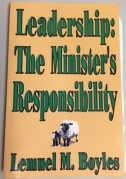 Responsibility, “The need for well-trained, highly qualified leaders in the Christian realm is one of the most critical problems we face in the church today.” I agree, and that also applies to the secular world. Without well-trained leaders, our churches and organizations are faltering. But Dr. Boyles taught that training alone is not sufficient. True leadership entails more than just filling a vocational slot: true leadership involves a higher calling.
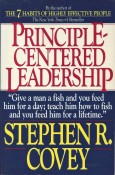 In his book, Principle-Centered Leadership, Stephen Covey said, “…we often attempt to short-cut natural processes–substituting expediency for priority, imitation for innovation, cosmetics for character, style for substance, and pretense for competence.” Although they might not realize it, this is designed failure by incompetent leaders.
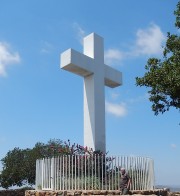 summarized the law in His statements in Matthew 22:37-39; “Love the Lord your God with all your heart, all your soul, and all your mind. This is the first and most important command. And the second command is like the first: Love your neighbor as you love yourself.” This is the foundation for good character and sound leadership.
 and we would be temporarily locked in the house. That was great for the skiers, and it made the landscape look more beautiful than words can tell. And if there was no wind while the snow was falling, the big fluffy snowflakes absorbed all the background noise which created a living Winter Rockwell Painting. Beautiful!
  With critters in front of the fireplace, a table nearby with a puzzle or a scrabble game on it, steam rising from two cups of hot chocolate or coffee, a big window across the room with snow gently falling outside–we have another Rockwell Painting. Periodically I would go out and clear the walks and uncover the car before the snow got too deep.
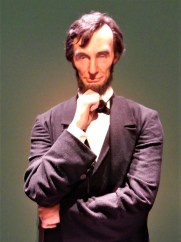
 which are dated only 35-100 years after Jesus resurrected. So, using the same reasoning, we should not doubt them. On the other hand, they are more credible than all the others put together.
 63 BC, have substantiated the Old Testament texts. Archeologists have verified the existence of Biblical towns, civilizations, and events.
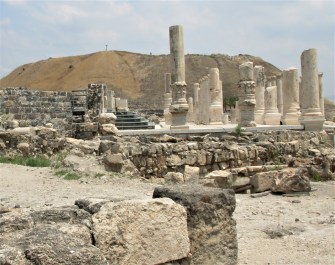 Joshua’s time, Egypt’s conquering of Israel, Pontius Pilate, Herod the Great, and many other events and people named in the Bible. Non-Christian historians like Porphyry, Celsus, Josephus, Pliny, et.al. have confirmed events recorded by the New Testament writers. Tacitus, the leading historian of Imperial Rome wrote: “The author of that name (Christian) was called Christ who in the reign of Tiberius suffered punishment under his Procurator Pontius Pilate.” The Jewish historian Josephus wrote, “There was about this time, Jesus, a wise man….” And many other non-Christian writers have verified the events in the New Testament.
![img_1798[1]](https://genelinzey.com/wp-content/uploads/2018/10/img_17981.jpg?w=136&h=113) interesting and I wanted to hear his reasoning, so I asked again, “What did you say?”
interesting and I wanted to hear his reasoning, so I asked again, “What did you say?”
 with eclipses on Jewish holy days, and comets approaching (or hitting) earth.
![dscn0464[1]](https://genelinzey.com/wp-content/uploads/2018/10/dscn046412.jpg?w=224&h=204) Back to the statement the man said, “It seems like we’re getting ready for Armageddon instead of for Thanksgiving.”
Back to the statement the man said, “It seems like we’re getting ready for Armageddon instead of for Thanksgiving.”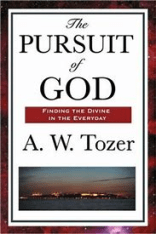 that impacted the 20th Century Church. During a trip by train from Chicago in the late 1940s, Tozer was inspired to write again. When the train pulled into McAllen, Texas the next morning, the rough draft of The Pursuit of God was completed. The depth of that message has made it a book in high demand – about 2 million copies in at least fifteen languages are in print.
 Tozer also said, “The shallowness of our inner experience, the hollowness of our worship, and the servile imitation of the world which marks our promotional methods all testify that we, in this day, know God only imperfectly, and the peace of God scarcely at all.”
 To be an authentic Christian, we must have an in-depth relationship with Jesus Christ. This relationship does not happen by going to church and enjoying the show. It happens by spending time with Jesus Himself through prayer, Bible study, meditating on the Life of Christ, and living in a manner that He would approve.
  old, and are friends going back to 1968. Mel, a bi-vocational pastor, and I worked at Boeing in Everett, Washington together in the tooling shop; also called the jig shop. Tools, in this sense, are not hammers, screwdrivers, and pliers. Tooling is a specialized field, and those tools are what the production workers used to actually build the Boeing 747s.
  We would have dinner with them, then spend the evening discussing theology, Bible doctrine, church beliefs, personal understandings of Scripture, and a lot more. When we discovered it was two in the morning, they told us to spend the night and ask Carol & me to sing for them in the church service.
 quite firm in some of my beliefs – church beliefs outranked Bible doctrine at the time – Mel helped me to grow in my understanding of the Bible, and in understanding of Who Jesus really was – and is. Mel always talked about Jesus because Jesus was – and is – the most important Person in his life. Mary comes next.
 Couple) more than words can say. We are grateful that, in our formative years as a family, they invested valuable time into our lives to help us become who we are today. That is a primary reason that we, in turn, invest time into other’s lives.
  love for us. But mostly we thank you for your love and devotion to each other and to our heavenly Father; for that is what made you who you are today.
 The LORD is my shepherd; I shall not want. He maketh me to lie down in green pastures: he leadeth me beside the still waters. He restoreth my soul: he leadeth me in the paths of righteousness for his name’s sake. Yea, though I walk through the valley of the shadow of death, I will fear no evil: for thou art with me; thy rod and thy staff they comfort me. Thou preparest a table before me in the presence of mine enemies: thou anointest my head with oil; my cup runneth over. Surely, goodness and mercy shall follow me all the days of my life: and I will dwell in the house of the LORD forever.
  There is an unspoken condition that is inferred after “The Lord is my Shepherd.” Many “sheep” who belong to the True Shepherd may not be enjoying all the benefits that this Psalm lists because they don’t understand or may not be aware of this unspoken condition. What is it?
  Carol and I were married on my 20th birthday: August 22, 1966. Carol says, “Marriage is made in Heaven; but it comes in a kit, and you have to put it together here on earth.” She is correct, and with God’s help we did a lot of “putting together” in our marriage.
  that sometimes.) And I learned that Carol was not being a demeaning tyrant who held me over the fires of hell every time I made a mistake. She was merely interested in truth: TOTAL truth.
  Gene Linzey