It’s all about Jesus

December 25 was a special day of the year. Having said that, you might expect this to be about Christmas. But have you ever … wait a minute. Let’s start somewhere else.

 Joy to the World the Lord Has Come! Angels We Have Heard on High…. Those songs, and others, were prompted by the message given to the shepherds out in the fields with their sheep. Silent Night, It Came Upon a Midnight Clear, and many others, were written about a special baby that was born. We Three Kings, and others, were written about several Persian noblemen who visited Joseph, Mary, and the toddler Jesus about a year later in their home.

Who was this famous baby that changed the world? Or, since babies don’t change society, the question should be, Who is this Person that changed the world?

The Book of Matthew starts with Jesus’ genealogy, then verse 18 begins the detailed account of his birth. Mark starts with the beginning of Jesus’ ministry. Luke starts with the history behind Luke’s Gospel, then verse 26 begins a detailed account of Jesus’ birth. But the Gospel of John starts prior to the beginning of mankind and prior to the creation of the earth.

John 1:1, “In the beginning was the Word, and the Word was with God, and the Word was God.” Verse 3 tells us the Word created everything in the universe. Verse 14, “And the Word was made flesh, and dwelt among us, (we beheld his glory, the glory as of the only begotten of the Father,) full of grace and truth.”

John 1:2 bounces me back to Genesis 1:1, “In the beginning, God created the heavens and the earth.” By this we know that the Word, Jesus, Who had no beginning, created the cosmos.

Okay, now we can think about Christmas, December 25. Was Jesus born at this time of year? Probably not, but that’s another story and don’t worry about it. We’re celebrating the birth of the Person mentioned in John 1:1 and Genesis 1:1 – God in human form. He is the greatest dichotomy of all time. For the first – and only – time in history, a real God was born as a human.

The Babylonians, Egyptians, Greeks, Romans, and many others developed myths, legends, and fantasies of gods creating themselves, gods being born, gods squabbling over territorial rights, fighting and killing each other, and a whole lot more. Their pantheons of gods were memorials of either great imaginations, or possibly of demon activity within mankind’s history.

Many citizens of those nations worshipped their gods out of fear, and offered sacrifices, including their own children, to those gods to appease their anger and to gain good business ventures and harvests.

But Genesis 1:1, John 1:1, and the remainder of Scripture tell a different story. The one and only God did not create Himself, because He never had a beginning. He is The Great I Am. God didn’t come to squabble or fight with anyone. Instead, He came to give life, redeem us, give peace, forgiveness, security, and a lot more. It would cost Him His natural life to accomplish it. But He came prepared with that in mind, and nothing would deter Him from fulfilling His mission.

The angels told Mary to name the baby Jehoshua, which means Jehovah is salvation. Through time, it was shortened to Joshua, and through Latin influence, we eventually have the name Jesus.

Have you ever thought about all that? That’s what Christmas is all about. (Christ-mas: a mass or meeting about Christ.)

“In the little village of Bethlehem, there lay a Child one day, and the sky was bright with a holy light, o’er the place where Jesus lay.

“’Twas a humble birthplace, but O how much God gave to us that day, from the manger bed what a path was led, what a perfect, holy way.

“Alleluia! How the angels sang. Alleluia, how it rang! And the sky was bright with a holy light, ‘twas the birthday of a King.”  By William Harold Neidlinger; 1890.

Display your lights, give gifts, share your meals – either scrumptious or meager. Listen to concerts, sing the Hallelujah Chorus and Christmas carols. Visit family, renew friendships.

But always keep in mind why Jesus came. Even as a baby, He was God. But He came to grow up and give His life for us so that we may have eternal life with Him in heaven.

The wonderful greeting of Merry Christmas is joyful, beautiful, and fitting one month out of the year, but Praising God and blessing people is fitting all year long. Be kind to one another and help others in this difficult time in history.


Dickens and Christmas

Have you heard about the movie: The Man Who Invented Christmas?

Chris Knight, chief film critic for the National Post, said, “The movie is based on Les Standiford’s long-winded historical non-fiction from 2008, The Man Who Invented Christmas: How Charles Dickens’s A Christmas Carol Rescued His Career and Revived Our Holiday Spirits.” Knight also said of the movie, “By all rights, The Man Who Invented Christmas should be a humbug. Instead, it’s a humdinger.”

Charles John Huffam Dickens was a prolific writer. One article says he is regarded as the greatest novelist of the Victorian era, and that he created some of the world’s best-known fictional characters. Several of them are: Jack Dawkins, the pick-pocket in Oliver Twist; Tiny Tim, Bob Cratchit, and Ebenezer Scrooge in A Christmas Carol; Mr. Pott, the editor in The Pickwick Papers; and David Copperfield in David Copperfield.

Dickens was a prolific writer. But did he invent Christmas? Humbug!

But some pagan activities did intermingle with the sacred celebration.

Another commentary is from Ronald Hutton, an historian at Bristol University in the UK. He said, “It’s a mistake to say that our modern Christmas tradition comes directly from pre-Christian paganism. However, you’d be equally wrong to believe that Christmas is a modern phenomenon. As Christians spread their religion into Europe in the first centuries A.D., they ran into people living by a variety of local and regional religious creeds.”

One report says: “A Christian holiday honoring the birth of Jesus Christ, Christmas evolved over two millennia into a worldwide religious and secular celebration, incorporating many pre-Christian, pagan traditions into the festivities along the way. Today, Christmas is a time for family and friends to get together and exchange gifts.”  (history.com/topics/christmas)

Philip Shaw, who researches early Germanic languages and Old English at Leicester University in the UK, said, “Early Christians wanted to convert pagans to Christianity, but they were also fascinated by their [pagan] traditions.”

Stephen Nissenbaum, author of “The Battle for Christmas”; Vintage, 1997) made a good case for an old Christmas celebration when he said, “If you want to show that Jesus was a real human being, not just somebody who appeared like a hologram, then what better way to think of him being born in a normal, humble human way than to celebrate his birth?”

Christmas celebrations developed independently around the world for almost 2,000 years. And why not? Jesus’ birth was probably one of the two most important events in the history of the world!

And that’s why we celebrate Christmas – God became man in order to redeem us and restore our fellowship with Himself. And he came as a baby, born in a manger.

But as mentioned previously, many of the Christmas festivities became corrupted. Instead of candlelight services or worship services, rowdy and drunken revelries became common. Therefore, many protestants rejected paganized Christmas celebrations. Early Protestants wanted to honor Jesus Christ, our Savior – not have a festivity which obscured Christ. Denouncing sin and frivolity, they gave necessities for life as gifts; avoiding superficial parties, they shared sacred meals.

But as some Protestants squelched the pagan revelry surrounding Christmas, they also put down anything associated with Christmas celebrations. They threw out the baby with the bathwater. In this case, they threw out observing the birth of Jesus with the pagan celebrations.

Enter Charles Dickens.

Noting societal debauchery, prevalent poverty, and abusive child labor in the 1840s, Dickens vowed to do something about it – and writing was what he did best. In six weeks, he wrote A Christmas Carol. If you’ve read it, you know why it became an immediate best-seller.

Dickens wanted to insert joy and gladness into a life filled with drudgery, dreariness and death. Without ignoring the seriousness of life, he portrayed the Spirit of Christmas filled with miracles and laughter. He also reminded society of the importance of blessing others by caring for those around them.

Did Dickens invent Christmas? No. But he did encourage joy and human-kindness, and inspired a positive change in society.

Jesus, who is God (John 1:1-3), came to earth to restore man’s relationship with himself. But he came as a baby (Matthew 1, Luke 1) so, as he grew, he could personally experience mankind’s trials, hardships, and joys.

Jesus loves you and desires for you to know him as he is today – God and Savior.

May the Lord bless you this Christmas season.

What Should We Do?

When people slander you, what do you feel like doing? When someone hurls insults in your face and maligns your integrity, how should you respond? What does human nature demand?

Please hear this: when we respond in our fallen human nature, war breaks out!

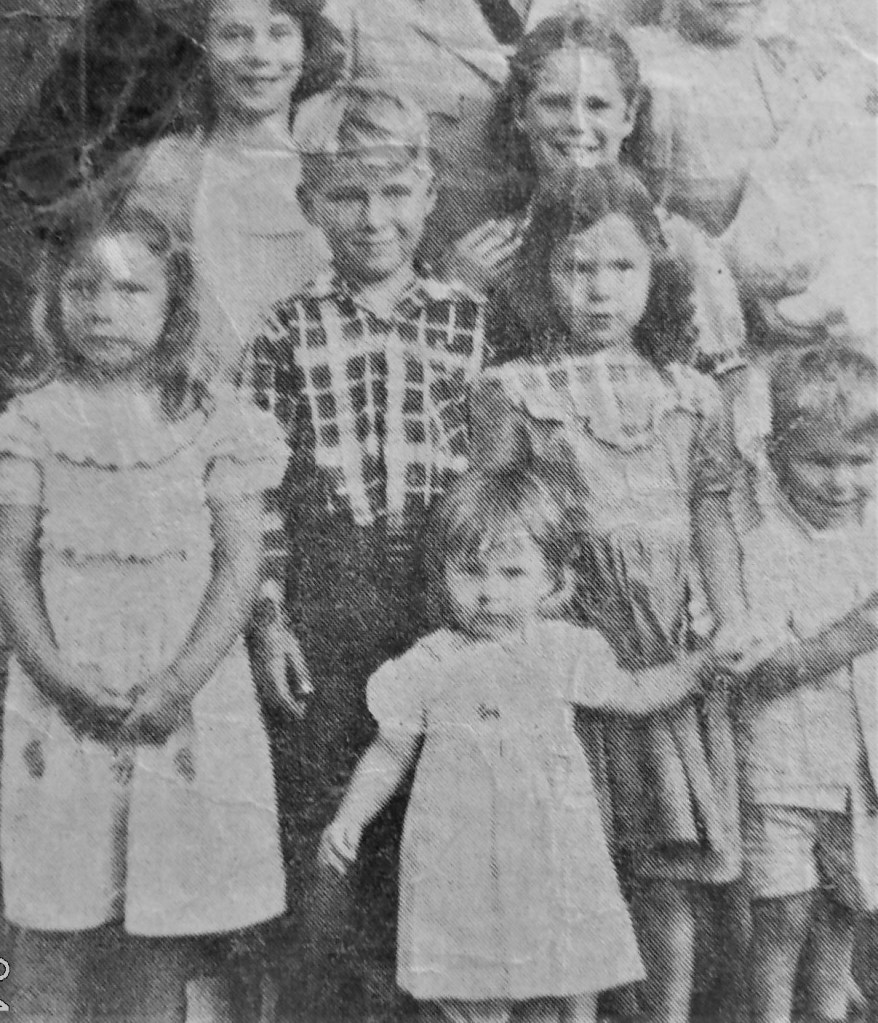
I grew up in a family of 10 kids, and if you know anything about children, peace does not always freely reign. We could sing When Peace Like a River Attendeth my Way, Let There be Peace in the Valley, or Peace On Earth, Goodwill Toward Men all we wanted to, but when one of us was offensive, only Dad or Mom could break us up. That’s fallen human nature. Why are we that way?

Now, lest my siblings find this and read it, I want to affirm that we had a lot of fun and have a barrel of good memories. Our family memoir, Looking Through the Rearview Mirror, bears this out. But we did have war at times. You might enjoy reading about the adventures and misadventures of our family, and can order the book at: https://www.amazon.com/Looking-Through-Rearview-Mirror-Linzey-ebook/dp/B09JM3N5TD/ref=tmm_kin_swatch_0?_encoding=UTF8&qid=1634619105&sr=1-2

When emotions get riled up, words tend to fly out of the mouth that might not be true. But if there is any truth to the words, the angry person tends to blow it out of proportion. And this problem is not relegated to children. Adults from 18 to 100 are just as guilty.

So, how should we react when someone attempts to destroy our character? How should we respond when someone broadcasts his or her disdain for us?

The wrong answer is to fight back; to fight fire with fire. Bristling, getting huffy, and trying to set that person straight tends to prove the angry person’s accusations.

There are several versions of the right answer. But since I have a habit of giving simple answers, let me give you one right now although I’m not the author of it.

Jesus said in Matthew 5:44, “I say unto you, love your enemies, bless them that curse you, do good to them that hate you, and pray for them which despitefully use you, and persecute you” (KJV).

The Aramaic Bible in Plain English says it this way, “I say to you, love your enemies and bless the one who curses you, and do what is beautiful to the one who hates you, and pray over those who take you by force and persecute you.”

But eighteen of twenty-eight versions I read simply say something very close to, “I say unto you, love your enemies, and pray for them that persecute you.”

Loving others simply means, be kind to them.

When I was twelve years old, one of my school-mates hollered, “Your family isn’t fit for a pack of wolves!” When I complained to Dad, he said, “If kids say things like that, just respond, You’re right. we can’t stoop that low.” A few days later when the junior high school thug hurled another similar epithet, I responded as Dad suggested. Amazingly, that was the end of the potential feud.

The old saying, it takes two to tango, can be applied to many situations. Recently, when a man who despises my worldview hurled hateful words at me in a public setting, I told him I considered him a friend. Was he friendly? Of course not, but his actions do not mandate my reaction. I purposely chose to respond in the manner that Jesus taught, and I pray for the man.

Getting angry raises our blood pressure and increases our cholesterol level, both of which are hard on the heart. Anger confuses us and immerses us in a moral quandary. Angry people don’t merely offend people they dislike, it puts a wedge between them and their friends.

An angry person develops a hollow feeling that cannot be filled. The person then has a compound-problem: he must amplify angry emotions and increase his outbursts to justify the feelings of hate. As the situation intensifies, a false reality develops which deepens the deception.

What should angry people do? If they enjoy being angry, they’ll continue as they are. But if they want peace in their lives, they’ll need to realize that the answer to the problem comes from Jesus and can be found in the Bible.

Jesus, the Prince of peace, wants to heal us of our self-inflicted problems, and as Philippians 4:7 says, Jesus gives us peace that cannot be adequately explained.

What else should we do? Follow Jesus’ example and forgive those who offend you. You’ll be happier and healthier if you do.

Memory & Mental Health

In 2018, Carol & I were in Young Harris, Georgia, at the USS Yorktown CV-5 Survivor’s Club Reunion.

The purpose of a reunion is to socialize with friends and family, help us remember an event, or to celebrate the life of a person. The original purpose of the Yorktown reunions was to give the survivors of the USS Yorktown at the Battle of Midway (June 3-7, 1942) opportunities to share memories of life on board the ship – including experiences of the hell that erupted during battle – as well as memories of life’s experiences after the war.

Dad was stationed on the Yorktown from 1939 to June of 1942. In 1953 dad reentered the US Navy as a chaplain, and after retirement became chaplain of the CV-5 survivor’s club. I had the privilege of attending several reunions with dad and enjoyed hearing the ‘war-stories’ the men told.

Although most of the Yorktown veterans endured horrific experiences during the bombing, strafing, and torpedoing, those who freely shared their memories with others suffered much less mental anguish about it. The freedom to talk about the events often reduces PTSD. Visiting memorials and sharing memories with others is therapeutic, and aids in positive mental health which, in turn, can remove the need for long-term counseling.

Years ago, a man racing a 595-pound, 1200cc Kawasaki motorcycle at 95 mph plowed broadside into a Datsun (predating the Nissan) that our son, Ron, was driving. The wreck splintered the bike, killed the biker, destroyed the Datsun, and sent our kids to the hospital.

Ron was 16 years old and I didn’t want an emotional scar to develop, so I encouraged him to talk about what he experienced. As Ron initially related everything he remembered about the accident, we took many pictures of the aftermath; and every day for two weeks, I asked him to talk about it. At first, it was difficult. Then we discussed the event several times a week for a month. He relived, analyzed, and discussed the incident until he could narrate the event objectively – without emotional pain

The result? He has clear memories of the event and is sad about it, but he has no emotional scars and no mental trauma to overcome.

Those who will not talk about or share their feelings should at least write them down. Write out your experiences in as much detail as you can.

A good friend up north was having severe marital problems, but he would not violate his vows and did not want to hurt the children. Not willing to talk about it to anyone, he quietly, secretly, and in great detail, wrote his anxieties, emotions, bitterness, and frustrations as letters to himself. After writing each letter, he read it to himself – sometimes tearfully and in pain – then sealed it in an envelope and hid it. Each week he sealed another envelope, and never opened any of them again. Although he didn’t share the letters or his feelings with anyone else, he continually asked God to help him.

After several years he overcame the problems that plagued him and he was healed. He didn’t forget the problems. In fact, refusing to bury or hide them, he acknowledged his emotional struggles and communicated to God about it all. Then he asked the Lord to help him forgive his wife.

The situation improved and years later he died a happily-married man. As a side note: his wife didn’t change much. It was the process of opening up and releasing the problems – and forgiving her – that enabled him to accept his wife as she was and receive his healing.

Sharing memories with others can release emotional pressure and help maintain or regain positive mental health. But be sensitive to others. Don’t badger or bore them. Be willing to listen as well as to speak.

Forgiving and not holding grudges, and talking about problems in a positive manner, is similar to disinfecting a wound: the memory bank is cleansed and emotions are healed.

But also consider Philippians 4:6-7; “Don’t worry about anything; instead, pray about everything. Tell God what you need, and thank him for all he has done. Then you will experience God’s peace, which exceeds anything we can understand. His peace will guard your hearts and minds as you live in Christ Jesus.” (NLT)

So spend time with family and friends, develop good memories as you enjoy life. Your happy memories will be one of your most important blessings in later life.

What’s Over the Next Hill?

“Daddy, what’s over that hill?”

“What do you think you’ll see?” Dad chuckled. He must have been humored at my numerous questions. He continued, “If you sit still for a minute, we’ll be on that hill, then we’ll both find out.” Dad knew but wanted the view to be a surprise.

From my earliest memories at almost 3-years old, I’ve always wondered: What’s around the corner? What’s in the box? How did the mountain get there? What’s fire made out of? What’s over the next hill? I’ve always had an unquenchable thirst for knowledge. I still do.

That was a special trip for me. I was 5 years old, and seldom had the privilege of spending time with dad and mom by myself. Eventually, I had five sisters and four brothers, and this trip would be the first of three trips where I was the only one dad and mom took with them.

Mom was taking a nap in the front seat of the Hudson Hornet, my four sisters (two older and two younger) were left with elders in the church, and I was leaning over the front seat looking with eyes wide open. I had never seen mountains and valleys like this. Seat belts hadn’t been invented yet, but we never had a problem.

There were no freeways where we lived in 1951, and our highways allowed us to travel at the break-neck speed of 55 miles per hour. However, some of these mountain roads allowed only 35-45 mph. Our destination was about 400 miles away, and we left home long before daylight.

As we approached the crest of the hill, dad asked, “Eugene, do you know where we’re going?”

“Yes, we’re goin’ campin’.”

“That’s right. But do you remember where mother said we’re going?”

While I was trying to remember that hard word, we reached the top of the hill. Dad pulled over to the side of the road.

“Ooooohhhhh Daddy! Someone broke that mountain in half!” I was stunned to see half a mountain standing on the side of the valley.

Dad already had his camera in hand and was opening the door. “Son, that broken mountain is called ‘Half-Dome’ and this is called Yosemite Na… Eugene? Where are you?”

Dad found me hiding inside the car, not wanting to get out. I was scared spitless of heights, and when I saw the valley floor WAY DOWN THERE, I panicked. But peeking out the window, I couldn’t take my eyes off that broken mountain.

“Okay, Eugene. Would you get out of the car if I hold your hand?”

I shook my head, “Hu-uh.”

When mom said, “Daddy will let you look through his binoculars if you get out of the car,” I agreed to hold daddy’s hand and get out.

That was my introduction to Yosemite National Park.

We drove down into the canyon and dad took me on a few short hikes. I enjoyed playing in the heavy mist of Bridal Veil Falls, then helping dad set up camp. I don’t remember how much of a help I was, but it was fun being with daddy and mommy.

My favorite part was watching the fire fall down the face of Glacier Point. The park ranger gave a talk each evening, and an entertainment group sang as others prepared a roaring fire on top of Glacier Point. Then at 9:00 PM, the ranger hollered, “Let the fire fall!”

Several men then pushed the burning material over the edge with bulldozers, and a river of glowing embers fell more than a half mile (some 3,000) feet to the valley floor. Little boys never forget things like that. (The final “fire-fall” was on January 25, 1968.)

The question of “what’s over the next hill” has never left me. I might see an elk, a river, a glowing sunset, the wide expanse of the ocean, or another mountain. I never tire of it. And I am blessed with a wife who shares the same adventurous spirit.

We’ve been in every state of the Union and have driven over many hills. But there is one “hill” I cannot experience yet, and I can only imagine what the other side looks like. I’ll go over that hill after I take my last breath here on earth and enter heaven. I’m not in a hurry to get there, but God, dad, and mom are waiting for me, and I won’t be afraid of that height. Who knows: God might have thousands of hills over there for me to experience.

Traits of Talented Employees

Are you looking for a job? Or maybe you have a job, but would like to improve your present situation? Well, I’ve got good news for you: here are ideas you can use to improve your lot in life. This will be easy because there are no gimmicks to figure out, no research to conduct, and nothing to buy. You merely need to know yourself. 
I’m talking about your character, integrity, reputation, your persona: what and who you are.

Every business needs people with particular skill-sets, therefore, many employers train people to fill technical positions. But to reduce overhead and protect their investment in the trainees, they try to hire people with good personal qualities. So you must make a good first impression.

First impressions never get a second chance, so make it count. Here are four things employers will notice right away.

  • Physical Appearance: be clean and well-groomed. The potential hiring company sets the tone for how one should dress, so you would not dress like a plumber when applying to be a salesman, and vice versa. Don’t be sloppy.
  • Communication Skills. Employers want to hire people who can communicate well in speaking and writing. Poor communication leads to negative issues within the company and with clients. Expressing yourself well, both verbally and in writing, plus understanding what others say, is mandatory. Intelligence is a strong foundation for success.
  • Attitude is Everything. This requires a favorable personality. People, both employees and customers, are drawn to positive thinkers with a sense of humor. A confident but intelligent employee is also more willing to take calculated risks or accept challenges that a timid person would avoid. Customers or clients will be impressed by a confident representative and feel like conducting business with his company.

Generally, people don’t like being around those who are pessimistic, negative or just plain unhappy. Positive and happy attitudes are contagious, and joyful people get more work done.

Optimistic people make better team members and create a more productive work environment. However, nobody likes someone who boasts or brags about their accomplishments, so don’t overdo the confidence. It becomes self-centeredness.

  • Energy and Enthusiasm. When energetic and enthusiastic people come to work, they generate a working environment that helps both themselves and their co-workers come up with new ideas. Also, employees who come to work fresh and energetic everyday are going to produce more than others who think negatively. Kick grumbling and complaining out of your life. (Make sure you eat well and get enough sleep.)

After you make your case and get that job, you need to prove to the employer that he/she made a good decision in hiring you. Here are the four follow-up steps.

  • Reliability is Powerful. Reliable employees – those who follow instructions and complete the tasks, those who show up on time and work productively – build companies. Managers don’t have to worry about these employees, and can use their own time addressing the company’s difficulties. Add self-motivation and self-discipline, and these reliable employees rise above adversity and setbacks, and rise above mediocre workers. They become the next generation of CEOs and company presidents.
  • When the employer encounters an overtly honest employee, he places greater trust in that person. That trust turns into more authority in the business which eventually results in greater influence and promotion.
  • Team Player. Although each individual employee must be able to do his job well, he must, also, be able to work in a team for the betterment of the company. Teamwork requires well-developed social skills, which include the ability to listen to the other members with an open mind. “Lone Rangers” normally do not progress very far up the corporate ladder.
  • Be Creative. Businesses of every kind need people to create new products and develop more efficient ways of doing current work. The general population gets bored with same-o-same-o routine. This is why the auto industry puts out new cars every year. So excel in your job, be thinking of ways to do it better and more efficiently, but also think of new ideas for the company.

There are many more ideas I could share, but that’s all I have time for today. And that should give you an idea of what it takes to get a job or a promotion.  Share this with those who need a nudge in the right direction; and enjoy the day.

Optimist, Pessimist, or…?

“Hey, dad; I learned something new at school today.” I was happy and wanted to share this new bit of wisdom with my dad. I was twelve years old, in 7th grade, and feeling big.

“Okay, I am sitting down. Enlighten me with this earth-shaking news.” We both laughed.

“An optimist looks one way before crossing a one-way street; but the pessimist looks both ways.” I was proud of myself because I remembered every word of it.

But dad sat there for a few seconds, then popped my bubble when he said, “Maybe the guy who looked both ways before crossing a one-way street wasn’t a pessimist. Maybe he was a realist.”

I felt badly because I didn’t impress dad the way I was hoping to; but in his wisdom, dad broadened my outlook on life – again – for which I am thankful. Dad always did his best to help me view life with a deeper, more complete understanding. He was a great dad, and a wise man.

By the way, pessimist comes from “pessimisme” which means “worst”, and could have originally meant “bottom-most”. But optimist comes from “optimisme” which means “the good” with an alternate meaning of “seeing the greatest good”.

Well, I learned something else today about optimists and pessimists. Since dad graduated to heaven 10 years ago, I can’t tell him about it. But I can tell you folk. (I can imagine dad in heaven saying, “Okay; enlighten your readers with this earth-shaking news.”)

This axiom was possibly stated by Winston Churchill. “A pessimist sees the difficulty in every opportunity; an optimist sees the opportunity in every difficulty.”

If you read it again and ponder on it, you’ll see the inherent wisdom. Optimism is the reason some people accomplish so much amid ongoing hardship, while others achieve so little even with no resistance. Yes, I know: you might say the poor achiever may not be a pessimist, but a lazy or a non-motivated person. You have a point there, so that would be two more reasons some people accomplish so little.

The story is told of a rancher taking his twin nephews to the barn. Jerry was a pessimist and his twin, Jack, was an optimist. When the uncle opened the first door, he said, “Jerry, I am giving you a horse.” Jerry looked at the horse standing there, saddled and ready to ride, but said, “Oh no!” then sat down – dejected.

“What’s the matter?” His uncle asked. The boy said, “If you give me a horse, I’ll have to clean out the stall!”

The uncle shrugged his shoulders and motioned for Jack to open the second door. Upon opening it, all Jack saw was a pile of horse manure. “Oh Boy!” shouted Jack, and he grabbed a shovel and started digging a pathway to go inside.

His uncle asked, “Jack, what are you doing?” The optimistic twin shouted, “With this much horse manure, there’s just GOT to be a horse in there somewhere!”

Please don’t misunderstand me. I am not putting down pessimists, for they help optimists through life. When people like me see the opportunities in the difficulties, the pessimists point out the potential land-mines which we need to avoid. And, of course, we optimists help the others to realize that some of those potential mines are not armed, and work should proceed. If we purposely work together without deriding each other, both pessimist and optimist can be a productive team.  

But I think Dad’s idea of the realist presents a balanced viewpoint. One definition says “a realist looks at things as they are and deals with them in a practical manner.”

Thinking I was either an optimist or realist, I took an online quiz to see what that shrewd computer program thinks I am. The computer surprised me with: “You are a gentle pragmatist.” Thank you, intelligent computer.

A definition of a pragmatist is: “One who has a reasonable and logical way of doing things, or practical way of handling problems; a realist.”

We need both optimists and pessimists; but both should be realistic about life, for that’s where the rubber meets the road. We shouldn’t ignore the difficulties in life, but neither should we see them as stumbling blocks.

Whether you are an optimist or pessimist, be a team player – a realist – and your organization will be blessed. Ecclesiastes 9:10a instructs us, “Whatever work you do, do your best.”

How’s Your Drag Set?

In the late 1990s, Carol and I were visiting her mother and step-dad in Pagosa Springs, Colorado where they owned a cabin on Pagosa Lake. Charles and I had become life-long friends and we enjoy fishing together. (My mother-in-law has since graduated to heaven, and the cabin was sold.)

“You want to go fishing out on the lake?” Charles asked.

“Sure, I suppose so; but we always catch our limit of Rainbow trout from your dock. Why fish from a boat?”

Charles’ neighbor, Frank, had a trolling boat and took Charles fishing in it somewhat often. The limit from the boat was still the same, but Charles said they catch bigger ones out on the water.

Within the hour, the boat was ready, we had our poles, tackle-boxes, bait, nets, and Coca Cola, and we headed out for an adventure.

Frank told me, “Throw your line out in back of us.” I had a new pole called an “Ugly Stick” with a Shakespeare reel, and the yellow and green Rooster Lure flew about 100 feet. Frank’s next order was, “Now, just hold the pole perpendicular to the direction of your line and wait for the trout to visit you. When he hits, don’t point the pole in the trout’s direction; keep it pointed 90 degrees from him. Just reel him in steadily and let the flexing pole do the work.”

We were trolling slowly, and within three minutes I felt a tremendous yank and my pole doubled over. But just as quickly, it popped back straight.

Frank had fished Pagosa Lake for many years and caught his limit every time. He said, “I know what’s out here, and the way your pole bent over, that was a 20-incher. Reel in your line.” When I found the end of the line, the lure was gone.

“That critter broke your line.” Frank exclaimed. “How’s your drag set?”

I asked, “What’s drag?”

Perplexed, Frank asked, “You’ve fished northern New Mexico for ten years, and you don’t know what drag is?”

“No, but I always catch fish.”

Frank and Charles started laughing. No they weren’t mocking me; they just thought it was funny that a man in his 50s could fish for years and never know what drag was. I began laughing, too, and handed my Ugly Stick with a Shakespeare reel to Frank.

The drag is actually an apparatus made from a pair of friction plates inside the reel. The tension has to be set to release quickly to keep the line from snapping when the big ones yank on it. Then as we reel the critter in and the fish puts up too much of a squabble, the friction is overcome, allowing the reel to rotate backwards just enough to keep the line from breaking.

Frank explained drag, and showed me how to set it. He then set it for the trout we were after and said, “You’ll need to adjust it for stream-fishing back home.”

We proceeded to fish for an hour, and each of us and several friends caught our limit of three Rainbow trout. The two 17-inchers I caught put up a fuss and took a minute or two to bring in. And yes, the drag function worked properly. But an 18-incher put up a fight! Taking almost three minutes to reel it in, I was grateful that Frank set the tension for me. Back at the cabin, Carol cooked the big one like a salmon, and it was GOOD! The left-overs were made into trout-fish sandwiches which tasted much better than tuna-fish.

By the way, the little ones – eight to thirteen inchers – don’t pull hard enough to break the line, and I have never reset the drag.

Reminiscing on that recently reminded me of everyday life. Do you find that the pressures of life are too much, and you feel like snapping? Do you feel like giving up? How’s your emotional drag set?

Don’t trust your own wisdom, for you’ll be disappointed.  And don’t give up because help is just a prayer away. So trust in the Lord with your entire life. In everything you do, acknowledge the Lord, and He will guide you (Pro. 3:5-6). You are secure in God’s hands because He will help you set your emotional drag.

The Art of Marriage

And God said, “It is not good for man to be alone; I will make him a helpmate” (Genesis 2:18).

Years ago, that perplexed me because, since God is all-knowing, He KNEW that man would need a helper, a friend, a companion. So, why the comment? I think it was because God wanted Adam to know that he (Adam) needed a companion. God allowed Adam to explore the world (the Garden), look at and name the animals, prepare his own meals, etc. – all the while with no other human to talk to. Being alone is no fun, and trying to talk to critters goes only so far.

Making another man for Adam would still leave Adam incomplete, and could never fulfill God’s plan on earth. So God made a woman for Adam, and harmony pervaded the Garden. God and Adam communed every evening, Adam and Eve communed every day, and relationships were complete in all directions.

I know the jokes and stories about Adam’s problems starting when Eve arrived on the scene, but Romans 5:14 explicitly informs us that Adam caused the problem. A major consequence was “broken and disjointed communications” that has plagued mankind – therefore, marriage – ever since. How can we restore marriage to God’s design?

My wife, Carol, says, “Marriage is made in heaven, but it comes in a kit that must be put together on earth.” Louis and Leah Houston said, “Our 58-year marriage is based on several factors. We started out as friends, and it developed into love. We share the same basic faith. We highly respect each other, and are always ready to help each other. And we discuss major decisions because a dual-perspective gives greater depth perception.” These are excellent pointers on how to develop wholesome, proper communications; and, therefore, how to develop a wholesome marriage. Louis and Leah understood the art of marriage, and were married more than 61 years before he passed away.

Watching portions of the Olympics, I was amazed at the skill exhibited by the figure-skaters. Their performance was a beautiful expression of the art of skating. Yes, several fell, but they got up and finished the presentation. How could they execute their art with such masterful technique and style? They studied and practiced, studied and practiced, studied and practiced. Falling did not deter them – they kept at it. That’s the method we use in mastering any art form — including the art of marriage.

Marriage is fundamentally based on observation and communication and is an art that must be learned. One concept found in Stephen Covey’s book (The 7 Habits of Highly Effective People) is Key #5 which says, “Seek first to understand, then to be understood.” That’s a Biblical principle that instructs us to put others first. When we place the needs/desires of our spouse above our own desires, heaven can reign in the home.

Another concept in a book written by Ken Boges & Ron Braund (Understanding How Others Misunderstand) is that people think and see differently. Therefore, in order to respond to others in a loving way, “We need some basic facts about [their] perception, motivation, needs, and values.” Observation and communication are the keys.

Dr. Paul Linzey wrote a dynamo of a book called, WisdomBuilt Biblical Principles of Marriage. On page 37 he says, “There are several things a couple can do to achieve a good marriage.” He includes: 1) Pray together, and ask God to bring unity into the IMG_8740relationship; 2) Work at promoting unity, and don’t do anything that hinders unity; 3) Control the tongue, words can heal or kill a marriage; 4) Honor your agreements, unity is based on trust; 5) Be kind to each other, little kindness throughout the day are worth more than one big one at the end of the day; 6) Take time to stop and think about each other’s positive qualities, strengths, and talents, and let your spouse know that you appreciate him or her; and 7) Spend time together. These seven things are more than mere suggestions for a strong marriage. They are mandatory as we consider the art of marriage. And tell your spouse several times a day that you love him or her.

WisdomBuilt Biblical Principles of Marriage is one of the best books on marriage today, and I heartily recommend the book for both married couples and for those considering marriage. Find more about Paul at paullinzey.com.

My wife and I have been married for 54 years now, and we don’t have all the bugs worked out – we never will in this human life. We’ve fallen several times, but we helped each other get back up. Because we individually have placed God as our highest priority and each other second, we experience joy, unity, love, and beauty in our marriage. We’re following God’s instructions as we continue to develop our marriage.

Resolving Conflict

That conversation sure deteriorated fast. They were long-time friends and met for coffee periodically. (No, these guys were not Gene Linzey and Louis Houston.)

It started out as a pleasant discussion about world events, but one of them hit the other’s hot button and verbal conflict ensued. After a few minutes of heated frustration, one man got up and left – letting those around him know what he thought about the world.

But why did he insult himself and berate the others by reacting that way?

Insult himself? Yes! He thought he was showing his manliness by vociferously giving his opinions, but he actually revealed his immaturity by responding like a kid throwing a temper-tantrum.

Every day we encounter conflict in some form or other: conflicts of personality, schedule, ideology, theology, politics, and the list goes on.

But speaking of Louis Houston – Louis was an author, co-writer, and a friend before he graduated to heaven. He and I got together every week that I was in town. I drank his coffee, we shared ideas – sometimes repeatedly – and we enjoyed each other’s company. Every now-and-then, we touched on a political topic about which we didn’t agree. What did we do?

I didn’t get angry and storm out of his house. Louis didn’t raise his voice to “give me a piece of his mind.” Those reactions would be disgusting. In fact, in the seven years we knew each other, Louis and I never said a harsh or negative word to each other. Instead, Louis and I discussed what we felt free to talk about; otherwise we took a sip of coffee and went on to another topic. The fact is, true friendship is hard to come by, and we didn’t let anything or anyone come between us.

In the business world, consultants are paid to help people learn how to resolve conflict. But there’s a flaw in it: trying not to be “religious”, many companies try to produce behavior modification without changing the cause of the behavior. That’s similar to trying to teach a cat not to meow. Therefore, at the end of the conference, most, if not all, of the attendees are the same going out as they were going in.

In 2005 I attended a conference presented by a business called Character First®. Based in Oklahoma City, they taught that behavior does not permanently change unless the character changes. They are correct. (Character First® has since been bought by Strata Leadership®.)

They taught that outward behavior is a manifestation of internal character; therefore changes in character produce behavioral changes. And positive changes in character produce maturity, an increase of integrity, and a greater joy in life.

When our character – the real “us” – changes, we mature and experience a reduction in personal conflict. Why? We stop being self-centered. We learn to accept others for who they are. We learn that we are not responsible to make the other person see things our way or become more like us.

We realize that ideological, theological, and political differences will always exist; but we don’t need to turn them into conflict.

(Note: Conflict is sometimes forced upon us, and that is another story.)

So, what happens if we disagree? Jesus said in John 13:35, “Men shall know that you are my disciples, if you love one another.” Jesus didn’t say that we had to agree with each other on every topic. But we need to learn to understand each other, and give people the freedom to think for themselves. We are not God, and should not try to force people into our image.

Facing conflict in business, government, and church in a mature manner enables those organizations to prosper. If we have a problem with a local church or business, we should not berate it; rather we should peacefully go where we can freely worship or do business.

The Braum’s Company, with dairies in Tuttle and Shattuck, Oklahoma, is product- and family-oriented. They don’t want their drivers to be away from their families overnight, and they want their product to be fresh. So their restaurants are located within a 1-day round-trip distance from where the milk, ice cream, bread, etc. are produced and packaged. When more distant towns wanted a Braum’s restaurant, the company faced a conflict of interest. What did they do?

They resolved their predicament by remaining true to their ideals: the quality of family life and product freshness outweighed financial gain. Case closed.

That is how we should resolve conflict. We must remain true to Scriptural ideals and morals. And when our ideas disagree with someone else? Don’t generate conflict over it. Maintain your integrity and friendship, if possible, as you increase your love for God and understanding of others.

Our primary methods of conflict resolution are:

  1. Live in such a way that we do not generate conflict.
  2.  Understand that we do not have to control others.
  3.  Do not accept other people’s problems as our own.
  4.  Allow others the same freedom of thought as we desire for ourselves.

Of course, that is only a start, but you get the point. Have a pleasant week.