
 Years ago we had a kitten that developed a special interest in life. It did the “cat thing” of chasing strings, rubbing against our legs, curling up in our laps, climbing trees, and the rest. But this critter developed the joy of jumping at and chasing shadows.
If we walked through the yard during the day or into the room at night with the lights on, and he saw our shadow, he immediately pounced on and wildly chased it, trying to nail it with his claws until the shadow disappeared. He then stopped and looked around as if to ask, “Where did it go?”
His favorite version of the game was trying to catch a shadow on the wall. You should have seen him! He would sit at the base of the wall, watching a shadow that Michael (our son) cast on the wall. Michael moved his hand up & down and in various directions, and the cat slowly – intently – focused on the ethereal object. He crouched low, quivering with pent-up energy. Then he EXPLODED straight up the wall as he grabbed at the phantom object. He did this repeatedly for five or six minutes until he tired himself out. But several hours later, he was ready for another go at it. What a critter!
Marvel (the cat) didn’t seem to know that he would never nab this prey. He didn’t know that his objective was not attainable, and he expended time and enormous amounts of energy in the process. Watching the feline focusing on and striving for something that was not attainable is entertaining and elicited gales of laughter from us. I think God revealed His sense of humor when He created cats.
But do you know that many people do the same thing? They sit at a mental wall and focus on objectives that are not attainable. They focus on what SHOULD be, or MIGHT have been. If only I had more money. If only I had married someone else. If only I had a different job. If only I were good-looking or more popular. Hundreds of If Onlys.
They also focus on what others might be thinking of them.
That reminds me of the shy student sitting alone. When the instructor asked the student if he needed assistance, the young man said, “No, but I’m wondering what those guys are thinking of me.” The instructor gently responded with, “You might be wasting your time, son; they don’t even know you are here. Why don’t you go join them?”
How about you? Do you worry and wish things were different in your life?  Worry will never change anything, and changing the past is impossible; so you are wasting time and expending enormous amounts of energy. That energy is needed for the present, and worrying blocks our creativity and impedes progress. Why not use that pent-up energy to do something? Make a change now. You should remember that many times the most important change we can make is our own attitude.
In 1973 I did not like my job. Let me rephrase that: I enjoyed being an appliance repairman, but I really did not like my employer! I jumped at every opportunity imaginable trying to get another job, but to no avail. No other job opened up for me. I didn’t know that the problem was NOT my employer – it was my attitude. I didn’t realize that I had become a proud, arrogant person; and trying to change employers while exhibiting a bad or poor attitude was like jumping at shadows.
One Sunday after the church service, I spent a lengthy time in prayer. The Holy Spirit was reminding me of my attitudes, errors, faults, sins (call them what you want), and I was repenting. I did not spend time consciously changing my attitude; but when my self-consciousness decreased and my God-consciousness increased, my attitude changed as a by-product. That shouldn’t surprise anyone.
Already a Christian, I became a different person: I had stopped doing things my way and accepted God’s way. And guess what? I learned to deeply appreciate my employer. And I was surprised when I was offered another job several months later with greater potential.
Let’s stop our futile efforts of jumping at shadows. Let’s live in the present and pursue reality. That begins with reducing our self-centeredness, increasing our Christ-centeredness, deepening our relationship with God, and allowing Him to guide us. It also enhances joyful interaction with our family.
 The Apostle Paul had an attitude. Whether you call him a Christian, Jew, or Roman, he was at times hard to get along with.
 Although Jesus criticized some Pharisees for being hypocrites, others were unswervingly dedicated to truth. This described Saul. He was “a Pharisee of the Pharisees” – that is, he was a Pharisee and the son of a Pharisee. Pharisees were teachers of the Jewish law, and Saul pursued truth with his entire being; at times even becoming angry at those he considered to be in error.
 But what we should do is stop and pray about it; think about our options. We need to realize that no one human sees the entire picture. This is why Paul eventually wrote 1 Corinthians 12: the eye needs the ear; the ear needs the nose; the eye, ear, and nose (and the rest) need the baby toe. (By the way, the baby toe provides stability while walking and tip-toeing.)
 Spirit will lead us if we pay attention. We all need each other. Each Christian needs the others. Each minister needs the church members and needs fellowship with ministers in his own and in other denominations.
 began recounting my stuff: lawn mower, chain saw, pickup truck, hand tools.… But I didn’t get very far when the missionary interrupted me and said, “You apparently didn’t understand the question.”
 by naming several items: clothing, car, surfboard, animals, land, business. What else came to your mind? But do you really own these things? Read the definition again.
 In Psalms 50:10-11 God said, “Every animal of the forest is already mine. The cattle on a thousand hills are mine. I know every bird on the mountains, and every living thing in the fields is mine.”
 So God gives us abilities, talents, skills, and property; but we erroneously focus on them and too often think we own them. Friends, we don’t even own our abilities. God loans them to us, but we can lose them in a moment by accident or sickness.
 There is nothing wrong with having things as long as we understand that we are only stewards of the things that we bought – with the money God helped us to earn. So, use things for their intended purpose and get the job done.
 he doesn’t have perfect memory? None of us do. And, why did the wife act like a tiger on the attack? Is it conceivable that her anger is a defense mechanism for her possible memory lapse?
 Encoding takes place while information is received from visual, electrical, chemical, and physical stimuli. Storage, the second stage, includes maintaining information over periods of time. The third stage is the retrieval of information for conscious consideration. Some retrieval attempts may be effortless, while other attempts are difficult due to the type of information we have stored, and life’s experiences we have encountered since storing that information.
 So, control yourself, be gentle, and stop disputing or arguing. Instead, learn to discuss, but don’t be pushy or aggressive. In non-critical issues, it’s better if you don’t demand that you are right and the other is wrong. Admit that no one’s memory – yours included – is perfect, and admit that not all erroneous memories are reason for conflict. Kindly agree to disagree and preserve your relationship.
 spiritual environment that makes it easier to recall the truth of the matter. Sadly, the couple mentioned above hasn’t figured that out yet. But you can if you try, and ask the Lord to help you.
 “I don’t believe I have to become a Christian in order to be good. Won’t God accept me as long as I am sincere about my beliefs?”
 item look like a first-class vessel. But when the pot was heated the wax melted and the liquid leaked out. Therefore, the respectable potters began writing on the bottom of their pots sin-ceré. The buyer knew she could trust this merchant and his merchandise.
 19:16-17 says: “Someone came and asked Jesus, ‘Good Master, what good thing shall I do, that I may have eternal life?’ Jesus responded, ‘Why do you call me good? There is only one good person; that is God: but if you desire eternal life, keep the commandments.’” (Read the rest of Matthew 19 for the remainder of Jesus’ message.)
 tribes in South America and Africa sincerely believed that if they captured, killed, and ate other people, they would receive their (the dead person’s) wisdom, knowledge, bravery, strength, etc. Other groups have done even more horrid and gruesome acts to appease their gods. Some groups have taken wood, stone, and/or metal, shaped them into images, assigned personality to the images, and called them gods. Yet other people say, “There is no God!”
 Bible.
 with a snake in the Garden of Eden. Do you really believe that non-sense?”
 serpent, whale, sea monster, river monster, dinosaur, fiery serpent, majestic beings, seraphim, afraid, worms, and crawling. The word for serpent in Genesis 3:1 is nachash and has been rendered serpent; not because it was a snake, but because it hissed. In medieval literature we read that witches hissed. This word hiss means to prognosticate (know the future), whisper a magic spell or an enchantment. Snakes cannot do that, and that is the first clue that the serpent was not an animal.
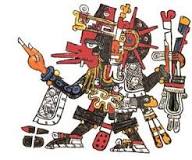 (feathered serpent depicted here), was the principal god of the Aztecs.
 “Church” is not a building of any sort; it isn’t an ecclesiastical institution; and it is not a business. Having said that, the church meets in buildings, it is known through many identifiable denominations, and good business sense is mandatory. Simply put: the church consists of people – some mature, some not – most of whom abide by a common code of ethics and standard: the Bible.
 body of Christ. And since we proclaim a high code of ethics as found in the Bible, we are expected to adhere to a higher standard, higher code of ethics, and higher morality than the world. The world is not expected to live up to our standard; but when we don’t, the world notices it. Therefore, when any of us violate our code of ethics, we not only let Jesus and the church down, we also let the world down. That’s why they view the Church as no better than they are and we become – you got it – hypocrites!
  Based on the nature of his questions, the person asking them had already concluded that there had been several ice ages and that the earth is becoming a greenhouse. I tried to discuss the topic with him, but having a prejudicial viewpoint, he refused any attempt at open bilateral discussion. Maybe he was hesitant to talk with someone with a scientific background – I don’t know.
 colder; and it takes a few years to freeze large sections of fauna, flora, and the earth. Many smaller animals would freeze rapidly and in the oscillation of the daily temperatures they would thaw and be eaten by predators, or rot. And without thinking it through, many folk infer that the larger animals could also freeze solid at glacial temperatures without decomposition setting in. However, the larger animals would die at a slower rate, and because of the body mass and internal heat they would begin decomposing before they completely froze.
 research about how cold the home freezer should be. (By the way, it should be set between 0o F to +5o F.) In that research we found that in order to freeze a 2 ton elephant and prevent the food in its mouth and stomach from digesting, the beast needs to freeze solid within 30-45 minutes; and to achieve that goal we need a temperature of 150o below zero Fahrenheit. And to freeze a 6-8 ton beast within 30-45 minutes requires a temperature of -250o F (minus 157o C). However, the coldest temperature ever recorded on earth is -128.6o F. That’s -89.2 C. Obviously, the evolutionary or uniformitarian ice age theories are not scientifically adequate to explain what we find in real life. But the Bible gives us hints as to what happened.
 schools – both public and private. I believe we need to study reality more closely and teach our students more objectively.
 others believe that it had a beginning? Why do some folk believe that the entire cosmos was created about 6,000 years ago while others believe it is over 4.54 billion years old? Why do some folk believe it started with “And God said” and others believe it started with a “big bang”?
 nothingness containing no space, no time, no matter, no light, no sound. A story logically begins at the beginning, but this story is about the universe and unfortunately there are no data for the very beginnings – none, zero. When you read or hear anything about the birth of the universe, someone is making it up–we are in the realm of philosophy. Only God knows what happened at the very beginning.”
 6,000 years ago, and if God has been here for AN EXTREMELY LONG FOREVER, did He do absolutely nothing until 6,000 years ago, or was He continuously a creator? The Bible doesn’t say, so we speculate. To clarify: postulating whether He continuously created for millions of years or didn’t create anything until 6,000 years ago is speculation and belief..
 San Diego, favored the steady-state (the universe always existed) hypothesis and admitted that his view supported Hinduism, not Christianity. A steady-state universe, were it true, would support the endless-life-cycle belief taught by Hinduism; which means the steady-state hypothesis is a religious belief. Therefore, also a matter of faith.
 proven historical track-record. Of course, some folk claim the Bible is very detailed and specific about creation while others say it is not. But rather than fighting about our interpretations or understandings, we should be encouraging each other to actively study the Bible.
 answers to their questions, and a foundation on to which base the answers. Although each Q & A could have easily taken up 5-6 pages, and others need a book to adequately address, I’ve endeavored to keep my narrative for each question short. If anyone wants more information for any question, please contact me.
 Gene Linzey