

In the summer of 2013, Carol and I were in Southern California when I learned that one of my cousin’s sons had died. Attending the graveside funeral, two other cousins and I began talking about family memories. The statement that caught my attention was, “When a person dies, all his or her memories are sealed in the coffin, never to be recovered – unless they were documented.”
Unless they were documented kept ringing through the corridors of my mind.
Documented how? When? In what circumstances?
We all know that nothing happens unless it is planned. Even accidents are planned out of ignorance by those who refuse to take safety precautions.
My cousins and I began talking about generating a family writing project, and the outcome could be a book of family memories. It could generate family cohesiveness. (We needed it!) We especially wanted to get memories from our surviving parents written down prior to their departure from this life. The farther back we can go, the stronger our family foundation will be. Our grandparents were already gone and our fathers (who were brothers) were gone. But our mothers were still here, and perhaps we could get the writing ball rolling. They could fill in memories of their husbands – our fathers.
Well, that didn’t happen. The only memories from our parents that we were able to compile was from their private writings in letters and diaries. And that wasn’t much.
When one of the cousins asked why we need to get memories written and what difference it would make, all I could say was, “For you, it wouldn’t make much difference because you are not interested in your past. And it infers that you aren’t interested in teaching your kids about their past. But enquiring minds want to know.” He openly agreed that it doesn’t matter to him, but that didn’t hurt our relationship. We still enjoy great camaraderie.
But I’ll answer that question for you folks.
Family history is important. Among other things, it helps to establish personal identity, self-esteem, and helps us understand the direction we’ve chosen to travel in life. Several examples follow.


Both of my parents were musicians, they came from a line of musicians, and my nine siblings and I are musicians. Dad was a chaplain, Mom’s side of the family includes a line of ministers of the Gospel, and nine of us siblings have been in or are in Christian ministry.
Dad was not only humorous, but quite pragmatic. What about the ten of us? All of us are pragmatists, and all but one has a well-developed sense of humor. Yes, we laugh a lot sometimes in the wrong place and at the wrong time. Let me add here, no matter how funny the story might be, try NOT to laugh at a funeral. It is the wrong place and the wrong time.
Everyone has quirks, traits, or habits that are peculiar to them. Why do we have them? Where did we get them? Does it matter?
It does matter for several reasons.
If we are being harassed or pestered about a personality trait, we might want to change. Understanding our past can assist us in making the change. But understanding our past can also strengthen our backbone if we don’t want to change. We just might like who we are!
I’ve been told often, “You’re just like your dad!” At first, I didn’t know how to take that hit. But when I stopped to analyze the situation, I was happy. I like my dad! So I was happy to be “just like him.”
One time I introduced Dad to some of my colleagues in New Mexico. After a few minutes of interaction, one of my friends said, “Chaplain Linzey, you’re just like your son.” Dad and I looked at each other, looked back at my friend, and broke out laughing. When the one who made the comment realized what he just said, he broke out into a big laugh, too.
Proverbs 17:22 informs us that a cheerful disposition (“a merry heart”) is good medicine to the body, but discouragement causes our health to deteriorate (“dries up the bones”).
So, what does that have to do with writing family memories?
Thanks for getting me back on track.
I have nine siblings. Two are in heaven, and two don’t have time to write. But six of us decided to get this family memory project going. I’ll tell you more next week.

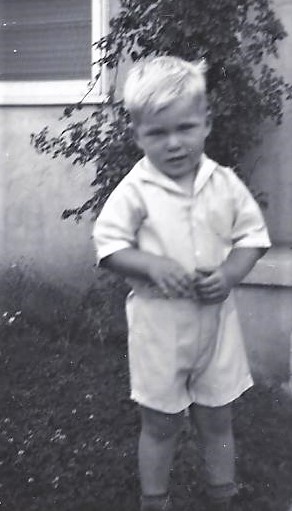
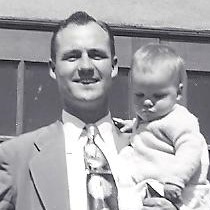

 and step-dad in Pagosa Springs, Colorado where they owned a cabin on Pagosa Lake. Charles and I had become life-long friends and we enjoy fishing together. (My mother-in-law has since graduated to heaven, and the cabin was sold.)
 his limit every time. He said, “I know what’s out here, and the way your pole bent over, that was a 20-incher. Reel in your line.” When I found the end of the line, the lure was gone.
 We proceeded to fish for an hour, and each of us and several friends caught our limit of three Rainbow trout. The two 17-inchers I caught put up a fuss and took a minute or two to bring in. And yes, the drag function worked properly. But an 18-incher put up a fight! Taking almost three minutes to reel it in, I was grateful that Frank set the tension for me. Back at the cabin, Carol cooked the big one like a salmon, and it was GOOD! The left-overs were made into trout-fish sandwiches which tasted much better than tuna-fish.
 name the animals, prepare his own meals, etc. – all the while with no other human to talk to. Being alone is no fun, and trying to talk to critters goes only so far.
 excellent pointers on how to develop wholesome, proper communications; and, therefore, how to develop a wholesome marriage. Louis and Leah understood the art of marriage, and were married more than 61 years before he passed away.
 relationship; 2) Work at promoting unity, and don’t do anything that hinders unity; 3) Control the tongue, words can heal or kill a marriage; 4) Honor your agreements, unity is based on trust; 5) Be kind to each other, little kindness throughout the day are worth more than one big one at the end of the day; 6) Take time to stop and think about each other’s positive qualities, strengths, and talents, and let your spouse know that you appreciate him or her; and 7) Spend time together. These seven things are more than mere suggestions for a strong marriage. They are mandatory as we consider the art of marriage. And tell your spouse several times a day that you love him or her.
 every week that I was in town. I drank his coffee, we shared ideas – sometimes repeatedly – and we enjoyed each other’s company. Every now-and-then, we touched on a political topic about which we didn’t agree. What did we do?
 In 2005 I attended a conference presented by a business called Character First®. Based in Oklahoma City, they taught that behavior does not permanently change unless the character changes. They are correct. (Character First® has since been bought by Strata Leadership®.)
 drivers to be away from their families overnight, and they want their product to be fresh. So their restaurants are located within a 1-day round-trip distance from where the milk, ice cream, bread, etc. are produced and packaged. When more distant towns wanted a Braum’s restaurant, the company faced a conflict of interest. What did they do?
 My 97-year-old mother was in and out of hospitals, and getting ready to meet the Lord face-to-face. The family was getting ready for another big change; and as is often the case, the family wasn’t able to address every detail. We needed assistance. (The picture of mother and me was taken when she was 95.)
 Wm. G. Justice titled “Training Guide for Visiting the Sick.” Mr. Justice, referring to all the elderly, whether sick or not, said, “The purpose is to oversee the care of those who are hospitalized, sick, shut in, or are in some way in need of care; and to assure they have their needs met to the best of our ability.”
 1 Thessalonians 4:14 says, “For since we believe that Jesus died and was raised to life again, we also believe that when Jesus comes, God will bring back with Jesus all the Christians who have died” (NLT).
 “Okay – we’ve taken Sharon and Jim to the airport. What would you like to do next?” (The year was 2016.)
 spotted a place called Beach Terrace Inn. “I wonder how much they charge for a night’s stay.” Translated into a man’s language, it actually means, “Find out how much it costs to stay here.” Yes, Ma’am.
 flashy.” Carol and I found that to be true.
 equal to half his worth, and gave it to rebellious George. Jake, the older son, was ecstatic! Now everything the old man owned was his, and he would do everything he could to increase the value of the business; for he was now heir to it all!
 Fourteen hours and two states later, the bus pulled into town around noon. Wondering how he would get from the station to the ranch, the boy looked out the window – and saw his dad.
  had a barbeque shin-dig ready; and a huge cake had been prepared that was decorated with “Welcome Home, George!”
 Dad responded, “Jake, everything I have will be yours. But George asked to be forgiven, and it is only right that we accept your brother into our home. After all, he is family.”
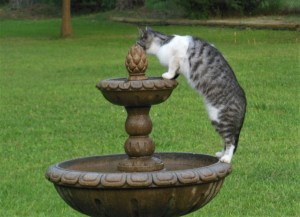 Cats are my favorite land animal, and I talk with them. No, I am not weird. I have learned to meow like kittens and cats. I can snarl a little like them too. Let me tell you about a special cat.
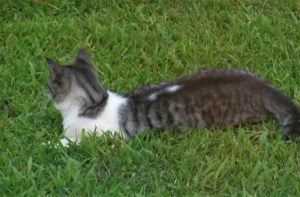 night visit.
 Don’t do it on the floor. Okay?” Tiger agreed with a soft, “Meow.”
 Tiger with me as long as I needed him because Tiger was God’s gift of healing to my hurting soul. But, also in His love for me, God allowed Tiger to leave when I was emotionally well enough and mature enough to re-attach with my siblings and parents. God loves us and brings into our lives special gifts at crucial times.
 Gene Linzey