What Song Are You Singing?

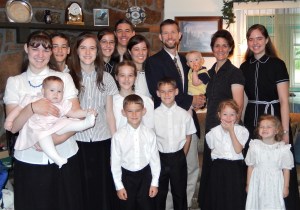
Five years ago, Carol and I attended a church meeting where Ron and Tanya (our son and his wife) and their singing family were ministering. In his presentation, Ron discussed how music is produced. Ron started with, “What song are you singing?” I enjoyed that message.
What is the basic ingredient of music? No, that’s the wrong question. What makes music? That’s closer, but still not it. What produces music? That’s it! What produces the sound?

Ron shared with the congregation that music and singing – ALL music and singing – is generated by friction and/or vibration. Another view is: all friction and vibration produce some kind of “music”.

The bow across the violin (string instruments) generates friction. The air through the mouth-piece of the clarinet (reed instruments), flutes and piccolos, and across the lips of trumpet players (brass instruments) generates vibrations. The piano produces music by the hammers impacting the strings, which generates vibration. The drums need no explanation. Then, of course, the various instruments transform the vibration or friction into musical notes.

Oh, I missed something. Talking is produced when the vocal muscles come close together, and the air passing over them sets up a vibration. And singing is merely talking according to musical note patterns and holding the sound according to specific timing. As we constrict the vocal chords, the sound or tune goes up. As we relax the muscles, the sound or tune goes down. That principle holds true with tightening or relaxing the strings on stringed instruments; also when shortening or lengthening the airway (using valves) on brass instruments. Well, some trombones have valves where most have slides

As the sound is produced, harmonics, partials, fundamentals, frequencies, chords, waves, overtones, and much more come into play. There are twenty-one major “keys” such as the keys of “C” and “G sharp”.
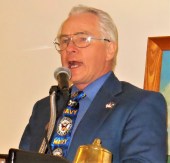
I just spoke the sentence “All sound is musical in nature” near the piano. I then played the keys to match my words “All sound.” The notes were “D” for “All” and “D flat” dropping to “G” for “sound.” When I spoke, various strings in the piano began vibrating – this deals with harmonics. Again, singing is talking according to note patterns. .

So, as you talk, what “song” are you singing? What words are you putting in your song?

Are you a griper? Do you gossip? Are you a whiner or a complainer? Do you “thunder” at people, condemn others, or put them down? Are you often depressed or angry? Are you often pessimistic or overly critical of others?

Or are you normally joyful? Do you bless others by both your words and by your prevailing attitude? Do you defend people? Are you an encourager? Do you help people by “carrying” their emotional load?

Friend, what song are you singing?

Gripers, gossipers, condemners are like musical groups (vocal and instrumental) who are out of tune, and where some members are on the wrong page – or even playing a different song. Some folk are like a raucus rock group where lyrics and quality of music make no difference; rather it is merely their presence and volume that are important. As these people dwell in the negative, irritating side of life, they would be surprised at the friction, harmonics, and overtones they produce. That kind of “music” or attitude greatly reduces the quality of life for both speaker and hearer.

Oh! But joyful people – those who encourage and bless others, those who have Godly content in their words and attitudes – are like a magnificent concert orchestra and choir. Their harmonics are a gift from the Lord.

While the Mormons and I may have theological differences, the Mormon Tabernacle Choir is one of the best choirs I’ve ever heard. And I enjoy hearing the United States Marine Band play any of John Philip Souza’s marches. But I suppose my greatest musical appreciation is directed to Handel’s “Messiah”. That oratorio, properly sung and played causes my spirit to soar, because from start to finish it honors my Savior, the Lord Jesus Christ.

Even as of this writing, I have excruciating back pain, but my song today is: “I sing because I’m happy, I sing because I’m free; For His eye is on the sparrow, and I know He watches me.”

Friend, by your life, words, actions, and attitude, what song are you singing? What message do you present to the world – just by “being you”?
Same Ground – Different Results

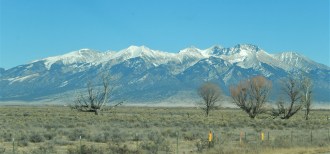
Carol and I love nature. We both were raised “in-town”, but we thoroughly enjoy driving along the coastlines, through forests, prairies, mountains, and even deserts. There is beauty in all of nature even though some people cannot see it.

The first time Carol’s mother drove from Washington State to New Mexico, she thought New Mexico was a wasted desert. However, after living there for several years, she learned to enjoy its beauty and didn’t want to leave. New Mexico is called “The Land of Enchantment” for good reason.

But we are also farmers at heart. We enjoy planting seeds, flowers, bushes, and trees and watching them grow. In 1974 we planted a Banana-Apple tree sapling in our front yard in Los Alamos, NM. We moved to Tulsa in 1978 so we didn’t have the privilege of eating its fruit at the 5-year mark. But in 1988 we moved back to Los Alamos (not to the same house) and visited the old place. Believe-it-or-not, the tree had grown so large that it nearly overshadowed the front yard! We had done a good job in preparing the ground prior to planting it, and the underlying soil was good for the tree. The owners gladly allowed us to take as many apples as we wanted, and we belatedly enjoyed the fruit of our labors. The apples were delicious in pies, strudel, crisp – and eating raw. They were good!

Even though I understand nature and farming, something always surprises me. I plant anything that crosses my fingertips in the same dirt. I give them all the same water. I treat them all with the same care. But different things sprout out of that same dirt. Although the same environment may be used, onions, potatoes, corn, yams, cucumbers, zucchini, beets, carrots and the rest are programmed to grow at different rates, to different sizes, to look differently, and to taste differently. The same ground produces different results.
The environment is basically the same – dirt, water, air, cultivation, weeding, debugging, etc. – but with minor variations, the results can be remarkable! We fertilize the ground and adjust the nutrients and minerals to match the needs of the seeds or bulbs, and that produces a difference in the quality of the product. If I kept everything exactly the same, something would still grow; but seeds respond differently to variations in the environment.

Do you know that we plant seeds into our own minds? Day after day we watch or listen to television, radio, the theater, DVDs, CDs, etc. We listen to all kinds of music and bombard our bodies with various levels of noise. We read books, magazines, newspapers, advertisements. We listen to audio books, gossip, slander, political debates, classroom teaching, sermons. What goes into the eyes and ears enters our minds and becomes part of us. Stuff is being planted into the garden of our minds day after day, and what we fertilize grows the best. The method of “fertilizing” what is in our mind is called “meditation”; and a simple definition of meditation is: “spending time thinking about what we have seen and heard.”

Psalm 19:14 says, ‘Let the words of my mouth and the meditation [thoughts] of my heart [mind] be acceptable to you, O Lord, my rock and my redeemer.”

You should ask yourself: Is God pleased with my thoughts?

We also “plant” seeds into other people’s lives. What we say to others – whether good or bad – produces a harvest. We either help others live a higher quality, more productive life, or we stunt their growth to where they don’t live up to their God-given potential. We must assure that we make positive comments for people to meditate on.

However, don’t confuse “negative comments” with “corrective statements.” Life doesn’t consist of a “Pollyanna World” or a 100% positive environment; therefore, we should learn to make necessary corrective statements in the proper attitude. Also, we should learn to make corrective adjustments in our own attitude. This is a lifetime process and I am still working on it.

I hope you understand that our minds are fertile ground, and what we see and hear eventually produces a harvest: some good fruit and some bad. Our character may be blossoming and maturing to where we can bless God and man, or it may be stunted as a sterile tree planted in contaminated ground. Sometimes a sterile tree looks wonderful until “harvest time”. That’s when the real nature of the tree is revealed. (Read Matthew 13:25-30 about the wheat and tares.)

Friend, what’s growing in the garden of your mind? What do you meditate on?

Enjoying Time Together

It’s near the turn of the year again. Wow! Time sure seems to fly by. As Carol and I were playing Scrabble last night … before I go any further, do any of you play Scrabble? How about Yahtzee, Monopoly, Life, Pictionary, Dominoes, or Balderdash? Do any of you put puzzles together? Do you eat together as a family, or as a married couple? Or is it “each person is on his own”? Are you obsessed with getting ahead in life, fearful about the direction of the stock market, or worried about what’s going to happen in the Middle-east?

I suppose my basic question is: do you, as a family, spend time together anymore, or are you individually cocooned in your own little world, worried about life, or mesmerized with your video games, tweeting, texting, or whatever else is available these days?

Let me ask another question: if you died tonight, what would you be remembered for? Stop a minute and think about it. …….. What did you come up with? Be honest with yourself: no one is listening to your thoughts except God, but you can’t fool Him anyway. What would be your legacy?

I know men and women who left much monetary gain to their families, but that didn’t earn them any greater respect or love. I know some who were famous in the scientific and/or educational fields, but the families were distant from them. I know some who were ministers of the Gospel of Jesus Christ, but they, also, were rejected by their families.

WHY??

One reason might be hinted at by a question a reporter asked Billy Graham years ago: “Mr. Graham, if you had your life to do over, would you change anything?”

“Yes,” replied Billy Graham, “I would probably spend less time on the road and more time with my family.”

“Why is that, sir?”

Billy’s response was misunderstood by some, but hit home to my heart. He said, “The ministry will always be there, but my family won’t be.”

Did you hear it? That comes very close to what Jesus said. It was so important that it is recorded in Matthew 26:11, Mark 14:7, and John 12:8. When Mary poured expensive perfume on Jesus’ feet, at least one of the disciples was upset at her for wasting it. Judas said that it could have been sold and the money given to the poor. But Jesus said, “You will always have the poor among you, but I will not be here with you much longer.” Jesus was not denigrating true ministry, but He did put an emphasis on Christ-honoring relationships.

So, back to my question: what will you be remembered for? Five months after your funeral, after the will or trust has been settled, what will the family members say about you?

This is why I’ve invested much time playing with our kids as they were growing up, and why my Precious Carol and I play Scrabble and other games with each other now in our upper years. We are still investing into each other’s lives.

Yes, I preach or teach as the doors open, and as you know by reading this blog, I write a lot. But life should not consist of merely learning, earning, and accumulating stuff. The most important thing is growing in our relationship with God, then manifesting our faith in Jesus Christ by how we live with and treat others.

Our children are all adults now, and we have 36 grandkids – at last count. But I still greatly enjoy spending time with and investing my life into my Precious Carol. And she invests her life into me.

Now, where was I? Oh yes. We were playing Scrabble.

Although we are competitive, we have fun while using the game for learning. Therefore, we use the dictionary to look up words. At times we show each other where the other might get more points. You see, we figure that no matter who wins on a particular evening, we both win because we love each other and enjoy spending time with each other. And using the dictionary is increasing our vocabulary which helps us as we interact with society. Using the dictionary also helps us as we grow older.

As of this writing, Carol and I are tied at 401 games. That means we’ve played 802 games, and that’s only since I’ve been keeping record.

This coming year, learn to enjoy spending time with your family – you don’t know when your time on earth will come to an end. When you die, will you wake up in Jesus home … or somewhere else? Think about it.

Let’s honor Jesus in all that we do because we want to spend eternity with Him.

Happy New Year, friends.

Our Obsession With Death

Intrigue. Plotting. Guns. Explosions. Executions. Blood. Murder. Carnage. Terror. Running. Fear. Screams. Panic. Revenge. Retaliation, etc., etc. … will it ever end?

I am talking about America’s infatuation with and obsession with death. All this of the world is obsessed with it, too. All this includes television, theaters, video games, and eastern religions. There are two groups of people involved here.

The first group consists of everyone who like to watch it happen. They talk about it, meditate on it, are thrilled by it, and pay billions of dollars to support it. And many people are paid millions to portray it.

Here are the names of several rock bands: Death, Black Sabbath, Slayer, Megadeth, Anthrax, Avenged Sevenfold, Guns N’ Roses, As I Lay Dying, Fear Factory, Demon Hunter, Grave Digger, Grim Reaper, Grateful Dead, and many more!

Do you know what group was playing when the terrorists began murdering in the Paris Le Bataclan Theater? Eagles of Death Metal.

Other ways we manifest our obsession with death is by what we watch in theaters. Several movies are: Spectre, The Last Witch Hunter, Sinister, The Exorcist, The Babadook, The Texas Chain Saw Massacre, Night of the Living Dead, Dawn of the Dead, and The Evil Dead. I don’t have enough time or space to name them all. 

The theater in Aurora, Colorado was showing the film The Dark Knight Rises. Mass-murderer James Holmes entered the theater dressed like one of the evil characters and began killing. He even cunningly rigged his apartment with explosives to kill any policeman or detective who might enter. (The detectives out-witted Holmes there.)

There are hundreds of murderous and sex-crazed television series and dramas. Quantico, Zombie, Once Upon a Time, Walking Dead, Boardwalk Vampire, Six Feet Under, Breaking Bad, House of Cards, Death Note, Castle, Scandal, You’re the Worst, Penny Dreadful, and American Horror Story are but a few.

Do you see what I mean when I say we have an obsession with death? And don’t ever again believe that watching videos or movies or playing deadly video games don’t affect people! One person who was arrested for murder was asked why he butchered the 17-year-old girl. His response: “I’ve seen it so many times in theaters and killed so many times in video games, I wanted to see what it felt like to actually do it.”

We legislate God and morality out of our society, legislate evil and immorality into our society, then we wonder why all this hell is breaking out. Incredible!

Have you ever wondered why sex crimes are at an all-time high? People – both genders – see nudity on television, in theaters, and in advertisements hour after hour, day after day. When actors remove their clothing, people think, “They are actors and it is okay to watch it.” We have become a sex-crazed people. That’s because society lost its sensitivity to inhibitions that God placed in us at creation. Therefore, as people feel free to murder, people also feel free to commit sexual crimes. And it all falls under the banner of “rebellion against God.”

The second group who are obsessed with death are those we call “radical jihadists” and who are attempting to create a world-wide Caliphate. These people scorn anyone who doesn’t believe the same way they do – even those of their own religion. But they view their murderous activities in a different light than we do: they do it in honor of their god, and they don’t intend to quit! They are convinced that fomenting a world-wide war will hasten the return of their long-awaited spiritual leader. And we westerners believe the lie that jihad is not a religious war? Again, incredible.

But even Christians in the so-called “civilized countries” have a problem. We pay untold millions of dollars to involve ourselves mentally and spiritually in murder, witchcraft, and adultery by watching it – which is sin – but we don’t want to see it happen in real life. This is a world-class double-standard! Stop and think: are you guilty of this double-standard?

If you truly detest what happened in Paris, London, Pensacola, the Middle East, in the Aurora theater, and in many schools, and the hundreds of other places people are murdering people, if you believe that people should not commit sex crimes, then you need to stop watching that stuff! You may not realize it, but watching it contaminates your mind and spirit. Our crime, immorality, and pornography rate prove it.

Why does it happen? When society stops living for and worshiping Almighty God, something must fill the void. And that “something” is some form of evil.

dscn0464In order for society to change for the better, we individually and corporately must change. We must turn away from evil and learn to truly honor Almighty God.

As long as people insist on enjoying evil, evil will prevail. But if you want the world to be a better place to live, you must turn to the Lord Jesus Christ, and make your portion of the world better.


What Do You Own?

Several years ago, Carol and I were visiting my cousin and his wife, Jim and Paula, in California. One morning as we were taking out the trash, I stopped and said, “Jim, my car’s gone.” Jim said, “No; you parked it right over … Oh No! It is gone!”

Now, I wouldn’t blame you if you don’t believe me: but I didn’t get upset. Why? When Carol and I purchased the Envoy, we dedicated it to the Lord. And as we made the payments with the income God helped us earn, we used the car for God’s purposes. To put it bluntly: we didn’t own the car – God did. Nevertheless, we called OnStar.

Within 10 minutes OnStar located the vehicle. Apparently, someone claimed that we were illegally parked (we were not) and the car was towed away. Cousin Jim drove us to where the car was stored and we retrieved it. I’m not the most mature Christian on earth, but I’m wondering: did the Lord arrange this to test the depth of my relationship with and trust in Him? I don’t know. But let’s look into “ownership.”

The verb to own: to possess; keep control over; maintain mastery over something.

So, what do you consider to be your property? Clothing? Car? truck? Horses and cattle? Your job? House and land? Do you really own these things? You do if no one could ever take them from you. However, our government thinks they own everything. Quit paying taxes and some government official will assist you with their understanding. And don’t forget about thieves, landslides, earthquakes, and fires.

So who REALLY owns it all? Almighty God does. God, as the Creator, owns people, animals, and the land. Psalms 50:7-11 – “God says, ‘My people, listen to me…I do not need bulls from your stalls or goats from your pens, because every animal of the forest is already mine. The cattle on a thousand hills are mine. I know every bird on the mountains, and every living thing in the fields is mine.’”

Leviticus 25:23 – “The land really belongs to me…. You are only foreigners and travelers living for a while on my land.”

Friends, God owns everything. But He wants us to learn to take care of His stuff, so he has given us the privilege of being His stewards, managers, or guardians.

Corrie ten Boom told a pastor some years ago: “Pastor, let go of all the things you think you own. Otherwise, it will hurt when God pries them out of your hands.”

How about skills and abilities? First Corinthians 12 informs us that abilities and gifts are given by God. So God retains ownership of the wisdom, skills, and gifts, while loaning them to us.

So, is there anything in the world that we can claim as our own? Yes: we are supposed to “own” (possess, control) our emotions. Luke 21:19 says: “In your patience, possess your souls.” That means, “Endure the situation. Gain mastery or control over your mind and emotions. Don’t give in to the problems, and don’t be overcome by adverse circumstances.” THIS is where our ownership is revealed.

No one can take from us what we truly own! And what we own in this life are our thoughts, will, emotions, and our responses to what happens in life. No one can make us do what we don’t want to do. However, we can cave in to pressure, but that’s still our decision.

There is nothing wrong with having money and things—as long as we understand that we don’t own them. We are the stewards of what God loans us. And believe me: understanding that we are only stewards of God’s stuff greatly reduces the pressures, frustrations, and worries that ownership can place on us. Why? Because God is in charge, and we merely follow His directions.

God didn’t create robots, so He doesn’t control us. But with God’s help, we can own, possess, or control our emotions, desires, and passions; and while using God’s things for their intended purpose, we leave the ownership to God.

So what do you own? To repeat: you own your thoughts, will, emotions, and personal responses. And that sets the stage for owning a clear conscience with joy, peace, and contentment.

Peace in the Storm

Our daughter, Rebecca, called and said, “You need to hear this! You will laugh your socks off!” And she proceeded to relate the following scenario.

Adjacent to their driveway is a chain-link fence covered with vines. Birds annually build nests in the intertwining tendrils because they know they are safe in the leafy maze. Our granddaughters play all around the yard, including near the vines, but the birds know the girls are not a threat to the eggs and fledglings.
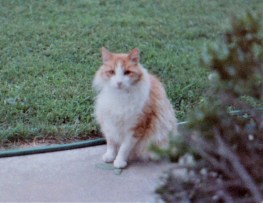
But there are historic menaces that lurk nearby – cats! So the parent birds are always diligently on the lookout for approaching prowlers to prevent them from invading the nest and having breakfast. Rebecca’s cat is named Lilly.

Lilly had eaten her Meow Mix breakfast, walked around the house, and sat down on the driveway near the fence. It was a warm sunny day with a light breeze, and Lilly was apparently enjoying life.

Suddenly, the parent bird came swooping out of the sky and feinted an attack on the seeming intruder! Lilly just sat there, didn’t budge or even flinch at the furious frenzied flyer, but continued gazing across the lawn.

After the scare tactics of pretending to dive bomb the cat didn’t produce the desired result, the bird flew up five or six feet then actually dive-bombed Lilly! After enduring the physical assaults several times, Lilly glanced over her shoulder, stood up and sauntered a few steps, then sat back down and steadfastly resumed her peaceful outlook on life. Lilly seemed to know that the three-ounce aviator wasn’t a real problem. I suppose the bird finally also realized that Lilly wasn’t a problem, and flew away.

After a minute or so when the cat stood up and ambled away, Rebecca said, “I have to call dad!” We shared a hearty laugh.

I told her that reminds me of Taffy – my 18-pound Maine Coon cat years ago – and the golden retrievers next door when we lived in New Mexico. Although separated by a five-foot chain-link fence, the retrievers wanted to kill Taffy and always “barked their heads off” every time they saw him.

One day I could hardly believe my eyes. I was harvesting beets from the garden when the pooches began barking – again. The fence began rattling and the barking became more agitated, so I looked up.

Taffy was walking directly toward them with eyes locked onto theirs. The retrievers were trying to push through the fence; the hair on their neck and back was standing straight up as they made all the noise their vocal chords could muster!

In the midst of the pandemonium, Taff walked directly toward the would-be killers to within two feet of the fence and made the customary 3-circle rotation. Amidst the cacophony, he then proceeded to lie down – and with head resting on paw, resumed looking directly at the barking dogs. The cat then very slowly opened his mouth and released one long disdaining HISS!

The dogs lost their minds! But Taff’s ears weren’t even laid back, for he was at peace in the midst of the storm.

Why didn’t Taffy and Lilly run for protection? How did Taff endure severe mental and audible abuse, and how did Lilly endure mental and physical abuse?

They both knew they were safe. That got me to thinking about the storms humans face.

A debilitating sickness and a diagnosis of a terminal disease are major storms. Loss of a job, a divorce, death of a close friend or family member, and personal rejection are storms.

Note: in order to keep our storms in perspective, remember that every day people around the world are being murdered because of their faith.

So, what storm are you facing right now?

Yes, these storms are real for the person in midst of them, but we don’t have to “lose our minds” or lose emotional stability. We also need to remember that we cannot face them alone. We need help. Friends and family are the primary human support system, but a deep, enduring faith in Jesus Christ and dependence on Him is our main support and protection.

We should not fear death, for it is the door to heaven for a Christian. And in the midst of the storm remember what Hebrews 13:5b says, “I [Jesus] will never leave you nor forsake you.” We need to trust Him. No matter the storm you are facing, you will not be overcome if you lock your eyes – your faith – onto Jesus Christ.

Why Do You Argue?

Several years ago, a man walked up to me in front of a supermarket and asked, “Pastor Linzey, how many animals were on the Mayflower?”

I had no idea how many animals were on the hundred-foot long Mayflower, with one hundred and two passengers and a twenty-five to thirty-man crew.

Thinking it was a trick question, I said, “I don’t know, maybe a few dogs and….”

But before I could continue, he verbally exploded: “You are just as ignorant as the rest of those Christians – oh, I mean on Noah’s Ark. How many animals were on the ark?”

His attempt to embarrass me backfired. Maybe I should have ignored him and walked away. But I responded with, “The Bible doesn’t say how many animals were on the ark, but….”

Again, he cut me off. Hoping to malign my integrity, the young man blurted out, “I knew it! You are as ignorant as everyone else who says they are Christians! I have my doctorate and you Christians are ignorant!” He then victoriously stomped away. This young man was not inquiring for knowledge, insight, or help in any manner. Rather, he had an agenda to boost his own ego by publicly disparaging me in an argumentative manner.

I understood that young man’s problem, for in my ignorant youth, I enjoyed the same sport. I boosted my own ego by arguing with others in order to “prove” them wrong. It didn’t matter the subject – I knew how to wield words like swords, and I enjoyed verbal sparring. But as I grew older, and hopefully more mature, I learned the difference between argumentation and persuasion. I also realized how arrogant and foolish it is to argue with and degrade others. That’s when I asked the Lord to forgive me. I forgave that young man and prayed for him.

The immature form of arguing I am talking about is: to quarrel, squabble, bicker dispute, etc.; to exchange or express diverging or opposite views in a contrary, arrogant, heated, or angry manner. You win only by degrading your opponent.

But there’s a better way to communicate an opposing viewpoint: persuasion. That is: inducement, convincing, encouragement; causing people to want to believe something without offending them.

Words are powerful force: everybody uses them, but not always properly, constructively, and effectively. Another problem arises because many people don’t realize their “audience” has tuned them out. There is a saying in the military: “The myth of communication is that it has taken place.”

When is the last time you thought you clearly understood what was said, but learned later that you missed it? The problem is two-sided: the speaker and the hearer. Sometimes what I thought I said to Carol was not what I verbalized – my error. Other times she misunderstood what I did say – her error. Those interactions can generate interesting discussions. Successful communication depends on clear purposes, careful attention to the message, how it is conveyed, and a thorough awareness of the audience.

I’ve had the privilege of learning from people like Zig Ziglar, Stephen Covey, and John Maxwell. They are true leaders who teach us how to see beyond our own short-sightedness.

Covey encourages us to search for a “win-win” solution. By seeking the benefit of others, we mature in our own character. Ziglar teaches that when we enable others to succeed, we also are enabled to “reach the top.” Maxwell teaches that we reach greatness as we endeavor to help others succeed.
Jason Jones, with Strata Leadership, LLC, said, “You don’t have to be a celebrity to be persuasive. People want to be persuaded by, and follow someone who is confident and resolute in their thought, vision, and direction.”

Over the years, I learned that to persuade others – rather than argue with them – we need to keep several things in mind. We need to know what we are talking about, look people in the eyes as we speak, smile, speak clearly and confidently but not forcefully, engage the other person in discussion, purposefully listen when they speak, find things in common to talk about, and use our body language to support what we say. To really understand, we need to “listen” with our eyes as well as with our ears.

One who knows how to persuade others is a powerful person, and Christ-centered persuasive people manifest that power with confidence baptized in true humility.

It Was On Backwards

We lived in the high country of northern New Mexico for many years. At 7,827 feet above sea level, we lived about a half mile higher than Denver. When folks who live near sea level take a trip up there and start chopping wood or do some other vigorous activity, they find out what it means to be out-of-breath. Why is that?

Sea level atmospheric pressure averages around 14.7 pounds per square inch, and water boils at 212 F. But the air pressure at 7,827 feet is around 11.1 psi, and water boils around 198 F. Okay, that’s not a big deal; but when we remember that the oxygen content in the atmosphere averages around 20.9%, a 3.6 psi drop in air pressure effectively reduces the available oxygen by 5%. Therefore, people need to breathe deeper or more often until their bodies acclimate to the altitude.

Conversely, when Carol and I moved to Siloam Springs (altitude of 1,132 feet, air pressure of 14.1 psi, with the boiling point around 210 F), we had a much easier time breathing.

Back to my story.

In New Mexico, we lived in the forest about thirty miles from town. Sometimes we had to remove a tree that had fallen across the road. Many of us carried chain saws in the back of our 4-wheel drive vehicles, so if the tree was too large to move by hand or truck, we would cut the tree to manageable chunks to clear the road.

Tornados, which are common in the flat country, are almost unheard of in the mountains of New Mexico. But one day a small twister touched down and took out about 183 trees that ranged in diameter from twelve inches to three feet (plus tons of saplings and underbrush), and it really cluttered up the road.

Seven or eight of us gathered around the mangled mess and got out our trusty chain saws. I was real proud of my saw. Our kids gave me a Sears-Best with a 20-inch bar, and I could hardly wait to show my friends what I could do with it.

I put gas and oil in it, checked the tension of the chain, put on my safety goggles and hearing protection, and pulled the cord.

RRRRRRRRRRRR!!!!!! It started up like it knew what it was doing.

I eagerly stepped up to the nearest tree lying across the road and increased the power. RRRRRRRRRRRR!!!!!!! I was excited and ready to throw chips and sawdust all over the road. With the saw revved at full speed, I attacked the tree. But nothing happened.

I was perplexed because my prized saw didn’t cut anything. I tried it again with the same results: nothing. No one was watching, for they were busy clearing their own portion of the road, so I shut the saw down to analyze the problem.

Have you ever felt an agonizing and humiliating embarrassment flood your soul? I did right then. Again, I looked around to see who was watching. Everyone else was busy working, and I was glad.

I had the appropriate tool, gas was in the tank, and the engine ran smoothly. But I had the chain on backwards!

Completely aggravated at myself for my ignorance, I quietly put the saw back in my pickup and did what any hard-working “wanna-be mountain-man” would do: I helped move the logs the other guys were cutting.

How many times have you discovered that a good plan wouldn’t work simply because you did something backwards? Many Christians I know complain about their lack of finances, but they squander their money at the casinos. Other folks make disastrous or poor decisions because they didn’t pray about them or seek counsel. These folks aren’t thinking properly.

But do you realize that God never gets things backwards? His plans are perfectly laid out. When something goes awry, it is us – you and me – who mess up. Proverbs 3:5-6 exhorts us: “Trust in the Lord with all your heart; do not depend on your own understanding. Seek God’s will in all you do, and he will direct your paths.” Proverbs 4:7(a) says, “Getting wisdom is the most important thing you can do.” And wisdom comes from God.

God’s plans are perfect. Listen to Him; trust and obey Him. God is omniscient and He’ll never lead you astray.

When I returned home, I reinstalled the chain. A month later, I did successfully clear the road of a fallen tree. And if I ever get tempted to look down on someone who made a mistake, God reminds me of when I had the chain on backwards.

Contagious Thinking

The flu is contagious. The measles, mumps, and smallpox are contagious. A large number of diseases are contagious and people are scared. Many are afraid of going shopping, going to the dentist, even afraid of going to the hospital because – well, let’s face it: that’s where folk with contagious diseases go.

Some folk are afraid of having their children vaccinated, and others are afraid of NOT having them vaccinated – both for very good reasons. And we find dispensers of hand-wipes almost everywhere to help stop the spread of the invisible, evil horde.

We go to great lengths to warn people of the latest epidemic. We talk about it on television, radio, and on all the social media. We even warn people about what MIGHT be coming around the bend, even though sometimes it doesn’t happen.

That reminds me of the counselor who told his worried patient, “90% of all the things you worry about never happen.” To which the patient replied, “Good! Now, what can I do to eliminate the other 10%?”

We need to be alert to all kinds of dangers that are lurking out there, and we need to help others because we are our brother’s keeper. But viruses and bugs are not the only disease we catch out in the public. Often the more pervasive problem is our attitudes, and they are easier to catch than the flu.

Attitudes and emotions are contagious.

I remember being in a planning meeting at a science lab, and we had a difficult obstacle to overcome. We were in a deep discussion on how to solve the problem, but the key individual, Matt, was missing due to a scheduling conflict. Each time an idea was presented, one dour experienced member of the team explained why it wouldn’t work. After about forty-five minutes, the entire team was feeling dismal because of the failure syndrome that pervaded the room. The team mindset had been poisoned because it “caught” this man’s negative attitude.

But Matt finally arrived and asked for an update. After he heard each rejected proposal, he laughed and said, “Well, I’m glad I finally got here. You have in your hands the answer to the problem.” He then happily explained how two of the proposals would work. When the dour man spoke up, Matt explained how his rebuttals didn’t apply to this situation.

This man had not been contaminated with the prevailing negative attitude, and that freed his God-given creativity to recognize the value of the ideas that had been presented.

We don’t need to be caught as creatures of our negative culture. Rather, with a positive attitude we should create an atmosphere in which others can be set free to rise to their God-given potential.

A complainer can destroy the company’s vision and torpedo the goal. Negative attitudes can undermine the morale of the team and hide or destroy the available talent and creativity. Negative emotions are destroyers of progress.

But positive attitudes and emotions are just as contagious. We don’t have to be a Pollyanna to cheer up the room, and we don’t have to have an ever-ready smile to make people happy. But we can ask the Lord to help us see past our problems and see things from God’s perspective. We create our immediate environment by what we believe, how we think, and how we act.

We have a choice as to whether we will inflict emotional and spiritual damage, or bring emotional and spiritual healing to others.

What we believe affects how we think. How we think affects how we act. How we act affects what we accomplish. It also affects how others around us think.

I believe God wants us to represent Him as much as we know how. Some years ago, my friend, Terry Langham, and I were operations officers in a scientific laboratory. The scientists and workers there thought the atmosphere was “all business.” But it felt to us somewhat gloomy. After praying about it, but without telling anyone else, we decided to change our culture.

Our phone calls and e-mails started with “Good morning.” In the calls and e-mails, we often asked what we could do for them. We stopped by people’s offices periodically to assure that we were effectively communicating with them.

After several years, the division leader told us, “You’ve changed our atmosphere. The entire division is a kinder and more cheerful place to work. Thank you.”

Our thinking and attitudes are definitely contagious. How are you affecting your community?

I Can’t Get Lost

1951 Del Mar FairWhen I was five years old, my parents took my four sisters and me to the San Diego County Fair in Del Mar, California. My paternal grandparents went with us, so Dad was not paying as close attention to me as he normally did.

We entered the east gate and the first exhibit we encountered was the reptile building. Snakes, especially big ones like the boa constrictor and anaconda, had my attention. Boas and anacondas are non-poisonous constrictors and kill their prey by squeezing them. Green anacondas grow to about 30 feet, weigh up to 550 pounds, and live about 10 years; while boas can grow to 14 feet long, weigh up to 100 pounds, and live up to 30 years. Female Boas can give birth to litters of up to 60 live babies that are two feet long.

I was spell-bound by the size of these critters and was fascinated by the way they moved, so I didn’t notice when the family walked away. Dad probably called my name and expected me to follow, but I heard nothing because of the high volume of thoughts racing around the corridors of my little mind.

At one point, a sheriff walked up to me and asked, “Son, are you lost?” Startled, I said, “I’m not lost because I know where daddy’s car is.” Because of the potential for getting lost in a crowd, dad ALWAYS made sure we knew where the car was.

When the sheriff asked me where my parents were, I looked around, and not seeing them I said, “I guess my mommy and daddy are lost.” Chuckling at the rationale of this five-year-old, the sheriff took my hand and said, “Well, let’s go and find them.”

We hadn’t walked far when I saw dad walking quickly toward us. I said, “That’s my daddy!” When the sheriff asked, “What’s his name?” I said, “Daddy.”

“Well”, he said, chuckling again, “I guess your daddy’s not lost anymore.” After explaining the situation to dad, he suggested to him “go light on the boy” and not punish me. But he also advised him to keep a tighter rein on me.

This concept of not being lost has followed me through life. It doesn’t matter where I am, I’m never lost because I always have a fixed point of reference. Whether it was daddy’s car as a child or my home as an adult, I always have a “home base.”

Oh, I might have an interesting time finding a place where I have never been – Carol calls that getting lost. But for me, “being lost” is not knowing how to get back to the house. But I don’t get lost because even without a GPS unit, I always know how to get back home and that brings comfort to my soul. I have a deep-seated security knowing where home is and how to get there.

Carol seldom drives on our trips because I enjoy driving. But one time I needed a break so she drove for several hours. When I woke, she said that she might have made a wrong turn and wanted to know what to do. I waited for a few minutes to see the next highway sign. I knew we were in Illinois, so when I saw South I-57 I said “We’re not lost. Keep going until you reach I-70 and turn west. That will take us toward Saint Louis, and that’s the direction for going home.”

When Carol and I decide to stop traveling, we know that someday we will have one last trip to make. That will be an exciting trip because we know our destination – heaven. We know how to get there – having accepted Jesus into our lives, He will take us. We know how long it will take to get there – immediately upon breathing our last here on earth. And we won’t have to pack anything because we will take nothing with us.dscn0464

Oh, at times I forget to follow Jesus closely, such as when I lingered too long at the reptile building at the fair. But when I ask the Lord to forgive me, I quickly get back on track.

Jesus, as presented in the Bible, is my fixed point of reference. Because I’ll serve Him and live for Him to the best of my ability for the rest of my life, I’ll never be lost. Have you made appropriate plans for your last trip?