When Things Go Wrong

Today started out wonderfully. I woke up at the normal time, although my Precious was up two hours previously. Why she wakes up around five in the morning, I don’t know. But she had coffee ready, so her early schedule is fine with me.

We had eggs, sausage, orange juice, and toast—and Coffee with cream and sugar. Of Swedish descent, Carol is a great cook. She would probably be a world-class cook if I could eat pepper, spices, and all the other stuff that comes with being a world-class cook. But she’s fed me well for almost 56 years. I love her and I thank the Lord for her every day.

This morning as we were reading the Bible after breakfast, my ears were pierced by an alarm.

We have a propane stove in the trailer, and we always open a window and turn on the exhaust fan while cooking. That greatly reduces the potential for CO and CO2 in the air and prevents the shrill alarm from offending my ears.

But breakfast was over, what we thought was an emergency was taken care of, window was closed, and the fan was off. Why the alarm?

I jumped up to turn off the sonic ear-buster near the ceiling, but it wouldn’t turn off. That’s when I discovered the propane sniffer at the base of the wall. I forgot that we have two ear-busters in the trailer.

I quickly opened the door, and within five seconds the ear-piercing beeping stopped. What a relief! But now I needed to find the propane leak.

As I began checking all the connections, Carol said, “I found the problem.” and pointed to the stove. “I must have bumped the knob as I was cleaning and turned it on. I turned it off now. But we never tested that sniffer before, and now we know that it works.”

“Yay; it’s always good to know that our equipment works.” We didn’t blame anyone, we were alive, and we finished our Bible-reading.

That was the in the morning. With no internet at our son’s home up in the mountains, I went to the church building in town to do my work.

In the late afternoon as I was heading home, a pickup approached me on the dirt road, raising dust everywhere. “The road’s blocked by a downed pole and power lines. You can’t get home!” the woman hollered as she drove by. I pulled off the road.

Where is the road blocked? How far away? It’s over 45 miles if I try to go around the other way. But would that get me home?

The questions pummeled my mind. As I sat there, four other vehicles ignored the warning and continued on their way. Those same drivers looked aggravated as they came back five minutes later. My silent prayer was, Lord, what should I do?

Then I heard in my mind: Go ahead. It’s okay. So I started the engine and continued. As I reached the area where the car had plowed head-long into the telephone pole, I could see the splintered pole and power-lines strewn across the road.

“Sir, you can’t go any further on this street. The road’s closed until morning, most likely.” the state patrolman said plaintively.

“My friend, I only need to get to Swiss Ranch Road. Is that open?”

His face broke into a smile. “Well now, that’s the only road that’ll be open for a while. The accident happened just past that turn. Have a good evening.” And he waved me through the blockade.

There were no lights in any of the homes or ranches along that road—power was out. So when I reached the house, I prepared for another procedure: power the trailer with the car.

Power had been out for six hours, and the RV battery was nearing depletion, so I backed the car up to the trailer, connected the power cable, and charged the RV battery with my engine for twenty-minutes. I charged it again at 4:30 the next morning, and community power was back on at 5:35 am.

Afterwards, I remember thinking: When things go wrong, it’s good to know my equipment, and know the procedures to keep things running.

And that reminded me of something else: BEFORE things go wrong, we need to be familiar with Holy Scripture, and have an active relationship with the Lord Jesus. Scripture and the Lord give us knowledge and wisdom for life. It was the Lord Who prompted me with, “Go ahead. It’s okay.” Jesus is never wrong.

Simple Writing is Smart Writing

When I was in high school trying to write reports and term papers, I had a difficult time. No matter how hard I tried, I couldn’t get anything to sound right. Asking dad for advice, he looked at my futile attempts and said, “You’re trying to sound smart.”

“Huh?”

“You’re trying to empress your teachers. Quit it, and make it sound like yourself. Do the research, know what you’re writing about, but make it sound like yourself.” He then taught me a lesson I never forgot.

The most widely read magazine at the time, Reader’s Digest, was written on the 8th-grade level. Although enjoyed by professionals and academics, it was read and understood by 10-year-old kids. “You do need to increase your vocabulary. That’s a fact. But don’t try to impress anyone. Just convey information in a meaningful way.” Dad was right, of course.

That made life much easier for me. And as I write this today, I am reminded of a humorous conversation between my brother-in-law, Paul Anderson, and a scientist in Los Alamos, NM. Paul is an expert auto mechanic and understands everyday life quite well.

The scientist drove up to Paul’s shop one day and said, “Mr. Anderson, There seems to be a protrusion in one of my tires that allowed the air to escape.”

Paul responded, “Oh, you mean you got a flat?”

Upon which the man replied, “Yes, I guess you could say that.”

Whether we are writing or speaking, we should use concepts, syllables, and phrases that convey our thoughts in a meaningful manner to the listener and reader. That’s called proper communication.

The rule of thumb is to say things simply. If people have to ask you what you meant, you may have miscommunicated, or you simply need to explain in more detail. When I teach, tell stories, preach, or write, I communicate in such a way that children as well as scientists can understand me.

New writers, as I was back in high school, tend to use long words and complicated writing styles. That works if the writer needs an extra 150 words to fulfill the writing assignment. But if the writer understands what he/she is writing about, fewer words give space for more content. Here’s a case in point.

Back in 2004 as I began writing Bible Question & Answer articles for a New Mexico newspaper, Ralph the editor told me I had a limit of 250 words per article; and 250 words included the question. I asked, “How can I fully answer a Bible question with approximately 225 words?”

Ralph responded, “Anyone who understands what he believes can respond in 225-250 words.”

That was possibly some of the best writing mentoring I ever received! And I worked at it.

After six months Ralph said, “You’re doing very well, and I’m upping your limit to 350 words. Keep avoiding excessive words while filling the added space with content.”

Ralph then suggested that I select up to 65 of those articles and format them into a book. Following that advice resulted in my first book titled Insights on Faith & History. It has been updated and published in a second edition called Reflections on Faith & History. (See my blog for last week.)

Quoting from a Princeton University Report: “Write as simply and plainly as possible and it’s more likely you’ll be thought of as intelligent.”

Combining the advice from Dad, Ralph, and Princeton – and applying it – changed my life.

Keep in mind that writing doesn’t necessarily mean writing books. People write and mail letters to friends. We also write emails, texts, tweets, and a lot more. But depressingly, a lot of that is very poorly written.

So, if any of you want to increase your writing skills, there are several options. Here are only three. 1. Find a writer’s club and join it. 2. Sit down and write something you’re interested in and ask a friend to critique it for you. Accept his or her advice and rewrite it. Ask others to critique it next time. Learn from them. 3. Go to the internet and simply type in: Help in writing better. You’ll get a lot of good advice.

Remember: Simple Writing is Smart Writing. Have a great day, and Happy Writing.

What Have You Been Up To?

“Hey, Gene, I haven’t seen much of you lately. What have you been up to?”

You may have a different name than I do, but has anyone ever asked you that kind of question? Most likely.

I suppose I have been out of sight from many of my friends recently. Yes, the covid pandemic took its toll on socializing this past year – and still is to some degree. But I’ve been busy for other reasons.

As a former pastor, I receive calls to fill in for ministers when they are on vacation or attending church conferences. Sometimes they call me to preach or teach on a special topic. If you read my blogs, you know that I am a devoted follower of the Lord Jesus Christ.

But last year I added another role: I format books. What is it that? One man said, “I write em, you format em, P&L publishes em.” And that is true. It is laborious and time-consuming but rewarding. I enjoy hearing people say, “I never believed I would actually get that book written, let alone published.”

A question many people ask is, “Who do you work for?” My answer is, “I work for you, the author.” And that is the truthful answer. However, the company I represent is P&L Publishing and Literary Services. You can read about them on their web site at plpubandlit.com.

So, what does a formatter do? The process is not fast, but it is simple to understand.

  1. Someone writes a story. This can take anywhere from a week to several years. The manuscript could be a novel, a historical account, a devotional, a how-to teaching, a cookbook, how to catch fish, or about anything you can think of. But then the writer wants it published.
  2. This step often involves an editor. Not always, but often. The editor is a professional who improves the writing and makes the book a better product. You can find more about our editing services on plpubandlit.com. The next step is where I come in.
  3. The formatter gets the necessary information from the author, puts the manuscript in the proper format and uploads the manuscript. Many of my authors do not go through an editor, but just want to publish the book. As the man said, “I write em, you format em, P&L publishes em.”

I have obviously oversimplified the process, but it gives you an idea of the publishing procedure and what I do.

If you are interested in writing a book but don’t know how to start or go about it, P&L also offers mentoring and project development services. But my part is formatting. If you’ve been writing and you now want to get it published, contact P&L Publishing and Literary Services at plpubandlit.com. Tell them you heard about them on my blog. Or, you can contact me directly at masters.servant@cox.net.

And now you know what I’ve been up to lately: I preach, teach, write, and format. I hope to hear from you.

Have a great day.

I Was Laid Off

Last week I talked about trust. This blog shows how trust and faith in God helps us.

In September of 1980, Rockwell, International in Tulsa hired me as an aerospace journeyman tool & die maker. I had previously worked for Boeing Aircraft Company as a toolmaker, so I knew the job. Boeing’s new plane was the 757, and Rockwell was building major portions of the fuselage.

But in the fall of 1983, we were finishing our portion and layoffs were announced. As four toolmakers were being laid off each week, my friends worried about me because we had young children to feed. I began worrying, too; but I finally prayed about it.

My prayer was simple, “Lord, what am I going to do?”; and I heard in my mind or spirit, “You’ll be here for at least three more years.”

I’ve never heard God speak audibly, and I don’t expect to in this life. But that was a direct answer to prayer. Jesus said in John 10:27, “My sheep hear my voice, and I know them, and they follow me.”

The next day my friends began helping me worry again, but I told them, “Don’t be concerned about me. I’ll be here at least three more years.” That set their hives a-buzzing! But I didn’t tell them how I knew.

Two weeks later, the supervisor announced that eight of us would be laid off the following Friday – and I was included.

That’s when the Lord prompted me to tell them how I knew; and I was surprised at the mockery I received that entire week. Even my Christian friends thought I was nuts. In front of the workers, the supervisor told me, “Gene, you will be laid off. Don’t make things up.” Giving me my pink slip, he was, however, intrigued at my calm demeanor and my confidence.

On Thursday, the day before my layoff, we were told to clean out our toolboxes, and Friday would be a “free day” – show up but do no work. I told him I wanted to continue working through Friday evening and clean my box out on Monday. Shaking his head, the supervisor agreed.

Friday morning, the supervisor called us to a group meeting. When he publicly asked me if I was ready to be laid off, I told him I wasn’t leaving. He asked me if was sure about it, and I said “Yes.” One of the workers asked if I thought I really heard from God, and I said, “Yes.” Many of them snickered or made derogatory comments.

The boss said, “You with pink slips, step forward and hold them up.” We did. He then looked directly at me and said, “Ten minutes ago, I received a notice from the main office. Tear those slips up. Your layoffs are cancelled, and we are bringing eight others back.”

THAT set their hives a-buzzing!

They gathered around me and wanted to know more. I had a great opportunity to tell them about Jesus and how He leads us … if we listen. For some reason, they all held me in much higher esteem.

What they didn’t know was, this was God’s story, not mine.

The next year I was promoted into management, and had my own crew building portions of the B1-B bomber. But several years later, our contract was winding down and I was given the option of either being laid off within the month or becoming a toolmaker again – then being laid off. That’s a “no-brainer”: be a toolmaker – it’s a paycheck.

 Four months later, when word came that layoffs for the toolmakers were on the horizon, my friends asked me if I was going to be laid off. I said I would pray about it.

Three days later I told them, “I have heard nothing from the Lord. Therefore, I can only assume that I will be laid off.”

That sent shudders down their spines, because that meant they would be laid off, too. A month later, I cleaned out my toolbox. But, believe-it-or-not, I was hired within two weeks by McDonnel-Douglas in Saint Louis, MO.

From the time I heard “You’ll be here for at least three more years” to my eventual layoff, almost four years had passed.

Not only did that episode teach my friends about praying and listening to the Lord, it increased my own faith in Jesus Christ. And that’s what the Lord wants from all of us: learn to pray and listen. If we do, our history will become His Story.

I can only encourage you to pray and ask the Lord for guidance. He can help you through any and every problem.

The Disappearing Light Beam

I’m sure many of you have seen a cat chase things. Butterflies, moths, mice, strings, almost anything that is small that moves. Kittens and cats do that, and I call that one of the many “cat antics.”

Our daughter had my laser pointer and was playing with her cat – Tiggy. Tig was in her 4-wheel-drive mode with all claws extended to get traction so she could make split-second turns on the carpet. Rebecca finally allowed Tig to “catch” the light beam. But you should have seen the perplexed look on the cat’s face when she lifted her paw only to find that the “bug” had escaped. After looking around for a minute, she walked away.

But our dog, Tyke, had been watching. He knew better than to interrupt the cat because Tig was older and had seniority in the family. Rebecca gave me the laser pointer because I had a different plan.

I put Tyke through the same maneuvers as Rebecca put Tiggy, but with Tyke’s size and slower reactions, I went slower. The dog tired out quicker than the cat and Tyke finally just laid down on the carpet. That’s when I employed my second thought.

I moved the light beam slowly just out of Tyke’s reach as the critter watched. I gave jerky movements with the light and Tyke’s head jerked each time. Then I did it. I ran the beam up and touched his paw.

You should have seen it! Tyke yelped and jumped off that carpet as though a big rock dropped on his foot. Then he looked at me, back at the light beam, slowly went up to sniff it, but I turned it off before he got to it. He looked back at me, then, using his natural sniffer, tried to find it. He never did.

Tiggy’s and Tyke’s perceptions were that the light beam was a solid object, and they reacted according to their perception of reality. Do you know that people do the same thing?

Years ago, I read of a professional basketball player who playfully pointed his gun at a friend. Sincerely believing the gun was not loaded, he acted on his perception of reality and pulled the trigger. When the resounding explosion subsided and the smoke cleared, his friend was dead.

Perceptions can be beneficial, a diversion, or a devastating error, and we must always get a reality check before we make a decision. I understand it’s quite difficult to give Tiggy and Tyke a reality check, but we can help people. Let’s look at two concepts.

Financial security. There’s nothing wrong with gaining financial stability. We are wise to plan for the future, including for retirement. But throughout history, money has disappeared like that light under my pine tree. Stock markets around the world have crashed. Expenses due to sickness have soaked up saving accounts. Casinos have gladly emptied people’s bank accounts. You can think up many other scenarios.

Millions of entrepreneurs have created companies that have given financial blessings to countless millions of people around the world. A great many business owners became prosperous and retired with an abundance of wealth. But many businesses fail. The average failure rate is 20% within the first year, and up to 50% within five years. Like the light the critters chased, businesses disappear.

Tree branches. I cut several branches off the trees in our back yard. When the grand kids saw them two weeks later, the younger one exclaimed, “Grandpa, the branches are still alive. We could plant them and make some new trees.” I explained that the needles on pine tree branches will stay green for almost a month after it was cut off the tree. The branches look alive, but they’re really dead. Appearances are deceiving.

Financial security and business ownership are wonderful, and grants freedom from worry.

But when our blessings disappear, when our securities vanish, when our health turns sour, when our lives become unstable, when a lot of what we perceive to be real dissipates, what should we do?

For those of us who have a dynamic relationship with God and have been trusting Him for our REAL security, the disappearing lights are disappointments but are not personally destructive. Our faith is not in temporal things that can vanish, but in Jesus Christ. In Hebrews 13:5, Jesus is quoted as saying, “I will never leave you nor forsake you.”

And He won’t. Therefore, get to know Jesus and put your trust and your faith in Him. He is no disappearing light beam. He is Alive!

Who Should Be Thankful?

Mr. Linzey,

I read your columns, and I can figure out what you think about Thanksgiving Day. But why does the celebration have to be Christian? Why can’t just anyone celebrate it?   (Gregg)

Thank you for your question. The simple truth is, everyone can enjoy Thanksgiving Day festivities. However, two questions need to be addressed: what is the memorial, and what was involved in the original celebration?

America’s Thanksgiving Day was a harvest festival based on giving thanks to God for His provision and protection. It was, and is, definitely Christian in nature, and everyone can commemorate it. But to properly observe and celebrate Thanksgiving Day, as intended, requires a belief in the almighty, loving, justice-oriented, Judeo-Christian God. Otherwise the observance is relegated to a holiday which honors a different god, an assortment of gods, or not god at all. Merely a holiday weekend.

But there’s something else to consider.

Can I celebrate the Kansas City Chief’s Super-bowl victory last February by conducting a fundraising campaign for the 49ers? No. Can I celebrate Pearl Harbor Day by lamenting the defeat of the Japanese Empire? No. Therefore, can we celebrate our American Thanksgiving Day, in context with its history and inherent meaning, by worshiping other gods and celebrating it differently than intended? No.

Having said that, any non-Christian – of whatever religion – can show gratitude and give thanks for blessings. The question is: to whom would he show gratitude and give thanks?

While a Jew or Christian cannot worship Allah during the fast of Ramadan, adherents of other religions cannot meaningfully celebrate Thanksgiving Day as originated in America while employing a different religious world view.

While anyone can enjoy the day off and be grateful for blessings, only those who worship and honor the Living God can truly celebrate Thanksgiving Day as intended. Am I being biased or prejudiced? Biased, yes. Prejudiced, no. I am merely being true to the concept. (Bias and prejudice have two different meanings.)

The intent of our Thanksgiving Day celebration is to worship and honor our provider, our Father, God.

With that in mind, let’s look at some of the history behind Thanksgiving Day.

For the 50 surviving Plymouth Pilgrims and their 90 Wampanoag neighbors celebrating between September 21 and November 11 in 1621, wild turkey was on the menu along with wheat, “Indian” corn, barley, peas, waterfowl, five deer, bass and cod. Actually, the Native Americans brought a lot of the food, including the five deer.

Since then, we’ve added items such as ham, sweet potatoes, corn on the cob, popcorn, cranberry sauce and pumpkin pie. The Pilgrims probably made pumpkin pudding sweetened with honey, but they didn’t have sugar, crust or whipped topping…and No Pumpkin Pie!! Life was tough back then.

Because the wild turkey was fast and alert with sharp eyesight, Benjamin Franklin wanted to make it the United States national symbol. Also, the turkey reminded Franklin of God’s provision in our early colonial existence. (The turkey lost out to the Roman Emblem: the Eagle.)

For years, Thanksgiving was observed randomly, but the first Thanksgiving Proclamation was made on June 20, 1676. Thanksgiving proclamations were made annually by the US Congress from 1777-1783 and celebrated in December. George Washington declared a national day of Thanksgiving in 1789 and 1795; John Adams in 1798 and 1799; and James Madison twice in 1815.

The next national Thanksgiving Day was declared during the American Civil War in April of 1862 by Abraham Lincoln. In 1863, he declared Thanksgiving for August 6, and for the last Thursday in November. He declared a similar observance in 1864, establishing a precedent that has been followed by every president since then.

After a few deviations of time, the last Thursday in November was finally chosen as the day for our National Day of Prayer and thanksgiving, but remained a non-holiday tradition until President Franklin Roosevelt signed the bill on November 26, 1941. It established the fourth Thursday in November (in perpetuity) as our national Thanksgiving public holiday.

Eleven days later, Japan bombed Pearl Harbor!

Friends, we never know what lies in store for us from one day to the next. Life is so precious, yet circumstances are so unpredictable. We humans tend to be self-centered, but our heavenly Father loves us so much, and is willing to help us in times of trouble. So, let us, all around the world, humbly admit our need for God, and set time aside to honor Him. And with heart-felt gratitude, let’s thank Him for all that He has done for us.

A Must-Read from a Well-Loved Professor

Many of you who are reading this blog are university professors, teachers, teacher’s assistants, and vocational teachers. Many others are pastors, Bible teachers, CEOs, and business instructors. You all know how important it is to develop a good relationship with your students and colleagues because it is that relationship which enables the students to more readily assimilate your teaching.

On the other hand, most likely all of you have been students at one time or other, and you know what it’s like to learn from a great teacher and be bored with an ineffective teacher.

In all my studies at the collegiate and university level, I’ve met and interacted with many teachers and professors – both men and women. During those years, three men have made a profound impression on me. Dr. Gary L. Royer is one of those men. I want to tell you about him because his recent book, published in March of 2020, is a must-read if you want to learn about a deeper aspect of life.

Dr. Gary L. Royer, adjunct faculty member at Southwest Assemblies of God University, released his latest book: Out of Darkness Into His Wonderful Light. The book is based on the course he taught about the spirit world. He wrote it at SAGU in 1997, and has taught it nearly every semester since then. Many students have declared that the course changed their lives.

Upon retiring from classroom teaching, Dr. Royer was encouraged by many of his former students and fellow professorial colleagues to put his notes for the course into book form. Foreseeing that the book would be used in bible studies and personal reading, as well as in the classroom, he divided it into thirteen chapters with study questions at the end of each chapter.

Dr. Royer writes, “So many students have told me that, although they faithfully attended church every Sunday morning, they had never understood the spirit world. It was a delight to write and teach an organized presentation of this subject of the Spirits of God, ministering angels, demonic spirits, and the powerful human spirit.”

Dr. Gary was one of my instructors at the university – in fact, my favorite instructor at SAGU. I add my voice to many others who say he teaches from a deep relationship with the Lord Jesus Christ, from an in-depth knowledge of people around the world, an in-depth knowledge of the spirit world, and with a love for his students.

With the skill of a biblical scholar, the spiritual insights of a Spirit-filled minster with much experience in dealing with spiritual problems, and with practical guidance in recognizing, addressing, and finding freedom in Christ, Dr. Royer presents this needed book. It is comprehensive in scope and is informed by other experts in addressing spiritual issues in dealing with the demonic and the spirit world. His text is centered on biblical insights, especially the Book of Ephesians, testimonies of many who have experienced spiritual bondages, and how they found freedom in Christ.

This is not a book of extremes, but a well-written and biblically balanced approach to a complex subject. Specific prayers are given which lead the reader in understanding how to approach God for help.

I encourage you to purchase several copies of the book, Out of Darkness Into His Wonderful Light, because you may want your family and friends to read it.

You may order it from Dr. Royer, or directly from Amazon.com at https://www.amazon.com/s?i=stripbooks&rh=p_27%3ADr.+Gary+Luther+Royer&s=relevancerank&text=Dr.+Gary+Luther+Royer&ref=dp_byline_sr_book_1

Feel free to contact Dr. Gary Royer, B.A., M.A., D. Min/Missions, at groyer@sagu.edu

I Have to Confront my Boss!

That’s what Sean angrily said. [Names have been changed.] When I asked him about the problem, he muttered something about a continual misunderstanding, but he wouldn’t, or couldn’t, pinpoint the primary issue.

Over coffee, his black and mine with cream and sugar, I asked Sean to think about it. “Is the boss being irrational, mean-spirited, or offensive? Or are you reacting to something else?”
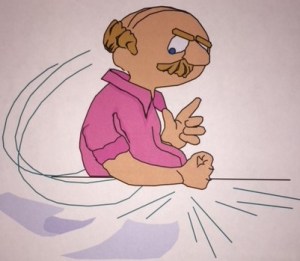
“I just don’t like him, but I haven’t really figured out why. I guess I do need to think about it.”

Sean was a man of few words but with good work ethics. With his permission, I made an appointment with Jack.

“Oh, Sean’s one of the best workers I have. Never late, hardly ever a complaint about his work. He just appears to be sullen a lot, but it beats me why. I wonder if he’s got family problems. Got any ideas?”

“Jack, I would like you to confront Sean because ….”

“Oh, no! Like I said, he’s a good worker, and I don’t want to lose him. Let’s just let it be.”

I took a deep breath and asked for a cup of coffee – with cream and sugar. “Jack, may I discuss the concept of healthy confrontation with you? I only need about ten minutes.”

“Take fifteen, and get on with it.” Jack got his own coffee – black. I was beginning to understand the situation, and was glad I brought my notes with me.

Confrontation can be either friendly, abrasive, or explosive. Confrontation is presenting ideas which at times are opposing or unknown to the listener. It is bringing themes, ideas, plans together for comparison and discussion. But people often take a defensive posture and turn confrontation into angry disagreement, resulting in antagonistic action or sullen withdrawal. It can devolve into explosive verbal – and sometimes physical – altercation.

Therefore, I suggested a true confrontation: “bringing two opposing parties face-to-face” in a non-threatening environment in order to resolve or prevent conflict. The purpose of confrontation is to help people, not hurt them. Many psychologists and counselors have their own list of steps, but I’ll simplify it.

Be firm and bold. (2 Cor. 13:1) Address the problem, don’t attack the person. Take witnesses if needed. Start with a compliment.

Be accurate and honest. (Matthew 5:37) Communicate your feelings assertively, not aggressively.  Express them without blaming.

Listen without interrupting. Ask for feedback if needed to assure a clear understanding of the issue. Don’t review the situation as a competition where one has to win and one has to lose.

Affirm all you can that is good. (2 Cor. 7:4) Remember, when only one person’s needs are satisfied, the issue is not resolved. Work toward a solution where both parties can have most of their needs met.

Know the facts. (2 Cor. 11:22-27) Listen first, talk second. And, hopefully, the authority figure should listen first. You should listen to what the other person is saying before presenting your own position. They might say something that changes your mind.

Focus on the issue, not your position. Accept the fact that individual opinions may change, so be observant. Work to develop areas of common ground.

And remember, not all “issues” are part of the problem. Many will dissipate when others are resolved. Know when to let something go. If you can’t come to an agreement, agree to disagree. When the relationship is established, little issues fall by the wayside.

Be gentle after being firm. (2 Cor. 7:8-15) It’s easy for people to get entrenched in their positions and for tempers to flare, voices to rise, and body language to become defensive. Build on mutual respect and understanding. And don’t be afraid of humor or laughing. Scripture says laughing often helps as much as medicine does. Be willing to forgive. Without forgiveness, resolving conflict is impossible.

Jack and Sean agreed to a meeting in the back corner of a coffee shop. I encouraged Sean to “pry yourself out of your shell” and tell the boss about his primary concerns. I also asked Jack to listen without interrupting, and to try not to speak so abruptly.

When analytical Sean began to realize how much Jack valued him, his demeanor picked up. And businessman Jack was amazed to discover Sean’s in-depth knowledge of the company. (The company benefited when Sean got a promotion.)

Confrontation is necessary and beneficial if conducted properly. A willingness to confront, a healthy understanding, and a good cup of coffee go a long way.

Think about it, and work on it.

Traits of Talented Employees

Are you looking for a job? Or maybe you have a job, but would like to improve your present situation? Well, I’ve got good news for you: here are ideas you can use to improve your lot in life. This will be easy because there are no gimmicks to figure out, no research to conduct, and nothing to buy. You merely need to know yourself. 
I’m talking about your character, integrity, reputation, your persona: what and who you are.

Every business needs people with particular skill-sets, therefore, many employers train people to fill technical positions. But to reduce overhead and protect their investment in the trainees, they try to hire people with good personal qualities. So you must make a good first impression.

First impressions never get a second chance, so make it count. Here are four things employers will notice right away.

  • Physical Appearance: be clean and well-groomed. The potential hiring company sets the tone for how one should dress, so you would not dress like a plumber when applying to be a salesman, and vice versa. Don’t be sloppy.
  • Communication Skills. Employers want to hire people who can communicate well in speaking and writing. Poor communication leads to negative issues within the company and with clients. Expressing yourself well, both verbally and in writing, plus understanding what others say, is mandatory. Intelligence is a strong foundation for success.
  • Attitude is Everything. This requires a favorable personality. People, both employees and customers, are drawn to positive thinkers with a sense of humor. A confident but intelligent employee is also more willing to take calculated risks or accept challenges that a timid person would avoid. Customers or clients will be impressed by a confident representative and feel like conducting business with his company.

Generally, people don’t like being around those who are pessimistic, negative or just plain unhappy. Positive and happy attitudes are contagious, and joyful people get more work done.

Optimistic people make better team members and create a more productive work environment. However, nobody likes someone who boasts or brags about their accomplishments, so don’t overdo the confidence. It becomes self-centeredness.

  • Energy and Enthusiasm. When energetic and enthusiastic people come to work, they generate a working environment that helps both themselves and their co-workers come up with new ideas. Also, employees who come to work fresh and energetic everyday are going to produce more than others who think negatively. Kick grumbling and complaining out of your life. (Make sure you eat well and get enough sleep.)

After you make your case and get that job, you need to prove to the employer that he/she made a good decision in hiring you. Here are the four follow-up steps.

  • Reliability is Powerful. Reliable employees – those who follow instructions and complete the tasks, those who show up on time and work productively – build companies. Managers don’t have to worry about these employees, and can use their own time addressing the company’s difficulties. Add self-motivation and self-discipline, and these reliable employees rise above adversity and setbacks, and rise above mediocre workers. They become the next generation of CEOs and company presidents.
  • When the employer encounters an overtly honest employee, he places greater trust in that person. That trust turns into more authority in the business which eventually results in greater influence and promotion.
  • Team Player. Although each individual employee must be able to do his job well, he must, also, be able to work in a team for the betterment of the company. Teamwork requires well-developed social skills, which include the ability to listen to the other members with an open mind. “Lone Rangers” normally do not progress very far up the corporate ladder.
  • Be Creative. Businesses of every kind need people to create new products and develop more efficient ways of doing current work. The general population gets bored with same-o-same-o routine. This is why the auto industry puts out new cars every year. So excel in your job, be thinking of ways to do it better and more efficiently, but also think of new ideas for the company.

There are many more ideas I could share, but that’s all I have time for today. And that should give you an idea of what it takes to get a job or a promotion.  Share this with those who need a nudge in the right direction; and enjoy the day.

Optimist, Pessimist, or…?

“Hey, dad; I learned something new at school today.” I was happy and wanted to share this new bit of wisdom with my dad. I was twelve years old, in 7th grade, and feeling big.

“Okay, I am sitting down. Enlighten me with this earth-shaking news.” We both laughed.

“An optimist looks one way before crossing a one-way street; but the pessimist looks both ways.” I was proud of myself because I remembered every word of it.

But dad sat there for a few seconds, then popped my bubble when he said, “Maybe the guy who looked both ways before crossing a one-way street wasn’t a pessimist. Maybe he was a realist.”

I felt badly because I didn’t impress dad the way I was hoping to; but in his wisdom, dad broadened my outlook on life – again – for which I am thankful. Dad always did his best to help me view life with a deeper, more complete understanding. He was a great dad, and a wise man.

By the way, pessimist comes from “pessimisme” which means “worst”, and could have originally meant “bottom-most”. But optimist comes from “optimisme” which means “the good” with an alternate meaning of “seeing the greatest good”.

Well, I learned something else today about optimists and pessimists. Since dad graduated to heaven 10 years ago, I can’t tell him about it. But I can tell you folk. (I can imagine dad in heaven saying, “Okay; enlighten your readers with this earth-shaking news.”)

This axiom was possibly stated by Winston Churchill. “A pessimist sees the difficulty in every opportunity; an optimist sees the opportunity in every difficulty.”

If you read it again and ponder on it, you’ll see the inherent wisdom. Optimism is the reason some people accomplish so much amid ongoing hardship, while others achieve so little even with no resistance. Yes, I know: you might say the poor achiever may not be a pessimist, but a lazy or a non-motivated person. You have a point there, so that would be two more reasons some people accomplish so little.

The story is told of a rancher taking his twin nephews to the barn. Jerry was a pessimist and his twin, Jack, was an optimist. When the uncle opened the first door, he said, “Jerry, I am giving you a horse.” Jerry looked at the horse standing there, saddled and ready to ride, but said, “Oh no!” then sat down – dejected.

“What’s the matter?” His uncle asked. The boy said, “If you give me a horse, I’ll have to clean out the stall!”

The uncle shrugged his shoulders and motioned for Jack to open the second door. Upon opening it, all Jack saw was a pile of horse manure. “Oh Boy!” shouted Jack, and he grabbed a shovel and started digging a pathway to go inside.

His uncle asked, “Jack, what are you doing?” The optimistic twin shouted, “With this much horse manure, there’s just GOT to be a horse in there somewhere!”

Please don’t misunderstand me. I am not putting down pessimists, for they help optimists through life. When people like me see the opportunities in the difficulties, the pessimists point out the potential land-mines which we need to avoid. And, of course, we optimists help the others to realize that some of those potential mines are not armed, and work should proceed. If we purposely work together without deriding each other, both pessimist and optimist can be a productive team.  

But I think Dad’s idea of the realist presents a balanced viewpoint. One definition says “a realist looks at things as they are and deals with them in a practical manner.”

Thinking I was either an optimist or realist, I took an online quiz to see what that shrewd computer program thinks I am. The computer surprised me with: “You are a gentle pragmatist.” Thank you, intelligent computer.

A definition of a pragmatist is: “One who has a reasonable and logical way of doing things, or practical way of handling problems; a realist.”

We need both optimists and pessimists; but both should be realistic about life, for that’s where the rubber meets the road. We shouldn’t ignore the difficulties in life, but neither should we see them as stumbling blocks.

Whether you are an optimist or pessimist, be a team player – a realist – and your organization will be blessed. Ecclesiastes 9:10a instructs us, “Whatever work you do, do your best.”