A BLESSED CHRISTMAS

Said the shepherd boy to the little lamb, “Do you see what I see?”

Way up in the sky little lamb, “Do you see what I see?”

A star, a star, shining in the night, it will bring us beauty and light.

It will bring us beauty and light.

    DSCN4172Thinking about that song brought many thoughts to my mind.  Allow me to share them with you.

     The shepherds, watching their flocks out in the field, looked up into the cool fall sky. Suddenly, one of the shepherds jumped up and cried out, “Look! Do you see what I see?” The others quickly looked – and in Luke 2:10-12 the lead angel made the announcement as the other shepherds shielded their eyes from the bright light:

“Do not be afraid. I am bringing you good news that will be a great joy to all the people. Today your Savior was born in the town of David. He is Christ, the Lord. This is how you will know him: You will find a new-born baby wrapped in white cloth, lying in a manger.”DSCN0574

     The shepherds, following the heavenly directions, quickly went to the cave or animal stall where Joseph and Mary were. When they saw the new-born baby who was declared by the angels to be God, one of the shepherds slowly knelt down, and incredulously asked, “Do you see what I see?” And their lives were changed forever!

     Anna, the 84-year old prophetess, was in the temple when Joseph and Mary brought Jesus in to be circumcised and blessed. When Anna saw the 8-day old Baby in Mary’s arms, she said gently and worshipfully, “Do you see what I see? I thank you, O Great Jehovah, for allowing my eyes to see the salvation of Israel.” She then prayed over baby Jesus, and began telling everyone what she saw: “People listen. This Little One is the Messiah for whom we all have been waiting. Let’s Worship the King!” And her life was changed forever!

     The Wise Men spent much time studying the sky. They were the scientists of their day and were advisors to their king. They were probably from Persia, which would include DSCN0309Iran and Iraq today. One night, one of the astronomers suddenly called to his colleagues, “Look! Do you see what I see?” The others gathered around and were amazed at the startling message unfolding in the sky, for it told them that a new King was born in Israel. Because of the writings left by Daniel back around 560 BC, they had been expecting it, and within six months, they left on a caravan for the Promised Land. Finding the house and kneeling down in front of Mary who was holding the child who was nearly a year old, the noblemen worshipfully said:  

   Here, most highly honored King, exalted by God in the heavens. We give you Gold: a treasure which does not tarnish or rust, it is a gift to royalty and conveys our life-long worship to you.

   We give you Frankincense: an aromatic treasure which we hope conveys the aroma of our love and adoration of You to the exalted God in the heavens.

   And we give you Myrrh: to make Your life on earth sweet.

And their lives were changed forever!

     Do you see what happened? Whenever people encounter the Living God, their lives are changed! And when someone’s life is truly changed, that person will change the world around them.

     As the shepherds went back to their flocks, they told everyone they met about the new Messiah for months to come because their lives had been changed. And they changed their world as they spread the Good News.

     At eighty-four, you know that she told people about the new Messiah for the rest of her life because her life had been changed. And she changed her world as she told folk who came to the Temple to worship.

     And the Wise men made an international impact, for they changed their world whichPICT0057 was the Middle-East. They told people in the trade caravans, the scientific community, kings and nobility about the new King.  That’s because their lives had been changed.
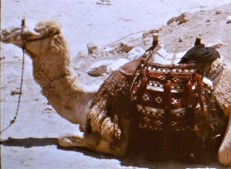
     Has your life been changed? Do you tell people about Jesus our Savior, or are you afraid of offending someone? God is calling you to change your world by being a faithful witness about what you have both seen and heard. Go ahead – people need to hear the Good News.

     Have you seen what I have seen?

CHRISTMAS QUESTIONS

Christmastime is almost here again. It seems like just last month people were resting up after last year’s Christmas-New Year’s rush. But here we are again, and in my mind I can hear Handel’s majestic Hallelujah Chorus.

Questions about Christmas have been asked for centuries, and I would like to give a brief response to two of those questions that people have asked me. Don’t laugh now, because they are serious questions.

Was there really a Santa Claus? My children want to know.PICT0540

Believe-it-or-not, there was a pastor named Nicholas in the third century AD in what is now Demre, or Kale, Turkey. The one to whom I refer came from a wealthy family, became the Bishop of Myrna, and upon the death of his parents used his inheritance to help the poor. Years after his death he was declared a Saint.

Nicholas became known by many titles in various areas of the world: four of which are Saint Nicholas, Saint ’Ch’las, and Sinterklaas, which were appropriate; and recently Santa Claus. The name Kris Kringle apparently originated in Germany from “Christkindl”, which means Christ Child (sometimes, referred as Christ’s Helper). But the image we have today of a fat, jolly ole St. Nick – Santa Claus – may be attributed to a poem in 1823 by Clement Clarke Moore: ‘Twas the Night Before Christmas (also called “A Visit from St. Nicholas”).

Why do we treat “Santa Claus” as a non-religious person? Post-Christian America builds up Christmas as they do Valentine’s Day or Halloween: it isn’t considered religious, but as a money-making endeavor. Also, it is politically correct to deny the reality of Jesus Christ, Biblical morality, and the intrinsic truth behind Jesus and the real Saint Nicholas.

     However, Saint Nicholas was a compassionate pastor who represented a caring, loving God. Nicholas represented Jesus Christ Who died for us, but raised from the dead three days later to redeem us from our sin. For many years, Pastor Nicholas gathered donations of clothing, shoes, and food, and distributed them to the poor; and not just in December. He did this year-round. Yes, there was a Pastor Nicholas whom some people called Saint Ch’las, or Santa Claus. 

Who were the three wise men?

     Matthew 2:1-2: “…wise men came from the east to Jerusalem saying … we have seen his star in the east….” Matthew 2:11: “When they entered the house, they saw the young child with his mother….”

     Many ethnic groups claim the wise men as their own, and the east is a big area so we need to know what eastern societies employed astrologers or astronomers. China, Persia, and India are prime candidates so let’s briefly look at them.

At that time China claimed their leader as god and viewed other national rulers with some contempt. So they are out. The basic religions of India were Jainism and Hinduism, and they were not astronomers nor would they have traveled anywhere to honor a new king. That leaves us with Persia. The main religion in Persia at the time was Zoroastrianism, and their priests were of a class called “Magi” – magician. (Zoroastrianism today is not the same as that in Ancient Persia.)

     Until about 220 AD, Zoroastrianism was sympathetic to any religion – including Judaism and Christianity – that taught kindness, justice, righteous thinking, truth, and monotheism. Daniel, Shadrach, Meshach, and Abednego introduced Judaism to Nebuchadnezzar and his empire around 586 BC; and after Nebuchadnezzar recovered from his illness, he declared to his empire that Daniel’s God was the supreme God of heaven (Daniel 4:37).

The wise men of Persia (Magi) were scholars or educated priests. They had various fields of expertise, of which astronomy/astrology was one. When a heavenly sign or starDSCN0716 indicated a royal birth (Psalm 19:1), a delegation (minimum of three) was sent to acknowledge that royal event; timing their arrival when the child would be six months to a year old (Matthew 2:11). For safety purposes, the royal delegation traveled with a large trade caravan, and there could have been five to ten Persian scholars or Magi who visited Jesus’ family at the house. The reason our tradition mentions three is because of the three gifts they brought: gold, frankincense, and myrrh.

Today, people ask: “Are you ready for Christmas?” That’s an interesting question, for it reveals their lack of understanding of the celebration. A more pertinent question would be: “Are you ready to publicly acknowledge Christ as did the shepherds and the Magi?”

     The good news is: God reveals Himself to whomever truly wants to know him. Jesus is no longer a baby-in-a-manger. He is our living God Who created the entire universe. (John 1:1-4, 14)

The Purpose of Miracles

What is a miracle? Several years ago, a man told me, “If you can explain it, it wasn’t a Question Markmiracle!” I found that rather humorous; but because the man was serious I didn’t want to insult him by laughing. However, that is not a criterion for miracles.

I find two basic types of miracles, with several variations of the theme. 1) Supernatural: God works above, against, or outside the laws of nature. 2) Natural: God uses natural phenomena or natural laws; but inexplicable timing is the key element.

The Veritas Bible commentary says,

Miracle may be defined as that which takes place by Divine power outside the ordinary course of nature. Miracles are not an end in themselves but are intended to show either the truth of what is taught or the presence of God in the person who teaches. The object of Christ’s miracles was to prove His Divinity so that men might come to salvation.

I agree. The purpose of miracles is to glorify God, although mankind does benefit from them.   Let’s address the supernatural element first; and I want to start by saying that LIFE is a miracle.

The first miracle I find in Scripture is creation. A long-standing scientific principle says, “Matter can be neither created nor destroyed; but can merely change state.” That is: change from solid, to liquid, to gas, and (temporarily) to plasma. You and I create things out of stuff that exists. That is fabricating, but isn’t a miracle. God, Who exists outside time and space, created stuff out of nothing. That’s a miracle.

So, if matter cannot be created, but it exists – and matter cannot spontaneously appear from nothing – we know there is a God Who has always existed outside time and space. God is the great “I AM” – the eternal, self-existent One; the first cause of all things. (Remember that phrase because nothing can happen without a cause. That is also a scientific principle.)

Another above- or outside-nature miracle is raising the dead to life. Stated very simply: PICT0122man can neither create life nor restore life; but God – Who is outside time and space – can. Physical healings are sometimes miraculous. And, of course, one of the greatest miracles is exemplified in our eternal salvation. Looking at a baby reveals the miraculous power – and love – of God. But (don’t think I’m beingIMG_1439 funny here), watching an egg hatch also reveals the miraculous power of God. Think about it: man cannot instill or create life.

Now, for miracles in the natural realm.

An example (inexplicable timing) of the second type of miracle is found in Joshua 3:14-17 where the Jordan River stopped flowing at flood-time for the Israelites to cross over. DSCN4904Verse 16 says, “the water above that point began backing up a great distance away at a town called Adam, which is near Zarethan. And the water below that point flowed on to the Dead Sea until the riverbed was dry. Then all the people crossed over near the town of Jericho. (NLT)”


A supernaturally-timed land-slide temporarily blocked the river’s flow. When the nervous priests reluctantly, yet obediently, stepped into the flooded Jordan River, they didn’t know the water level was about to recede. Then, after more than a million people with all their animals crossed over, the temporary earthen dam gave way and a tsunami of water, rocks, and mud came crashing down the Jordan River. God caused the heavy landslide at the right time which blocked and contained the water until the right time. The timing was miraculous.

The Bible records about 37 miracles performed by Jesus, and He said in John 14:13, “If you ask for anything in my name, I will do it for you so that the Father’s glory will be shown through the Son.”

THAT is the purpose of miracles: that the Father’s glory will be manifested, and that His purposes will be fulfilled on earth and in heaven.

Miracles are not for our self-aggrandizement or to puff up our reputation. They are not even primarily for our benefit. This is where many in the Church make their mistake: they focus on the miracle or on what they think they did through “their word” or by “their faith.” We must face the fact that, although man does benefit from them, miracles are for the purpose of exalting God.

Jesus said in Luke 10:20, “Don’t rejoice because evil spirits obey you; rejoice because your names are registered as citizens of heaven.”

So, don’t brag about your faith or your prayers. Learn to align yourself with God. Pray, act, and speak in concert with God’s will, in Jesus’ name, and allow God to receive the credit. He’ll bless you for it.Bible.docx

Just remember: The Bible lets us know that the purpose of miracles is to glorify God.

God’s Amazing Grace

Have you read and thought about the words to John Newton’s famous hymn “Amazing Grace”?

Let me refresh your memory with the first verse:

     Amazing grace, how sweet the sound that saved a wretch like me!

     I once was lost, but now I’m found; was blind, but now I see.Boy

As a teenager I told my dad, a Navy Chaplain, “I can’t sing the song because I am not a wretch.” But my father, a wise man, said, “The man who wrote that song was speaking about himself. You need to read about him. But before you do, look up the word.” So I did.

“Wretch” is traced to the Old English “wrecca” which means “banished person.” It also means “a despicable, worthless, contemptible, or vile person.”

Well, that didn’t apply to me as a thirteen-year-old boy. The worst thing I ever did was lie to my parents and fight with my siblings. Maybe I talked back to my parents, and cheated on a test. Oh whatever – but I decided that I was NOT a wretch!

When dad asked me what I found out, I gave my report about how bad I was NOT. Granting that I was overall a good boy, dad asked me a strange question: “Are you in the same category as Jesus – one who has never sinned?”

“Of course I have sinned,” I said. “But I’m still not a wretch!” What was dad getting at anyway? Had I done something really bad that I had forgotten about? I didn’t think so. Well, I did shoot at cars with my Red Rider B-B gun one time; but the B-Bs never even came close to the cars which were a quarter-mile away. And I’m sure dad never knew about that.

Dad had turned to James 2:10 in the New Testament and read: “And the person who keeps all of the laws except one is as guilty as the person who has broken all of God’s laws.” He then asked me what it meant. All I did was to repeat the verse because it was self-explanatory.

“So,” dad asked, “are you any better than John Newton?”

Rev. John Newton was born July 24, 1725 and died December 21, 1807. In his later years, he was an Anglican minister, hymn-writer, and supported the English abolition of slavery. So, what’s the deal about a wretch? There’s more to the story.

The son of a British shipmaster, the Royal Navy captured John – a common way of drafting men into the military, sometimes called “shanghaied.” Somewhat of a rebel, he was flogged and sold into slavery. He referred to himself as “a servant of slaves in West Africa.” But he was eventually set free; and, although having been a victim of slavery, he became a slave trader.

ShipAlthough it was totally demeaning, barbaric, and inhuman to the captured Africans, it was a lucrative endeavor. Not only that, it was a joint-effort: black Africans were capturing neighboring black Africans and selling the ones they didn’t kill to the white slave-traders.
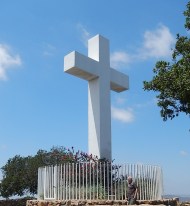
Newton married a Christian, and made a confession of faith in Christ, but continued in the evil, inhumane business of treating human beings worse than he treated his dog.

When offered a better position, Newton quit the slave trade and grew in his understanding of the evil nature of slavery. By the late 1760s Newton’s conscience was gnawing at him in such a way that he finally realized the wretchedness of his malevolent, cruel involvement, and how much he had offended God.

God had revealed His “Amazing Grace” to Newton, and the song was written in 1773. InCross 1788, thirty-four years after Newton left slavery, he wrote a pamphlet titled “Thoughts Upon the Slave Trade.” He described the hellish conditions of the slave ships, and said, “It will always be a subject of humiliating reflection to me, that I was once an active instrument in a business at which my heart now shudders.” He joined William Wilberforce, and in 1807 they led the charge of ending the slave trade in England.

Dad was waiting for my response. I said, “According to James 2:10, since I have sinned in other areas, I am no better than a slave trader, a murderer, or anything else. I guess without Christ I did fit the ‘wretch’ category.”

Dad said, “Good boy. That is the correct conclusion.”

I now could sing the song. But it took me many years to fully understand the true wretchedness of a person without Christ. And I also understand, decades later, that if I fail to live for the Lord in the best way I know how, I would still be a wretch. 

Want about you? Have you thought about it?

Is The Bible Historical or Merely Mythical? (pt.1)

I would like to address this question directly, but because there are so many side-issues involved, I must start somewhere else.

IMG_1799BThis question the historical reality of the Bible is often asked by adherents of an evolutionary hypothesis, some of whom are agnostics and atheists. Let me begin with the concept of evolution because that is normally the direction of the question. Let’s look at three words.
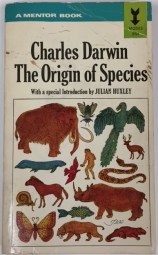
HYPOTHESIS: an assumption; an unverified idea; something assumed to be true for the sake of argument or investigation. Hypotheses are starting points.

THEORY: a speculative or conjectural viewpoint; a plausible but unproven concept; a potentially reasonable hypothesis with some substantiation.

FACT: a proven theory; knowledge based on reality; proven or demonstrated to exist or have existed; an actual, verified event.

The basic concept of evolution – the universe originating from a bang, and organic life evolving from rocks – is an hypothesis, which is called a theory, and taught as fact; andIMG_1797 that is not science. In every other scientific endeavor, a concept must be proven to be called a fact. But if you study the evolutionary hypothesis critically, it falls light-years short of explaining how humanity and the cosmos originated.

Remember: matter (atoms, energy, mountains, water, air, whatever) can be neither created nor destroyed. That is a well-established scientific principle, and that negates a big-bang hypothesis. Matter can change form, shape, or nature (ice to water, water to vapor, etc.), but it cannot be destroyed or annihilated.

I am aware of the anti-matter concept, but it is merely hypothetical.

Now: since matter can be neither created nor destroyed, yet the universe does exist, we add the phrase “except by a force outside time and space.” That supports both the science aspect and Biblical creation; therefore, it introduces the supernatural.

Treating hypotheses as facts and arguing over them is waste of time. Without proof, call it what it is: an hypothesis. Then teach and debate it as such. Don’t mock true science and don’t deny the reality of a Creator. Since it is impossible for stuff to magically appear out of nowhere, let’s admit that someone had to create it.

Actually, it takes faith to believe either way: Biblical creation, or in the evolutionary origin of the cosmos. But it takes an unsubstantiated faith – almost blind faith – to believe in a spontaneous, self-materialized cosmos where rocks morph into organic life. Why? Listen carefully now.

In the spontaneous, self-materialized cosmos, nothing or no one created everything out of nothing. (Read that again.) However, Biblical faith rests on the acceptance of a self-existing Creator. He is the first cause outside of time and space who designed and created the invisible stuff out of which everything was created. (Read THAT again.)

You’ve probably heard that there are over 6,000,000 parts to a Boeing 747-100, with over Boeing 747-4003,000,000 of them being rivets, screws, bolts, etc. Each rivet, window, cable, seat, etc. has a position to fill in order to complete the 747. Can there be variations in placement of parts? Yes. Seats are interchangeable. Rivets can exchange places with like rivets. And so on. Every part has a place it must fill; but when like parts are shuffled, the plane does not change.

There are also four complete computer systems in the plane. The primary computer system runs the plane, with three complete in-line backup systems. We have proof that every individual part of the plane was intelligently designed and purposely placed in their strategic locations. I know because I helped build them.

But you probably know that the Boeing 747 cannot self-assemble no matter how many billions of years the pre-fabricated plastic, aluminum, steel, wiring, etc. parts are tumbled together.

Now, let’s get really simple: DNA is needed in order to create RNA, and RNA is needed in order to create DNA; therefore, neither one can self-generate or evolve. Not only that, I read that there are over eighty-one billion trillion possible combinations in the human genetic code, and each sub-microscopic piece of the strand has its own individual place it must fill. Chance? More like a miracle.

This introduces God into the equation, but that invalidates modern evolutionary synthesis, natural selection, cosmic evolution, population genetics, and all the rest.

DSCN7715If you read this article critically, you find that spontaneous self-materialization is impossible. Rocks cannot become organic. An intelligent designer-creator is mandatory. There must be a first cause and that first cause, by nature, will not be bound by time and space. This first cause will be intelligent because design and order do not result from time plus chance.  Chaos is the product of time plus chance. Ask any farmer or botanist.

Now, since inanimate material cannot think (that sounds silly, but follow the thought), stuff cannot modify itself. It takes a person – one who can rationalize, understand consequences, set goals. It takes One who is outside time and space; One Who is not affected by any process or lack of process. And One Who is not affected by whether or not someone believes in Him. Since God, Jehovah, our Creator, fills that status, we revert to the Bible because that is where we learn about God.

And let’s get real: since creation – in any way you want to consider it – requires a creator, stop making up fantastic hypotheses to rationalize God out of the picture. Our Creator has already made Himself known to us. He is what the Bible is all about.

Next time we’ll look at the other side of this story: history.

Wait for What?

Have you ever been told to “Wait!”? As a kid I waited for my sisters and walked to school with them. At mealtime we waited for everyone to get to the table before we could startPICT0070B eating. As a teenager I had to wait to get my driver’s license. With five sisters and four brothers, even with two bathrooms in the house, we had to wait – sometimes with great apprehension – until it was our turn. Waiting was not always pleasant.

But my parents made it more complex. We were raised in a Christian home, and one of the more frequent exhortations I heard was, “Be patient now; you must wait on the Lord.”

Wait for what? I could neither see nor hear God. I had a hard enough time waiting for people I could see.

One day I decided to check it out. Isaiah 40:28-31 (NLT) says:

“Don’t you know that the Lord is the everlasting God, the Creator of all the earth? He never grows faint or weary. No one can measure the depths of his understanding. He gives power to those who are tired and worn out; he offers strength to the weak. Even youths will become exhausted, and young men will give up. But those who wait on the Lord will find new strength. They will fly high on wings like eagles. They will run and not grow weary. They will walk and not faint.”

Studying those verses presented quite an eye-opener and I found three possible applications.  

1.                  Sometimes we are emotionally and physically tired. If we push ourselves too long and too hard we wear out and can get sick, but God wants us to rest and rejuvenate our strength. He wants us to physically take care of ourselves.

2.                  Without waiting for God’s timing or for His direction, some folk require, expect, or demand God to bless their decisions. And when things don’t work out, they incredulously ask, “I had faith! What happened?”

3.                  However, upon further study, I discovered another concept. In a restaurant DSCN7919the host says, “Your waiter will be with you soon.” Then the waiter or waitress asks the customer, “May I bring you something to drink?” Upon returning, he asks, “Are you ready to order?” Later, he asks, “Is the meal to your liking?” or “May I get you some desert?”

Do you see it? The waiter is serving the customer. He doesn’t wait for, but waits on the customer – therefore, his title: waiter. This provides the most appropriate application of the passage.

By the way, although seniors may receive discounts at certain restaurants, there are no discounts in heaven. We all are judged by the same criteria: we must live to honor the Lord Jesus Christ.

Now read Isaiah 40:28-31 again. God is the infinitely understanding Master or Customer, and we are the finite servants or waiters. We often don’t know what God wants. That’s why we wait on Him to find out. It’s equivalent to asking the Lord, “Are You ready to order?”

What does God want? He wants what is best for us. We don’t know what we want or need; but God does. And if we wait on God – tune in to His desires by praying to Him and serving Him – then He will assure that we receive timely guidance. He will let us know what He desires, and our needs will be taken care of. He will help us make proper decisions.

As we wait on the Lord, the instructions He gives us include everything we need for living a healthy life. We’ll fly high above the problems in life. As we “run the race” that the Apostle Paul mentions, we will not become weary, and we will not quit.

As we cooperate with God we will be physically strengthened, depression will not be a factor in our lives, and we will add joy and inspiration to those around us.

So how do we wait on the Lord? We start with what Jesus said in John 14:15, “If you love me, obey my commandments”; and in verse 21, “Those who obey my commandments areBible.docx the ones who love me.” The two commandments mentioned by Jesus in Matthew 22:36-40 (love the Lord your God, and and love your neighbor) encompass “The Ten” presented to Moses; and those Ten encompass all of life. So we wait on the Lord by obeying Him. We take His order.

Please note: NEVER give God an order; God is not your waiter.

Joyful obedience is the purest form of worship, and through true worship – a lifestyle, not music – we build the kingdom of God. Waiting on the Lord is not a chore; rather, it brings us into the presence of a loving God where there is fullness of joy.

Introduction to Prejudice

For all but two years of my childhood, I lived in Southern California; but we did move DSCN1743around within the state. In several towns people cautioned our parents “Watch out: be careful if you have to drive through [a certain part of] town. Lock your doors!” Ethnic prejudice prevailed; but as a child I rejected it, and it never took hold in my mind.

There were not many black kids in my schools, but the ones who did attend were usually lonely, and I chose to befriend them. Several times I saw adults insult people of a different ethnicity, and I disrespected them for their ignorance. Although dad was born and raised in South Texas, he taught me that we all are equal in God’s sight – and that was good enough for me.

But living in Charleston, S.C. in 1963-1964 presented an eye-opener for me. In my senior year in high school I was in the school band, glee club, and in the senior play.

But my life changed around 1:45 PM (ET) on Friday, November 22, 1963 when an uproar broke out throughout the high school. It sounded like our football team had just scored the winning touchdown.

President John Kennedy had just been murdered in Dallas, Texas.IMG_1564

I was flabbergasted, stunned, and didn’t believe it. I didn’t want to believe it! Why would anyone want to murder the president of the United States? And why would any American citizen cheer when our president was killed? Even Christian kids were cheering!

My feelings of disbelief quickly changed to hatred of those who would raucously cheer over our President’s murder. The only animosity toward a people I had ever experienced previously was in reading about the Nazis and Japanese whom we fought in WWII, and the Communists – although I never disliked them personally.

But now, I experienced a deep-seated hatred for some of my own countrymen. Not black, but white! At seventeen years of age, being raised in Church and in the military, I disdained anyone who treated human life as a disposable item. Voicing my feelings, my reputation took a turn. You see, I also had the stigma of being a Californian, and California supported the North in our Civil War. But President Kennedy, a Northerner, was hated by many in the South because he had been endorsing ethnic integration which the Deep South rejected.

My black friends in Charleston had been nervous about being seen with me. But now several of them took me aside and said: “We can’t spend any more time with you. You are not one of us, and you being with us is making our life harder. We are going to get hurt if we don’t stop being with you.”

I said, “I don’t understand. You are my friends, and I will fight anyone who tries to hurt you!”

Then the clincher. One of them said, “But next year you will be gone, and we will still be here. Who will protect us then? Don’t come around us anymore!”

THAT is when ethnic bigotry and prejudice took on a new – and contemporary – PICT0942meaning for me. I viewed the American Civil War in somewhat of a different light. It broke my heart to be deprived of friendship with the black kids. It broke their hearts, too, for apparently, I was the first white kid who ever wanted to spend time with them. I was still in the band, glee club, and the senior play, and I still got along with most the white kids, but my life had changed.

When that school year was over, I rode the Greyhound Bus back to Southern California. At midnight, I was the only passenger from Charleston to Atlanta; but from Atlanta to New Orleans, the bus was as full as a sardine can.

With only two seats available (one in the middle of the bus near a white woman, the other in the back near a black man), all eyes were on me as I walked to the back of the bus. The black man told me that I couldn’t sit there because that was the black section; but speaking so that everyone could hear me, I informed him that this was America and I could sit anywhere I chose. When he said, “You could git awful hut if you sit heah.” I said, “I’ll take my chances.”

I couldn’t see them, but in retrospect, I am sure that several Angels were accompanying me on that bus ride.

On our way to New Orleans, that black man taught me, a naïve teenager, a college course on the plight of black Americans – a lesson I have never forgotten. Prejudice is a manifestation of ignorance at best, and demonic hatred at worst – depending on how people act – and I dedicated my life to teaching truth; for it is the truth of Jesus Christ that sets people free. 

 Jesus said in John 8:33; “You are truly my disciples if you remain faithful to my teachings. And you will know the truth, and the truth will set you free.”

THANKSGIVING DAY

“What did you say?” The man just looked at me. He made a statement that I found very img_1798[1]interesting and I wanted to hear his reasoning, so I asked again, “What did you say?”

He hesitantly reiterated: “It seems like we’re getting ready for Armageddon instead of for Thanksgiving.”

That was a powerful statement. When he realized I was not challenging him, he relaxed and we began discussing international events and the perplexities of the nations as mentioned in Luke 21:25-26 which says, “And there will be strange signs in the sun, moon, and stars. And here on earth the nations will be in turmoil, perplexed by the roaring seas and strange tides. People will be terrified at what they see coming upon the earth, for the powers in the heavens will be shaken.”DSCN1112B

That was interesting because what Luke said approximately 1,974 years ago seems to be happening now. Strange signs in space could be thought of as: solar flares, blood-red moons DSCN0406with eclipses on Jewish holy days, and comets approaching (or hitting) earth.

How about nations in turmoil and perplexed by roaring seas? 1) Roaring seas could be the increased number of massive hurricanes, while strange tides could be increased tsunamis and hurricanes. 2) Nations in turmoil and perplexity could also be thought of as nations and kingdoms in such political, religious, and economic messes that they seem impossible to resolve. 3) And people around the earth are terrified by the wars, rumors of wars, political intrigue, and horrendous, outrageous murders taking place.

There is a lot happening and much of it has not been pleasant. Massive hurricanes creating myriads of problems across the eastern and southern USA, while horrendous forest fires devastate states on the other end of the country.

     The international political scene is heavy with uncertainty. The Israeli predicament looming continuously on the horizon directly affects the entire world. And Islamic terrorism continues to push throughout the world which generates confusion and fear – the magnitude which has not yet been imagined by most world leaders.

     Our own government has been actively endorsing various foreign religions, yet continues to denigrate the very religion – Judeo-Christianity – upon which our nation was founded. Thus, we have been gradually losing our right to espouse our own beliefs while being forced to accommodate the beliefs of others. This has been going on for decades – but with current leadership, it might be turning around. We pray that it does.

     With all this in mind, what in the world do I have to be thankful for? I’m glad you asked. Question Mark

     According to the Bible, we have freedom to turn to Almighty God for help. Our own founding fathers knew this and appealed to God numerous times for divine assistance. Even Benjamin Franklin wisely advised the colonial leaders to beseech the Almighty for help when they reached a stalemate in forming our government.

     So, can I be thankful today in the face of seemingly insurmountable odds? Yes!

     Henry Morris IV (Director of Donor Relations at Institute for Creation Research, Dallas, TX) pointed out that we are “not to give thanks FOR everything—rather, we are to give thanks IN everything (1 Thessalonians 5:18).” Did you catch the difference? Read his statement again. The ATTITUDE of thankfulness is equally important – if not more so – than the ACT of being thankful.

     But when I add Romans 8:28 (And we know that God causes everything to work together for the good of those who love God and are called according to his purpose for them. NLT), I realize that I actually can thank God FOR things that happen to me.

     And because we humans are so easily distracted by the problems, predicaments, and perils of life, I am grateful that on December 26, 1941, President Roosevelt and Congress officially established the fourth Thursday of November as our annual Thanksgiving Day celebration. This resulted from repeated proclamations by most or our US Presidents and the US Congress.

     Hebrews 11:6 says, “Without faith no one can please God. Anyone who comes to God must believe that he is real and that he rewards those who truly want to find him.” And we find that a person who is habitually thankful is usually a patient and loving person. Why is that important? Patient and loving people help solve problems.

     dscn0464[1]Back to the statement the man said, “It seems like we’re getting ready for Armageddon instead of for Thanksgiving.”

     All I can say to that is, focusing on Armageddon cannot prepare us to face life’s challenges; but placing our faith in Jesus Christ can help us prepare; and we can be thankful for Jesus Christ, our Savior and Friend.

Life After Death

Joe asked, “Stephen Hawking made the statement that there is no life after death. Wouldn’t that mean that Jesus is still dead? How might Scripture respond to his comment?”

The following is a quote from No Heaven? Why Stephen Hawking’s Comment Doesn’t Matter by Stephanie Pappas on May 16, 2011. “I regard the brain as a computer which will stop working when its components fail,” Hawking said in The Guardian. “There is no heaven or afterlife for broken down computers; that is a fairy story for people afraid of the dark.”

I appreciated Joe’s question, but here is an eye-opener: Hawking’s statement is nothingIMG_1085B less than a statement of faith. Why? Because believing that there is no God is a religious conviction. Hawking was a dedicated scientist with a background in mathematics, physics, and cosmology; not religion or theology. Also Hawking had Lou Gehrig’s disease, was a quadriplegic, was confined to a wheelchair, and had no use for a god who wouldn’t heal him. His humanistic faith was based on the fact that he could not see God and couldn’t prove that there is a God.

Going one step further, Mr. Hawking placed his faith in science. In reality, that made science his god.

This is indeed a shaky foundation, because many scientists throughout history were and are devout followers of Jesus Christ and Jehovah God. Their scientific endeavors have verified to them that there IS a God.

I am continually surprised by the number of people who put faith in famous actors, theologians, scientists, and philosophers who disavow faith in Almighty God. We need to wake up. Fame doesn’t grant access to sources of spiritual knowledge that are inaccessible to the rest of mankind.

Some say that we Christians and Jews cannot prove there is a God, and they are correct. By the help of the Holy Spirit and through Scripture we can know Jesus, but we cannot prove to others He is alive or that He is God. Believing in someone or something we Atheist Symbolcannot prove is, by definition, faith.

But hold on now: NOT believing in someone or something without proof is also, by definition, faith. Hawking did not believe in life after death because that includes heaven and hell; which, in turn, requires a belief in a Creator: God. Mr. Hawking had a very strong faith that declared there is no god.

Psalm 14:1-3 describes the condition of those who refuse to believe in God. Psalm 14:1 and Psalm 53:1 say that whoever does not believe in God is foolish. I didn’t say that; Scripture did. Also, Proverbs 18:2 informs us that whoever is not interested in gaining [spiritual] understanding is foolish, for they are interested only in expressing their own opinions.

There is no scientific proof for or against life after death; either way it is a matter of faith. And believing that God is either real or a myth are both matters of faith. But there is more to faith in God and Jesus Christ than mere believing.

In the Bible and throughout history many people have spoken of their interaction with God. People have experienced, in powerful, personal ways, strong affirmations of God’s healing, presence, and provision in this world as well as His promises concerning life in the next (Luke 23:43; John 14:1-6; Rev. 21-22). Untold millions of people have studied Biblical claims and extra-Biblical claims; some have returned after dying and have a dynamically different conclusion from Hawking’s. Scripture teaches us about life after death which is called eternal life. Scripture alone is proof for us, but we cannot, in turn, prove it to anyone else. It’s a matter of faith.

Billy Graham could not speak authoritatively on science or the universe, but he was aSatellite Dish giant in the kingdom of God. In like manner, Mr. Hawking has credibility in cosmology and physics because of his work in the field (although I don’t agree with him on several scientific issues); but he has no credibility in the realm of Scripture or spiritual matters.
We all have faith, but the Bible leaves it up to each individual regarding where we will place our faith. Nevertheless, the historical declaration in Scripture is: Jesus Is Alive! There is life after death.

The darkness to which Hawking refers is reserved only for those who reject God. And that statement refers to God as found in the Holy Bible – not some other god. Therefore, examine Scripture, seek the truth, and choose life.

Authentic Christianity

Rev. Charles Swindoll said: In order to change our world, we must live authentic Christian lives.”  But what does that mean?

Some of you may not like today’s blog, but read it anyway and see if you can understand what I am attempting to convey.

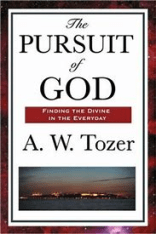
A. W. Tozer was born in 1897. He had no earned college degree but wrote many booksuntitled that impacted the 20th Century Church. During a trip by train from Chicago in the late 1940s, Tozer was inspired to write again. When the train pulled into McAllen, Texas the next morning, the rough draft of The Pursuit of God was completed. The depth of that message has made it a book in high demand – about 2 million copies in at least fifteen languages are in print.

Pastor Tozer had a drive to know God. He was not content to be merely a Godly pastor who could preach from the Bible. Tozer could be gentle with those who were actively searching for truth, but tough on those who were faking it. And his parishioners knew what it meant to be authentic Christians.

In his book Apprehending God, Tozer clearly says God wants to interact with us, but that the church around the world is basically ignorant of it. I agree with Tozer. Here are several of my own observations from around our nation:

  • People often treat the sanctuary as a secular auditorium.
  • Pre-service conversation is often not about the Lord.
  • However, as though a power switch has been turned on, people instantly enter a “worship” mode. (Is it authentic, or a trained response?)
  • After the meeting, most people go out as they came in because nothing in their lives has really changed. But some of them say, “I enjoyed the worship.”

This, in part, is what Tozer was talking about. Most people don’t understand the nature of God or what He desires. Worse yet: many of our ministers, also, don’t understand the nature of God and don’t know what it means to be an authentic Christian. 

Why do some folk have deep spiritual experiences with the Lord while others do not? The answer doesn’t lie with God, but with people. God is willing to bless all who sincerely come to Him, but many people don’t seriously study the Bible; they don’t meditate on or think about who and what God really is. Instead, too many of us prefer (as Tozer said) “glamour and fast flowing dramatic action” in our church services. Sadly, that is true today more dynamically than it was in 1948!

In our church meetings we often compete with the world for the attention of the world rather than focus on leading people in righteousness. Tozer said in 1948, “…worst of all, we have made the Word of Truth conform to our experience and accepted this low plane as the very pasture of the blessed.” In other words, most people think the hoopla and excitement in the church services is actually worshiping God and receiving God’s approval. But that might not be correct.

A.W.TozerTozer also said, “The shallowness of our inner experience, the hollowness of our worship, and the servile imitation of the world which marks our promotional methods all testify that we, in this day, know God only imperfectly, and the peace of God scarcely at all.”

How true! Since many in church leadership don’t really know what God wants, they are using the world’s methods in an attempt to accomplish God’s work. Therefore, we are pursuing the world instead of pursuing God. By placing an emphasis on being relevant to the people, we have effectively reduced the necessity of living a life dedicated to Jesus Christ. Thus, we essentially have watered down the Gospel.

I hope you readers will think about this.

Tozer said, “We have within us the ability to know Him if we will but respond to His overtures. (And this we call pursuing God!)  We will know Him in increasing degree as our receptivity becomes more perfect by faith and love and practice.”

This happens only by spending time getting to really know God. 

Authentic means not false or copied. It is something genuine, real, trustworthy, reliable; being accurate in representation of the facts. To be authentic Christians, we must stop living and acting like the world, but honor Jesus Christ in every facet of our lives – both in and out of church.

Come on now: What do you watch on television? What do you watch at the theaters? What kind of social activities do you enjoy? Would a Holy God approve of it? And don’t think God’s not watching. He most definitely is.

IMG_1799BTo be an authentic Christian, we must have an in-depth relationship with Jesus Christ. This relationship does not happen by going to church and enjoying the show. It happens by spending time with Jesus Himself through prayer, Bible study, meditating on the Life of Christ, and living in a manner that He would approve.

Authentic Christians change their world because of their Godly core values.

This life will be over somewhat quickly, and the way we live now sets the stage for what happens next. Think about it.