Suicide Doesn’t Help

Carol and I had been at the Niagara Falls for five minutes when the State Trooper walked up and asked, “Sir, I don’t understand a thing any these folks are saying, but you look like you speak English. Have you heard anything about a man jumping over the edge?”

“No, sir. I’ve been here for about five minutes, and I haven’t heard anything about that.”

 “The rumor is that he jumped over about seven minutes ago. If you hear anything about it, I’d appreciate it if you’d find me and let me know. I’ll be in the State Trooper booth over there.”

“Yes, sir. Will do.”

An estimated 12,000,000 people visit the Falls annually, and every year about 40 people are killed going over the Falls – most of them suicides. The horrendous water pressure mangles the person against the rocks below and sometimes the bodies are never found.

We walked to the railing that is supposed to keep people out of the Niagara River. Here is basic information about the Falls.

The water plunges onto the rocks and slowly erodes the cliff at the rate of less than a foot per year. The confluence from the Canadian Horseshoe Falls and the American Falls creates the large whirlpool below. The American Niagara plunges down a total of 167-188 feet (depending on the specific location), but the water hits the mound of boulders around 70-110 feet.

The river flows about 25 miles per hour with an average of 150,000 gallons going over the edge each second; but the highest recorded volume was about 700,000 gallons per second. Its speed is estimated to be 68 mph as it hits the jagged boulders with multiple tons of pressure.

On the lighter side: As I read other information about the five Great Lakes, the Niagara River, and the Falls, I leaned back and laughed. For an unknown number of centuries, the Laurentide Ice Sheet covered Canada and a portion of the Northern US. According to one theory, the last ice age ended about 18,000 years ago, and the ice sheet which gouged out the lakes began receding.

I read: “20,000 years ago, earth started to warm, and the Laurentide Ice Sheet began to disappear. By approximately 10,500 BC, the Niagara Peninsula was free of the ice.”

This is why I laughed. Man is accused of causing global warming, but man wasn’t capable of generating substantial local heat until about 1500 BC, and no substantial regional heat until the 1700s AD. But the ice sheet began melting around 18,000 BC.

If man wasn’t the culprit 20,000 years ago, what caused the global warming back then? For that matter, what caused the earth to warm and freeze to generate the multiple theoretical ice ages? If the earth can cool and warm by itself, why blame man now? This is simple logic and easy to think through.

Back to Niagara Falls.

Carol and I spent the next four hours looking at the beauty and wondering about the power of nature on this spot on the map in northwest New York. Standing on the observation tower several hundred yards away or at the railing a few feet from the water’s edge, the sight of the water plunging over the edge and the roar of the cascading water crashing on the rocks was almost mesmerizing. Is that what prompted the man to take the leap? Or was it sorrow, loneliness, embarrassment, or emotional pain that prompted him to end his life?

The Niagara Falls is called The Honeymoon Capital of the World, so why do so many people end their lives here?

For the western mindset, the thought might be, I just can’t take the pain any longer; I’ll end it all. For the New Age or oriental religions, the mindset might be, This life hurts too much; perhaps it will be better next time.

But suicide neither solves nor ends any problems; it only creates more. Hebrews 9:27-28 says, “Just as everyone must die once and then be judged, so Christ was offered as a sacrifice one time to take away the sins of the people. And he will come a second time, not to offer himself for sin, but to bring salvation to those who are waiting for him.” Suicide will not help anyone, but Jesus can help whoever asks Him for help. Turn to God, and to friends, for help, comfort, and direction for life, because you are loved. Your life is valuable, and people need you.

John 3:16: For God so loved the [people in the] world, that He gave His only begotten Son, that whoever believes in Him shall not perish but have everlasting life.


What Do You Want in Life?

Matthew 13:44-46 is our starting point for this topic. “The Kingdom of Heaven is like a treasure that a man discovered hidden in a field. In his excitement, he hid it again and sold everything he owned to get enough money to buy the field. Again, the Kingdom of Heaven is like a merchant on the lookout for choice pearls. When he discovered a pearl of great value, he sold everything he owned and bought it!” (NLT)

Have you ever wanted something so badly that you would do almost anything to get it?

Little Joe grew up in Pennsylvania near a coal mining town. He was skinny, not very tall, and didn’t look like he could take the pounding that high school football players take; so the coach put him on the sideline.

But Joe wanted to be a football quarterback.

He practiced for hours every night after school throwing and catching the ball. His dad became his personal coach and created difficult practice sessions for him. Joe strenuously pushed himself, and his skills exceled. The coach noticed Joe’s improvement and asked him to play on the starting team, and they won the state championship several years straight.

At graduation, a Notre Dame university scout recruited him, and Joe took the Fighting Irish to several national championships. After graduating from Notre Dame, the San Francisco 49ers hired Joe Montana, and the rest is Football History.

Here’s another story.

All his life, Harry wanted to be an actor, but at every interview he was told he would make a good blue-collar worker.

However, he hired out as an apprentice carpenter and brick layer. He eventually learned the carpentry trade so well that he formed his own company, began designing houses, and hired his own workers. But he never gave up his dream, and he practiced acting in front of the mirror … in the woods … in the houses he built. He never quit.

One day when a movie director hired Harrison to design a new house, the director said, “Haven’t you interviewed for one of my films?” When Harrison answered “yes,” Mr. Lucas said, “Please come for another interview in the morning.”

So Harry, Harrison Ford, interviewed and became Hans Solo in STAR WARS!

What did Joe Montana and Harrison Ford have in common? They had a goal. They set their minds to accomplish that goal. And they made it.

What do you want in life? When I was asked that question as a teenager, I refined the question. “The more appropriate question for me is, what does God want me to do.”

When we enter God’s family, He gives us several gifts (I Corinthians 12 and Ephesians 4) and asks us to put them to good use; and those gifts are the tools we need to accomplish what God has asked us to do.

If you know what Gifts God has given you, and you know what God has asked you to do, have you set your mind to accomplish it? If not, why not?

Romans 12:2 says, “Don’t copy the behavior and customs of this world, but let God transform you into a new person by changing the way you think. Then you will learn to know God’s will for you, which is good and pleasing and perfect” (NLT).

Here are six others who set their will to obey the Lord.

The Apostle Peter broke tradition to offer the Gospel to the Roman rulers.

The Apostle Paul took the Gospel to the entire gentile world and wrote much of the New Testament.

Martin Luther rediscovered the truth that we are saved by Grace: not by anything we can do.

John and Charles Wesley took the Gospel all through England and eastern America. They wrote over 500 hymns, and many are in our hymnals today.

Charles Finney was a lawyer. When he discovered that most of our laws were based on the Holy Bible, he studied it to increase his wisdom in court. Becoming a Christian, he devoted his life to preaching. Soon, the Holy Spirit generated true revival in many towns and businesses that Mr. Finney entered.

God wants persistent, unwavering, confident people in His church. He wants people who will remain loyal and obedient to Him no matter what opposition, storms, or blessings come our way. You can be one of those people.

Are you willing to cooperate with God? If so, what do you willing to do? What do you want in life? Ask the Lord to guide you, and He will.

When Things Go Wrong

Today started out wonderfully. I woke up at the normal time, although my Precious was up two hours previously. Why she wakes up around five in the morning, I don’t know. But she had coffee ready, so her early schedule is fine with me.

We had eggs, sausage, orange juice, and toast—and Coffee with cream and sugar. Of Swedish descent, Carol is a great cook. She would probably be a world-class cook if I could eat pepper, spices, and all the other stuff that comes with being a world-class cook. But she’s fed me well for almost 56 years. I love her and I thank the Lord for her every day.

This morning as we were reading the Bible after breakfast, my ears were pierced by an alarm.

We have a propane stove in the trailer, and we always open a window and turn on the exhaust fan while cooking. That greatly reduces the potential for CO and CO2 in the air and prevents the shrill alarm from offending my ears.

But breakfast was over, what we thought was an emergency was taken care of, window was closed, and the fan was off. Why the alarm?

I jumped up to turn off the sonic ear-buster near the ceiling, but it wouldn’t turn off. That’s when I discovered the propane sniffer at the base of the wall. I forgot that we have two ear-busters in the trailer.

I quickly opened the door, and within five seconds the ear-piercing beeping stopped. What a relief! But now I needed to find the propane leak.

As I began checking all the connections, Carol said, “I found the problem.” and pointed to the stove. “I must have bumped the knob as I was cleaning and turned it on. I turned it off now. But we never tested that sniffer before, and now we know that it works.”

“Yay; it’s always good to know that our equipment works.” We didn’t blame anyone, we were alive, and we finished our Bible-reading.

That was the in the morning. With no internet at our son’s home up in the mountains, I went to the church building in town to do my work.

In the late afternoon as I was heading home, a pickup approached me on the dirt road, raising dust everywhere. “The road’s blocked by a downed pole and power lines. You can’t get home!” the woman hollered as she drove by. I pulled off the road.

Where is the road blocked? How far away? It’s over 45 miles if I try to go around the other way. But would that get me home?

The questions pummeled my mind. As I sat there, four other vehicles ignored the warning and continued on their way. Those same drivers looked aggravated as they came back five minutes later. My silent prayer was, Lord, what should I do?

Then I heard in my mind: Go ahead. It’s okay. So I started the engine and continued. As I reached the area where the car had plowed head-long into the telephone pole, I could see the splintered pole and power-lines strewn across the road.

“Sir, you can’t go any further on this street. The road’s closed until morning, most likely.” the state patrolman said plaintively.

“My friend, I only need to get to Swiss Ranch Road. Is that open?”

His face broke into a smile. “Well now, that’s the only road that’ll be open for a while. The accident happened just past that turn. Have a good evening.” And he waved me through the blockade.

There were no lights in any of the homes or ranches along that road—power was out. So when I reached the house, I prepared for another procedure: power the trailer with the car.

Power had been out for six hours, and the RV battery was nearing depletion, so I backed the car up to the trailer, connected the power cable, and charged the RV battery with my engine for twenty-minutes. I charged it again at 4:30 the next morning, and community power was back on at 5:35 am.

Afterwards, I remember thinking: When things go wrong, it’s good to know my equipment, and know the procedures to keep things running.

And that reminded me of something else: BEFORE things go wrong, we need to be familiar with Holy Scripture, and have an active relationship with the Lord Jesus. Scripture and the Lord give us knowledge and wisdom for life. It was the Lord Who prompted me with, “Go ahead. It’s okay.” Jesus is never wrong.

Walking with God

Several people have asked the question, “What does it mean to walk with God” and everyone in the world should be interested in knowing the answer. I’ll start with Billy Graham’s response. The following Q & A is from the Billy Graham Evangelistic Association “Answers” blog, February 13, 2017.

Question: “I’ve heard preachers say that we need to learn to walk with God, but what exactly does this mean? I’d like to walk with God, but I don’t know how. And anyway, how would I know if God was actually with me?”

Answer: “I’m thankful you want to walk with God—because He wants to walk with you! He wants to assure you that He is always with you, and He also wants to talk with you—and you with Him.

“Look at it this way. By nature, we are cut off from God, because we have sinned and turned our backs on Him. But when we come to Christ and commit our lives to Him, God cleanses us of all our sins, and we are no longer separated from Him. Instead, He makes us part of His family, and we become his children forever. The Bible says, “Now if we are [God’s] children, then we are heirs—heirs of God and co-heirs with Christ” (Romans 8:17).

“How, then, do we walk with God and grow closer to Him? Just as we do with our children, the most important way is by spending time with Him—listening to Him as He speaks to us in the Bible and talking with Him in prayer. Just as human friendships wither and die if we never spend time together, so our relationship with God will grow cold if we never spend time with Him. Set aside time every day—even if it’s only a few minutes at first—to be alone with God.

“But Christ is also with you every moment of the day! Even when you’re busy, you can still talk with Him and follow Him. Jesus said, “I am with you always, to the very end of the age” (Matthew 28:20).

I like Billy’s response. My prayers are often short, to the point, and I receive answers. I don’t play church, and I am not super-spiritual. But I know that walking with God is a vital reality and is a necessary part of life if we are to be an active child of God. But we have to reduce the noise and busyness in our lives and pay attention to God in order to hear Him!

God in heaven doesn’t play church, and neither did Jesus on earth. And no one ever walked with Father God as closely as Jesus did. Enoch came close.

Genesis 5:21-24 says: “Enoch lived sixty-five years, and begot Methuselah. After he begot Methuselah, Enoch walked with God 300 years, and had sons and daughters. So all the days of Enoch were 365 years. And Enoch walked with God; and he was not, for God took him” (NKJV).

Enoch being “taken” is another story for another time, but what made Enoch different, or special? What set him apart from the rest of humanity? He purposely lived a Godly life in the middle of a corrupt and perverse culture. He didn’t water-down or modify his ethics, morals, and faith in order to win the world or to be relevant to the world. Enoch had set his mind to know—really KNOW—the God who walked in the Garden with Adam.

And in case you haven’t noticed, we live in a corrupt and perverse world just like Enoch did. Sadly, many Christians are immersed in their own lifestyle, they have deleted consecration to God from worship, and are oblivious to the idea of walking with God. A great many Christians desire God’s favor and ask God to bless them, but their lifestyles do not reflect the nature or the character of Jesus. Many Christians are so busy living for themselves that they cannot hear the Lord’s voice when He speaks to them.

To boil the answer down to a few words: Walking with God requires knowing how and what He thinks, what He wants of us, and obeying Him. It’s that simple. The emphasis is on learning to know Him and obeying Him.

When we learn to know the Lord by studying His thoughts as found in Holy Scripture, First Corinthians 2:16b becomes reality: “We have the mind [thoughts] of Christ.”

Are you one of those who wants God to care for you, to help you, to bless you? I can almost hear the Lord say, “You quit asking Me to bless you, and you start walking with Me and obeying Me. That’s when I’ll do something with your life.”

God is waiting for you to truly turn to Him.

The Donkey Spoke

In the year 2000, I filled in as interim pastor for a couple of months in a small New Mexico town while the leadership searched for a new pastor. Then in December, the elders surprised me by asking me to be their pastor. I said “No.”

The church had a history of ups-and-downs with a poor reputation, and it couldn’t afford to give me a salary. It was 200 miles from where I lived, and I was already working 60-hour-per week; so you might understand why I didn’t want to accept the call. Part time at that distance was okay, but I didn’t want to commit to full-time.

The elders and I discussed the logistics, and they eventually offered a parsonage we could use; agreeing that I would keep the current employment.

But a 400-mile round-trip every weekend? Huh-uh!

They asked me to pray about it. Now I was trapped. Christians, especially pastors, can’t refuse to pray – that’s against the rules.

I found out that God must have a sense of humor, because after praying about it, it seemed like the Lord was prompting me to accept. So on January 7, 2001, I hesitantly accepted the call.

Now my attitude was different. Why? Instead of merely filling the position while they were supposed to be looking elsewhere for a pastor, my new objective was to find out why the church was having ongoing problems. Maybe I should have already known, but I had decided to let the next pastor figure it out. Now I was that next pastor.

However, as I did my pastoral homework, it didn’t take long to discover the problems. To put it mildly: a lack of Christian love ruled the roost. The owner of the local grocery store told me the church was known as “the Fighting Church.” That didn’t make me feel any better.

Part of the problem was, as is common in many local churches, poor communications and unwillingness to compromise on small issues in order to make headway on larger concerns. How was I going to turn it around?

Did I mention that God has a sense of humor? Keep reading.

After the service one Sunday morning, two of the elders and I were discussing an idea that I thought would help the church. They didn’t agree, so I invited them outside the church building to look at the situation. I hoped that by looking at the problem, it might help them understand my point of view.

Reminding me that they disagreed, they politely listened anyway.

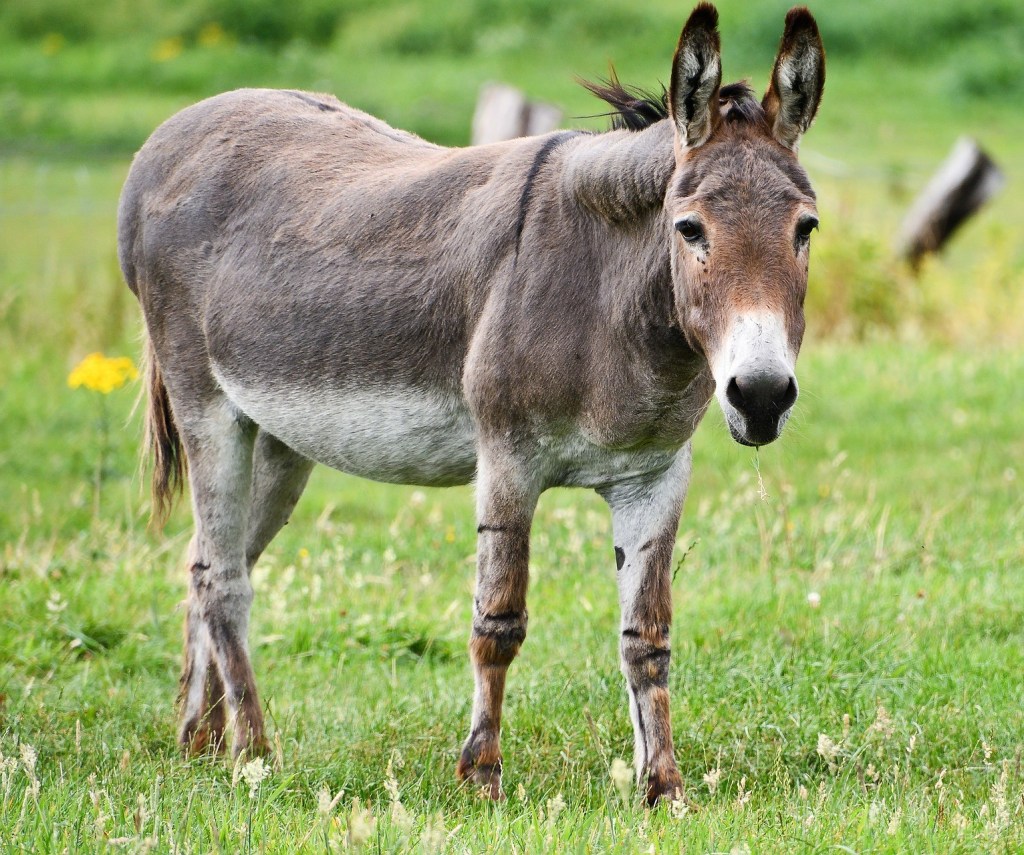
The church building was in the countryside, and a ranch was across the fence. Choosing my words carefully, I laid out my thoughts, and I was convinced I had won them over. But at the very moment I said my last word, the donkey in the adjacent field spoke!

I haven’t heard a donkey bray that loudly before in my life! Of course, the elders and I began to laugh at the timing of the interruption. But to make matters worse, my lead elder said as loudly as the donkey, “My Sympathies, Exactly!”

The three of us broke out in an uproarious laughter. We had been friends for over a year and disagreements never hurt us. But that event brought us even closer together.

When I muttered, “Dumb donkey!” the other elder said, “He’s not dumb. He spoke his mind quite clearly.” More laughter ensued, and we went back into the building to get some coffee—mine with cream and sugar.

Then Romans 12:3b came to mind. “Don’t think you are better than you really are. Be honest in your evaluation of yourselves, measuring yourselves by the faith God has given us” (NLT).

Over coffee, I asked them to state their opinion—again—and I would listen carefully. In the next half-hour, I realized they were right, and we worked out an alternate plan.

That incident did more than settle a disagreement. As word got around to the church members that they now had a pastor who was willing to listen, they began to trust me.

Still working on the other problems, I preached on forgiveness four times a year for three years—that’s what it took to settle the other personnel issues. And when I eventually resigned as pastor, that same groceryman told me, “Your church has a new name in town: the Loving Church.”

I thanked God for prompting the donkey to speak.

Enjoying Life

When we lived in the hills in northern New Mexico, we had two dogs and a cat. Both dogs were larger than the cat, but the cat was still in charge. They grew up together and had no traditional cat-dog animosity. In fact, they loved each other. The dogs were Flicka and Tyke (Flicka was Tyke’s mama), and the cat was Tiggy. The family called her Tig. I called her Critter, but today we’ll go with the family name.

One day when I returned home from work, I saw Tig stalking something – or someone. I slowly got out of the car and crept up to look over the white picket fence.

The cat’s eyes were intensely focused, her belly was barely touching the ground, and her tail was twitching as she ever-so-slowly inched her way forward. Her target? A hapless Tyke, taking a nap about 22 feet away.

I almost held my breath, waiting to see what Tig would do.

Suddenly, like an F/A 18 Super Hornet being catapulted from the deck of the USS Reagan, Tig bolted toward Tyke! Reaching the sleeping victim in a second, she leapt over him, smacking him on the rump with her right front paw as she flew over. As she touched down, Tyke, jerked out of sleep, was up and after her. He instinctively knew the game.

But Tig had it all figured out. Her attack was not intended to include a chase this time, but to show superiority. By the time Tyke could get out an obligatory bark, but before he could generate any momentum, Tig was up the tree that was five feet away.

I can still see it: Tyke standing on his hind legs with his front paws against the tree, vociferously discussing things with the cat; while Tig, hanging onto the tree by her needle-sharp talons about eight feet off the ground, looked down and issued a gentle hiss at the dog. The hiss is translated as, “I win – again.”

 In a few minutes the game was over. Tyke asked for his evening dinner while Tig enjoyed a few minutes in the arms of her adoring owner: our daughter, Rebecca.

Do you enjoy life like that? No, I’m not inferring that you are an animal. Do you take time out of your busy life to have fun?

With all the stuff going on in the world – for example: one mighty nation invading a much smaller peaceful neighbor, people committing murder in the name of their religion, people manifesting intolerance while demanding tolerance from others, people insisting on political correctness while simultaneously distaining common sense, and more – it is sometimes difficult to find time to enjoy a happy moment; but it is possible, and necessary.

Some years ago dad and mom came to visit us. On the second day a gentle breeze was blowing, and dad said, “The temperature is just about right; how about a game of tennis? I’m here to take a break from my hectic schedule.”

We went to the court and began the contest. But within fifteen minutes it began raining. Not a gully-washer or a torrential downpour, but a gentle, refreshing drizzle that encourages rosebushes and lilies to blossom.

“Oh, goodnight! There goes our tennis game.”

“Why, dad? What’s wrong with playing with a wet ball? And with our new shoes, we won’t slip on the court.” Dad relented and we continued playing.

We played hard, and those balls looked like a sideways Saturn as the water spun off. After a half hour, the rain let up and the clouds parted.

“I haven’t had this much fun playing tennis in years. Where’d you learn to play in the rain?”

“You probably enjoyed it because you beat me.” I replied. “But you taught me long ago not to let little things bother me; and this rain was not a bother but a joy. We need the rain.”

“Thank you for learning and thank you for feeding it back to me. I needed the lesson, and YES! I enjoyed beating you.”

We laughed, got dried off and I treated dad to a chocolate milkshake. That was the price for losing. But spending time with dad was never a waste of time. We enjoyed being together.

Do you know that our Heavenly Father enjoys it when we spend time with Him? Hebrews 13:5 quotes Jesus saying, “I’ll never leave you.” That statement alone should give us a great sense of security.

There is nothing we can do about many problems in the world, but we can place our trust in Jesus. Then no matter what happens in the world, when we die we will be with Him forever. Rain or shine, enjoy the time with God as you study the Bible and honor Him in everything you do.

Friend or Foe?

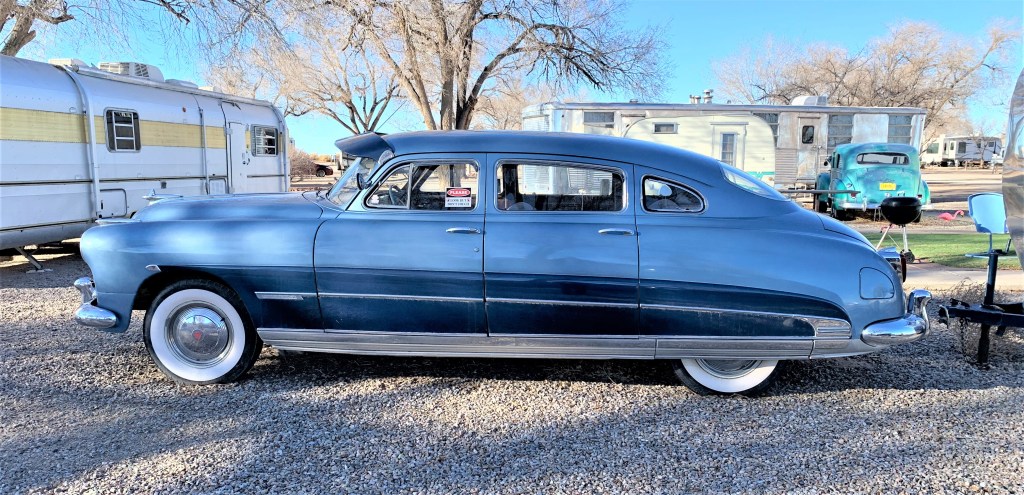
Wind always fascinated me. My 7-year-old hand became an airplane as I stuck it out the window while Dad drove the 1952 Hudson Hornet at the break-neck speed of 60 miles per hour. I enjoyed watching the wind blow water across the neighborhood as water shot high into the air from our garden hose. Wind was my friend. (The Hornet in this picture is not the car Dad drove. I saw it recently at the Enchanted Trails RV Park in Albuquerque, NM.)

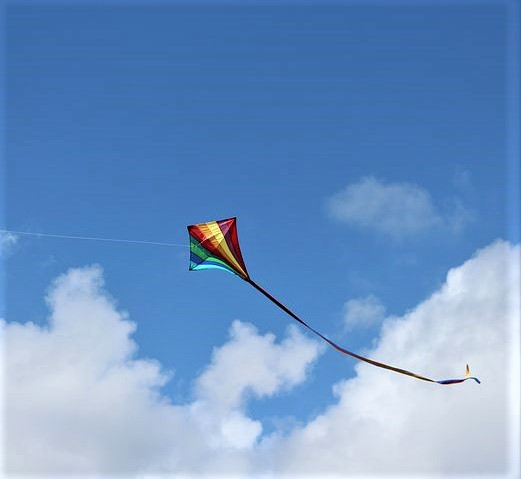
Earlier in life, I enjoyed being outdoors. I was 12 years old. It was Saturday morning with a good breeze blowing across our back yard in El Cajon, California. After breakfast, I assembled my kite, tore up an old pillowcase and made the tail, and gave the kite a test flight. I could have bought a 425-foot-long roll of Megalon string, but dad allowed only 300-foot rolls; so I bought 3 rolls. I named my kite Bird. It took off fast – but nose-dived! Ouch!

I made one adjustment to the tail and tried it again. Beautiful!

I waited for a good gust of wind and launched my Bird. Within a half hour, I had used up one roll of string. Tying the string to a stick, I wondered, why not add another roll of string?

I tied the string securely to the beginning of a new roll. Working the Bird very carefully, I released the second roll of string. I had never put a kite up that far. I was happy, but my natural curiosity began working overtime.

Would I be able to take it up another 300 feet? Let’s try it!

I attached the third roll of string and slowly let it out. At this point, allowing for the angle of the kite’s ascent, the kite was probably 750 feet above the ground and in the main air flow that blew above El Cajon Valley. The Bird was tugging firmly on the stick that the string was tied to.

“Eugene, Mom said it’s time to come in for lunch.”

I don’t remember who the messenger was, but what should I do with the Bird? There was no way I could bring it down in time for lunch. Could I tie it to the fence by the telephone pole and see if it’s still flying in an hour? Why not? What happens if the wind stops blowing? I don’t know, but Mom’s calling, so I’ll find out later.

After lunch, I hurried back outside to check on the experiment. I could hardly believe it! The wind had picked up, and the high-flying Bird was not about to come down. And now I began pondering….

I’ve never had a kite that well-balanced. Probably never will again. I’ve never put a kite up that high. Probably never will again. I’ll never be challenged to fly a kite again. I’ve done it!

After I stood there for about 10 minutes looking at the sight, I cut her loose. It was amazing to watch the Bird fly higher and across the valley until it disappeared out of sight. Did it come down in town somewhere? Maybe. But probably on one of the hills surrounding the valley.

The wind is normally a friend to kite-flyers. Years later I taught my boys to fly kites, but they never matched my experiment with the Bird. Wind also turns the giant turbines on wind farms across the plains which generate electricity.

However, most people also understand that the wind can be an enemy. Trucks and trailers are blown over and their contents get scattered all over the highways. Tornados and hurricanes destroy hundreds, if not thousands, of homes and businesses every year. The wind kicks up tremendous haboobs – dust and sandstorms up to 100 feet high – which cover towns and cities with thick layers of dust and sand.

But wind isn’t the only thing that blows across our lives that either help or hurt us. Our words and attitudes can benefit or destroy people. We can either make their day or ruin it. We can either bless others and help them improve their lives or curse them and send them into a spiral of despair. Look at three verses in Proverbs 15.

Verse 13, “Happiness makes a person smile, but sadness can break a person’s spirit”

Verse 18, “People with quick tempers cause trouble, but those who control their tempers stop a quarrel.”

Verse 28, “Good people think before they speak, but foolish people pour out foolishness.”

Don’t speak words that kick up storms or create devastation; use your words to help people. Be a friend, not a foe. Be a blessing to your community, and God may bless you.

The Head-Banger

Have you ever found yourself banging your head against a wall? How’d it feel? Did it help the situation? A friend of mine in New Mexico got so upset one day that he broke the sheet rock wall in his house with his head. After recovering from the concussion, he paid someone to repair the wall; but the situation he reacted to didn’t change because HE didn’t change.

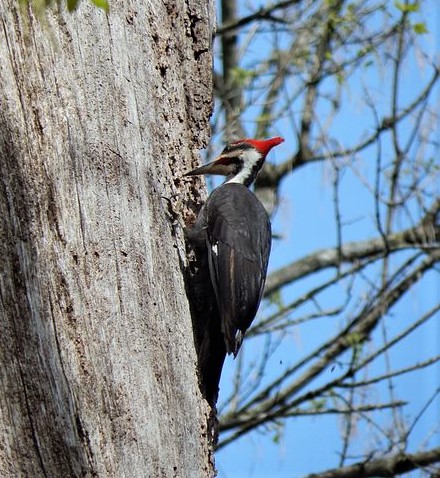
Several weeks ago, Carol and I were finishing breakfast when I heard the unmistakable sound of someone banging its head against a solid object. This guy wasn’t upset or angry. He was hungry and looking for food. He was pounding away on the branch making bits of bark fly as he was gathering ants and other bugs with his long, barbed tongue.

It was a woodpecker.

I’m not an ornithologist, but this bird looked like a large Pileated Woodpecker. These guys can grow to almost 20 inches long, have a wingspan up to 29 inches, and weigh up to 12 ounces. It was drumming on one of our branches, grabbing nourishment with its tongue, and apparently taking it to someone in a nest because it made eight or nine trips to a distant tree while we were watching. I read that some woodpeckers have up to 9-inch tongues, but the Pileated Woodpecker’s tongue is only about 4 inches long.

These birds are members of the Picidae family, and peck like a jackhammer at about 20 hits per second! Compare that to a good machine-gun that fires 1,000 bullets per minute, which is16 per second.

The International Ornithological Congress says 236 species of woodpeckers make up the Picidae family world-wide, but only 23 species inhabit the United States.

How do woodpeckers survive the banging without getting headaches or concussions? God provided them with amazing safety features.

The beak consists of three-layers. The tough outer cover is called rhamphotheca made of scales from keratin, a middle layer of porous bone, and an inner fibrous layer made of mineralized collagen. Its structure absorbs and distributes much of the impact throughout the body which reduces the strain on the brain.

The skull is made of sponge-like bone, and liquid surrounds the brain. Both skull and liquid absorb a lot of the rapid-fire shock, and a safety belt called the hyoid bone that wraps around the brain keeps the brain from rattling. While pounding the tree, a thick nictitating membrane covers the eyes, protecting them from flying shrapnel. Also, the slitted nose is protected with special feathers.

Many of these critters are antisocial and don’t mix well with others. In this sense, “Birds of a feather flock together” doesn’t always hold true. Most are territorial and are jealous of their turf.

I read that wild woodpeckers live from 4 to 12 years, but under ideal conditions they might live 25 to 30 years.

The most famous woodpecker in America is the cartoon Woody Woodpecker that was created by Ben Hardaway in 1940. I always liked that cartoon. Hardaway styled Woody as a combination of several birds, including the Pileated Woodpecker.

Thinking back on my friend in New Mexico, he wasn’t created like a woodpecker, so he shouldn’t have physically banged his head. And he discovered that becoming a head-banger doesn’t do any good.

What about figuratively banging our heads? Normally, that means we are frustrated, angry, or worried. However, if we get upset, it blocks the creativity we need for correcting the situation. Rather than demanding that the situation change, we need to change our method of responding.

Storms of all sizes and types are an integral part of life. But as devastating as the storm may be, it is our reaction that exacerbates the problem. Getting upset and banging our heads only makes things worse.

So what should we do?

Because we have a difficult time changing our circumstances, we need to learn how to change ourselves. Romans 12:2 tells us don’t act like the world but ask God to help us change the way we think. Then we will learn to know God’s will for us. Interestingly, when we change the way we think and act, our circumstances often change.

Psalms and Proverbs provide the principles for handling almost any situation that life can present. You may scoff at that; but when you recognize and admit your need for help, God will be waiting for you. We don’t need to be a head-banger; leave that option for the woodpeckers.

Pray for Others

A friend sent a rather lengthy tale to me several decades ago, but I never learned the identity of the author. The story is not a historical account, but more like a parable to illustrate a moral, and the following is a portion of the narrative.

**************

A ship was wrecked during a storm at sea and only two of the men survived and managed to get to a small island. Not knowing what else to do, they agreed that they had no other recourse but to pray to God.

The first thing the one man prayed for was food. The next morning, he saw a fruit-bearing tree on his side of the island, but the other man’s parcel of land remained barren.

However, to find out whose prayer was more powerful, they agreed to divide the territory between them and stay on opposite sides of the island.

After a week, the first man was lonely and he decided to pray for a puppy. The next day, he found a pooch swimming to his side of the island. On the other side of the island, nothing came ashore.

Soon the first man prayed for a house, clothes, more food. Each time, somehow, the food and the material for all of these came ashore.  However, the second man still had nothing. The first man did, begrudgingly, share some of his food with him.

Finally, the first man prayed for a ship, so that he and his puppy could leave the island. By morning, the wind had blown a deserted boat to his side of the island. He boarded the boat with his puppy and decided to leave the second man on the island.

He thought the other man was unworthy to receive God’s blessings, since none of his prayers had been answered.

As he was about to leave, he heard a voice from heaven booming, “Why are you leaving your companion on the island?”

“My blessings are mine alone, since I was the one who prayed for them. His prayers were all unanswered and so he doesn’t deserve anything.”

“You are mistaken!” the voice rebuked him. “He had only one prayer, which I answered. If not for that, you wouldn’t have received any of my blessings.”

“What did he pray for that I should owe him anything?”

“His only prayer these past two months was that I would answer your prayers.”

**************

In the legend, both men initially understood their plight, realized that prayer was the only recourse available to them, and amicably began their experiment.

The reason this stood out so strongly to me is that I’ve seen the same qualities in people wherever I go. Some folks are humble, good-hearted, and want what’s best for others. They go out of their way, even to the point of depriving themselves of some benefits of life so they can reduce the hurt and pain others are experiencing. These people are obeying Jesus.

But I’ve also seen other folks who are out to get what they can for themselves. Not helping others in a material way, these self-centered people sometimes go out of their way to destroy reputations, mock others, and make life hard for their imagined enemies.

What those self-absorbed people don’t understand is, the people they are attempting to hurt could be cherished friends if allowed to be.

But let’s continue about the fable above, and perhaps we should reconsider the concept of prayer.

The blessings we receive might not always be the fruit of our prayers alone, but are perhaps benefits from others praying for us. I can write a book about dangerous and life-threatening situations people have faced and how they escaped or survived, but I’ll tell about only one.

My father was in the USS Yorktown during WWII, heading for what would erupt into the Battle of Midway. A terrible fear gripped dad’s mind and he couldn’t do his job. Five thousand miles away, mom had a powerful burden to pray for him … not even knowing where in the world he was. After an hour of intense prayer, mom stopped praying, and the fear suddenly lifted from dad’s mind. Unknown to dad, God answered mom’s prayers.

I encourage all you who are reading this blog: when someone comes to your mind, pray for him or her. Pray however you feel like it, but pray. You may be the “ministering angel” God uses to rescue or help someone.

Happy New Year, Friends

On December 31, 2020, Carol and I spent a quiet New Year’s celebration together. It was relaxing because from 2011 through 2020, we had been home on December 31 only four times. We’d been in California on New Year’s Eve five times and in Florida once. And this past New Year’s Eve we were in New Mexico.

Several friends asked, “Can’t sit still, can ya?” My response is normally, “You find no moss under my wheels.” And we’ve driven over 29,000 miles in 2021.

It’s well-known by our families, friends, and those who read my articles that we enjoy living in Siloam Springs, Arkansas. All cities, towns, and villages have their problems, but we’ve found this town to be one of the more pleasant places we’ve lived. With that in mind, why do we “hit the road” so often?

One quick answer is: our five kids live in five different states, and my siblings are spread out from the West Coast to the East Coast. We enjoy visiting them. We also have the privilege of preaching and teaching in our travels.

A second answer is: we enjoy seeing God’s creation first-hand. Seeing nature in books and on video is great. But nothing beats driving through the Sierra Nevada Mountain Range, seeing the Giant Redwoods in northern California, the amazing Oregon Coast, Puget Sound in the great northwest, the red granite beaches of Maine, the snow-white beaches of Siesta Beach in Florida, seeing Yellowstone and Yosemite National Parks, and HUNDREDS of other places.

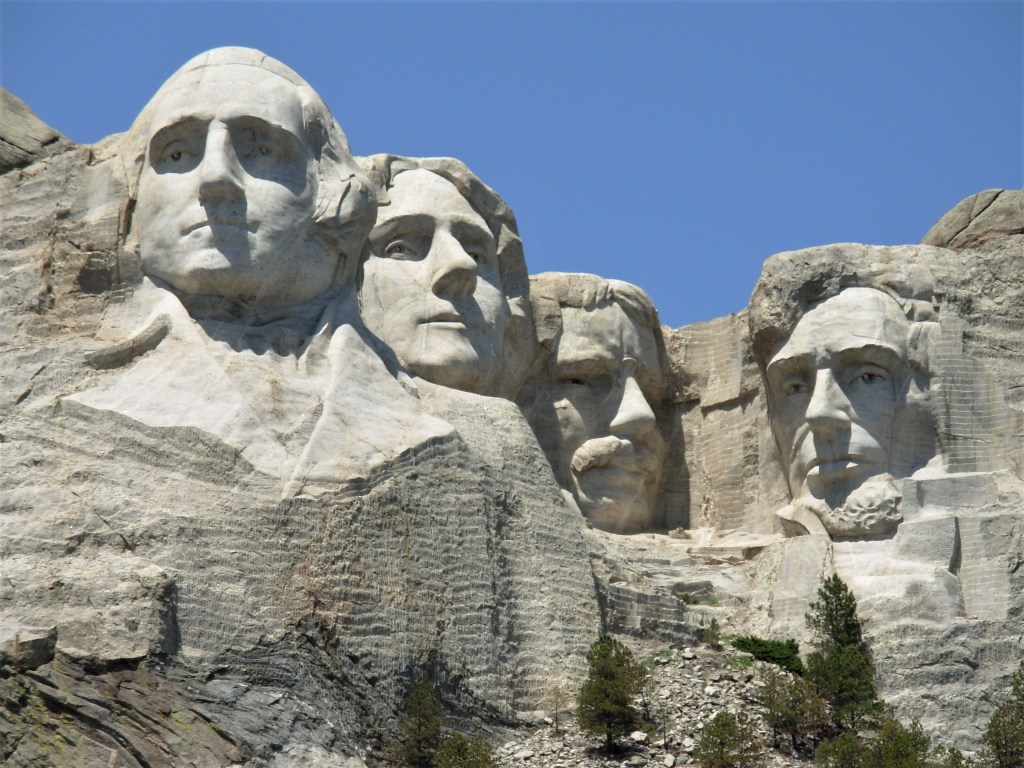
We also enjoy seeing the marvels of man’s creation, such as Mount Rushmore in South Dakota, the 605-foot-tall Space Needle in Seattle, and the 630-foot-tall Arch in St. Louis.

Historic sites such as the Yorktown, Virginia battlefield, the Gettysburg Battlefield, and Pearl Harbor cause me to stop and contemplate how different life might have been if the political and military tide had turned the other way.

The third answer is: we’re getting older, and some day our travel days will be over. So let’s travel while we can.

As we travel, we take thousands of pictures to document where we’ve been and what we saw. You see many of them in these blogs. We’re grateful for digital photography, because that’s a lot less expensive than the film we bought in the past. We often get our pictures out (on computer or another device) and through our memory, we enjoy those trips again.

The ability to remember amazes me. When I get to heaven, I want to ask God how He created memory. But I think He’ll simply say: That’s My secret.

As I mentally gaze on our blessings this past year, I’m fully aware that many people have died, others have gotten sick, many have lost homes and businesses due to pandemics, government mistakes, the natural flow of economics, and natural disasters. But sickness, wars, governmental problems, business failures, and all the other problems and catastrophes have been going on since shortly after Adam and Eve left the Garden of Eden. As we read in Ecclesiastes 1:9, “The thing that hath been, it is that which shall be; and that which is done is that which shall be done: and there is no new thing under the sun.”

The emphasis is: there’s nothing new under the sun. We have modern means of traveling, conducting war, studying, and getting work done, but the essence of life hasn’t changed throughout man’s history. Sickness, death, and all other problems related to life on earth will continue until Jesus stops it. And He will return one day.

But if He doesn’t return soon enough, I will die too. I don’t know by what means, but I will die, and the thought doesn’t bother me at all. Why not? Because that’s life.

In the same concept as midnight on December 31 starts a new year, or a baby being born starts a new life, when my traveling days are over and I breathe my last on earth, I will start a new year, a brand-new life in heaven. It’s part of the Christian’s cycle of life.

However, as badly as I feel for those who have been hurt by various events on earth, I feel worse for those who die while not believing in Jesus Christ. We can start over after a catastrophe on earth, but when we die without faith in Jesus, there is no recovery. Think about it.