Do You Worry?

IMG_1791Over 13 million Americans worry every day. The worries range from national, state, county and town issues. People worry about school, grades, war, the economy, home finances, children, grandchildren, their job, retirement, and so much more.

But worrying causes problems. One third of all visual problems are caused by worrying. Worriers get sick more easily. Worriers don’t get good-quality sleep. Worriers have a harder time digesting their food. Most worriers have difficulty trusting others.

Many years ago, the director of the YMCA in Pittsburgh, Pennsylvania, had worried himself almost to a nervous breakdown. He was working about 85 hours a week while worrying about the myriad of problems that surrounded him. He couldn’t sleep well and was having a difficult time making proper decisions. Sad and depressed, he finally went for counsel.

The doctor said, “George, you’re going to ruin your health – or kill yourself – with worry unless you back20100208_172053 off. I know it will be difficult, but you must cooperate with God. You must turn all your worries over to God – and let them go – and learn to trust your staff.” George always thought his feelings and actions were directed by the Lord, so that surprised him.

After thinking it over, George took a long walk in the woods. Sitting down against a tree, he got out his pencil and paper, and wrote:

Dear God, I hereby resign as Executive Director and General Manager of the Universe.

Love, George

 “Wonder of Wonders,” George said, “God accepted my resignation!” Now eating and sleeping better, within days his strength returned and he could think more clearly. And within a few months the YMCA operations improved dramatically.

Worrying dishonors God and actually generates problems for ourselves. Why? Believing that we must personally control everything, we take our focus off God and place the focus onto ourselves. But note this:

            40% of things we worry about never happen.

            30% are in the past, and cannot be changed.

            12% are about criticism.

            10% are about health problems (and worrying makes it worse).

            Only 8% may be legitimate.

God’s prescription for our worry and stress is in Philippians 4:1-8.

     Verse 1: Stand Fast in the Lord. (Accept God’s teaching as your foundation for life.)
     2: Live harmoniously with others. (Avoid disputes and arguments.)

     3: Help others. (Remove your focus from yourself.)IMG_1799B

     4: Rejoice in the Lord in every way. (Live cheerfully. Romans 8:28 says that everything works for our good IF we cooperate with God.)

     5: Let your moderation (mild manner, appropriate actions, gentle and understanding attitude) become manifest in your everyday life.

     6: Be careful for nothing. (Don’t be concerned over what you can do nothing about. Train yourself to stay focused on the issues at hand (Rom. 12:2). Through prayer and thanksgiving, talk with God about your concerns. Converse with Him as you would a friendly counselor. Talk or pray aloud; it is okay.)

     7: The Peace of God, which no man fully understands, shall keep your hearts and minds.

(Keep = Protects or guards you in the presence of the enemy. HOW? We must REFUSE to worry, but place our lives in God’s hands.  God can’t protect us if we refuse to cooperate with Him.)

8.    Whatever is true (not hidden or imagined, but obvious),

Whatever is honest (worthy of honor and respect),

Whatever is just (right; innocent, without speculation. Don’t waste time guessing about people’s motives),

Whatever is pure (sacred, consecrated, not mixed with evil. Seriously pray about the books you read, the movies you watch, and your daily activities),

Whatever is lovely (friendly toward God, accepted by God. If God doesn’t approve of something, it isn’t lovely: leave it alone),

Whatever is of good report (reputable, wholesome),

If there be any virtue (excellence, moral goodness, high regard. This again warns us to stay away from movies, videos, books, magazines and activities that promote ungodliness),

If there be any praise (something commendable),

Think on these things (reckon, meditate, dwell).

I Thessalonians 5:16-18 says: Rejoice evermore. Pray without ceasing. In everything give thanks: for this is the will of God in Christ Jesus concerning you.

This is how we live without worry. This is how we live without stress. We must not attempt to take God’s place as the Executive Director and General Manager of the Universe – or even of our own lives. We don’t have the credentials for the job. And we must live within the boundaries that Jesus would accept.

Stop worrying; seek help if necessary.

Critical Thinking

When I was a teenager, people told me, “Stop being so critical!” Have you ever been told that? “Stop being so picky!” is another version. Yet another exhortation, “Listen to that he means, not what he says.” Wow! Since I cannot read minds, THAT’S a tricky one. 

However, we must intelligently analyze life to understand life.

For over a century our educational system diligently taught critical thinking as part of its mission. And wePICT1473 are told that nearly all American educational institutions still teach critical thinking; but do they really? My answer is a resounding NO! Several years ago, we found that “post-modernism” discarded critical thinking. Let’s look into it.

Critical Thinking: “Disciplined thinking that is clear, rational, open-minded, and informed by evidence. The mental process of actively and skillfully conceptualizing, applying, analyzing and evaluating information to reach an answer or conclusion.” The word “critical” comes from “kriticos”, a Greek word meaning “discerning judgment.” So, a critical thinker is searching for truth. My father taught me how to think critically, yet without being condemning.

Ruth Mayhew of Demand Media said, “Critical thinking is ‘self-guided, self-disciplined thinking which attempts to reason at the highest level of quality in a fair-minded way. People who think critically consistently attempt to live rationally, reasonably.’”

Clear thinking is essential for making appropriate decisions about what to believe and do, whether for personal decisions such as religious beliefs and who to marry; and vocational decisions, or civic decisions such as voting or serving on a jury. Without a well-informed, critically-thinking citizenry, freedom and democracy will falter and justice will be non-existent. Have you assessed our judicial and political systems recently? Many Judges and lawyers often discard truth in favor of procedures, word-games, personal agendas, or intimidation. I saw on the news yesterday [as of this writing] that a man on death row for murder – who had testified that, indeed, he murdered the girl – was released by a judge because of a technicality in the judicial process.

We should employ critical thinking during conflict resolution which requires understanding issues from several viewpoints. Understanding people’s needs requires critical thinking. Socrates talked about the important role critical thinking plays in our ability to consider an issue and decide what to do or believe. Critical thinking should be employed while shopping or caring for children.

DSCN1300Critical thinkers must take the context of every situation into account and think on a multi-level platform in order to come to proper conclusions. Homeschoolers have an advantage for learning critical thinking skills because they can incorporate these lessons into it their curriculum – as every educational system should do. When a person is able to make correct, intelligent choices on complex matters, he is considered intelligent and competent.

Critical thinking is required in deciding whether a claim is true, partially true, or false. It is a tool we use to arrive at reasoned conclusions based on a reasoned process. Fortunately, as with all skills, we can learn to think critically.

Now let’s apply the principle.

We read that: 1) It’s possible for a “rogue planet” to hit the earth and wipe out humanity. 2) If we vote for this person he’ll stop the problem in Congress. 3) It’s inferred that this automobile will get you the prettiest girl. Let’s address the politician first.

Regrettably, it takes only one person (US President or a judge) to negate good morals and legalizeDSCN5212 immorality. But it takes a distinct majority of the Senate and House to change direction or change a law for the better – and even then, one judge is allowed to negate the will of the people. This is wrong. Why doesn’t the US Congress apply the checks and balances which are built into the US Constitution? They are not thinking critically.

Thinking critically would entail: How will this bill or law affect the people in my district, my state, and the nation? Do the people understand the repercussion of the bill? If they don’t, I need to tell them. To say, “Let’s pass this thing so we can see what is says” does not display critical thinking. Rather, it was one of the most absurd and ignorant political statements in the history of our nation.

How about a “rogue planet”? Thinking critically we should ask: “Is this a hypothesis, theory, or fact? Is this someone’s imagination, or is there substantiation for the fear? Does he have solid evidence on which to base his claim?” Well, [thinking critically] since Scripture says that Jesus will rule this earth for 1,000 years, I don’t think we need to worry about an imaginary rogue planet.

And the car? THINK! Is the girl attracted to you or to the car? If she is attracted to a nifty or spectacular car, you won’t want her unless you are a flake. It takes more than a car to attract an intelligent girl.

Critical thinking produces information on which we can base our lives. Psalm 111:10 says, “The fear of the Lord is the beginning of wisdom.” And Godly wisdom is mandatory in critical thinking.

God’s Amazing Grace

Have you read and thought about the words to John Newton’s famous hymn “Amazing Grace”?

Let me refresh your memory with the first verse:

     Amazing grace, how sweet the sound that saved a wretch like me!

     I once was lost, but now I’m found; was blind, but now I see.Boy

As a teenager I told my dad, a Navy Chaplain, “I can’t sing the song because I am not a wretch.” But my father, a wise man, said, “The man who wrote that song was speaking about himself. You need to read about him. But before you do, look up the word.” So I did.

“Wretch” is traced to the Old English “wrecca” which means “banished person.” It also means “a despicable, worthless, contemptible, or vile person.”

Well, that didn’t apply to me as a thirteen-year-old boy. The worst thing I ever did was lie to my parents and fight with my siblings. Maybe I talked back to my parents, and cheated on a test. Oh whatever – but I decided that I was NOT a wretch!

When dad asked me what I found out, I gave my report about how bad I was NOT. Granting that I was overall a good boy, dad asked me a strange question: “Are you in the same category as Jesus – one who has never sinned?”

“Of course I have sinned,” I said. “But I’m still not a wretch!” What was dad getting at anyway? Had I done something really bad that I had forgotten about? I didn’t think so. Well, I did shoot at cars with my Red Rider B-B gun one time; but the B-Bs never even came close to the cars which were a quarter-mile away. And I’m sure dad never knew about that.

Dad had turned to James 2:10 in the New Testament and read: “And the person who keeps all of the laws except one is as guilty as the person who has broken all of God’s laws.” He then asked me what it meant. All I did was to repeat the verse because it was self-explanatory.

“So,” dad asked, “are you any better than John Newton?”

Rev. John Newton was born July 24, 1725 and died December 21, 1807. In his later years, he was an Anglican minister, hymn-writer, and supported the English abolition of slavery. So, what’s the deal about a wretch? There’s more to the story.

The son of a British shipmaster, the Royal Navy captured John – a common way of drafting men into the military, sometimes called “shanghaied.” Somewhat of a rebel, he was flogged and sold into slavery. He referred to himself as “a servant of slaves in West Africa.” But he was eventually set free; and, although having been a victim of slavery, he became a slave trader.

ShipAlthough it was totally demeaning, barbaric, and inhuman to the captured Africans, it was a lucrative endeavor. Not only that, it was a joint-effort: black Africans were capturing neighboring black Africans and selling the ones they didn’t kill to the white slave-traders.
Newton married a Christian, and made a confession of faith in Christ, but continued in the evil, inhumane business of treating human beings worse than he treated his dog.

When offered a better position, Newton quit the slave trade and grew in his understanding of the evil nature of slavery. By the late 1760s Newton’s conscience was gnawing at him in such a way that he finally realized the wretchedness of his malevolent, cruel involvement, and how much he had offended God.

God had revealed His “Amazing Grace” to Newton, and the song was written in 1773. InCross 1788, thirty-four years after Newton left slavery, he wrote a pamphlet titled “Thoughts Upon the Slave Trade.” He described the hellish conditions of the slave ships, and said, “It will always be a subject of humiliating reflection to me, that I was once an active instrument in a business at which my heart now shudders.” He joined William Wilberforce, and in 1807 they led the charge of ending the slave trade in England.
Dad was waiting for my response. I said, “According to James 2:10, since I have sinned in other areas, I am no better than a slave trader, a murderer, or anything else. I guess without Christ I did fit the ‘wretch’ category.”

Dad said, “Good boy. That is the correct conclusion.”

I now could sing the song. But it took me many years to fully understand the true wretchedness of a person without Christ. And I also understand, decades later, that if I fail to live for the Lord in the best way I know how, I would still be a wretch. 

Want about you? Have you thought about it?

Is The Bible Historical or Merely Mythical? (pt.2)

In 2003 a New Mexico rancher named Jorge (pronounced Horheh; Spanish for George) asked me, “Why do you believe something just because it’s in the Bible?” 

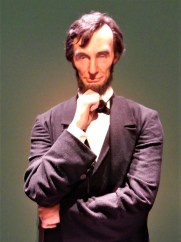
My response was, “Have you read about Abraham Lincoln?” He said, “Yes.” “Have you ever seen him?” I asked.DSCN7975

“I may look that old, but I am only seventy-six!” he retorted.

I asked, “Do you believe Lincoln really lived?” He said, “Yes, of course.”

My final question was, “Why do you believe in President Lincoln just because you read about him in a book?” Jorge admitted he was stumped on that one, but still did not want to believe in the Bible.

Did you get the point? The situation wasn’t that he couldn’t believe the Bible. Rather, he wouldn’t believe. It was a conscious decision.

Years ago, a colleague at a scientific laboratory challenged me to prove the veracity of a Bible story. When I answered his challenge using non-Biblical sources, he countered with, “You only know that because you know history.” Whereupon I responded, “If I didn’t know history, the story in the Bible would still be true. That verifies the truthfulness of the Bible. Read it; there’s a lot to learn in it.”

Those who challenge the historical veracity of the Bible normally have an ulterior motive: if they can do away with the Bible’s authenticity, they can do away with Jesus.

Even in their quest for the “historical Jesus,” many people attempt to establish a merely human Jesus. They quote scholars who are hostile to Jesus as Deity, but they ignore scholars with equal or greater credentials who accept Jesus as God. It is a conscious decision.

Major complaints given about the Holy Bible being historical are paraphrased here: “It was written so long ago, how can we assess its legitimacy? It has been copied so many times, how can we verify its integrity?”

Let’s apply those questions to other well-accepted writings.

Plato’s Republic was written in 400 BC. We have only seven copies, but the earliest copy is dated 1200 years after Plato’s death. We accept Herodutus’ History with only eight manuscripts; the earliest is dated 1300 years after Herodotus died. The earliest copies of Tacitus’ writings are dated about 1100 AD. Aristotle died in 322 BC, but we accept copies of his writings dated 1400 years later as being accurate. The earliest manuscript for Sophocles is dated 1400 years after he died, and Pliny’s was 750 years after his demise. And we blithely accept them all as being legitimate.

But we have many hundreds, if not thousands, of New Testament documents, many of IMG_1799Bwhich are dated only 35-100 years after Jesus resurrected. So, using the same reasoning, we should not doubt them. On the other hand, they are more credible than all the others put together.

The Old Testament was written from about 1500 BC to 350 BC, and the “Dead Sea Scrolls,” dated around 152-DSCN075963 BC, have substantiated the Old Testament texts. Archeologists have verified the existence of Biblical towns, civilizations, and events.

The New Testament was written around 45 AD to 95 AD. Men who have been historically verified were eye-witnesses to what was taking place, and wrote about it. Two of the writers were Jesus’ half-brothers: James and Jude. They initially rejected their half-brother as a lunatic and a fake. But they saw Jesus after He came out of the tomb, they became true believers. Refusing to lie about what they saw and knew, they were killed for their faith. Luke wrote the historical books of Luke and Acts to a Greek dignitary after interviewing numerous eye-witnesses.

Peter said in 2 Peter 1:16, “For we did not follow cleverly devised myths when we made known to you the power and coming of our Lord Jesus Christ, but we were eye-witnesses of His majesty.” Peter was, also, murdered for his faith.

Even the next generation of church leaders recorded their personal interviews with these eye-witnesses. For example, Papias, born in 60 A.D. interviewed the Apostle John.

Forty authors wrote the sixty-six books of the Bible over a period of 1600 years, and all are in harmony with the whole. Historical? Yes, indeed!

Archeology has verified the existence of the Hittite civilization, Jericho’s destruction in DSCN0576Joshua’s time, Egypt’s conquering of Israel, Pontius Pilate, Herod the Great, and many other events and people named in the Bible. Non-Christian historians like Porphyry, Celsus, Josephus, Pliny, et.al. have confirmed events recorded by the New Testament writers. Tacitus, the leading historian of Imperial Rome wrote: “The author of that name (Christian) was called Christ who in the reign of Tiberius suffered punishment under his Procurator Pontius Pilate.” The Jewish historian Josephus wrote, “There was about this time, Jesus, a wise man….” And many other non-Christian writers have verified the events in the New Testament.

If we applied the same higher criticism (for judging the Biblical writings as mythological) to the writings of the other above-mentioned philosophers and historians, we would reject all of them post-haste.

My logical, literary, and scientific conclusion is this: An historical/spiritual guide that reveals God’s interaction with man and His redemption of man, the Bible is not mythological; but is a bona fide history book that can be trusted. It is the oldest history book in the world, and has been substantiated thousands of times.

Wait for What?

Have you ever been told to “Wait!”? As a kid I waited for my sisters and walked to school with them. At mealtime we waited for everyone to get to the table before we could startPICT0070B eating. As a teenager I had to wait to get my driver’s license. With five sisters and four brothers, even with two bathrooms in the house, we had to wait – sometimes with great apprehension – until it was our turn. Waiting was not always pleasant.

But my parents made it more complex. We were raised in a Christian home, and one of the more frequent exhortations I heard was, “Be patient now; you must wait on the Lord.”

Wait for what? I could neither see nor hear God. I had a hard enough time waiting for people I could see.

One day I decided to check it out. Isaiah 40:28-31 (NLT) says:

“Don’t you know that the Lord is the everlasting God, the Creator of all the earth? He never grows faint or weary. No one can measure the depths of his understanding. He gives power to those who are tired and worn out; he offers strength to the weak. Even youths will become exhausted, and young men will give up. But those who wait on the Lord will find new strength. They will fly high on wings like eagles. They will run and not grow weary. They will walk and not faint.”

Studying those verses presented quite an eye-opener and I found three possible applications.  

1.                  Sometimes we are emotionally and physically tired. If we push ourselves too long and too hard we wear out and can get sick, but God wants us to rest and rejuvenate our strength. He wants us to physically take care of ourselves.

2.                  Without waiting for God’s timing or for His direction, some folk require, expect, or demand God to bless their decisions. And when things don’t work out, they incredulously ask, “I had faith! What happened?”

3.                  However, upon further study, I discovered another concept. In a restaurant DSCN7919the host says, “Your waiter will be with you soon.” Then the waiter or waitress asks the customer, “May I bring you something to drink?” Upon returning, he asks, “Are you ready to order?” Later, he asks, “Is the meal to your liking?” or “May I get you some desert?”

Do you see it? The waiter is serving the customer. He doesn’t wait for, but waits on the customer – therefore, his title: waiter. This provides the most appropriate application of the passage.

By the way, although seniors may receive discounts at certain restaurants, there are no discounts in heaven. We all are judged by the same criteria: we must live to honor the Lord Jesus Christ.

Now read Isaiah 40:28-31 again. God is the infinitely understanding Master or Customer, and we are the finite servants or waiters. We often don’t know what God wants. That’s why we wait on Him to find out. It’s equivalent to asking the Lord, “Are You ready to order?”

What does God want? He wants what is best for us. We don’t know what we want or need; but God does. And if we wait on God – tune in to His desires by praying to Him and serving Him – then He will assure that we receive timely guidance. He will let us know what He desires, and our needs will be taken care of. He will help us make proper decisions.

As we wait on the Lord, the instructions He gives us include everything we need for living a healthy life. We’ll fly high above the problems in life. As we “run the race” that the Apostle Paul mentions, we will not become weary, and we will not quit.

As we cooperate with God we will be physically strengthened, depression will not be a factor in our lives, and we will add joy and inspiration to those around us.

So how do we wait on the Lord? We start with what Jesus said in John 14:15, “If you love me, obey my commandments”; and in verse 21, “Those who obey my commandments areBible.docx the ones who love me.” The two commandments mentioned by Jesus in Matthew 22:36-40 (love the Lord your God, and and love your neighbor) encompass “The Ten” presented to Moses; and those Ten encompass all of life. So we wait on the Lord by obeying Him. We take His order.

Please note: NEVER give God an order; God is not your waiter.

Joyful obedience is the purest form of worship, and through true worship – a lifestyle, not music – we build the kingdom of God. Waiting on the Lord is not a chore; rather, it brings us into the presence of a loving God where there is fullness of joy.

Introduction to Prejudice

For all but two years of my childhood, I lived in Southern California; but we did move DSCN1743around within the state. In several towns people cautioned our parents “Watch out: be careful if you have to drive through [a certain part of] town. Lock your doors!” Ethnic prejudice prevailed; but as a child I rejected it, and it never took hold in my mind.

There were not many black kids in my schools, but the ones who did attend were usually lonely, and I chose to befriend them. Several times I saw adults insult people of a different ethnicity, and I disrespected them for their ignorance. Although dad was born and raised in South Texas, he taught me that we all are equal in God’s sight – and that was good enough for me.

But living in Charleston, S.C. in 1963-1964 presented an eye-opener for me. In my senior year in high school I was in the school band, glee club, and in the senior play.

But my life changed around 1:45 PM (ET) on Friday, November 22, 1963 when an uproar broke out throughout the high school. It sounded like our football team had just scored the winning touchdown.

President John Kennedy had just been murdered in Dallas, Texas.IMG_1564

I was flabbergasted, stunned, and didn’t believe it. I didn’t want to believe it! Why would anyone want to murder the president of the United States? And why would any American citizen cheer when our president was killed? Even Christian kids were cheering!

My feelings of disbelief quickly changed to hatred of those who would raucously cheer over our President’s murder. The only animosity toward a people I had ever experienced previously was in reading about the Nazis and Japanese whom we fought in WWII, and the Communists – although I never disliked them personally.

But now, I experienced a deep-seated hatred for some of my own countrymen. Not black, but white! At seventeen years of age, being raised in Church and in the military, I disdained anyone who treated human life as a disposable item. Voicing my feelings, my reputation took a turn. You see, I also had the stigma of being a Californian, and California supported the North in our Civil War. But President Kennedy, a Northerner, was hated by many in the South because he had been endorsing ethnic integration which the Deep South rejected.

My black friends in Charleston had been nervous about being seen with me. But now several of them took me aside and said: “We can’t spend any more time with you. You are not one of us, and you being with us is making our life harder. We are going to get hurt if we don’t stop being with you.”

I said, “I don’t understand. You are my friends, and I will fight anyone who tries to hurt you!”

Then the clincher. One of them said, “But next year you will be gone, and we will still be here. Who will protect us then? Don’t come around us anymore!”

THAT is when ethnic bigotry and prejudice took on a new – and contemporary – PICT0942meaning for me. I viewed the American Civil War in somewhat of a different light. It broke my heart to be deprived of friendship with the black kids. It broke their hearts, too, for apparently, I was the first white kid who ever wanted to spend time with them. I was still in the band, glee club, and the senior play, and I still got along with most the white kids, but my life had changed.

When that school year was over, I rode the Greyhound Bus back to Southern California. At midnight, I was the only passenger from Charleston to Atlanta; but from Atlanta to New Orleans, the bus was as full as a sardine can.

With only two seats available (one in the middle of the bus near a white woman, the other in the back near a black man), all eyes were on me as I walked to the back of the bus. The black man told me that I couldn’t sit there because that was the black section; but speaking so that everyone could hear me, I informed him that this was America and I could sit anywhere I chose. When he said, “You could git awful hut if you sit heah.” I said, “I’ll take my chances.”

I couldn’t see them, but in retrospect, I am sure that several Angels were accompanying me on that bus ride.

On our way to New Orleans, that black man taught me, a naïve teenager, a college course on the plight of black Americans – a lesson I have never forgotten. Prejudice is a manifestation of ignorance at best, and demonic hatred at worst – depending on how people act – and I dedicated my life to teaching truth; for it is the truth of Jesus Christ that sets people free. 

 Jesus said in John 8:33; “You are truly my disciples if you remain faithful to my teachings. And you will know the truth, and the truth will set you free.”

THANKSGIVING DAY

“What did you say?” The man just looked at me. He made a statement that I found very img_1798[1]interesting and I wanted to hear his reasoning, so I asked again, “What did you say?”

He hesitantly reiterated: “It seems like we’re getting ready for Armageddon instead of for Thanksgiving.”

That was a powerful statement. When he realized I was not challenging him, he relaxed and we began discussing international events and the perplexities of the nations as mentioned in Luke 21:25-26 which says, “And there will be strange signs in the sun, moon, and stars. And here on earth the nations will be in turmoil, perplexed by the roaring seas and strange tides. People will be terrified at what they see coming upon the earth, for the powers in the heavens will be shaken.”DSCN1112B

That was interesting because what Luke said approximately 1,974 years ago seems to be happening now. Strange signs in space could be thought of as: solar flares, blood-red moons DSCN0406with eclipses on Jewish holy days, and comets approaching (or hitting) earth.

How about nations in turmoil and perplexed by roaring seas? 1) Roaring seas could be the increased number of massive hurricanes, while strange tides could be increased tsunamis and hurricanes. 2) Nations in turmoil and perplexity could also be thought of as nations and kingdoms in such political, religious, and economic messes that they seem impossible to resolve. 3) And people around the earth are terrified by the wars, rumors of wars, political intrigue, and horrendous, outrageous murders taking place.

There is a lot happening and much of it has not been pleasant. Massive hurricanes creating myriads of problems across the eastern and southern USA, while horrendous forest fires devastate states on the other end of the country.

     The international political scene is heavy with uncertainty. The Israeli predicament looming continuously on the horizon directly affects the entire world. And Islamic terrorism continues to push throughout the world which generates confusion and fear – the magnitude which has not yet been imagined by most world leaders.

     Our own government has been actively endorsing various foreign religions, yet continues to denigrate the very religion – Judeo-Christianity – upon which our nation was founded. Thus, we have been gradually losing our right to espouse our own beliefs while being forced to accommodate the beliefs of others. This has been going on for decades – but with current leadership, it might be turning around. We pray that it does.

     With all this in mind, what in the world do I have to be thankful for? I’m glad you asked. Question Mark

     According to the Bible, we have freedom to turn to Almighty God for help. Our own founding fathers knew this and appealed to God numerous times for divine assistance. Even Benjamin Franklin wisely advised the colonial leaders to beseech the Almighty for help when they reached a stalemate in forming our government.

     So, can I be thankful today in the face of seemingly insurmountable odds? Yes!

     Henry Morris IV (Director of Donor Relations at Institute for Creation Research, Dallas, TX) pointed out that we are “not to give thanks FOR everything—rather, we are to give thanks IN everything (1 Thessalonians 5:18).” Did you catch the difference? Read his statement again. The ATTITUDE of thankfulness is equally important – if not more so – than the ACT of being thankful.

     But when I add Romans 8:28 (And we know that God causes everything to work together for the good of those who love God and are called according to his purpose for them. NLT), I realize that I actually can thank God FOR things that happen to me.

     And because we humans are so easily distracted by the problems, predicaments, and perils of life, I am grateful that on December 26, 1941, President Roosevelt and Congress officially established the fourth Thursday of November as our annual Thanksgiving Day celebration. This resulted from repeated proclamations by most or our US Presidents and the US Congress.

     Hebrews 11:6 says, “Without faith no one can please God. Anyone who comes to God must believe that he is real and that he rewards those who truly want to find him.” And we find that a person who is habitually thankful is usually a patient and loving person. Why is that important? Patient and loving people help solve problems.

     dscn0464[1]Back to the statement the man said, “It seems like we’re getting ready for Armageddon instead of for Thanksgiving.”

     All I can say to that is, focusing on Armageddon cannot prepare us to face life’s challenges; but placing our faith in Jesus Christ can help us prepare; and we can be thankful for Jesus Christ, our Savior and Friend.

Life After Death

Joe asked, “Stephen Hawking made the statement that there is no life after death. Wouldn’t that mean that Jesus is still dead? How might Scripture respond to his comment?”

The following is a quote from No Heaven? Why Stephen Hawking’s Comment Doesn’t Matter by Stephanie Pappas on May 16, 2011. “I regard the brain as a computer which will stop working when its components fail,” Hawking said in The Guardian. “There is no heaven or afterlife for broken down computers; that is a fairy story for people afraid of the dark.”

I appreciated Joe’s question, but here is an eye-opener: Hawking’s statement is nothingIMG_1085B less than a statement of faith. Why? Because believing that there is no God is a religious conviction. Hawking was a dedicated scientist with a background in mathematics, physics, and cosmology; not religion or theology. Also Hawking had Lou Gehrig’s disease, was a quadriplegic, was confined to a wheelchair, and had no use for a god who wouldn’t heal him. His humanistic faith was based on the fact that he could not see God and couldn’t prove that there is a God.

Going one step further, Mr. Hawking placed his faith in science. In reality, that made science his god.

This is indeed a shaky foundation, because many scientists throughout history were and are devout followers of Jesus Christ and Jehovah God. Their scientific endeavors have verified to them that there IS a God.

I am continually surprised by the number of people who put faith in famous actors, theologians, scientists, and philosophers who disavow faith in Almighty God. We need to wake up. Fame doesn’t grant access to sources of spiritual knowledge that are inaccessible to the rest of mankind.

Some say that we Christians and Jews cannot prove there is a God, and they are correct. By the help of the Holy Spirit and through Scripture we can know Jesus, but we cannot prove to others He is alive or that He is God. Believing in someone or something we Atheist Symbolcannot prove is, by definition, faith.

But hold on now: NOT believing in someone or something without proof is also, by definition, faith. Hawking did not believe in life after death because that includes heaven and hell; which, in turn, requires a belief in a Creator: God. Mr. Hawking had a very strong faith that declared there is no god.

Psalm 14:1-3 describes the condition of those who refuse to believe in God. Psalm 14:1 and Psalm 53:1 say that whoever does not believe in God is foolish. I didn’t say that; Scripture did. Also, Proverbs 18:2 informs us that whoever is not interested in gaining [spiritual] understanding is foolish, for they are interested only in expressing their own opinions.

There is no scientific proof for or against life after death; either way it is a matter of faith. And believing that God is either real or a myth are both matters of faith. But there is more to faith in God and Jesus Christ than mere believing.

In the Bible and throughout history many people have spoken of their interaction with God. People have experienced, in powerful, personal ways, strong affirmations of God’s healing, presence, and provision in this world as well as His promises concerning life in the next (Luke 23:43; John 14:1-6; Rev. 21-22). Untold millions of people have studied Biblical claims and extra-Biblical claims; some have returned after dying and have a dynamically different conclusion from Hawking’s. Scripture teaches us about life after death which is called eternal life. Scripture alone is proof for us, but we cannot, in turn, prove it to anyone else. It’s a matter of faith.

Billy Graham could not speak authoritatively on science or the universe, but he was aSatellite Dish giant in the kingdom of God. In like manner, Mr. Hawking has credibility in cosmology and physics because of his work in the field (although I don’t agree with him on several scientific issues); but he has no credibility in the realm of Scripture or spiritual matters.
We all have faith, but the Bible leaves it up to each individual regarding where we will place our faith. Nevertheless, the historical declaration in Scripture is: Jesus Is Alive! There is life after death.

The darkness to which Hawking refers is reserved only for those who reject God. And that statement refers to God as found in the Holy Bible – not some other god. Therefore, examine Scripture, seek the truth, and choose life.

Authentic Christianity

Rev. Charles Swindoll said: In order to change our world, we must live authentic Christian lives.”  But what does that mean?

Some of you may not like today’s blog, but read it anyway and see if you can understand what I am attempting to convey.

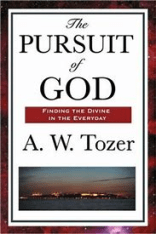
A. W. Tozer was born in 1897. He had no earned college degree but wrote many booksuntitled that impacted the 20th Century Church. During a trip by train from Chicago in the late 1940s, Tozer was inspired to write again. When the train pulled into McAllen, Texas the next morning, the rough draft of The Pursuit of God was completed. The depth of that message has made it a book in high demand – about 2 million copies in at least fifteen languages are in print.

Pastor Tozer had a drive to know God. He was not content to be merely a Godly pastor who could preach from the Bible. Tozer could be gentle with those who were actively searching for truth, but tough on those who were faking it. And his parishioners knew what it meant to be authentic Christians.

In his book Apprehending God, Tozer clearly says God wants to interact with us, but that the church around the world is basically ignorant of it. I agree with Tozer. Here are several of my own observations from around our nation:

  • People often treat the sanctuary as a secular auditorium.
  • Pre-service conversation is often not about the Lord.
  • However, as though a power switch has been turned on, people instantly enter a “worship” mode. (Is it authentic, or a trained response?)
  • After the meeting, most people go out as they came in because nothing in their lives has really changed. But some of them say, “I enjoyed the worship.”

This, in part, is what Tozer was talking about. Most people don’t understand the nature of God or what He desires. Worse yet: many of our ministers, also, don’t understand the nature of God and don’t know what it means to be an authentic Christian. 

Why do some folk have deep spiritual experiences with the Lord while others do not? The answer doesn’t lie with God, but with people. God is willing to bless all who sincerely come to Him, but many people don’t seriously study the Bible; they don’t meditate on or think about who and what God really is. Instead, too many of us prefer (as Tozer said) “glamour and fast flowing dramatic action” in our church services. Sadly, that is true today more dynamically than it was in 1948!

In our church meetings we often compete with the world for the attention of the world rather than focus on leading people in righteousness. Tozer said in 1948, “…worst of all, we have made the Word of Truth conform to our experience and accepted this low plane as the very pasture of the blessed.” In other words, most people think the hoopla and excitement in the church services is actually worshiping God and receiving God’s approval. But that might not be correct.

A.W.TozerTozer also said, “The shallowness of our inner experience, the hollowness of our worship, and the servile imitation of the world which marks our promotional methods all testify that we, in this day, know God only imperfectly, and the peace of God scarcely at all.”

How true! Since many in church leadership don’t really know what God wants, they are using the world’s methods in an attempt to accomplish God’s work. Therefore, we are pursuing the world instead of pursuing God. By placing an emphasis on being relevant to the people, we have effectively reduced the necessity of living a life dedicated to Jesus Christ. Thus, we essentially have watered down the Gospel.

I hope you readers will think about this.

Tozer said, “We have within us the ability to know Him if we will but respond to His overtures. (And this we call pursuing God!)  We will know Him in increasing degree as our receptivity becomes more perfect by faith and love and practice.”

This happens only by spending time getting to really know God. 

Authentic means not false or copied. It is something genuine, real, trustworthy, reliable; being accurate in representation of the facts. To be authentic Christians, we must stop living and acting like the world, but honor Jesus Christ in every facet of our lives – both in and out of church.

Come on now: What do you watch on television? What do you watch at the theaters? What kind of social activities do you enjoy? Would a Holy God approve of it? And don’t think God’s not watching. He most definitely is.

IMG_1799BTo be an authentic Christian, we must have an in-depth relationship with Jesus Christ. This relationship does not happen by going to church and enjoying the show. It happens by spending time with Jesus Himself through prayer, Bible study, meditating on the Life of Christ, and living in a manner that He would approve.

Authentic Christians change their world because of their Godly core values.

This life will be over somewhat quickly, and the way we live now sets the stage for what happens next. Think about it.

Living With Conviction

The newspaper headline was: “With conviction, the elderly pastor conned the former convict into surrendering after the ex-con attempted to con the pastor out his life savings. And with conviction the jury convicted the ex-con.”

Are you dizzy yet? When I read that news brief, it made my head spin. So, get a cup of coffee and let’s look at the word “Conviction.” What does it mean?

It comes from Latin: convincere; which means: “to conquer, to overcome decisively; to firmly persuade.” Today the verb form is “to convince or convict”; and the noun isConviction1 “conviction.”

So, a conviction is a firm belief that we hold on to; and many times a conviction is not just an idea that we believe. It is often a value or set of values (such as wedding vows and Biblical principles) upon which we have based our lives. Therefore, convictions are the criteria by which we make important decisions, and are the foundation of our character. And when we act on convictions, society often changes.

Thomas was a man of convictions. He saw a problem. He felt a conviction in his heart and mind about it. He prayed about it. Then, facing derision and opposition, he decided to do something about it.

Born in Glastonbury, England in 1845, Thomas was a dentist, a minister in the Wesleyan Methodist Connexion (which became the Wesleyan Methodist Episcopal Church), and disapproved of both slavery and alcohol.

Already understanding the detrimental results of alcoholism on society, Thomas became concerned about the use of alcohol (the sacramental wine) in Holy Communion. He objected to the use of alcohol anyway, had a pastoral concern for recovering alcoholics, and wanted children to partake in the sacrament of communion. As a communion steward in the church, Thomas Bramwell decided he had to do something about it.

He read about Ephraim Wales from Concord, Massachusetts who had finally achieved his goal of “developing the perfect sweet and palatable grape.” Ephraim named the grape after his hometown, Concord. Thomas also knew about Louis Pasteur’s process of retarding the spoilage of milk, called pasteurization, and applied that process to the Concord grape to prevent the fermentation process. After developing his unfermented communion alternative, he eventually convinced his church and many others to use the unfermented wine.

So there you have it. A centuries-long practice of using alcoholic wine in communion was overturned by a prohibitionist. Today entire denominations decry any use of alcohol in any form, including in Holy Communion.

220px-Thomas_Bramwell_Welch (1)But society also changed in other areas because of this man of convictions. His full name is Thomas Bramwell Welch, and he – with his son, Charles – had developed Welch’s Grape Juice. This achievement not only gave us unfermented wine for both sacramental communion and a safe beverage for home, but marked the beginning of the processed fruit juice industry.

Here are a few more tidbits of Welch trivia.

In 1913 Secretary of State William Jennings Bryan served Welch’s Grape Juice at a state diplomatic event instead of the traditional fermented wine. In 1914 the Secretary of the Navy, Josephus Daniels, forbade wine on naval ships and [temporarily] substitutedDSCN6260C Welch’s Grape Juice. In 1918 the Welch Company developed its first jam and called it “Grapelade.” The U.S. Army bought the first entire batch, and the G.I.s clamored for it when they returned to civilian life. In 1923 the world-famous “Concord Grape Jelly” was introduced, and it is my all-time favorite jelly. And in 1949 Welch became a pioneer in the frozen fruit juice industry by introducing Welch’s Frozen Grape Juice Concentrate. An added bonus is that in 2002 researchers reported the potential cancer-fighting benefit of the purple grape juice.

One man who had strong convictions changed society for the better. But a simple, diligent research can reveal thousands of others who, with conviction, changed our world: some for the better, and some for the worse.

How about you? Are you a person with convictions, or do you just float through life and let other folk establish your political, religious, and personal ideology? Living with and acting on convictions will produce the foundation in life you need to determine your direction and set your goals in life. Living with convictions produce character and integrity.

How do you become a person of conviction? I’m glad you asked.

Establish your core values – the values and ideas that you absolutely cannot and will not change. Now, if you say that you absolutely believe there are no absolutes – go meditate on that contradiction – that will be one of your core values.

Once you have determined some of these foundation stones of life, think about them; meditate on them and see where they might lead you. If you don’t like the result, go back and think it through again.

Reading about people like George Washington, Abraham Lincoln, Thomas Welch,  Charles Finney, and Billy Graham can assist you in defining and learning about convictions. Reading about Biblical characters such as Moses, Joshua, the Wise men from the East, the Apostle Paul, and especially the teachings and examples of Jesus can help you, because personal convictions help establish and confirm our identity.

May the Lord bless you as you live with and act on Godly convictions.