
A vast majority of you will say “No, I’m not an atheist,” while some will say “Yes, I am.” But why would I ask that question? Back to that in a minute.
Atheism has been defined as a lack of belief in God, a total denial of His existence,  and variations of the theme in between. The word atheism comes from the Greek negative article “a” which means “no,” and “theos” which means “god.” Therefore, atheism is the belief that there is no god. Did you catch that? A belief that there is no God. On the other hand, many of us believe that there is a God, He is knowable, He loves us, and is involved with mankind.
The polytheistic Romans in Jesus’ day, who believed in hundreds of gods, accused Christians of being atheists simply because Christians believed ONLY in the Holy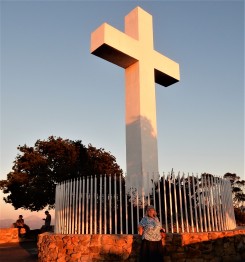 Trinity (Father, Son, Holy Spirit); while the Jews accused Christians of polytheism BECAUSE they believed in the Holy Trinity. The accusations depended on the point of reference. But that’s a story for another time. (This cross is on Mount Helix in San Diego County, just four miles from where I grew up.)
Many atheists probably don’t consider themselves anti-theists, but non-theists. Many are good, ethical, moral citizens, and strong Americans; and most atheists claim that atheism is not a belief system or a religion. But I call atheism a religion. Why?
In the atheist’s belief system: there is no God; nothing formed itself into a well-organized, majestic universe; organic life evolved from rocks; man evolved from … who knows?; there is no life after death; belief in God is wrong; and so on. But all of that is a matter of faith, and that is religion. Simply put: the atheist’s non-belief system is, by definition, a belief system. Biologist George Klein wrote: “I am an atheist. My attitude is not based on science, but rather on faith. The absence of a Creator, the non-existence of God, is my childhood faith, my adult belief, unshakable and holy.”
Many strong atheists are often aggressive in their conversations with theists and try to shoot holes in theistic beliefs. (And, sadly, many Christians are equally argumentative.) Atheists like to use logic and anti-biblical “evidences” to denounce God’s existence. However, I’ve had many interesting discussions with scientific atheists in the past, and most of them are still my friends because we didn’t hammer, degrade, insult, or malign each other. Rather, we expressed our beliefs – yes, religious beliefs – and allowed each other freedom of religion, freedom of thought, and freedom of expression.
Remember, we cannot change anyone’s mind. We must, as simply or as complex as the situation requires, present our beliefs and convictions to them and allow the Holy Spirit to work in their heart and mind.
 But now I have several questions for you: If you are a Christian, are you a practicing atheist? Keep reading.
1. Do you effectively deny God by your lifestyle: your language, actions, thoughts, motivations, work ethics, choice of humor, the places you go, what you watch at the theaters, on computer, or on television?
2. When someone begins to bad-mouth God or another person, do you just sit by? Or worse, do you join in the negative conversation?
3. If you attend church, do you attend for social purposes, out of obligation, or for business contacts?
4. Without being abrasive or overbearing, do you openly proclaim Christ to the world, or do you hide your Christian faith in the social shadows?
5. Would some folk be surprised if you told them you are a Christian?
A “yes” answer shows you are effectively denying God: being a practicing atheist. But if you claim to be a Christian, I want you to think about your relationship with God. Do you truly desire to live for God? I am not encouraging you to cram your religion down someone’s throat; that would be wrong. But we do need to openly, definitively “let our light shine” for the Lord – if indeed we are Christians.
Matthew 10:32-33 says, “Therefore whoever confesses Me before men, him I will also confess before My Father who is in heaven. But whoever denies Me before men, him I will also deny before My Father who is in heaven.”
Let’s not try to intimidate others, but let’s allow them to experience truth and life through our lives. Let’s give them a glimpse of Christ by the way we live.
 did you have a deer-in-the-headlights look on your face? The question is normally NOT asked in search of information, but either to strengthen the emotional barrier that blocks God out of a person’s life, or to hide some deep-seated hurts he is bearing. And he asks the question, knowing that he can shoot down most answers that people usually give. He’s done it many times and is good at it.

 reduction of the intensity of light, and total darkness is the total absence of light. The closest I have ever come to being in total darkness was in the big room of the Carlsbad Caverns – 700 feet below ground. They could not turn on the dark, but they did off the lights. And it was DARK!
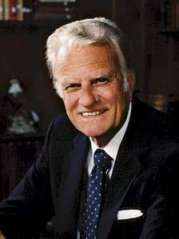 just stop your sinning, you will become holy!” But he often said: “If you will come to Jesus and ask Jesus to forgive you for your sins, if you ask Jesus to come into your life, you can become a new person and learn to live for the Lord!”
  a legacy. There are two kinds: physical and spiritual. So, what kind and what quality of a legacy are you creating?
 relative, friend, neighbor, whomever) in the casket was lowered into the ground and you left the cemetery, what left with you? Money? Land? Clothing? No. So if none of that left the cemetery with you, what did? MEMORIES! The person’s character – exemplary or disappointing – does not get buried, but remains in the minds of all those who know him or her – or even know OF him.
 to build our rockets and space shuttles. I was on several of those teams. Each person designs, programs, or builds his own portion, then hands it (the legacy) to someone who takes the product to the next level. There is always someone who will pick up where we leave off. If we do our part well, we have created a good legacy. Then when all the parts are finally assembled into a rocket and space shuttle and placed on the launching pad, what happens? If the vehicle is assembled properly the passengers will safely reach the space station, the moon, or whatever destination has been programmed.
 proven throughout history that others will be either blessed or hurt by how we live. Proverbs 11:18 tells us that if we do what is right, we will be rewarded. Proverbs 22:9 informs us that those who share what they have with others will be blessed. Those three verses talk about our legacy.
 enjoyed about 99% of the trip. We had been thinking about a trip like this for over 30 years, and it was time to fulfill the dream.
 sermon; but my computer was having difficulty conducting simple operations.
 miles to a computer shop in Pagosa Springs, Colorado. During the interrogation, it slowly dawned on me: the 65-watt transformer came with my previous computer! When I upgraded to my Dell Precision M6300, I didn’t think of purchasing an updated travel power supply, and had not needed a backup power supply again until this trip.
 exhausting our batteries? We often find ourselves with insufficient power to finish the job at hand. Sometimes we even start a job without the appropriate power. Perhaps we are either not plugged in, or maybe we are plugged into an improper power supply. Attempting to operate on low or inappropriate power often works for a while, but living that way can eventually generate a nasty little condition called burnout. Or even Failure!
 Memorial Day! The very sound of the name resonates with deep feelings within the minds of some Americans. Parades with marching bands and the rippling Red and White stripes with the Blue field of white stars (one of the most famous flags in the history of the world) will be a major event in many towns dotting the landscape of the United States of America.
 scholarships. But at age nine, he heard John Philip Sousa and the United States Marine Band on Sousa’s last tour, and Stan developed a burning desire to be a Navy musician.
 and torpedoes. Believing the ship would capsize, Captain Buckmaster gave the order to abandon ship. The USS Balch, a small warship called a destroyer, rescued Stan and many others. (The Yorktown sunk two days later.)
 After the war, Stan left the Navy, continued his schooling, and in 1954 reentered the Navy as a Chaplain. He spent another twenty years serving the Lord and his country to the best of his ability. He retired with the rank of Captain.
 As of March of 2017, over forty projects with over 10,800 wind turbines throughout Texas provided electricity through wind power – called renewable energy – and generated approximately 15.7% of the electricity used in Texas. That’s more wind-powered electricity than is generated in any other state. This industry also provides over 24,000 jobs in Texas.
 are becoming more and more popular around the world. Without wind, our summer days can become oppressively hot, and rain would not be able to water the land. Wind has been a necessary component of life throughout history.
 but raised three days later to live forever more. If we believe in and place our faith in Him, we, also, will have eternal life and will live with God in heaven forever. If we accept Christ into our lives and live for Him, we will have peace that passes all understanding even in the midst of turmoil. We will be able to stand tall and strong through any windstorm we may face, just like the Vestas V90 wind towers in the plains of Texas.
 equilibria, natural selection, convergent evolution, co-evolution, adaptive radiation, mutation, genetic drift, theistic evolution, intelligent design, Biblical creation, etc., can be confusing! In the midst of this confusion, I’ll attempt to take some mud out of the water.
 from other solar systems or galaxies, while others go straight to the hypothetical Big Bang. But neither hypothesis provides a plausible answer.
 dissolved rocks: a rich soup of dissolved minerals. But without the direct intervention of the divine Creator, God, it is absolutely impossible for organic life to evolve from dissolved rocks. Also, a portion of the 2nd law of thermodynamics (entropy) reveals that nature does not become more complex, but degrades with time.
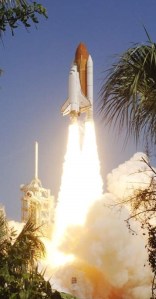 planners, engineers, builders, and more. When we study the intricacies of the simple one-cell amoeba or massive 200-billion-star galaxies, it is obvious that there was a dreamer, planner, engineer, and builder. The classic Big Bang hypothesis and humanistic evolution make intriguing science fiction, but do not stand the test of time. Rather they are diversions which turn us away from truth: from Almighty God who created us, and from Jesus Christ who loved us and gave himself for us.
 country. Starting the trip with 30,159 miles on the odometer, we ended the trip with 52,143. Simple math says that we drove 21,984 miles. However, the trailer we pulled logged only 9,105 miles which reveals that every time we parked the trailer, we did a lot of other traveling. Moss does not grow on our wheels.
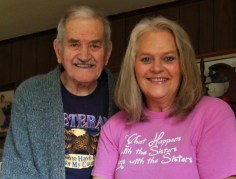 Church of Christ pictured here with his daughter, Cathy – was 94-years-old, and he delighted us with his quick wit and good memory. He spent some time regaling us with stories of the past including memories of Iwo Jima and Guadalcanal in World War II.
 time, Dear Jesus; that’s all I’m asking of you.” But because we humans are easily prone to get stressed out, I think Jesus would respond by saying, “On the Contrary: One day at a time, Dear Christian; that’s all I’m asking of YOU.” Scripture exhorts us to take a day at a time, for Jesus said in Matthew 6:34 “Don’t worry about tomorrow, for tomorrow will bring its own worries. Today’s concerns are enough for today.”
 nor destroyed. Matter can change shape, form, or state (ice, water, vapor, plasma), but matter cannot be made out of nothing or annihilated into nothing. That invalidates any Big Bang hypothesis – scientific or not.
 and all the cosmos were merely a statistically impossible happenstance of nature, and if creatures such as the Spotted Owl, rare New Mexico Jumping Mouse, Northern Hairy-Nosed Wombat, or a kitten were more important than mankind, why do so many well-meaning people who don’t believe in mankind’s importance endorse expensive self-improvement, image-enhancing, and self-esteem seminars? Those would be a waste of time; but negating mankind’s importance does explain their obsession of infanticide by fetal abortion.
 and purpose for our existence, and that we were made in the image of our Creator. Those who accept that fact might understand the dynamic meaning for our existence. So, why are we here? God created us to fulfill HIS purposes. However, we must study the Holy Bible and ask God to reveal His specific purpose for our individual life.
 have been surprised at their moral contradictions. Many who believe in being
 meaning, and God established morality, then our destiny will dynamically involve God. Keep in mind that your and my beliefs neither eradicate nor establish truth. Truth stands on its own foundation and we either accept or reject it. A group of people can sit in a circle for as long as they desire and think world peace as intently as they know how. But judge for yourself: Is it working? Of course not, because the world rejects the Prince of Peace – Jesus. If you don’t believe me, look at the Middle-East today.
 John 3:16 – God so loved the world – that includes you and me – that He gave His only begotten son – Jesus, who died for us – that whosoever believes on Him will not suffer eternal death, but will live eternally in heaven with Him.
 Gene Linzey