
After working in a national scientific laboratory for twenty-two years, I retired in 2006. But 1991 was a turning point in my professional life: I was introduced to the world of computers.
My project leader asked me a very simple question: “What do you know about computers?”
“Nothing.” I truthfully responded.

“Everyone knows something about them, so really, what do you know?”
“I told you, nothing.”
A little perplexed, he invited me into the computer room. He couldn’t believe that an adult was ignorant about computers in the advanced 1991 culture.
I followed him into the room that contained all the electronic equipment, including the computer, that operated our multi-million-dollar experiment.
Pointing to something on the desk, he asked, “What’s this?”
“A television?”
“No, that’s the monitor.” Pointing to another item, “What’s this?”
“A funny-looking typewriter?”
“No, that’s the keyboard.” Pointing to a metallic-looking box with some buttons on a nearby table, “What’s this?”
“That’s a printer.”

“Correct.” Pointing to something on the floor, “What’s this?”
“A storage container?”
“That’s the computer. Good grief, you don’t know anything about computers!”
He then made a prediction. “Your future lies in knowing how to use the computer. Starting tomorrow, you’ll spend two hours a day learning how to operate the computer and learning what you can do with it. Eventually, all your reports will be made using the computer.”
But the boss didn’t leave me high and dry. He gave me some basic instructions. Very basic!
Holding a flimsy thing in his hand, he started.
“This is a [5.25”] floppy disk, here is where you will sit, this is where you insert the disk into to computer, this is how you turn it on … but stay out of “C” drive.”
I didn’t know what “C” drive was, but I decided to stay out of it. And that was my introduction to the world of computers and word processing.
For the next four months, I spent two hours each working day “playing” with the computer. I took out documents (typed by others) and retyped them while changing things for the experience. I poked around with buttons and keys just to see what would happen. Often, I would get the poor thing confused and it would freeze up, and I had to use the magic formula of Ctrl – Alt – Del. That always fixed everything. (Remember, that was back in 1991.) But I still didn’t know what “C” drive was.
However, this was a special computer that controlled our scientific experiment. One day when I turned it on, it seemed that some of the information that usually appeared on the monitor was missing, so I called my project manager and asked him what was happening. After a brief interlude of unrecognizable and unrepeatable utterances, he exclaimed, “You got into “C” drive!”
Well, over the phone, he gave me instructions that enabled me to retrieve the lost information. That day, I learned about “C” drive and “Undelete,” and that was also the day he scheduled me to attend my first computer class. Two primary bits of knowledge I gained in class were: 1) The computer didn’t store or save information until we purposely saved it. 2) Save what we’re working on every 15-20 minutes.
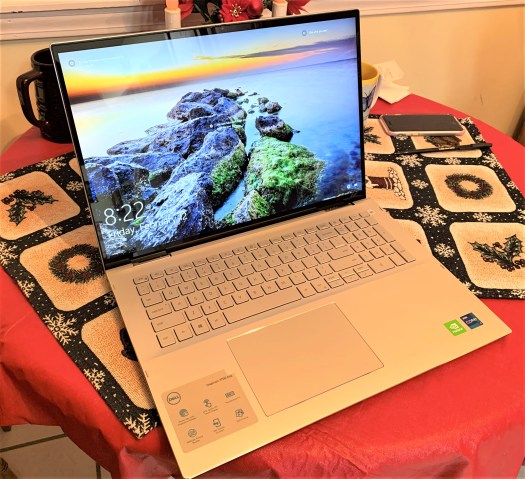
The boss at the scientific lab was correct when he predicted, “Your future lies in knowing how to use the computer.” Teaching, preaching, formatting books, publishing, and so much more that I do, requires use of the computer. And what’s even more exciting is, I enjoy the work. And you, the reader, know it because without the computer, I wouldn’t be able to put up my blogs.
Oh, yes … I can now get into “C” drive safely … most the time.
[An excerpt from Reflections on Life, page 130.
https://www.amazon.com/Reflections-Life-S-Eugene-Linzey/dp/B09BT9TG5D]
 Gene Linzey