
Do we have any idea of when Jesus was born? How did we place his birth in December?
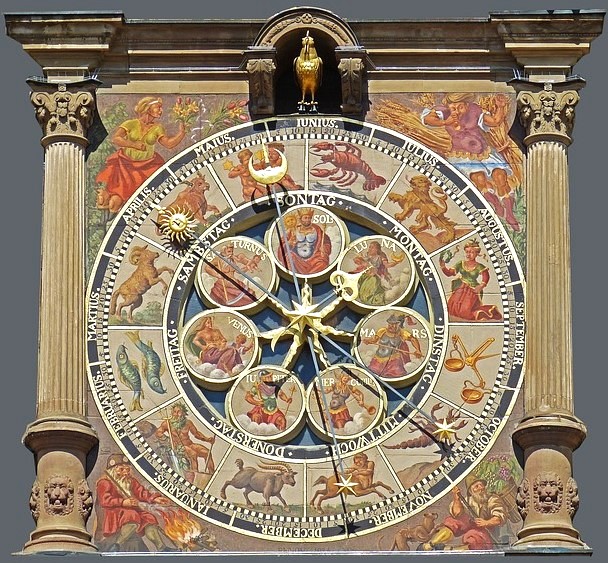
Emperor Julian, Constantine’s nephew, originated the Julian Calendar. In 1582 Pope Gregory’s people found a way to correct the minor flaws in the Julian calendar and produced what we call the Gregorian Calendar. However, the accumulated Julian calendar errors amounted to an estimated period of two to seven years (no one knows for sure), and it would not be possible to go back and attempt to correct every document ever written. Therefore, since all of human history was, in some way, dated in relation to Jesus’ birth, it was decided to back-date Jesus’ birth.
Using the amended Gregorian calendar, we think Jesus was born around 2–5 BC. In what month was he born? Probably in late September to mid-October. Why do I say that?
We know that the Old Testament spoke not only of history and the Abrahamic Covenant, but the Old Testament is intrinsically tied in with the life of Jesus Christ (Immanuel: God with us), the prophecies of his appearance, major Jewish religious festivals, and the proposed restoration of mankind. Therefore, I believe it is safe to assume that the major points of Jesus’ life are also related to the major festivals. Let’s look at them.
Jesus’ crucifixion took place on the Passover (Pesach). This is a major point that is well-documented in the Gospels and in Roman history. The Feast of Unleavened Bread related to Jesus’ burial. The Feast of First-fruits was related to Jesus’ resurrection. And of course, the Feast of Pentecost (Shavuot, or Weeks) related to the birth of the church fifty days after Jesus’ resurrection which was ten days after his ascension.

The other three major festivals are the Feast of Trumpets (Rosh Hashanah), Feast of Tabernacles (Sukkoth, or Booths), and the Day of Atonement (Yom Kippur). With the Feasts commemorating major events in the life of Jesus as well as of Israel, it seems to me that His birth would have taken place at another major feast: possibly at the Feast of Trumpets (around September or October).
Luke 2:8 says, “Now there were in the same country shepherds living out in the fields, keeping watch over their flock by night.” If the shepherds were living in the fields at night when the angels “trumpeted” Jesus’ birth, it is safe to deduce that the weather was not yet too cold. Thus, a September or October timeframe is logical, but not conclusive.
His birth might have been on the Feast of Booths (Tabernacles), also in the September-October time frame. Why? Mary and Joseph were not in a house during Jesus’ birth; they were in a cave, stable, or some other “booth.”
So how did the church decide on December 25?
King Constantine in the fourth century royally decreed that everyone in his empire should be Christian, and it became convenient for him in consolidating his empire to declare many pagan festivities as “Christian.” Therefore, the Sol Invictus (the “Unconquerable Sun”), marking the winter solstice and celebrated on December 25, was decreed to be equivalent to “the Righteousness of our Lord.” And to make things politically and religiously correct, Constantine decreed that Christ was born on that date. And since the emperor heavily influenced the church’s decisions, the church accepted that assigned date.

I’m a historian and I enjoy researching. However, the fact that Jesus wasn’t born on December 25 is not a problem. Our faith does not hinge on knowing the date of Christ’s birth. Our faith is based on the truth that Jesus is God in human form, was born of a virgin, came to save us from eternal destruction, died to redeem us from our sin nature, raised from the dead three days later to conquer death, ascended to heaven 40 days after he rose, and that he will return.
So, go ahead and celebrate His birth. But remember: He is no longer a baby. He is Almighty God, the creator of the universe. He created you and wants you to join Him and be part of His family forever.
Read part 2 tomorrow.
 Gene Linzey