Birthday Celebrations

Two of my sisters and two of my children were born in November, so let’s talk about birthdays.

You all know the song, “Happy birthday to you.” It’s normally sung as a cake, with lit candles, is brought into the room or placed on the table. Someone hollers “make a wish,” then the birthday-kid – or adult – blows the candles out with one breath. I’ll admit, it’s difficult to get them all with one breath if there are more than 25 on the cake, or if they are trick candles.

Have you ever heard of those? Trick candles usually have magnesium dust in the wick. After the person blows out the candles, a glowing ember reignites the magnesium, and that reignites the residual wax in the wick. I know the trick to blowing them out – and keeping them out – with one breath, but I won’t tell.

Once when 35 candles were on my cake, it set off the smoke alarm!

Happy Birthday, cake, ice cream, presents, noise … where did it all begin? The answer will reveal why some Christians, Puritans as well as contemporary individuals, don’t celebrate them. They consider the festivity as pagan. They saw it as evil, arrogant, and ego-building.

It seems that birthday celebrations began in ancient Egypt. The date of birth was viewed in conjunction with astronomy, hoping “the stars” might predict their future. Also, a Pharaoh re-established his birthdate to when he became Pharaoh, because that’s when the people viewed him as a god.

The ancient people thought that demons were especially active during major events in our lives, so they made loud noises to scare them away. During new year festivities, the noise comes from guns, fireworks, and other means. For birthdays, noisemakers of many types are employed. But they also thought joy and happiness warded off demons, so gifts were given to make the person happy.

Candles might have come from the Greeks as they honored the goddess Artemis. They were lit to glow like the moon, which was a symbol associated with that goddess.  

Various cultures counted birthdays differently. For example. In June of 1969, we spoke with Chief Eagle of the Rosebud Sioux Reservation in South Dakota. In the past they didn’t think of years; they counted winters. (The Sioux call themselves the Lakota or Dakota – which means, Our People.)

It appears that the birthday cake, as we know it today, was first invented in Germany for their Kinderfeste, or Children’s Festivity. Creamed ice – I said that correctly – was known as early as the second century B.C. But ice cream might have been invented in the mid-1700s A.D. It’s said that President George Washington spent $200 for ice cream in the hot summer of 1790.

The original tune for “Happy Birthday” was written in 1893 by two sisters (Patty and Mildred Hill), both Kentucky school teachers. Their song was called “Good Morning To All,” and was sung by the students each school morning. But when a child had a birthday, the sisters substituted the lyrics Happy Birthday To You.

September 9 and October 5 compete as the most common birth date in the United States, but February 29, on the calendar every fourth year, is the least common birth date in the world.

The majority of American children celebrate birthdays with a cake topped with lighted candles. Most families use candles to represent how old a person is. When the cake is set before the guest of honor, he or she is supposed to make a wish without telling anyone what it is. After making a wish, he or she tries to blow out the candles. If all the candles go out with one breath, it is believed that the wish will come true.

Birthdays are celebrated more for children than for adults, unless it’s a milestone birthday such as 21, 30, 40, 50, 75, or 100. But have you ever thought about why we even bother to celebrate birthdays? Very simply, it’s a time for friends and family to come together and rejoice with you, to tell you how much you mean to them. Or to congratulate you for surviving another year.

With so many people hurting, feeling rejected, or unimportant, celebrating their life and honoring them is a wonderful way to express your love to them, and tell them how much they mean to you. It doesn’t need to cost much, but it’s important to show your family and friends that you care.

Reaching for Life

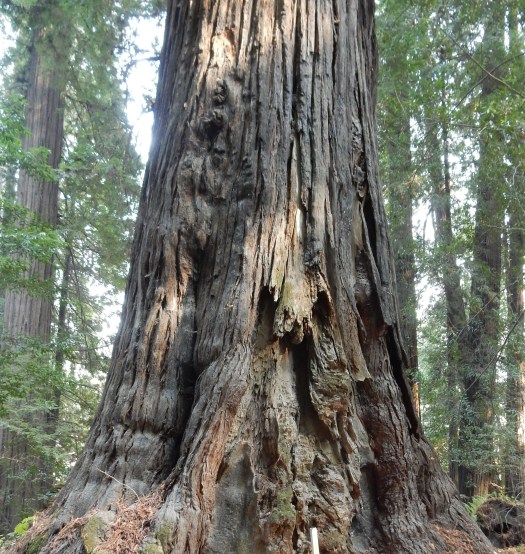
I’ve been looking at my pictures of the redwood forest in Northern California. The trees are big! Our pine tree in the back yard that is over two and a half feet in diameter looks big, but it is small compared to a relatively small five-foot diameter redwood tree. Amazingly, redwoods that are 10-15 feet in diameter are common; and it staggers the imagination knowing that the diameter of the General Sherman Redwood is over 32 feet!

A typical farmed redwood tree may weigh 50,000 pounds, but some redwood trees weigh over 2,000,000 pounds! Interestingly, about half the weight is in the water. The redwood bark may be over 18 inches thick, and a huge redwood tree may provide wood to build 30-35 homes.

Water is necessary for life. The redwoods grow to 250-350 feet tall and require over 100 gallons per tree per day. But it rains a lot in these forests, snows in the winter, and fog is prevalent; therefore, they are seldom thirsty. The root systems of redwoods are shallow, and that would mean a heavy wind or flood could topple them easily. But as they reach for life-giving water, a mature tree spreads its roots over 2 to 4 acres; and with an average of over 30 trees per acre, the root systems overlap and intertwine which results in a strong foundation for these top-heavy giants. They effectively support each other in rough times.

Light is also necessary for life. God engineered plants to reach for or aim toward light. This is called phototropism. The same is true of these giant trees. Programmed to be tall anyway, they continue to reach for life – for sunlight. Lone trees out in the open will not be as tall as those in the forest with a thick canopy of foliage, therefore, they are open to more danger. There is protection among neighbors.

The mature redwoods are basically fire-resistant. The thick, fibrous bark does not burn easily, and as a protective shell, it insulates the tree which allows it to survive most fires. The thick bark also provides protection of another kind: it has the ability to withstand fungus, disease, and insect attacks. This is why these trees live so long. The oldest known redwoods are about 3,000 years old. Only the bristlecone pines (about 5,000 years old) are known to be older.

Looking at the pictures of these magnificent trees, my mind gravitates toward humanity. I see similarities. No – not about size, but about other features and qualities.

The redwood’s root system covers a wide area which gives it stability in inclement weather. In the same way, our roots in healthy relationships with family, church, and society give us stability during “inclement” situations such as death, job loss, health deterioration, and more. In our many storms of life, we need each other for emotional and physical support.

But strong roots in a healthy relationship with Jesus Christ will help us even more in this life on earth, as well as throughout eternity.

 A straight tree is stronger than a crooked tree, and its wood is useable in more situations. Likewise, a morally and intellectually straight man is stronger and more trustworthy, where an immoral or double-minded man is weak, confuses people, and leads people down the path of destruction.

Trees must reach for the light to survive. In the same manner, man must reach for light – truth – to survive. We cannot survive very long, either societally or spiritually, if we live in spiritual and moral darkness. We cannot mature as morally strong individuals if we resist truth.

As the thick bark protects the trees, living in truth will protect us. Knowing the truth about various aspects of life – food, environment, chemicals, health, morals, physiology, and a lot more – can help us live safely. And purposefully living according to the truths found in the Bible will protect us in many ways most people don’t yet understand.

As the trees depend on water from the sky for life, man depends on guidance from the sky – from God – for life. Psalm 1:1-2 tells us not to follow the advice of ungodly people, but to meditate on and live according to the words of the Lord. Psalm 33:11 tells us that God’s plans are good, healthy, and beneficial. And Proverbs 14:11-12 warns us that man’s apparently powerful plans will fail in the end, but God’s seemingly weak plans are actually strong and will stand forever.

Trust in Jesus: Reach for Life. And live forever.

Who’s the Designer?

I’ve been driving cars for over 59 years, but that doesn’t make me an auto mechanic. I’ve been using computers for 33 years, but that doesn’t make me a computer programmer. In like manner, a person who has a Ph.D. and works in a scientific laboratory doesn’t mean he or she knows much about creation, the origination of the cosmos, or of life.

But please listen: just because I’m a dedicated Christian doesn’t mean I know everything about creation or of the origination of life, either. If we are honest, we admit that we all base our lives on faith to some degree.

While I openly admit that my knowledge is limited, others who oppose my views get upset or frustrated if I declare their knowledge to be limited.

Let’s look at a few ideas logically and scientifically.

To start, faith is required to believe in what has not been proven. For example, I had faith that this chair would support me. I sat on it to test my theory. Wonderful! It is now proven that the chair will support me, so faith is no longer required. Let’s continue.

In September of 2000, Alan Dershowitz, an agnostic, debated Alan Keys, a Roman Catholic. In defending his main thesis that “what is right cannot be known,” Dershowitz said, “We know what evil is. We have seen it.” He mentioned events such as the holocaust and the crusades. He then raised his voice and emphatically declared, “I don’t know what’s right. I only know what’s wrong!” (From the book, I Don’t Have Enough Faith to be an Atheist, by Norman Geisler and Frank Turek; page 179.)

But Dershowitz was definitely and defiantly wrong.

We cannot know what is incorrect or wrong unless we have a standard of what is correct to judge it against. To know what’s wrong, we must know what is right. Therefore, since we know it is evil to murder, we instinctively understand the intrinsic value of life. Since we know that lying is wrong, we intuitively understand the moral value of truth. The principle of right and wrong is imbedded in everyone’s conscience. Therefore, we have proof that we can know what is right.

How about the concept of truth? Some people emphatically declare that since everything is relative, there is no absolute truth. But is that statement correct? Think now: Is it absolutely true that there are no absolute truths?

Some people affirm that Biblical Creation is not true, and claim that the mythical and unprovable Big Bang created the well-organized cosmos with logical and scientific precision with no intellect or mind to guide anything. But I don’t care how it’s explained, it is scientifically and physically impossible for matter to self-generate out of nothingness. The Big Bang hypothesis is science fiction. I might add, though, It is an intriguing concept.

I’ve never received an intelligent answer to this question: If evolution were true, how did rock particles turn into living organisms?

By the way, have you ever looked through a microscope at a one-celled amoeba? I have. Those critters are very complex. And if you ever stop and think about it, there’s no intelligent rationale as to how amoebas evolved into other life-forms. In reality, evolution is not scientific. It’s a hypothesis, it’s called a theory, and taught as fact. But that’s not science. At best, it is an unprovable concept that is based on faith.

We in the scientific arena understand that nothing (neither material nor energetic substance) can be created out of nothing. Matter can be neither created nor destroyed. Yet matter – stars, planets, gas – does exist.

To believe billions of galaxies came into existence due to an explosion of absolutely nothing takes more faith than to believe our Creator – God – spoke the cosmos into being.

In order for people (agnostics, atheists, higher critics, skeptics, non-believers) to persuade me that God did not create all of nature, they should give me a viable alternative. But they can’t. Their arguments break down due to physical impossibilities, built-in inconsistencies of logic, ignorance of obvious truth, and lack of substantiation. That’s why many who believed in (had faith in) evolution have gravitated toward the Intelligent Design concept.

But they still have a problem: if there’s no God, who is the intelligent designer?

Understanding that ALL concepts of creation are intrinsically religious, the only logical approach is Genesis 1:1, “In the beginning, God….”

God is the designer of it all.

Be Ready for Surprises

Carol and I have an exciting life. We often don’t know from one day to the next what we’ll encounter – whether we’ll enjoy the events or be disappointed that we got out of bed. However, we understand that every day and in every situation in life, we have choices about how we’ll respond to circumstances. Sometimes events may be planned, but often they seem to pop up out of the blue. But we choose to respond in ways that honor the Lord.

For example, I wanted to visit my brother in California who was having health problems. Stopping for the weekend to visit with a dear, life-long friend who is a pastor, at 5:30 on Saturday evening, the pastor asked, “Would you be willing to preach for us tomorrow?”

I could have reacted with, “This is too short of a notice. I need more time to prepare.” But that’s not how God works. God had a plan in mind for both the church and for me, and I didn’t need much time to prepare. God had already been preparing the message in my mind and heart.

Another example developed as we were planning our route west from Albuquerque. Snow was forecast for Flagstaff, and pulling a trailer uphill in snowy weather is not my idea of safe traveling. So, we decided to take the southern route through Las Cruces, NM, and west through Mesa and Phoenix, Arizona.

However, we found out that God guided us in choosing the southern route because another friend who lived in Mesa had passed away. Her husband, Bill, called and asked if we could be with him at the home-going ceremony which would be at 10:00 AM on Monday. We agreed and arrived in Mesa on Saturday and stayed with Bill through the weekend.

Arriving at the cemetery at 9:30 AM on Monday, we interacted with Bill and the other family members, but the pastor hadn’t arrived yet. Finally, at 9:55 AM, I asked Bill, “Where’s your pastor?”

“Oh, didn’t I tell you? You’re him.” Surprised, I asked if he had an agenda. He said, “You’re it.”

I turned to the funeral director and asked him about his agenda. He responded, “I was told you’d have it.”

Again, I could have complained about not being informed beforehand. But if we are truly followers of the Lord Jesus Christ, our lives and schedules are in His hands, and He has the freedom to guide our paths. That eliminates a lot of potential stress.

I took a deep breath, sent up a quick prayer, and reprogrammed my mind. Four minutes later we began our Celebration of Life service. It didn’t take any time for preparation because God was in charge, and Jo had been Carol’s and my friend since the early 1990s. I opened the meeting with prayer, then related an interaction with her when I was music minister where she played trumpet in the orchestra. Other friends who had known Jo since the 1980s were there, along with Jo’s husband and family. They, and others, added stories from their past. We truly celebrated her life, and it seemed like it was all planned.

Guess what? It WAS all planned – in the mind of God.

When a surprise springs up in front of us, all we need to do is ask the Lord for guidance. God likes that, and always has an answer. He’s in charge, and all we need to do is communicate with Him and be ready to obey.

That reminds me of another interaction many years ago.

In 1978 when Carol & I, with our 3 older kiddos were getting ready to relocate from New Mexico to Oklahoma, an older pastor in Albuquerque gave me this admonition:

“Gene, don’t open your own doors. You, and others who are like you, have a tendency to open doors that God doesn’t want open. Keep your hands off the doorknobs. Let God open the doors for you, but be sure to go through the ones He opens.”

“May I try the doors and see if they’re unlocked?”

“You may lightly push – with one finger. But keep your hands off the knobs.”

I’ve lived by that rule and God has led in wonderful ways.

Many surprises await us, so trust God for His guidance. Psalm 28:7a says, “The Lord is my strength and shield. I trust him with all my heart. He helps me, and my heart is filled with joy.” Be ready to obey, and enjoy the surprises.

Is There Life Without Internet?

This is a follow-up of my blog last week. But this trip, in late 2018, took us up to the Great Northwest. We were staying at the Silver Lake RV Resort about 48 miles west of Mount St. Helens, not far from Castle Rock, Washington, .

My Precious Carol and I have been staying at an RV Campground since September 15 that does not provide wi-fi service for us. They do provide it for people staying for two weeks or less, but those of us who stay long-term have to pay for our own internet service, wi-fi, and electricity. All you veteran RVers probably know what I’m talking about, but this was new to us.

I laughingly and facetiously asked my Bride of 52 years, “Is there life without internet?”

She reminded me of when our three older kids were in elementary school. The school officials were going to conduct an experiment that was titled: Is there life after TV? The Public Schools were cooperating in a research endeavor regarding the effects of television on family life.

This was not mandatory for everyone, but on Monday morning all kids in the school were encouraged to refrain from watching television for the next 7 days. The kids took notes home to their parents asking them to participate with the project.

The kids were asked to bring in daily reports of what they did each day and how life changed; but in our house, we watched very little TV so I didn’t expect quality of life to change. Darlene, Ron, and Jeremy practiced their musical instruments a little more, we played a few more family games, and we got into more family discussions. But I was surprised when Carol told me how much better we all got along with each other.

Guess what? Shortly after that educational experiment, we sold the TV and used the money for music lessons. Our kids were in on the family pow-wow, and that decision was unanimous.

For the rest of the school, was there life after television? After just two days, there was weeping, wailing, and gnashing of teeth in many of the homes – and much of that came from the parents!

It was surprising how many families had wrapped and warped their lives around the box that usurped so much of their time. Unplugging the television was like a divorce, and life was shattered. Many families couldn’t take it and turned the TV back on. Relief flooded their homes as each family member resumed going his or her separate way.

That was in 1979 and we still do not immerse ourselves in television, theater, entertainment, etc. Our daughters and Carol & I own televisions, but the TVs are tools we use at our discretion. On the other hand, our two married boys, Ron and Jeremy and their large families, don’t own television sets. We all understand what life is about.

Now, where was I? Oh yes … is there life without the internet?

The first question my Precious Carol and I asked ourselves is: What is the purpose of this extended trip?

The purpose is two-fold. We realized that if nothing in our lives changed in these, our later years, we would not be making any new memories. So 1) I resigned from all my responsibilities to reduce stress, and be with Carol. And 2) I need time to write two or three books.

And guess what? It is great! Even without internet.

But let me be open with you: I do need wi-fi and internet periodically, but not 24/7. I need internet capability – as when I need to email you folk, send my Reflection articles to the newspaper, and do research – and the park officials allow me to intermittently use their service in the lodge. But leaving the RV to do that means I plan my time judiciously because this trip was mainly about spending time with Carol.

So, are there benefits of not having internet and TV? Yes, that’s why I am not paying for it at RV campsites. But we are paying for electricity. That comes in handy if we want to have lights, heat, and use of the computer – wi-fi or not.

One man asked me, “Don’t you want continuous use of your e-mail service?”

I told him that I can live without most of the e-mail I receive, and e-mail that friends and family send can be answered when I have time. I reminded him of the benefit of e-mail: others can send e-mail at THEIR convenience, and I can respond at MY convenience. I am not hog-tied to the internet or e-mail; the telephone is what’s needed for immediate interaction.

 Well, since you’re reading this, I suppose the e-mail worked and my blog got through the internet. Have a great day.

You’ve Got to be Kidding!

The following event took place in 2018.

“Where are you going this time?” Ed seemed to think my Precious and I should stay put for a while. “And how long will you be gone?”

“We’re going to The Ridges Resort in Young Harris, Georgia. It’s time for the annual reunion of the USS Yorktown (CV-5) Survivor’s Club, and we’re meeting in northern Georgia this year. The reunion will run from May 2-6. I’m the chaplain for the group”

“Oh yeah. Your dad was on the Yorktown at the Battle of Midway, wasn’t he? When was that battle?”

“June 3-6, 1942, and the ship sunk on June 7. I replaced Dad as chaplain of the survivor’s club when Dad died. We’re wrapping a trip around the reunion.”

“Young Harris? Funny name for a town.”

“It’s a real town – a small one – about six miles south of the Tennessee border and about 110 miles by road south of Gatlinburg, Tennessee.”

I told Ed we bought a travel trailer, and that it’ll be our home on the road for a month. I also mentioned that we would visit the Museum of the Bible in Washington D.C., the Gettysburg Battlefield, Niagara Falls, and maybe Noah’s Ark in Williamstown, Kentucky again before coming home.

 “The trip sure sounds interesting. But I know you: you wouldn’t buy a trailer for only a one-month trip, and I know you have to be home for your writer’s conference in June. So, why the trailer?”

“Okay, Ed; I’ll give you a hint. Starting in late July or early August, we’ll be on the road for about a year.”

“A year! Are you serious?”

“Yes, we’ll be gone for about a year, and the trailer will, indeed, be our home on the road. We’ll need a renter for the house. If you know of a family who needs a home for a year, let me know. But regarding the trip, I’m going to conduct an informal survey of churches across America while we travel the country. And, yes, we’ll do a lot of sight-seeing as we go.”

Shaking his head, “More like a spot-check survey. I think you ought to stay home. You going to keep writing for the paper?”

“Oh yes. For some reason Graham Thomas puts up with me, so you’ll see me every Wednesday in the Herald-Leader. And I’ll send Graham Tales From the Road periodically.”

Ed said he would pummel me with more questions later; but he had errands to run.

We never had a trailer before, so we made a preliminary week-end excursion to the Dallas area in March to learn about pulling one. We’ve named the car Traveler and the trailer Casita. In US Navy terms, the Dallas trip was the trial-run; the month-long Yorktown Reunion trip will be the shake-down cruise; and the year-long excursion will be the maiden voyage. (The month-long stretched into a 7-week trip.)

I chuckle as I think about Ed’s and my conversation. It’s true that Carol and I travel a bit, and I’m thinking of a trip back in June of 1970. Renting a U-Haul truck, we were moving from Everett, Washington to Los Alamos, New Mexico. Carol and our two kids flew by United Airlines, and a friend, Oscar Moe, drove the truck with me. Stopping in Pinehurst, Idaho for gas, Oscar struck up a conversation with the gas-station attendant.

“How long have you lived here in Pinehurst?” Oscar asked.

“All my life.”

“Have you traveled much throughout the Great Northwest?”

“Never been outa Pinehurst.”

“I don’t mean to be rude, but you said you are 38-years-old, and you’ve never been out of town?”

“Yup. Don’t need to go nowhere. Family’s here, dog’s here. Ma and Pa’s buried here.”

That amazed me! I was almost 24-years-old, married almost 4 years, and had traveled coast-to-coast with my Navy parents. Meeting someone who had never been out of town? That was almost beyond my comprehension.

Well, back to the 2018 trip.

Ed didn’t think we were really serious about this trip in a small trailer, and when he saw it, he burst out, “You’ve got to be kidding!”

I agreed with him that this will be living in close quarters for a while, and the weekend trip to Dallas would introduce us to living with each other in a portable house that is about half the size of the living room in our house. Will there be tension or misunderstandings? We are human, so the answer was yes. The inside space of a 20-foot trailer has only about 120 useable square feet, and that’s a lot less personal space than a 1750-square-foot house!

But our dedication to Jesus Christ was foundational and our love for and devotion to each other is a close second. We understand human nature. but no matter what happens on this ball we call earth, I’d rather be with Carol than with anyone else in the world. Therefore, overcoming problems is a given, and we will grow through them.

That was five years ago, and Carol & I have slowed down a little. But don’t be surprised if you hear that we took off on another trip. After all, the Casita is still on our driveway in front of the house. Tires are good, and — come to think of it, we are going to Texas in 2 weeks. Hmmmm………

Well, Blow Me Down!

Some folks said Blow me down! meant to hit me or knock me down; but that might not be correct. The phrase goes back the late 1700s, and is a statement that sailors said in a windstorm. A windy place in Nova Scotia was called Cape Blow-me-down, which evolved through time to Cape Blomidon.

Blow me down! eventually became a phrase used when someone was surprised. A relatively new version is, That blows my mind!

Wind is an interesting atmospheric action. It can be gentle for kite-flying; moderate for turning wind-turbines; strong can blow over trucks and trailers; or powerful such as tornados and hurricanes. The story this week is about the third group: strong winds.

Carol and I arrived in La Luz, a small town near Alamogordo, New Mexico on Sunday to visit friends, and planned to head east on Wednesday. But watching the evening news report, we learned that a tremendous windstorm was heading our way. It would hit on Tuesday and turn violent on Wednesday. We considered leaving on Thursday, but snow was forecast for Thursday night and Friday. Our last option was to leave a day early.

So, we toured the space museum in Alamogordo on Monday and toured the Tularosa Museum on Tuesday morning, then headed east up the mountain to Cloudcroft. La Luz is 4,761 feet above sea level and Cloudcroft is 8,668. It was quite a climb, but our car was up to the challenge. Pulling the trailer, I put the 6.2L, 380 HP, 8-speed engine in gear #4 and it was an easy pull up the mountain. Several other cars, pulling no trailers, had stopped beside the road to let their engines cool down, but our engine heat indicator barely moved.

We stopped in Cloudcroft to look at the scenery and have an early dinner, and the winds began greatly increasing. We hugged our friends, bid them adios, and headed east to Hobbs, NM which was projected to be on the fringe of the storm.

When we had the opportunity to watch the news, we learned that our departure was directed by the Lord. The wind blowing through one of the passes going into the Alamogordo basin reached over 100 mph. Remember: hurricane winds begin at 70 mph.

When thinking of the danger of driving in windy situations, we need to consider sustained wind and wind gusts. If the wind is blowing around 20-30 mph, gusts may reach 40 or 50 mph; and although it can be a rocky ride, it is normally safe. Wind advisories are put out if the sustained winds surpass 30 mph. But if the sustained wind reaches 50 mph, gusts may easily reach 60-75, and we may be in trouble.

The gusts are the worst part of the storm because the intermittent pressure can set up sideways trailer motion called oscillations which can cause a turnover.

Having said all that, the simple decision was: if the sustained wind is 50 mph or higher, park the car and trailer. But if we must drive, here are several ideas to consider.

  1. Drive slower: decreased speed decreases the wind pressure.
  2. Use a lower gear: more power on the drive wheels at a slower speed can compensate for some of the crosswinds.
  3. Whether car, trailer, or truck, secure the cargo: a moveable center of gravity can result in losing balance.
  4. Keep a safe distance behind the guy ahead: if either one of us goes over, we don’t want to hit someone or get hit.
  5. Back to basics: if possible, stay off the road. Losing time is less expensive than repairing or replacing the car, trailer, and cargo; and a lost life cannot be replaced.

There are other kinds of storms of life. Some of these storms are political, health, weather, financial, and interpersonal; and God sends us storms for our personal growth. Knowing a storm was about to brew, Jesus told his disciples to go to the other side of the sea (Matthew 14:22-24) because they needed to learn how to trust the Master. Read the story: it’s interesting.

Sometimes we are dragged into storms by others, and we need wisdom to handle the situation. But many times, we generate our own storms by foolishness and disobedience. An example is when Jonah tried to run from God (Jonah 1:1-4).

Whatever kind of storm we encounter, let’s stop; assess the situation; and ask God for wisdom. He will guide us if we listen. He guided us back in New Mexico.

Weather Woes

Before we begin, you need to know that we stayed on the positive side of life all through these weather woes, and you can, too. Now, on with the story.

Carol and I began the trip on July 30, 2018. Throughout portions of Colorado, Wyoming, Montana, Idaho, and Washington, we breathed smoke from forest fires, and I had to take allergy pills to reduce sneezing.

In early October, the smoke had cleared out of western Washington where we were staying, but something changed. In mid-October we felt the cold hand of winter tapping us on the shoulder, so we made plans to head south. By November 1, we heard that snow was on its way, and we started driving.

Heading down through Oregon, snow was no threat, but rain was visiting us often. We had some days of sunshine, and we enjoyed the trip, but rain was becoming much more prevalent. We cut the scenic trip short and headed south to sunny California.

On November 17, our son and his family moved to Mountain Ranch, just sixteen miles east of San Andreas, California, so we went to visit them. Now in California, we were south of wintery Washington and rainy Oregon. We are not classified as Snowbirds, but we do prefer a little warmer and drier climate.

I grew up in California, and winters on the golden coast were normally mild. For example: In February of 1993 we drove to Southern California for my grandmother’s funeral. Our ten-year-old son, Michael, said, “Dad, a California winter is like a New Mexico summer!” I laughed and said, “You’re right.” (Our home in New Mexico was at 7,830 feet above sea level.)

Back to the trip.

I had planned to stay in Northern California only through December. But the pastor of the church, asked me to teach on the Beatitudes (found in Matthew 5:1-12), so we stayed another month. Our son had a full-hookup on his property for our trailer, so we got settled in and really enjoyed the time with their family.

California had been in a drought for a number of years, so we were surprised to hear that a heavy rainstorm was on its way. That would be okay because, based on history, it wouldn’t last long, and the state needed the water.

But we got pounded! Rain came fast and furious. Any roof that could leak DID leak, some houses slid into rivers, and mudslides had to be removed from many streets. Our trailer was rocked by rain and heavy wind, but we survived the onslaught.

Then my cell phone warned me: “Weather Alert – Winter Advisory in effect for the next 48 hours. Snow accumulation of two to four inches.”

Our son said that might be an exaggeration because they haven’t received much snow for about 12-15 years. Good. Nothing to worry about.

But within the next 36 hours, we received 16 inches of heavy, wet snow. California needed the snowpack for its water supply, but it made things difficult for us. Snow-laden trees toppled onto power lines, and electrical power was out for almost a week. I made plans to move south as soon as I completed the Bible series. (Power was restored, but with damaged trees, branches kept falling and power was intermittent for two more weeks.)

By February 5, the snow had melted enough to allow me to pull the trailer off the property and down the mountain. So, with another winter advisory set for February 7, we pulled out on the 6th, and we headed for Bakersfield, California.

We wanted to stay in Bakersfield for two nights, but a portion of Interstate-5 called Tejon Pass is over 4,100 feet, and snow was predicted in two days. We stayed only one night.

We reached Oak Grove, CA (adjacent to Palomar Mountain) where my sister and brother-in-law, lived; and breathing a sigh of relief, I said, “We are finally out of the weather.”

That was a misunderstanding!

On February 14, Valentine’s Day, our area got the heaviest rainstorm on record and received over six inches of rain in two days. Roads washed out and several bridges were ripped up.

You might understand that, as soon as the dirt road was repaired, we headed further south to San Diego. Yes, we visited the zoo and Sea World. We had sunny skies for the next week – and hit the road to Phoenix before the next storm descended.

Where am I going with this tale-of-weather-woes? Simply this: we cannot always escape problems – weather or otherwise. Whatever we’re facing, we must pray for guidance and wisdom. 1 Peter 5:7 tells us to give our worries to the Lord because he cares for us. If we keep a cheerful outlook and trust the Lord, He will guide us.

I Won’t Go Back to This Church

Several years ago, Carol and I visited a church in California. It was the largest church in town with four weekend services: one Saturday evening and three on Sunday. I was really looking forward to hearing the pastor to see what was drawing the people.

One of the Sunday services was designated for the youth, and one parishioner said, “You don’t want to visit that one – it’s the loudest kid’s service in this part of the state!”

Well, that explained one drawing card. It’s too bad that neither the kids nor the church staff understand the destructive effect that high decibel levels have on our physical bodies – including our heart and nervous system.

Here is some information regarding noise levels measured in decibels (db).

Calm conversation level between 2-3 people is around 50 db.

60 db is 10 times louder than 50.

70 is 100 times louder than 50.

80 is 1,000 times louder than 50.

90 is 10,000 times louder than 50.

100 is 100,000 times louder than 50.

And so on.

Hearing damage starts at a continuous 80 decibels.

We hear about 85 dbs from locomotives going 45 mph about 100 feet away.

Motorcycles produce about 95-100 dbs.

Chainsaws produce about 105 dbs.

Many churches try to stay between 95–115 dbs during their music.

Clubs and concerts try for 105-125 dbs.

Jet engine at takeoff is about 140 dbs.

150 db can burst the eardrums.

185 db can kill a person.

Hearing degrades dramatically after only two minutes of exposure of 110 dbs without ear protection,

I also found that the church has many weekly and monthly games and activities for kids; various support groups for people; outings for men, women, and senior’s groups; and a school. The church is serving as an overall social organization for a large part of the community with some of the kids’ activities mirroring those provided by the non-Christian world. At least some hurting folks are receiving help, and that’s good.

We discovered something else interesting about that church. The pastor openly proclaimed in his message that we do not need to believe the Bible; we don’t need to live by any moral rules – either health or Biblical; and we don’t need to adhere to Bible doctrine. We don’t need any of that in order to go to heaven. How we live – be it as a prostitute, liar, whatever – has no bearing on our relationship with God.

I communicated with the pastor by email later that week to learn more of his point of view. He informed me that we can live any way we want to, by any code of ethics we choose, participate in any activity we want – be it evil or holy – and believe anything – Biblical or not – that we want to. It won’t make any difference in whether or not God will accept us, because God has already chosen us for heaven or chosen us for hell. Period. And there is nothing we can do about it.

I asked him if we should believe what Jesus taught in Scripture, and he said we don’t have to.

He asserted that it doesn’t matter whether or not people repent and turn from their sin and live a holy life, because if God didn’t choose them, they would go to hell anyway. Obeying the Lord and living for the Lord is not necessary.

I will state emphatically: That is not the God I find in the Bible. And that pastor does not represent Jesus who died for us. John 14:21 says, “Those who accept my commandments and obey them are the ones who love me. And because they love me, my Father will love them. And I will love them and reveal myself to each of them.”

John 3:16 says, “For God so loved the world, that he gave his only begotten Son, that whosoever believeth in him should not perish, but have everlasting life.”

2 Peter 3:9b says, “…But God is being patient with you. He does not want anyone to be lost, but he wants all people to change their hearts and lives.”

I believe that pastor is confused and is defrauding the people. It’s a large social club, and I am concerned for the people attending those social clubs.

The Mighty “A”

I’ve visited many forts in the USA. Among them are an underground bunker near Boston, Massachusetts, Fort Sumter in Charleston Harbor in South Carolina, and Fort Worden near Port Townsend on the Washington Peninsula. Forts were strategically placed on our borders for training and for protection in wartime. Some forts were ready for battle during both World Wars in case the Germans or Japanese attacked the mainland.

But land-based forts are for defense, and are useless in battles we fought across the seas. We needed portable offensive forts: forts that could be hauled across the world so we could take the fight to the land of those attacking us. Our first serious effort to build a floating fortress was in 1892 when we built the USS Texas. That was a good start and we learned a lot, but we needed something more substantial.

The US experimented with several ideas from 1894 through 1932, and we finally succeeded in designing and building fully decked-out citadels. However, because of a tactical error, eight of these sea-going fortresses were sitting-ducks in Pearl Harbor on December 7, 1941 and all eight battleships were bombed. The USS Nevada, USS Tennessee, and the USS Maryland were repaired and returned to service the next year. Three others returned to service in 1943-1945, but we needed new and improved fighters.

Interestingly, no US battleship was sunk in any war after December 7, 1941.

The USS Alabama was one of the new sea-going fortresses coming on line, and was commissioned in February of 1942 prior to the battles of the Coral Sea and Midway. The Alabama, weighing about 45,000 tons and had a crew of 1,793 men, was a fast battleship that could cruise at 27.5 knots (32 mph), and could sail for 14,773 nautical miles (17,000 miles) before refueling.

The ship bristled with firepower. It had 20 five-inch (inside diameter) guns firing 54-pound projectiles, and had 46 anti-aircraft guns. Its massive fire-power came from 9 sixteen-inch (inside diameter) guns which fired projectiles (large, bullet-shaped bombs) weighing an average of 2,400 pounds. These fortresses didn’t need to be near the shore, for they could hit the enemy 24 miles away with these weapons. Amazing!

For weight comparison to the sixteen-inch projectiles: a Chevy Spark (automobile) weighs about 2,269 pounds and a Nissan Versa weighs about 2,400 pounds.

The ship had a belt (steel-plating) at and below the waterline that was over a foot thick to deflect the concussion of near-miss bombs, and deflect or dull the blast of torpedoes.

The USS Alabama has seen battle action around the world: throughout the Atlantic, the Mediterranean, the Philippines, and all through the Pacific Ocean. But its legend continued even after the war. In 1947 it was taken to the Puget Sound Naval Shipyard in Bremerton, Washington to await further orders. The USS New Jersey was the only battle wagon activated for the Viet Nam war, so the Alabama was decommissioned. In 1964 it was towed to Mobile, Alabama and became a floating museum. Yesterday I met several folks who donated money for that effort.

But there’s more to the Mighty “A” to know.

The Alabama is also a movie-star – although, uncredited. It had a major role in the 1975 movie Movin’ On. It was used in the 1988 miniseries War and Remembrance representing the USS Iowa. Nicolas Cage starred in USS Indianapolis: Men of Courage with the Alabama posing as the USS Indianapolis. And it was used in most of the battleship scenes in the 1992 film Under Siege.

I’ve been on aircraft carriers, cruisers, destroyers, frigates, PT-boats, tug-boats, and many others. But I had never been on a Battle-Wagon. Seeing the ship often as I drove by on Interstate 10, I always wanted to visit it, and decided that I would … someday.

That day finally came on April 25, 2019.

As I walked up the gangplank, I said the traditional, “I request permission to come aboard.” The tour guide was a retired Master Chief Petty Officer. Smiling, he responded, “Permission granted. Welcome aboard, Chaplain.” We both laughed and saluted.

I walked every available passageway from stem-to-stern. I slowly walked the main deck and recalled what our US Navy personnel experienced in battle. I honor and admire them for fighting to maintain our freedoms.

With the advent of jet planes, rockets, and missiles, Battleships are now obsolete; but I am in awe of this magnificent ship. I am grateful to the Mobile, Alabama city fathers for preserving this historic memorial – the Mighty “A” – for future generations to experience.