

Jesus emphasized mercy in the story of the unmerciful servant which is found in Matthew 18:23-35 (KJV).
Therefore, is the kingdom of heaven likened unto a certain king, which would take account of his servants. And when he had begun to reckon, one was brought unto him, which owed him ten thousand talents.
Ten Thousand Talents? That sure sounds like a lot of … something. What is it?
There are three ways to think of the word talent.
The first thought is a skill such as playing a musical instrument, playing a sport, or learning a craft. But the servant couldn’t owe the king anything like that.

Another concept is weight. Various charts give different weights, one of which says a talent is equivalent to 85.5 US pounds. Therefore, 10,000 talents is equivalent to about 855,000 pounds, or 427.5 tons. For comparison, an early version of the Boeing 747 aircraft weighs about 435 tons. The servant couldn’t owe anything like that, either.
So, let’s look at it historically from the days Jesus walked the earth.
In 30 A.D. a day’s wage was a Roman denarius, sometimes called a pence or a penny in the Bible, and the laborers worked all day long with no overtime. A single talent was 6,000 denarii, or pence, which was 6,000 days’ wages. If you do the math, you find that was a man’s pay for about nineteen years.

10,000 talents were the wages for about 190,000 years. If a person today earns $15 per hour for 40 hours a week, the wages for 190,000 years would be approximately $5,928,000,000.
Would the man in Jesus’ story ever be able to pay off that debt? No. Jesus told the parable to show how deeply indebted mankind is to God because of sin. It is impossible for us to pay that debt. Therefore, God, in the form of Jesus, had to settle the debt for us.
Let’s return to the story at verse 25. When you see “a hundred pence,” remember that is almost three month’s wages.
But forasmuch as he had not to pay, his lord commanded him to be sold, and his wife, and children, and all that he had, and payment to be made. The servant therefore fell down, and worshipped him, saying, Lord, have patience with me, and I will pay thee all.
Then the lord of that servant was moved with compassion, and loosed him, and forgave him the debt.
But the same servant went out, and found one of his fellow servants, which owed him an hundred pence: and he laid hands on him, and took him by the throat, saying, Pay me that thou owest. And his fellow servant fell down at his feet, and besought him, saying, Have patience with me, and I will pay thee all.
And he would not: but went and cast him into prison, till he should pay the debt.
So when his fellow servants saw what was done, they were very sorry, and came and told unto their lord all that was done. Then his lord, after that he had called him, said unto him, O thou wicked servant, I forgave thee all that debt, because thou desiredst me: shouldest not thou also have had compassion on thy fellow servant, even as I had pity on thee? And his lord was wroth, and delivered him to the tormentors, till he should pay all that was due unto him.
Jesus painted quite a picture! The compound message revealed a harsh consequence for not forgiving someone. But let’s think about what happens in real life today.
We often get caught up in finding fault, or become blinded in the emotion of a problem, and we can’t see straight. We think we’ve been defrauded, or our rights have been violated, and we want vengeance. Although we’ve made mistakes and have been forgiven, we still demand justice and retribution related to others.
However, Jesus made it clear that since God forgives us of the impossible debt we owe Him, we are asked to forgive others of the minor debt they owe us if we want to continue to grow in our relationship with God.
How would we fare if God demanded justice from us? There is no way we could make it right with God. We would be judged and sentenced to be punished forever. But in the greatest act of mercy in the history of mankind, Jesus is willing to forgive us.
1 John 1:9 tells us that all we need to do is sincerely confess our sin and ask God to forgive us. But a stipulation related to our pardon is that we extend mercy to others. That’s an integral part of Christianity – an essential part of forgiveness – and we cannot ignore it. It’s a dynamic factor in the process of becoming like Jesus.
[An excerpt from chapter 5 in the book: Truth not meant to be Hidden.
Visit: https://www.amazon.com/Truth-not-meant-Hidden-Becoming/dp/B0BRYWHZDS








 You think you know the story in Luke 15:11-32 because you’ve heard it a hundred times? Keep reading, because this time you might be surprised. Bear with me as I put the story in a modern setting.
 equal to half his worth, and gave it to rebellious George. Jake, the older son, was ecstatic! Now everything the old man owned was his, and he would do everything he could to increase the value of the business; for he was now heir to it all!
 Fourteen hours and two states later, the bus pulled into town around noon. Wondering how he would get from the station to the ranch, the boy looked out the window – and saw his dad.
  had a barbeque shin-dig ready; and a huge cake had been prepared that was decorated with “Welcome Home, George!”
 Dad responded, “Jake, everything I have will be yours. But George asked to be forgiven, and it is only right that we accept your brother into our home. After all, he is family.”
 he doesn’t have perfect memory? None of us do. And, why did the wife act like a tiger on the attack? Is it conceivable that her anger is a defense mechanism for her possible memory lapse?
 Encoding takes place while information is received from visual, electrical, chemical, and physical stimuli. Storage, the second stage, includes maintaining information over periods of time. The third stage is the retrieval of information for conscious consideration. Some retrieval attempts may be effortless, while other attempts are difficult due to the type of information we have stored, and life’s experiences we have encountered since storing that information.
 So, control yourself, be gentle, and stop disputing or arguing. Instead, learn to discuss, but don’t be pushy or aggressive. In non-critical issues, it’s better if you don’t demand that you are right and the other is wrong. Admit that no one’s memory – yours included – is perfect, and admit that not all erroneous memories are reason for conflict. Kindly agree to disagree and preserve your relationship.
 spiritual environment that makes it easier to recall the truth of the matter. Sadly, the couple mentioned above hasn’t figured that out yet. But you can if you try, and ask the Lord to help you.
 heavily – still in a rage! That’s when Fred whimsically said, “Now I know why we should never come between a mother bear and her cubs.”
 Having a sense of humor releases our native creativity and helps us to properly interpret events that happen to us. The way we perceive events determines whether we feel challenged, happy, threatened, puzzled, joyful, etc. Tense situations are where you need to laugh the most. Humor helps us to overlook the aggravating trivia that tend to grow out of proportion and block our vision.
 likely to experience burnout and depression; and they will most likely have a more fulfilled life in general – including a long-lasting marriage where they can enjoy their 50th wedding anniversary.
 in New Mexico, gave me permission to reprint an article he wrote for his Bible Answers column as a spring-board for discussion. Chuck wrote:
 attempting to spell out who is worthy of grace and who is not, we should remember that “all are sinners and fall short of God’s perfection” (Rom. 3:23).
 worthy of judgment. But God doesn’t want to damn us; that’s why Jesus came to rescue us, and the remedy is given in Scripture. “Jesus did not come to condemn the world; rather, He came so that the world might be saved” (John. 3:17-21).
 were sacrificed, foreshadowed the crucifixion of Jesus; for Jesus, the Christ, was ultimately the true innocent Passover Lamb – not just for one nation, but for the world. Let’s briefly recap the history that led to the Passover Celebration.
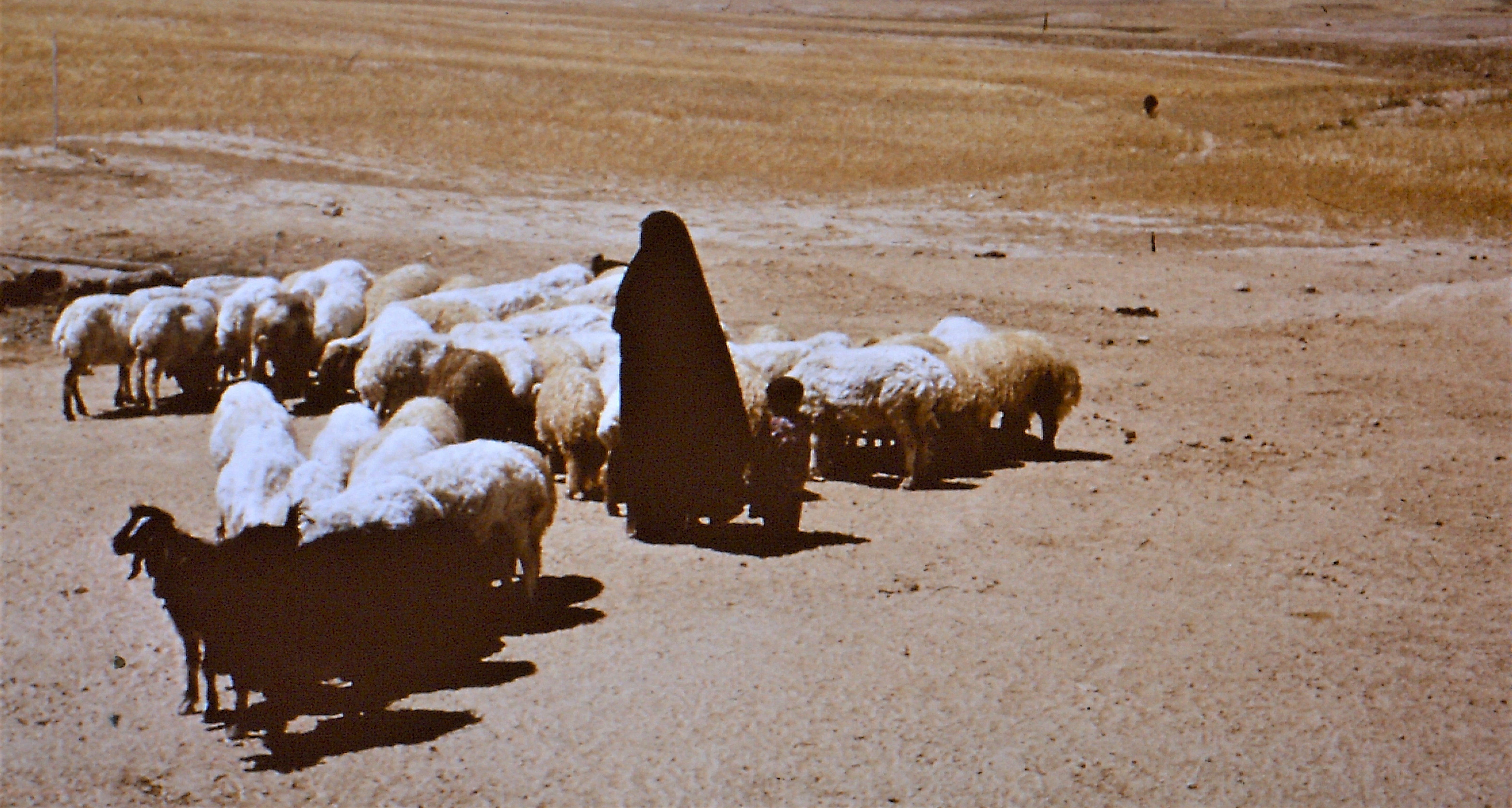 Deprived of his royal background, he became a lowly shepherd for forty years; but God never abandoned Moses, and commissioned him to return to Egypt to be the human element in setting the Israelis free.
![dscn0185[1]](https://genelinzey.com/wp-content/uploads/2019/03/dscn01851.jpg) Passover is a picture of the sinless Lamb of God – Jesus – Who suffered the penalty of sin for us (death), raised Himself back to life, and set us free. All we need to do is to accept Jesus into our lives, ask Him to forgive us for our self-centered lifestyle, then purposely live for Him. We will be covered with the blood of the Lamb and forgiven.
Passover is a picture of the sinless Lamb of God – Jesus – Who suffered the penalty of sin for us (death), raised Himself back to life, and set us free. All we need to do is to accept Jesus into our lives, ask Him to forgive us for our self-centered lifestyle, then purposely live for Him. We will be covered with the blood of the Lamb and forgiven. in every way, which includes His memory, Clarence asked if God can choose to forget. I suggested that we not confuse the issue, but stick to what the Bible says.
![dscn0464[1]](https://genelinzey.com/wp-content/uploads/2018/10/dscn046412.jpg) Forgiveness is not about letting the offender off the hook, but returning the right to dispense justice back to God and to the appropriate human authorities. Forgiving others, and asking to be forgiven when we err, keeps our consciences clear.
Forgiveness is not about letting the offender off the hook, but returning the right to dispense justice back to God and to the appropriate human authorities. Forgiving others, and asking to be forgiven when we err, keeps our consciences clear. Gene Linzey