A Must-Read from a Well-Loved Professor

Many of you who are reading this blog are university professors, teachers, teacher’s assistants, and vocational teachers. Many others are pastors, Bible teachers, CEOs, and business instructors. You all know how important it is to develop a good relationship with your students and colleagues because it is that relationship which enables the students to more readily assimilate your teaching.

On the other hand, most likely all of you have been students at one time or other, and you know what it’s like to learn from a great teacher and be bored with an ineffective teacher.

In all my studies at the collegiate and university level, I’ve met and interacted with many teachers and professors – both men and women. During those years, three men have made a profound impression on me. Dr. Gary L. Royer is one of those men. I want to tell you about him because his recent book, published in March of 2020, is a must-read if you want to learn about a deeper aspect of life.
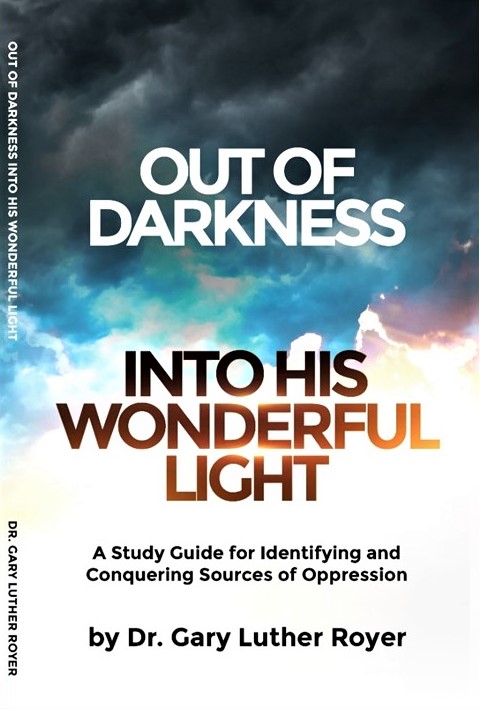
Dr. Gary L. Royer, adjunct faculty member at Southwest Assemblies of God University, released his latest book: Out of Darkness Into His Wonderful Light. The book is based on the course he taught about the spirit world. He wrote it at SAGU in 1997, and has taught it nearly every semester since then. Many students have declared that the course changed their lives.

Upon retiring from classroom teaching, Dr. Royer was encouraged by many of his former students and fellow professorial colleagues to put his notes for the course into book form. Foreseeing that the book would be used in bible studies and personal reading, as well as in the classroom, he divided it into thirteen chapters with study questions at the end of each chapter.

Dr. Royer writes, “So many students have told me that, although they faithfully attended church every Sunday morning, they had never understood the spirit world. It was a delight to write and teach an organized presentation of this subject of the Spirits of God, ministering angels, demonic spirits, and the powerful human spirit.”

Dr. Gary was one of my instructors at the university – in fact, my favorite instructor at SAGU. I add my voice to many others who say he teaches from a deep relationship with the Lord Jesus Christ, from an in-depth knowledge of people around the world, an in-depth knowledge of the spirit world, and with a love for his students.

With the skill of a biblical scholar, the spiritual insights of a Spirit-filled minster with much experience in dealing with spiritual problems, and with practical guidance in recognizing, addressing, and finding freedom in Christ, Dr. Royer presents this needed book. It is comprehensive in scope and is informed by other experts in addressing spiritual issues in dealing with the demonic and the spirit world. His text is centered on biblical insights, especially the Book of Ephesians, testimonies of many who have experienced spiritual bondages, and how they found freedom in Christ.

This is not a book of extremes, but a well-written and biblically balanced approach to a complex subject. Specific prayers are given which lead the reader in understanding how to approach God for help.

I encourage you to purchase several copies of the book, Out of Darkness Into His Wonderful Light, because you may want your family and friends to read it.

You may order it from Dr. Royer, or directly from Amazon.com at https://www.amazon.com/s?i=stripbooks&rh=p_27%3ADr.+Gary+Luther+Royer&s=relevancerank&text=Dr.+Gary+Luther+Royer&ref=dp_byline_sr_book_1

Feel free to contact Dr. Gary Royer, B.A., M.A., D. Min/Missions, at groyer@sagu.edu

The Master Dreamer

As I was preparing this Reflection, I realized that “Dreamer” has an intense political connotation. But this is not about immigration – legal or illegal – or about anyone’s location of birth. It relates to a discussion several years ago between my son, Ron, and myself.

“Dad, are you a dreamer?”

“I dream quite a bit, more than most people. The sleep test I endured proved it. Why?”

I had no idea what Ron was talking about. I know that sleep dreaming is a function of thinking. When we go to sleep, our bodily functions slow down, but our mind – not to be confused with our brain – plods right along. Dreaming is subconsciously thinking while we are sleeping. This will be another Reflection for another time.

“I’m not talking about dreaming while you’re asleep, dad. I mean, do you dream about what you want? For example; if you were to buy a pickup truck, what features would you want on it?”

I began enumerating the many things I would want.

“So, getting a new pickup truck is one of your dreams?”

“No, I already have a pickup. It’s old, but it’s good. I merely answered your question. I don’t spend much time brooding over or pondering about something that is out of my financial reach, or that I really don’t need. For me, it’s a waste of time. But I DO ponder or meditate on things – even almost impossible things – if I think the Lord wants me to accomplish them. I am pragmatic, and my ‘dreaming’ is figuring out how to accomplish a task that is set before me.

“I also dream about how God accomplished His activities. I ponder on how the Red Sea parted, how the Jordan River stopped flowing, how God flooded the earth in Noah’s time, how God created the polar ice caps, and so on.”

“Do you come up with answers?”

“Oh, yes!”

We then talked about dreamers throughout history, and their vital importance for the forward progress of civilization. Inventors are dreamers. Two examples are the Wright Brothers who succeeded in giving America the airplane. (Some dreamers died in their attempts.)

Ron is a dreamer. My wife, Carol, is a dreamer. Thomas Edison was a dreamer. These people make life more enjoyable for the rest of us.

“Ron, I can’t be a dreamer. God didn’t make me that way. But I sure need people like you.”

“But you’re a writer. Isn’t writing a function of dreaming?”

Hmmmmm…. I had to stop and think about that one.

“Well, yes and no. Everyone who writes fiction has to dream the whole thing up. But since everything I have been writing so far relates to history, I merely need to remember or research the event, and tell it in a truthful and interesting way.”

“What about your next book?”

“You got me there, Ron. This book is about ancient history. The facts are difficult to find, and harder to piece together; and I’ve been intermittently gathering information since you were a kid. But since we don’t fully understand how they lived 4,500 years ago, part of the story line needs to be created, and that takes some dreaming. That’s why it’s taking me so long to write it. I am more of a reporter than a dreamer.”

That gives you an idea of Ron’s and my 2-hour discussion. But let me tell you about the master dreamer of all time. He needs no introduction, for you all have heard of Him. We call Him God.

The greatest history book of all time tells us about it. Genesis starts out with, “In the beginning, God created the heavens and the earth.” Since God never had a beginning, I wonder how long He thought – dreamed – about it before He did something. Think about it: God had no “time-limit”, no deadline in which to finish, and He had an eternity of creativity to express.

The corollary thought is in the New Testament, John 1:1-3; “In the beginning was the Word, and the Word was with God, and the Word was God. All things were made by Him.” Verse 14 tells us the Word is Jesus Himself. Jesus is the Creator.

God made everything from the infinitesimal one-celled amoeba to the giant dinosaur; from the invisible quarks to the super-clusters of galaxies. But God had something else in mind: He made man to fulfill His master plan, and He incorporates anyone who wants to be included into His plan.

For this, you don’t have to dream; all you need to do is believe in and live for Jesus the best way you can. What’s your decision?

Lessons from the Flock – Vision

“You’re a bird-brain!”

Did you ever hear that? It’s a derogatory statement and meant to degrade someone. But I identify with it because I am learning a lot from my fowl friends – my five chickens.

I’ve noticed that the birds often gather at the fence and look in the direction of the kitchen window. When I move around in the room, their heads follow my movements and they seem to be waiting for me to come out. But when they are standing in bright daylight, how can they see me through a window in a room with subdued lighting?

It was research time.

Of the many documents on the internet, I found an article by Cynthia Berger published on July 19, 2012 titled “True Colors: How Birds See the World.” That was an eye-opener. Using a device called a spectrophotometer (it measures light that is reflected from a surface), researchers found colors in the UV range that most birds can see.

Quoting from her second paragraph, “…systematic testing of bird vision revealed something unexpected: many bird species can see UV light. Scientists also have learned that many birds have plumage that reflects UV light.”

I had never thought about chickens being able to see differently from humans. Oh, I know chickens have enhanced hearing and smelling, but enhanced sight? Amazing.

I’ve always wondered how a bird can distinguish a male from a female, but now I know. Both males and females of barn swallows, mockingbirds, western meadowlarks (and many others) look remarkably alike to humans. But viewing them through the spectrophotometer we find they look totally different from each other. They, of course, have the same shape but different coloring. Another example: To humans, the blue tit male looks identical to the female. But looking at the UV reflection, we find a bright spot on the males’ head. The female spots that immediately and says “That’s my man!”

Female birds know which eggs are hers because various eggs reflect UV light differently. Choosing to raise her own offspring, some females either break or eject foreign eggs from her nest.

Birds will more readily eat food that reflects greater amounts of UV light. That explains another question I had: why do my chickens go for corn more than wheat? Corn reflects more UV. Also, insects reflect a higher amount of UV than green grass. Watch out, moths and bugs; my chickens are loose in the yard and you are doomed!

Speaking of moths, it’s fun to watch a hen run at full speed then half jump and half fly with neck fully extended to grab a moth or other flying insect out the air.

But all that helps to explain why the birds are at the fence looking in my direction: some of my clothing is reflecting UV light. They see me through the window, and they assume that I’ll bring food out to them. Sorry, chicks. I’ll feed you later.

When I think of birds’ ability to see what humans cannot see, it reminds me of spiritual sight. In Ephesians 1:18, the Apostle Paul said, “I pray that the eyes of your heart may be enlightened, so that you may know the hope to which God has called you, the riches of his glorious inheritance in the saints.”

“Eyes of your heart”? Sounds strange because blood-pumping hearts don’t have eyes. What Paul means is we have inner understanding, insight, the discernment or comprehension of spiritual reality as it pertains to Almighty God, and verified in the Holy Bible. I am not referring to Hinduism, Buddhism, spiritism, spiritualism, other religions, or any New Age idea. I am not talking about mindless concepts that exalt man, nature, familiar spirits, or demons.

An example of a mindless statement – proclaimed to be spiritual insight by Matshona Dhliwayo – is: “The Universe is one body; love is its heartbeat.” Not understanding either the universe or love, Dhliwayo is wrong on both counts.

True spiritual insight comes from God, and enables us to understand real life – both temporal and eternal – from God’s perspective. Second Corinthians 2:16 informs us that we can “have the mind of Christ”; that is, receive His thoughts. This requires us to stop being self-centered, and to become God-centered or Christ-centered.

As birds can see some of what humans cannot see, we can ask God to grant us wisdom and insight which would enable us to understand what we normally cannot “see”. That’s not being a bird-brain; it’s being in tune with God.

Living a Holy Life

Some years ago, I was talking with an acquaintance about a church in Tulsa, Oklahoma.

“Oh, I wouldn’t go that THAT church! They act holier than thou!” he exclaimed.

“What does that mean?” I asked.

“It means, uh, well, you know – they act real holy and religious!”

“Well, what does that mean?” I asked again.

“What’s the matter? I thought you knew this religion stuff.”

“I know about religion and Christianity, but you are condemning those people. So, tell me what you mean, and why.”

He walked away because, not being a Christian, he was trying to justify his own sinful lifestyle (it was bad) by demeaning those who were living a Godly lifestyle.

But he said they were “acting holy,” so let’s talk about holiness.

If a person or thing is holy, it is separated. Being in a state of holiness is being dedicated or set apart to God. Holiness begins in our minds, and is an ongoing lifestyle. Holiness is a work in progress. It results in spiritual transformation. Holiness should permeate our entire life, for it involves everything we do, think, and say.

1 Peter 1:15-16 says, “But now you must be holy in everything you do, just as God—who chose you to be his children—is holy. For he himself has said, You must be holy because I am holy.” And Romans 12:2a: “Don’t copy the behavior and customs of this world, but let God transform you into a new person by changing the way you think.” But we have to purposely cooperate with God for that to happen.

Several related words are: consecrated, hallowed, saint, belonging (to God), God-like.

I admire people for saying what many pastors and teachers are either hesitant or outright afraid to say. Holiness results in fearing, honoring, revering, loving, and living for God. But do Christians actually fear, revere, or honor God?

Based on what I’ve seen in the church across our nation, many Christians – adults as well as the youth – do not fear God. Rather than living a life wholly dedicated to God and teaching others to know and accept Christ for who He is, misguided Christians and church leaders are choosing to enjoy some of the evil pleasures of the world. In an attempt to be relevant to the world, they have become like the world.

We need to ask ourselves: “Where do we spend our time? Our money? Where do we invest our emotions and our intellect? What are our priorities in life?” Answering these questions truthfully could help the church – including you and me – get back on track.

Several church denominations are historically described as holiness churches because of their historic stand for Christ and against sin and worldliness. But a great many of their members now go where the sinful world goes, and do what the sinful world does. Many of them don’t understand that when they act like the world, they have diluted or lost their witness for Christ.

Jesus was consistent in remaining separate from the world while ministering life to the people. He said in John 17:15-17, “I’m not asking you [Father God] to take them [Jesus’ followers] out of the world, but to keep them safe from the evil one. They are not part of this world. Make them pure and holy by teaching them your words of truth.”

Jesus didn’t mimic the lifestyle of the people in order to save them. Instead, while remaining holy and dedicated to the Father, He presented truth with the love and authority of the Father; and those who desired to live for God joined Jesus. Therefore, we, also, must remain separate from the world while living in and ministering to the world. We don’t need to act or look like the sinful world while trying to accomplish God’s goals. If we look and act like the world, they might see no need to change.

We must use the proper methods of rescuing the perishing, and that entails being holy while sharing the Holy Word of God. We must know the Father by knowing Jesus Christ, then the Holy Spirit can empower us and equip us with spiritual gifts to minister to the world and influence them for Christ. (Read Ephesians 4:11-16 and First Corinthians 11:4-11.)

Second Corinthians 6:17a says, “Therefore, come out from them and separate yourselves from them, says the Lord.” By thought, word, action, and lifestyle, let’s honor the Lord Jesus Christ.

Loving the Elderly

DSCN0410BMy 97-year-old mother was in and out of hospitals, and getting ready to meet the Lord face-to-face. The family was getting ready for another big change; and as is often the case, the family wasn’t able to address every detail. We needed assistance. (The picture of mother and me was taken when she was 95.)

Elsa Anderson was one of mother’s care-givers. She and I discussed our purpose in life for a while, and she said that God had given her 54 talents – that she knows of anyway. Caring for people near the end of life is a talent she cherishes the most. Elsa said, “I love being with these dear folks and sharing God’s love with them. But it isn’t always the elderly who get blessed: many times as I reach out to them, I receive the blessing.”

This reflects the attitude and gifting of a friend in New Mexico.

Rev. Thomas Kearns, chaplain at the Las Cruces Good Samaritan Retirement Community in New Mexico, said, “Many times you go to a hospital to minister to someone with the intent of praying for healing, for comfort for the patient and family, and also ready with scripture to share God’s word. But your ministry is, also, to be there – what I call ‘the ministry of presence’. Even if I don’t say a thing, my mere presence often provides emotional healing to the people.” I agree.

Elsa employs that concept. Her mere presence often provides a type of healing for the families. It’s obvious that she loves her patients, and – in this case – loved my mother.

The word “love” is used in many ways. You’ve heard it, I’m sure: I love my cat (dog, horse, turtle, whatever). I love my house. I love apple pie and ice cream. I love my country. What else? Oh yes: I love my wife and I love God. The meaning of love is based on context.

But when we think of loving our elderly relatives, friends, or citizens, we think of not just those who are infirm, disabled, or handicapped. We include those in their upper years who may not be able to fend for themselves in some ways.

The briefest description of loving or caring for the elderly comes from a book bytRIALB Wm. G. Justice titled “Training Guide for Visiting the Sick.” Mr. Justice, referring to all the elderly, whether sick or not, said, “The purpose is to oversee the care of those who are hospitalized, sick, shut in, or are in some way in need of care; and to assure they have their needs met to the best of our ability.”

Rev. Gary Kroah, retired minister living in Siloam Springs, agrees with Mr. Justice. At one point in a discussion, Gary said, “Just because they are elderly and cannot come to church, we cannot ignore them. They are still a vital part of church and of our community. It is our privilege to continue loving them. Jesus loves them, and we are effectively the hands, feet, and voice of Jesus to them.” I add a hearty amen.

But loving the elderly comes with a price, and we had to differentiate between mother’s best interests and our emotional needs. I definitely do not believe in euthanasia, and I won’t discuss my mother’s condition; but I will say this: at 97 years of age and the condition she was in, it would actually be a loving act to allow her to go home to be with Jesus. She will also be with her parents, my father, and one of my sisters … and multi-millions of others in heaven.

With her body trying to shut down, I believe it is neither loving nor merciful to use every modern technological means that’s available to keep her body alive. Rather, it is loving to let her know how much we love her, but that we also release her to “go home” to be with Jesus.

Does it hurt us to do that? Yes, it does; and we knew we would miss her. But is it loving her? Yes, it is; for where she was bedridden, could not communicate, and her body trying to shut down with several terminal maladies, she would be well, healed, strong, and vibrant in heaven.

1 Thessalonians 4:14 says, “For since we believe that Jesus died and was raised to life again, we also believe that when Jesus comes, God will bring back with Jesus all the Christians who have died” (NLT).

Mom experienced her final graduation on November 11, 2016; but we’ll see mom again when it’s our turn to graduate.

History Ignored is Freedom Lost

Have you ever watched a movie (or DVD) several times and wanted to see it again? My Precious Carol and I watched a film this past week called, “Monumental: In Search of America’s National Treasure,” staring Kirk Cameron. This was the second time I watched it, and I’ll watch it again. If you haven’t seen it, you should. It’s a 90-minute film about America’s beginning.

Because much of our national heritage is not taught in schools, a major portion of our population is ignorant of our history. This film supplies some of the details.

Psalms 78:5-7 says, “The Lord made an agreement with Jacob and gave the teachings to Israel, which he commanded our ancestors to teach to their children. Then their children would know them, even their children not yet born. And they would tell their children. So they would all trust God and would not forget what he had done but would obey his commands.”

I agree with that.

We start with the concept of monuments which are reminders of historical events. God told the Israelites to build monuments about what they accomplished, and about what the Lord did for them. Then they were to use those monuments as tools to teach their children about their past. My own father taught me the importance of history, and said, “If you don’t know where you’ve been, it’s hard to tell where you’re going.” How true.

Kirk Cameron wanted to know what principles the early settlers – Pilgrims – established that the Founding Fathers followed to make the United States of America the most successful example of civil, economic, and religious liberty ever developed in the history of the world.

But America became a moral quagmire because we, as a nation, slowly stopped teaching about God and the truth of our history. We also voted people into office who rejected truth – both Scriptural and historical. And now, since we don’t know where we’ve been, we are on the wrong track. Let me give you several historical facts that are hard to find in schools today.

The Pilgrims left Europe because the Church WAS the State, and the state was persecuting them. Therefore, they established a separation between Church and State. But they didn’t want a godless society; instead, they wanted God-fearing men to run the government, and to guarantee everyone the freedom to worship according to conscience.

I won’t hide the errors and flaws in early American society, but I am telling you their intent.

The_Mayflower_Compact_1620_cph.3g07155The first governmental document in America was the Mayflower Compact. The Pilgrims established this document firmly on the principle that God should be the center of our public life. This guaranteed religious freedom.

The Pilgrims did not abuse the Native Americans. Others did, but the Pilgrims treated the “Indians” as equals.

Civil authority, law, justice, mercy, education, and equality were established firmly on Scripture. That created our foundation for liberty – both civil and religious.

Our early Congress highly approved of Christianity. On January 21, 1781, Robert Aitken asked the new Congress to authorize, and, if possible, even pay for the printing of the King James Version of the Bible in America. Congress wouldn’t fund the project, but here is the approval issued on September 10, 1782:

“Whereupon, Resolved, That the United States in Congress assembled, highly approve the pious and laudable undertaking of Mr. Aitken, as subservient to the interest of religion as well as an instance of the progress of arts in this country … we recommend this edition of the Bible to the inhabitants of the United States, and hereby authorise him to publish this recommendation in the manner he shall think proper.”

In 1783, George Washington wrote a letter commending Aitken for his Bible, known as the “Bible of the American Revolution”.

The founding fathers realized that a nation that is not based on faith in Holy Scripture and Almighty God, and that does not maintain a high moral integrity – both individually and corporately – will ultimately crumble. Therefore, our leaders kept God in our national conscience for a long time. Many WWII war bonds were issued “to preserve freedom of worship”. Our government printed WWII posters showing Hitler driving a sword through the Bible. A current problem is, many in our American Government today would do the same if we let them

We have hundreds of writings from founding fathers who professed faith in Almighty God. But many in our post-modern society want to deprive us of our national, Godly heritage. They don’t know that history ignored is freedom lost.

To maintain our freedoms, we must know our history and reestablish our faith in God.

Did God Create Evil?

I am sure you’ve heard the old story about the college student and his atheistic professor. Here is an edited version.

The professor first degrades the concept of God, then challenges Christian students regarding their faith. One student accepts the challenge.

The prof asks the student if God created everything, and the student affirms that God did. The wily prof then asks his favorite question – apparently it worked every other time – “If God created everything, did God create evil?”

The student counters with, “Sir, is there such a thing as ‘cold’ or ‘dark’?” The prof bit on it and said, “Yes, there is.”

The student then explains, “No sir, there is no such thing as cold or dark. What we call ‘cold’ is actually a reduction of heat, and ‘dark’ is only a reduction of light. Extreme cold is a greater reduction of heat and total darkness is the total absence of light. When you enter a room, you don’t turn off the dark; you turn on the light. On a wintery day, you don’t turn down the cold; you turn up the heat.”

The student continues, “In like manner, evil is the absence of righteousness.”

That specific interaction may or may not have happened, but the concept is accurate. I think the ‘light and dark’ and ‘heat and cold’ examples are self-explanatory, so let’s go straight to ‘righteousness and evil’.

Did God create an angel that became the devil with the title of Satan? Yes, God created that angel. Does that mean God created evil? The answer is “No”; but that might not satisfy your curiosity. Therefore, let me ask this: Does the Subaru Auto Company create auto accidents?

What kind of silly question is that? I’ll answer that later.

Does the Siemens Company create Amtrack accidents? Does the Boeing Company create airline crashes? Does the housing industry create house fires? The answers to all those apparently absurd questions are: “Of course, not!”

But cars, trains, and planes do crash. Houses do burn. Therefore, those tragedies MUST be caused by the creators of those machines and buildings – right? Wrong!

Although human error is evident in many situations, the creators do not INTEND for their products to crash or burn.

Neither did God intend for His “products” to fail. He knew we would, but that was neither His intention nor His plan. God simply made both angels and man with a free will. If a robot obeys, that proves nothing. But if a person with a free will obeys, that shows love or loyalty – or both.

Satan (Luke 10:18, Rev. 12:9) was obviously created with a free will to choose to obey or disobey Almighty God, the creator of all that exists; otherwise he could not have rebelled against God.

In like manner, man was created perfectly sinless in the Garden of Eden and was given the freedom to choose to obey or disobey. Genesis 2:16-17 says, “But the Lord God gave him this warning: ‘You may freely eat any fruit in the garden except fruit from the tree of the knowledge of good and evil. If you eat of its fruit, you will surely die.’”

But Satan tricked Eve, and Adam willingly disobeyed God (Genesis 3:1-6, Romans 5:14). Later their older son, Cain, got upset with God and murdered his brother, Abel. And things got worse from there.

Throughout the Bible, God implores man to obey; yet man disobeys (Gen. 6:5). And in a disobedient state, man commits atrocities against man. Murder. Rape. Pillaging. Enslaving. Torture. Adultery. Theft. Gossip. Slander. You name it, and man did it. But it wasn’t God who created the crime.

God, Himself, gave us basic guidelines to follow. Several of them are: honor your parents, don’t kill, don’t steal, don’t lie, don’t commit adultery, and they are part of the foundation of American law. Whenever man obeys God, he is kind to others. He honors others. He helps his fellow man. But when man disobeys God, he becomes evil. Man chooses how he is going to live and act. Man is the culprit – not God.

Dark is the absence of light. Cold is the absence of heat. Evil develops in the absence of righteousness.

God did not and cannot create evil. Evil is the attitude and actions of someone rejecting God. Therefore, evil is produced when man turns his back on God and Scripture, and lives for himself. When man rejects God, man produces every kind of evil (First Peter 3:11). And God doesn’t override man’s arrogance.

On the other hand, when man cooperates with our Loving God, righteousness, peace, contentment, serenity, prevails. Remember: God gave us a free will, and He wants us to live a healthy, honorable, productive life. And whoever decides to live for God and honor Him simultaneously chooses to live with Him in heaven forever. It is our choice of how we will live, and where we’ll spend eternity.

Don’t blame God for people’s evil actions and the hell it generates here on earth. But choose to live for God.

Essentials of Christianity

Many have asked over the centuries, “Of all the religions in the world, what makes Christianity special?”

I’ve rolled this over in my mind for years, and I believe the simple answer is: Christianity is the only religion in the world in which God loves His creation, is ultimately concerned with the people, and came down to man’s level of existence in order to personally help him. Every other religion, with the possible exception of Judaism, leaves the adherent in question as to his relationship with his god and his future.

The man who recently asked me that question then asked, “Okay, what are the essentials of Christianity?” The following is a summary of our discussion.

As you may know, there are approximately 4,200 religions in the world. That covers any kind of faith or belief system you can think of. And many religions have various denominations within them. We read that within Christianity we may have as many as 33,000 denominations. That is, of course, debatable; and at least two “denominations” consists of one solitary congregation.

There may be six major religions in the world. They are: Islam, Hinduism, Buddhism, New Age, Judaism, and Christianity. And each religion has its own god, gods, and/or goddesses.

Islam, Judaism, and Christianity are monotheistic, and most denominations within Christianity believe God is eternal. But several groups, including the Mormon Church, claim that God is not eternal, Jesus and Lucifer could be brothers, and men can become Gods. Therefore, Mormons may believe in millions of gods. This could actually remove the Mormon belief system from Christianity.

Other religions also have a multiplicity of gods. For example, Hinduism claims to have approximately 300 million. The New Age religion (which actually dates back to antiquity) is quite complex, and claims that every person and animal either is or can become a god. This, of course, contradicts Scripture.

With all that in mind, what makes Christianity special? What are the essentials of Christianity?

For starters, true Christians believe the Bible, and recognize that God, in the human form of Jesus, came to earth to rescue man from his own degradation; and made possible the restoration of our relationship with God.

Many theologians and teachers have their list of what makes Christianity unique, and (of course) I have my list. If any on the list were not true, Christianity would be a false religion. Also, any one of these can be broken down into several components, which is one way the list can grow.

  1. The Eternality of God (Genesis 1:1, John 1:1). He did not have a beginning, and will not have an ending. He is the “I Am” – eternally self-existent.
  2. Absolute Truth (John 7:11). Whereas many ideas, theories, and concepts are debatable, there is Truth that can be known, which cannot be negated, modified, or superseded.
  3. Inspired Scripture (2Timothy 3:16). The Bible was written by men who were inspired by Almighty God, and can lead us into relationship with the living God.
  4. The Deity of Jesus Christ (John 1:1, Mark 14:61). Jesus is fully God and fully man. This includes the facts of his virgin birth, His perfectly sinless life, His death, burial, resurrection, and ascension.
  5. The Fall of Man (Genesis 3:6-19, Romans 3:23). Everyone is born in a sinful state, and is destined for an eternity without God.
  6. Salvation through Jesus Christ (John 3:16, John 14:6, Romans 5:6-17, Acts 16:31). Only through Jesus can we be restored to the Heavenly Father. This includes recognition of and confession of sin; and with God’s help (through faith by His grace), turning from sin and purposely living to honor God.
  7. Jesus’ Personal Return (John 14:3, Matthew 24:36). The Bible says that Jesus will return (at a time unknown to both man and angels).

If any of those points are not true, the Bible is not true; and in that case Christianity is not true. Christianity is based on what the Bible says, and Who God is. No other religion has a god who loves the people and gave His own life to rescue them from eternal destruction.

One criticism of Christianity is: “It is exclusive.” Of course it is. But ALL religions are exclusive in some manner, and mankind is already lost and headed for a black eternity. However, since Jesus offers eternal life to ALL who accept Him (John 10:10), I believe Christianity is the truly inclusive religion.

Review of The Prodigal Son

You think you know the story in Luke 15:11-32 because you’ve heard it a hundred times? Keep reading, because this time you might be surprised. Bear with me as I put the story in a modern setting.

                          *******

A man was successful as a rancher and in his investments, and his family had everything they wanted that money could buy. He had two sons, George and Jake, both of whom secretly disrespected dad, and openly hated each other.

Disillusioned with life, one day George, the younger boy, said, “Dad, I’ve thought it over and I want nothing to do with ranching. I want to live my own life without you telling me what to do. Even though you’re not dead, give me my half of the inheritance and I’ll get out of your life!”

Wisely or not, the dad evaluated his business, sold enough stock that was equal to half his worth, and gave it to rebellious George. Jake, the older son, was ecstatic! Now everything the old man owned was his, and he would do everything he could to increase the value of the business; for he was now heir to it all!

Over the next three years, George wasted life and money on prostitutes, cars, gambling, drugs and alcohol. Now penniless, he looked for a job – anything that might provide enough money for another drug fix or bottle of booze.

Finally, rejected by all the friends his money had bought, he considered suicide. But he thought, Maybe dad will hire me to repair fences, or something. There’s enough to do on the ranch where I can stay out of his way.

He called home from the Salvation Army office. When he asked dad if he could come home, his father said, “Son, my door is open; come on home.” The Salvation Army captain took George to his house to get cleaned up. He gave him clean clothing and bought him a bus ticket.

Fourteen hours and two states later, the bus pulled into town around noon. Wondering how he would get from the station to the ranch, the boy looked out the window – and saw his dad.

As he disembarked the Greyhound bus, he said, “Dad, I’m ashamed of what I’ve done. I’ve wasted everything, and my life is a mess. Can you hire me as one of your ranch hands until I get back on my feet?”

But his father said, “Son, I’ve been waiting every day for these past three years for you to return. Everything I own is now your brother’s, but you are still my son. And as long as I am alive, my home is your home.”

When they pulled up to the big house, his mother, aunts and uncles, cousins, and neighborsDSCN0024B had a barbeque shin-dig ready; and a huge cake had been prepared that was decorated with “Welcome Home, George!”

During the party George asked his dad, “Where’s Jake?” Dad said that he was up north conducting business, and he would be home in a couple of days.

But someone in the household called Jake on his cell phone and told him that George had returned. Jake blew up!

Jake immediately called his dad and demanded, “What’s that good-for-nothing wino doing back home! I’m the one who has stayed with you and built the business. I don’t want him here living off what I’ve built!”

Dad responded, “Jake, everything I have will be yours. But George asked to be forgiven, and it is only right that we accept your brother into our home. After all, he is family.”

                           *******

You’ve been told that the story was about George who wasted half the family fortune. But George’s narrative is only the background for the real story. The parable is not about George’s rebellion, repentance, and return; it’s about Jake’s pride and rejection. George repented, but Jake refused to forgive.

You see, Jesus told the parable to the Pharisees and Sadducees who considered themselves the elite of society and heirs to the kingdom of God. The proud religious leaders thought it would lower their prestige if they forgave and accepted these repentant traitors, winos, and prostitutes into their society and into their church meetings.

But God loves everyone and gives everyone a chance to repent and turn to Him. John 3:16 says it clearly: God so loved the world that He gave His only begotten Son; and whoever believes on Him (Jesus) will not suffer eternal punishment, but will live forever with the Lord in heaven.

The moral: Pride is just as bad as living a wasted life. But anyone who truly repents, whether pastor or prostitute, haughty or humble, is accepted by the Father and welcomed into His kingdom.

Jehovah is not only a God of justice, but also a God of love and forgiveness.

Tiger – My Friend

Cats are my favorite land animal, and I talk with them. No, I am not weird. I have learned to meow like kittens and cats. I can snarl a little like them too. Let me tell you about a special cat.

He was a stray that “adopted” me when I was eleven years old. I was going through a year of depression because I was convinced that no one in the world loved me. It seemed to me that none of my nine siblings or my parents cared whether or not I was alive. Then one day, a full-grown cat announced his presence in our yard. I named him Tiger. When I asked if I could keep him, the answer was, “No.”

I begged to keep him. You see, Tiger and I had bonded within an hour of his arrival. Noting the look of anguish on my face, my parents finally consented and my spirit soared!

“But that cat cannot sleep with you; the cat will stay outside every night.” Mother was firm on the idea.

“Yes, mom; I hear you” I managed to utter. But I needed emotional comfort, so I snuck Tiger in at night anyway.

After several weeks, mom became suspicious and surprised me with a late-night visit.

“I thought I smelled a cat in here. Put him outside.”

I begged over and again to let Tiger stay with me, and mom finally relented with, “Okay. But if he messes on the floor, you will clean it up and clean the carpet.” Then she left the room.

I was sitting on the edge of the bed and Tiger was sitting on the floor looking up at me. I began verbally pouring my heart out to the critter, and – I’m not kidding – when I asked Tiger if he understood, he gently said, “Meow.” He verbally responded each time I asked if he understood.

Finally, I was ready to turn out the light. But I first cupped Tiger’s face in my hands and said, “If you have to go potty in the night, be sure to wake me up. Don’t do it on the floor. Okay?” Tiger agreed with a soft, “Meow.”

Sometime in the middle of the night, Tiger awakened me by gently rubbing my cheek with his paw. I asked, “Do you need out?” Tiger placed his fore-paws on the window sill and meowed. I opened the window and he jumped out. About ten minutes later, he reappeared outside the window. I let him in, and he said, “Mew.” I knew that meant “Thank you.” Again, I’m not joking. Tiger was my best friend.

One afternoon about eight months later, Tiger didn’t show up for dinner. Dad said, “He is probably out catting around.”

The next day, dad sent me on an errand across the 4-lane highway to buy some donuts. As I reached the median, I saw the motionless form of a dead cat. Tiger had been run over!

My emotions exploded, and I burst out crying as ran back to dad. As I sobbed uncontrollably, dad gently held me close for a while. That’s the first time in a LONG time that either dad or mom expressed love to me in a way that I could understand. After a few minutes, dad softly said, “Let’s bring Tiger home.”

Picking Tiger up with a shovel, I took him and buried him in the back yard. That was 1958, but I can still show you where I buried him.

God, in His love for me, brought Tiger to fill a void in my life. And God kept Tiger with me as long as I needed him because Tiger was God’s gift of healing to my hurting soul. But, also in His love for me, God allowed Tiger to leave when I was emotionally well enough and mature enough to re-attach with my siblings and parents. God loves us and brings into our lives special gifts at crucial times.

When you are hurting, look for God’s interaction in your life. Proverbs 3:5-6 says, “Trust in the Lord with all your heart; and don’t depend on your own understanding. In all your ways acknowledge God, and he will guide you.” God loves you more than you know; and He uses animals, friends, and situations to help you heal.

God used Tiger to help me for a year in my childhood; but God, Himself, will help me forever.