Happy Trails to You

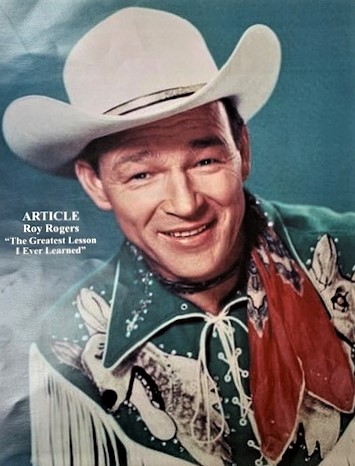
Roy Rogers and Dale Evans were my all-time favorite television friends. The Lone Ranger, Zorro, and Robin Hood were in 2nd, 3rd, and 4th place.

After each weekly adventure, Roy and Dale (riding their horses, Trigger and Buttercup) sang in beautiful harmony, “Happy trails to you, until we meet again; Happy trails to you, keep smiling until then. Who cares about the clouds when we’re together? Just sing a song and bring the sunny weather. Happy trails to you, ‘til we meet again.” Then after a short commercial, an exciting portion of the William Tell Overture introduced the Lone Ranger as his horse, Silver, reared and pawed the air.

Those are happy and care-free memories of the early decades of our lives. But the following is about a trip we took only four years ago, and I’m going to tell about it as though it were a current event.

******

In these, our latter decades, Carol and I are setting out to create new memories by traveling the country in a trailer.

When we pulled out of our driveway to begin this month-long trek, the song Happy Trails came to mind, and, as the song intoned, Saturday was cloudy and rainy.  But we didn’t care about the clouds because we were together; and our singing produced sunny weather – at least inside the car.

I’ve been driving cars since I was fifteen years old, and I’ve driven 28-foot U-Haul or Penske trucks no less than fourteen times across the western USA as we changed residences. But pulling a trailer is different, and many of you know what I mean. As I drive at 60-65 mph, the air pressure from the18-wheelers and pickups pulling big 5th-wheel rigs passing me going 70-80 mph creates a little excitement. And I change lanes as few times as possible!

I suppose I’ll get accustomed to it, but so far driving is the hard part. Setting up for the campsite or getting ready to hit the road has already become an easy routine. But the best part is walking around the campsite and meeting people.

The retired US Army colonel next to us was adjusting the water purification system to his double-axle Greyhound-bus-size motorhome as Carol and I walked up to him. Jim was an instant friend. He easily stopped what he was doing and gave me some pointers that a newcomer to RVing needs to know: “Make sure you check the air pressure in the tires.” After thanking him for serving our country, we continued down the trail to meet other friends.

But guess what? It seems that every time I learn something new, I need to buy something new. That’s when Carol and I get our heads together, assess the limited space we have, and decide what we NEED versus what we merely WANT.

When Colonel Jim pulled out the next morning, I saluted, and he gave me a friendly blast from the horn of his mobile condominium. “Happy Trails to you, Jim.”

When I pulled my studio-apartment sized trailer out the following morning, I went to the Shell station to add air to the tires. Do you know how difficult it is to turn around in a gas-station parking lot? I won’t tell you how many times I went back-and-forth before I got it right, but it was embarrassing when a man finally said, “Let me move my truck so you don’t hit it.”

Backing straight is easy, but backing and turning? I have a lot to learn. Pray for me – I’ll get the hang of it eventually.

This new phase of life is similar to what is involved when a person becomes a Christian and wants to serve the Lord. There is a lot to learn, and it reminds me of a Sunday evening church service in Quincy, Massachusetts back in 1962. Megan, calling herself a street-lady, confessed that she lived a raunchy life. After tearfully repenting for a life of sin and professing Jesus Christ as her Savior, Megan happily announced, “I’m glad I finally come to Jesus. I’ll have a hell-of-a-time serving Him!”

We didn’t judge Megan for that. She didn’t mean anything bad by that statement. She was excited to become a follower of Jesus, but it takes a while to learn a new way of living and a new way of talking.

Like backing straight, it is easy to stop what we call the major sins. But like backing and turning, changing a lifestyle takes some effort and training; and it’s our job to help them along the way.

Oh-oh, a cloud just burst, and the heavens are emptying their resources. I’ll go for now and close windows. Happy Trails to you.

Gettysburg!

In 1736, William Pitt’s family bought a tract of land from the Iroquois tribe, and soon over a hundred families of Scotch Irish descent, who had left Northern Ireland to escape English persecution, settled in what is now Pennsylvania.

Samuel Gettys built a tavern in 1761, and his son James plotted a town on the land surrounding the tavern. Giving this town the family name, it became known as Gettysburg. By the way, a tavern back then was an inn or a motel with a restaurant.

By 1860, ten roads led into Gettysburg, which had grown to a town of 2,400 people, and several thriving industries were situated in the area including carriage manufacturing, shoemakers, tanneries, merchants, banks and taverns. This quiet little town would be the focal point for two armies in late June of 1863 and would thrust Gettysburg into the forefront of American History.

My family visited Gettysburg for the first time in September of 1996. Driving into town on highway 116, we checked into the motel (not a tavern) and asked the receptionist, “Where’s the battlefield?”

“You came into town on one of the two roads that missed the action, but the museum is four blocks down the road on the right.” We ate dinner but went to the museum the next day.

As we entered the Gettysburg Museum, a poster caught my eye. It said, “The Civil War – Why? The Civil War was the culmination of many antagonisms between the North and the South. These clashes, increasingly more intense over a half century, were social, political and economic.”

One of the curators of the museum said, “The causes or reasons for the war are like a puzzle. In this case, some puzzle-pieces are large, and some are small. Slavery was a large piece, but still, only one piece.”

But how did the puzzle-piece called “Gettysburg” become part of the picture?

Up to 1863, most of the fighting had been in the south – primarily, in Virginia. So General Robert E. Lee decided to take the war up north where the South thought it belonged. After all, the South called the war, “the War of Northern Aggression.”

Lee’s goal was to attack Harrisburg, or Philadelphia – a big target. Gettysburg was merely a path to the target. But Union and Confederate scouts spotted each other, and the battle seemed to develop piece-meal. Southern General Lee advised his generals not to fight there, and northern General Meade wasn’t aware a battle was about to erupt. But it seemed to be inevitable.

Northern troops were pushed back the first day. The South nearly won the second day, but the North held their positions. The third day, July 3, was the day of decision. I’m sure you’ve heard of Pickett’s Charge. It is said that General Lee told General Longstreet, “Tomorrow is July 4, our day of independence. Tomorrow, we win our independence again.”

As Lee unfolded his plan to march across a three-quarter-mile open cornfield, Longstreet told Lee, “General, no 12,000 men ever born can cross this mile-wide field and win.” But Lee was in charge and ordered Pickett and 12,000 men to cross the 4,000-foot open field.

Longstreet was correct.

Approximately 51,000 men – North and South – were killed, wounded, or missing in that 3-day brutal conflict. It was probably General Lee’s greatest miscalculation. Lee should have known better because just six months earlier at Fredericksburg, Virginia, the tables were turned. The South had the high ground and defeated the Northern forces as Union troops tried to cross only a half-mile of open field.

We drove around and across the Battleground, we walked that open field, we climbed Little Round Top, we saw a good number of the 1,400 monuments, we read the battle descriptions, and we read Lincoln’s Gettysburg Address. Tears came to our eyes as we read about all the Americans who died or were mortally wounded.

You see, this is Our Country! This is Our Battlefield! What was done here, the lives lost here, the Presidential Speech here – it’s all part of our heritage. It is all part of who we are.

Southern Generals Lee, Longstreet, Pickett, Pettigrew, Ewell, Hill, and Armistead, as well as Northern Generals Buford, Reynolds, Meade, Howard, Warren, Hancock, and Colonel Chamberlain – and all the others – are our countrymen. Every one of them fought for freedom. They all fought for what they thought was right.

The United States of America wasn’t the only nation that had problems. Every nation that I’ve read about has had serious internal strife sometime in their history because people use human philosophy and knowledge to govern themselves instead of using wisdom offered by God. People are still doing that they think is right instead of going to the Bible to find out what is right. Proverbs 19:12 says, “There is a way that seems right to a man, but its end is the way to death.” That’s why irrational laws will continue passing and hatred, killing, and war will continue until Jesus returns.

Therefore, I encourage you to live to honor God every day of your life. My prayer is Proverbs 19:14: “Let the words of my mouth, and the meditation of my heart, be acceptable in thy sight, O Lord, my strength, and my redeemer.”

Steering Clear of Danger

For a month we visited my sister and her husband near Mount Palomar in Oak Grove, California. Our trailer was located near a hill an eighth of a mile from her house, and I often walked around or climb the hill for exercise.

In our second week, I saw footprints near our RV. Small prints from critters such as racoons, birds, rabbits, and squirrels were all around our site with larger paw-prints about thirty feet away. The geographical feature on the nearby hill that interested me was a mound of boulders that resembled the large cat enclosures at the San Diego Zoo. I mentioned that to Carol, so as we exited the trailer we playfully called out, “Here, kitty-kitty.”

Several days after a light rain, I saw some larger tracks that were probably a week old. Because of the rain, I couldn’t clearly identify the animal, but two suspects entered my mind:  bear and cougar. When I asked one of the neighbors if bear were in the area, he said he never saw bear anywhere around.

When I asked if cougars were nearby, he said, “No, but we have mountain lions.”

I chuckled and explained that mountain lions, cougars, and pumas are all the same animal.

“Oh, I didn’t know that. Okay, then, we have cougars here. These hills are home to them, and one or two call this valley their home.”

Well, that was encouraging. I have to watch out for only two of these cats. When I mentioned this to my sister, she said she received a phone call several days previously stating a large mountain lion was spotted nearby.

Cougars have more names in various languages – including more than 40 English names – than any other cat. Cougar, screamer, puma, and mountain lion are the four more popular English names; and because of the Disney film Charlie, the Lonesome Cougar, I choose to call them cougars. But in Southern California they are usually called mountain lions because their tawny color resembles that of the African Lion.

Cougars are the largest native North American cat and are the fourth-largest world-wide, but they are not referred to as a large cat. Male cougars can weigh up to 220 pounds but average around 150, while the females can weigh up to 141 but average around 121. Their overall length – nose to tail – varies from five to nine feet.

I laughed when I discovered why the cougar is not considered a large cat: it can’t roar. They hiss, growl, purr, chirp and whistle. But instead of roaring, they scream! That’s why they are called screamers.

Cougars live an average of eight to ten years in the wild, and more than 20 years in captivity. Depending on food supply, the male’s territory varies from 58-380 square miles while the female’s territory varies from 30-165 square miles. With its large hind legs, this cat has been known to jump 18-feet straight up, leap 40-feet horizontally, and can sprint up to 55 miles-per-hour.

This cat is in a zoo.

Adult cougars will kill and eat one major meal (dear, antelope, elk, etc.) every two weeks, but a mother feeding her cubs might take down a meal twice a week. If the cat can’t find a large animal, it’ll eat many smaller critters, and all small animal species are fair game – including skunks. It does not normally hunt humans, but as humanity encroaches on the cat’s territory, attacks have been recorded. But it will kill anyone or anything that comes near its cubs.

I looked up cougar paw-prints online, then went back to check the prints in the sand. They were prints of a Cougar!

Back to the foothills of Mount Palomar.

Twice in the next three weeks, I found fresh prints. The size and depth of the print suggested a 120-140-pound critter. And one morning as I exited the trailer, I saw what resembled the hind-quarters of a cougar disappearing over one of the larger boulders. I no longer called “Here, kitty-kitty” as I exited the trailer.

A number of family members gathered in my sister’s home for Bible study and discussions several evenings a week, and we usually ended them after dark. Therefore, when I walked to the trailer, I carried a light and made sufficient noise to scare away any unwanted visitors. I am not a fearful person, but I steer clear of potential danger.

Suicide Doesn’t Help

Carol and I had been at the Niagara Falls for five minutes when the State Trooper walked up and asked, “Sir, I don’t understand a thing any these folks are saying, but you look like you speak English. Have you heard anything about a man jumping over the edge?”

“No, sir. I’ve been here for about five minutes, and I haven’t heard anything about that.”

 “The rumor is that he jumped over about seven minutes ago. If you hear anything about it, I’d appreciate it if you’d find me and let me know. I’ll be in the State Trooper booth over there.”

“Yes, sir. Will do.”

An estimated 12,000,000 people visit the Falls annually, and every year about 40 people are killed going over the Falls – most of them suicides. The horrendous water pressure mangles the person against the rocks below and sometimes the bodies are never found.

We walked to the railing that is supposed to keep people out of the Niagara River. Here is basic information about the Falls.

The water plunges onto the rocks and slowly erodes the cliff at the rate of less than a foot per year. The confluence from the Canadian Horseshoe Falls and the American Falls creates the large whirlpool below. The American Niagara plunges down a total of 167-188 feet (depending on the specific location), but the water hits the mound of boulders around 70-110 feet.

The river flows about 25 miles per hour with an average of 150,000 gallons going over the edge each second; but the highest recorded volume was about 700,000 gallons per second. Its speed is estimated to be 68 mph as it hits the jagged boulders with multiple tons of pressure.

On the lighter side: As I read other information about the five Great Lakes, the Niagara River, and the Falls, I leaned back and laughed. For an unknown number of centuries, the Laurentide Ice Sheet covered Canada and a portion of the Northern US. According to one theory, the last ice age ended about 18,000 years ago, and the ice sheet which gouged out the lakes began receding.

I read: “20,000 years ago, earth started to warm, and the Laurentide Ice Sheet began to disappear. By approximately 10,500 BC, the Niagara Peninsula was free of the ice.”

This is why I laughed. Man is accused of causing global warming, but man wasn’t capable of generating substantial local heat until about 1500 BC, and no substantial regional heat until the 1700s AD. But the ice sheet began melting around 18,000 BC.

If man wasn’t the culprit 20,000 years ago, what caused the global warming back then? For that matter, what caused the earth to warm and freeze to generate the multiple theoretical ice ages? If the earth can cool and warm by itself, why blame man now? This is simple logic and easy to think through.

Back to Niagara Falls.

Carol and I spent the next four hours looking at the beauty and wondering about the power of nature on this spot on the map in northwest New York. Standing on the observation tower several hundred yards away or at the railing a few feet from the water’s edge, the sight of the water plunging over the edge and the roar of the cascading water crashing on the rocks was almost mesmerizing. Is that what prompted the man to take the leap? Or was it sorrow, loneliness, embarrassment, or emotional pain that prompted him to end his life?

The Niagara Falls is called The Honeymoon Capital of the World, so why do so many people end their lives here?

For the western mindset, the thought might be, I just can’t take the pain any longer; I’ll end it all. For the New Age or oriental religions, the mindset might be, This life hurts too much; perhaps it will be better next time.

But suicide neither solves nor ends any problems; it only creates more. Hebrews 9:27-28 says, “Just as everyone must die once and then be judged, so Christ was offered as a sacrifice one time to take away the sins of the people. And he will come a second time, not to offer himself for sin, but to bring salvation to those who are waiting for him.” Suicide will not help anyone, but Jesus can help whoever asks Him for help. Turn to God, and to friends, for help, comfort, and direction for life, because you are loved. Your life is valuable, and people need you.

John 3:16: For God so loved the [people in the] world, that He gave His only begotten Son, that whoever believes in Him shall not perish but have everlasting life.

Legislating Morality?

Some time ago, a friend and I were talking about our nation’s problems and how they could be solved. His position was that new laws need to be created for every new situation, and I said multitudinous comprehensive laws were already in place – but needed to be enforced.

When the discussion turned to morality, Henry became agitated and blurted out, “You can’t legislate morality!”

Surprised, I asked what he meant.

“Outlawing alcohol – you know, prohibition – in the 1920s didn’t work; outlawing gambling didn’t work; and outlawing prostitution, drugs, and other activities won’t work; so we need to change the laws. Those things should be legalized so the government can collect taxes on it all. You just can’t legislate morals!”

But the young man had no idea what he just said. It takes legislation to make something either legal or illegal, and our government has legislated morals since our nation’s founding.

Morals is defined as: relating to or concerned with the principles or rules of right conduct; the distinction between right and wrong; concerned with the judgment of right or wrong human action and character.

By the way, most verdicts that judges or juries give are comments on legislated morality. Who or what made the distinction between right and wrong? Let’s look into it.

What about taking a life? Homicide has commonly been called 1st, 2nd, or 3rd degree murder, and it’s against the law in the US to murder someone. What about theft? On the books we have petit larceny, then four degrees of grand larceny: also, against the law. What about lying? Perjury is spelled out in the US Code, Title 18, Part 1, Chapter 79, § 1621. You guessed it: illegal.

Nevertheless, lying is prevalent in our society – especially in government and the mass media. However, some rename it and call it disinformation.

Here are several disinformational methods:

Telling a big lie openly, then retracting it quietly. Giving erroneous reports as fact. In a valid report, omitting data needed to make a proper and correct evaluation. Quoting others out of context to give an erroneous viewpoint. Over-publicizing a news item in order to ignore or cover up something more important. Denigrating the integrity of one who is telling the truth. In all situations, disinformation is a means of hiding truth.

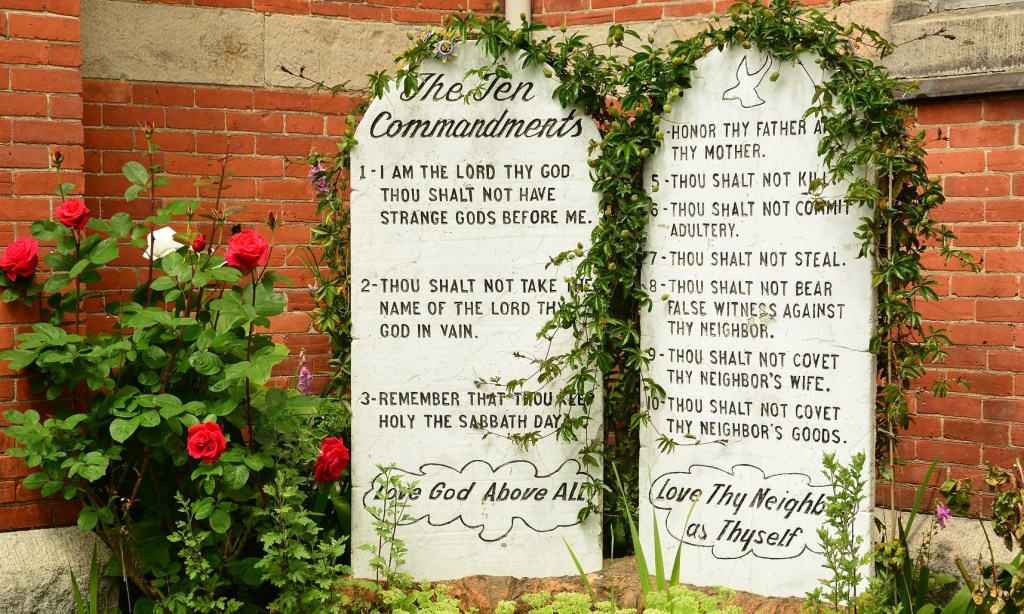
Let’s see now: morals is the distinction between right and wrong. And we just identified three moral activities which we have outlawed by legislation. Murder, stealing, and lying are also prohibited in the 6th, 8th, and 9th of the 10 Commandments (Exodus 34); so our government does agree with Scripture – sometimes.

Obviously, we can and do legislate morals; so the question is: what morals do we choose to legislate? The answer: many! We legislate (make law) many good, honorable ideas; but we also approve anti-Biblical and anti-American laws that nullify constitutional rights.

Ravi Zacharias, on his radio program titled Let My People Think, said, “The non-Christian world politicizes morality while they moralize politics.” He is correct. Some of our politicians favor good morality and truth while others outright disdain truth. What baffles me is that sometimes our leaders and judges listen to a small minority on the fringe of society and make or break laws that override the desires and morals of the voting majority. What kind of democracy is that?

We also have a built-in dichotomy in our government. Some well-known government officials can commit crimes and lie about it, and we overlook it; while other well-known officials commit crimes and lie about it, and are prosecuted. Yet other officials are prosecuted when there is no evidence for prosecution. The morality of the issue seems to depend on what side of the political fence the official is on. They moralize politics.

However, if it’s a hate crime, that is bad! Amazingly, that is a double-legislation of morals.

Friends, we legislate morals all the time. But we have a problem. Often we’re outlawing wholesome, healthy core values, while approving anti-Biblical values and morals. This goes against our national heritage and weakens our nation: both spiritually and politically.

Morals – right versus wrong – is both a Biblical and political issue. Galatians 6:7 says, “Don’t be misled. You can’t ignore or mock God and get away with it.” Therefore, if we don’t revert to using Scripture for our legislative standard as we formerly did, our national problems will become more profound than they are now. It’s time to wake up and turn back to God.

You Are an Ambassador

Dad was a US Navy chaplain, but first he was an Assemblies of God minister. When church denominations ordain a person, the ministers are representatives or ambassadors of their denomination. If they are commissioned into the military as chaplain, they are brought in as ambassadors of their respective church, but they also become ambassadors for the military.

Okay, what is an ambassador?

Merriam’s online dictionary defines it this way: 1) an official envoy; especially a diplomatic agent of the highest rank accredited to a foreign government or sovereign as the resident representative of his or her own government. 2) an authorized representative or messenger. 3) an unofficial representative, such as ambassadors of goodwill.

That covers a lot of ground!

One time when dad preached in the Navy chapel on the Pentecostal experience as found in Acts chapter 2, he was challenged by his Navy superiors. But dad wisely explained that he was an ambassador for his authorities – both church and military – and could be accused of gross negligence if he forsook his responsibilities. His superiors understood and backed down.

I learned from my father. One time when I was told that I could lose my job because I openly stood for Biblical morality and against politically correct social changes, I explained on a scientific basis what the issues were, that I was an ambassador for truth, and that I would not back down from truth. I did not lose my job; instead, my reputation increased.

What or whom do you represent? If you work for a company, you represent that business and are its ambassador. If you work for yourself, you should be known as a person of integrity; and therefore, are an ambassador of honesty, reliability, and accountability. Commander Fuchida pictured here represented Japan in 1941.

When you call Sears (or whatever company) to do a job for you, if the worker looks sloppy or acts disgraceful you will be hesitant to do business with that company again. Why? The company may be great, but that ambassador presented a poor image. It works that way all through life – including with your faith.

Are you an Atheist? A Christian? A Jew? You are an ambassador of your faith. (Yes, an Atheist has faith: faith that there is no God.) With over 4,300 religions in the world, I’ll refer to Christians now because I am a disciple of Jesus Christ.

A US ambassador represents the US President; therefore, he must act in a manner that befits the office of the president. Likewise, a Christian represents Jesus Christ, and should live, act, speak, and worship in a manner that befits the office of our Lord.

The US ambassador knows the president, has personal interaction with him, and learns to know how the president thinks. But Jesus is more than a president or a king – Jesus is God. So how should we represent Him?

As with the president’s ambassadors, Christ’s ambassadors must know Jesus, have personal interaction with Him, and learn to know how He thinks. How do we do that? We diligently read and study the Bible. We converse (talk, pray) with the Lord.

Second Corinthians 2:16 starts with, “Who can know the Lord’s thoughts?” And it ends with, “We have the mind of Christ.” The end of the verse answers the first part. Having the mind of Christ means His thoughts are available to us. We can know how Jesus thinks by studying the Book that tells us how He thinks: the Bible.

Second Corinthians 5:20 says, “We [Christians] are Christ’s ambassadors; God is making his appeal to you through us. We speak for Christ ….” THAT is a heavy responsibility!

The following are words of a song written by Verona Wagner that I learned as a child:

We are Christ’s Ambassadors, and our colors we must unfurl. We must wear a spotless robe, clean and righteous before the world. We must show we’re cleansed from sin and that Jesus dwells within. Proving duly that we’re truly Christ’s Ambassadors.

After World War II, Commander Fuchida became a Christian, and in this picture, he represents Jesus Christ. In order to be an ambassador for Jesus, we must be loyal and obedient to Him, live a life that honors Him, and treat others the way we want to be treated. We should avoid activities that Jesus would not approve. Christ’s ambassadors must not allow their worship experiences to reflect the ways and actions of the non-Christian world. And don’t mock the Lord by an ungodly lifestyle.

Jesus is the best friend you can have; but do not forget – He is God. And if you claim to be a Christian, you also claim to be Christ’s ambassador. Are you fulfilling your responsibilities?

God’s Limiting Factor

I can hear the Reformed Theologians now: You Can’t Limit God. God is supreme. God is sovereign. God does what He wants to do without regard to man, beast, or nature.

But this Reflection is not about Calvinism versus Arminianism, or the misunderstood and misnamed Sovereignty-versus-Grace controversy; so let’s put those arguments aside.

I propose that humans are the only factor in limiting what God will do in our own lives. Not what God CAN do, but what He WILL do. Why? Are we superior to God? Absolutely not! Is God sovereign? Yes, absolutely!

God can side-step mankind when He wants to, and He often does. No one, including Lucifer, can thwart God’s ultimate plan. However, Scripture makes it clear that God does not mandate our lifestyle. We are not robots; therefore, God does not commandeer man’s will. God would receive no honor or glory if He programmed us to worship Him. Instead, He programmed us to be worshippers – but it’s our decision whom or what we will worship.

As I obey God, I can accomplish my part of His will on earth. He directs me in the decisions I make and the direction I go. But if I disobey Him, He does NOT direct me. He may direct other situations to guide me back to where He wants me, but it’s up to me to cooperate. God is omniscient: there’s no doubt about it. And since God already knows what I will do or not do, He already knows what He will do or not do regarding my life.

Scripture makes it clear that God hates sin; therefore, God does not make me disobey Him. But neither does He make me obey Him. Obedience is my decision. All through Scripture, and with assistance from the Holy Spirit, God implores man to listen to Him, to obey Him, to follow His leading. Jesus said in John 14:15, “If you love me, you will keep my commandments.” That statement alone reveals our freedom of choice, and reveals that God does not make the choice for us.

Is God stressed out about my disobedience? Heavens, no. God is bigger than that.

God’s imploring or pleading with us is not because of His inadequacy, but for our benefit. God is encouraging us to grow in our relationship with Him so that we can cooperate with Him in fulfilling our portion of His plan both here on earth and throughout eternity. Yes: God has plans for us!

Genesis 1:26A says, “Let Us make man in Our image, according to Our likeness ….” In that regard, God gave man a say-so about how he (man) will live.

Deuteronomy 28:1-14 spells out the blessings God promised Israel if they would obey Him, and verses 15-29 spell out the problems they would encounter if they deserted or rebelled against God. It identifies our freedom of choice without God’s intervention. But it also shows that God strongly desires us to obey Him.

Joshua 24:15 further clarifies it: “Now if you are unwilling to serve the Lord, choose this day whom you will serve, whether the gods your ancestors served in the region beyond the River or the gods of the Amorites in whose land you are living; but as for me and my household, we will serve the Lord. (NASB)”

Then Deuteronomy 30:19 gives the conclusion: “I call heaven and earth to witness against you today, that I have set before you life and death, the blessing and the curse. So choose life in order that you may live, you and your descendants.”

Do you see it? God is clearly telling man to make a choice. You might ask, “So, what’s your point?”

You are the only person in the universe who can affect the quality of God’s interaction in your life. Therefore, you are the only one who can limit your relationship with God. Others may battle you, interfere with you, try to stop your progress in various ways. Others may hurt you, persecute you, belittle you, slander you, and so forth. Although God knows if and when that will happen, none of that can hinder your relationship with Almighty God if you don’t let it.

Not even Lucifer has the authority to control or guide you.

It is your response to people or reaction to those situations that affect your relationship with the Lord – either positive or negative – and that determines how God will interact with you.

God will not mandate your reaction, and you cannot react properly without His help. It is a team effort. So in every situation in life, no matter the circumstances, learn to look to the Lord to see how you should respond.

How God will use you in heaven depends on how you cooperate with Him here on earth. So choose Life. Choose Christ and live.

Itching Ears, Misplaced Devotion

Carol and I know many people who are dis-satisfied with church-life. They want to go deeper into the Word of God. They want to get into the mind of Christ so that they can know God’s thoughts on every issue, but they think of church services as on the level of kindergarten. They place themselves on a higher plane than the Church and look down on others.

However, when I look at their lives, I find many of them to be spiritually arrogant. Many of them do weird things – in the name of Christ, of course. I am reminded of Second Timothy 4:3-4 that says, “The time will come when they will not endure sound doctrine; but after their own lusts shall heap to themselves teachers, having itching ears; and they shall turn away from the truth, and shall be turned unto fables.”

One Sunday evening, I watched Pastor Frank tell a parishioner, “If you believe and stick your head out the church window and yell ‘Jesus’ three times as loud as you can, you will be healed.” The woman obeyed and Frank victoriously pronounced her healed. When she died a month later, Pastor Frank merely intoned, “She didn’t have faith.”

I watched Pastor Carey announce to his congregation, “If you believe, and sign the book of life in the back of the church, you’ll never die. No matter how long Jesus delays His return, you’ll live until He comes back.” With people lining up to sign his book, I asked my father, “When Brother Carey dies, that will disprove his theory, won’t it?” Dad responded, “No, son. His followers will just think the pastor didn’t have faith.” Brother Carey died in 1993 and people continue to propagate his fables.

One day while praying, Jack had an experience with the Lord that could have changed his life. Jack was excited and wrote down every detail so he would never forget it; and every time visitors came, Jack excitedly read the experience to them. One day a minister he hadn’t seen for some years came to visit, and Jack went to his room to get the document. The visiting minister wondered what happened when he heard Jack yell, “Oh no! The rats ate my experience!”

Yes, the rodents found their way into the desk and destroyed the document. However, Jack had lost the reality of his experience to spiritual rats long before. Why? He placed his affection on an experience rather than on the Lord of the experience.

Let’s back up for a minute. I am from a Pentecostal background and have been affiliated with various denominations. I’ve also been dis-satisfied with church at times. I always want to go deeper into the Word of God, and I want to know God’s thoughts on every issue. So, what’s the difference?

Many of the folks to whom I referred place their faith in spiritual experiences, spiritual knowledge, and spiritual gifts; but that emphasis tends to overshadow Jesus. Scripture tells us to exalt Jesus, the resurrected Christ, the Giver of the experiences, knowledge, and gifts. That’s where I am. There is a world of difference here. If we are devoted to or focused on Jesus as we study the Bible, He will help us gain the knowledge, experiences, and gifts as He sees appropriate. But our priorities will be correct.

Some friends remind me that First Corinthians 12:31 says “Earnestly desire the best gifts.” They think that’s an exhortation to go after gifts that appeals to them. But I respond, “You are seeking the gifts while side-stepping the Giver of the gifts. That’s backwards. Instead, that verse encourages us to utilize the gift that is most appropriate for the situation, for there is NO spiritual gift that is more important than any other. And if we seek God’s input, He will grant us the wisdom we need as we respond to any and every situation.”

I’ve seen people healed of terminal diseases and seen other miracles take place. But I understand the purpose of miracles and spiritual experiences. Yes, they benefit man, but they are supposed to help us focus our attention on the Lord, to honor and bring glory to God.

First Corinthians 2:16b tells us, “We have the mind of Christ.” That is, Jesus will reveal His thoughts as we remain true to Scripture and turn away from those who exalt either themselves or their ideas.

“Itching ears” generates misplaced devotion and causes us to put our faith in miracles or in experiences. Instead, we should put our faith in the Scripture and on the Lord Jesus Christ.

Do You Trust God?

What in the world is “trust”? Can “trust” be qualified? What I am getting at is… oh, let’s start over.

Let’s define the word. Trust is a firm belief in the reliability, truth, ability, or strength of someone or something. It is conviction · credence · reliance

Can a person live without ever trusting someone or something? No.

You think I’m wrong? Let’s check it out.

Are you sitting on a chair or standing up? Either way, you are trusting something. You either trust the chair to hold you – as I am doing right now – or you trust the floor to hold you; and the floor is holding the chair. I don’t care if you weigh 75 pounds or 575 pounds: you trust the floor, chairs, the bed, even a motor vehicle to hold you; which proves you trust their manufacturers. So we just proved that everyone on earth trusts someone or something. It’s just a matter of in what or in whom we will place that trust.

Next: can “trust” be qualified? That is, can you partially trust someone? Or is it an all-or-nothing concept?

When I was five years old, we lived in El Cajon, California. My dad put me on the top bunkbed, and said, “When I say ‘jump’, you jump to me. (Yes, the lights were on.) But I was afraid of falling, so I told dad I didn’t want to jump. Dad promised me that there was absolutely no way I could fall; because even if I jumped awkwardly or inadvertently fell off the bed, he would still catch me.

I don’t know if you understand the fear of falling, but I was almost scared to death! I was emotionally paralyzed. But dad said very gently, “Eugene, if you can’t trust me, how will you ever learn to trust God?” You see, the proof or result of trust is obedience.

 Well that made sense – even to a 5-year-old.

So I suddenly leapt off the bed and hit dad in the chest with my 40 pounds and nearly knocked him over. Dad caught his balance and asked, “Why didn’t you warn me you were going to jump?” I responded, “You said you would catch me.” Dad chuckled, hugged me, and said, “Good job.”

Dad taught me about trust. Dad taught me a lot about life.

Did I fully trust dad, or did I partially trust him? If we consider my fear, we might say I partially trusted him. But if we consider my obedience, we say I absolutely trusted him. Obedience verifies trust.

What was it dad said? “Eugene, if you can’t trust me, how will you ever learn to trust God?”

As I grew older, I learned to trust God with my entire life.

How would my faith in God have been affected if dad dropped me? That’s hard to say because dad caught me. However, Dad most likely would have picked me up, apologized profusely to mom (who was watching), and tenderly talked to me about what went wrong. And because of that, I think I would still have learned to trust God.

I’ve experienced many situations since I left my parents’ home where I could have forfeited my faith and lost trust in God. But I am reminded of John 6:65-68. Many of Jesus’ disciples left Him, and Jesus asked if the twelve would also leave. “Peter responded, Lord, to whom shall we go? You have the words of eternal life.”

Job was one of the richest men in the world, and he lost everything. He lost his children, livestock, respect and admiration of friends and business associates, and was accused of being a terrible sinner.

But in spite of all of that, Job never lost his faith in God. He wanted to talk to God face-to-face and defend himself, but he never lost his faith. Job 13:15a says, “Though he [God] slay me, yet will I trust in him.” In chapter 19 verse 25, Job proclaims, “I know that my Redeemer lives, and he will eventually come to the earth.” And God, in the form of Jesus of Nazareth, did come to earth to redeem us.

Human mistakes and misfortunes should not deter us from trusting God. Jesus said if we love him, we will obey him. And Obedience is a manifestation of trust.

So, do you trust God?

Are You Color-Blind?

Years ago, I suspected that one of my friends might have a vision difficulty, so I asked him: “Are you color-blind?” He surprised me by asking if I referred to ethnic identification. We laughed, and he told me he was partially color-blind. But he had a point to which I will return later.

So, optically-speaking, what does it mean to be color-blind? Normally, color-blindness is an inherited genetic vision problem; but aging, disease, sickness, or an injury can also trigger it. Sometimes color-blindness can be a side-effect of medicine.

A color-blind person has difficulty seeing primary colors, or a mix of these colors from which every other conceivable color comes. Three theories potentially define primary colors. One basic concept identifies red, blue, and green; and another theory classifies red, blue, and yellow as primary. A third theory includes red, blue, green, and yellow.

A popular belief is that color-blind people cannot see any color at all, but that isn’t always correct. Therefore, the term is actually misleading, but we’ll use it for ease of understanding in this Reflection. And let me add here: very seldom will people even with excellent vision see colors exactly the same as others do.

As various mixes of primary colors produce the different colors and hues, the light-receiving cones in the retinas of our eyes sense variations of the light spectrum which the brain interprets as the hundreds of possible colors. The highest concentration of these color-receiving cones is in the macula – the central part of the retina. Color-blindness occurs when the cones don’t function properly.

One common method of diagnosing color-blindness is by looking at patterns of variously colored dots and trying to decipher numbers, letters, or other patterns embedded therein. The patterns the person can or cannot recognize reveal the area of difficulty.

Inherited color-blindness cannot be treated at present, but sometimes an acquired deficiency can be treated. And I found it interesting that men (about 8%) are more likely to have the color-recognition problem than women (half a percent); but more women are carriers of the deficiency.

Color-blindness may make people ineligible for some vocations, such as flying planes. But during World War II, the Army Air Corp (predecessor to the United States Air Force) hired color-blind people to be “spotters” in planes because they would not be fooled by the camouflaging that was used to hide trucks, cannons, supplies, and soldiers.

What I found to be even more interesting is that some “color-blind” people are not really color-blind. Their eyes function properly and the retinas receive all available colors; but the individuals do not recognize color. The problem here is perception, not vision.

Many folks take the handicap in stride and get on with life. Some artists such as Australia’s Clifton Pugh overcame his handicap by focusing on shades of light and dark rather than on overt color; and France’s Charles Méryon overcame color-deficiency by focusing on etching rather than on painting.

Let me get back to ethnic identification.

My eyes have been tested for color reception, and they came out very good. Also, with my eye-glasses, I have near 20-10 (near perfect) vision. But I am somewhat “color-blind” regarding ethnicity. Many of my friends are not Caucasian or White, yet we call each other brother or sister. Ethnicity is not an issue and the love of Christ flows between us. As I interact with people from around the world, I see people made in the image of God. Even if the person isn’t a Christian, I still see someone whom Jesus loves and for whom Jesus died.

But there is another type of “color-blindness”. As our spotters in the Army Air Corp in World War II were not fooled by enemy camouflage, God’s “color-blind” people are not fooled by Satan’s deception in education, politics, and in the church.

True Vision

They are not fooled by anti-Biblical teaching that is camouflaged by religious, philosophical, political, or educational rhetoric. They are not fooled by so-called political-correctness that squelches Christianity while uplifting other religions, philosophies, and lifestyles.

These folks are blessed by the Lord, but they often come under attack. The world rejects or hates them and misguided Christians misunderstand them. But these color-blind people, like the Apostle Paul and Billy Graham, are the ones who keep the faith in Almighty God alive, and spread it around the world. If you have that kind of vision, as I do, don’t back down. People need to hear us.