Friend or Foe?

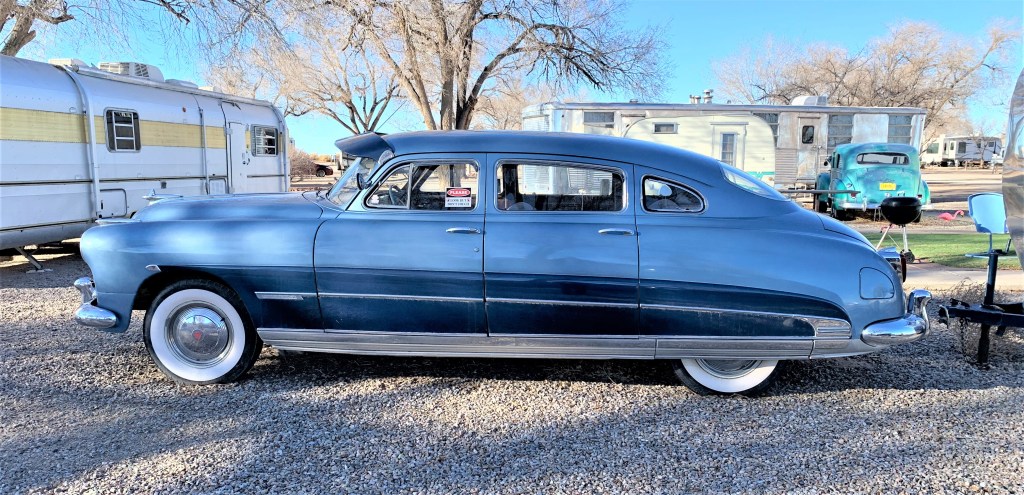
Wind always fascinated me. My 7-year-old hand became an airplane as I stuck it out the window while Dad drove the 1952 Hudson Hornet at the break-neck speed of 60 miles per hour. I enjoyed watching the wind blow water across the neighborhood as water shot high into the air from our garden hose. Wind was my friend. (The Hornet in this picture is not the car Dad drove. I saw it recently at the Enchanted Trails RV Park in Albuquerque, NM.)

Earlier in life, I enjoyed being outdoors. I was 12 years old. It was Saturday morning with a good breeze blowing across our back yard in El Cajon, California. After breakfast, I assembled my kite, tore up an old pillowcase and made the tail, and gave the kite a test flight. I could have bought a 425-foot-long roll of Megalon string, but dad allowed only 300-foot rolls; so I bought 3 rolls. I named my kite Bird. It took off fast – but nose-dived! Ouch!

I made one adjustment to the tail and tried it again. Beautiful!

I waited for a good gust of wind and launched my Bird. Within a half hour, I had used up one roll of string. Tying the string to a stick, I wondered, why not add another roll of string?

I tied the string securely to the beginning of a new roll. Working the Bird very carefully, I released the second roll of string. I had never put a kite up that far. I was happy, but my natural curiosity began working overtime.

Would I be able to take it up another 300 feet? Let’s try it!
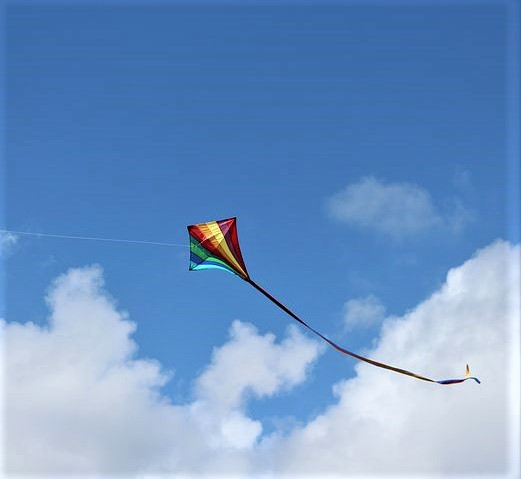
I attached the third roll of string and slowly let it out. At this point, allowing for the angle of the kite’s ascent, the kite was probably 750 feet above the ground and in the main air flow that blew above El Cajon Valley. The Bird was tugging firmly on the stick that the string was tied to.

“Eugene, Mom said it’s time to come in for lunch.”

I don’t remember who the messenger was, but what should I do with the Bird? There was no way I could bring it down in time for lunch. Could I tie it to the fence by the telephone pole and see if it’s still flying in an hour? Why not? What happens if the wind stops blowing? I don’t know, but Mom’s calling, so I’ll find out later.

After lunch, I hurried back outside to check on the experiment. I could hardly believe it! The wind had picked up, and the high-flying Bird was not about to come down. And now I began pondering….

I’ve never had a kite that well-balanced. Probably never will again. I’ve never put a kite up that high. Probably never will again. I’ll never be challenged to fly a kite again. I’ve done it!

After I stood there for about 10 minutes looking at the sight, I cut her loose. It was amazing to watch the Bird fly higher and across the valley until it disappeared out of sight. Did it come down in town somewhere? Maybe. But probably on one of the hills surrounding the valley.

The wind is normally a friend to kite-flyers. Years later I taught my boys to fly kites, but they never matched my experiment with the Bird. Wind also turns the giant turbines on wind farms across the plains which generate electricity.

However, most people also understand that the wind can be an enemy. Trucks and trailers are blown over and their contents get scattered all over the highways. Tornados and hurricanes destroy hundreds, if not thousands, of homes and businesses every year. The wind kicks up tremendous haboobs – dust and sandstorms up to 100 feet high – which cover towns and cities with thick layers of dust and sand.

But wind isn’t the only thing that blows across our lives that either help or hurt us. Our words and attitudes can benefit or destroy people. We can either make their day or ruin it. We can either bless others and help them improve their lives or curse them and send them into a spiral of despair. Look at three verses in Proverbs 15.

Verse 13, “Happiness makes a person smile, but sadness can break a person’s spirit”

Verse 18, “People with quick tempers cause trouble, but those who control their tempers stop a quarrel.”

Verse 28, “Good people think before they speak, but foolish people pour out foolishness.”

Don’t speak words that kick up storms or create devastation; use your words to help people. Be a friend, not a foe. Be a blessing to your community, and God may bless you.

Who Are You?

I recently heard a portion of a conversation. A man named John went to a hospital to visit a bed-ridden, dying man. The name of the man in bed was Tom. (The names have been changed.)

In the early portion of the visit, Tom perceived that his visitor was troubled concerning his vocation. Not wanting to be nosey or pushy, the dying man realized, however, that John was the one who needed to be encouraged. Also, Tom noticed that John was an up-front, forthright kind of man, so Tom jumped right in. As close as I can recall, here is what I heard.

“John, who are you?”

That took John off guard. “Uh, I’m a basketball coach. Why do you ask?”

“If basketball went away, who would you be?”

John thought about it, then mentioned his other vocations, adding that he is a father, a lay-leader at church, and ….”

“John, you’re missing the point of my question. All those things are what you do or have done, and every one of those things will someday not be so any longer. I’m asking you one simple question. WHO are you? If you became an invalid, as I am, who would you be?”

John is like most of us – he never thought of that before. But Tom wasn’t through. He had one more question.

“My friend, here’s how you can figure out who you are. When you die, as I will soon, you will be none of those things you mentioned. As you enter heaven, none of those titles, jobs, and positions you filled will be part of you. None of your importance, influence, prestige, reputation, or money will go with you. Who will you be then? Think about it, John. Who are you?”

John left the hospital perplexed, and that question began rolling around the corridors of my mind. Who am I? I’ll come back to that in a minute.

Dear reader, you and I could spend several days or weeks trying to impress each other about our jobs, our accomplishments, how we’ve changed our company, church, or society. We also have a culturally imbedded idea that what we do is who we are. I am the president of this. I’m the CEO of that. I started this company. I am a pastor. I’m the chief mechanic over this operation. On and on we could go because we strongly identify with what we do.

But is any of that who we are? If we sleep in a garage, does that make us a car?

Bed-ridden, dying Tom was pointing to eternal reality. When all the temporary things in life vanish, when we breath our last, the eternal question is: who will we be? If we can answer that question, we’ll know who we are.

So, who am I? I’ve learned not to tell folks about my accomplishments because it could be considered a matter of pride. Even while I was a pastor, I truthfully said that I didn’t have a ministry. Why? The Ministry belongs to God, and He graciously allowed me to be a part of what He was doing.

Who am I? I am a King’s Kid. I am an adopted son of the Living, Loving, Eternal, Creative, Almighty God. That’s who I am. And I’ll be that forever.

I remember a 1796 song written by Charlotte Elliott. The first verse is: “Just as I am without one plea, But that thy blood was shed for me, And that thou bidst me come to thee, O Lamb of God, I come, I come.”

I asked the Lord to accept me into His family when I was five years old, and I’ve never turned my back on Jesus. Do I sin? Yes, but when I realize it, I ask the Lord to forgive me. And He does. 1 John 1:9 says, “If we confess our sins, he is faithful and just to forgive us our sins, and to cleanse us from all unrighteousness.”

Today, I listened to a 1992 song written by Mosie Lister. In addition to being a song-writer, he was a great pianist. The words to the chorus are, “Beyond the Cross is a tomb that is empty, you won’t find Me there anymore. And beyond the tomb is life ever-lasting, and hope forever more.”

Jesus died for us, but He raised back to life three days later. He is alive, and I’ll be alive with Him forever. Who am I? I am an adopted son of God!

Friend, who are you?

The Head-Banger

Have you ever found yourself banging your head against a wall? How’d it feel? Did it help the situation? A friend of mine in New Mexico got so upset one day that he broke the sheet rock wall in his house with his head. After recovering from the concussion, he paid someone to repair the wall; but the situation he reacted to didn’t change because HE didn’t change.

Several weeks ago, Carol and I were finishing breakfast when I heard the unmistakable sound of someone banging its head against a solid object. This guy wasn’t upset or angry. He was hungry and looking for food. He was pounding away on the branch making bits of bark fly as he was gathering ants and other bugs with his long, barbed tongue.

It was a woodpecker.

I’m not an ornithologist, but this bird looked like a large Pileated Woodpecker. These guys can grow to almost 20 inches long, have a wingspan up to 29 inches, and weigh up to 12 ounces. It was drumming on one of our branches, grabbing nourishment with its tongue, and apparently taking it to someone in a nest because it made eight or nine trips to a distant tree while we were watching. I read that some woodpeckers have up to 9-inch tongues, but the Pileated Woodpecker’s tongue is only about 4 inches long.

These birds are members of the Picidae family, and peck like a jackhammer at about 20 hits per second! Compare that to a good machine-gun that fires 1,000 bullets per minute, which is16 per second.

The International Ornithological Congress says 236 species of woodpeckers make up the Picidae family world-wide, but only 23 species inhabit the United States.

How do woodpeckers survive the banging without getting headaches or concussions? God provided them with amazing safety features.

The beak consists of three-layers. The tough outer cover is called rhamphotheca made of scales from keratin, a middle layer of porous bone, and an inner fibrous layer made of mineralized collagen. Its structure absorbs and distributes much of the impact throughout the body which reduces the strain on the brain.

The skull is made of sponge-like bone, and liquid surrounds the brain. Both skull and liquid absorb a lot of the rapid-fire shock, and a safety belt called the hyoid bone that wraps around the brain keeps the brain from rattling. While pounding the tree, a thick nictitating membrane covers the eyes, protecting them from flying shrapnel. Also, the slitted nose is protected with special feathers.

Many of these critters are antisocial and don’t mix well with others. In this sense, “Birds of a feather flock together” doesn’t always hold true. Most are territorial and are jealous of their turf.

I read that wild woodpeckers live from 4 to 12 years, but under ideal conditions they might live 25 to 30 years.

The most famous woodpecker in America is the cartoon Woody Woodpecker that was created by Ben Hardaway in 1940. I always liked that cartoon. Hardaway styled Woody as a combination of several birds, including the Pileated Woodpecker.

Thinking back on my friend in New Mexico, he wasn’t created like a woodpecker, so he shouldn’t have physically banged his head. And he discovered that becoming a head-banger doesn’t do any good.

What about figuratively banging our heads? Normally, that means we are frustrated, angry, or worried. However, if we get upset, it blocks the creativity we need for correcting the situation. Rather than demanding that the situation change, we need to change our method of responding.

Storms of all sizes and types are an integral part of life. But as devastating as the storm may be, it is our reaction that exacerbates the problem. Getting upset and banging our heads only makes things worse.

So what should we do?

Because we have a difficult time changing our circumstances, we need to learn how to change ourselves. Romans 12:2 tells us don’t act like the world but ask God to help us change the way we think. Then we will learn to know God’s will for us. Interestingly, when we change the way we think and act, our circumstances often change.

Psalms and Proverbs provide the principles for handling almost any situation that life can present. You may scoff at that; but when you recognize and admit your need for help, God will be waiting for you. We don’t need to be a head-banger; leave that option for the woodpeckers.

Simple Writing is Smart Writing

When I was in high school trying to write reports and term papers, I had a difficult time. No matter how hard I tried, I couldn’t get anything to sound right. Asking dad for advice, he looked at my futile attempts and said, “You’re trying to sound smart.”

“Huh?”

“You’re trying to empress your teachers. Quit it, and make it sound like yourself. Do the research, know what you’re writing about, but make it sound like yourself.” He then taught me a lesson I never forgot.

The most widely read magazine at the time, Reader’s Digest, was written on the 8th-grade level. Although enjoyed by professionals and academics, it was read and understood by 10-year-old kids. “You do need to increase your vocabulary. That’s a fact. But don’t try to impress anyone. Just convey information in a meaningful way.” Dad was right, of course.

That made life much easier for me. And as I write this today, I am reminded of a humorous conversation between my brother-in-law, Paul Anderson, and a scientist in Los Alamos, NM. Paul is an expert auto mechanic and understands everyday life quite well.

The scientist drove up to Paul’s shop one day and said, “Mr. Anderson, There seems to be a protrusion in one of my tires that allowed the air to escape.”

Paul responded, “Oh, you mean you got a flat?”

Upon which the man replied, “Yes, I guess you could say that.”

Whether we are writing or speaking, we should use concepts, syllables, and phrases that convey our thoughts in a meaningful manner to the listener and reader. That’s called proper communication.

The rule of thumb is to say things simply. If people have to ask you what you meant, you may have miscommunicated, or you simply need to explain in more detail. When I teach, tell stories, preach, or write, I communicate in such a way that children as well as scientists can understand me.

New writers, as I was back in high school, tend to use long words and complicated writing styles. That works if the writer needs an extra 150 words to fulfill the writing assignment. But if the writer understands what he/she is writing about, fewer words give space for more content. Here’s a case in point.

Back in 2004 as I began writing Bible Question & Answer articles for a New Mexico newspaper, Ralph the editor told me I had a limit of 250 words per article; and 250 words included the question. I asked, “How can I fully answer a Bible question with approximately 225 words?”

Ralph responded, “Anyone who understands what he believes can respond in 225-250 words.”

That was possibly some of the best writing mentoring I ever received! And I worked at it.

After six months Ralph said, “You’re doing very well, and I’m upping your limit to 350 words. Keep avoiding excessive words while filling the added space with content.”

Ralph then suggested that I select up to 65 of those articles and format them into a book. Following that advice resulted in my first book titled Insights on Faith & History. It has been updated and published in a second edition called Reflections on Faith & History. (See my blog for last week.)

Quoting from a Princeton University Report: “Write as simply and plainly as possible and it’s more likely you’ll be thought of as intelligent.”

Combining the advice from Dad, Ralph, and Princeton – and applying it – changed my life.

Keep in mind that writing doesn’t necessarily mean writing books. People write and mail letters to friends. We also write emails, texts, tweets, and a lot more. But depressingly, a lot of that is very poorly written.

So, if any of you want to increase your writing skills, there are several options. Here are only three. 1. Find a writer’s club and join it. 2. Sit down and write something you’re interested in and ask a friend to critique it for you. Accept his or her advice and rewrite it. Ask others to critique it next time. Learn from them. 3. Go to the internet and simply type in: Help in writing better. You’ll get a lot of good advice.

Remember: Simple Writing is Smart Writing. Have a great day, and Happy Writing.

A Sure Foundation

Carol returned from shopping. As I carried the groceries into the house, my foot turned to an awkward position and I nearly lost my balance. That’s abnormal because I have a history of being as sure-footed as a mountain goat.

Well, I was sure-footed when I was a 12-year-old kid. On a weekend vacation in the hills of Southern California with my parents, I ran and jumped from huge boulder to boulder and never tripped, stumbled, or fell. I somehow developed the skill of not falling.

When someone trips, the person often stiffens and falls. That’s when bones break, and other injuries take place. But when my foot hits a tree root, or anything else, I don’t get tense. Instead, my leg immediately relaxes, then swings out in front of me to stabilize me. That’s why I seldom fall.

Oh, I should mention this. While standing on the edge of a 10-foot tall granite boulder, the deteriorated front face of the ancient granite crumpled, and I went down with it. But while studying Judo in high school, I learned how to fall and roll without getting hurt, so I wasn’t injured.

However, at 75, I do need to be more careful. What happened this time while carrying groceries into the house? I didn’t have shoes on, but slip-on sandals. As I stepped onto the threshold, my sandal, which was not secured to my foot, turned. Guess what happened next? Yep, my foot turned with it, and I nearly went down. But, out of training, I recovered and didn’t fall.

You probably realize that poorly-fitting shoes can cause various physical problems, and it’s a well-known fact a good pair of shoes that fits our feet is one of the best things we can buy to keep us safe as we walk, run, jog, or just stay at home. Well-known because in 2019, over 91 billion US dollars were spent on footwear.

Good shoes provide a secure foundation while walking. But that applies only to the physical side of life. What about people who trip, stumble, or fall emotionally, mentally, or spiritually? We need something to give us stability in that part of our life, too.

With so much political, cultural, and social turmoil, along with rampant diseases spreading around the world, we need a solid foundation. This is found in a relationship with the One Who created us, and Who wants the best for us both now, and throughout eternity.

We find the instructions we need in Ephesians 6:10-18. The ESV says, “Finally, be strong in the Lord and in the strength of his might. Put on the whole armor of God, that you may be able to stand against the schemes of the devil. For we do not wrestle against flesh and blood, but against the rulers, against the authorities, against the cosmic powers over this present darkness, against the spiritual forces of evil in the heavenly places. Therefore take up the whole armor of God, that you may be able to withstand in the evil day, and having done all, to stand firm. Stand therefore, having fastened on the belt of truth, and having put on the breastplate of righteousness, and, as shoes for your feet, having put on the readiness given by the gospel of peace. In all circumstances take up the shield of faith, with which you can extinguish all the flaming darts of the evil one; and take the helmet of salvation, and the sword of the Spirit, which is the word of God, praying at all times in the Spirit, with all prayer and supplication. To that end, keep alert with all perseverance….”

The truths in those verses are not hypotheses or theories. They’ve been tried and tested and have helped millions of people live on a sure foundation throughout their lives. I live by those verses. People here in town and in other states have mocked Christians and tried to destroy us and our belief in Christ, but the accusers and mockers are the ones who are hurting.

Some folks say they have their own reality, and it doesn’t include the Bible or Jesus Christ. But those assumed realities will evaporate like a morning mist, while reality in and with Jesus will provide a sure foundation throughout eternity.

Jesus left heaven to come as a baby so He could give us that sure foundation.

In Case You’re Interested ….

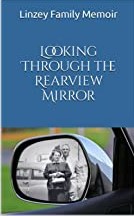
There are three books on Amazon that I wrote, and one that five of my siblings and I wrote. I’ll tell you about them in a minute, but first I need to tell you where to find them. Go to Amazon.com: S. Eugene Linzey: Books, Biography, Blog, Audiobooks, Kindle and scroll down to see them. All four are treasure-troves of information, insight, and good reading. You can order either print copies or kindle versions – or both.

I’d been taught that all Christians go to heaven. But how was a Christian supposed to live while on earth? I didn’t see much difference in many people’s lives when they became a Christian or joined a church. On Sundays, most people talked about the Lord, sang, bowed heads in prayer, listened to the pastor – most of them – but something was missing.

Why would the Church of Jesus Christ—including all divisions and denominations–need a charter? Simply because I know many Christians who don’t seem to understand the Faith they claim to believe. Going to church and joining it is not the same as understanding the faith.

The Church, including each member of it, needs to keep in mind that our goal in life is not merely to get to heaven. Our goal in life, both on earth and in heaven, is to be a member of Jesus’ team and grow the Kingdom of God throughout eternity. It is by becoming an adopted child of God, and growing into a mature spokesman for God, that we can fully take our place in the Kingdom. That is why we need to know and understand the teaching in Matthew 5:1-12.

This book, Charter of the Christian Faith, addresses this topic.

Absolute truth is something that is true at all times, in all places, for all people, and in all circumstances. For example, there are no round squares, and there are no triangular circles. We may change the descriptive terms, but that won’t change the facts. On the other hand, temporal truth changes with the passage of time. As an example, I am temporarily not hungry. That is true. But tomorrow, I will be hungry. That also is also true.


But why are so many people on both sides of all fences worked up about the differences in viewpoint? A difference in viewpoint can be healthy as long as we don’t fight over them. To use a verse from Isaiah 1:18, “Come, let us reason together.” However, in reasoning or discussing our viewpoints, we must have a standard against which to measure truth. That’s the crux of the matter. The problem is that too many people on both sides of many fences make mistakes.


Our worldview is the basis for how we live: how we think, how we act, how we respond, what we believe, and how we worship. But a worldview produced with limited input produces a restricted or narrow outlook. I endeavor to write about a variety of topics which, over time, can enable the reader to expand his or her horizons. A person doesn’t even need to agree with me, but reading what I write gets him or her to think; and that is the key to maturing both mentally and spiritually. These are my thoughts, my reflections on life, my beliefs. Read them and compare them with your worldview.

Over the years, we have seen a lot of change in the church. We have seen it change from the big central church of downtown in the 1950s to the outlying mega-church in the 1980s. We have seen hippies who accepted Christ in the Jesus Movement of the 1970s become yuppies in the 1990s. We’ve seen a major shift from mainline denominations to inter- and non-denominational organizations. But our desire through it all has been to teach people both in and out of the church to develop a relationship with Christ. Although we believe that church involvement is necessary, it is the personal relationship with Jesus Christ that will see us through both the problems and the blessings of life.

The Bible is a book about civilization, government, war, and intrigue. It contains drama, history, culture, and a lot more. However, it is primarily a book about faith and spirituality. This book was written to answer many questions to help people sift through the sands of time to gain a better understanding of the Word of God.

This book was written by three brothers and three sisters (six siblings in all) who realized after their parents had passed away, that the family was divided into factions. They also admitted there was much they didn’t know about each other, and they decided to do something about it.


The memories they wrote about prompted spontaneous email conversations and phone calls among the siblings. They found themselves saying things like, “I didn’t know you felt that way!” Or, “I never knew that!” Or even, “Me too!” They started learning about one another and seeing each other in a whole new light, and the conversations that occurred every week became highly therapeutic. They accepted one another, and in the process, learned to love each other more deeply than any of them had ever experienced.


Join them on a journey that spans the past 70+ years, as they tell you the stories of family, faith, and friendship. This is a memoir about love and laughter, anger and attitude, groaning and growing. In many ways, it is a story about coming of age.


“Whether you are a family member, a distant relative, a neighbor, friend, or even a complete stranger, we invite you to join us on this journey as we share our lives with you. We hope you enjoy the stories. Welcome to the family.”

Find these books and order them on Amazon.com: S. Eugene Linzey: Books, Biography, Blog, Audiobooks, Kindle.

Pray for Others

A friend sent a rather lengthy tale to me several decades ago, but I never learned the identity of the author. The story is not a historical account, but more like a parable to illustrate a moral, and the following is a portion of the narrative.

**************

A ship was wrecked during a storm at sea and only two of the men survived and managed to get to a small island. Not knowing what else to do, they agreed that they had no other recourse but to pray to God.

The first thing the one man prayed for was food. The next morning, he saw a fruit-bearing tree on his side of the island, but the other man’s parcel of land remained barren.

However, to find out whose prayer was more powerful, they agreed to divide the territory between them and stay on opposite sides of the island.

After a week, the first man was lonely and he decided to pray for a puppy. The next day, he found a pooch swimming to his side of the island. On the other side of the island, nothing came ashore.

Soon the first man prayed for a house, clothes, more food. Each time, somehow, the food and the material for all of these came ashore.  However, the second man still had nothing. The first man did, begrudgingly, share some of his food with him.

Finally, the first man prayed for a ship, so that he and his puppy could leave the island. By morning, the wind had blown a deserted boat to his side of the island. He boarded the boat with his puppy and decided to leave the second man on the island.

He thought the other man was unworthy to receive God’s blessings, since none of his prayers had been answered.

As he was about to leave, he heard a voice from heaven booming, “Why are you leaving your companion on the island?”

“My blessings are mine alone, since I was the one who prayed for them. His prayers were all unanswered and so he doesn’t deserve anything.”

“You are mistaken!” the voice rebuked him. “He had only one prayer, which I answered. If not for that, you wouldn’t have received any of my blessings.”

“What did he pray for that I should owe him anything?”

“His only prayer these past two months was that I would answer your prayers.”

**************

In the legend, both men initially understood their plight, realized that prayer was the only recourse available to them, and amicably began their experiment.

The reason this stood out so strongly to me is that I’ve seen the same qualities in people wherever I go. Some folks are humble, good-hearted, and want what’s best for others. They go out of their way, even to the point of depriving themselves of some benefits of life so they can reduce the hurt and pain others are experiencing. These people are obeying Jesus.

But I’ve also seen other folks who are out to get what they can for themselves. Not helping others in a material way, these self-centered people sometimes go out of their way to destroy reputations, mock others, and make life hard for their imagined enemies.

What those self-absorbed people don’t understand is, the people they are attempting to hurt could be cherished friends if allowed to be.

But let’s continue about the fable above, and perhaps we should reconsider the concept of prayer.

The blessings we receive might not always be the fruit of our prayers alone, but are perhaps benefits from others praying for us. I can write a book about dangerous and life-threatening situations people have faced and how they escaped or survived, but I’ll tell about only one.

My father was in the USS Yorktown during WWII, heading for what would erupt into the Battle of Midway. A terrible fear gripped dad’s mind and he couldn’t do his job. Five thousand miles away, mom had a powerful burden to pray for him … not even knowing where in the world he was. After an hour of intense prayer, mom stopped praying, and the fear suddenly lifted from dad’s mind. Unknown to dad, God answered mom’s prayers.

I encourage all you who are reading this blog: when someone comes to your mind, pray for him or her. Pray however you feel like it, but pray. You may be the “ministering angel” God uses to rescue or help someone.

Happy New Year, Friends

On December 31, 2020, Carol and I spent a quiet New Year’s celebration together. It was relaxing because from 2011 through 2020, we had been home on December 31 only four times. We’d been in California on New Year’s Eve five times and in Florida once. And this past New Year’s Eve we were in New Mexico.

Several friends asked, “Can’t sit still, can ya?” My response is normally, “You find no moss under my wheels.” And we’ve driven over 29,000 miles in 2021.

It’s well-known by our families, friends, and those who read my articles that we enjoy living in Siloam Springs, Arkansas. All cities, towns, and villages have their problems, but we’ve found this town to be one of the more pleasant places we’ve lived. With that in mind, why do we “hit the road” so often?

One quick answer is: our five kids live in five different states, and my siblings are spread out from the West Coast to the East Coast. We enjoy visiting them. We also have the privilege of preaching and teaching in our travels.

A second answer is: we enjoy seeing God’s creation first-hand. Seeing nature in books and on video is great. But nothing beats driving through the Sierra Nevada Mountain Range, seeing the Giant Redwoods in northern California, the amazing Oregon Coast, Puget Sound in the great northwest, the red granite beaches of Maine, the snow-white beaches of Siesta Beach in Florida, seeing Yellowstone and Yosemite National Parks, and HUNDREDS of other places.

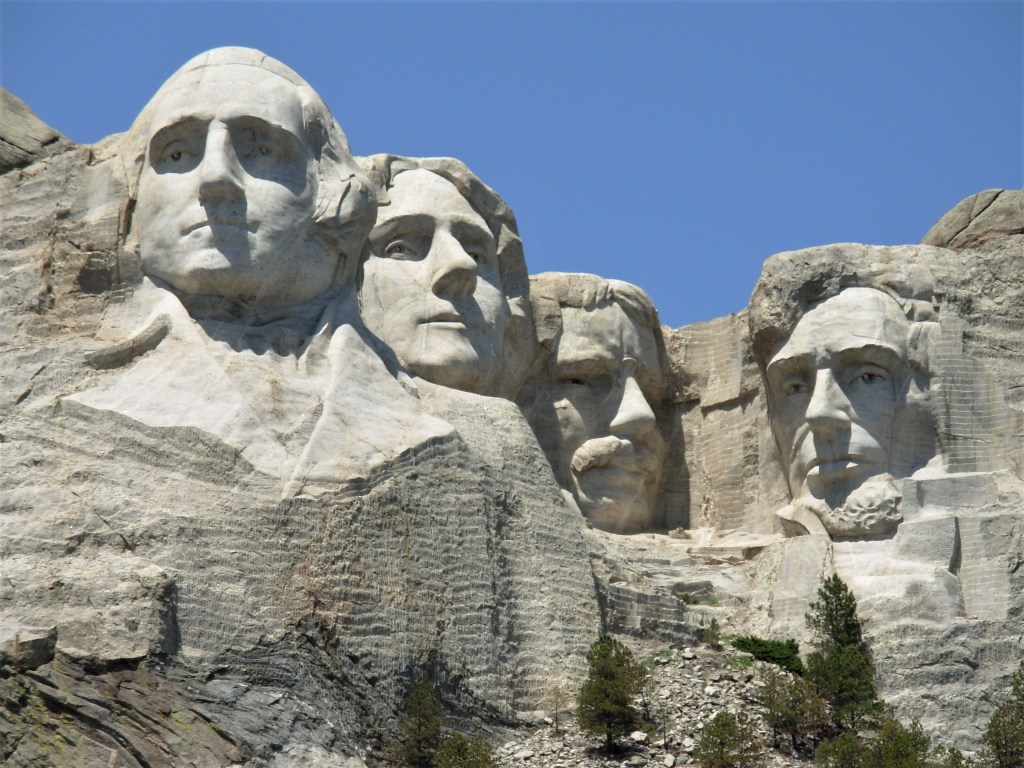
We also enjoy seeing the marvels of man’s creation, such as Mount Rushmore in South Dakota, the 605-foot-tall Space Needle in Seattle, and the 630-foot-tall Arch in St. Louis.

Historic sites such as the Yorktown, Virginia battlefield, the Gettysburg Battlefield, and Pearl Harbor cause me to stop and contemplate how different life might have been if the political and military tide had turned the other way.

The third answer is: we’re getting older, and some day our travel days will be over. So let’s travel while we can.

As we travel, we take thousands of pictures to document where we’ve been and what we saw. You see many of them in these blogs. We’re grateful for digital photography, because that’s a lot less expensive than the film we bought in the past. We often get our pictures out (on computer or another device) and through our memory, we enjoy those trips again.

The ability to remember amazes me. When I get to heaven, I want to ask God how He created memory. But I think He’ll simply say: That’s My secret.

As I mentally gaze on our blessings this past year, I’m fully aware that many people have died, others have gotten sick, many have lost homes and businesses due to pandemics, government mistakes, the natural flow of economics, and natural disasters. But sickness, wars, governmental problems, business failures, and all the other problems and catastrophes have been going on since shortly after Adam and Eve left the Garden of Eden. As we read in Ecclesiastes 1:9, “The thing that hath been, it is that which shall be; and that which is done is that which shall be done: and there is no new thing under the sun.”

The emphasis is: there’s nothing new under the sun. We have modern means of traveling, conducting war, studying, and getting work done, but the essence of life hasn’t changed throughout man’s history. Sickness, death, and all other problems related to life on earth will continue until Jesus stops it. And He will return one day.

But if He doesn’t return soon enough, I will die too. I don’t know by what means, but I will die, and the thought doesn’t bother me at all. Why not? Because that’s life.

In the same concept as midnight on December 31 starts a new year, or a baby being born starts a new life, when my traveling days are over and I breathe my last on earth, I will start a new year, a brand-new life in heaven. It’s part of the Christian’s cycle of life.

However, as badly as I feel for those who have been hurt by various events on earth, I feel worse for those who die while not believing in Jesus Christ. We can start over after a catastrophe on earth, but when we die without faith in Jesus, there is no recovery. Think about it.

It’s all about Jesus

December 25 was a special day of the year. Having said that, you might expect this to be about Christmas. But have you ever … wait a minute. Let’s start somewhere else.

 Joy to the World the Lord Has Come! Angels We Have Heard on High…. Those songs, and others, were prompted by the message given to the shepherds out in the fields with their sheep. Silent Night, It Came Upon a Midnight Clear, and many others, were written about a special baby that was born. We Three Kings, and others, were written about several Persian noblemen who visited Joseph, Mary, and the toddler Jesus about a year later in their home.

Who was this famous baby that changed the world? Or, since babies don’t change society, the question should be, Who is this Person that changed the world?

The Book of Matthew starts with Jesus’ genealogy, then verse 18 begins the detailed account of his birth. Mark starts with the beginning of Jesus’ ministry. Luke starts with the history behind Luke’s Gospel, then verse 26 begins a detailed account of Jesus’ birth. But the Gospel of John starts prior to the beginning of mankind and prior to the creation of the earth.

John 1:1, “In the beginning was the Word, and the Word was with God, and the Word was God.” Verse 3 tells us the Word created everything in the universe. Verse 14, “And the Word was made flesh, and dwelt among us, (we beheld his glory, the glory as of the only begotten of the Father,) full of grace and truth.”

John 1:2 bounces me back to Genesis 1:1, “In the beginning, God created the heavens and the earth.” By this we know that the Word, Jesus, Who had no beginning, created the cosmos.

Okay, now we can think about Christmas, December 25. Was Jesus born at this time of year? Probably not, but that’s another story and don’t worry about it. We’re celebrating the birth of the Person mentioned in John 1:1 and Genesis 1:1 – God in human form. He is the greatest dichotomy of all time. For the first – and only – time in history, a real God was born as a human.

The Babylonians, Egyptians, Greeks, Romans, and many others developed myths, legends, and fantasies of gods creating themselves, gods being born, gods squabbling over territorial rights, fighting and killing each other, and a whole lot more. Their pantheons of gods were memorials of either great imaginations, or possibly of demon activity within mankind’s history.

Many citizens of those nations worshipped their gods out of fear, and offered sacrifices, including their own children, to those gods to appease their anger and to gain good business ventures and harvests.

But Genesis 1:1, John 1:1, and the remainder of Scripture tell a different story. The one and only God did not create Himself, because He never had a beginning. He is The Great I Am. God didn’t come to squabble or fight with anyone. Instead, He came to give life, redeem us, give peace, forgiveness, security, and a lot more. It would cost Him His natural life to accomplish it. But He came prepared with that in mind, and nothing would deter Him from fulfilling His mission.

The angels told Mary to name the baby Jehoshua, which means Jehovah is salvation. Through time, it was shortened to Joshua, and through Latin influence, we eventually have the name Jesus.

Have you ever thought about all that? That’s what Christmas is all about. (Christ-mas: a mass or meeting about Christ.)

“In the little village of Bethlehem, there lay a Child one day, and the sky was bright with a holy light, o’er the place where Jesus lay.

“’Twas a humble birthplace, but O how much God gave to us that day, from the manger bed what a path was led, what a perfect, holy way.

“Alleluia! How the angels sang. Alleluia, how it rang! And the sky was bright with a holy light, ‘twas the birthday of a King.”  By William Harold Neidlinger; 1890.

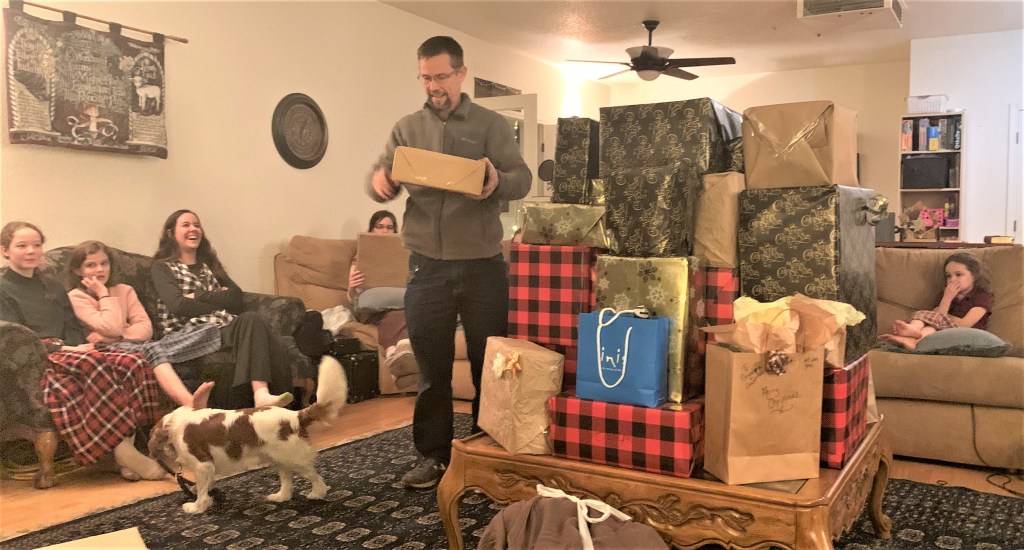
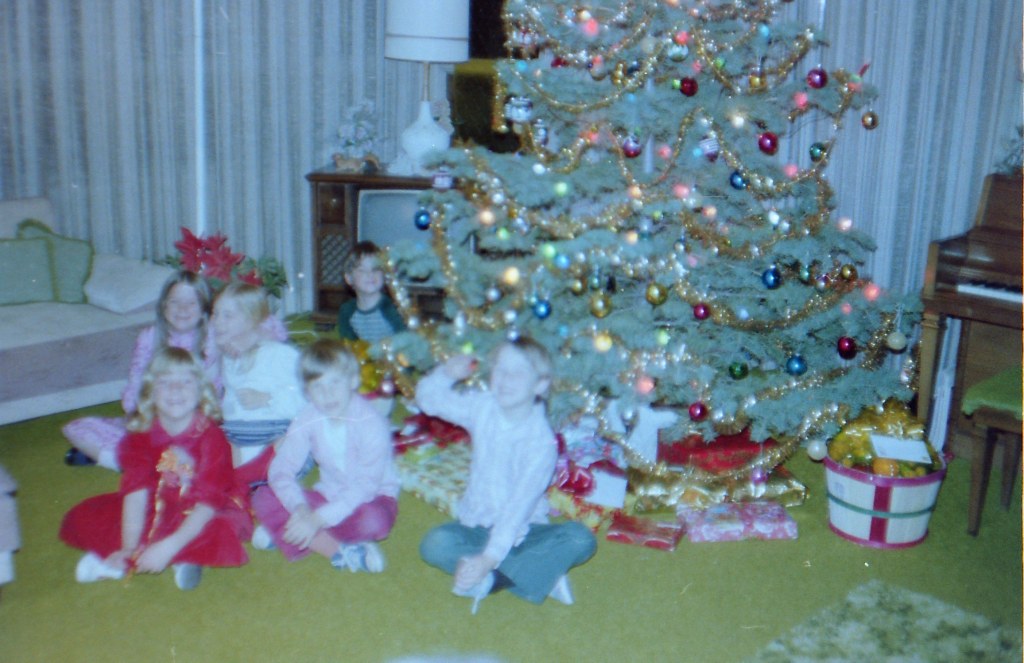
Display your lights, give gifts, share your meals – either scrumptious or meager. Listen to concerts, sing the Hallelujah Chorus and Christmas carols. Visit family, renew friendships.

But always keep in mind why Jesus came. Even as a baby, He was God. But He came to grow up and give His life for us so that we may have eternal life with Him in heaven.

The wonderful greeting of Merry Christmas is joyful, beautiful, and fitting one month out of the year, but Praising God and blessing people is fitting all year long. Be kind to one another and help others in this difficult time in history.

Dickens and Christmas

Have you heard about the movie: The Man Who Invented Christmas?

Chris Knight, chief film critic for the National Post, said, “The movie is based on Les Standiford’s long-winded historical non-fiction from 2008, The Man Who Invented Christmas: How Charles Dickens’s A Christmas Carol Rescued His Career and Revived Our Holiday Spirits.” Knight also said of the movie, “By all rights, The Man Who Invented Christmas should be a humbug. Instead, it’s a humdinger.”

Charles John Huffam Dickens was a prolific writer. One article says he is regarded as the greatest novelist of the Victorian era, and that he created some of the world’s best-known fictional characters. Several of them are: Jack Dawkins, the pick-pocket in Oliver Twist; Tiny Tim, Bob Cratchit, and Ebenezer Scrooge in A Christmas Carol; Mr. Pott, the editor in The Pickwick Papers; and David Copperfield in David Copperfield.

Dickens was a prolific writer. But did he invent Christmas? Humbug!

But some pagan activities did intermingle with the sacred celebration.

Another commentary is from Ronald Hutton, an historian at Bristol University in the UK. He said, “It’s a mistake to say that our modern Christmas tradition comes directly from pre-Christian paganism. However, you’d be equally wrong to believe that Christmas is a modern phenomenon. As Christians spread their religion into Europe in the first centuries A.D., they ran into people living by a variety of local and regional religious creeds.”

One report says: “A Christian holiday honoring the birth of Jesus Christ, Christmas evolved over two millennia into a worldwide religious and secular celebration, incorporating many pre-Christian, pagan traditions into the festivities along the way. Today, Christmas is a time for family and friends to get together and exchange gifts.”  (history.com/topics/christmas)

Philip Shaw, who researches early Germanic languages and Old English at Leicester University in the UK, said, “Early Christians wanted to convert pagans to Christianity, but they were also fascinated by their [pagan] traditions.”

Stephen Nissenbaum, author of “The Battle for Christmas”; Vintage, 1997) made a good case for an old Christmas celebration when he said, “If you want to show that Jesus was a real human being, not just somebody who appeared like a hologram, then what better way to think of him being born in a normal, humble human way than to celebrate his birth?”

Christmas celebrations developed independently around the world for almost 2,000 years. And why not? Jesus’ birth was probably one of the two most important events in the history of the world!

And that’s why we celebrate Christmas – God became man in order to redeem us and restore our fellowship with Himself. And he came as a baby, born in a manger.

But as mentioned previously, many of the Christmas festivities became corrupted. Instead of candlelight services or worship services, rowdy and drunken revelries became common. Therefore, many protestants rejected paganized Christmas celebrations. Early Protestants wanted to honor Jesus Christ, our Savior – not have a festivity which obscured Christ. Denouncing sin and frivolity, they gave necessities for life as gifts; avoiding superficial parties, they shared sacred meals.

But as some Protestants squelched the pagan revelry surrounding Christmas, they also put down anything associated with Christmas celebrations. They threw out the baby with the bathwater. In this case, they threw out observing the birth of Jesus with the pagan celebrations.

Enter Charles Dickens.

Noting societal debauchery, prevalent poverty, and abusive child labor in the 1840s, Dickens vowed to do something about it – and writing was what he did best. In six weeks, he wrote A Christmas Carol. If you’ve read it, you know why it became an immediate best-seller.

Dickens wanted to insert joy and gladness into a life filled with drudgery, dreariness and death. Without ignoring the seriousness of life, he portrayed the Spirit of Christmas filled with miracles and laughter. He also reminded society of the importance of blessing others by caring for those around them.

Did Dickens invent Christmas? No. But he did encourage joy and human-kindness, and inspired a positive change in society.

Jesus, who is God (John 1:1-3), came to earth to restore man’s relationship with himself. But he came as a baby (Matthew 1, Luke 1) so, as he grew, he could personally experience mankind’s trials, hardships, and joys.

Jesus loves you and desires for you to know him as he is today – God and Savior.

May the Lord bless you this Christmas season.