Being Thankful

When I was a kid, Dad would ask us many times what we were thankful for. But on Thanksgiving, we had a family tradition – in addition to having turkey dinner.

Before I get into the tradition, my favorite part of the meal was mom’s mashed potatoes and gravy. Mmmm-mmmm-mmmm! They were good!

Oh, maybe my sisters, Gena and Janice made the mashed potatoes. Yeah, that’s right. Mom started the tradition, dad showed us how to make it without lumps, then Gena and Janice continued. It was a family effort. I can ask God to thank mom for me because she’s in heaven with Him, but I’ll tell my sisters “Thank You!”

The turkey thighs were my next favorite part, with marshmallow-covered sweet-potatoes coming in a close third. I never developed a liking for cranberries, but I would take one teaspoon of the stuff to make mom feel good.

Pumpkin pie and vanilla ice cream topped it off – but sometimes we waited for several hours to let the main meal settle. Then, the pie and ice cream served as a second, special meal!

 After the scrumptious meal, we stayed around the table and each person shared a memory of something that happened that past year for which he/she was thankful. When one of my siblings was thankful that Christmas was coming soon, dad said, “We’ll get to that another time.”

When it was my turn, it was sometimes difficult for me, because emotionally I felt like I was taking a school test: under pressure, I froze up. I broke out in a sweat and couldn’t think. After what seemed like an eternity, Dad would ask, “What are you happy about?”

Now THAT I could answer because it didn’t feel like an interrogation. I was happy about the meal we just ate. I was happy that it rained that week. I was happy that Jesus kept us out of a car accident when we were going to Ramona. I could think of a lot of things if I didn’t feel like I was under the spotlight.

It’s interesting how just changing the words in the question released me from the feeling of a dreaded school test.

With twelve of us around the table – ten kids plus dad and mom – it took a while to complete the tradition, and that was good! Too many times we would eat, clean up, wash-n-dry dishes, and continue on our busy way. But the tradition kept us around for a while and helped us interact as a cohesive family unit.
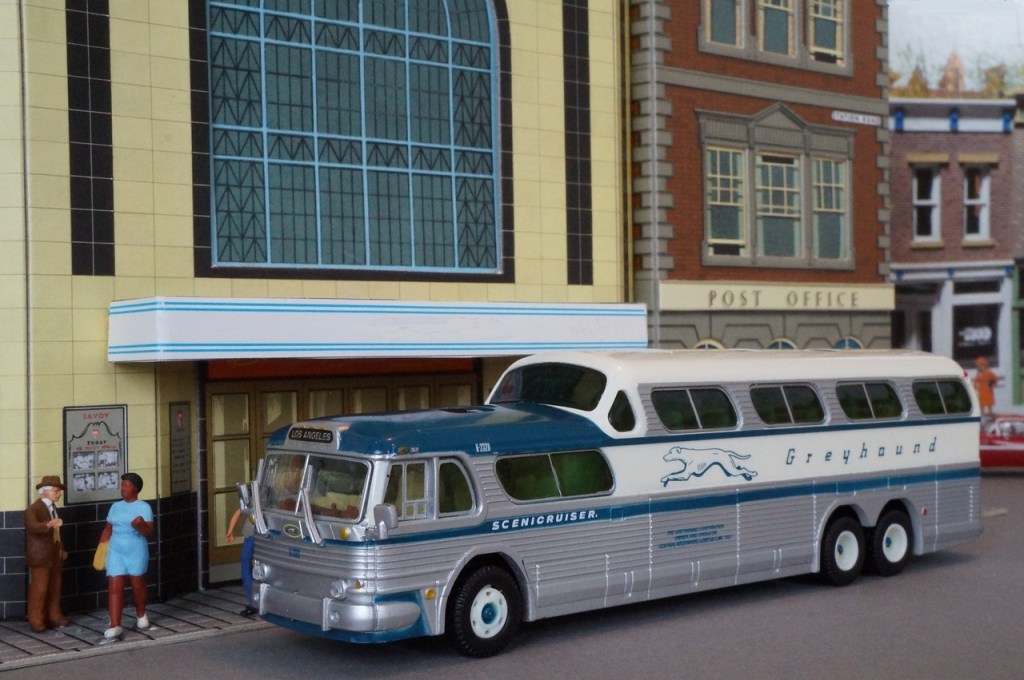
An example of that is when we, as a family, went to the Greyhound Bus Depot in San Diego to greet an incoming missionary. As dad was getting information from the man, my sister Janice came around the corner.

“Janny!” I hollered; and ran to greet her with a hug.

“How long has it been since they saw each other?” the missionary asked.

Looking at his watch, dad replied, “Oh, about 10 minutes.”

“Ten minutes? And they act like that?”

“That’s what we do – we love each other and greet each other with hugs.”

Love and acceptance is another tradition we always tried to build. One person told me, “It was probably an act because you didn’t really love each other – did you?”

All I could say was, “It was – and is – real for me. I can’t speak for the others; if it was only an act for them, that’s their problem. But as long as it is meaningful for me, it keeps me emotionally and spiritually healthy.”

Wouldn’t you prefer to be around loving and grateful people more than around grumblers and complainers?

It’s a fact that, as a class of people, loving and grateful people are healthier than others. That brings three Scriptures to mind.

Philippians 2:14 says, “Do everything without complaining or arguing.” That includes grumbling. Proverbs 17:22 says, “A happy heart is like good medicine, but a broken spirit drains your strength.” And Romans 8:28 tells us that if we cooperate with God, He can actually bring good out of negative situations if we trust Him.

A happy heart refers to a joyful person; one who normally doesn’t let disappointments get him down. And a broken spirit refers to a crushed or depressed attitude. Not only does depression drain the depressed person of energy, it also drains the energy of people around him.

So, become a thankful person, and make your life easier.

Down Memory Lane (pt.2)

For a couple of years, my brother, Paul, and I’ve been talking about preserving family memories. Our parents and parents-in-law are gone, two of our siblings are gone, and we don’t know what the future holds. Every time someone leaves this life, an encyclopedia of information evaporates into thin air.

How many times have you heard, or even said, “I didn’t really know him”? How many times have you thought, “How would he respond in this situation?” Or, “I know we grew up together, but what happened that gave her a different outlook on life than I have?”

It was time to start documenting Linzey family memories!

To begin, two major factors had to be considered.

1) Because everyone is so busy, the process must be simple. And

2) Because writing is seen as a chore, the process must be enjoyable.

The brainstorming session began.

Proverbs 17:22 informs us that a cheerful disposition (“a merry heart”) is good medicine to the body, but discouragement causes our health to deteriorate (“dries up the bones”).

We could let each sibling take turns choosing a topic to write about, but people’s minds sometimes go blank. Several of our siblings asked, “How do we choose a topic?” So Paul chose the Rememory Card® system. (Look up “Rememory Cards” on the web.) Nevertheless, with or without cards, here is the simple process Paul wrote.

  1. Decide how many months you would like the project to continue.
  2. Each week, take turns selecting a writing prompt and those joining the fun will write a memory on that topic. Write from a half to 2 pages per memory. Paul and I decided on one memory per week, but you can choose your own time cycle. We realized that if we waited too long, we’d lose the enjoyment and the momentum.
  3. Write whatever you want. Nobody will censor your language or stories.
  4. There is no pressure or mandate to write about every topic selected. If you don’t want to write about something, skip it.
  5. You may write about anyone in the family. Your stories don’t have to be only about yourself, however, you should be considerate of others’ feelings when writing about your family.
  6. You can draw from your whole history. Consider your whole childhood as well as your adult interaction with the family.
  7. This is a memoir project. Memory is not always accurate. In fact, it’s been demonstrated that nobody remembers perfectly. Also, we tend to interpret as we remember. We subconsciously fill in the blanks, expand, and erase some aspects of our experiences. So, we don’t challenge anyone’s memory. Memory is specific to the individual.
  8. Every family has both good and bad, painful and pleasant, positive and negative, funny and serious memories. Try to get your stories to reflect a balance and a blend of these dynamics.
  9. Not everybody will remember what you remember, so it might be a good idea to identify the year, the location, and the writer’s name after each person’s story.
  10. It’s OK if your stories focus on yourself, but, if possible, find a way to bring at least one other family member into the anecdote.
  11. This endeavor can create priceless documentation of your family history that your grandkids and great grandkids might never know otherwise.
  12. Simply take turns choosing a topic, gather the stories, and have someone compile them. If the family agrees, you may find a publishing company (expensive traditional or affordable self-publishing company) to format it and turn it into a family treasure.
  13. Keep in mind that this memory project is for your own benefit as well as for the rest of the family. And if you get brave, as my family might, you can have it published for the general public.

Our family started in January and will complete it in October. With six of us writing, we’ll have well-over 400 pages to edit and format into a family treasure.

There are ten kids in our family, with fifteen years between the oldest and youngest. Knowing that fact alone, you may understand why there’s a lot about each other that we don’t know – even coming out of the same family, same church, and same basic culture.

The fact is, we are all different and we all interpret life differently. But all six of us thoroughly enjoyed it, and, as a side benefit, this project has drawn us all closer than we’ve ever been before.