

I’ve been driving cars for over 59 years, but that doesn’t make me an auto mechanic. I’ve been using computers for 33 years, but that doesn’t make me a computer programmer. In like manner, a person who has a Ph.D. and works in a scientific laboratory doesn’t mean he or she knows much about creation, the origination of the cosmos, or of life.
But please listen: just because I’m a dedicated Christian doesn’t mean I know everything about creation or of the origination of life, either. If we are honest, we admit that we all base our lives on faith to some degree.
While I openly admit that my knowledge is limited, others who oppose my views get upset or frustrated if I declare their knowledge to be limited.
Let’s look at a few ideas logically and scientifically.
To start, faith is required to believe in what has not been proven. For example, I had faith that this chair would support me. I sat on it to test my theory. Wonderful! It is now proven that the chair will support me, so faith is no longer required. Let’s continue.

In September of 2000, Alan Dershowitz, an agnostic, debated Alan Keys, a Roman Catholic. In defending his main thesis that “what is right cannot be known,” Dershowitz said, “We know what evil is. We have seen it.” He mentioned events such as the holocaust and the crusades. He then raised his voice and emphatically declared, “I don’t know what’s right. I only know what’s wrong!” (From the book, I Don’t Have Enough Faith to be an Atheist, by Norman Geisler and Frank Turek; page 179.)
But Dershowitz was definitely and defiantly wrong.
We cannot know what is incorrect or wrong unless we have a standard of what is correct to judge it against. To know what’s wrong, we must know what is right. Therefore, since we know it is evil to murder, we instinctively understand the intrinsic value of life. Since we know that lying is wrong, we intuitively understand the moral value of truth. The principle of right and wrong is imbedded in everyone’s conscience. Therefore, we have proof that we can know what is right.
How about the concept of truth? Some people emphatically declare that since everything is relative, there is no absolute truth. But is that statement correct? Think now: Is it absolutely true that there are no absolute truths?

Some people affirm that Biblical Creation is not true, and claim that the mythical and unprovable Big Bang created the well-organized cosmos with logical and scientific precision with no intellect or mind to guide anything. But I don’t care how it’s explained, it is scientifically and physically impossible for matter to self-generate out of nothingness. The Big Bang hypothesis is science fiction. I might add, though, It is an intriguing concept.
I’ve never received an intelligent answer to this question: If evolution were true, how did rock particles turn into living organisms?
By the way, have you ever looked through a microscope at a one-celled amoeba? I have. Those critters are very complex. And if you ever stop and think about it, there’s no intelligent rationale as to how amoebas evolved into other life-forms. In reality, evolution is not scientific. It’s a hypothesis, it’s called a theory, and taught as fact. But that’s not science. At best, it is an unprovable concept that is based on faith.
We in the scientific arena understand that nothing (neither material nor energetic substance) can be created out of nothing. Matter can be neither created nor destroyed. Yet matter – stars, planets, gas – does exist.
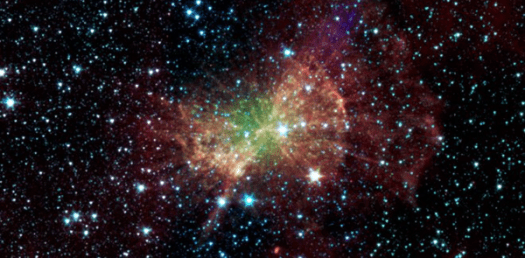
To believe billions of galaxies came into existence due to an explosion of absolutely nothing takes more faith than to believe our Creator – God – spoke the cosmos into being.
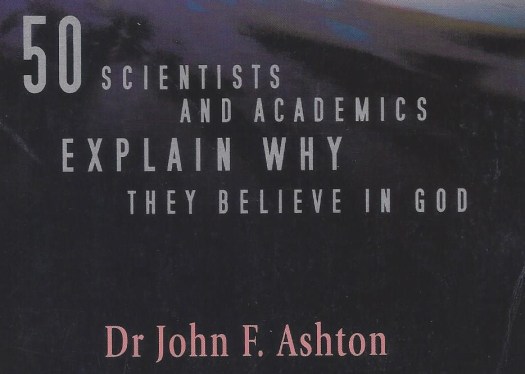
In order for people (agnostics, atheists, higher critics, skeptics, non-believers) to persuade me that God did not create all of nature, they should give me a viable alternative. But they can’t. Their arguments break down due to physical impossibilities, built-in inconsistencies of logic, ignorance of obvious truth, and lack of substantiation. That’s why many who believed in (had faith in) evolution have gravitated toward the Intelligent Design concept.

But they still have a problem: if there’s no God, who is the intelligent designer?
Understanding that ALL concepts of creation are intrinsically religious, the only logical approach is Genesis 1:1, “In the beginning, God….”
God is the designer of it all.
 Gene Linzey