This is Getting Close to the End of the Year.

Sunset on November 27, 2021 in Siloam Springs, Arkansas
We feel like time travelers.

Can you believe it? This year is almost over, and 2022 is about to begin! 2021 has been a busy year for Carol and me. We’ve traveled over 29,000 miles – yes, we drove every one of them – and we feel like we’ve traveled through time. We’ve also seen a lot of beautiful scenery. 

I’ve also formatted dozens of books for folks, and written a few myself. One I’ve worked on for quite a while, and finally put in print this year, is a compilation of my Reflections on Life articles. If you want a book that is easy to read, yet is chalk-full of information on numerous topics, get this book.  It contains about 77 short articles that will let you travel through time from ancient history to now. You’ll read about topics from geology to history to Bible to astronomy, plus a whole lot more!

Now that I think about it, you might want to have your own books published, and we can do that for you for a low fee. So go to plpubandlit.com and check us out. You’ll find our prices are very hard to beat, especially when you see the quality of work we do. When you call us, you don’t get a recording very often because we enjoy talking with our clients, and giving personal service.

P & L Publishing and Literary Services also provides professional editing services. Look us up at P & L Publishing & Literary Services – Expert Formatting & Editing for Self-Publishing Your Book (plpubandlit.com).

If you have a book or books you’ve been thinking of writing and publishing, you’ll enjoy checking out our web site at plpubandlit.com. We’ll be glad to help your literary dreams become a reality.

Christmas is almost here, with New Year’s just around the corner. Please drive carefully, and live in such a manner that you will be safe and help others be safe.

MERRY CHRISTMAS

AND

HAPPY NEW YEAR, FRIENDS.

What Should We Do?

When people slander you, what do you feel like doing? When someone hurls insults in your face and maligns your integrity, how should you respond? What does human nature demand?

Please hear this: when we respond in our fallen human nature, war breaks out!

I grew up in a family of 10 kids, and if you know anything about children, peace does not always freely reign. We could sing When Peace Like a River Attendeth my Way, Let There be Peace in the Valley, or Peace On Earth, Goodwill Toward Men all we wanted to, but when one of us was offensive, only Dad or Mom could break us up. That’s fallen human nature. Why are we that way?

Now, lest my siblings find this and read it, I want to affirm that we had a lot of fun and have a barrel of good memories. Our family memoir, Looking Through the Rearview Mirror, bears this out. But we did have war at times. You might enjoy reading about the adventures and misadventures of our family, and can order the book at: https://www.amazon.com/Looking-Through-Rearview-Mirror-Linzey-ebook/dp/B09JM3N5TD/ref=tmm_kin_swatch_0?_encoding=UTF8&qid=1634619105&sr=1-2

When emotions get riled up, words tend to fly out of the mouth that might not be true. But if there is any truth to the words, the angry person tends to blow it out of proportion. And this problem is not relegated to children. Adults from 18 to 100 are just as guilty.

So, how should we react when someone attempts to destroy our character? How should we respond when someone broadcasts his or her disdain for us?

The wrong answer is to fight back; to fight fire with fire. Bristling, getting huffy, and trying to set that person straight tends to prove the angry person’s accusations.

There are several versions of the right answer. But since I have a habit of giving simple answers, let me give you one right now although I’m not the author of it.

Jesus said in Matthew 5:44, “I say unto you, love your enemies, bless them that curse you, do good to them that hate you, and pray for them which despitefully use you, and persecute you” (KJV).

The Aramaic Bible in Plain English says it this way, “I say to you, love your enemies and bless the one who curses you, and do what is beautiful to the one who hates you, and pray over those who take you by force and persecute you.”

But eighteen of twenty-eight versions I read simply say something very close to, “I say unto you, love your enemies, and pray for them that persecute you.”

Loving others simply means, be kind to them.

When I was twelve years old, one of my school-mates hollered, “Your family isn’t fit for a pack of wolves!” When I complained to Dad, he said, “If kids say things like that, just respond, You’re right. we can’t stoop that low.” A few days later when the junior high school thug hurled another similar epithet, I responded as Dad suggested. Amazingly, that was the end of the potential feud.

The old saying, it takes two to tango, can be applied to many situations. Recently, when a man who despises my worldview hurled hateful words at me in a public setting, I told him I considered him a friend. Was he friendly? Of course not, but his actions do not mandate my reaction. I purposely chose to respond in the manner that Jesus taught, and I pray for the man.

Getting angry raises our blood pressure and increases our cholesterol level, both of which are hard on the heart. Anger confuses us and immerses us in a moral quandary. Angry people don’t merely offend people they dislike, it puts a wedge between them and their friends.

An angry person develops a hollow feeling that cannot be filled. The person then has a compound-problem: he must amplify angry emotions and increase his outbursts to justify the feelings of hate. As the situation intensifies, a false reality develops which deepens the deception.

What should angry people do? If they enjoy being angry, they’ll continue as they are. But if they want peace in their lives, they’ll need to realize that the answer to the problem comes from Jesus and can be found in the Bible.

Jesus, the Prince of peace, wants to heal us of our self-inflicted problems, and as Philippians 4:7 says, Jesus gives us peace that cannot be adequately explained.

What else should we do? Follow Jesus’ example and forgive those who offend you. You’ll be happier and healthier if you do.

Death Valley

When we reached California to visit our son and his family, Ron asked, “How was the trip?”

“It was a tough trip. I went through the valley of death just to see you.”

“Really, Dad? So you, a 74-year-old Californian, finally visited Death Valley National Park. Was it worth the time?”

“For a Californian, definitely, YES. But I think for a US Citizen, the answer is still, Yes.”

After Carol and I drove through Bryce and Zion National Parks on May 10 and 11, our next visit was to Death Valley.

There are three basic routes to visit the Valley: the Fast Route, Scenic Route, and the Explorer Route. Any of the three are worth the time spent, although I think the Scenic Route is the most rewarding.

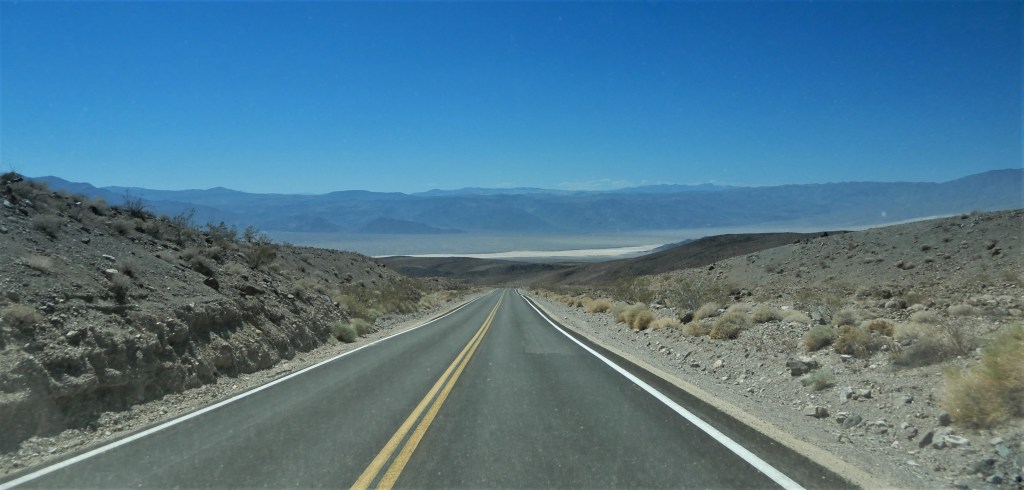
Situated in the northern Mojave Desert, Death Valley is an intriguing part of our Country. Here’s an interesting travel trivia tid-bit. The highest point in the Continental United States (that excludes Alaska and Hawaii) is Mount Whitney. The lowest point in the US is Bad Water. Are you ready? These two geological points are only 88 miles apart. Mount Whitney reaches 14,494 feet above sea level in the Sierra Nevada Mountain range, and Bad Water is in Death Valley at 282 feet below sea level.

The Valley is also the hottest spot in the Western Hemisphere. When we visited it on May 12, 2021, the temperature was 110 degrees F. A year earlier on August 16, the temp reached 130 F. The highest air temperature ever recorded in the Western Hemisphere was in Death Valley on July 10, 1913. It was 134 degrees F. But there’s more. The hottest surface temperature ever recorded on earth was in Death Valley on July 15, 1972. That was 201 degrees F, and some folks fried eggs on the ground. I hope they didn’t eat them.

The Valley is called a “graben” which is a block of land between two mountain ranges that has dropped, probably due to earthquakes. Over 5,000 years ago, the Valley held a 100-mile-long lake which was about 600 feet deep.

Have you ever heard of climate change? Long before industries developed and before we contaminated the atmosphere, several thousand years before the Pilgrims came to America, climate change was already well-developed, and Death Valley Lake, along with thousands of others, dried up.

The area turned to desert and most of the water evaporated which left an abundance of crystalized material; the primary one was borax. Borax was mined heavily from 1883-1907. Have you ever heard of Boraxo, or 20 Mule-Team Borax? It came from Death Valley, and the Pacific Coast Borax Company sponsored radio and television shows called Death Valley Days. The radio program ran from 1930-1945, and the television show ran from 1952-1975. Ronald Reagan was the narrator of the television show from 1964-1965.

Several geological faults intersect in the Valley, and the Amargosa River runs into it but disappears in the sand. And, if you’re wondering, it snowed once in January of 1922.

The Valley is home to the Native American Timbisha tribe, formerly called Panamint Shoshone. They called the area “tumpisa” which means “rock paint” because red ochre paint is made from the clay found there.

On February 11, 1933, President Herbert Hoover declared the area as Death Valley National Monument, but in 1994 it was renamed Death Valley National Park. Located in California and Nevada, it’s the largest national park in the 48 states, and has almost 1,000 miles of roads in it. Dress with loose-fitting clothing and take plenty of water with you during your visit.

But why is it called Death Valley?

In the 1849 California Gold Rush, about 300,000 adventurers went to find their fame and fortune. A group of 13 were just a few who entered the Valley but didn’t understand the dry heat of the deep desert and didn’t take enough water. They were found dead, and people called it a valley of death.

Do you know that millions of people around the world today are searching through an emotional and spiritual valley of death for fame, self-worth, or mere acceptance, while others are seeking wealth, power, and prestige? That craving will never be satisfied outside a relationship with Jesus Christ. Fulfillment in this life, and joy throughout eternity is found only in Jesus.

Visit Death Valley but live for Christ. The treasure you seek can be discovered by reading the treasure-map, the Bible.

Down Memory Lane (pt.2)

For a couple of years, my brother, Paul, and I’ve been talking about preserving family memories. Our parents and parents-in-law are gone, two of our siblings are gone, and we don’t know what the future holds. Every time someone leaves this life, an encyclopedia of information evaporates into thin air.

How many times have you heard, or even said, “I didn’t really know him”? How many times have you thought, “How would he respond in this situation?” Or, “I know we grew up together, but what happened that gave her a different outlook on life than I have?”

It was time to start documenting Linzey family memories!

To begin, two major factors had to be considered.

1) Because everyone is so busy, the process must be simple. And

2) Because writing is seen as a chore, the process must be enjoyable.

The brainstorming session began.

Proverbs 17:22 informs us that a cheerful disposition (“a merry heart”) is good medicine to the body, but discouragement causes our health to deteriorate (“dries up the bones”).

We could let each sibling take turns choosing a topic to write about, but people’s minds sometimes go blank. Several of our siblings asked, “How do we choose a topic?” So Paul chose the Rememory Card® system. (Look up “Rememory Cards” on the web.) Nevertheless, with or without cards, here is the simple process Paul wrote.

  1. Decide how many months you would like the project to continue.
  2. Each week, take turns selecting a writing prompt and those joining the fun will write a memory on that topic. Write from a half to 2 pages per memory. Paul and I decided on one memory per week, but you can choose your own time cycle. We realized that if we waited too long, we’d lose the enjoyment and the momentum.
  3. Write whatever you want. Nobody will censor your language or stories.
  4. There is no pressure or mandate to write about every topic selected. If you don’t want to write about something, skip it.
  5. You may write about anyone in the family. Your stories don’t have to be only about yourself, however, you should be considerate of others’ feelings when writing about your family.
  6. You can draw from your whole history. Consider your whole childhood as well as your adult interaction with the family.
  7. This is a memoir project. Memory is not always accurate. In fact, it’s been demonstrated that nobody remembers perfectly. Also, we tend to interpret as we remember. We subconsciously fill in the blanks, expand, and erase some aspects of our experiences. So, we don’t challenge anyone’s memory. Memory is specific to the individual.
  8. Every family has both good and bad, painful and pleasant, positive and negative, funny and serious memories. Try to get your stories to reflect a balance and a blend of these dynamics.
  9. Not everybody will remember what you remember, so it might be a good idea to identify the year, the location, and the writer’s name after each person’s story.
  10. It’s OK if your stories focus on yourself, but, if possible, find a way to bring at least one other family member into the anecdote.
  11. This endeavor can create priceless documentation of your family history that your grandkids and great grandkids might never know otherwise.
  12. Simply take turns choosing a topic, gather the stories, and have someone compile them. If the family agrees, you may find a publishing company (expensive traditional or affordable self-publishing company) to format it and turn it into a family treasure.
  13. Keep in mind that this memory project is for your own benefit as well as for the rest of the family. And if you get brave, as my family might, you can have it published for the general public.

Our family started in January and will complete it in October. With six of us writing, we’ll have well-over 400 pages to edit and format into a family treasure.

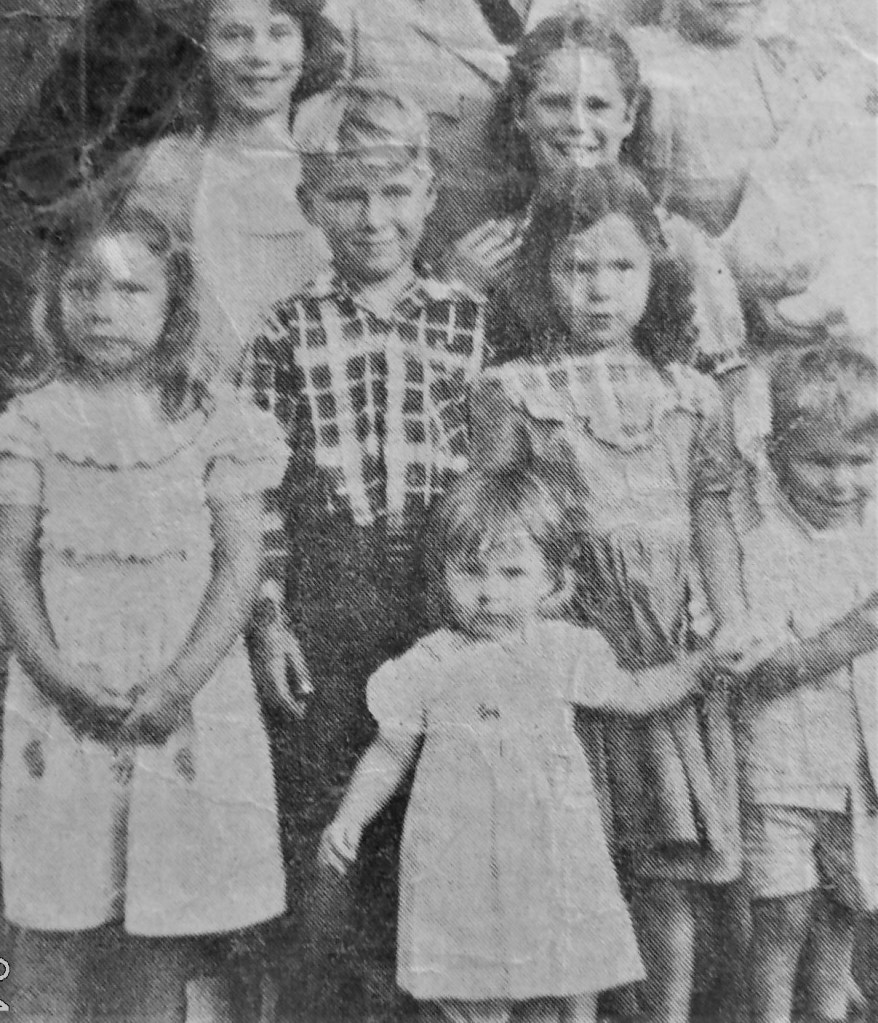
There are ten kids in our family, with fifteen years between the oldest and youngest. Knowing that fact alone, you may understand why there’s a lot about each other that we don’t know – even coming out of the same family, same church, and same basic culture.

The fact is, we are all different and we all interpret life differently. But all six of us thoroughly enjoyed it, and, as a side benefit, this project has drawn us all closer than we’ve ever been before.

G. W. Carver and J.H. Pickle, Jr.

Have you heard of these men? Both are scientists … well, J. H. is still a scientist, but G. W. was a scientist until he passed away in 1943.

David Pickle called me last week and said he had a book for me, so I drove over to get it. It was so interesting that it didn’t take me very long to finish reading it. The book was compiled and written by Dave’s brother, John H. Pickle, Jr., and it’s an amazing account of his father’s interaction with the outstanding scientist, George Washington Carver! The title of the book is, One of His Boys.

Quoting from the back of the book, “George Washington Carver is today remembered in part for the many products he derived from the peanut, a crop he urged on Southern Farmers to replace cotton and avoid soil exhaustion and the boll weevil. Less known are the multitude of college students Carver took under his wing over the years in relationships that were cherished by and valuable to the scientist. One of His Boys is the story of the mentorship of Johnnie Pickle, one young man inspired to follow in Carver’s footsteps after witnessing firsthand the Wizard of Tuskegee’s wisdom.”

Johnnie Pickle had the privilege of meeting the African American scientist in 1932. Because of this “chance encounter” Johnnie was inspired to become a scientist. Johnnie’s son, John Jr. also followed in Carver’s and Johnnie’s footsteps, and [quoting the book] “spent thirty years developing products for farmers to use. He is now retired and continues to promote good science.”

Dr. John H. Pickle, Jr., spoke about their father’s long-time interaction with Carver. The presentation was at the George Washington Carver National Monument on Saturday, September 11, 2021. I attended and enjoyed the presentation as well as enjoyed meeting Dr. John Pickle.

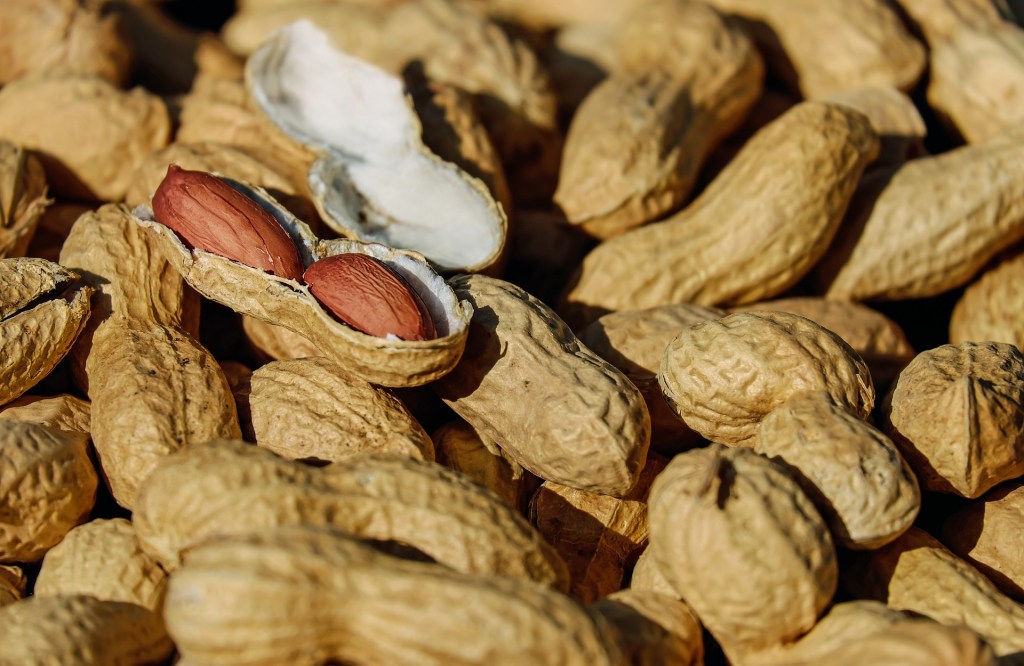
Carver was the most prominent black scientist in the early 1900s. Two of the things he is famous for were crop-rotation and creating over 300 uses for the peanut. I found it quite interesting that, until 1870, peanuts grown in America were primarily used as a garden crop, and its primary large-scale purpose was hog food until around 1932.

Here’s a bit of peanut trivia.

President Thomas Jefferson was a botanist and grew peanuts. The peanut was nutrition for soldiers during the Civil War. Known as goober peas, the Southerners pronounced them gooba peas because the word from Africa was, nguba.

Enter George Washington Carver, the Wizard from Tuskegee.

Quoting Carver: “All my life, I have risen regularly at four in the morning to go into the woods and talk with God. That’s where He reveals His secrets to me. When everybody else is asleep, I hear God best and learn my plan.”

One morning, George asked God why He made the peanut.

Quoting Carver: “He told me, separate the peanut into water, fats, oils, gums, resins, sugars, starches, and amino acids. Then recombine these under My three laws of compatibility, temperature, and pressure. Then you will know why I made the peanut.”

Eight of these discoveries are flour, paste, insulation, paper, wood stains, shaving cream, tires, and skin lotion.

That heavenly advice helped Carver discover over 300 uses for the peanut, and that changed the South, changed ethnic relations, and changed the agriculture industry.

I laughed when I learned that Carver didn’t merely “talk to God.” He “conversed with God.” That’s exactly what prayer is supposed to be – a conversation with God. Carver said, “God speaks to us every hour, if we will only TUNE IN.”

God is alive, and He wants to communicate with us. If I do all the talking, I’ll get no answers. I know what my problems and needs are, at least I think I know, but God really knows them. If I merely recite to God what He already knows, I’m not learning anything.

But if I listen, I can hear God giving me helpful information – as He gave Carver information. God communicates with me often, and wants to converse with you, too. Jesus said in John 10:27, “My sheep know My voice.”

God listens, then responds to us. Do you listen to God?

If in Doubt, Throw it Out

“Mamma, what’s that yucky green stuff in the ice box?”

Wait a minute. Do any of you know what an ice box was?

Years ago, those things that held food didn’t plug into the wall and were made out of wood. The door on the upper portion was not for ice cream or to freeze your meat and vegetables. You opened that door to put in a 25-pound block of ice. As the ice melted, you could put other food in with it. The ice absorbed heat, melted, and cooled the food in the lower section. Cool, huh?

By the time I entered this world, my parents had long-since replaced the ice box with a fancy thing called a refrigerator. No more visits from the Ice Man. By the way, Carol and I saw a real wooden ice box in the Tillamook County Museum in Tillamook, Oregon. Memories! Buy some Tillamook cheese while you’re there.

These new-fangled refrigerators plugged into the wall and had a compartment that would keep ice cream hard if we put it in the back, but it would freeze meat, vegetables, and water anywhere in that compartment.

Because of our upbringing, we still called it an ice box. However, I had to start calling them refrigerators because in the 1970s I was an appliance repairman, and no one knew what an ice box was.

But where was I? Oh, yes. It was in the 1950s and my parents were visiting some friends.

The mother came into the kitchen to answer the cry about yucky green stuff. “What’s the matter, Maureen?”

“Mamma, there’s yucky stuff on the cheese. What is it?” The little girl was pointing to a dull greenish-blue fuzz.

“Oh, my goodness! Mold is growing again. Well, let’s just cut the green off, and we can eat the rest.”

Today, we understand that the roots of the mold grow deep into the food, and we usually just throw the moldy food out. However, our ice bo – excuse me – our refrigerators today still grow mold under the right circumstances. And we now understand that mold and bacteria are growing before we can see any of it.

So how do we know whether or not the food is fit to eat? Usually, we smell it.

The fungi and bacteria on meat will normally give off an unpleasant odor before the yucky green stuff, or any slime, is visible.

I don’t want anyone to die, or even get sick, from food poisoning; so, years ago I developed one very important phrase as an appliance repairman, and I still say it today: If in Doubt, Throw it Out!

It’s worth memorizing because our health is much more important than a few dollars’ worth of food.

You can find on the internet the procedures for handling and caring for various kinds of food. And it’s quite simple.

But there is a more insidious poison growing in our culture. I call it spiritual and mental poisoning.

Mental health today is a multi-billion-dollar industry, and is complex, cumbersome, and costly! The primary reason is that people don’t see or smell the problem. This poisonous garbage has been insidiously foisted on our culture. But if it is culturally acceptable, it must be good. Right?

Wrong!

Many people are being accused and jailed for sexual immorality. It is gross, ugly, demeaning to men, women, and children, sexist, humanly degrading, and is one of three primary evils offered to our culture through theaters, television, advertisements, and DVDs.

Another evil is hatred. Blatant, cruel, murderous, evil hatred.

The third is evil music accompanied by gross, inane actions of the singers.

The church isn’t helping the situation because a large section of its members supports the garbage industry by paying for it and watching it; and many Christians are just like the world: they don’t seem to understand that it is poisoning humanity.

If people would simply evaluate what they’re watching and listening to, they would easily see that it is destroying us. But reading and studying the Bible would give them wisdom and alert them to the calamity they are bringing upon themselves.

First Thessalonians 5:22 says, “Stay away from everything that is evil.” Simple! That would cure most of the mental problems.

If people want to do what is right, they could objectively realize that it is not good for them. They would realize that it destroys families, society, and the church. They should get rid of it.

But for those who are not sure: If In Doubt, Throw It Out!

Actually, whoever is feasting on it, is either sick, or deceived by the world.

Judgment starts in the House of God, so you Christians should get the garbage out of your homes and lives. Then we can make a positive impact on the world.

Memory & Mental Health

In 2018, Carol & I were in Young Harris, Georgia, at the USS Yorktown CV-5 Survivor’s Club Reunion.

The purpose of a reunion is to socialize with friends and family, help us remember an event, or to celebrate the life of a person. The original purpose of the Yorktown reunions was to give the survivors of the USS Yorktown at the Battle of Midway (June 3-7, 1942) opportunities to share memories of life on board the ship – including experiences of the hell that erupted during battle – as well as memories of life’s experiences after the war.

Dad was stationed on the Yorktown from 1939 to June of 1942. In 1953 dad reentered the US Navy as a chaplain, and after retirement became chaplain of the CV-5 survivor’s club. I had the privilege of attending several reunions with dad and enjoyed hearing the ‘war-stories’ the men told.

Although most of the Yorktown veterans endured horrific experiences during the bombing, strafing, and torpedoing, those who freely shared their memories with others suffered much less mental anguish about it. The freedom to talk about the events often reduces PTSD. Visiting memorials and sharing memories with others is therapeutic, and aids in positive mental health which, in turn, can remove the need for long-term counseling.

Years ago, a man racing a 595-pound, 1200cc Kawasaki motorcycle at 95 mph plowed broadside into a Datsun (predating the Nissan) that our son, Ron, was driving. The wreck splintered the bike, killed the biker, destroyed the Datsun, and sent our kids to the hospital.

Ron was 16 years old and I didn’t want an emotional scar to develop, so I encouraged him to talk about what he experienced. As Ron initially related everything he remembered about the accident, we took many pictures of the aftermath; and every day for two weeks, I asked him to talk about it. At first, it was difficult. Then we discussed the event several times a week for a month. He relived, analyzed, and discussed the incident until he could narrate the event objectively – without emotional pain

The result? He has clear memories of the event and is sad about it, but he has no emotional scars and no mental trauma to overcome.

Those who will not talk about or share their feelings should at least write them down. Write out your experiences in as much detail as you can.

A good friend up north was having severe marital problems, but he would not violate his vows and did not want to hurt the children. Not willing to talk about it to anyone, he quietly, secretly, and in great detail, wrote his anxieties, emotions, bitterness, and frustrations as letters to himself. After writing each letter, he read it to himself – sometimes tearfully and in pain – then sealed it in an envelope and hid it. Each week he sealed another envelope, and never opened any of them again. Although he didn’t share the letters or his feelings with anyone else, he continually asked God to help him.

After several years he overcame the problems that plagued him and he was healed. He didn’t forget the problems. In fact, refusing to bury or hide them, he acknowledged his emotional struggles and communicated to God about it all. Then he asked the Lord to help him forgive his wife.

The situation improved and years later he died a happily-married man. As a side note: his wife didn’t change much. It was the process of opening up and releasing the problems – and forgiving her – that enabled him to accept his wife as she was and receive his healing.

Sharing memories with others can release emotional pressure and help maintain or regain positive mental health. But be sensitive to others. Don’t badger or bore them. Be willing to listen as well as to speak.

Forgiving and not holding grudges, and talking about problems in a positive manner, is similar to disinfecting a wound: the memory bank is cleansed and emotions are healed.

But also consider Philippians 4:6-7; “Don’t worry about anything; instead, pray about everything. Tell God what you need, and thank him for all he has done. Then you will experience God’s peace, which exceeds anything we can understand. His peace will guard your hearts and minds as you live in Christ Jesus.” (NLT)

So spend time with family and friends, develop good memories as you enjoy life. Your happy memories will be one of your most important blessings in later life.

What’s Over the Next Hill?

“Daddy, what’s over that hill?”

“What do you think you’ll see?” Dad chuckled. He must have been humored at my numerous questions. He continued, “If you sit still for a minute, we’ll be on that hill, then we’ll both find out.” Dad knew but wanted the view to be a surprise.

From my earliest memories at almost 3-years old, I’ve always wondered: What’s around the corner? What’s in the box? How did the mountain get there? What’s fire made out of? What’s over the next hill? I’ve always had an unquenchable thirst for knowledge. I still do.

That was a special trip for me. I was 5 years old, and seldom had the privilege of spending time with dad and mom by myself. Eventually, I had five sisters and four brothers, and this trip would be the first of three trips where I was the only one dad and mom took with them.

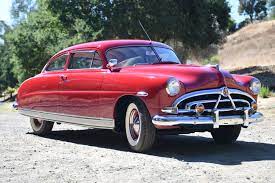
Mom was taking a nap in the front seat of the Hudson Hornet, my four sisters (two older and two younger) were left with elders in the church, and I was leaning over the front seat looking with eyes wide open. I had never seen mountains and valleys like this. Seat belts hadn’t been invented yet, but we never had a problem.

There were no freeways where we lived in 1951, and our highways allowed us to travel at the break-neck speed of 55 miles per hour. However, some of these mountain roads allowed only 35-45 mph. Our destination was about 400 miles away, and we left home long before daylight.

As we approached the crest of the hill, dad asked, “Eugene, do you know where we’re going?”

“Yes, we’re goin’ campin’.”

“That’s right. But do you remember where mother said we’re going?”

While I was trying to remember that hard word, we reached the top of the hill. Dad pulled over to the side of the road.

“Ooooohhhhh Daddy! Someone broke that mountain in half!” I was stunned to see half a mountain standing on the side of the valley.

Dad already had his camera in hand and was opening the door. “Son, that broken mountain is called ‘Half-Dome’ and this is called Yosemite Na… Eugene? Where are you?”

Dad found me hiding inside the car, not wanting to get out. I was scared spitless of heights, and when I saw the valley floor WAY DOWN THERE, I panicked. But peeking out the window, I couldn’t take my eyes off that broken mountain.

“Okay, Eugene. Would you get out of the car if I hold your hand?”

I shook my head, “Hu-uh.”

When mom said, “Daddy will let you look through his binoculars if you get out of the car,” I agreed to hold daddy’s hand and get out.

That was my introduction to Yosemite National Park.

We drove down into the canyon and dad took me on a few short hikes. I enjoyed playing in the heavy mist of Bridal Veil Falls, then helping dad set up camp. I don’t remember how much of a help I was, but it was fun being with daddy and mommy.

My favorite part was watching the fire fall down the face of Glacier Point. The park ranger gave a talk each evening, and an entertainment group sang as others prepared a roaring fire on top of Glacier Point. Then at 9:00 PM, the ranger hollered, “Let the fire fall!”

Several men then pushed the burning material over the edge with bulldozers, and a river of glowing embers fell more than a half mile (some 3,000) feet to the valley floor. Little boys never forget things like that. (The final “fire-fall” was on January 25, 1968.)

The question of “what’s over the next hill” has never left me. I might see an elk, a river, a glowing sunset, the wide expanse of the ocean, or another mountain. I never tire of it. And I am blessed with a wife who shares the same adventurous spirit.

We’ve been in every state of the Union and have driven over many hills. But there is one “hill” I cannot experience yet, and I can only imagine what the other side looks like. I’ll go over that hill after I take my last breath here on earth and enter heaven. I’m not in a hurry to get there, but God, dad, and mom are waiting for me, and I won’t be afraid of that height. Who knows: God might have thousands of hills over there for me to experience.

Water!

“Water, water, everywhere, and all the boards did shrink; Water, water, everywhere, nor any drop to drink.” So states the 29th stanza of the The Rime [Rhyme] of the Ancient Mariner by Samuel Taylor Coleridge. The somewhat confusing poem is too long for me to remember, but those lines stick with me.

One of Bob Nolan’s songs sung by the Sons of the Pioneers is Cool Water. The first stanza is: “All day I face the barren waste without the taste of water; Cool water. Old Dan and I with throats burned dry and souls that cry for water, Cool water.” By the way, Old Dan is the mule or horse.

There’s much water in the poem and no water in the song – but in both situations, drinkable water is not available. Mankind has fought for thousands of years over water rights, but what’s the reason for this obsession?

Simply this: Humans can live for four or five weeks without food; but barely a week without water.

However, earth is a watery world. Earth is the only planet in our solar system that is naturally and readily habitable for mankind. Water is found almost everywhere either on or under the surface of the earth: from the polar ice caps to boiling geysers.

The oceans are an integral part of our lives because their influence dominates the world’s weather systems. About 96% of earth’s water covers approximately 71% of the earth’s surface. I read that under current atmospheric conditions, the atmosphere can hold approximately 37 million, billion gallons of water – enough to cover the entire surface of the world, including oceans, with one inch of water.

But if the solid earth were a smooth, round ball, one estimate is that the existing surface water – from oceans, lakes, and rivers – would be about 1.5 miles deep.

A water molecule is made of 2 hydrogen atoms and 1 oxygen atom – H2O – and water aids in sustaining a breathable atmosphere and a viable temperature. It is water that keeps vegetation, animals, and people alive.

Solar radiation heats the atmosphere, land, and oceans. As the warm air rises, water vapor rises with it. As the moisture enters the upper atmosphere, it cools, forms clouds, and spreads the live-sustaining liquid across the world as rain, hail, and snow.

Water is the world’s greatest solvent – humorously, but correctly, called dihydrogen monoxide (H2O). It is called the universal solvent because it dissolves more minerals and compounds than any other chemical known. Scientists have proven this by extracting gold, silver, lead, copper, and a host of other elements from sea water. Water from rain and snow dissolves those minerals from mountains and prairies and deposits them into lakes and oceans.

As corn, beans, wheat, potatoes, and all the other crops grow, their root systems absorb these minerals, and they become part of us as we eat the food. It takes water a long time to break down organic material; therefore, the body creates HCL (hydrochloric acid) to break down or digest food, and the watery blood system distributes food, vitamins, and minerals to every cell of the body.

Water is a major component of the human body. Bodies of newborn babies average 78% water but the adult body averages about 60%. The average water content in adult blood is 80%, and lungs are about 90% water.

Water has enabled mankind to build or advance civilization in many ways. Rivers, lakes, and oceans have been major highways of the world for thousands of years. Dams have been built across major rivers around the world, and the rushing water turns huge hydroelectric turbines to produce electrical power for untold millions of homes and factories. The oceans provide food for people and help to regulate climate by redistributing heat around the world.

Water is critical for life; and without water, live cannot exist.

But there is another kind of water that is critical for humanity. As H2O is mandatory for human life, Jesus has provided “living water” that is mandatory for Eternal Life. Jesus said in John 4:14, “Those who drink the water I give will never be thirsty again.”

How? That means He will sustain or help us throughout life. We “drink” of this living water by learning to know Jesus, purposely obeying Him, and living to please Him. This water includes wisdom that we need as we interact with others; and this water is necessary in every other aspect of human life.

Without this living water, we cannot enter the kingdom of God. Have you partaken of God’s living-water? Quench your spiritual thirst. Start by reading the Gospel of John. Follow it up by reading the book of Romans.

What Have You Been Up To?

“Hey, Gene, I haven’t seen much of you lately. What have you been up to?”

You may have a different name than I do, but has anyone ever asked you that kind of question? Most likely.

I suppose I have been out of sight from many of my friends recently. Yes, the covid pandemic took its toll on socializing this past year – and still is to some degree. But I’ve been busy for other reasons.

As a former pastor, I receive calls to fill in for ministers when they are on vacation or attending church conferences. Sometimes they call me to preach or teach on a special topic. If you read my blogs, you know that I am a devoted follower of the Lord Jesus Christ.

But last year I added another role: I format books. What is it that? One man said, “I write em, you format em, P&L publishes em.” And that is true. It is laborious and time-consuming but rewarding. I enjoy hearing people say, “I never believed I would actually get that book written, let alone published.”

A question many people ask is, “Who do you work for?” My answer is, “I work for you, the author.” And that is the truthful answer. However, the company I represent is P&L Publishing and Literary Services. You can read about them on their web site at plpubandlit.com.

So, what does a formatter do? The process is not fast, but it is simple to understand.

  1. Someone writes a story. This can take anywhere from a week to several years. The manuscript could be a novel, a historical account, a devotional, a how-to teaching, a cookbook, how to catch fish, or about anything you can think of. But then the writer wants it published.
  2. This step often involves an editor. Not always, but often. The editor is a professional who improves the writing and makes the book a better product. You can find more about our editing services on plpubandlit.com. The next step is where I come in.
  3. The formatter gets the necessary information from the author, puts the manuscript in the proper format and uploads the manuscript. Many of my authors do not go through an editor, but just want to publish the book. As the man said, “I write em, you format em, P&L publishes em.”

I have obviously oversimplified the process, but it gives you an idea of the publishing procedure and what I do.

If you are interested in writing a book but don’t know how to start or go about it, P&L also offers mentoring and project development services. But my part is formatting. If you’ve been writing and you now want to get it published, contact P&L Publishing and Literary Services at plpubandlit.com. Tell them you heard about them on my blog. Or, you can contact me directly at masters.servant@cox.net.

And now you know what I’ve been up to lately: I preach, teach, write, and format. I hope to hear from you.

Have a great day.