Part 3: What was the Star of Bethlehem?

Let’s check into a proven historical resource: the Bible. Please read Matthew 2:1–9. And I thank Dr. D. James Kennedy of Coral Ridge Ministries, Ft. Lauderdale, Florida, for helping me think through this issue. (Dr. Kennedy passed away September 5, 2007.)

The phrase “we have seen” denotes an academic observation, and the phrase “in the East” (“…For we have seen His star in the East.…”) literally means “in its rising,” which in turn could denote a physical direction or pointing of the “star.” Therefore, the wording in verse two “we have seen his star in its rising” implies a meticulous scrutiny of a portion of the night sky rather than a casual observation.

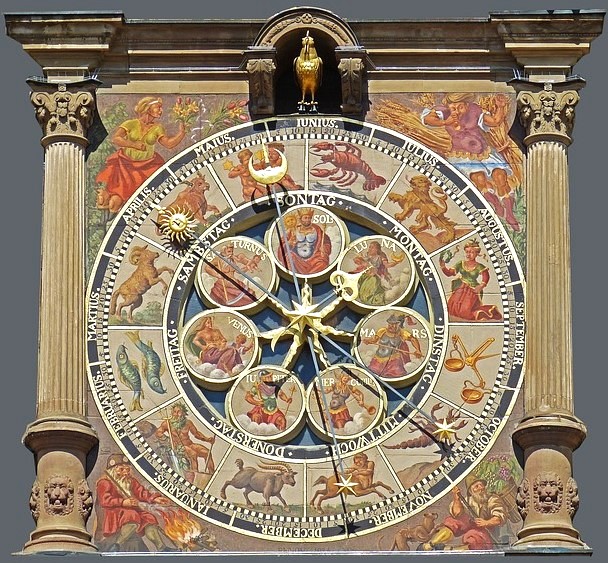
The zodiac is divided into twelve constellations, and at that time in history each constellation was assigned to a specific world empire. The common thought back then was whenever a king or prince was born, a “sign” (comet? super-nova? conjunction of several planets?) would be found in that empire’s constellation.

Dr. Kennedy said the Persians believed whenever a comet entered a constellation, if the comet’s tail pointed downward a king had just died, but if the tail pointed upward a king was born. It was also understood that God (or “the gods”) controlled the heavens. Psalm 19:1 agrees by saying, “The heavens declare God’s glory; the sky displays His handiwork.”

Therefore, the wise men (Magi, astronomers, scholars, nobility) may have been studying the sky and discovered a new comet in Israel’s constellation with its tail pointing upward, and correctly understood it to mean that a new king was born in or near Israel’s capital: Jerusalem. In this sense, these royal ambassadors did not follow the star as one would follow a slow hotair balloon. Rather, they followed the directions obtained from Israel’s constellation and went to Jerusalem.

But what is it about the “star” that led them to the specific house? Matthew 2:9 says, “… and behold, the star which they had seen in the East went before them, till it came and stood over where the young Child was.” A comet, possibly as close as 3,000,000 miles away, cannot “stand over” a planet, let alone stand over a house. The moon, 240,000 miles away, cannot “stand over” a particular house. Therefore, even a small star the size of our sun (with a diameter of approximately 860,000 miles, and 93,000,000 miles away) cannot get close enough to “stand over” a house.

So we need to consider another act of God – that of possibly assigning a messenger – to further direct the royal ambassadors. Here is a brief explanation of my theory.

After seeing a comet within Israel’s constellation which prompted the magi to start on their journey and directed them to Jerusalem, and being advised by the palace scholars to go to Bethlehem, an angel could have taken the physical position of “standing” or hovering over the house as the Magi approached Bethlehem. However, the angel would have started high in the sky and slowly descended to the house as the visitors approached. Therefore, the angel was not recognized for who he was. This, my theory, fits the biblical parameters while taking into consideration history and culture. I hope this helps you in formulating your ideas.

Someone asked me if I could prove that Jesus is God. No, I cannot. But the Bible says that He is. And because the Bible has been proven correct so many times, I accept the Bible as authoritative proof. What many folks do not understand is this: believing that Jesus is God is a matter of faith, but disbelieving is also a matter of faith.

Scripture attributes characteristics and titles to Jesus that can be true only of God, and Jesus is often called God. Example: “Looking for the blessed hope and the appearing of the glory of our great God and Savior, Jesus Christ” (Titus 2:13; NCV). Jesus is presented as being self-existent (John 1:1, 14:6); omnipresent (Matthew 18:20, 28:20); omniscient (John 4:16–18, 6:64, Matthew 17:22–27); omnipotent (Revelation 1:8, Luke 4:39– 55, 7:14–15, Matthew 8:26–27); and possessing eternal life (John 1:4, 1 John 5:11–12, 20).

Most of Jesus’ followers were devout Jews who believed in one true God. They were uncompromisingly monotheistic, yet they recognized Jesus as God incarnate. Because of his extensive training as a Pharisee and a rabbi, the Apostle Paul would be even less likely to attribute deity to Jesus. Yet he did (Acts 9:1–5, 20:28). These were not blind, mushy-minded, easy to deceive simpletons. They were devout Jews who were proud of their Jewish heritage. Yet they became followers of Jesus Christ because they believed what their Scriptures prophesied about Him.

Did Jesus claim to be God? In a confrontation with Satan, Jesus said, “It is written, ‘You shall worship the Lord your God, and serve Him only” (Matthew 4:10–11, NASB). Yet Jesus purposely received honor and worship that He, as God, had a right to receive (Matthew 14:33, 28:9). The Jewish leaders told Him: “For a good work we do not stone You, but for blasphemy; and because You, being a man, make Yourself out to be God” (John 10:33; NASB). Thus, the Jewish leaders agreed that Jesus claimed to be God. So, it is safe to believe that Jesus Christ is God, but is eternally dangerous not to believe.
This Jesus is the one who was born of a virgin, lived a sinless life, was killed on the cross because the Jewish leaders were afraid of Him, who raised to life after three days in the tomb, and re-ascended to heaven forty days after his resurrection. He is God. You do not need to be afraid of Him because He came to save us and grant us eternal life. He loves you and is waiting for you to respond to Him.
Part 1: Jesus – God with Us

Do we have any idea of when Jesus was born? How did we place his birth in December?

Emperor Julian, Constantine’s nephew, originated the Julian Calendar. In 1582 Pope Gregory’s people found a way to correct the minor flaws in the Julian calendar and produced what we call the Gregorian Calendar. However, the accumulated Julian calendar errors amounted to an estimated period of two to seven years (no one knows for sure), and it would not be possible to go back and attempt to correct every document ever written. Therefore, since all of human history was, in some way, dated in relation to Jesus’ birth, it was decided to back-date Jesus’ birth.

Using the amended Gregorian calendar, we think Jesus was born around 2–5 BC. In what month was he born? Probably in late September to mid-October. Why do I say that?

We know that the Old Testament spoke not only of history and the Abrahamic Covenant, but the Old Testament is intrinsically tied in with the life of Jesus Christ (Immanuel: God with us), the prophecies of his appearance, major Jewish religious festivals, and the proposed restoration of mankind. Therefore, I believe it is safe to assume that the major points of Jesus’ life are also related to the major festivals. Let’s look at them.

Jesus’ crucifixion took place on the Passover (Pesach). This is a major point that is well-documented in the Gospels and in Roman history. The Feast of Unleavened Bread related to Jesus’ burial. The Feast of First-fruits was related to Jesus’ resurrection. And of course, the Feast of Pentecost (Shavuot, or Weeks) related to the birth of the church fifty days after Jesus’ resurrection which was ten days after his ascension.

The other three major festivals are the Feast of Trumpets (Rosh Hashanah), Feast of Tabernacles (Sukkoth, or Booths), and the Day of Atonement (Yom Kippur). With the Feasts commemorating major events in the life of Jesus as well as of Israel, it seems to me that His birth would have taken place at another major feast: possibly at the Feast of Trumpets (around September or October).

Luke 2:8 says, “Now there were in the same country shepherds living out in the fields, keeping watch over their flock by night.” If the shepherds were living in the fields at night when the angels “trumpeted” Jesus’ birth, it is safe to deduce that the weather was not yet too cold. Thus, a September or October timeframe is logical, but not conclusive.

His birth might have been on the Feast of Booths (Tabernacles), also in the September-October time frame. Why? Mary and Joseph were not in a house during Jesus’ birth; they were in a cave, stable, or some other “booth.”

So how did the church decide on December 25?

King Constantine in the fourth century royally decreed that everyone in his empire should be Christian, and it became convenient for him in consolidating his empire to declare many pagan festivities as “Christian.” Therefore, the Sol Invictus (the “Unconquerable Sun”), marking the winter solstice and celebrated on December 25, was decreed to be equivalent to “the Righteousness of our Lord.” And to make things politically and religiously correct, Constantine decreed that Christ was born on that date. And since the emperor heavily influenced the church’s decisions, the church accepted that assigned date.

I’m a historian and I enjoy researching. However, the fact that Jesus wasn’t born on December 25 is not a problem. Our faith does not hinge on knowing the date of Christ’s birth. Our faith is based on the truth that Jesus is God in human form, was born of a virgin, came to save us from eternal destruction, died to redeem us from our sin nature, raised from the dead three days later to conquer death, ascended to heaven 40 days after he rose, and that he will return.

So, go ahead and celebrate His birth. But remember: He is no longer a baby. He is Almighty God, the creator of the universe. He created you and wants you to join Him and be part of His family forever.

Read part 2 tomorrow.

Living a Holy Life

Some years ago, I was talking with an acquaintance about a church in Tulsa, Oklahoma.

“Oh, I wouldn’t go that THAT church! They act holier than thou!” he exclaimed.

“What does that mean?” I asked.

“It means, uh, well, you know – they act real holy and religious!”

“Well, what does that mean?” I asked again.

“What’s the matter? I thought you knew this religion stuff.”

“I know about religion and Christianity, but you are condemning those people. So, tell me what you mean, and why.”

He walked away because, not being a Christian, he was trying to justify his own sinful lifestyle (it was bad) by demeaning those who were living a Godly lifestyle.

But he said they were “acting holy,” so let’s talk about holiness.

If a person or thing is holy, it is separated. Being in a state of holiness is being dedicated or set apart to God. Holiness begins in our minds, and is an ongoing lifestyle. Holiness is a work in progress. It results in spiritual transformation. Holiness should permeate our entire life, for it involves everything we do, think, and say.

1 Peter 1:15-16 says, “But now you must be holy in everything you do, just as God—who chose you to be his children—is holy. For he himself has said, You must be holy because I am holy.” And Romans 12:2a: “Don’t copy the behavior and customs of this world, but let God transform you into a new person by changing the way you think.” But we have to purposely cooperate with God for that to happen.

Several related words are: consecrated, hallowed, saint, belonging (to God), God-like.

I admire people for saying what many pastors and teachers are either hesitant or outright afraid to say. Holiness results in fearing, honoring, revering, loving, and living for God. But do Christians actually fear, revere, or honor God?

Based on what I’ve seen in the church across our nation, many Christians – adults as well as the youth – do not fear God. Rather than living a life wholly dedicated to God and teaching others to know and accept Christ for who He is, misguided Christians and church leaders are choosing to enjoy some of the evil pleasures of the world. In an attempt to be relevant to the world, they have become like the world.

We need to ask ourselves: “Where do we spend our time? Our money? Where do we invest our emotions and our intellect? What are our priorities in life?” Answering these questions truthfully could help the church – including you and me – get back on track.

Several church denominations are historically described as holiness churches because of their historic stand for Christ and against sin and worldliness. But a great many of their members now go where the sinful world goes, and do what the sinful world does. Many of them don’t understand that when they act like the world, they have diluted or lost their witness for Christ.

Jesus was consistent in remaining separate from the world while ministering life to the people. He said in John 17:15-17, “I’m not asking you [Father God] to take them [Jesus’ followers] out of the world, but to keep them safe from the evil one. They are not part of this world. Make them pure and holy by teaching them your words of truth.”

Jesus didn’t mimic the lifestyle of the people in order to save them. Instead, while remaining holy and dedicated to the Father, He presented truth with the love and authority of the Father; and those who desired to live for God joined Jesus. Therefore, we, also, must remain separate from the world while living in and ministering to the world. We don’t need to act or look like the sinful world while trying to accomplish God’s goals. If we look and act like the world, they might see no need to change.

We must use the proper methods of rescuing the perishing, and that entails being holy while sharing the Holy Word of God. We must know the Father by knowing Jesus Christ, then the Holy Spirit can empower us and equip us with spiritual gifts to minister to the world and influence them for Christ. (Read Ephesians 4:11-16 and First Corinthians 11:4-11.)

Second Corinthians 6:17a says, “Therefore, come out from them and separate yourselves from them, says the Lord.” By thought, word, action, and lifestyle, let’s honor the Lord Jesus Christ.