

The title of this Reflection is a question I’ve been asked several times. Years ago, I often said: “The Bible is the basis for my faith.” But my answer has changed. Now I joyfully say, “Eyewitnesses, and the empty tomb where Jesus was buried is the basis for my faith.”
What’s the difference? To answer that, I’ll use a Protestant version of the King James Bible.
This version of the KJV Bible (printed around 1885) has 66 books, 1,189 chapters, 31,102 verses, and 788,258 words in the text. It contains stories and narratives that relate information such as numbers of people killed in numerous battles, lists of kings, priests, and prophets, and genealogies of various people.
But that information, and a lot more, is based on various dating and numbering methods. For example: some cultures listed the second year of the king’s reign as the first year simply because some kings were killed before the first year was complete. Sometimes the second year of a baby’s life was counted as its first because 1st-year mortality was rampant. Sometimes, a king and a co-regent reigned simultaneously, yet their individual reigns seem to be listed consecutively.
Various versions of the Bible – even various KJ versions – have different word and verse counts. Other things are documented differently, depending on the original ethnic scribes or subsequent translators.
All of that, plus more, give people opportunities to call the Bible wrong – therefore, impugning the integrity of the Bible – which, consequently, tends to impugn the integrity of those of us who believe the Holy Bible.

Therefore, I no longer say the Bible is the basis for my faith because detractors, skeptics, agnostics, atheists, and adherents of other religions think they have grounds to prove the Bible wrong.
I now rely on eyewitnesses and the empty tomb as the basis for my faith. As surely as the person on the right of this blog witnessed the US Navy Blue Angles flying over Duncanville, Texas, there were eyewitnesses of Jesus’ resurrection and of the empty tomb in which He had been buried. That means Jesus rose from the dead. How can you argue against a person who predicted that he would die, how he would die, by whose promptings he would die, by whose hands he would die, and that he would come back to life in three days – and it all come true? Are you going to call him a liar? Not me; especially since much of it was also predicted centuries earlier by others.
How can a person debate that? Jesus either rose from the dead, or he didn’t. It isn’t “The Bible” I have to believe – it is eyewitnesses I believe. Witnesses such as Matthew, Peter, John, and others who documented their observations. They had no idea that their writings might be saved for people to read centuries later. However, because their observations and stories were found to be authentic, they were incorporated into a group of books that became the Holy Bible.
Merriam-Webster defines the word bible as: a publication that is preeminent especially in authoritativeness or wide readership. Many bibles abound such as the Machinists’ Bible, Deer Hunters’ Bible, Flower Gardener’s Bible, the Holy Bible, and many more.
The topic of Jesus’ rising from the dead has been found by archeologists in ancient Roman documents because it was a political concern for the emperors. Therefore, it is worth our time discussing it, but not arguing over it.

But I don’t blindly accept the Holy Bible. We can believe it or we don’t have to believe it; but there isn’t much sense in arguing over it. The fact is that the Holy Bible is not just a spiritual book; it is one of the oldest and greatest history books in existence. It’s also a matter of faith. But faith goes both ways: you either have faith to believe Jesus rose from the dead, or you have faith that he didn’t rise from the dead. You have faith to believe the Bible, or you have faith not to believe it. You have faith to believe in God or you have faith not to believe. Everyone’s life is based on faith in something or in someone.
The historicity of Jesus living and dying has been proven by non-biblical sources, so that is not the issue. His raising from the dead is the issue. But you’ll also discover that Jesus’ resurrection has been proven by atheists and agnostics. Of course, they became believers in Christ once they verified the deity of Jesus Christ.
Not only does the empty tomb provide me with answers for this life, it also substantiates my faith for eternal life. And I ask you to turn to Jesus Christ and live for Him.
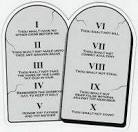 church and state, but that isn’t true. Some of my friends who call themselves atheists, and with whom I get along fine, don’t have a problem with the Ten Commandments being posted. Granting me the freedom of expressing my faith grants them the corresponding freedom to express theirs.
 I am still convinced these laws are the basic foundation upon which our nation was founded, although some folks disagree with me.
 Gene Linzey