Valentine’s Day

As a child in elementary school, Valentine’s Day wasn’t a big event for me. In third grade I liked a girl named Nancy. However, I didn’t like her very long because when I told her I liked her, she kicked me. End of liking Nancy.

The down-side of Valentine’s Day in elementary school was that the teachers wanted us to give Valentine Cards or notes to everyone in the class, and that was a bummer: I didn’t even know most the kids in class.

In fifth grade, I liked Mrs. Wells. She was the only person in school to whom I wanted to give a card. When mom took me to the 5ȼ – 10ȼ store (we called it the dime store), I bought the usual bag of cheepies for the class, but found a good one for Mrs. Wells. I waited until no one was looking, and quickly put the card on her desk. None of the other kids knew what I had done until Mrs. Wells called me up and gave me a hug.

Have you ever been embarrassed to tears and elated up into the clouds at the same time? That was me.

Fast forward eight years.

In college, I met a girl named Carol Ann Winton. Okay, you probably figured it out. Yes, she has been Carol Ann Linzey for over 57 years now. Back in 1964-1966 when I saw her across campus walking to class, I broke into a run to walk with her. Just being with her pumped joy into my life! It still does!

In 1965, Valentine’s Day was on Sunday, I was eighteen years old, and Carol and I were attending SCC (Southern California College: now Vanguard University of Southern California). I remember thinking: “If Carol accepts my invitation to the Valentine Banquet, I’ll know that she is the girl I will marry.” So, nervously, I asked her.

Guess what? She didn’t kick me and I was elated. Yes friends, she accepted. I was thrilled to tears but not embarrassed; and for the first time since I was in fifth grade, Valentines Day was a special event.

Our wedding was on August 22, 1966—my 20th birthday anniversary.

I would be lying if I said we never had a problem. We are human beings with minds of our own, wills of our own, and our own stubbornness. But through the years the stubbornness in both of us has worn down because we wanted to love each other.

Did you read that last sentence? We WANTED to love each other.

The meaning is this: we were young and loved each other with an immature love. But because we made a dynamic commitment to each other, and expressed that commitment to the church, to our friends, and to God, we worked through the problems.

And listen: because we wanted to love each other, we learned what it meant, what it took, and how to do it. Learning to truly love isn’t easy, and it is not a 50-50 emotional split. It requires that we put our pride aside, release our stubbornness, and go out of our way to help our mate, even if we don’t want to. And it works both ways. Therefore, our early love matured into true love – the love that surpasses emotion.

In 1969 while working at Boeing Aircraft Company in Everett, Washington, one of my workmates had just become divorced – for the 3rd time. As we were discussing marriage, he said, “I’m sorry for you: you’re trapped and can’t have any fun.”

“You’ve got it wrong.” I responded. “I can go out with anyone I want, go wherever I want, and go whenever I want.”

“You’re full of it! How do you get away with that while being married?”

“My wife is the person I always want to go out with. We go everywhere together, and we always have fun.” That embarrassed him, or angered him, and he walked away.

We’re working on our 58th year now, and I’ve never been sorry that I married her. That is a true statement. And in our upper 70s now, we still have fun being with each other and travelling together.

Please understand: we haven’t always been happy with each other, but we never forget that we love each other. We stay together, work through the issues, and the happiness always returns. Happiness and emotions are fluid, but our love is solid. That way there is never a breach in our marriage.

One more important factor in our marriage must be mentioned. Both of our lives are anchored in a relationship with the Lord, Jesus Christ, and the love of God is the lubricant that keep our marriage gears running smoothly. We both put our highest priority in living for Jesus, and our second priority is living for each other. Both those priorities reinforce our love for each other.

Happy Valentine’s Day.

My Most Meaningful Christmas

When I reflect back on my life, many occasions stand out as special events. Eleven memories are: my wedding day; the day I joined a Gospel quartet as a teenager; each day of the birth of our five kids; the day I dropped dad’s prized notebook into the San Diego Harbor; the day dad returned from a 13-month deployment; the first time I preached over the radio; and the day, when playing hide-n-seek, I backed into a cactus plant. (I won’t tell you how badly that hurt!)

When I consider my most meaningful Christmas Day before marriage, I have to pause and go through my life – location-by-location. In the 20 years between my birth and marriage, we lived in 9 different places (10 if we include the college campus), and my childhood memories are in those 10 mental compartments. As an adult married for 57 years – and counting to the same, wonderful, precious Carol – we lived in 17 different locations – so far.

Reflecting on my childhood, dad sometimes took us on Saturday afternoon family walks through El Cajon, California. We walked past Foster’s Freeze ice cream store, and each of us got an ice cream cone. They cost a nickel back then. We walked to the other end of town, stopping at the 5, 10, & 15-cent store for a coke. They cost a dime. We then crossed the highway, and walked back home, stopping first by the Ford dealership to look at new cars. Looking didn’t cost anything. As children, we thought it must have been a 5-mile walk. But the walks were probably around two miles at the most and were deeply enjoyable times with mom and dad.

Whenever I got into a fuss with any of my five sisters, I always went to dad for consolation. He didn’t arbitrarily take my side in the fuss, but he helped me understand life. I felt important when I was with my dad.

But then, the navy sent dad overseas for 13 months, and I felt all alone. I plodded along, but life was hollow for me. I hate to admit it, but I cried often. Not realizing it, I became belligerent at times to mom. It wasn’t intentional, but I was a kid, and hurting. However, that doesn’t excuse me, and I eventually grew up and asked both mom and the Lord to forgive me.

Then Dad Returned Home! And I became happy again. We had two Christmases that year. When dad returned in the summer of 1957 and gave all of us gifts, we claimed that as an extra Christmas. Then we celebrated the regular Christmas in December. That Christmas was my most meaningful childhood Christmas.

But Joy still comes in the morning. That’s the first line in the chorus of the song, Alive & Breathing, by Matt Maher.

Dad helped pick out the tree. Dad brought out the special gifts he had purchased for us overseas but had concealed them in his closet. We never suspected he had them. Dad spent the whole day with us. Dad, my brothers, and I tossed the football. We played catch with a baseball. Dad had target-practice with me with my new Daisy B-B Gun. Many of us played Monopoly. Dad won. We had root-beer floats. All in all, I was in heaven-on-earth! Life wasn’t perfect, but my daddy was home! And that was my most meaningful Christmas as a child.

What about you? Think back in time. Our memory is our Time Travel Machine. Relax and take time to reflect on your life. What events or relationship made Christmas meaningful to you, and when was that? It can be either when you were a child or an adult. Please take time to jot down some notes and think about the good times in your life. Share those good memories with family and friends.

But there’s another story for a lot of people. Many of you might not have good or enjoyable memories. Life has been hard. Rejection has been inscribed across the recesses of your mind. Sometimes you might think of ending it all. I would like you, also, to write some of those painful memories on paper. Write down the details of how you’ve been hurt. Then I want you to talk with God about it. Tell Him how difficult your life has been. Pour out your heart and feelings to Him. He understands. Why?

Jesus was born into this corrupt, hell-bent world to show us a better way to live. His purpose was to take the penalty of our own sin and selfishness so that we could be healed and restored to Father God. Jesus’ plan is for us to live with Him where sin, selfishness, and sorrow does not exist. It’s called Heaven.

God commissioned people to jot down His thoughts to give us. Those notes are the Bible. You can learn to know Jesus by reading Matthew, Mark, and Luke, but especially the Gospel of John. Leaving heaven, He came to be born as a human, like us. But unlike you and me, Jesus was never selfish. As a human, He didn’t search for fulfillment to make His life worthwhile. Instead, He came to give Himself in order to make our lives worthwhile. He gave His life on the cross to re-establish eternal life for us. In His 33 years on earth prior to His crucifixion, He showed us how to live, how to love, and how to give.

Also unlike you and me, Jesus raised back to life to confirm that He is, indeed, God, and to reaffirm His love for us.

I encourage you this Christmas season to think less of stuff, more of others, and especially, more of Jesus. He wasn’t born in December, but this celebration is still all about Him. Stuff will wear out; but if you choose to live for Jesus Christ, our Savior, your relationship with Him will last forever.

MERRY CHRISTMAS.

Weather Woes

Before we begin, you need to know that we stayed on the positive side of life all through these weather woes, and you can, too. Now, on with the story.

Carol and I began the trip on July 30, 2018. Throughout portions of Colorado, Wyoming, Montana, Idaho, and Washington, we breathed smoke from forest fires, and I had to take allergy pills to reduce sneezing.

In early October, the smoke had cleared out of western Washington where we were staying, but something changed. In mid-October we felt the cold hand of winter tapping us on the shoulder, so we made plans to head south. By November 1, we heard that snow was on its way, and we started driving.

Heading down through Oregon, snow was no threat, but rain was visiting us often. We had some days of sunshine, and we enjoyed the trip, but rain was becoming much more prevalent. We cut the scenic trip short and headed south to sunny California.

On November 17, our son and his family moved to Mountain Ranch, just sixteen miles east of San Andreas, California, so we went to visit them. Now in California, we were south of wintery Washington and rainy Oregon. We are not classified as Snowbirds, but we do prefer a little warmer and drier climate.

I grew up in California, and winters on the golden coast were normally mild. For example: In February of 1993 we drove to Southern California for my grandmother’s funeral. Our ten-year-old son, Michael, said, “Dad, a California winter is like a New Mexico summer!” I laughed and said, “You’re right.” (Our home in New Mexico was at 7,830 feet above sea level.)

Back to the trip.

I had planned to stay in Northern California only through December. But the pastor of the church, asked me to teach on the Beatitudes (found in Matthew 5:1-12), so we stayed another month. Our son had a full-hookup on his property for our trailer, so we got settled in and really enjoyed the time with their family.

California had been in a drought for a number of years, so we were surprised to hear that a heavy rainstorm was on its way. That would be okay because, based on history, it wouldn’t last long, and the state needed the water.

But we got pounded! Rain came fast and furious. Any roof that could leak DID leak, some houses slid into rivers, and mudslides had to be removed from many streets. Our trailer was rocked by rain and heavy wind, but we survived the onslaught.

Then my cell phone warned me: “Weather Alert – Winter Advisory in effect for the next 48 hours. Snow accumulation of two to four inches.”

Our son said that might be an exaggeration because they haven’t received much snow for about 12-15 years. Good. Nothing to worry about.

But within the next 36 hours, we received 16 inches of heavy, wet snow. California needed the snowpack for its water supply, but it made things difficult for us. Snow-laden trees toppled onto power lines, and electrical power was out for almost a week. I made plans to move south as soon as I completed the Bible series. (Power was restored, but with damaged trees, branches kept falling and power was intermittent for two more weeks.)

By February 5, the snow had melted enough to allow me to pull the trailer off the property and down the mountain. So, with another winter advisory set for February 7, we pulled out on the 6th, and we headed for Bakersfield, California.

We wanted to stay in Bakersfield for two nights, but a portion of Interstate-5 called Tejon Pass is over 4,100 feet, and snow was predicted in two days. We stayed only one night.

We reached Oak Grove, CA (adjacent to Palomar Mountain) where my sister and brother-in-law, lived; and breathing a sigh of relief, I said, “We are finally out of the weather.”

That was a misunderstanding!

On February 14, Valentine’s Day, our area got the heaviest rainstorm on record and received over six inches of rain in two days. Roads washed out and several bridges were ripped up.

You might understand that, as soon as the dirt road was repaired, we headed further south to San Diego. Yes, we visited the zoo and Sea World. We had sunny skies for the next week – and hit the road to Phoenix before the next storm descended.

Where am I going with this tale-of-weather-woes? Simply this: we cannot always escape problems – weather or otherwise. Whatever we’re facing, we must pray for guidance and wisdom. 1 Peter 5:7 tells us to give our worries to the Lord because he cares for us. If we keep a cheerful outlook and trust the Lord, He will guide us.

Tales From the Road: Danger Warnings

How many of you have a trailer, 5th wheel, or motor home? Perhaps I should also ask, how many of you formerly had one? You folks know there are many things to consider while living in an RV and things can go wrong.

While setting up in a campground or park, we need a level spot, or we need to use various items to level the rig. We need to connect to the proper power – 20, 30, or 50-amp service – and include a heavy-duty surge-protector in the circuit. We never know when rain and a thunderstorm will descend on us, or if other catastrophic electrical surges will hit. And as we connect to the water supply, we need to have a pressure-limiter to protect the plumbing. Believe-it-or-not, many campgrounds have high water pressure which can rupture plastic pipes.

When setting up the drain for the gray and black tanks, we need to assure that the tube cannot come loose during the draining operation. That would be a mess, especially with the black tank, and could cause a political or environmental mess. Oh yes: the gray water is from the shower, bath, and sinks. The black water is from the toilet. And when draining both tanks, we drain the black water first and let the gray water flush everything else down the drain. Of course, you want to have an attachment to rinse the tube with fresh water after you drain both tanks.

Until we bought our RV, we didn’t realize how much water evaporates in the trailer. Cooking, boiling water, making coffee, washing dishes, and cleaning ourselves all puts water in the air. But even when we don’t do any cooking, washing, etc., in the trailer, we still found heavy condensation on the windows on cold mornings. We learned that on the average, each person perspires and breathes out between three to five and a half cups of water a day. So, in humid areas, it’s beneficial to have dehumidifiers in the RV.

Hopefully your RV has an outside hose to rinse off sand and mud, so you don’t track it inside. You can use another garden hose if you have multiple faucets or use a splitter on a single faucet.

Most RVs I’ve seen use propane for cooking. When propane burns, it produces heat, water, and carbon dioxide (CO2). CO2 is not poisonous but can kill by displacing oxygen – it suffocates us. But when propane doesn’t burn properly, it produces heat, water, CO2, and carbon monoxide (CO). CO is absorbed into the body much more easily than oxygen and is poisonous. So, check your burners periodically, and make sure that you open windows and use the exhaust fan while cooking.

One time while toasting bread in the microwave oven, we over did it. When we opened the door, the smoke alarm exercised its sound system. In a regular house, the beeping is highly irritating. But in a trailer, it is LOUD and hurts the ears! That’s when we learned the smoke detector works.

That reminds me: once while we were washing dishes after breakfast (Carol washes and I dry), the propane sensor began screaming. That’s loud enough to wake up someone in the trailer next door! But it has to be loud in order to save lives. We discovered that while we were cleaning the stove, we lightly bumped the burner knob and turned on the propane. It wasn’t enough to cause a hiss as the propane escaped, and we don’t have an electronic ignition; but enough gas was escaping to set off the danger warning. That’s when we found out the propane sniffer works.

As I said earlier, there are many things to think about while living in an RV, and our enjoyment and satisfaction depends on our attention to detail. I’m happy to report that after our year-long trip in the RV, we arrived home safely.

But did you realize there are many things to think about while living on this huge RV called Planet Earth? Although we must learn to live safely, we’ll all die sometime, and we need to think about where we’ll go.

God has supplied us with numerous warnings to let us know when we’re in spiritual danger. We receive advice from our parents, spouse, friends, and authorities; but most of our best cautions, counsels, and admonitions are easy-to-read in the Bible. The Psalms and Proverbs are primary sources of wisdom, and our safety depends on our attention to detail. If we read the Bible daily and learn to live for and honor Jesus, He will guide us, and we’ll get to our ultimate “Home” – heaven – safely.

Tornado!

Carol and I were visiting our son, Jeremy, and his family in Oklahoma when my cell phone interrupted us. It was a tornado warning for Siloam Springs. We’ve received tornado warnings in the past and were thankful the storms passed over or around our town. But this time, it was different.

After midnight on October 21, 2019, an EF-2 tornado, accompanied by straight-line winds, hit Siloam Springs and a few other places in northwest Arkansas. An EF-2 can cause major damage.

The next day, our daughter-in-law, Angela, checked the news and found that up to nine tornados hit the Dallas-Fort Worth area. The worst of them was an EF-3. Soon, the topic of windstorms, especially tornados, prompted a discussion among the grandkids.

When one of the granddaughters learned that these circular winds can pick up cars, rip roofs off buildings, topple trucks, and pick up and splinter houses, she asked, “Grandpa, how does a tornado pick up huge things like cars and houses?”

Aha! A teachable moment, and five or six grandkids were close by.

“Gloria, what’s the name of the machine that cleans your carpets?”

“A vacuum.”

“Right. And what does it do?”

“It picks up dirt.”

“Right, again. The roller with brushes on it is sometimes called a beater. The roller turns almost 6,500 times a minute. That’s about 108 turns a second. But the machine also has a fan that sucks in air. So, when the roller and brushes vibrate the carpet and shake the dirt loose, the machine pulls loose dirt in with the air. If the vacuum hits a piece of mud, the mud usually breaks apart and the vacuum sucks up the pieces. Small rocks can’t break apart, so the vacuum just swallows them.”

“That gets loud. But how does a tornado pick up cars or houses?”

“I’m getting there. Does your mama have a blender?”

“Yep.”

“When you turn it on, what happens?”

“It chops up food, spins it, and makes it into a liquid.”

“What does it look like as it’s spinning?”

“It pulls the food down in the center and pushes it up on the sides.”

“Right. A tornado does that but upside down. A tornado is like a huge blender but without the blades. The powerful force of the wind and change of air pressure – vacuum – are what tear things apart. Now, let’s put this all together.

Tornados are like a combination of upside-down blenders and right-side-up vacuums. Vacuum heads are only 8-16 inches wide and can pick up dirt, sand, pennies, little rocks, socks, things like that. But a tornado can be as small as 500 feet wide or as large as several miles wide. They create winds as slow as 80-miles-per-hour, or over 300-miles-per-hour. And they can pick up things that weigh several tons.

 “When a tornado hits a car, the car is like a rock and doesn’t break apart. So, the wind moves the car and the vacuum sucks it up. It’ll get banged up, thrown around, and most of the time it’s destroyed. When a tornado hits a house or building, the wind normally tears it apart like a vacuum cleaner breaks up a piece of mud. The tornado sucks up the pieces of buildings and sends them several yards and sometimes miles away. But once in a while, a gentle part of the tornado – that sounds funny – picks up an entire house without shattering it. The house moves sideways for several feet or is turned around without breaking up.”

“But the plumbing and electrical system has to be repaired.”

“You got it. The power of the wind breaks the house loose from the footing, and the upside-down blender suction picks it up and turns it. However, even though the house might look mostly fine, it might have to be rebuilt anyway because of internal damage.”

That brief, over-simplified explanation satisfied the grandkids’ curiosity.

But tornados of other kinds, such as death in the family, loss of job, poor health, breakup of a marriage, can tear up our lives. We might appear to be fine, but we are broken up on the inside, and simple explanations don’t help. A counselor might help us cope, and friends can help us recover; but only God can help us heal.

Don’t be afraid to ask the Lord for help. John 15:13 says, “Greater love has no one than this, than to lay down one’s life for his friends” (NLT). Jesus gave his life for you. Turn to Him and trust Him in the turbulence of your life.

Counting Calories – Again

Although I knew my belt had slowly been getting tighter, I was surprised on May 18, 2014, to find that I weighed 182 pounds. I am five feet, eight inches tall with my shoes on, and I shouldn’t weigh more than 165.

We had been in California from December of 2013 through February of 2014, and my brother fed us well!

I told Carol, “Precious, I am disgusted!”

“What’s the matter?”  

“I am having trouble with my jaws.”

“What do you mean?”

“My jaws are processing way too much food and my tummy is revealing the consequences.”

Laughing, she asked, “Are you going on a diet?”

“No, and Yes. No: I’m not going on a traditional diet that people make and break twelve times a year. And Yes: I am going to count calories.”

And so I did. The weight calculator said my caloric intake should not exceed 1,948 calories daily, so I decided on 1,900 calories for easier figuring. If I went over one day, I stayed under the next day.

I started limiting calories – not food types, but caloric intake – on May 18, 2014; and five weeks later, June 25, I was down to 160 pounds. My plan worked. Ice cream, pies, and cookies were part of my diet, but only in limited quantities, and only after a hearty – not large, but hearty – meal.

If you want to know: my daily caloric intake for the 5 weeks averaged 1,713.

Oh, I almost forgot: Carol also experienced significant weight reduction because we both disciplined ourselves to a new way of eating.

That was eight years ago. But as you know, we again took a prolonged road-trip around our grand country; and guess what? My belt slowly-but-surely got tighter. When we returned home on May 16, 2019, the scale lied: it said I weighed 191 pounds! Not to be outsmarted, I replaced the battery, and the truth was revealed: my true weight was 182 – again. I remembered that tried-and-true “counting-calorie” regimen, and I decided to do it again. Because I was five years older, the weight calculator limited me to 1916 calories daily. So, I limited myself to 1850.

Limiting calories while sitting on the couch or at the computer helps only a little. So in addition to sitting at my desk doing a lot of writing, I exercised. I didn’t have the time yet to go to the gym to work out, so I worked outside.

Tree-trimming, shredding the limbs, weed-whacking around our half-acre, mowing the lawns, burning pine-needles and branches, ridding the premises of unwanted vegetation such as poison ivy, etc., was work! It wouldn’t have mattered if I went over the caloric intake because I burned it off. Nevertheless, I kept track and kept Jaws under control. Or did I keep my eating under control?

Either way, I got the weight down to a healthy level – again. (My average daily caloric intake after 6 weeks averaged 1625.)

I ate mashed potatoes and gravy, hamburgers and steak, chicken and turkey. I really like fish. And I ate fruit and vegetables. I just didn’t over-eat. Yes – milk-shakes, ice cream, pies, and cookies were still in! But in limited quantities.

I’m not a vegetarian, but I found myself asking for more fruit and vegetables, and I lost interest in some foods that are low on nutrition. (Some – not all.) Therefore, I felt better quickly and regained a lot of energy.

By the way: I didn’t LOSE the weight because I knew where it was hiding: in the refrigerator, the food pantry, and at my favorite restaurants. The key is discipline.

Our next short adventures were to Dallas to see our newest grandbaby, and to Pagosa Springs, Colorado, to be with our daughters and friends, and I made sure I didn’t over-eat.

Well, I might need to retract that statement. I caught plenty of 16-inch to 18-inch rainbow trout up there, and I tend to over-eat on fish. However, wild trout has between 202-270 calories for a 6-ounce fillet (depends on how it’s cooked). Compare that with approximately 394 for 6 ounces of hamburger, and approximately 400 for steak. Fish meat is obviously healthier for us.

It wasn’t difficult to reduce my waistline and weight. I just had to WANT to reduce, and I had to want to stay healthy.

By the way, you may use my plan if you want to: it works.

Bon appétit, mes amies.

Labor Day

The Linzey family has a current memory of Labor Day. On August 31, 2012, our oldest son, Ron, and his family came to visit over the Labor Day weekend. We had a great time with Ron, Tanya, and their twelve kids. On Monday, September 3, Ron said, “Well, we better get going. The new baby is due in three weeks and we have some preparations to make.” So they loaded up the van and headed back toward Oklahoma City.

As I was growing up in Southern California, I learned about Labor Day in school. However, at times I confused it with Armistice Day because my sister Janice was born on Armistice Day – which was renamed Veteran’s Day in 1954. That made things worse: for how could Janice be born on Veteran’s Day when she was actually born on Armistice Day. Are you dizzy yet? As a child, I easily became confused. Let’s get back to Labor Day.

   Ron’s family hadn’t been gone long when the van pulled back onto our driveway. Ron said, “For some reason, baby has decided to be born that evening. May we spend the night?” And a new memory was created: Little Daniel was born within the hour … on our bed … on “Labor” Day.

     Although most Americans observe Labor Day as a holiday, some are aware of the meaning of the day. What are some of your memories? While you’re thinking, let me share some historical data with you. We won’t discuss Jolly Old England, but will stick with the US of A.

This day is a celebration of the American labor movement and is dedicated to the social and economic achievements of workers. It’s an annual tribute to the contributions workers have made to the strength, prosperity, and well-being of our country. But if we look at it objectively, we should not celebrate labor OVER management or company owners. No; our achievements are a product of overall cooperation between management and laborers. But we did have quite a time getting things straightened out between the two sides as labor unions became politically oriented. However, without business organizations, laborers are not needed; and without laborers, business organizations could not exist. But someone had to be the authority over the workplace. Although that necessarily fell to management, the compromise was that labor became a cooperative partner.

There have been many labor disputes, such as the massive “Pullman Strike” and the poorly named “Haymarket Massacre.” But not all problems have been between labor and management. Many times the problems were between the laborers themselves and other problems were within management and/or between companies.

Company owners and laborers alike have made mistakes. Some mistakes were based on “company greed” and others on “laborer greed.” But both are encompassed in “human greed.” Many times laborers had proper grievances, and when cool heads prevailed, problems were resolved. Sometimes it was hard to find those cool heads.

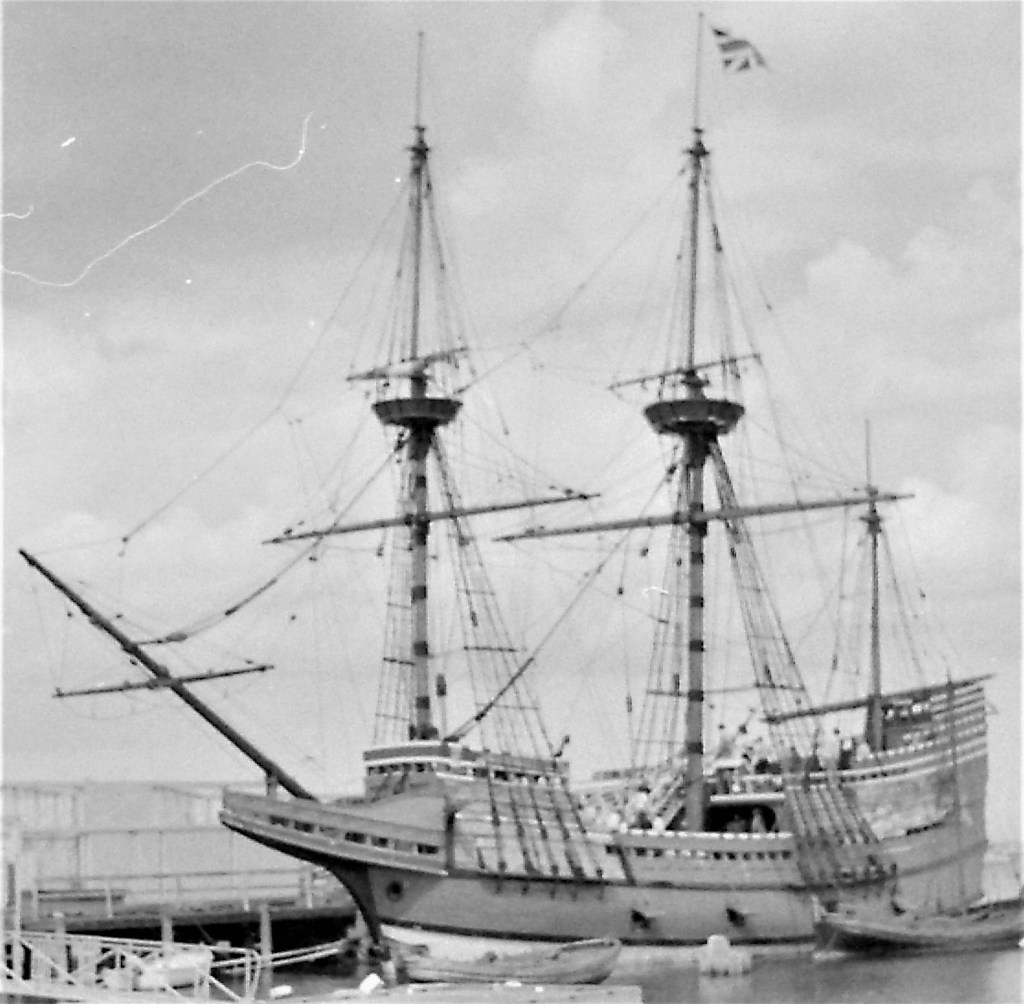
But historically, Americans built a strong country. The pilgrims were diligent workers who believed in and honored God. The United States is a blend of people from around the world, and most of them had a desire to be self-sufficient. They wanted to send word back to their motherland that they were doing well. They detested receiving handouts but would rather give a helping hand to others. These folk helped to establish a strong, powerful working force that could solve any problem that arose. I applaud them, and hope America will reestablish that mindset today.

Some of you may have been involved in union strikes. If you have, you know it’s seldom an easy task to clearly define the issues, because both sides act like Republicans and Democrats: too often they create their own problems, hide their own ignorance, and blame each other.

We as a nation have become like I was as a child: we have become confused. Having “grown up” in the 19th century, we regressed in the 20th. I matured because I received a Biblical work ethic from my father who also taught me to believe in Jesus Christ. But America has forsaken our Biblical heritage, rejected a foundational work ethic, and is floating precariously down the river of shame and disgrace. As a nation, we are in trouble.

Our only hope to become stabilized is to reestablish our foundational belief in God and live according to Biblical principles.

I Try to Protect My Flock

In 2017 we were visited by a small flock of chickens. This blog, and the blogs for the next three weeks are about those memories.

I evicted the raccoon, ground hog, and opossum from the premises. Then I repaired the 8’x10’ barns to prevent predators from hiding close to the coop and put up new fencing to keep predators out of the chicken yard. The chickens and squirrels get along together, and the chickens love to eat little worms, frogs, and every kind of moving bug they can catch. Bugs are happy meals for happy chickens. (Yes! They do eat small frogs.)

Every night I latch the doors to the coop and latch the gate to the chicken yard. I feed the four hens and one rooster well, keeping food and water available 24-hours a day, and I give them scratch, table scraps, and other goodies every day. I try to protect my flock.

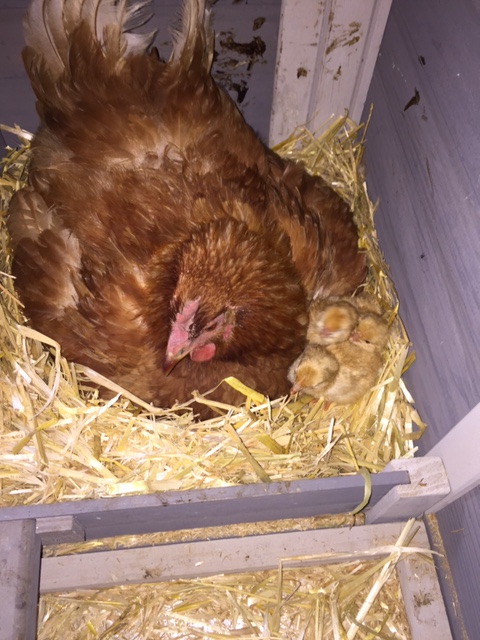
Carol and I decided to let the hens hatch a batch of chicks. All four hens took turns laying the eggs in one nest. I suppose the hens drew straws and Goldie was chosen to be the Momma. Twenty-three eggs fit inside the nest, so we began gathering the rest.

In New Mexico, we raised chickens and turkeys from 1973-1978. Buying the chicks at 3-days old, we didn’t hatch our own, therefore, this would be the first time we hatched … uh … let our hen hatch them, and we had a lot to learn.

I forgot that the mama hen turns the eggs several times a day. Thinking that one of the hens laid an egg on top of the 23, I took it and put it in the refrigerator. (We wash all the eggs we collect.) Four days later, Carol and I were negatively surprised when I cracked that egg to cook it, and dropped a fully-developed chicken as big as the first two digits on my baby finger into the pan. It had previously died in the fridge.

One night I got home late and forgot to secure the coop. The next morning, I found chicken feathers all over the yard, but no rooster. Fred (the rooster) apparently had fought the predator to protect his harem, and gave his life for them. But in the fracas, Fred also mortally wounded the opossum, and I found the opossum’s carcass in the corner of the yard. However, something else (coyote?) had jumped the fence and took Fred’s carcass.

Never again will I forget to secure the coop.

After Goldie sat on the nest for three weeks, the eggs began hatching. Eleven hatched, but one died. I called the remaining babies “Our ten chicklets.” I made sure I closed and latched the coop, but there was something else I didn’t know: the other hens would hurt or kill the babies.

Making the fatal mistake of allowing the hens to be in the same coop with the babies, the next morning I found eight dead chicklets. It was my fault, and I felt terrible. Even worse, while Goldie was trying to protect her young’uns, the other three hens attacked her. That broke our hearts, and I resolved to keep the hens away from Goldie and her remaining babies until they were older. Goldie recovered, but a week later, one of the chicklets died.

The remaining chicklet is nearly full-size now, and she has a name: Baby. So, we have Red Head, Whitey, Elona, Goldie, and Baby. Now the hens don’t attack Baby; it’s just the regular “pecking-order” that takes place.

As I’ve been thinking about all this, the Church came to mind. Too often, if someone’s theology differs from ours, they are labeled or branded as in error. Regardless of theology, if they tend to differ in other seemingly important areas, the church often tends to shun them or separate from them. We sometimes “kill” them socially by damaging their reputation. And if we allow our emotions to control us, we can even insult Jesus by splitting His Church. This ought not to be!

People who are made in the image of God should not act like animals. I Peter 4:8 informs us that we should look for ways to love and protect God’s flock.

Neither you nor I are perfect, so learn to accept others as they are. Love and honor God by loving and protecting His flock. Remember: you need their friendship as much as they need yours.

I’ll tell you more about the flock in the next three weeks.

Hardships

The word hardship came from England back in the 1200s, and it described sturdy ships that endured the brutal storms of the North Atlantic.

Today it’s defined as a condition that is difficult to endure. It refers to suffering, deprivation, and oppression: something hard to bear, lack of comfort, constant toil or danger.

As we think about hardship, we need to remember that life is not supposed to be about us. Life, including eternal life, is about Jesus and our relationship with Him. However, although Jesus should be the center of all human existence, most people put Him on the sidelines, or not in their life at all.

Then, generating our own hardships, people get all limp and wishy-washy about life, or get hard and bitter. We have a difficult time doing things God’s way because we don’t spend time getting to know our heavenly Father.

But God has been saying all along: Please give me the reins. I can tame this team of horses, but you need to cooperate.

A young woman who didn’t know how to cooperate with the Lord told her mother about how life was so hard for her. There seemed to be no end to her problems, and she wanted to give up. She couldn’t understand that she was creating most of the hardships for herself.

Her mother sent up a silent prayer, then took her daughter to the kitchen. Filling three pots with water, she placed them on the stove and turned the heat to high. In the first pot she placed carrots; in the second, she placed a couple of eggs; and in the last, she poured a cup of coffee grounds.

Without saying a word, she let them boil for about twenty minutes, then turned off the burners. She fished the carrots and eggs out and placed them in separate bowls. Then she ladled the coffee grounds out and placed them in a bowl.

Turning to her daughter, she said, “Tell me what you see.”

“Carrots, eggs, and coffee grounds.”

Her mother brought her closer and asked her to feel the carrots and peel an egg. The daughter noted that the carrots were soft and the eggs were hard boiled.

“Now, check the coffee grounds and water.”

The daughter smiled. “The coffee grounds look the same but wet. But the water was now … coffee, and I think I’ll have some. Mother, what are you getting at?”

Her mother explained that each of these objects had faced the very same adversity: 212-degree boiling water for twenty minutes. Each reacted differently. The carrots went in strong, hard, and stiff, but after sitting in boiling water, they softened and became weak. Inside the shell, the eggs had been fragile. Their thin outer shell had protected the liquid interior, but after bumping around in the boiling water, the insides became hardened. The ground coffee was unique. The oppressive adversity (boiling water) released color and flavor.

“Which are you?” she asked her daughter. “When hardship knocks on your door, how do you respond? Are you a carrot, an egg … or … coffee?”

The daughter, drinking her coffee, understood the lesson.

So I ask you, dear reader: Are you the carrot that is strong when there are no problems, but with pain and adversity you wilt and lose your strength?

Are you the egg that starts with a malleable attitude, but becomes hardened with the heat? Did you have a fluid spirit, but after a death, a break-up, a financial hardship, or some other trial, you became cynical? Does your shell look the same, but on the inside are you inflexible?

Or are you like the coffee? Do you change the circumstances that bring the pain? When things are at their worst, do you cave in or help change the situation around you?

When the hour is the darkest and trials are their greatest, how do you handle adversity?

Remembering that hot water releases the fragrance and flavor of the coffee grounds, perhaps you can remember to sincerely turn to God for guidance. He is always willing to help us. God tells us in Isaiah 43:2-3, “When you go through deep waters, I will be with you. When you go through rivers of difficulty, you will not drown. When you walk through the fire of oppression, you will not be burned up; the flames will not consume you. For I am the Lord, your God, the Holy One of Israel, your Savior.”

That is true if we cooperate with God. How do you respond to hardships?

Current Actions Produce Delayed Results

The phone rang. Looking at the caller ID, I answered, “Howdy Paul.”

“Hey Eugene, what are you doing June 21 through June 24?” Paul was an army chaplain, recently retired, and is now a supporting chaplain at the Naval Academy at Annapolis, Maryland.

I responded, “Nothing’s on the calendar for those days – yet. What do you have in mind?”

“You want to fly to Montana with me?”

“Are you driving?”

“No, big brother. We’ll fly commercial.”

“Are you looking for grizzlies, moose, bison, or what?”

“Wrong on all counts. I want to see the shortest river in the world. You coming with me on this ‘brother’s trip’ or not?”

“Count me in!” And that started an adventure that two close brothers will never forget; and will result in a co-authored book.

Flying out of Oklahoma City, we changed planes in Salt Lake City, then made Helena, Montana home for two nights.

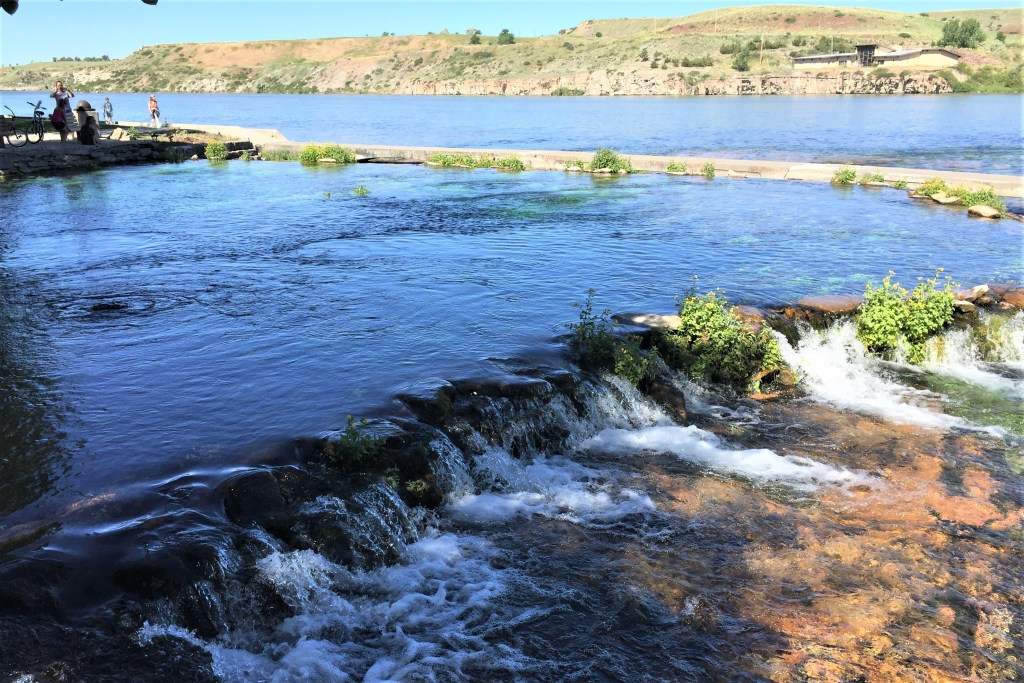
Over dinner, we discussed the purpose of the trip. Up near Great Falls, Montana, there is a natural phenomenon called Giant Springs from which flows what has been dubbed the shortest river in the world. Paul informed me, “Both the Springs and the River are why we are here.” The next day, we drove 75 miles to Giant Springs.

The Little Belt Mountains are sixty miles from Great Falls. As it rains and snows in those hills, water seeps into the Madison Aquifer. Most of that water flows underground into five surrounding states and up into Canada, but a portion travels to Giant Springs. There, approximately 150 million gallons push to the surface every day through openings in the limestone overlaying the Madison Aquifer. Situated on the east bank of the Missouri, some spring water flows directly into the Missouri, while the remainder enters the Missouri by way of the 201-foot-long Roe River. Fish eggs are called roe, and a portion of the short river is diverted into the fish hatchery. Therefore, the name Roe River.

As Paul and I approached the water, I incredulously asked, “That’s a river? That’s shorter than a football field.”

“Sure is. I was on a business trip in 2004, and I always wanted to come back and study it.”

Well, study it, we did – and still are. Various reports say it takes the water twenty-six to fifty-six years to make the sixty-mile trek through the Madison Aquifer, flowing from the Little Belt Mountains to Giant Springs. Yet other reports say some of the water is diverted through different layers of limestone and takes 3,000 years for the journey. Why is there a diversity of opinion about how long it takes? There is an answer, and we will find it.

Another point: the water becomes impure as it seeps into the ground. It can become contaminated by animal droppings, dead animals, mold, and so forth. But as it flows through the limestone, much of the impurities are filtered out.

But what’s the point of it all? I’m glad you asked.

There is a cause and effect working here. The mountain rain and pristine snow (the cause) and the beauty and majesty of the springs (the effect) remind us of the timeline of human life. As it takes many years for the water to seep through sixty miles of limestone to the Springs, things also happen in our lives that often produce a delayed response.

As a child you may have been told, “You’re dumb; you’ll never amount to much!” Or, “You can’t do anything right!” Those are devastating blows that contaminate life; and the clock begins ticking for results to push to the surface. But as the limestone removes the impurities from the water, someone’s intervention can remove those impurities from life. Loving interactions heal wounds.

On the other hand, you might have heard, “You are GOOD at this! You will do well in life.” That, also, sets the clock ticking, and what bubbles to the surface years later can benefit both humanity and God.

The point is: events and personal interactions shape us, but it may take years for the results to show.  So be kind to others and guide them. Help shape lives in a positive manner. Love others as God loves you.

Well, after the working part of the trip, we drove to the town of Stanford, Montana, where Paul treated me to lunch. He said, “I’m taking Stanford (my first name) to Stanford for lunch in honor of your first name.” It was sixty miles out of the way, but who cares? We had a wonderful time up in Big Sky Country.