An Important Question (pt. 1)

I enjoyed a question a reader asked because it prompted me to critically and logically think about my faith and my understanding about God.

Question: How do you determine the difference between 1) what God and Jesus actually said and did, versus 2) what the Bible authors merely reported that God and Jesus said and did?

To affirm what God and Jesus said and did would require eyewitnesses. Therefore, I will not start with faith; I’ll start with what many scholars believe to be fact.

Literary scholars of various religious and non-religious persuasions determined that portions of the Old Testament may have been written as early as 3500 BC, and I think they are on the right track. Why do I agree with them?

According to Genesis chapter three, God had personal interaction with Adam. Therefore, Adam learned about the creation events from God, and most likely wrote about it. And since Adam lived well into Methuselah’s lifetime, he passed the knowledge regarding creation and the beginning of human history to Enoch and his son, Methuselah; and they could have started formally documenting the history of mankind. Since Methuselah died about a week before the flood began, he had time to document what Noah was doing.
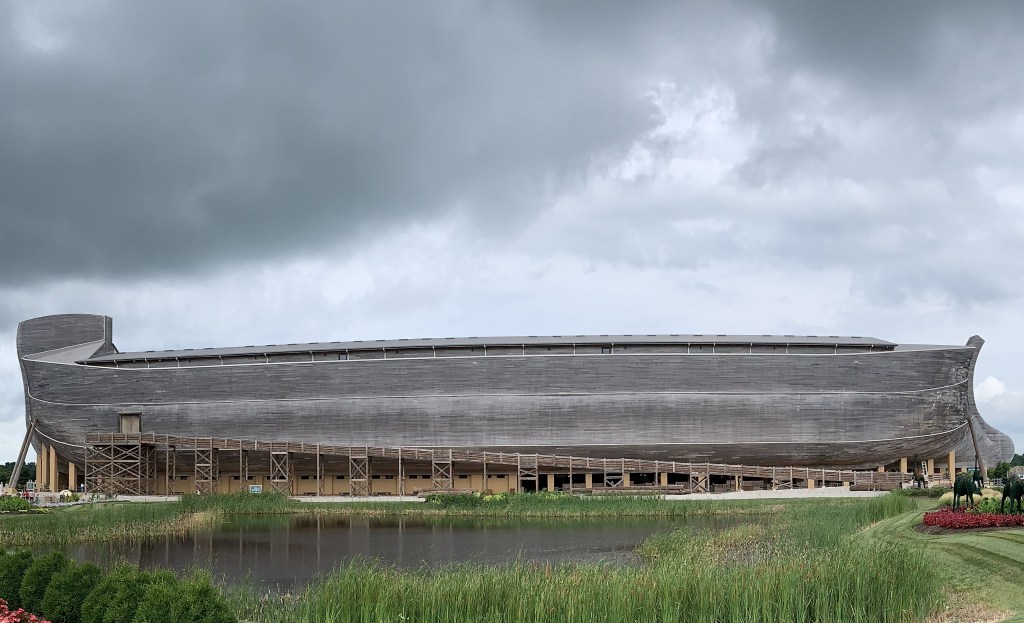
God gave Noah a 120-year warning that the flood was to happen, so Noah wasn’t in a hurry and would have taken all the writings that Methuselah gave him onto the Ark. Noah and Shem may have added more info to the writings.

Those writings (on clay, parchment, paper, or whatever the medium), were passed down to Abraham and eventually reached Moses. All that information was the basis for the first 11 chapters of Genesis.

The information presented in Genesis 12 through 50 was most likely documented by Abraham, Isaac, Jacob, Joseph, and several others while they were in Egypt, and given to Moses. If the writings started around 3500 BC, and we apply the genealogy given us in the Bible, we can see how the actions and words of God – and of Jesus – were documented by eyewitnesses. It takes many guesses out of the equation.

Add to the equation: the Bible is the oldest history book in the world, and much of it has been verified by archeology and other scientific endeavors.

Hundreds of prophecies have been spoken throughout the OT time frame. A few of the prophecies were spoken by seemingly wild-eyed hermits, while many, if not most, were spoken by kings, priests, farmers, shepherds, merchantmen, and other socially accepted people. Most of them have already come true, such as: approximately 356 prophecies in the OT about the coming Messiah have been fulfilled in Jesus.

Quoting from https://www.learnreligions.com/prophecies-of-jesus-fulfilled-700159, Learn Religions – Old Testament Prophecies of Jesus, we read: “In the book Science Speaks, Peter Stoner and Robert Newman discuss the statistical improbability of one man, whether accidentally or deliberately, fulfilling just eight of the prophecies Jesus fulfilled. The chance of this happening, they say, is 1 in 1017 power.”

10 to the 17th power is 10 with 17 zeros after it. Go figure the number.

But there were not 8 prophecies about Jesus that were fulfilled – there were approximately 356. For this, I don’t know how many zeros would be required, the result equals to an impossibility.

But all that deals only with prophecies about Jesus. There were hundreds of other prophecies throughout the 1200 years of writing Genesis through Malachi. They were about people, politics, events, and they were fulfilled, also. If there is no one who knows everything that will ever happen in the course of mankind, this is a staggering impossibility.

Many of those 356 prophecies that were fulfilled in the life, death, and resurrection of Jesus point to the fact that Jesus would be the Messiah, and others pointed to the fact that Jesus would be God in human form.

Now, switch to what is called the New Testament.
What we call the “Church Age” did not begin until the Day of Pentecost. That’s why we say the books of Matthew, Mark, Luke, and John are actually a continuation of the Old Testament. That would change the 1200 years of writing to almost 1600 years. Those four books reveal the life of Jesus and show how Jesus fulfilled many prophecies in the OT.

John, the Gospel writer, was possibly the final Old Testament prophet. Remember, he didn’t die until somewhere around 100 AD – about 60 years after Jesus was crucified. And with everything said about the coming Messiah being fulfilled in Jesus, John informs us in John 1:1 that the Messiah, who had originally been predicted in Genesis 3:15, was and is God.

Let’s continue next week.

Valentine’s Day

As a child in elementary school, Valentine’s Day wasn’t a big event for me. In third grade I liked a girl named Nancy. However, I didn’t like her very long because when I told her I liked her, she kicked me. End of liking Nancy.

The down-side of Valentine’s Day in elementary school was that the teachers wanted us to give Valentine Cards or notes to everyone in the class, and that was a bummer: I didn’t even know most the kids in class.

In fifth grade, I liked Mrs. Wells. She was the only person in school to whom I wanted to give a card. When mom took me to the 5ȼ – 10ȼ store (we called it the dime store), I bought the usual bag of cheepies for the class, but found a good one for Mrs. Wells. I waited until no one was looking, and quickly put the card on her desk. None of the other kids knew what I had done until Mrs. Wells called me up and gave me a hug.

Have you ever been embarrassed to tears and elated up into the clouds at the same time? That was me.

Fast forward eight years.

In college, I met a girl named Carol Ann Winton. Okay, you probably figured it out. Yes, she has been Carol Ann Linzey for over 57 years now. Back in 1964-1966 when I saw her across campus walking to class, I broke into a run to walk with her. Just being with her pumped joy into my life! It still does!

In 1965, Valentine’s Day was on Sunday, I was eighteen years old, and Carol and I were attending SCC (Southern California College: now Vanguard University of Southern California). I remember thinking: “If Carol accepts my invitation to the Valentine Banquet, I’ll know that she is the girl I will marry.” So, nervously, I asked her.

Guess what? She didn’t kick me and I was elated. Yes friends, she accepted. I was thrilled to tears but not embarrassed; and for the first time since I was in fifth grade, Valentines Day was a special event.

Our wedding was on August 22, 1966—my 20th birthday anniversary.

I would be lying if I said we never had a problem. We are human beings with minds of our own, wills of our own, and our own stubbornness. But through the years the stubbornness in both of us has worn down because we wanted to love each other.

Did you read that last sentence? We WANTED to love each other.

The meaning is this: we were young and loved each other with an immature love. But because we made a dynamic commitment to each other, and expressed that commitment to the church, to our friends, and to God, we worked through the problems.

And listen: because we wanted to love each other, we learned what it meant, what it took, and how to do it. Learning to truly love isn’t easy, and it is not a 50-50 emotional split. It requires that we put our pride aside, release our stubbornness, and go out of our way to help our mate, even if we don’t want to. And it works both ways. Therefore, our early love matured into true love – the love that surpasses emotion.

In 1969 while working at Boeing Aircraft Company in Everett, Washington, one of my workmates had just become divorced – for the 3rd time. As we were discussing marriage, he said, “I’m sorry for you: you’re trapped and can’t have any fun.”

“You’ve got it wrong.” I responded. “I can go out with anyone I want, go wherever I want, and go whenever I want.”

“You’re full of it! How do you get away with that while being married?”

“My wife is the person I always want to go out with. We go everywhere together, and we always have fun.” That embarrassed him, or angered him, and he walked away.

We’re working on our 58th year now, and I’ve never been sorry that I married her. That is a true statement. And in our upper 70s now, we still have fun being with each other and travelling together.

Please understand: we haven’t always been happy with each other, but we never forget that we love each other. We stay together, work through the issues, and the happiness always returns. Happiness and emotions are fluid, but our love is solid. That way there is never a breach in our marriage.

One more important factor in our marriage must be mentioned. Both of our lives are anchored in a relationship with the Lord, Jesus Christ, and the love of God is the lubricant that keep our marriage gears running smoothly. We both put our highest priority in living for Jesus, and our second priority is living for each other. Both those priorities reinforce our love for each other.

Happy Valentine’s Day.

A Very Good Question

The following is a question from a dear friend, and my response to her.

“In a short and concise answer, why do you believe Christianity is the true/real religion and others are false?”

Joanna, If I give you a “short and concise answer,” it will answer the question but it will not answer your intent. Here is the short and concise answer, and you’ll see what I mean:

Christianity is based on Jesus, and Jesus is truly God. Other religions are based on false gods. Anything false is not true or real. That’s why I believe Christianity is the true/real religion.

Now you see why a short and concise answer will not tell you what you want to know. Therefore, allow me to go a bit further with a fuller, more complex response.

A major scientific principle states: Matter can be neither created [out of nothing] nor destroyed [resulting into nothing]. It can change shape, form, or appearance, but cannot be created or destroyed. But matter exists. The entire universe is made from matter.

Therefore, we must amend the principle like this: Matter can be neither created nor destroyed – except by a force outside time and space. That force must be an uncreated, eternal, thinking Being. And by nature, He must be a creator. A person such as this can only be God. That outside force – God – is the only one who can make or create substance out of absolutely nothing.

Mankind is a compound creation: body and spirit. Man was created to be autonomously animated: he breathes by himself, he moves by himself, and he thinks by himself – he’s a compound miracle. It has been proven throughout human history that, although man can think up ideas, then invent and manufacture things out of processed material found in nature, man cannot create something out of nothing.

Man was created with the innate desire to worship something or someone, but rebellious or highly independent man does not want to be responsible to his Creator. Therefore, although some have chosen to believe there is no God or gods, others have generated gods from their own fanciful imagination.

Man granted these imaginary gods the ability to create themselves. Man granted them personality, spirit, and some supernatural powers, and decided to worship his own invention. However, man-made imaginations cannot answer prayer, but Jesus does answer prayer. Man-made imaginations cannot heal or speak, but Jesus interacts with us in our minds and spirits daily; and He heals. Man-made imaginations cannot guide us, but Jesus guides us in healthy, wholesome decisions.

Joanna, do you understand what I just wrote? It’s true that I learned much of that by studying various subjects. But let me quote my Grandpa Linzey when I asked him a question. You’ll find this on page 14 of my book, Reflections on Faith & History:

The last time I saw my grandfather, Stanford Linzey, he was ninety-six years old. I asked him: “Grandpa, what is the most important thing in life? I want to pass your thought on to my children as part of their family heritage.” Grandpa looked out into the field and over the horizon for a few minutes as I silently waited with eager anticipation. At last he looked toward me and pensively said, “I suppose the most important thing in life is this: everything you need to know is in The Book. You can know a lot of other things, but everything you need to know is in The Book. Study it.”

I deeply cherish those moments with Grandpa, and I have never stopped studying the bible – The Book. However, although everything we need to know for eternal life is in the Bible, I’ve learned a lot more information so that I can effectively fulfill what the Lord has asked me to do – write to inform and teach people.

You must develop your Christian world-view for yourself in order to solidly establish your faith in Jesus Christ and to be able to adequately talk with others about it.

Remember that I’m available to help. But please read my book, Reflections on Faith & History. (Click on the url at the end of this blog.) It won’t take long to read it, you’ll find several other answers you’re looking for, and I gladly await your next question. You ask very good questions. May the Lord bless you, abundantly, and I look forward to seeing you again soon.

https://www.amazon.com/Reflections-Faith-History-Bringing-Scripture/dp/1793443599

The $5,928,000,000 Debt

Jesus emphasized mercy in the story of the unmerciful servant which is found in Matthew 18:23-35 (KJV).

Therefore, is the kingdom of heaven likened unto a certain king, which would take account of his servants. And when he had begun to reckon, one was brought unto him, which owed him ten thousand talents.

Ten Thousand Talents? That sure sounds like a lot of … something. What is it?

There are three ways to think of the word talent.

The first thought is a skill such as playing a musical instrument, playing a sport, or learning a craft. But the servant couldn’t owe the king anything like that.

Another concept is weight. Various charts give different weights, one of which says a talent is equivalent to 85.5 US pounds. Therefore, 10,000 talents is equivalent to about 855,000 pounds, or 427.5 tons. For comparison, an early version of the Boeing 747 aircraft weighs about 435 tons. The servant couldn’t owe anything like that, either.

So, let’s look at it historically from the days Jesus walked the earth.

In 30 A.D. a day’s wage was a Roman denarius, sometimes called a pence or a penny in the Bible, and the laborers worked all day long with no overtime. A single talent was 6,000 denarii, or pence, which was 6,000 days’ wages. If you do the math, you find that was a man’s pay for about nineteen years.

10,000 talents were the wages for about 190,000 years. If a person today earns $15 per hour for 40 hours a week, the wages for 190,000 years would be approximately $5,928,000,000.

Would the man in Jesus’ story ever be able to pay off that debt? No. Jesus told the parable to show how deeply indebted mankind is to God because of sin. It is impossible for us to pay that debt. Therefore, God, in the form of Jesus, had to settle the debt for us.

Let’s return to the story at verse 25. When you see “a hundred pence,” remember that is almost three month’s wages.

But forasmuch as he had not to pay, his lord commanded him to be sold, and his wife, and children, and all that he had, and payment to be made. The servant therefore fell down, and worshipped him, saying, Lord, have patience with me, and I will pay thee all. 

Then the lord of that servant was moved with compassion, and loosed him, and forgave him the debt. 

But the same servant went out, and found one of his fellow servants, which owed him an hundred pence: and he laid hands on him, and took him by the throat, saying, Pay me that thou owest. And his fellow servant fell down at his feet, and besought him, saying, Have patience with me, and I will pay thee all. 

And he would not: but went and cast him into prison, till he should pay the debt. 

So when his fellow servants saw what was done, they were very sorry, and came and told unto their lord all that was done. Then his lord, after that he had called him, said unto him, O thou wicked servant, I forgave thee all that debt, because thou desiredst me: shouldest not thou also have had compassion on thy fellow servant, even as I had pity on thee? And his lord was wroth, and delivered him to the tormentors, till he should pay all that was due unto him.

Jesus painted quite a picture! The compound message revealed a harsh consequence for not forgiving someone. But let’s think about what happens in real life today.

We often get caught up in finding fault, or become blinded in the emotion of a problem, and we can’t see straight. We think we’ve been defrauded, or our rights have been violated, and we want vengeance. Although we’ve made mistakes and have been forgiven, we still demand justice and retribution related to others.

However, Jesus made it clear that since God forgives us of the impossible debt we owe Him, we are asked to forgive others of the minor debt they owe us if we want to continue to grow in our relationship with God.

How would we fare if God demanded justice from us? There is no way we could make it right with God. We would be judged and sentenced to be punished forever. But in the greatest act of mercy in the history of mankind, Jesus is willing to forgive us.

1 John 1:9 tells us that all we need to do is sincerely confess our sin and ask God to forgive us. But a stipulation related to our pardon is that we extend mercy to others. That’s an integral part of Christianity – an essential part of forgiveness – and we cannot ignore it. It’s a dynamic factor in the process of becoming like Jesus.

[An excerpt from chapter 5 in the book: Truth not meant to be Hidden.
Visit: https://www.amazon.com/Truth-not-meant-Hidden-Becoming/dp/B0BRYWHZDS

Part 2: Who were the Wise Men?

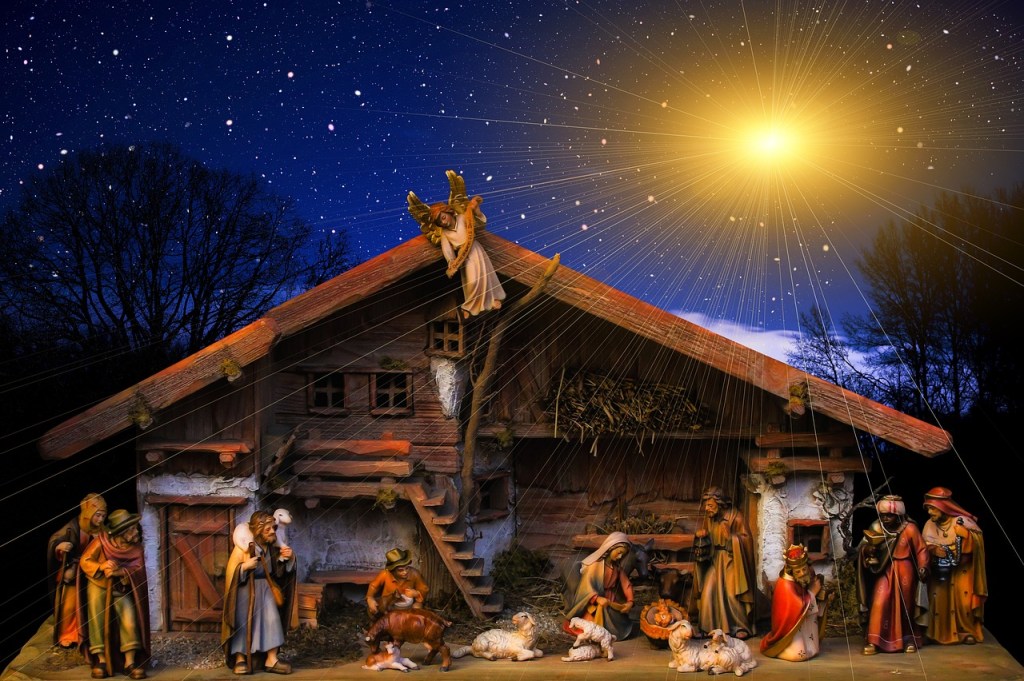
Who were the wise men, and why did they search for the new king? Matthew 2 says in part, “wise men came from the east to Jerusalem saying we have seen his star in the east… When they entered the house, they saw the young child with his mother.…”

The east is a big area, so we need to know what Eastern societies employed those who might be watching or studying the stars. China, India, and Persia are possible candidates.

China is the first that comes to mind, for they have written many things about the stars and the heavens throughout their history. But China’s Daoism (Taoism) was basically passive and stressed ethical action, and Confucianism stressed conformity as related to society, government, and family. Neither group was interested in religion or other governments at the time.

India is also an unlikely candidate because Buddhism (with its focus on the negative aspects of materialism) and Hinduism (with perhaps over 300 million gods, although possibly based on one central deity) were not interested in either the religions or the governments of other civilizations.

That leaves us with Persia. The main religion in Persia at the time was Zoroastrianism, and their priests were of a class called Magi (from whence we get magician). They were basically monotheistic. They acknowledged an evil one who was in opposition to the true Wise Lord, they believed the world would end when light finally conquered darkness, and they believed the Wise Lord was a loving God who desired communication with humans. These wise men, or scholars, studied the stars, and the languages, writings, cultures, botany, etc., of other civilizations.

They were the scientists of the day and carried status of nobility. In fact, the words “wise men” in Scripture refer to Babylonian officials who were of the Magian class. Remember also when the Jews (including Daniel who was Nebuchadnezzar’s personal counsel for years) were in captivity in Babylon in the sixth century BC, the Zoroastrians learned about the prophesies in the Hebrew Scriptures. Until about 220 AD, Zoroastrianism was sympathetic to any religion, including Judaism and Christianity, that taught kindness, justice, righteous thinking, truth, monotheism, etc.

The magi had various fields of expertise, including astronomy and astrology. Whenever a sign or star indicated a royal birth (Psalm 19:1), or when they learned of a royal birth through the communication system of the day, a delegation of three to seven was sent to acknowledge that royal event with expensive gifts fit for a king. Traveling with a caravan, they timed their arrival for when the child was about a year old (Matthew 2:11) because of the high infant mortality rate, and the visit was intended as an honor to God as well as an honor to the reigning king and the new prince.

Therefore, I believe that the Magi were monotheistic Zoroastrians from Persia, and they spread the good news of the new King throughout Persia when they returned home.

There is a small group of Zoroastrians today in India, but they believe somewhat differently than the Magi who took gifts to honor the Messiah, Jesus Christ.

Read part 3 tomorrow.

Part 1: Jesus – God with Us

Do we have any idea of when Jesus was born? How did we place his birth in December?

Emperor Julian, Constantine’s nephew, originated the Julian Calendar. In 1582 Pope Gregory’s people found a way to correct the minor flaws in the Julian calendar and produced what we call the Gregorian Calendar. However, the accumulated Julian calendar errors amounted to an estimated period of two to seven years (no one knows for sure), and it would not be possible to go back and attempt to correct every document ever written. Therefore, since all of human history was, in some way, dated in relation to Jesus’ birth, it was decided to back-date Jesus’ birth.

Using the amended Gregorian calendar, we think Jesus was born around 2–5 BC. In what month was he born? Probably in late September to mid-October. Why do I say that?

We know that the Old Testament spoke not only of history and the Abrahamic Covenant, but the Old Testament is intrinsically tied in with the life of Jesus Christ (Immanuel: God with us), the prophecies of his appearance, major Jewish religious festivals, and the proposed restoration of mankind. Therefore, I believe it is safe to assume that the major points of Jesus’ life are also related to the major festivals. Let’s look at them.

Jesus’ crucifixion took place on the Passover (Pesach). This is a major point that is well-documented in the Gospels and in Roman history. The Feast of Unleavened Bread related to Jesus’ burial. The Feast of First-fruits was related to Jesus’ resurrection. And of course, the Feast of Pentecost (Shavuot, or Weeks) related to the birth of the church fifty days after Jesus’ resurrection which was ten days after his ascension.

The other three major festivals are the Feast of Trumpets (Rosh Hashanah), Feast of Tabernacles (Sukkoth, or Booths), and the Day of Atonement (Yom Kippur). With the Feasts commemorating major events in the life of Jesus as well as of Israel, it seems to me that His birth would have taken place at another major feast: possibly at the Feast of Trumpets (around September or October).

Luke 2:8 says, “Now there were in the same country shepherds living out in the fields, keeping watch over their flock by night.” If the shepherds were living in the fields at night when the angels “trumpeted” Jesus’ birth, it is safe to deduce that the weather was not yet too cold. Thus, a September or October timeframe is logical, but not conclusive.

His birth might have been on the Feast of Booths (Tabernacles), also in the September-October time frame. Why? Mary and Joseph were not in a house during Jesus’ birth; they were in a cave, stable, or some other “booth.”

So how did the church decide on December 25?

King Constantine in the fourth century royally decreed that everyone in his empire should be Christian, and it became convenient for him in consolidating his empire to declare many pagan festivities as “Christian.” Therefore, the Sol Invictus (the “Unconquerable Sun”), marking the winter solstice and celebrated on December 25, was decreed to be equivalent to “the Righteousness of our Lord.” And to make things politically and religiously correct, Constantine decreed that Christ was born on that date. And since the emperor heavily influenced the church’s decisions, the church accepted that assigned date.

I’m a historian and I enjoy researching. However, the fact that Jesus wasn’t born on December 25 is not a problem. Our faith does not hinge on knowing the date of Christ’s birth. Our faith is based on the truth that Jesus is God in human form, was born of a virgin, came to save us from eternal destruction, died to redeem us from our sin nature, raised from the dead three days later to conquer death, ascended to heaven 40 days after he rose, and that he will return.

So, go ahead and celebrate His birth. But remember: He is no longer a baby. He is Almighty God, the creator of the universe. He created you and wants you to join Him and be part of His family forever.

Read part 2 tomorrow.

My Most Meaningful Christmas

When I reflect back on my life, many occasions stand out as special events. Eleven memories are: my wedding day; the day I joined a Gospel quartet as a teenager; each day of the birth of our five kids; the day I dropped dad’s prized notebook into the San Diego Harbor; the day dad returned from a 13-month deployment; the first time I preached over the radio; and the day, when playing hide-n-seek, I backed into a cactus plant. (I won’t tell you how badly that hurt!)

When I consider my most meaningful Christmas Day before marriage, I have to pause and go through my life – location-by-location. In the 20 years between my birth and marriage, we lived in 9 different places (10 if we include the college campus), and my childhood memories are in those 10 mental compartments. As an adult married for 57 years – and counting to the same, wonderful, precious Carol – we lived in 17 different locations – so far.

Reflecting on my childhood, dad sometimes took us on Saturday afternoon family walks through El Cajon, California. We walked past Foster’s Freeze ice cream store, and each of us got an ice cream cone. They cost a nickel back then. We walked to the other end of town, stopping at the 5, 10, & 15-cent store for a coke. They cost a dime. We then crossed the highway, and walked back home, stopping first by the Ford dealership to look at new cars. Looking didn’t cost anything. As children, we thought it must have been a 5-mile walk. But the walks were probably around two miles at the most and were deeply enjoyable times with mom and dad.

Whenever I got into a fuss with any of my five sisters, I always went to dad for consolation. He didn’t arbitrarily take my side in the fuss, but he helped me understand life. I felt important when I was with my dad.

But then, the navy sent dad overseas for 13 months, and I felt all alone. I plodded along, but life was hollow for me. I hate to admit it, but I cried often. Not realizing it, I became belligerent at times to mom. It wasn’t intentional, but I was a kid, and hurting. However, that doesn’t excuse me, and I eventually grew up and asked both mom and the Lord to forgive me.

Then Dad Returned Home! And I became happy again. We had two Christmases that year. When dad returned in the summer of 1957 and gave all of us gifts, we claimed that as an extra Christmas. Then we celebrated the regular Christmas in December. That Christmas was my most meaningful childhood Christmas.

But Joy still comes in the morning. That’s the first line in the chorus of the song, Alive & Breathing, by Matt Maher.

Dad helped pick out the tree. Dad brought out the special gifts he had purchased for us overseas but had concealed them in his closet. We never suspected he had them. Dad spent the whole day with us. Dad, my brothers, and I tossed the football. We played catch with a baseball. Dad had target-practice with me with my new Daisy B-B Gun. Many of us played Monopoly. Dad won. We had root-beer floats. All in all, I was in heaven-on-earth! Life wasn’t perfect, but my daddy was home! And that was my most meaningful Christmas as a child.

What about you? Think back in time. Our memory is our Time Travel Machine. Relax and take time to reflect on your life. What events or relationship made Christmas meaningful to you, and when was that? It can be either when you were a child or an adult. Please take time to jot down some notes and think about the good times in your life. Share those good memories with family and friends.

But there’s another story for a lot of people. Many of you might not have good or enjoyable memories. Life has been hard. Rejection has been inscribed across the recesses of your mind. Sometimes you might think of ending it all. I would like you, also, to write some of those painful memories on paper. Write down the details of how you’ve been hurt. Then I want you to talk with God about it. Tell Him how difficult your life has been. Pour out your heart and feelings to Him. He understands. Why?

Jesus was born into this corrupt, hell-bent world to show us a better way to live. His purpose was to take the penalty of our own sin and selfishness so that we could be healed and restored to Father God. Jesus’ plan is for us to live with Him where sin, selfishness, and sorrow does not exist. It’s called Heaven.

God commissioned people to jot down His thoughts to give us. Those notes are the Bible. You can learn to know Jesus by reading Matthew, Mark, and Luke, but especially the Gospel of John. Leaving heaven, He came to be born as a human, like us. But unlike you and me, Jesus was never selfish. As a human, He didn’t search for fulfillment to make His life worthwhile. Instead, He came to give Himself in order to make our lives worthwhile. He gave His life on the cross to re-establish eternal life for us. In His 33 years on earth prior to His crucifixion, He showed us how to live, how to love, and how to give.

Also unlike you and me, Jesus raised back to life to confirm that He is, indeed, God, and to reaffirm His love for us.

I encourage you this Christmas season to think less of stuff, more of others, and especially, more of Jesus. He wasn’t born in December, but this celebration is still all about Him. Stuff will wear out; but if you choose to live for Jesus Christ, our Savior, your relationship with Him will last forever.

MERRY CHRISTMAS.

Who’s the Designer?

I’ve been driving cars for over 59 years, but that doesn’t make me an auto mechanic. I’ve been using computers for 33 years, but that doesn’t make me a computer programmer. In like manner, a person who has a Ph.D. and works in a scientific laboratory doesn’t mean he or she knows much about creation, the origination of the cosmos, or of life.

But please listen: just because I’m a dedicated Christian doesn’t mean I know everything about creation or of the origination of life, either. If we are honest, we admit that we all base our lives on faith to some degree.

While I openly admit that my knowledge is limited, others who oppose my views get upset or frustrated if I declare their knowledge to be limited.

Let’s look at a few ideas logically and scientifically.

To start, faith is required to believe in what has not been proven. For example, I had faith that this chair would support me. I sat on it to test my theory. Wonderful! It is now proven that the chair will support me, so faith is no longer required. Let’s continue.

In September of 2000, Alan Dershowitz, an agnostic, debated Alan Keys, a Roman Catholic. In defending his main thesis that “what is right cannot be known,” Dershowitz said, “We know what evil is. We have seen it.” He mentioned events such as the holocaust and the crusades. He then raised his voice and emphatically declared, “I don’t know what’s right. I only know what’s wrong!” (From the book, I Don’t Have Enough Faith to be an Atheist, by Norman Geisler and Frank Turek; page 179.)

But Dershowitz was definitely and defiantly wrong.

We cannot know what is incorrect or wrong unless we have a standard of what is correct to judge it against. To know what’s wrong, we must know what is right. Therefore, since we know it is evil to murder, we instinctively understand the intrinsic value of life. Since we know that lying is wrong, we intuitively understand the moral value of truth. The principle of right and wrong is imbedded in everyone’s conscience. Therefore, we have proof that we can know what is right.

How about the concept of truth? Some people emphatically declare that since everything is relative, there is no absolute truth. But is that statement correct? Think now: Is it absolutely true that there are no absolute truths?

Some people affirm that Biblical Creation is not true, and claim that the mythical and unprovable Big Bang created the well-organized cosmos with logical and scientific precision with no intellect or mind to guide anything. But I don’t care how it’s explained, it is scientifically and physically impossible for matter to self-generate out of nothingness. The Big Bang hypothesis is science fiction. I might add, though, It is an intriguing concept.

I’ve never received an intelligent answer to this question: If evolution were true, how did rock particles turn into living organisms?

By the way, have you ever looked through a microscope at a one-celled amoeba? I have. Those critters are very complex. And if you ever stop and think about it, there’s no intelligent rationale as to how amoebas evolved into other life-forms. In reality, evolution is not scientific. It’s a hypothesis, it’s called a theory, and taught as fact. But that’s not science. At best, it is an unprovable concept that is based on faith.

We in the scientific arena understand that nothing (neither material nor energetic substance) can be created out of nothing. Matter can be neither created nor destroyed. Yet matter – stars, planets, gas – does exist.

To believe billions of galaxies came into existence due to an explosion of absolutely nothing takes more faith than to believe our Creator – God – spoke the cosmos into being.

In order for people (agnostics, atheists, higher critics, skeptics, non-believers) to persuade me that God did not create all of nature, they should give me a viable alternative. But they can’t. Their arguments break down due to physical impossibilities, built-in inconsistencies of logic, ignorance of obvious truth, and lack of substantiation. That’s why many who believed in (had faith in) evolution have gravitated toward the Intelligent Design concept.

But they still have a problem: if there’s no God, who is the intelligent designer?

Understanding that ALL concepts of creation are intrinsically religious, the only logical approach is Genesis 1:1, “In the beginning, God….”

God is the designer of it all.

Being Thankful

When I was a kid, Dad would ask us many times what we were thankful for. But on Thanksgiving, we had a family tradition – in addition to having turkey dinner.

Before I get into the tradition, my favorite part of the meal was mom’s mashed potatoes and gravy. Mmmm-mmmm-mmmm! They were good!

Oh, maybe my sisters, Gena and Janice made the mashed potatoes. Yeah, that’s right. Mom started the tradition, dad showed us how to make it without lumps, then Gena and Janice continued. It was a family effort. I can ask God to thank mom for me because she’s in heaven with Him, but I’ll tell my sisters “Thank You!”

The turkey thighs were my next favorite part, with marshmallow-covered sweet-potatoes coming in a close third. I never developed a liking for cranberries, but I would take one teaspoon of the stuff to make mom feel good.

Pumpkin pie and vanilla ice cream topped it off – but sometimes we waited for several hours to let the main meal settle. Then, the pie and ice cream served as a second, special meal!

 After the scrumptious meal, we stayed around the table and each person shared a memory of something that happened that past year for which he/she was thankful. When one of my siblings was thankful that Christmas was coming soon, dad said, “We’ll get to that another time.”

When it was my turn, it was sometimes difficult for me, because emotionally I felt like I was taking a school test: under pressure, I froze up. I broke out in a sweat and couldn’t think. After what seemed like an eternity, Dad would ask, “What are you happy about?”

Now THAT I could answer because it didn’t feel like an interrogation. I was happy about the meal we just ate. I was happy that it rained that week. I was happy that Jesus kept us out of a car accident when we were going to Ramona. I could think of a lot of things if I didn’t feel like I was under the spotlight.

It’s interesting how just changing the words in the question released me from the feeling of a dreaded school test.

With twelve of us around the table – ten kids plus dad and mom – it took a while to complete the tradition, and that was good! Too many times we would eat, clean up, wash-n-dry dishes, and continue on our busy way. But the tradition kept us around for a while and helped us interact as a cohesive family unit.

An example of that is when we, as a family, went to the Greyhound Bus Depot in San Diego to greet an incoming missionary. As dad was getting information from the man, my sister Janice came around the corner.

“Janny!” I hollered; and ran to greet her with a hug.

“How long has it been since they saw each other?” the missionary asked.

Looking at his watch, dad replied, “Oh, about 10 minutes.”

“Ten minutes? And they act like that?”

“That’s what we do – we love each other and greet each other with hugs.”

Love and acceptance is another tradition we always tried to build. One person told me, “It was probably an act because you didn’t really love each other – did you?”

All I could say was, “It was – and is – real for me. I can’t speak for the others; if it was only an act for them, that’s their problem. But as long as it is meaningful for me, it keeps me emotionally and spiritually healthy.”

Wouldn’t you prefer to be around loving and grateful people more than around grumblers and complainers?

It’s a fact that, as a class of people, loving and grateful people are healthier than others. That brings three Scriptures to mind.

Philippians 2:14 says, “Do everything without complaining or arguing.” That includes grumbling. Proverbs 17:22 says, “A happy heart is like good medicine, but a broken spirit drains your strength.” And Romans 8:28 tells us that if we cooperate with God, He can actually bring good out of negative situations if we trust Him.

A happy heart refers to a joyful person; one who normally doesn’t let disappointments get him down. And a broken spirit refers to a crushed or depressed attitude. Not only does depression drain the depressed person of energy, it also drains the energy of people around him.

So, become a thankful person, and make your life easier.

Let Freedom Ring!

After the eight-year War of Independence ended in 1784, the colonists were finally free! Well, I suppose they weren’t colonists any longer; they were citizens of a brand new country. But they were free!

They were free from tyranny. Free from taxation without representation. Free from the hated Redcoats! And free from a host of other problems: both real and imagined.

But what were they free to do? They were free of military oppression and free to operate their own businesses. What else were the colonists – I mean, Americans – free to do?

Political freedom was a major item. Not desiring any over-arching government, they wouldn’t bow to any state but their own. This was a problem because there were thirteen new governments to consider. So, the former colonies – now sovereign states – agreed to a limited government under a federation called The United States of America. To them that actually meant The United Countries of America.

They were free to tax themselves with “in-house” representation. That was a fight! The local towns didn’t want the states to tax them, and the states didn’t want the feds to tax them. They were also free to print their own money. Oops … that didn’t work too well. Each state created its own currency, with some states having several currencies. Banks issued their own money, and by 1836 over 1,600 banks were issuing thousands of varieties of paper money. Many of them were not “worth a continental.” Amazingly, standardized currency was not established until 1929.

How about freedom of religion.

In order to have a workable government, compromises are made. However, these concessions need to be in the civil arena; not in matters of faith. In colonial legislation, Thomas Jefferson said in the Virginia Statute for Religious Freedom (written in 1779):

“No man shall be compelled to frequent or support any religious worship, place, or ministry whatsoever … nor shall otherwise suffer, on account of his religious opinions or belief; but that all men shall be free to profess, and by argument [discussion] to maintain, their opinions in matters of religion, and that the same shall in no wise diminish, enlarge, or affect their civil capacities.”

Jefferson made sure the First Amendment carried the same idea: “Congress shall make no law respecting an establishment of religion or prohibiting the free exercise thereof….”

President Eisenhower said on January 20, 1953, “History does not long entrust the care of freedom to the weak or the timid.” And on November 25, 1981, the United Nations General Assembly passed the “Declaration on the Elimination of All Forms of Intolerance and of Discrimination Based on Religion or Belief.” (This was, however, controversial.)

With that in mind, why is our government prohibiting the free exercise of the Christian religion? Why are we disregarding our religious freedoms that are protected in our own national documents? I am referring, of course, to openly reading and teaching from the Holy Bible.

When Scripture teaches that marriage is between a man and a woman, why do we cower before those who disagree? Why does our government pressure us to turn our back on our faith and turn against the Bible? Without a constitutional amendment, Congress does not have the right to revoke our constitutional rights of freedom of speech and freedom of religion and deny my right to preach the truth as found in Scripture. I don’t hate homosexuals; I have worked alongside several, and some of my friends are homosexuals. There is no hate involved when I tell them that the Bible teaches against homosexuality. It’s a statement of fact. But hate is involved when “gay” people angrily hurl insults and epithets at me.

It is unconstitutional, immoral, and unethical to allow the LGBTQIA2+ person first amendment rights yet disallow those with traditional Biblical beliefs the same rights. Everyone should have the freedom to speak their mind in the same way without fear of reprisal. And whoever dares to limit or eliminate one person’s freedom does damage to everyone’s freedom.

Proverbs 25:26 says, “A good person who gives in to evil is like a muddy spring or dirty well.”

     Christians have the same guaranteed, blood-bought, constitutional freedoms to teach and worship according to conscience, and to express our beliefs as does anyone else – including the right and obligation of teaching the Biblical view of life. To deny that freedom would be discrimination, bigotry, intolerance, and anti-American. And remember, even the UN denounces intolerance – at least, on paper.

So respect those with whom you disagree; live according to Scriptural principles; and give thanks for our national and religious freedoms.