
What are they doing out there?”
I was pouring a cup of coffee – my first one of the day – and had my back to Carol.
“What are who doing out where?”
“You have to look and see.”
It was around 7:15 in the morning and I had already gone out to let the girls (chickens) out of the coop. As I prepared their mix of goodies, they followed me so closely that I nearly stumbled over them. Goldie and Elona pecked my britches as a sign to pick them up and love them a little – which I did. Then, as they began gobbling up the morning meal, I returned to the house where my coffee was waiting.
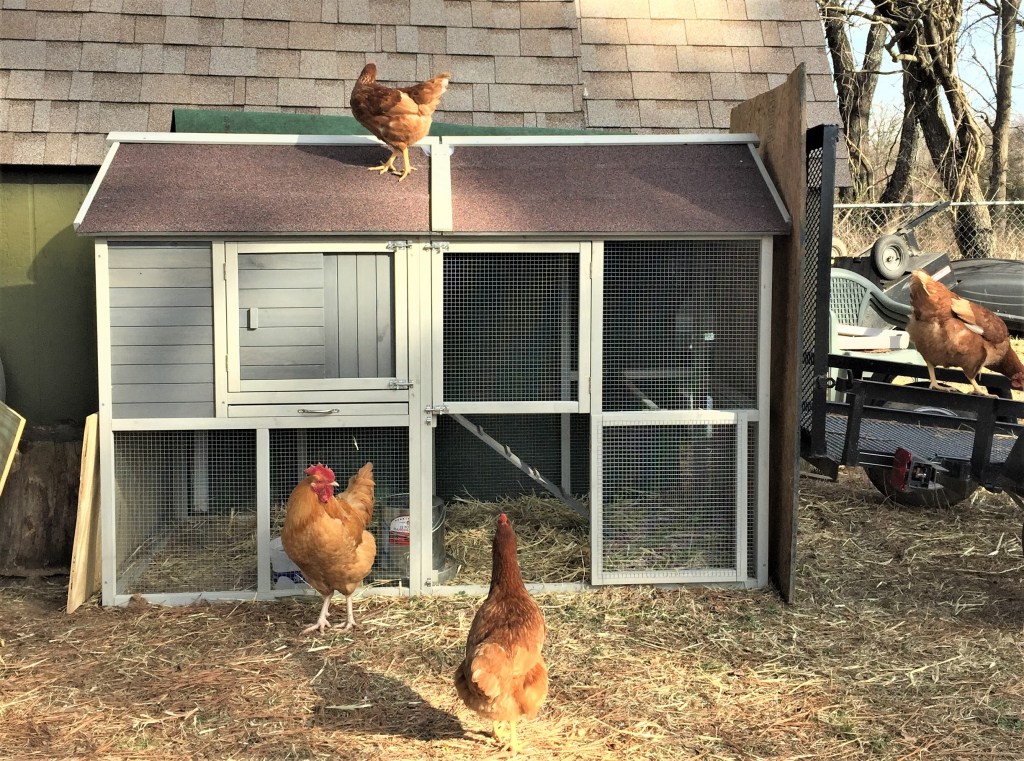
As I set my cup down, Carol reached for her camera to take a video of what was taking place. I began laughing. I had seen this many times previously but had never seen it from Carol’s viewpoint.
Goldie had entered the coop but left it within a few seconds. Whitey was walking toward the entrance of the coop. When Goldie walked out, Whitey entered, but quickly exited and stood at the entrance. Red Head was pacing a few feet away.

“Elona must be on the nest, Precious, and the other girls are waiting. No one will go in to make their deposit until Elona leaves the nest. And it looks like Whitey will be next.”
“That doesn’t make sense. Even if she’s on the nest, there are four more nests available. “Why don’t they use the other nests?”
I poured milk into my coffee to cool it and to give it a better flavor. I don’t like black coffee. I don’t like it hot, either.
“That’s human logic, Precious, but not necessarily bird logic. Remember when Goldie became a brooder and sat on twenty-three eggs?”
“Yes. All four birds laid the eggs in one nest.”
“They still do that quite often.”
“But Fred has been gone for eleven months now; do they think they can raise another flock?”
(Fred was the rooster.) “Who knows? I can figure out part of their thinking, but not all of it. All I can say is the girls seem to be waiting in line until it’s their turn to pay their dues.”
“You mean, lay their eggs. I didn’t know chickens could be so patient. Look!”

Elona walked out, and Whitey entered. Goldie moved up and stood at the entrance – Red Head continued pacing a few feet away. She would go last.
Putting her camera down, Carol finally said, “When it comes to eating, they will grab worms, cockroaches, moths, and other choice morsels from each other’s beaks; and Elona and Goldie fight each other vying for your attention. But when it comes to taking dust baths or laying eggs, they patiently wait in line? I don’t get it.”
“I don’t know if it is about patience; it might be a matter of being focused.”
The day before, Goldie and Red Head were chasing Elona all over the quarter-acre backyard trying to get the night-crawler away from her. Focused on that worm, they cornered Elona, and all three birds managed to eat a portion of that 7-inch fish-bait.
The birds know how to be focused. God programmed that into them. As they meander around the yard, they are always on the alert for a bug – either flying or creeping. Sometimes one of them will half-run and half-fly all the way across the yard, leap or fly up several feet and grab a butterfly that is flying low. Now that’s being focused!
Is there something we can learn from our flock? Yes.
Not able to focus on eternal values, chickens are focused on what will keep them alive physically. But it’s supposed to be different with humans. What are you focused on? Fun? Personal gain? Entertainment? Vocational advancement? Vengeance? Disappointments? None of that will help you when you stop breathing. God built within us the ability to focus on eternal values.

Philippians 3:13b-14 says, “I focus on this one thing: Forgetting the past and looking forward to what lies ahead, I press on to reach the end of the race and receive the heavenly prize for which God, through Christ Jesus, is calling us. (NLT)”
The prize the Apostle Paul was focused on was eternal life with God which he gained by living for and honoring Jesus Christ while here on earth. We must fulfill our responsibilities on earth, but let’s stay focused on honoring our Heavenly Father by obeying our Lord, Jesus Christ.

 Gene Linzey