One Nation Under God

For some time now, our government has felt obligated to divorce Christ and Almighty God from the public domain. For those of you who either haven’t studied history or don’t believe the historical record, I pray that the following reflections on history will help you to understand the path we have trod that made us a great nation – Under God.

“A patriot without religion in my estimation is as great a paradox as an honest man without the fear of God.” So stated Abigail Adams, wife of John Adams.

On July 2, 1776, the Second Continental Congress adopted Richard Henry Lee’s resolution to be independent from Great Britain. It was a unanimous vote with only New York abstaining. The next day, July 3, John Adams wrote a letter to Abigail in which he wrote:

“The day is past. The second day of July 1776, will be the most memorable Epocha [sic], in the history of America. I am apt to believe that it will be celebrated, by succeeding generations, as the great anniversary festival. It ought to be commemorated, as the Day of Deliverance by solemn acts of devotion to God Almighty.”

It took two days for news to spread throughout the colonies, so July 4 became the Great Day. But the point is the same: true freedom is a gift from God, and God is to be praised for it.

Decades earlier, William Penn – after whom Pennsylvania was named – said, “Men must choose to be governed by God, or condemn themselves to be ruled by tyrants.”

On this topic, the esteemed Benjamin Franklin said, “Freedom is not a gift bestowed upon us by other men, but a right that belongs to us by the laws of God and nature. I never doubted the existence of the Deity, that He made the world, and governed it by His Providence.”

And Thomas Jefferson, the chief writer of our Declaration of Independence, said, “The God who gave us life gave us liberty. And can the liberties of a nation be thought secure when we have removed their only firm basis, a conviction in the minds of the people that these liberties are the gift of God? That they are not to be violated but with His wrath? Indeed, I tremble for my country when I reflect that God is just; that His justice cannot sleep forever.”

Do you remember the firebrand Patrick Henry? He said, “It cannot be emphasized too strongly or too often that this great nation was founded not by religionists but by Christians, not on religion but on the Gospel of Jesus Christ.”

And I cannot ignore the colonists’ premier general and president, George Washington. He said, “It is impossible to account for the creation of the universe, without the agency of a Supreme Being. It is impossible to govern the universe without the aid of a Supreme Being. It is impossible to reason without arriving at a Supreme Being.”

Then, in both the political and summer heat of 1787, when the fledgling nation was floundering as Congress of the newest nation on earth tried to stabilize the country, Old Ben Franklin once again stepped to the forefront on June 28. He said, in part:

“I have lived, sir, a long time; and the longer I live, the more convincing proofs I see of this truth, that God governs in the affairs of men. And if a sparrow cannot fall to the ground without His notice, is it probable that an empire can rise without His aid? We have been assured, sir, in the sacred writings, that ‘except the Lord build the house, they labor in vain that build it.’ I firmly believe this….I therefore beg leave to move that henceforth Prayers, imploring the Assistance of Heaven, and Its Blessing on our deliberations, be held in this Assembly every morning before we proceed to business; and that one or more of the clergy of this City be requested to officiate in that service.”

So, on what are our civil liberties based? Noah Webster (1758-1843) said, “The religion which has introduced civil liberty is the religion of Christ and His apostles….This is genuine Christianity and to this we owe our free constitutions of government.” Therefore, it is clear to me that our national perils, natural and political, are because our nation, our government, has divorced God. Our rescue is dependent upon returning to the faith of our fathers – both spiritual and political.

Peace in the Midst of a Storm

It was December 24, 1914. The battle lines had been drawn up between the English and German forces. As with the Union and Confederate forces in the American Civil War, the English and Germans thought the fight would be over in a few months. But five months after it started, the “hell” of war began to weigh heavily on them.

It had been raining during the day, and freezing at night. The dead between the opposing trenches could not be retrieved, so they froze each night. On December 7, Pope Benedict XV had suggested a cessation of hostilities in honor of Christmas, but neither England nor the German high command would agree. They thought the soldiers wouldn’t see the man across the line as an enemy if they dwelled for a day on Christ and Christmas.

But some men in the frozen, muddy trenches had other ideas. Christians were on both sides of the field, and Christmas Eve on this particular portion of the battle-line was peculiarly quiet.

German soldiers, who had spent time in England prior to the war, began singing Christmas Carols, some in English. Most of the Germans sang in their own language. Their English enemy, 100 yards across no-man’s-land, cautiously looked above the soggy sandbags to see what was going on. Seeing no weapons ready to fire, and no bullets whizzing over their heads, some English soldiers began singing. There, in the middle of the storm of The War to End All Wars, the peace of God was manifesting itself in the hearts of declared enemies.

Then December 25, 1914 – Christmas Day – dawned.

Against the orders of his commander, a German soldier climbed out of the trench, raised his hands in a gesture of peace, and nervously, slowly, walked onto the field of death. Orders of “Don’t shoot!” were issued from the English side. An English soldier, thinking this might be a trick, nevertheless, climbed out of his trench.

Then, he slowly laid his rifle down and raised his hands in peace. As the two men cautiously walked toward each other, men on both sides began emerging from the safety of the trenches and joined them. Those who knew the other’s language conversed, shared stories of home and family. Several reports I read said they played soccer that day, using cans or soggy sandbags for the ball.

The men in the German/Prussian uniforms did not hate those in the English uniforms, and the opposite was true. The unofficial cease-fire on December 25, 1914 verified that fact. They were pitted against each other because of the ideologies of their national governments.

There was another event in the history of the world that took place about 1,880 years earlier that set the stage for the English/German non-official cease-fire. It, also, manifested peace in the midst of a storm.

Not only was the iron hand of Rome harshly ruling the known world, the cruel and insecure Herod was ruling Israel. As the emperor mandated the death of those who would not bow to him or his gods, Herod ordered the death of anyone – including wife and son – who threatened his rule. In the midst of that deathly turmoil, the angel warned Joseph and Mary of the danger. They were granted a place of safety and serenity in a stable for the birth of the One who came to offer salvation and peace to the world – Jesus. Scripture says He would be called Emmanuel, which means, God with us.

He is still with us. The peace He offers was not only for the Jews back in the days of Imperial Rome. It wasn’t only for those who stopped fighting for a day in 1914. Jesus offers peace to us today – in the midst of the storm of covid-19, the turmoil of the presidential election, and social upheaval.

If Democrats, Republicans, Independents, Communists, Socialists, Green Party members, and the rest could stop fighting, study the Bible and allow the truth of Christmas – and the true Christ – to enter their hearts and minds, they could learn God’s purpose for their lives. Jesus also died for the Buddhists, Shintoists, Muslims, atheists, and everyone else who would accept Jesus into their tumultuous lives.

He came as a baby so He could grow up experiencing the pressure and pain we encounter. But His babyhood lasted only a year or so. He became a man Who suffered every kind of pain, trial, and temptation that we suffer. But He never sinned. And He died!

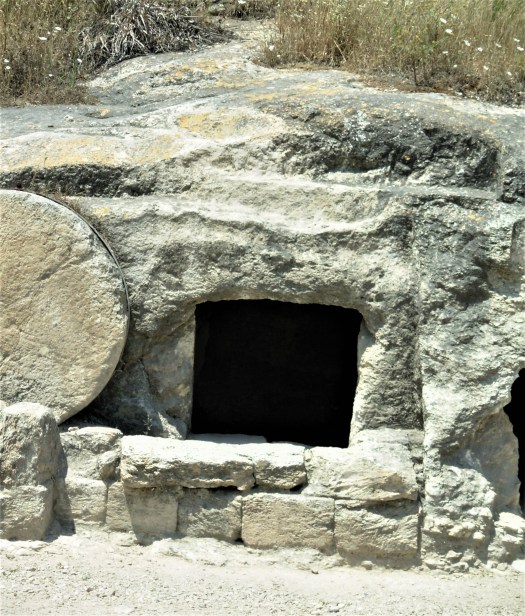
But three days later He came out of that tomb, and we have eyewitnesses to the fact: the guards on duty who were there to make sure no one stole the corpse. And because of His resurrection, He offers us His peace and joy in the midst of our storms. And He offers us eternal life with Him in heaven if we accept Him into our lives. He’s listening right now, so you can talk with Him. He loves you and will help you.

Have a Blessed Christmas.

Let Freedom Ring!

After the eight-year War of Independence ended in 1784, the colonists were finally free! Well, I suppose they weren’t colonists any longer; they were citizens of a brand new country. But they were free!

They were free from tyranny. Free from taxation without representation. Free from the hated Redcoats! And free from a host of other problems: both real and imagined.

But what were they free to do? They were free of military oppression and free to operate their own businesses. What else were the colonists – I mean, Americans – free to do?

Political freedom was a major item. Not desiring any over-arching government, they wouldn’t bow to any state but their own. This was a problem because there were thirteen new governments to consider. So, the former colonies – now sovereign states – agreed to a limited government under a federation called The United States of America. To them that actually meant The United Countries of America.

They were free to tax themselves with “in-house” representation. That was a fight! The local towns didn’t want the states to tax them, and the states didn’t want the feds to tax them. They were also free to print their own money. Oops … that didn’t work too well. Each state created its own currency, with some states having several currencies. Banks issued their own money, and by 1836 over 1,600 banks were issuing thousands of varieties of paper money. Many of them were not “worth a continental.” Amazingly, standardized currency was not established until 1929.

How about freedom of religion.

In order to have a workable government, compromises are made. However, these concessions need to be in the civil arena; not in matters of faith. In colonial legislation, Thomas Jefferson said in the Virginia Statute for Religious Freedom (written in 1779):

“No man shall be compelled to frequent or support any religious worship, place, or ministry whatsoever … nor shall otherwise suffer, on account of his religious opinions or belief; but that all men shall be free to profess, and by argument [discussion] to maintain, their opinions in matters of religion, and that the same shall in no wise diminish, enlarge, or affect their civil capacities.”

Jefferson made sure the First Amendment carried the same idea: “Congress shall make no law respecting an establishment of religion or prohibiting the free exercise thereof….”

President Eisenhower said on January 20, 1953, “History does not long entrust the care of freedom to the weak or the timid.” And on November 25, 1981, the United Nations General Assembly passed the “Declaration on the Elimination of All Forms of Intolerance and of Discrimination Based on Religion or Belief.” (This was, however, controversial.)

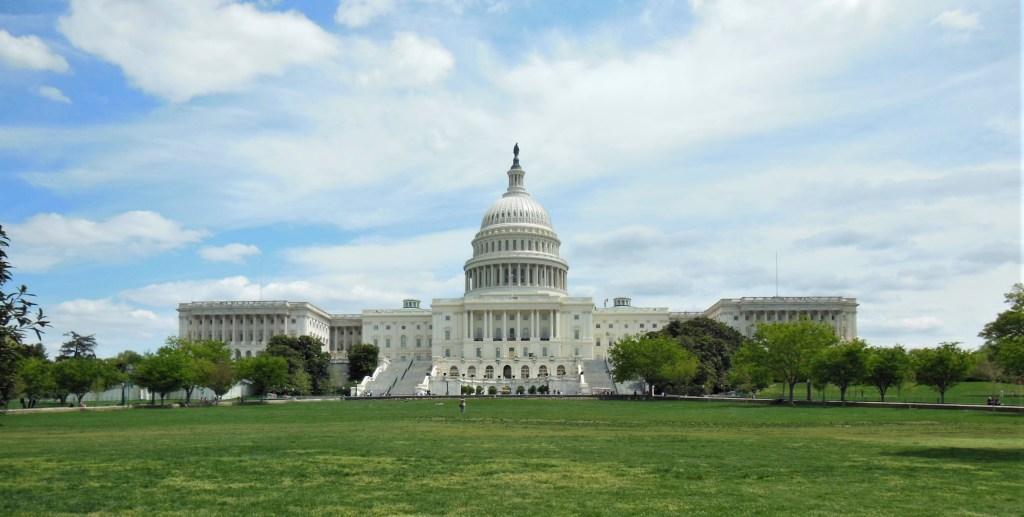
With that in mind, why is our government prohibiting the free exercise of the Christian religion? Why are we disregarding our religious freedoms that are protected in our own national documents? I am referring, of course, to openly reading and teaching from the Holy Bible.

When Scripture teaches that marriage is between a man and a woman, why do we cower before those who disagree? Why does our government pressure us to turn our back on our faith and turn against the Bible? Without a constitutional amendment, Congress does not have the right to revoke our constitutional rights of freedom of speech and freedom of religion and deny my right to preach the truth as found in Scripture. I don’t hate homosexuals; I have worked alongside several, and some of my friends are homosexuals. There is no hate involved when I tell them that the Bible teaches against homosexuality. It’s a statement of fact. But hate is involved when “gay” people angrily hurl insults and epithets at me.

It is unconstitutional, immoral, and unethical to allow the LGBTQIA2+ person first amendment rights yet disallow those with traditional Biblical beliefs the same rights. Everyone should have the freedom to speak their mind in the same way without fear of reprisal. And whoever dares to limit or eliminate one person’s freedom does damage to everyone’s freedom.

Proverbs 25:26 says, “A good person who gives in to evil is like a muddy spring or dirty well.”

     Christians have the same guaranteed, blood-bought, constitutional freedoms to teach and worship according to conscience, and to express our beliefs as does anyone else – including the right and obligation of teaching the Biblical view of life. To deny that freedom would be discrimination, bigotry, intolerance, and anti-American. And remember, even the UN denounces intolerance – at least, on paper.

So respect those with whom you disagree; live according to Scriptural principles; and give thanks for our national and religious freedoms.

Memories on Memorial Day

May 29, 2023 is Memorial Day. Memorial Day is a day of honor and remembrance. It’s a day when we reflect on the sacrifices our citizens in uniform have made to protect the liberties we cherish here in the United States.

However, it was Almighty God who helped us to establish this nation. It was He who helped our founding fathers develop and write the national documents that state our freedoms and teach us to defend them. And it is God who inspired men to write the Holy Scriptures that teach us about duty, honor, integrity, and commitment.

As Americans, we have a solemn obligation to pray for and to support our troops to the best of our ability because they are the ones on the front lines of battle who enable us to enjoy the opportunities and freedoms we often take for granted.

Not only on Memorial Day, but every day we should remember the sacrifices of our service members and honor the memory of those who perished in the fight for freedom.

Although my father didn’t die in battle, I’m thinking of him right now. He was stationed on the USS Yorktown, CV-5. On May 4-8, 1942, the Yorktown was in the Battle of the Coral Sea just northeast of Australia. A 500-pound armor-piercing bomb plunged through the ship and exploded adjacent to my father’s radio room, but the steel wall shielded dad from death. Although we lost the aircraft carrier USS Lexington, CV-2, the Battle of the Coral Sea was the first naval engagement the Japanese didn’t win.

When the damaged Yorktown limped into Pearl Harbor, Captain Elliott Buckmaster requested six months for major repairs, but Admiral Chester Nimitz knew what was brewing near Midway Island and gave Captain Buckmaster only 72 hours.

The Japanese fleet, advancing to attack Midway, included four attack carriers, two battleships, three cruisers, nine destroyers, twenty-eight submarines, and eight refueling tankers. Altogether, they could have had about 180 ships assembled for the operation. This was not some spur-of-the-moment impulse; rather it was a strategic, well-planned full-scale attack – as was the attack on Pearl Harbor. We might have had about 55 ships in the area to counter the assault.

The Fighting Lady (Yorktown) did set sail in three days. As the ship approached Midway, a paralyzing fear gripped dad. He couldn’t shake it off. Finally, he prayed, “Lord, I’m saved and I know it. If I must die, I must. It’s okay with me. Only one thing I ask of You: take this numbing fear out of my heart and mind so I can do my duty. Amen.” (Dead in the Water, USS Yorktown at Midway; page 92.)

Dad, an intra-ship radioman and musician, said the fear lifted immediately. The change was so dramatic that he thought someone had entered the room. Then Psalm 91:7 came to mind – “A thousand shall fall at thy side, and ten thousand at thy right hand; but it shall not come nigh thee.” Dad said he experienced no heavy fear throughout the rest of the war.

The Japanese intended to use Midway Island as a base of operations from which to finish the job they started at Pearl Harbor, and Admiral Nagumo betrayed his ignorance of Americans by saying, “The enemy [America] lacks the will to fight.” But US intelligence broke the Japanese code and Admirals Nimitz and Spruance devised a plan similar to an old western ambush and caught Admirals Yamamoto and Nagumo off guard. Japan learned about our will to fight when they lost the same four aircraft carriers they used in attacking Pearl Harbor. They also lost two heavy cruisers, three destroyers, and 275 planes. This battle ended Japanese naval superiority in the Pacific. We lost one carrier (the USS Yorktown), one destroyer (the USS Hammann), and 150 planes.

Although the USS Yorktown, CV-5, sank on June 7, my father survived the battle. After the war, dad attended college and seminary, and reentered the US Navy for another 20 years, but this time as a Chaplain. Retiring with the rank of Captain, he said the eight years as an enlisted man and the wartime experiences in World War II helped prepare him for what lay ahead in life.

We should not be afraid of negative circumstances in life; rather we should prayerfully face them and learn from them. If we purpose to live to honor Jesus Christ, we should remember His words in Hebrews 13:5 – I will never leave you nor forsake you.

Can a Christian Be a Scientist?

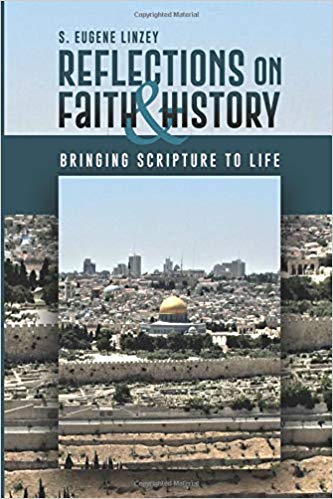
An acquaintance in Texas wrote and asked a question that I had addressed on page 21 in my book, Reflections on Faith & History. He hadn’t read the book, so I copied that section and emailed it to him.

I retired from the scientific community in 2006 but since I still hear the question from other people, I’ll put it on this blog. I’ll present the original question and response and add further comments at the end.

     While working at a scientific laboratory, did you have a hard time separating your “Christian life” from your “scientific life?”

I do not have the need or the desire to separate my life into compartments. For one thing, I might get confused as to “Who am I supposed to be today?” or “How am I supposed to respond in this situation?” Whoever ideologically partitions his or her life because of supposed differences is being hypocritical in one or more areas. Instead, I am a dedicated Christian and it is easy for me to live in both communities. In my case, I totally enjoyed my life in both areas of the scientific and Christian communities because both are based on a quest for knowledge. The word science is an old word that literally means knowledge. We in the scientific community are searching for knowledge in many areas of life. We are called scientists, or seekers of knowledge. Also, we in the Christian community are searching for knowledge, and the Holy Bible which is a major source of knowledge does not contradict true science (2 Timothy 3:16–17).

However, there is a problem here: many people have been taught the fallacy that either there is no Creator God, or that God does not interact with humanity (read Psalm 14:1). They have been taught that human beings (at least some of us) are the ultimate universal intellect, and that we must decide our own reality or fate. But a person who rejects the Bible is rejecting a major source of truth and is then forced to formulate questionable hypotheses to replace rejected truth. Attempting to abstain from religion, his or her belief system becomes a religion in and of itself; and a dubious, man-made religion will not provide the answers for life’s problems.

Also, since people tend to impose their agnostic or atheistic belief systems (which are religious in nature) and humanistic errors on our society, we must study the Bible carefully to separate their counterfeits from the truth (2 Timothy 2:15). But keep this in mind: thousands of scientists around the world realize it was impossible for this universe to just “happen” all by itself. They realize that man could not really evolve from a tadpole, amoeba, monkey, donkey, or a spontaneous loud noise (big bang), and they also believe in God.

So keep on learning about Jesus and the Bible, keep learning about God and his creation, and please do not separate your life into compartments. Be yourself. Be real. Be a Christian.

There is a misunderstanding about whether or not we can talk about our beliefs in public. Although I don’t cram my religion down anyone’s throat, I understand and employ my God-given and Constitutionally guaranteed freedoms of speech and religion.

Here’s an example. One day at the scientific laboratory (I think it was in 1994), I was told that I need to take my Bible off my desk and stop praying on lab property. I looked at my manager and calmly said, “This week, America is celebrating National Native American Heritage Week. Ten Native American Tribes are opening each of their 4-hour sessions on Lab property with their own native prayer, and they have their religious material here on government property. Since the lab authorities and the national government are endorsing these religious events on lab property, they cannot deprive me of the same privileges. Therefore, my Bible stays on my desk, and I will continue to pray privately.”

I didn’t wave banners or get excited. I forthrightly but calmly stated my case and went about my business. And that was the end of it. I have many other personal examples, but that will suffice.

So, can a Christian be a scientist? Yes. Thousands of scientists, professors, doctors, astronomers, et.al., are Christians. Don’t be intimidated by non-Christians, but don’t be foolish, either. Be respectful as you wisely interact with the world (1 Peter 3:15).

Historical Trivia

I thought I’d follow up last week’s blog of New Years myths with a few tidbits of historical trivia.

Many things are going on in the world today and we tend to get tense, worried, and cynical.  But I think we need to “lighten up” … for at least a week. Also, I think humor is appropriate since Proverbs 17:22 says “A cheerful heart is good medicine, but a broken spirit saps a person’s strength” (NLT). So, here is some light-hearted trivia that I found many years ago. When I first read them, it looked like some had incorrect information so I did a little “lookin’ up” to get as close to the truth as I could. So sit back, relax, and enjoy the next five minutes.

Have you heard the saying “God willing and the creek don’t rise”? Some folk have a picture of an uncrossable stream or creek rising during a torrential downpour – especially with all the flooding happening in parts of the world today. However, there is one small error in that quote. The statement was written by Benjamin Hawkins, a politician and Indian diplomat in the early 1800s. While on the job in the southern USA, Hawkins was requested by President Thomas Jefferson to return to Washington D.C. and give a report about what was happening. His response was, “God willing and the Creek don’t rise.” Because of his job, and the fact that he capitalized the word “Creek,” it is deduced that he was referring to a potential Creek Indian uprising, and not a flooded body of water.

In George Washington’s days, there were no cameras. One’s image was either sculpted or painted. Some paintings of George Washington show him standing behind a desk with one arm behind his back, while others showed both legs and both arms. In fact, many paintings show people with arms or legs out of sight. That’s because prices were based on how big the canvas was, how many objects (things and people) were to be painted, and by how many fingers, hands, arms, legs, and feet were to be painted. Arms and legs are more difficult to paint, therefore painting them raised the price considerably. This is one probable origin of the expression, “It’ll cost you an arm and a leg.” By the way, that’s why many (if not most) cartoons show the characters with only three fingers and a thumb. Omitting the fourth finger reduced the production costs.

In centuries past, personal hygiene was not understood, and people didn’t bathe very often, which aided in the profusion of lice. Therefore, many women and most men in the European higher social strata shaved their heads because of lice and bugs, then wore wigs. This continued in colonial America – which, of course, was primarily an extension of British society. Wealthy and influential people could afford to buy larger wigs – and they did. Today we still use the term “He’s a big wig” because someone appears to be, or is, powerful and wealthy.

You might have heard various stories about the origin of “chairman of the board.” Well, some of the stories are flakey, but this is probably correct. The word “chair” infers sitting in the chair, or seat of authority (at times, perhaps the only chair while others sat on benches), and “board” (as we know it) was first heard of in the 13th century spelled borde, and means “table” – such as “God’s borde” (meaning “the Lord’s table.”) A mother’s call to the family was: “Mi bord is maked. Cumed to borde.” – meaning, “The table is set [for a meal]. Come to the table.” Also, people pay a fee or rent for “room and board” – sleeping quarters and food at the table. So, chairman of the board would be the person in charge at the table where business is conducted: be it church, industry, restaurant, or government.

Here’s one more. Have you heard the phrase, “turn a blind eye” in a situation?

In the naval battle of Copenhagen in 1801, British Admiral Horatio Nelson (who was blind in one eye) lead the attack against a joint Danish/Norwegian flotilla. The British fleet was commanded by Admiral Sir Hyde Parker. Sensing defeat, Parker sent a signal for Nelson to disengage, but Nelson was convinced he could win if he persisted. In Clarke and M’Arthur’s biography, Life of Nelson, published around 1809, they printed what they said was Nelson’s actual words at the time: [Putting the field glass to his blind eye and addressing his assistant] “You know, Foley, I have only one eye – and I have a right to be blind sometimes. I really do not see the signal.” So, turning a blind eye to Admiral Parker’s order, Nelson proceeded to defeat the enemy.

Thank you for reading, and I hope you have a pleasant week.

Pearl Harbor: December 7, 1941

On December 7, 1941, at 7:55 a.m. Hawaii time, a dive bomber from the Japanese Imperial Navy flew unchallenged over the mountains on the island of Oahu. Then 360 Japanese warplanes, following closely behind, thundered over the mountains, descended on and attacked the U.S. naval base and the Army air base at Pearl Harbor. That catapulted the United States into World War II.

President Franklin D. Roosevelt then galvanized the US Congress and the nation into action with his memorable speech which started with: “Yesterday, December 7, 1941 – a date which will live in infamy – the United States of America was suddenly and deliberately attacked by naval and air forces of the Empire of Japan.”

Part of our Pacific fleet was crippled. Included in the destruction were: four battleships, three cruisers, three destroyers, several other ships and subs, and almost 200 planes. Over 2,300 Americans were killed and 1,200 wounded in that disaster. That debacle could not and would not be ignored.

Interestingly, the attack was engineered to prevent the United States from entering the war which would have enabled Japan to advance her imperialistic goals.

Dad’s 1999 book was updated and in December of 2021 was released under a new title: Dead in the Water. I put in new Introduction and numerous pictures, and my brother, Paul, put in a new Afterword. You can find the book on Amazon, and you’ll be glad you bought the book.

Japan’s surprise attack – prior to declaring war – propelled this mighty nation into action. The US aircraft carriers which Japan intended to sink at Pearl Harbor were not at Pearl. Admiral Chester Nimitz, also a Texan, had sent them elsewhere, and the aircraft from those ships destroyed the core of the Japanese Imperial Navy six months later in the Battle of Midway. My father was on the USS Yorktown in that battle.

Recently we seem to have forgotten about the attack on Pearl Harbor. No, we don’t hate the Japanese, but if we forget history, we’ll forget who we are and why our nation exists.

When I worked at the Los Alamos National Laboratory – where our first atomic bombs were constructed – every year well-meaning people protested on August 6 and 9. Those were the dates the US dropped the bombs on Hiroshima and Nagasaki. They thought we should never have bombed Japan.

The fact is, we didn’t want to bomb Japan; we didn’t even want to get into the war. But when we are attacked, we do respond.

Tales From the Road: Road Hazards

Carol and I enjoy traveling. We drive the speed limit, observe traffic rules and cautions, and watch out for hazards. Watching out for hazards is sometimes nerve-wracking because there are many kinds of them.

Potholes and broken sections of pavement which can destroy tires account for most of our hazards. I’ve seen one accident that was caused by a driver who swerved to miss a big hole but hit another car.

Another hazard that drivers sometimes face in the deserts of Southern California, Nevada, and Arizona, are sandstorms. We didn’t encounter those storms on this trip, but four years ago we got caught. The sand was blowing at 40 mph and was so thick that I couldn’t see more than 20 feet in front of me. When that storm was over, the windshield needed to be replaced.

Yet other hazards crop up: animals on the roadway. Rabbits, racoons, squirrels, and other small game just get squashed, and it’s over. Dogs, deer, coyotes, and the like can present more of a challenge, but elk, cattle, and horses can prove to be fatal – for man and beast.

Another hazard we’ve seen – but haven’t been affected by – are downed trees across the roads. Nature has been acting up lately and high winds have been howling through the forests. About a mile from where we are staying, a large tree fell across the road after midnight. It was still dark, and by the time a tired driver saw the tree, he didn’t have time to hit the brake. It took over two hours for the ambulance crew to remove the body, and the highway department to remove the wreck and the tree.

But of all the hazards we face on the highways, one stands out like a sore thumb. It is a high-speed hazard called a Motorcycle!

 All over the United States we see signs reminding us about them. “Be courteous: share the road.” “Watch out for motorcycles.” “Save a life.” “Start Seeing Motorcycles.” And others.

But the more ominous problem is that many of the motorcyclists are not watching out for themselves! I hear the complaints from many RVers across the country. At medium to high speeds, motorcyclists disobey traffic rules. At high speeds, they weave in-n-out of traffic and zip past us between the lanes. The interstate freeway speed limit may be 70mph, and we may be going 65mph while most cars buzz past us doing 70-80. But many cyclists shoot past us doing 80-90 or higher!

When I want to change lanes, I turn on my signal, check my side mirrors, rear-view mirror (if I’m not pulling a trailer), and ask Carol if the way is clear. When I hear and see that all is clear, I pull over. But several times as I was about to change lanes, a motorcycle zoomed out of the distance at over 100 mph ignoring my turn signal. I would’ve been hit if I completed the lane-change, and the cyclist probably would have been dead. Complicating the problem is: if we collided, the default verdict would normally be against the driver of the car.

On one of our trips, we were driving 45 mph east on I-8 up Mission Valley in San Diego. The traffic was heavy. A motorcycle passed me at high speed on the inside shoulder between the concrete highway dividers and my car. I told Carol, “I hope he doesn’t kill himself.”

This photo is that of a different fatality.

About ten minutes later, traffic came to a crawl as the two left lanes began merging into the two right lanes. We eventually passed a damaged car, the mangled bike, and the rider’s broken body. The ambulance had not yet arrived.

There are many hazards on the highways and byways that we watch out for. But we must make sure that we don’t become the hazard.

Do you know that living according to Biblical principles can make our life safer? In Romans 13:1-5, Paul teaches us about obeying those in authority over us. That would include obeying speed limits, wouldn’t it? It includes being courteous drivers and giving others room to enter our lane without crowding them. And according to the principle in Matthew 25:40, if we show kindness to other drivers, we are showing kindness to Jesus.

We also should pray before we get out on the road. God can warn us of danger, remind us to be safe, and can protect us from unsafe drivers.

Legislating Morality?

Some time ago, a friend and I were talking about our nation’s problems and how they could be solved. His position was that new laws need to be created for every new situation, and I said multitudinous comprehensive laws were already in place – but needed to be enforced.

When the discussion turned to morality, Henry became agitated and blurted out, “You can’t legislate morality!”

Surprised, I asked what he meant.

“Outlawing alcohol – you know, prohibition – in the 1920s didn’t work; outlawing gambling didn’t work; and outlawing prostitution, drugs, and other activities won’t work; so we need to change the laws. Those things should be legalized so the government can collect taxes on it all. You just can’t legislate morals!”

But the young man had no idea what he just said. It takes legislation to make something either legal or illegal, and our government has legislated morals since our nation’s founding.

Morals is defined as: relating to or concerned with the principles or rules of right conduct; the distinction between right and wrong; concerned with the judgment of right or wrong human action and character.

By the way, most verdicts that judges or juries give are comments on legislated morality. Who or what made the distinction between right and wrong? Let’s look into it.

What about taking a life? Homicide has commonly been called 1st, 2nd, or 3rd degree murder, and it’s against the law in the US to murder someone. What about theft? On the books we have petit larceny, then four degrees of grand larceny: also, against the law. What about lying? Perjury is spelled out in the US Code, Title 18, Part 1, Chapter 79, § 1621. You guessed it: illegal.

Nevertheless, lying is prevalent in our society – especially in government and the mass media. However, some rename it and call it disinformation.

Here are several disinformational methods:

Telling a big lie openly, then retracting it quietly. Giving erroneous reports as fact. In a valid report, omitting data needed to make a proper and correct evaluation. Quoting others out of context to give an erroneous viewpoint. Over-publicizing a news item in order to ignore or cover up something more important. Denigrating the integrity of one who is telling the truth. In all situations, disinformation is a means of hiding truth.

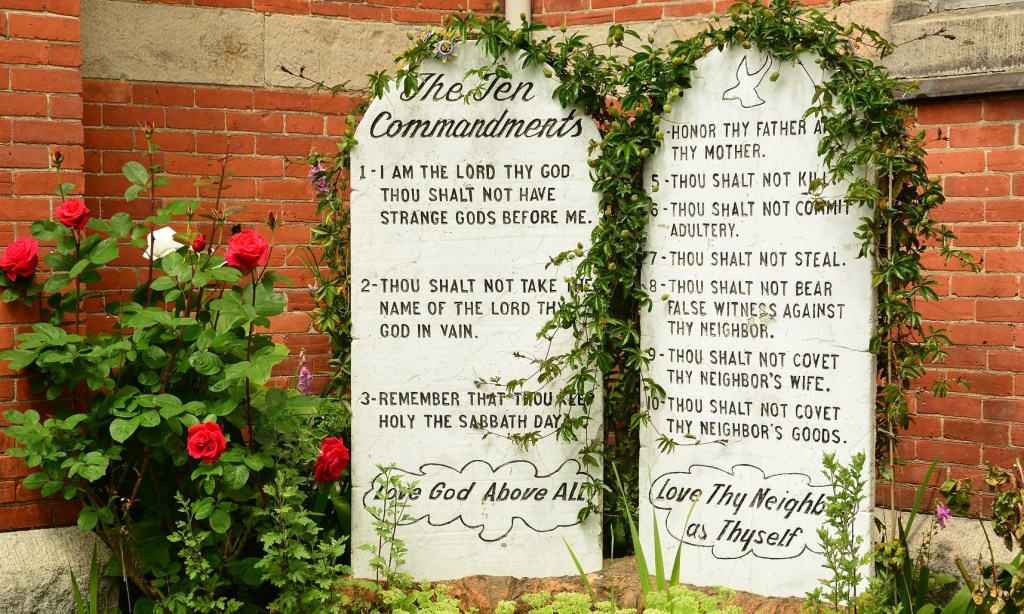
Let’s see now: morals is the distinction between right and wrong. And we just identified three moral activities which we have outlawed by legislation. Murder, stealing, and lying are also prohibited in the 6th, 8th, and 9th of the 10 Commandments (Exodus 34); so our government does agree with Scripture – sometimes.

Obviously, we can and do legislate morals; so the question is: what morals do we choose to legislate? The answer: many! We legislate (make law) many good, honorable ideas; but we also approve anti-Biblical and anti-American laws that nullify constitutional rights.

Ravi Zacharias, on his radio program titled Let My People Think, said, “The non-Christian world politicizes morality while they moralize politics.” He is correct. Some of our politicians favor good morality and truth while others outright disdain truth. What baffles me is that sometimes our leaders and judges listen to a small minority on the fringe of society and make or break laws that override the desires and morals of the voting majority. What kind of democracy is that?

We also have a built-in dichotomy in our government. Some well-known government officials can commit crimes and lie about it, and we overlook it; while other well-known officials commit crimes and lie about it, and are prosecuted. Yet other officials are prosecuted when there is no evidence for prosecution. The morality of the issue seems to depend on what side of the political fence the official is on. They moralize politics.

However, if it’s a hate crime, that is bad! Amazingly, that is a double-legislation of morals.

Friends, we legislate morals all the time. But we have a problem. Often we’re outlawing wholesome, healthy core values, while approving anti-Biblical values and morals. This goes against our national heritage and weakens our nation: both spiritually and politically.

Morals – right versus wrong – is both a Biblical and political issue. Galatians 6:7 says, “Don’t be misled. You can’t ignore or mock God and get away with it.” Therefore, if we don’t revert to using Scripture for our legislative standard as we formerly did, our national problems will become more profound than they are now. It’s time to wake up and turn back to God.

Frustration with the Unknown

I would like to talk coherently about the flu, but with so much conflicting information floating across the world, it’s difficult to know what to say. So, I’ll start by saying that this flu is a real disease.

I don’t know where you lived, but I grew up in Southern California. Flus made the rounds every year, and I probably got the flu every other year. Although I always recovered, every year thousands of people died from the flu.

The common logic for us was: “If you’re sick, stay home!” There was no mandate to push on us. If we had a cold, the measles, the flu, or any other contagious ailment, we stayed home. It’s silly, if not stupid, to go out and share diseases.

Am I afraid of the covid flu? No. I might have had two strains of it while on travel. Guess what? I stayed in the trailer until I got well. I might have gotten a third strain, and I stayed home. I understand the covid is a real sickness. But I did what I did as a kid, and in each event, I got well in record time. Also, after every trip, Carol and I self-quarantine.

Early on in the pandemic, N95 face masks were touted as being a major factor in controlling covid-19. But what do we get at the stores? These flimsy little corrugated paper things we hang in front of our face. Some folks tell us the masks mainly protect the wearer. Others say they primarily protect others. Yet others say they don’t protect anyone at all. And ….

Oh, let’s get off the mask thing. Nothing is for sure about masks, anyway.

Early on, we were told that if 75% of our population gets the shot, we can control the covid. Woops … make that a double shot. Oh, my goodness, perhaps a third round might be necessary. Now we’re talking about annual boosters. But in all instances, the injections are touted as the cure for the disease.

Oh-oh, millions of people are getting the shots and wearing masks, but the pandemic is getting out of hand again.

Now we’re being told that an apparently healthy person with no covid symptoms can make a person who is “fully-vaccinated” sick. How does that work? Aren’t the first, second, and possible third shots supposed to protect people?

For many years, it was common knowledge that when a person got sick and recovered, he or she was naturally immunized against the disease. It’s been verified around the world. Verified in the home in which I grew up, and I have nine siblings.

But now we’re told that the immunity generated from a man-made chemical is superior to the natural immunity created by human bodies after fighting off the real sickness. Incredible.

What if we’ve already had and recovered from covid-19? What if our temperature is normal? We’re told it doesn’t matter, get the injection anyway. Again, incredible. Apparently, many of our citizens never studied critical thinking. Logic is no longer part of our culture.

Covid-19 and the variants are real diseases. Multi-thousands of people have died of it. But flus have killed people for thousands of years. So let’s be wise. If we’re sick, stay home and don’t spread the illness. But let’s also tell the whole truth.

In courts, witnesses formerly were asked, “Do you swear (or affirm) to tell the truth, the whole truth, and nothing but the truth, so help you God?” Most people answered with, “I do.”

What’s that got to do with the pandemic?

The death numbers related to covid are questionable. I’ve recently seen several reports making statements like: “The provisional death count is ….”

Provisional count? We’re not sure what the cause of death was?

And “Thirty-five more people have died of covid-related diseases.”

Covid-related? What does that mean? Hmmmm …They might not have died of covid?

The main problem here is that the real disease, however it got here, has become a political football. Misinformation, misstatements, misunderstanding, and outright false statements have made the rounds from many people, and we’re frustrated with the unknown.

Publicly we don’t have many answers, yet some good guidance is being rejected.

What can I say about all this?

If you need or want medical assistance, get it. But don’t force your choice of remedies on those who don’t want them. And don’t argue about it.

But keep this in mind: fully vaccinated people are dying of covid and the variants while millions of unvaccinated people are getting sick and recovering.

So, what’s really going on?