The Calaveras Jumping Frog

I had no idea what to expect when Carol and I went to San Andreas to visit our son and his family. Our first three nights were in Angels Camp just eleven miles south.

No; that isn’t a place where celestial beings hunted and camped out. It is a town started by Henri Angell in 1848 as a gold mining town. Originally named Carson’s Creek, the town was incorporated under the name Angels in 1912 (located in Calaveras County) and eventually renamed to Angels Camp.

Although more than $20,000,000 in gold was processed there in the middle to late 1800s, one thing brought fame to both the town and a man: a story about a frog.

Sam Clemens, under the pen name of Mark Twain, was down on his luck and went to try his hand at panning for gold in the winter of 1864-1865. He didn’t do very well during his 88 days here in the California hills, but he heard a story in one of the taverns about a jumping frog. The veracity of the story is questionable; but embellishing it even further, Mark Twain wrote it up and sent it to his newspaper, The Territorial Enterprise, in Virginia City, Nevada.

That story, only 2,637 words including the title (The Celebrated Jumping Frog of Calaveras by Mark Twain), brought him immediate fame and fortune; that story became his “gold mine.”

Our son, Ron, took me to visit the site of his cabin on Jackass Hill where Mark Twain lived for almost three months. The hill received that name because at least once a week, a caravan of up to 200 donkeys with supplies for the miners in Carson Creek (Angels Camp) would stop there for the night.

Today, the main feature of the Calaveras County Fair is the frog-jumping contest. It is called the Calaveras County Fair & Jumping Frog Jubilee, and is one the longest-running events in the state of California—going back to 1893. Of course, as with any good county fair, it includes entertainment, livestock, food, music, and crafts.

The frog jumping contest is usually in the third weekend of May; and in a town of about 3,900 population, about 50,000 visitors attend the jubilee. People can bring their own frogs, or rent them from a company in town (who catch the amphibians in the local ponds). The winner of the contest each year gets a plaque and $900 in cash. But if a frog beats the world record of 21 feet, 5 ¾ inches, the owner gets a World Record Holder title and $5,000 cash. Now maybe you can see why this is a big deal in Calaveras County.

Frogs are placed at the starting line. They get three jumps. The actual distance they jump is immaterial – it’s how close the critter gets to the finish line that counts. (They seldom jump in a straight line.)

Another event that takes place is the Mark Twain Wild West Fest on the third Saturday of October. Gold Rush village is a kid’s area with fence-painting, knot-tying, a petting zoo, historic town with candle and soap-making, and more. There is gold-rush era music, and in honor of Mark Twain, a liar’s contest. That’s a real hoot!

Mark Twain was a good story-teller. In 1899 he wrote an article titled, “How to Tell a Story.” He said, “The humorous story is American, the comic story is English, the witty story is French. The humorous story depends for its effect upon the manner of the telling; the comic and the witty story upon the matter.”

Twain learned to tell stories in a dead-pan manner. The audience would be in a gale of laughter while Twain would sit there and watch them. That made it even funnier.

Mark Twain sent his story about the Calaveras County frog contest to The Territorial Enterprise in Virginia City, Nevada. I read recently that although the paper had gone out of business sometime ago, it is now back in operation. It was in this newspaper that Twain wrote, “If you don’t read the newspaper, you’re uninformed. If you do read the newspaper, you’re misinformed.”

Angels Camp is about 132 miles east of San Francisco by road, and about 80 miles southeast from Sacramento. My favorite eating establishment in town is called Round-Table Pizza, and the best ice cream place is called Yummy Ha-Ha. (I’m not kidding.)

Well, Blow Me Down!

Some folks said Blow me down! meant to hit me or knock me down; but that might not be correct. The phrase goes back the late 1700s, and is a statement that sailors said in a windstorm. A windy place in Nova Scotia was called Cape Blow-me-down, which evolved through time to Cape Blomidon.

Blow me down! eventually became a phrase used when someone was surprised. A relatively new version is, That blows my mind!

Wind is an interesting atmospheric action. It can be gentle for kite-flying; moderate for turning wind-turbines; strong can blow over trucks and trailers; or powerful such as tornados and hurricanes. The story this week is about the third group: strong winds.

Carol and I arrived in La Luz, a small town near Alamogordo, New Mexico on Sunday to visit friends, and planned to head east on Wednesday. But watching the evening news report, we learned that a tremendous windstorm was heading our way. It would hit on Tuesday and turn violent on Wednesday. We considered leaving on Thursday, but snow was forecast for Thursday night and Friday. Our last option was to leave a day early.

So, we toured the space museum in Alamogordo on Monday and toured the Tularosa Museum on Tuesday morning, then headed east up the mountain to Cloudcroft. La Luz is 4,761 feet above sea level and Cloudcroft is 8,668. It was quite a climb, but our car was up to the challenge. Pulling the trailer, I put the 6.2L, 380 HP, 8-speed engine in gear #4 and it was an easy pull up the mountain. Several other cars, pulling no trailers, had stopped beside the road to let their engines cool down, but our engine heat indicator barely moved.

We stopped in Cloudcroft to look at the scenery and have an early dinner, and the winds began greatly increasing. We hugged our friends, bid them adios, and headed east to Hobbs, NM which was projected to be on the fringe of the storm.

When we had the opportunity to watch the news, we learned that our departure was directed by the Lord. The wind blowing through one of the passes going into the Alamogordo basin reached over 100 mph. Remember: hurricane winds begin at 70 mph.

When thinking of the danger of driving in windy situations, we need to consider sustained wind and wind gusts. If the wind is blowing around 20-30 mph, gusts may reach 40 or 50 mph; and although it can be a rocky ride, it is normally safe. Wind advisories are put out if the sustained winds surpass 30 mph. But if the sustained wind reaches 50 mph, gusts may easily reach 60-75, and we may be in trouble.

The gusts are the worst part of the storm because the intermittent pressure can set up sideways trailer motion called oscillations which can cause a turnover.

Having said all that, the simple decision was: if the sustained wind is 50 mph or higher, park the car and trailer. But if we must drive, here are several ideas to consider.

  1. Drive slower: decreased speed decreases the wind pressure.
  2. Use a lower gear: more power on the drive wheels at a slower speed can compensate for some of the crosswinds.
  3. Whether car, trailer, or truck, secure the cargo: a moveable center of gravity can result in losing balance.
  4. Keep a safe distance behind the guy ahead: if either one of us goes over, we don’t want to hit someone or get hit.
  5. Back to basics: if possible, stay off the road. Losing time is less expensive than repairing or replacing the car, trailer, and cargo; and a lost life cannot be replaced.

There are other kinds of storms of life. Some of these storms are political, health, weather, financial, and interpersonal; and God sends us storms for our personal growth. Knowing a storm was about to brew, Jesus told his disciples to go to the other side of the sea (Matthew 14:22-24) because they needed to learn how to trust the Master. Read the story: it’s interesting.

Sometimes we are dragged into storms by others, and we need wisdom to handle the situation. But many times, we generate our own storms by foolishness and disobedience. An example is when Jonah tried to run from God (Jonah 1:1-4).

Whatever kind of storm we encounter, let’s stop; assess the situation; and ask God for wisdom. He will guide us if we listen. He guided us back in New Mexico.

Weather Woes

Before we begin, you need to know that we stayed on the positive side of life all through these weather woes, and you can, too. Now, on with the story.

Carol and I began the trip on July 30, 2018. Throughout portions of Colorado, Wyoming, Montana, Idaho, and Washington, we breathed smoke from forest fires, and I had to take allergy pills to reduce sneezing.

In early October, the smoke had cleared out of western Washington where we were staying, but something changed. In mid-October we felt the cold hand of winter tapping us on the shoulder, so we made plans to head south. By November 1, we heard that snow was on its way, and we started driving.

Heading down through Oregon, snow was no threat, but rain was visiting us often. We had some days of sunshine, and we enjoyed the trip, but rain was becoming much more prevalent. We cut the scenic trip short and headed south to sunny California.

On November 17, our son and his family moved to Mountain Ranch, just sixteen miles east of San Andreas, California, so we went to visit them. Now in California, we were south of wintery Washington and rainy Oregon. We are not classified as Snowbirds, but we do prefer a little warmer and drier climate.

I grew up in California, and winters on the golden coast were normally mild. For example: In February of 1993 we drove to Southern California for my grandmother’s funeral. Our ten-year-old son, Michael, said, “Dad, a California winter is like a New Mexico summer!” I laughed and said, “You’re right.” (Our home in New Mexico was at 7,830 feet above sea level.)

Back to the trip.

I had planned to stay in Northern California only through December. But the pastor of the church, asked me to teach on the Beatitudes (found in Matthew 5:1-12), so we stayed another month. Our son had a full-hookup on his property for our trailer, so we got settled in and really enjoyed the time with their family.

California had been in a drought for a number of years, so we were surprised to hear that a heavy rainstorm was on its way. That would be okay because, based on history, it wouldn’t last long, and the state needed the water.

But we got pounded! Rain came fast and furious. Any roof that could leak DID leak, some houses slid into rivers, and mudslides had to be removed from many streets. Our trailer was rocked by rain and heavy wind, but we survived the onslaught.

Then my cell phone warned me: “Weather Alert – Winter Advisory in effect for the next 48 hours. Snow accumulation of two to four inches.”

Our son said that might be an exaggeration because they haven’t received much snow for about 12-15 years. Good. Nothing to worry about.

But within the next 36 hours, we received 16 inches of heavy, wet snow. California needed the snowpack for its water supply, but it made things difficult for us. Snow-laden trees toppled onto power lines, and electrical power was out for almost a week. I made plans to move south as soon as I completed the Bible series. (Power was restored, but with damaged trees, branches kept falling and power was intermittent for two more weeks.)

By February 5, the snow had melted enough to allow me to pull the trailer off the property and down the mountain. So, with another winter advisory set for February 7, we pulled out on the 6th, and we headed for Bakersfield, California.

We wanted to stay in Bakersfield for two nights, but a portion of Interstate-5 called Tejon Pass is over 4,100 feet, and snow was predicted in two days. We stayed only one night.

We reached Oak Grove, CA (adjacent to Palomar Mountain) where my sister and brother-in-law, lived; and breathing a sigh of relief, I said, “We are finally out of the weather.”

That was a misunderstanding!

On February 14, Valentine’s Day, our area got the heaviest rainstorm on record and received over six inches of rain in two days. Roads washed out and several bridges were ripped up.

You might understand that, as soon as the dirt road was repaired, we headed further south to San Diego. Yes, we visited the zoo and Sea World. We had sunny skies for the next week – and hit the road to Phoenix before the next storm descended.

Where am I going with this tale-of-weather-woes? Simply this: we cannot always escape problems – weather or otherwise. Whatever we’re facing, we must pray for guidance and wisdom. 1 Peter 5:7 tells us to give our worries to the Lord because he cares for us. If we keep a cheerful outlook and trust the Lord, He will guide us.

I Won’t Go Back to This Church

Several years ago, Carol and I visited a church in California. It was the largest church in town with four weekend services: one Saturday evening and three on Sunday. I was really looking forward to hearing the pastor to see what was drawing the people.

One of the Sunday services was designated for the youth, and one parishioner said, “You don’t want to visit that one – it’s the loudest kid’s service in this part of the state!”

Well, that explained one drawing card. It’s too bad that neither the kids nor the church staff understand the destructive effect that high decibel levels have on our physical bodies – including our heart and nervous system.

Here is some information regarding noise levels measured in decibels (db).

Calm conversation level between 2-3 people is around 50 db.

60 db is 10 times louder than 50.

70 is 100 times louder than 50.

80 is 1,000 times louder than 50.

90 is 10,000 times louder than 50.

100 is 100,000 times louder than 50.

And so on.

Hearing damage starts at a continuous 80 decibels.

We hear about 85 dbs from locomotives going 45 mph about 100 feet away.

Motorcycles produce about 95-100 dbs.

Chainsaws produce about 105 dbs.

Many churches try to stay between 95–115 dbs during their music.

Clubs and concerts try for 105-125 dbs.

Jet engine at takeoff is about 140 dbs.

150 db can burst the eardrums.

185 db can kill a person.

Hearing degrades dramatically after only two minutes of exposure of 110 dbs without ear protection,

I also found that the church has many weekly and monthly games and activities for kids; various support groups for people; outings for men, women, and senior’s groups; and a school. The church is serving as an overall social organization for a large part of the community with some of the kids’ activities mirroring those provided by the non-Christian world. At least some hurting folks are receiving help, and that’s good.

We discovered something else interesting about that church. The pastor openly proclaimed in his message that we do not need to believe the Bible; we don’t need to live by any moral rules – either health or Biblical; and we don’t need to adhere to Bible doctrine. We don’t need any of that in order to go to heaven. How we live – be it as a prostitute, liar, whatever – has no bearing on our relationship with God.

I communicated with the pastor by email later that week to learn more of his point of view. He informed me that we can live any way we want to, by any code of ethics we choose, participate in any activity we want – be it evil or holy – and believe anything – Biblical or not – that we want to. It won’t make any difference in whether or not God will accept us, because God has already chosen us for heaven or chosen us for hell. Period. And there is nothing we can do about it.

I asked him if we should believe what Jesus taught in Scripture, and he said we don’t have to.

He asserted that it doesn’t matter whether or not people repent and turn from their sin and live a holy life, because if God didn’t choose them, they would go to hell anyway. Obeying the Lord and living for the Lord is not necessary.

I will state emphatically: That is not the God I find in the Bible. And that pastor does not represent Jesus who died for us. John 14:21 says, “Those who accept my commandments and obey them are the ones who love me. And because they love me, my Father will love them. And I will love them and reveal myself to each of them.”

John 3:16 says, “For God so loved the world, that he gave his only begotten Son, that whosoever believeth in him should not perish, but have everlasting life.”

2 Peter 3:9b says, “…But God is being patient with you. He does not want anyone to be lost, but he wants all people to change their hearts and lives.”

I believe that pastor is confused and is defrauding the people. It’s a large social club, and I am concerned for the people attending those social clubs.

The Mighty “A”

I’ve visited many forts in the USA. Among them are an underground bunker near Boston, Massachusetts, Fort Sumter in Charleston Harbor in South Carolina, and Fort Worden near Port Townsend on the Washington Peninsula. Forts were strategically placed on our borders for training and for protection in wartime. Some forts were ready for battle during both World Wars in case the Germans or Japanese attacked the mainland.

But land-based forts are for defense, and are useless in battles we fought across the seas. We needed portable offensive forts: forts that could be hauled across the world so we could take the fight to the land of those attacking us. Our first serious effort to build a floating fortress was in 1892 when we built the USS Texas. That was a good start and we learned a lot, but we needed something more substantial.

The US experimented with several ideas from 1894 through 1932, and we finally succeeded in designing and building fully decked-out citadels. However, because of a tactical error, eight of these sea-going fortresses were sitting-ducks in Pearl Harbor on December 7, 1941 and all eight battleships were bombed. The USS Nevada, USS Tennessee, and the USS Maryland were repaired and returned to service the next year. Three others returned to service in 1943-1945, but we needed new and improved fighters.

Interestingly, no US battleship was sunk in any war after December 7, 1941.

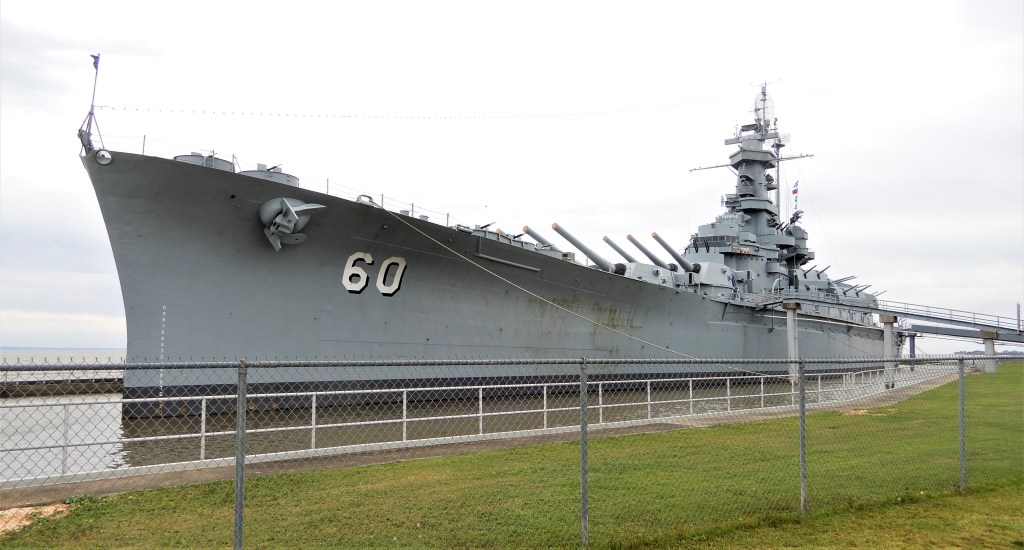
The USS Alabama was one of the new sea-going fortresses coming on line, and was commissioned in February of 1942 prior to the battles of the Coral Sea and Midway. The Alabama, weighing about 45,000 tons and had a crew of 1,793 men, was a fast battleship that could cruise at 27.5 knots (32 mph), and could sail for 14,773 nautical miles (17,000 miles) before refueling.

The ship bristled with firepower. It had 20 five-inch (inside diameter) guns firing 54-pound projectiles, and had 46 anti-aircraft guns. Its massive fire-power came from 9 sixteen-inch (inside diameter) guns which fired projectiles (large, bullet-shaped bombs) weighing an average of 2,400 pounds. These fortresses didn’t need to be near the shore, for they could hit the enemy 24 miles away with these weapons. Amazing!

For weight comparison to the sixteen-inch projectiles: a Chevy Spark (automobile) weighs about 2,269 pounds and a Nissan Versa weighs about 2,400 pounds.

The ship had a belt (steel-plating) at and below the waterline that was over a foot thick to deflect the concussion of near-miss bombs, and deflect or dull the blast of torpedoes.

The USS Alabama has seen battle action around the world: throughout the Atlantic, the Mediterranean, the Philippines, and all through the Pacific Ocean. But its legend continued even after the war. In 1947 it was taken to the Puget Sound Naval Shipyard in Bremerton, Washington to await further orders. The USS New Jersey was the only battle wagon activated for the Viet Nam war, so the Alabama was decommissioned. In 1964 it was towed to Mobile, Alabama and became a floating museum. Yesterday I met several folks who donated money for that effort.

But there’s more to the Mighty “A” to know.

The Alabama is also a movie-star – although, uncredited. It had a major role in the 1975 movie Movin’ On. It was used in the 1988 miniseries War and Remembrance representing the USS Iowa. Nicolas Cage starred in USS Indianapolis: Men of Courage with the Alabama posing as the USS Indianapolis. And it was used in most of the battleship scenes in the 1992 film Under Siege.

I’ve been on aircraft carriers, cruisers, destroyers, frigates, PT-boats, tug-boats, and many others. But I had never been on a Battle-Wagon. Seeing the ship often as I drove by on Interstate 10, I always wanted to visit it, and decided that I would … someday.

That day finally came on April 25, 2019.

As I walked up the gangplank, I said the traditional, “I request permission to come aboard.” The tour guide was a retired Master Chief Petty Officer. Smiling, he responded, “Permission granted. Welcome aboard, Chaplain.” We both laughed and saluted.

I walked every available passageway from stem-to-stern. I slowly walked the main deck and recalled what our US Navy personnel experienced in battle. I honor and admire them for fighting to maintain our freedoms.

With the advent of jet planes, rockets, and missiles, Battleships are now obsolete; but I am in awe of this magnificent ship. I am grateful to the Mobile, Alabama city fathers for preserving this historic memorial – the Mighty “A” – for future generations to experience.

Being Thankful

When I was a kid, Dad would ask us many times what we were thankful for. But on Thanksgiving, we had a family tradition – in addition to having turkey dinner.

Before I get into the tradition, my favorite part of the meal was mom’s mashed potatoes and gravy. Mmmm-mmmm-mmmm! They were good!

Oh, maybe my sisters, Gena and Janice made the mashed potatoes. Yeah, that’s right. Mom started the tradition, dad showed us how to make it without lumps, then Gena and Janice continued. It was a family effort. I can ask God to thank mom for me because she’s in heaven with Him, but I’ll tell my sisters “Thank You!”

The turkey thighs were my next favorite part, with marshmallow-covered sweet-potatoes coming in a close third. I never developed a liking for cranberries, but I would take one teaspoon of the stuff to make mom feel good.

Pumpkin pie and vanilla ice cream topped it off – but sometimes we waited for several hours to let the main meal settle. Then, the pie and ice cream served as a second, special meal!

 After the scrumptious meal, we stayed around the table and each person shared a memory of something that happened that past year for which he/she was thankful. When one of my siblings was thankful that Christmas was coming soon, dad said, “We’ll get to that another time.”

When it was my turn, it was sometimes difficult for me, because emotionally I felt like I was taking a school test: under pressure, I froze up. I broke out in a sweat and couldn’t think. After what seemed like an eternity, Dad would ask, “What are you happy about?”

Now THAT I could answer because it didn’t feel like an interrogation. I was happy about the meal we just ate. I was happy that it rained that week. I was happy that Jesus kept us out of a car accident when we were going to Ramona. I could think of a lot of things if I didn’t feel like I was under the spotlight.

It’s interesting how just changing the words in the question released me from the feeling of a dreaded school test.

With twelve of us around the table – ten kids plus dad and mom – it took a while to complete the tradition, and that was good! Too many times we would eat, clean up, wash-n-dry dishes, and continue on our busy way. But the tradition kept us around for a while and helped us interact as a cohesive family unit.

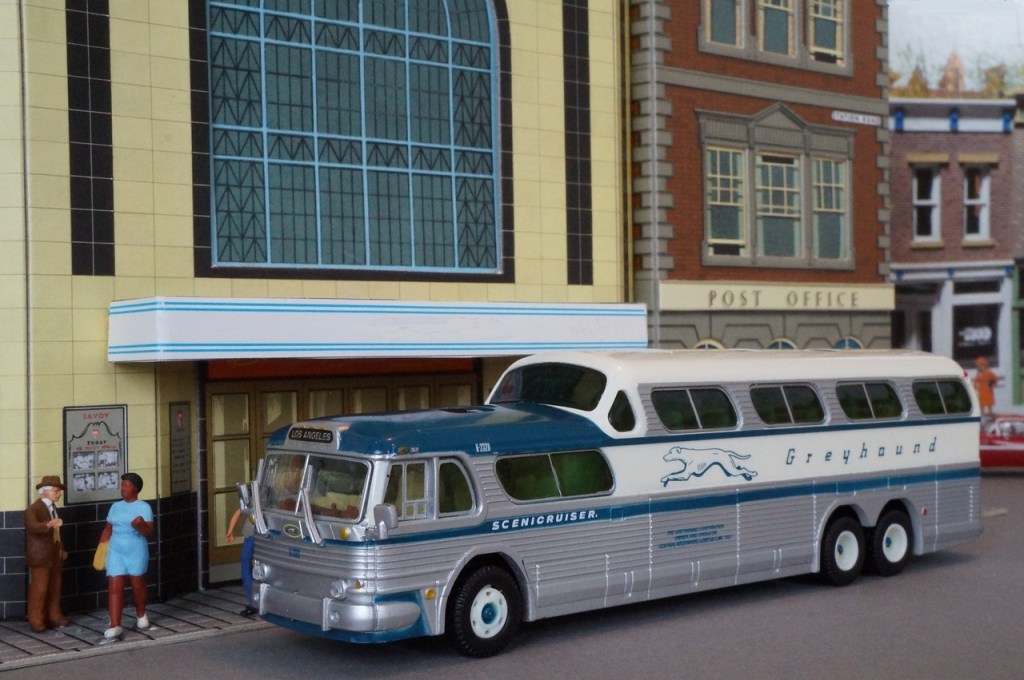
An example of that is when we, as a family, went to the Greyhound Bus Depot in San Diego to greet an incoming missionary. As dad was getting information from the man, my sister Janice came around the corner.

“Janny!” I hollered; and ran to greet her with a hug.

“How long has it been since they saw each other?” the missionary asked.

Looking at his watch, dad replied, “Oh, about 10 minutes.”

“Ten minutes? And they act like that?”

“That’s what we do – we love each other and greet each other with hugs.”

Love and acceptance is another tradition we always tried to build. One person told me, “It was probably an act because you didn’t really love each other – did you?”

All I could say was, “It was – and is – real for me. I can’t speak for the others; if it was only an act for them, that’s their problem. But as long as it is meaningful for me, it keeps me emotionally and spiritually healthy.”

Wouldn’t you prefer to be around loving and grateful people more than around grumblers and complainers?

It’s a fact that, as a class of people, loving and grateful people are healthier than others. That brings three Scriptures to mind.

Philippians 2:14 says, “Do everything without complaining or arguing.” That includes grumbling. Proverbs 17:22 says, “A happy heart is like good medicine, but a broken spirit drains your strength.” And Romans 8:28 tells us that if we cooperate with God, He can actually bring good out of negative situations if we trust Him.

A happy heart refers to a joyful person; one who normally doesn’t let disappointments get him down. And a broken spirit refers to a crushed or depressed attitude. Not only does depression drain the depressed person of energy, it also drains the energy of people around him.

So, become a thankful person, and make your life easier.

Publishing Your Book the Easy and Inexpensive Way

Have you wanted to write a book but didn’t know how to start? Does the idea of writing a book seem a hard or difficult thing to do? Have you found it difficult to get information about how to get a book published?

You’ve thought about it … you’ve dreamed about it … you might have prayed about it. But now P&L Publishing and Literary Services can help you do something about it. We understand the difficulties because there’s a lot to consider. Writing is an expression of who you are, what you believe, and what you want to accomplish. Writing and publishing are important investments of your time, and we can help you make the best use of it.

The booklet I wrote a few months ago may be just what you’re looking for. The title is Publish Your Book the Easy and Inexpensive Way. When I was asked to speak at a conference, I wrote it so those attending the conference could have a way of remembering more clearly what I taught. This booklet will help dispel the mystery of getting your book in print and out to your readers.

I am S. Eugene Linzey, and I’m the president of P&L Publishing & Literary Services. My staff and I can help you turn your message into a book so it is available to people who want to read it . . . who need to read it.

What are your passions? What flows through your mind every week, if not every day? What do you wish people knew? What would you tell others if you had an audience?

By writing a book, you have an opportunity to impact hundreds . . . maybe thousands . . . of lives. Writing and publishing is your escalator to the world. But how do you even get started?

P&L Publishing & Literary Services was created in 2019 for four basic reasons.

  1. Definitive information about publishing is sometimes hard to get.
  2. Prices are often too high.
  3. Many companies won’t communicate by phone, and it’s difficult to resolve some issues by email.
  4. Waiting many months to finish the job is too long.

Therefore, P&L was formed to give an excellent product at a much lower price and a lot faster than many other companies. We also know that writers are more comfortable and feel more secure if they can talk with the people who publish their books.

We explain the process and spell out the fees up front, and our clients enter the publishing agreement with most questions answered.

But P&L’s mission goes far beyond that.

Many folks have a desire to share their stories, their personal experiences, and their views on life. People are creative, and through their writings they open their readers to new dimensions. And since all our staff members are writers, we know how to make the publishing experience a pleasant one.

Reading informs, empowers, and enables people to learn about life, and writing provides the reading material. You’ll be surprised about the impact your book will have on someone’s life!

Our goal is to make your journey as satisfying and meaningful as possible. We want you to be 100% pleased with the process and with your book.

This booklet will answer many of your questions and introduce you to our staff. But you will most likely have other questions, so please feel free to email or call us at any time. If we’re busy with a client, we will do our best to get back to you the same day.

Come with us on a journey of fulfilling your dream of publishing your story or your message. We’re here to help.

You can type in: S. Eugene Linzey Publish Your Book the Easy and Inexpensive Way, or https://www.amazon.com/Publish-Your-Book-Easy-Inexpensive/dp/B0BVT8KWN2.

C. M. Russell Museum

In September of 2018, I took Carol to see the 201-foot-long Roe River in Great Falls, Montana, and the Giant Springs that feeds the river. My brother, Paul, and I visited the river in June of 2016, and I was anxious to see it again. (Visit http://www.paullinzey.com)

Returning from the river and springs, Carol saw a sign and excitedly said, “Turn around!”

An obedient chauffeur, I turned around and found my way back to 400 13th Street North. I could hardly believe my eyes. I blurted out, “The Charlie Russell Museum? I didn’t know it was here! You want to go in?”

“I pointed it out to you, didn’t I?” (Good point.)

In Southern California I learned to know the artist as Charlie Russell, but perhaps most of you know him as C. M. Russell. Also known as “Kid” Russell, Charlie was perhaps the greatest painter and sculptor of Western America.

Charles Marion Russell was born in St. Louis, Missouri on March 19, 1864—a year before the American Civil War ended; and he apparently had the desire to sculpt and draw as a child. (Some of my friends say it was not a Civil War, but the War of Northern Aggression. Other friends call it the War of Southern Secession. Whatever……)

Through the stories of his grandmother (Lucy Bent Russell – her brothers were Charles and William Bent who founded Bent’s Fort in Colorado), Charlie became infatuated with The West, and when he was sixteen years old his parents allowed him to head west to work on a sheep ranch in Montana—often called Big Sky Country.

He became a cowboy; but no matter what you saw on television, being a cowboy was not all “Yippie-ty-yi-yo, Get Along, Little Doggies.” It was a rough life, but Charlie stayed on and learned almost everything there was to know about the job. He often sketched scenes, painted, and made models of wildlife to pay for his room and board.

Gifted artists are not usually great businessmen; therefore, he had difficulty paying bills and keeping food in the pantry. But when Charlie married Nancy Cooper in 1896, she became his manager. When Charlie might have settled for $25 for a painting, Nancy knew how to get several hundred for it. With Nancy as his manager, Charles Russell entered the national limelight.

Charlie’s memory was amazing, but he frequently used props and models. Sometimes Nancy and another friend would dress up in Native American costumes to model for him. He would often create a quick reference sketch then join in the fun and dress up as well. His studio was filled with Native American and cowboy tools, jewelry, clothing, etc., which he used for reference.

Charles M. Russell died of congestive heart failure on October 24, 1926.

Arriving at the museum in Great Falls around 1:30 pm, time escaped us as we visited the gallery. The Charlie Russell Riders Sculpture Garden in the front of the museum is beautiful. And once inside the gallery, we were amazed with the paintings, sketches, sculptures, and carvings! Even the model stagecoach looked realistic.

Charlie was observant! Seeing what most others glossed over, Charlie saw the beauty in a galloping horse; sage brush in twilight; sunset over the rugged plains; and the fearsome look on the face of the Chief sitting on his pinto without a saddle.

He had a memory for detail that far surpassed most people. A gunfight at a saloon with rowdy cowboys riding their steeds on the boardwalks became a beautifully detailed painting. And looking at another painting, I could almost feel the pain in the cowboy’s wrenched back as he tried to “break the bronco.”

The museum is very well laid out as it reveals the evolution of Charlie’s life: professional as well as personal. We found high-quality gifts in the C. M. Russell Museum Store. The personnel are friendly, informative, and a joy to be with. I learned a lot as I spoke with them. In 2009 the Wall Street Journal called the museum “One of America’s premier Western art museums,” and I fully agree.

As we drove back to Dick’s RV Campground, I marveled at Charlie Russell’s abilities. Almighty God is a great and loving Creator. I believe that God gives everyone some creative ability or talent at birth, and it’s up to us to discover what it is and develop it. Charlie did. I encourage you to visit the C. M. Russell Museum at 400 13th St. North, Great Falls, Montana. You’ll enjoy it.

Let Freedom Ring!

After the eight-year War of Independence ended in 1784, the colonists were finally free! Well, I suppose they weren’t colonists any longer; they were citizens of a brand new country. But they were free!

They were free from tyranny. Free from taxation without representation. Free from the hated Redcoats! And free from a host of other problems: both real and imagined.

But what were they free to do? They were free of military oppression and free to operate their own businesses. What else were the colonists – I mean, Americans – free to do?

Political freedom was a major item. Not desiring any over-arching government, they wouldn’t bow to any state but their own. This was a problem because there were thirteen new governments to consider. So, the former colonies – now sovereign states – agreed to a limited government under a federation called The United States of America. To them that actually meant The United Countries of America.

They were free to tax themselves with “in-house” representation. That was a fight! The local towns didn’t want the states to tax them, and the states didn’t want the feds to tax them. They were also free to print their own money. Oops … that didn’t work too well. Each state created its own currency, with some states having several currencies. Banks issued their own money, and by 1836 over 1,600 banks were issuing thousands of varieties of paper money. Many of them were not “worth a continental.” Amazingly, standardized currency was not established until 1929.

How about freedom of religion.

In order to have a workable government, compromises are made. However, these concessions need to be in the civil arena; not in matters of faith. In colonial legislation, Thomas Jefferson said in the Virginia Statute for Religious Freedom (written in 1779):

“No man shall be compelled to frequent or support any religious worship, place, or ministry whatsoever … nor shall otherwise suffer, on account of his religious opinions or belief; but that all men shall be free to profess, and by argument [discussion] to maintain, their opinions in matters of religion, and that the same shall in no wise diminish, enlarge, or affect their civil capacities.”

Jefferson made sure the First Amendment carried the same idea: “Congress shall make no law respecting an establishment of religion or prohibiting the free exercise thereof….”

President Eisenhower said on January 20, 1953, “History does not long entrust the care of freedom to the weak or the timid.” And on November 25, 1981, the United Nations General Assembly passed the “Declaration on the Elimination of All Forms of Intolerance and of Discrimination Based on Religion or Belief.” (This was, however, controversial.)

With that in mind, why is our government prohibiting the free exercise of the Christian religion? Why are we disregarding our religious freedoms that are protected in our own national documents? I am referring, of course, to openly reading and teaching from the Holy Bible.

When Scripture teaches that marriage is between a man and a woman, why do we cower before those who disagree? Why does our government pressure us to turn our back on our faith and turn against the Bible? Without a constitutional amendment, Congress does not have the right to revoke our constitutional rights of freedom of speech and freedom of religion and deny my right to preach the truth as found in Scripture. I don’t hate homosexuals; I have worked alongside several, and some of my friends are homosexuals. There is no hate involved when I tell them that the Bible teaches against homosexuality. It’s a statement of fact. But hate is involved when “gay” people angrily hurl insults and epithets at me.

It is unconstitutional, immoral, and unethical to allow the LGBTQIA2+ person first amendment rights yet disallow those with traditional Biblical beliefs the same rights. Everyone should have the freedom to speak their mind in the same way without fear of reprisal. And whoever dares to limit or eliminate one person’s freedom does damage to everyone’s freedom.

Proverbs 25:26 says, “A good person who gives in to evil is like a muddy spring or dirty well.”

     Christians have the same guaranteed, blood-bought, constitutional freedoms to teach and worship according to conscience, and to express our beliefs as does anyone else – including the right and obligation of teaching the Biblical view of life. To deny that freedom would be discrimination, bigotry, intolerance, and anti-American. And remember, even the UN denounces intolerance – at least, on paper.

So respect those with whom you disagree; live according to Scriptural principles; and give thanks for our national and religious freedoms.

Billy Graham – God’s Ambassador 

I’ll never forget the time years ago that I met Billy Graham in Los Alamos, New Mexico.

Billy’s sister-in-law, Rosa Montgomery, and her husband, Don, lived in Los Alamos and we visited them often. Rosa had been my wife’s Bible Teacher back in the 1950s, and Don worked at the Los Alamos National Laboratory.

One day Don called me and said, “Billy’s here in Los Alamos and will be speaking in the Lab’s main auditorium tomorrow. I want you to sit with me and meet him after his talk.”

“He can’t preach at the Lab – what’s he going to talk about?”

“His topic is ‘One Man’s View of the World’s Situation Today’, and I’ll pick you up at 8:15 in the morning.”

“I’ll be ready” I responded.

For fifty minutes Billy Graham spelled out the problems that the world – not just the US – was facing, and he made it clear that there appeared to be no resolution. But then, not allowed to preach, he ended with two statements that wrapped it all up: “Of course, the answers to these problems are found in a relationship with the Lord, Jesus Christ. God bless you.”

The 800 plus people in the auditorium gave him a thunderous, standing ovation, and began gathering around him. Everyone wanted to shake hands with the famous Dr. Billy Graham. “Great talk, Dr. Graham.” “Thank you for coming sir.” “It is an honor to hear you, Mr. Graham.” And the accolades continued.

“Come up with me and meet my brother.” Don said. So we got in line.

“Billy, this is Gene Linzey, my good friend who also works here at the Lab.”

I looked up at this big man, standing six feet, six inches tall. I am only 5’8”. What could I say that hadn’t already been articulated? So I simply said, “Bless you, Doc.”

I’ll never forget it: He smiled, wrapped his arms around me, and gave me a bear hug. “Bless you, too, son.”

Billy probably didn’t remember me later, and that’s okay. He didn’t have time to remember everyone he met; he had a much broader vision of life. As Vice President Mike Pence said, “Billy Graham’s ministry for the gospel of Jesus Christ and his matchless voice changed the lives of millions.”

Throughout history, God called various people to proclaim the message of repentance, salvation, reconciliation, security, and peace. You might remember several of those names: Noah, Moses, Isaiah, Jeremiah, John (the Baptist), the Apostle Paul, Luther, Charles Finney, D.L. Moody, and Smith Wigglesworth. And God called William (Billy) Franklin Graham, Jr. to join that elite group.

Russell Moore, president of the Ethics and Religious Liberty Commission of the Southern Baptist Convention said, “Billy Graham was, in my view, the most important evangelist since the Apostle Paul. He preached Christ: not himself, not politics, not prosperity.”

However, God used Billy in the social fabric of the world. In spite of powerful opposition in the 1960s, he decided not to preach to segregated audiences any longer. And surprisingly, President Johnson awarded Billy and Ruth the Congressional Gold Medal in 1966. Billy also wrote 33 books to help people understand life with Christ and life in heaven.

Russell Moore continued, “What Billy Graham taught us is all summed up in the invitation hymn … ‘Just as I am, without one plea, but that Thy blood was shed for me.’”

Admitting that “I am just a sinner, saved by grace,” Billy Graham said, “My one purpose in life is to help people find a personal relationship with God, which, I believe, comes through knowing Christ.”

But he did more than that. As God’s ambassador, Billy dynamically lived for Jesus Christ. Robert Morris, founding pastor of Gateway Church in Dallas said after Billy died, “Rev. Billy Graham was one of the most faithful followers of Jesus. He made a huge impact in my life, and even led my wife, Debbie, to the Lord. This world will miss him, but we celebrate that he is now with the One he loved so much.”

The love of his life on the human level was his beloved Ruth. Married for 64 years, Ruth died in 2007. I suppose we can say: Billy and Ruth are together again. And I am sure he will not be sitting on a cloud playing a harp; for I believe God has more for Billy Graham to do in heaven. Leaving this life is merely the transition for what’s to come.

Bless you, Doc.