Commander Fuchida Led the Attack

“Sweetheart, my sister just called. She wants to take us four sisters on a sisters-trip. She wants us to go next month. What do you think?”

 “That’s wonderful, Precious! Where are you going?”

“HAWAII!”

“You have to visit the USS Arizona Memorial in Pearl Harbor. That’s a must!”

“We have a month to plan our trip,” Carol responded, “but the USS Arizona will definitely be included.”

That was in June of 2003, and they had a marvelous time!

Years ago in New Mexico, three people who were protesting the bombing of Hiroshima and Nagasaki challenged me about my emphasis on remembering Pearl Harbor. They said, “Pearl Harbor was nothing compared to what the US did to Japan!”

I responded, “You have it backwards. The reason it’s important to remember December 7, 1941 this: If the Japanese hadn’t attacked Pearl Harbor, the US would not have dropped the bombs on them. Knowing history helps us to keep things in perspective.”

Believing their gods declared that Japan would control the world, Japan was eager to expand its empire. However, the United States stood in its way, so Japan decided to knock us out. Their initial targets were our three aircraft carriers they thought were anchored in the harbor. But Admiral Nimitz sent them out to sea, and the catastrophe Japan accomplished in Hawaii did not destroy our fleet – and didn’t knock us out! (I don’t have time in this article to discuss Japans’ previous brutal and bloody campaigns in China and elsewhere.)

Although the attempt might have been made, the Japanese did not inform us about their declaration of war prior to the attack, and an unprovoked attack on American soil is not something we solve by verbal negotiation! That’s why President Bush and the US Congress (both Democrats and Republicans) responded as they did after September 11, 2001.

Japan had a long tradition of opening hostilities by surprise attack. The problem in America was that, as US-Japanese relations worsened, we ignored Japanese tradition and her history. (We keep making the same type of mistakes in the Middle-east today.)
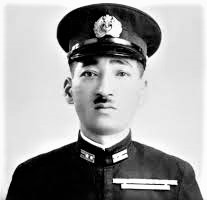
Commander Mitsuo Fuchida was selected to train the pilots and lead the air attack on Pearl Harbor. A great tactician with a brilliant mind, Fuchida did his job well and shouted into his microphone, “Torá! Torá! Torá!” (Torá means Tiger; but is also an acronym for “totsugeki raigek.” That means “lightning attack” which denoted a complete surprise attack.)

However, as mentioned, the aircraft carriers were not there. Even as Japan celebrated the great victory, Admiral Yamamoto became deeply concerned. Although it has never been verified that he said, “I fear all we have done is to awaken a sleeping giant and fill him with a terrible resolve,” (as stated in the movie Torá! Torá! Torá!), Admiral Yamamoto knew Japan would not be able to conduct a Pacific naval war with America for much longer than six months.

But Commander Fuchida was exhilarated! As Gordon W. Prange said on page 37 of GOD’S SAMURAI – Lead Pilot at Pearl Harbor, “Years would pass before Fuchida understood that he had left behind more than smashed ships and aircraft and dead and wounded men. He also left behind a nation welded together by the fires he and his men had set—a United States that would not rest until the Japanese had paid in full for their mornings work.”

And the United States certainly did respond!

That devious and reprehensible act on December 7, 1941 forced the US populace to suddenly move from an isolation mentality to a war mentality, and that move sealed the doom for the Japanese aspirations for empire-expansion.

The focal point today for many of us regarding Pearl Harbor is the USS Arizona which was sunk intact with up to 1,117 sailors on board.

But I have another point to make.

On April 14, 1950, Captain (promoted from Commander) Mitsuo Fuchida met his Maker.

No, Fuchida didn’t die then – he met Jesus Christ and became a Christian. (He died May 30, 1976.)

Fuchida, the fearless, outspoken warrior read a pamphlet by former prisoner-of-war SSgt. Jake DeShazer – one of Doolittle’s Raiders who bombed Japan on April 18, 1942. DeShazer was captured and treated cruelly by the Japanese for forty months. Fuchida also read about Peggy Covell’s missionary parents who were murdered by the Japanese. But DeShazer and Peggy had totally forgiven their former enemies.

Not understanding the difference between war and personal cruelty, these stories intrigued Fuchida. He then read the New Testament to see what changed DeShazer’s life from bitterness to forgiveness, and what helped Peggy to let go of her deep sorrow and forgive her enemy. As Fuchida read the Bible, he began to understand life more accurately. And that improved understanding included realizing his world view was totally wrong.

Asking Jesus to forgive him, Mitsuo Fuchida’s life was also changed, and he became life-long friends with his former enemy: Jake DeShazer. Dedicating the remainder of his life to Jesus Christ, he became an evangelist and introduced many others to our Lord.

It is Jesus Christ Who can turn bitterness to forgiveness, despair to hope, sorrow to joy, and hatred to love. God did it for the man who led the attack on Pearl Harbor, and He can do it for you.

Lesson from the Flock: Wisdom

Chickens are curious creatures: they want to get into everything, fly over anything their limited flight ability will allow, and go where no chicken has gone before. But while they will run from a person who is trying to catch them, and run from another animal coming at them, their little minds cannot understand the inherent danger involved in leaving the protection established by their keeper.

The birds in our flock cluck their way around the yard as they scratch for bugs, hop onto the trailer, crawl under the BBQ grill, and fly up to look into our windows. But what got my attention was when I found three hens sitting atop the gate of our chain-link fence. Obviously, their wings are getting stronger. (This took place a week before we were given Elona – the fourth pullet.)

“You might need to clip their wings” Carol prophetically intoned. I shouldn’t have been surprised the next day when I went out to feed them, but found only Fred – the rooster.

Oh, I forgot to mention the names of the pullets. The bird with thin white feathers along her neck is Whitey. The one with a dark red neck on top a lighter colored body is Red-Head. The even-colored bird is Goldie. And, as I said, the rooster is Fred. (Don’t ask – I don’t know why.)

As I said, the three girls were gone. Carol reminded me that, when I found them, not to attempt to chase them back into the yard because with their non-rational reactions they will scatter like cockroaches – creating a ruckus in the process.

I found them in the neighbor’s front yard and called them. Getting their attention, I dropped grain – which they dearly love – behind me as I walked toward the gate. Carol was right. When they saw the grain falling from my hand, they ran to me and willingly gobbled the grain as they followed me home. The situation reminded me of the Pied Piper, but my motives were good.

The four birds have a quarter-acre to roam, eat, run, fly, scratch, lay eggs, fuss with each other, eat more, cluck to their heart’s content, and enjoy life. So why do they spend an inordinate amount of time at the gate looking out? Within the yard, they have all they will ever need. They are safe from all kinds of predators … and cars. Yet with their half-inch-long brain, there is no way they can understand the dangers outside the fold. Neither safety nor danger enters their little minds, so they roam wherever they feel like it at the moment.

Surprisingly, I know some people who act in the same irresponsible manner – and they have a three-pound brain. So, the problem doesn’t lie in the size of our brain, or even with the ability to rationalize; but with wisdom and understanding.

Wisdom can be defined in many ways. One definition is: the soundness of an action or decision with regard to the application of experience and knowledge. Another definition is: the ability to apply what I have learned to life’s situations. Some folk say wisdom is common sense. Properly understood, I agree.

But wisdom depends on something else. Proverbs 9:10 (KJV) says, “The fear of the LORD is the beginning of wisdom: and the knowledge of the holy is understanding.” The NCV says, “Wisdom begins with respect for the Lord, and understanding begins with knowing the Holy One.”

As the space shuttle needs a base from which to launch, and as a building needs a solid footing, wisdom needs a firm foundation. So Proverbs 9:10 informs us that knowing, respecting, revering, and obeying God is the foundation upon which wisdom is built. The emphasis is on obedience. Sacrifice was the highest form of worship in the Old Testament, but I Samuel 15:22 tells us that obedience is far better than sacrifice.

God gave humans our three-pound brain to operate our bodies. Within that brain, our mind thinks, analyzes, and ponders; but wisdom goes beyond that.

Wisdom enables us to see through problematic situations; to understand and heal wounded relationships; to formulate a plan of action. Wisdom enables us to avoid hurting others and helps us to understand and love more completely. Wisdom enables us to accomplish our God-given goals. Wisdom helps us to understand Who God, what He desires of us, and to obey Him. As we remain obedient to the Lord, He grants us wisdom to understand and enjoy life.

The chickens finally learned to stay home. In like manner, we need stay close to God.

Who Should Be Thankful?

Mr. Linzey,

I read your columns, and I can figure out what you think about Thanksgiving Day. But why does the celebration have to be Christian? Why can’t just anyone celebrate it?   (Gregg)

Thank you for your question. The simple truth is, everyone can enjoy Thanksgiving Day festivities. However, two questions need to be addressed: what is the memorial, and what was involved in the original celebration?

America’s Thanksgiving Day was a harvest festival based on giving thanks to God for His provision and protection. It was, and is, definitely Christian in nature, and everyone can commemorate it. But to properly observe and celebrate Thanksgiving Day, as intended, requires a belief in the almighty, loving, justice-oriented, Judeo-Christian God. Otherwise the observance is relegated to a holiday which honors a different god, an assortment of gods, or not god at all. Merely a holiday weekend.

But there’s something else to consider.

Can I celebrate the Kansas City Chief’s Super-bowl victory last February by conducting a fundraising campaign for the 49ers? No. Can I celebrate Pearl Harbor Day by lamenting the defeat of the Japanese Empire? No. Therefore, can we celebrate our American Thanksgiving Day, in context with its history and inherent meaning, by worshiping other gods and celebrating it differently than intended? No.

Having said that, any non-Christian – of whatever religion – can show gratitude and give thanks for blessings. The question is: to whom would he show gratitude and give thanks?

While a Jew or Christian cannot worship Allah during the fast of Ramadan, adherents of other religions cannot meaningfully celebrate Thanksgiving Day as originated in America while employing a different religious world view.

While anyone can enjoy the day off and be grateful for blessings, only those who worship and honor the Living God can truly celebrate Thanksgiving Day as intended. Am I being biased or prejudiced? Biased, yes. Prejudiced, no. I am merely being true to the concept. (Bias and prejudice have two different meanings.)

The intent of our Thanksgiving Day celebration is to worship and honor our provider, our Father, God.

With that in mind, let’s look at some of the history behind Thanksgiving Day.

For the 50 surviving Plymouth Pilgrims and their 90 Wampanoag neighbors celebrating between September 21 and November 11 in 1621, wild turkey was on the menu along with wheat, “Indian” corn, barley, peas, waterfowl, five deer, bass and cod. Actually, the Native Americans brought a lot of the food, including the five deer.

Since then, we’ve added items such as ham, sweet potatoes, corn on the cob, popcorn, cranberry sauce and pumpkin pie. The Pilgrims probably made pumpkin pudding sweetened with honey, but they didn’t have sugar, crust or whipped topping…and No Pumpkin Pie!! Life was tough back then.

Because the wild turkey was fast and alert with sharp eyesight, Benjamin Franklin wanted to make it the United States national symbol. Also, the turkey reminded Franklin of God’s provision in our early colonial existence. (The turkey lost out to the Roman Emblem: the Eagle.)

For years, Thanksgiving was observed randomly, but the first Thanksgiving Proclamation was made on June 20, 1676. Thanksgiving proclamations were made annually by the US Congress from 1777-1783 and celebrated in December. George Washington declared a national day of Thanksgiving in 1789 and 1795; John Adams in 1798 and 1799; and James Madison twice in 1815.

The next national Thanksgiving Day was declared during the American Civil War in April of 1862 by Abraham Lincoln. In 1863, he declared Thanksgiving for August 6, and for the last Thursday in November. He declared a similar observance in 1864, establishing a precedent that has been followed by every president since then.

After a few deviations of time, the last Thursday in November was finally chosen as the day for our National Day of Prayer and thanksgiving, but remained a non-holiday tradition until President Franklin Roosevelt signed the bill on November 26, 1941. It established the fourth Thursday in November (in perpetuity) as our national Thanksgiving public holiday.

Eleven days later, Japan bombed Pearl Harbor!

Friends, we never know what lies in store for us from one day to the next. Life is so precious, yet circumstances are so unpredictable. We humans tend to be self-centered, but our heavenly Father loves us so much, and is willing to help us in times of trouble. So, let us, all around the world, humbly admit our need for God, and set time aside to honor Him. And with heart-felt gratitude, let’s thank Him for all that He has done for us.

A Must-Read from a Well-Loved Professor

Many of you who are reading this blog are university professors, teachers, teacher’s assistants, and vocational teachers. Many others are pastors, Bible teachers, CEOs, and business instructors. You all know how important it is to develop a good relationship with your students and colleagues because it is that relationship which enables the students to more readily assimilate your teaching.

On the other hand, most likely all of you have been students at one time or other, and you know what it’s like to learn from a great teacher and be bored with an ineffective teacher.

In all my studies at the collegiate and university level, I’ve met and interacted with many teachers and professors – both men and women. During those years, three men have made a profound impression on me. Dr. Gary L. Royer is one of those men. I want to tell you about him because his recent book, published in March of 2020, is a must-read if you want to learn about a deeper aspect of life.

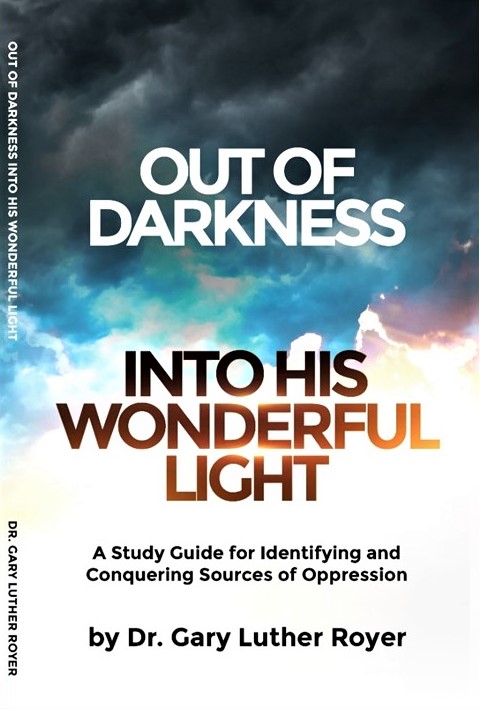
Dr. Gary L. Royer, adjunct faculty member at Southwest Assemblies of God University, released his latest book: Out of Darkness Into His Wonderful Light. The book is based on the course he taught about the spirit world. He wrote it at SAGU in 1997, and has taught it nearly every semester since then. Many students have declared that the course changed their lives.

Upon retiring from classroom teaching, Dr. Royer was encouraged by many of his former students and fellow professorial colleagues to put his notes for the course into book form. Foreseeing that the book would be used in bible studies and personal reading, as well as in the classroom, he divided it into thirteen chapters with study questions at the end of each chapter.

Dr. Royer writes, “So many students have told me that, although they faithfully attended church every Sunday morning, they had never understood the spirit world. It was a delight to write and teach an organized presentation of this subject of the Spirits of God, ministering angels, demonic spirits, and the powerful human spirit.”

Dr. Gary was one of my instructors at the university – in fact, my favorite instructor at SAGU. I add my voice to many others who say he teaches from a deep relationship with the Lord Jesus Christ, from an in-depth knowledge of people around the world, an in-depth knowledge of the spirit world, and with a love for his students.

With the skill of a biblical scholar, the spiritual insights of a Spirit-filled minster with much experience in dealing with spiritual problems, and with practical guidance in recognizing, addressing, and finding freedom in Christ, Dr. Royer presents this needed book. It is comprehensive in scope and is informed by other experts in addressing spiritual issues in dealing with the demonic and the spirit world. His text is centered on biblical insights, especially the Book of Ephesians, testimonies of many who have experienced spiritual bondages, and how they found freedom in Christ.

This is not a book of extremes, but a well-written and biblically balanced approach to a complex subject. Specific prayers are given which lead the reader in understanding how to approach God for help.

I encourage you to purchase several copies of the book, Out of Darkness Into His Wonderful Light, because you may want your family and friends to read it.

You may order it from Dr. Royer, or directly from Amazon.com at https://www.amazon.com/s?i=stripbooks&rh=p_27%3ADr.+Gary+Luther+Royer&s=relevancerank&text=Dr.+Gary+Luther+Royer&ref=dp_byline_sr_book_1

Feel free to contact Dr. Gary Royer, B.A., M.A., D. Min/Missions, at groyer@sagu.edu

The Master Dreamer

As I was preparing this Reflection, I realized that “Dreamer” has an intense political connotation. But this is not about immigration – legal or illegal – or about anyone’s location of birth. It relates to a discussion several years ago between my son, Ron, and myself.

“Dad, are you a dreamer?”

“I dream quite a bit, more than most people. The sleep test I endured proved it. Why?”

I had no idea what Ron was talking about. I know that sleep dreaming is a function of thinking. When we go to sleep, our bodily functions slow down, but our mind – not to be confused with our brain – plods right along. Dreaming is subconsciously thinking while we are sleeping. This will be another Reflection for another time.

“I’m not talking about dreaming while you’re asleep, dad. I mean, do you dream about what you want? For example; if you were to buy a pickup truck, what features would you want on it?”

I began enumerating the many things I would want.

“So, getting a new pickup truck is one of your dreams?”

“No, I already have a pickup. It’s old, but it’s good. I merely answered your question. I don’t spend much time brooding over or pondering about something that is out of my financial reach, or that I really don’t need. For me, it’s a waste of time. But I DO ponder or meditate on things – even almost impossible things – if I think the Lord wants me to accomplish them. I am pragmatic, and my ‘dreaming’ is figuring out how to accomplish a task that is set before me.

“I also dream about how God accomplished His activities. I ponder on how the Red Sea parted, how the Jordan River stopped flowing, how God flooded the earth in Noah’s time, how God created the polar ice caps, and so on.”

“Do you come up with answers?”

“Oh, yes!”

We then talked about dreamers throughout history, and their vital importance for the forward progress of civilization. Inventors are dreamers. Two examples are the Wright Brothers who succeeded in giving America the airplane. (Some dreamers died in their attempts.)

Ron is a dreamer. My wife, Carol, is a dreamer. Thomas Edison was a dreamer. These people make life more enjoyable for the rest of us.

“Ron, I can’t be a dreamer. God didn’t make me that way. But I sure need people like you.”

“But you’re a writer. Isn’t writing a function of dreaming?”

Hmmmmm…. I had to stop and think about that one.

“Well, yes and no. Everyone who writes fiction has to dream the whole thing up. But since everything I have been writing so far relates to history, I merely need to remember or research the event, and tell it in a truthful and interesting way.”

“What about your next book?”

“You got me there, Ron. This book is about ancient history. The facts are difficult to find, and harder to piece together; and I’ve been intermittently gathering information since you were a kid. But since we don’t fully understand how they lived 4,500 years ago, part of the story line needs to be created, and that takes some dreaming. That’s why it’s taking me so long to write it. I am more of a reporter than a dreamer.”

That gives you an idea of Ron’s and my 2-hour discussion. But let me tell you about the master dreamer of all time. He needs no introduction, for you all have heard of Him. We call Him God.

The greatest history book of all time tells us about it. Genesis starts out with, “In the beginning, God created the heavens and the earth.” Since God never had a beginning, I wonder how long He thought – dreamed – about it before He did something. Think about it: God had no “time-limit”, no deadline in which to finish, and He had an eternity of creativity to express.

The corollary thought is in the New Testament, John 1:1-3; “In the beginning was the Word, and the Word was with God, and the Word was God. All things were made by Him.” Verse 14 tells us the Word is Jesus Himself. Jesus is the Creator.

God made everything from the infinitesimal one-celled amoeba to the giant dinosaur; from the invisible quarks to the super-clusters of galaxies. But God had something else in mind: He made man to fulfill His master plan, and He incorporates anyone who wants to be included into His plan.

For this, you don’t have to dream; all you need to do is believe in and live for Jesus the best way you can. What’s your decision?

I Have to Confront my Boss!

That’s what Sean angrily said. [Names have been changed.] When I asked him about the problem, he muttered something about a continual misunderstanding, but he wouldn’t, or couldn’t, pinpoint the primary issue.

Over coffee, his black and mine with cream and sugar, I asked Sean to think about it. “Is the boss being irrational, mean-spirited, or offensive? Or are you reacting to something else?”
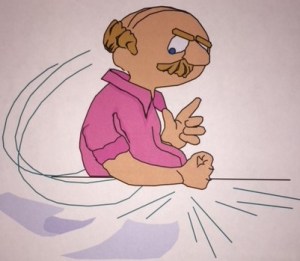
“I just don’t like him, but I haven’t really figured out why. I guess I do need to think about it.”

Sean was a man of few words but with good work ethics. With his permission, I made an appointment with Jack.

“Oh, Sean’s one of the best workers I have. Never late, hardly ever a complaint about his work. He just appears to be sullen a lot, but it beats me why. I wonder if he’s got family problems. Got any ideas?”

“Jack, I would like you to confront Sean because ….”

“Oh, no! Like I said, he’s a good worker, and I don’t want to lose him. Let’s just let it be.”

I took a deep breath and asked for a cup of coffee – with cream and sugar. “Jack, may I discuss the concept of healthy confrontation with you? I only need about ten minutes.”

“Take fifteen, and get on with it.” Jack got his own coffee – black. I was beginning to understand the situation, and was glad I brought my notes with me.

Confrontation can be either friendly, abrasive, or explosive. Confrontation is presenting ideas which at times are opposing or unknown to the listener. It is bringing themes, ideas, plans together for comparison and discussion. But people often take a defensive posture and turn confrontation into angry disagreement, resulting in antagonistic action or sullen withdrawal. It can devolve into explosive verbal – and sometimes physical – altercation.

Therefore, I suggested a true confrontation: “bringing two opposing parties face-to-face” in a non-threatening environment in order to resolve or prevent conflict. The purpose of confrontation is to help people, not hurt them. Many psychologists and counselors have their own list of steps, but I’ll simplify it.

Be firm and bold. (2 Cor. 13:1) Address the problem, don’t attack the person. Take witnesses if needed. Start with a compliment.

Be accurate and honest. (Matthew 5:37) Communicate your feelings assertively, not aggressively.  Express them without blaming.

Listen without interrupting. Ask for feedback if needed to assure a clear understanding of the issue. Don’t review the situation as a competition where one has to win and one has to lose.

Affirm all you can that is good. (2 Cor. 7:4) Remember, when only one person’s needs are satisfied, the issue is not resolved. Work toward a solution where both parties can have most of their needs met.

Know the facts. (2 Cor. 11:22-27) Listen first, talk second. And, hopefully, the authority figure should listen first. You should listen to what the other person is saying before presenting your own position. They might say something that changes your mind.

Focus on the issue, not your position. Accept the fact that individual opinions may change, so be observant. Work to develop areas of common ground.

And remember, not all “issues” are part of the problem. Many will dissipate when others are resolved. Know when to let something go. If you can’t come to an agreement, agree to disagree. When the relationship is established, little issues fall by the wayside.

Be gentle after being firm. (2 Cor. 7:8-15) It’s easy for people to get entrenched in their positions and for tempers to flare, voices to rise, and body language to become defensive. Build on mutual respect and understanding. And don’t be afraid of humor or laughing. Scripture says laughing often helps as much as medicine does. Be willing to forgive. Without forgiveness, resolving conflict is impossible.

Jack and Sean agreed to a meeting in the back corner of a coffee shop. I encouraged Sean to “pry yourself out of your shell” and tell the boss about his primary concerns. I also asked Jack to listen without interrupting, and to try not to speak so abruptly.

When analytical Sean began to realize how much Jack valued him, his demeanor picked up. And businessman Jack was amazed to discover Sean’s in-depth knowledge of the company. (The company benefited when Sean got a promotion.)

Confrontation is necessary and beneficial if conducted properly. A willingness to confront, a healthy understanding, and a good cup of coffee go a long way.

Think about it, and work on it.

Lessons from the Flock – Vision

“You’re a bird-brain!”

Did you ever hear that? It’s a derogatory statement and meant to degrade someone. But I identify with it because I am learning a lot from my fowl friends – my five chickens.

I’ve noticed that the birds often gather at the fence and look in the direction of the kitchen window. When I move around in the room, their heads follow my movements and they seem to be waiting for me to come out. But when they are standing in bright daylight, how can they see me through a window in a room with subdued lighting?

It was research time.

Of the many documents on the internet, I found an article by Cynthia Berger published on July 19, 2012 titled “True Colors: How Birds See the World.” That was an eye-opener. Using a device called a spectrophotometer (it measures light that is reflected from a surface), researchers found colors in the UV range that most birds can see.

Quoting from her second paragraph, “…systematic testing of bird vision revealed something unexpected: many bird species can see UV light. Scientists also have learned that many birds have plumage that reflects UV light.”

I had never thought about chickens being able to see differently from humans. Oh, I know chickens have enhanced hearing and smelling, but enhanced sight? Amazing.

I’ve always wondered how a bird can distinguish a male from a female, but now I know. Both males and females of barn swallows, mockingbirds, western meadowlarks (and many others) look remarkably alike to humans. But viewing them through the spectrophotometer we find they look totally different from each other. They, of course, have the same shape but different coloring. Another example: To humans, the blue tit male looks identical to the female. But looking at the UV reflection, we find a bright spot on the males’ head. The female spots that immediately and says “That’s my man!”

Female birds know which eggs are hers because various eggs reflect UV light differently. Choosing to raise her own offspring, some females either break or eject foreign eggs from her nest.

Birds will more readily eat food that reflects greater amounts of UV light. That explains another question I had: why do my chickens go for corn more than wheat? Corn reflects more UV. Also, insects reflect a higher amount of UV than green grass. Watch out, moths and bugs; my chickens are loose in the yard and you are doomed!

Speaking of moths, it’s fun to watch a hen run at full speed then half jump and half fly with neck fully extended to grab a moth or other flying insect out the air.

But all that helps to explain why the birds are at the fence looking in my direction: some of my clothing is reflecting UV light. They see me through the window, and they assume that I’ll bring food out to them. Sorry, chicks. I’ll feed you later.

When I think of birds’ ability to see what humans cannot see, it reminds me of spiritual sight. In Ephesians 1:18, the Apostle Paul said, “I pray that the eyes of your heart may be enlightened, so that you may know the hope to which God has called you, the riches of his glorious inheritance in the saints.”

“Eyes of your heart”? Sounds strange because blood-pumping hearts don’t have eyes. What Paul means is we have inner understanding, insight, the discernment or comprehension of spiritual reality as it pertains to Almighty God, and verified in the Holy Bible. I am not referring to Hinduism, Buddhism, spiritism, spiritualism, other religions, or any New Age idea. I am not talking about mindless concepts that exalt man, nature, familiar spirits, or demons.

An example of a mindless statement – proclaimed to be spiritual insight by Matshona Dhliwayo – is: “The Universe is one body; love is its heartbeat.” Not understanding either the universe or love, Dhliwayo is wrong on both counts.

True spiritual insight comes from God, and enables us to understand real life – both temporal and eternal – from God’s perspective. Second Corinthians 2:16 informs us that we can “have the mind of Christ”; that is, receive His thoughts. This requires us to stop being self-centered, and to become God-centered or Christ-centered.

As birds can see some of what humans cannot see, we can ask God to grant us wisdom and insight which would enable us to understand what we normally cannot “see”. That’s not being a bird-brain; it’s being in tune with God.

Is the Majority Always Right?

That’s a serious question and needs to be answered. But it’s also a dangerous question, because a conniving leader could undermine our social order. Remember, our society consists not only of various levels of government. It includes families, social clubs, churches, and businesses; and to a large extent, our society is based on the “majority rule” principle. That’s what local and national elections are all about.

Before we proceed, please understand I am not advocating a rejection of elections, majority-rule in Congress, congregational government in local churches, and so forth. In any scenario, the first result could be the rise of a dictator, and that is abhorrent. But also understand this: even with majority rule in place, we can still have a dictator, anarchy, or chaos when we elect people who have no fear or reverence for God into office. (Think that one through.)

How can that be? I’m glad you asked. Let’s look at a couple of stories in the Bible. We’ll start with Exodus 32:1-6. Moses was on the mountain getting the rules for living (Ten Commandments) from God. But the majority of the people wanted a god they could see, so they chose a common god of the middle east: a young bull (“golden calf”) to worship. Even Aaron the high priest – Moses’ brother – cooperated with them. But the majority was wrong. In this case, majority-rule was disastrous.

Look at Numbers 13. The Israelites had left Egypt, spent two years hearing from God and getting their society established. They were at the border of the Promised Land, and “home” was in sight. God – who created the world and all that is in it, so He has the right to do what He wants – told Moses to send twelve men across the river to get information.

All 12 gave a good report about the weather, the fertility of the soil (they even brought back figs, pomegranates, and a huge cluster of grapes), the availability of forests for lumber, etc. But 10 of them (83.4 percent) said they should not go into the land, while Joshua and Caleb (16.6 percent) gave the correct report.

The masses agreed with the majority, and God issued judgment: all those over the age of twenty at that time would never enter the Promised Land. All except for Joshua and Caleb, because they agreed with God. The ungodly majority ruled, and they reaped disaster.

However, Proverbs 11:14 says, “Without wise leadership, a nation falls; there is safety in having many advisers.” So what should we do?

We must have wise leadership; but we – the people – must be knowledgeable enough to 1) know who is wise, 2) be courageous enough to elect them, and 3) be wise enough to follow them. How do we gain that wisdom?

Proverbs 9:10 says “The fear and reverence of the Lord is the foundation of all wisdom. Knowledge of the Holy One results in good judgment.” That is beautifully self-explanatory.

Proverbs 11:10a says, “When the righteous [Godly people] do well, the city [society] rejoices [prospers].” Proverbs 29:2 says, “When the righteous [Godly people] are in authority, the people [society] rejoice; but when the wicked [ungodly people] are in power, the people groan [suffer].”

We have seen a lot of that in our nation’s history.

Therefore, since the “majority-rule” concept often gets us into trouble, we should be looking in a different direction. Where should we be looking? Some of you readers may get bothered with me, but the answer is found in the Bible. We should be looking for wise people to lead us.

One man exclaimed, “I am not looking for a Christian to lead me; I want a good politician!” His friend standing nearby mockingly said, “Isn’t ‘good politician’ an oxymoron?” I laughed and said, “I know some good politicians. They are people of high integrity and who cannot be swayed by money, sex, fame, or power. Most of them are Godly folk who pray about their own life, and about pending decisions. But I also know some non-Christian politicians of high integrity.”

We need to understand that the majority is not always right. Therefore, like Joshua and Caleb, we should not be swayed by the opinion of the masses; rather we should study Scripture, pray about decisions, and base our lives on what is right in God’s sight – even if we must stand alone.

But remember: God will be standing with us.

Keep this with you, and read it several times before you vote.

Lessons from the Flock: Joy

I could hardly believe my eyes!

Normally when I walk out the back door of the house, the four hens come running to me. They think I’ll have a treat for them, and they are usually correct. So, they run to me, stand as tall as they can, and sometimes jump as they try to get goodies out of my hands. One time I put my open hand down to their level. When they saw the wheat kernels in the palm of my hand, they rushed forward. As they began eating it, I found out what it feels like to be hen-pecked. (No, it didn’t hurt at all.) By the way, chickens have a 300-degree field of vision without turning their heads.

But today as I walked out the back door, I was quieter than usual; and the birds, who were out of sight, didn’t hear me. I stood there for a minute with no visible activity in the yard. I then began to hum a song. No words; I just softly hummed.

Pandemonium erupted in the back yard!

I don’t know how to accurately spell what I heard, so I won’t try. But these birds exploded from behind the 10 x 12 barn! They came half-running and half-flying as fast as I have ever seen a chicken move. With wings spread straight out like a hawk on the attack, the little head making more noise than seemingly possible, the four birds came racing to see what their benefactor had for them.

It amazes me to see the joy the birds express when they know I am near. When they either see or hear me, they stop everything they might be doing and come running. If they even see me through the kitchen window they come running. (In addition to seeing all the colors that humans do, chickens also see ultraviolet – but that’s another story.)

Stop and think about it: theses chickens joyfully interact with me, their loving benefactor. How many Christians do you know who joyfully interact with our loving Benefactor – Almighty God?

Okay, you might say that we cannot see God. Well, most the time our chickens cannot see me either because I am out of sight. But they LOOK for me. Are we “looking” for God?

The birds love me because of what I do for them. On a much higher level, do we love God for what He does for us? We don’t have to look far to see His blessings. In fact, if we don’t see them, we are blind because God’s blessings are so abundant and prevalent.

Sadly, some Christians are oblivious to what God has done for them. But on the other hand, many Christians do see the blessings – but still are not joyful. Why not? Let’s look at two definitions.

One definition of Joyfulness is: the emotion evoked by well-being, success, good fortune, or by the prospect of possessing what one desires. (Actually, that is the definition of happiness which deals with circumstances; but the modern world , including Christians, confuses joy with happiness.)

A definition and application that is more appropriate is: the spontaneous enthusiasm I experience when I am in fellowship with the Lord (Psalm 16:11). If God never did anything else for me, I would be satisfied because 1) my relationship with Him is intact, 2) my eternal future is secure, and 3) I have everything I need to fulfill God’s will for my life.

So, let’s look back at the chickens. Are they joyful or happy? They are a little of both: they get their treats, but they also walk with me as I traipse around the yard. The birds really enjoy being with me.

Dear reader, are you enjoying your relationship with God, your Supreme Benefactor, or are you worried, mired in the “mud” of everyday life? Do you invest time observing and enjoying the blessings God has heaped upon you, or are you immersed in some level of self-pity because things don’t go your way?

If we are purposely doing something – thought, word, or deed – that is contrary to Biblical principles, we will not have the Joy of the Lord. Could that apply to you?

So “Run to the Lord” with your whole heart. Be satisfied with what He gives you. Even while experiencing financial or material loss, God still blesses us. First Timothy 6:6 says, “Godliness with contentment is great gain.”

So, look for God; He is watching you.

Safest Place in Iraq

My brother, Colonel Paul Linzey, US Army Chaplain (retired) spent a tour of duty in Iraq. Not because he was ordered overseas, but because his men were stationed in harm’s way, and Paul wanted to be with them to minister hope, peace, and life with them. Coming within mere feet of death, himself, Paul clearly identified with his men, and that is beautifully portrayed within the pages of Safest Place in Iraq.

He encountered numerous experiences – many serious, yet many humorous – and he detailed some of them in this book.

I had the privilege of reviewing and endorsing the book, and I highly recommend it. You don’t need a military background to understand and “enter” the story; but if you are military, you will “find yourself” in Iraq, and will immediately be a part of the story as it unfolds in these pages.

As the mournful sirens sound off, the missiles come screaming overhead, and as the bombs explode creating death all around, you’ll walk with Paul as he visits the hurting, the dying, and as he helps the soldiers see past the deadly present and gives them hope for the future.

Go to https://paullinzey.com/books/ and visit Paul’s website. You can order Safest Place in Iraq, and see Paul’s other endeavors.

You can also find the book at https://www.amazon.com/Safest-Place-Iraq-Experiencing-During/dp/1642799173