
Let Freedom Ring!

After the American eight-year War of Independence ended in 1784, the colonists were finally free! Well, I suppose they weren’t colonists any longer; they were citizens of a new country. But they were free!

They were free from tyranny. Free from taxation without representation. Free from the hated Redcoats! And free from a host of other problems – both real and imagined.

But what were they free to do? They were free to worship according to conscience and free to choose their own religion, but let’s come back to that in a minute. What else were the colonists – I mean, Americans – free to do?

Political freedom was a major item. Not desiring any over-arching government, they wouldn’t bow to any state but their own. This was a problem because there were thirteen new governments to consider. So, the former colonies – now sovereign states – agreed to a limited government under a federation called The United States of America.

They were free to tax themselves with “in-house” representation. That was a fight! The local towns didn’t want the states to tax them, and the states didn’t want the feds to tax them. They were also free to print their own money. Oops … that didn’t work too well. Each state created its own currency, with some states having several currencies. Banks issued their own money; and by 1836 over 1,600 banks were issuing thousands of varieties of paper money. Many were “not worth a continental.” Believe-it-or-not, standardized currency wasn’t established until 1929.

Back to freedom of religion.

In order to have a workable government, compromises are made. However, these concessions need to be in the civil arena; not in matters of faith. In colonial legislation, Thomas Jefferson said in the Virginia Statute for Religious Freedom (written in 1779):

“No man shall be compelled to frequent or support any religious worship, place, or ministry whatsoever … nor shall otherwise suffer, on account of his religious opinions or belief; but that all men shall be free to profess, and by argument to maintain, their opinions in matters of religion, and that the same shall in no wise diminish, enlarge, or affect their civil capacities.”

Jefferson made sure the First Amendment carried the same idea: “Congress shall make no law respecting an establishment of religion, or prohibiting the free exercise thereof….”

President Eisenhower said on January 20, 1953, “History does not long entrust the care of freedom to the weak or the timid.” And on November 25, 1981 the United Nations General Assembly passed the “Declaration on the Elimination of All Forms of Intolerance and of Discrimination Based on Religion or Belief.”

With that in mind, why is our government limiting or restricting the free, open exercise of the Christian religion? Why are we disregarding our religious freedoms that are protected in our own national documents? I am referring, of course, to openly reading and teaching from the Holy Bible.

When Scripture teaches that marriage is between a man and a woman, why do we cower before those who disagree? Without a constitutional amendment, Congress doesn’t have the right to revoke our constitutional rights of freedom of speech, freedom of religion, or deny our right to preach the truth as found in Scripture.

I don’t hate homosexuals; I have worked alongside several, and some of my friends are homosexuals. There is no hate involved when I tell them that the Bible teaches against homosexuality. But hate is involved when “gay” people angrily hurl insults and epithets at me.

It is unconstitutional, immoral, and unethical to allow the “gay” person his first amendment rights, yet disallow the “straight” person the same rights. Gay folks, as American citizens, have the freedom to speak their mind, so why would he or she deny me, an American citizen, the same freedom to speak my mind without fear of reprisal? Whoever dares to eliminate my freedom puts his own freedoms in jeopardy.

Proverbs 25:26 says, “A good person who gives in to evil is like a muddy spring or dirty well.”

     Christians have the same guaranteed, blood-bought, constitutional freedoms to teach and worship according to conscience, and to express our beliefs as does anyone else – and that includes teaching everything in the Bible. To deny that freedom would be discrimination, bigotry, and intolerance on the highest level – and would be un-constitutional. Remember, even the UN denounces intolerance – at least, on paper.

Why Is It …?

Why is it that Moslems are allowed to spread out their mat then kneel and pray in public, while Christians are told to keep their faith to themselves?

Why is it that the names of Allah, Krishna, Rhea, Ishtar, Zeus, and thousands of other deities are allowed to be mentioned publicly, but we’re told that the name of Jesus should be a private matter?

Why is it socially acceptable to holler out the name of Jesus as a swear word or to use his name in vain, but it is not socially acceptable to use his name publicly in a worshipful manner?

Why is it that homosexuals can demean, denigrate, curse, and threaten a Christian without fear of governmental intervention and even commit vandalism on church buildings, yet if a Christian merely quotes Bible verses about homosexuality, it could be called a hate crime?

Why is it that Moslems are allowed to publicly quote the Quran and Hindus can openly quote the Vedas, but Christians are told that reading the Bible openly is considered offensive, and intolerant?

Why are Hinduism (Yoga, Transcendental Meditation, etc.), Islam, Theosophy, and other forms of religious activity openly taught and practiced in public schools, yet Christians are warned not to openly teach or display Christianity on public property?

 Why is it acceptable to publicly display hundreds of religious symbols and beliefs, yet Christians are challenged to remove Christian symbols from public view?

Why is it that our nation puts aside our foundational Christian beliefs in our own land in order to not be offensive, yet adherents of other religions – from other countries – have the right to openly display their religion in our land?

Why is it that Christians in our own country are commanded to be tolerant of and accept other religions, but those of other faiths on American soil are not required to be tolerant of Christianity?

Why is it that our government, while tolerant of all other religions, expresses contempt for Christianity?

Why is it that we spend money to preserve unhatched spotted owls, forest salamanders, and other animals, while simultaneously spending money to kill unborn humans?

Why is it that our own Congress – consisting of our own United States citizens – tends to limit or outlaw our national freedoms which are guaranteed to our citizens by our own Constitution and Bill of Rights, yet they favor granting freedoms to citizens of foreign countries who live here illegally?

Why is it that our Congress talks about reducing the financial support of our own citizens who have paid into the system for decades, while increasing the financial support of foreigners who have might have paid nothing or very little into it?

Why does our government come against Americans who stand for the foundational principles upon which this great nation was founded, while they defend people – both US citizens and foreigners alike – who would destroy our national heritage?

Why is it that Congress and the Supreme Court allowed presidents to change our nation’s values and economy single-handedly, and the president and Congress allowed the Court to legislate from the bench, without employing the checks and balances established in the Constitution?

I can go on-and-on, but maybe you get the point.

But why is it?

Here’s why. Over the years America has been lied to. We have been told that America must not offend anyone. It doesn’t matter that the world is offending us, and it doesn’t matter that our own government is limiting our own civil liberties, freedom of religion, freedom of speech, freedom of the press, and all the rest. And our President, Congress, and the Supreme Court seem to be unaware that our freedoms are being diluted or deleted. Or is that their intent?

Some folk think if we elect the right man for president things will get better. I have news for you: even if he makes the correct decisions, the president cannot do it alone. Anti-American sentiment crosses political boundaries.

We know that a socialist or ultra-liberal can make things worse; but even a president who adheres to traditional American values cannot help us if we – as a nation, including our own Congress – won’t return to faith in God. It goes beyond government: it’s a matter of spiritual values.

Second Chronicles 7:14 says: “If my people who are called by my name will humble themselves and pray and seek my face and turn from their wicked ways, I will hear from heaven and will forgive their sins and heal their land.”
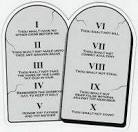
So, why is it that our nation refuses to turn back to God?

What’s the Problem Here?

Why is there an uproar in America about having the Ten Commandments posted in public view? You might have been told the issue is separation of church and state, but that isn’t true. Some of my friends who call themselves atheists, and with whom I get along fine, don’t have a problem with the Ten Commandments being posted. Granting me the freedom of expressing my faith grants them the corresponding freedom to express theirs.

Although many faiths could be mentioned in this blog, I will mention only Islam, Judaism, and Christianity: three monotheistic religions.

Let’s briefly look at and comment on the commandments found in Deuteronomy 5: 6-21. The first four reflect on our relationship with God.

  • You must not have any other gods before [in priority over, or other than] me. Every person in the world is religious, and every country in the world has its own god or gods. Other nations place great importance on their god or gods without worrying about offending others – Islam being the most dynamic about this – so why are Christians being forced to change?
  • You must not create an object to worship. Adherents of Judaism and Islam agree with this, and many agnostics and atheists don’t care about it.
  • You must not use the name of God thoughtlessly or loosely. Although most people misunderstand this one and ignore it, adherents of Judaism and Islam agree with this principle.
  • You must honor the Sabbath day. Labor unions worked hard to give their members one or two days off from work each week, and the courts who invalidate the commandments won’t sit in session on Saturday or Sunday. Also, Judaism and Islam have their day of rest.

The next six commandments relate to human interpersonal relationships.

  • Honor your father and mother. Properly understood and applied, this command is one of the primary supports for most civilizations on earth.
  • You must not commit murder. We have stiff laws prohibiting murder. This command attempts to protect us from mentally sick and evil people who purposely kill others. Islam does not agree with this one.
  • You must not commit adultery. When this was observed and upheld in our culture, our society was strong. However, many people – including members of our courts, legislative bodies, and some presidents and pastors – have disregarded this one simply because sexual perversion is one of the world’s primary joys.
  • You must not steal. We arrest people and send them to jail for this.
  • You must not lie. We have contracts to keep people honest, and we can arrest people if they break contracts or commit perjury.
  • You must not think of taking your neighbors wife, house, land, or whatever else belongs to him. This command covers a lot of territory, and the courts are busy tending this every week of the year.

We’ve just seen that US citizens are not against at least seven of the rules, so what’s the problem with the Ten Commandments?

Here it is: the sound of “The 10 Commandments” reminds people of the God of the Bible. They may not be against a moral code; they are against God. And many who are NOT against God have been deceived into thinking the vast majority of people have to change our culture in order to keep from offending the miniscule minority. However, any culture that adheres to and lives by these ten laws – including honoring a Sabbath day – will be a healthier society. And most people know it.

I am still convinced these laws are the basic foundation upon which our nation was founded, although some folks disagree with me.

When we examine the Ten Commandments, it’s likely that only three of them are offensive to the general public. They are numbers 1, 3, and 7: many people don’t want God in their lives because they want the freedom to enjoy their evil, sexually-perverted lifestyle.

Some adherents of Islam agree with the ideals included in nine of the Ten Commandments. But they disagree with it all simply because the laws originated from the Judeo-Christian God; and, of course, command #1 disallows serving another god.

Other people all around the world have their own gods, and they don’t change their religion in the face of disagreement or opposition. But we in America are changing our historical, foundational belief in God simply because people disagree with us. But removing our historic foundation is outlawing moral integrity, and approving immoral hypocrisy. And that could destroy the fabric of our society. What’s the problem here?

I’ll tell you.

Many Americans have been convinced that in order to be tolerant, we must set our own beliefs aside. We have been deceived into thinking that stating our own faith is an intolerant act.

But our country has lead the way in guaranteeing personal freedom. We have openly offered freedom of expression of faith for all religions. So in keeping with the concept of religious freedom, and refraining from being ignorant hypocrites, we should not deny our own citizens the freedom of expressing their faith in Jesus Christ and Almighty God.

Whom Do You Trust?

What in the world is “trust”? Can “trust” be qualified? What I am getting at is… oh, let’s start over. Let’s define the word.

Trust is a firm belief in the reliability, truth, ability, or strength of someone or something. It is confidence placed in a person or thing. It is dependence on someone or something. Can a person live without ever trusting someone or something? Think about it.

Next: can “trust” be qualified? That is, can you partially trust someone? Or is it an all-or-nothing concept?

When I was three years old, we lived in El Cajon, California. My dad put me on the top bunkbed, and said, “I want you to jump to me.” (Yes, the lights were on.) But I was afraid of falling, so I told dad I didn’t want to jump. Dad promised me that there was absolutely no way I could fall, because even if I jumped awkwardly, or inadvertently fell off the bed, he would still catch me.

I don’t know if you understand the fear of falling, but I was almost scared to death! I was emotionally paralyzed. But dad said very gently, “Eugene, if you can’t trust me, how will you ever learn to trust God?” You see, the proof or result of trust is obedience.

 Well that made sense – even to a 5-year-old.

So I suddenly leapt off the bed and hit dad in the chest with my 35 pounds and nearly knocked him over. Dad caught his balance and asked, “Why didn’t you warn me you were going to jump?” I responded, “You said you would catch me.” Dad chuckled, hugged me, and said, “Good job.”

Dad taught me about trust. Dad taught me a lot about life.

Did I fully trust dad, or did I partially trust him? If we consider my fear, we might say I partly trusted him. But if we consider my obedience, we say I absolutely trusted him. Obedience verifies trust.

What was it dad said? “Eugene, if you can’t trust me, how will you ever learn to trust God?”

As I grew older, I learned to trust God with my entire life.

How would my faith in God have been affected if dad dropped me? That’s hard to say because dad caught me. However, Dad most likely would have picked me up, apologized profusely to mom (who was watching), and tenderly talked to me about what went wrong. And because of that, I think I would still have learned to trust God.

Since I left my parents’ home, I’ve experienced many situations where I could have forfeited my faith and lost trust in God. But I am reminded of John 6:65-68. Many of Jesus’ disciples left Jesus, and Jesus asked if the twelve would also leave. “Peter responded, Lord, to whom shall we go? You have the words of eternal life.”

Job was one of the richest men in the world, and he lost everything. He lost his children, livestock, respect, and admiration of friends and business associates. He was accused of being a terrible sinner.

But in spite of all of that, Job never lost his faith in God. He wanted to talk with God face-to-face and defend himself, but he never lost his faith. Job 13:15a says, “Though he [God] slay me, yet will I trust in him.” In chapter 19 verse 25, Job proclaims, “I know that my Redeemer lives, and he will eventually come to the earth.” And God, in the form of Jesus of Nazareth, did come to earth to redeem us.

Human mistakes and misfortunes should not deter us from trusting God. Jesus said if we love him, we will obey him. And Obedience is a manifestation of trust.

So, whom do you trust?

We Start With the Bible

The last time I saw my grandfather, Stanford Linzey, he was ninety-six years old. I asked him, “Grandpa, what is the most important thing in life? I want to pass your thought on to my children as part of their family heritage.”
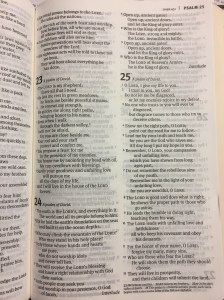
Grandpa looked out into the field for a few minutes as I silently waited. At last he looked toward me and pensively said, “I suppose the most important thing in life is this: everything you need to know is in The Book. You can know a lot of other things, but everything you NEED to know is in The Book. Study it.”

Grandpa Linzey went to heaven in 1987, about four months before his one-hundredth birthday anniversary. And I continue to study The Book.

Today let’s talk about a New Years’ Plan. You could call it a resolution, but I call it: developing a relationship with the Lord. Warning: this might change your life – for the better! And I know that the New Year celebration was a month ago, but that’s okay. What I’m about to say is still true.

Many folk have their own ideas about how to study the Bible, and I have developed my own. I have read many methods, but in order to make it easy to remember, I keep my method simple. It entails three steps, and it goes like this.

  1. What do the words on the page say?

When I was in high school, my father said, “If something in the Bible doesn’t seem to make sense, study it out. Don’t stop until you understand it.” He then referred me to 2 Timothy 2:15 which became my commission in life. “Study to shew thyself approved unto God, a workman that needeth not to be ashamed, rightly dividing the word of truth” (KJV).

It simply means: Study the Bible. You start by reading it. Be sincere. Be diligent. Don’t quit. Don’t embarrass yourself or insult God by being sloppy or half-hearted. Ask for help when you need it.

So I have set aside a time during which I can study without too much interference, and during which time I can concentrate on the topic at hand. For me, this is usually between 9 p.m. and 2 a.m. I read the section of Scripture under consideration, but I also read enough before and after to get a grasp of the context. Without evaluating the context, we can misunderstand the content which can cloud our comprehension of the intent. We could even miss the entire message!

2. What did the writers mean when they wrote it?

Since the original manuscripts that we have were written between 1500 BC and ad 95 AD, many figures of speech, idioms, idiomatic phrases, concepts, and historical knowledge have been forgotten or misunderstood. Also, some of the words and phrases the translators used may not always currently convey the proper meaning. Therefore, in order to understand or “rightly divide” Scripture, we must often study language, history, archeology, or ancient Middle-Eastern culture. This is sometimes difficult and time-consuming, but without this step we can miss what God wants us to know.

Don’t get scared, now. Since most people have neither the time nor the resources to conduct an in-depth study of this nature, the Lord has set in place pastors, teachers, and evangelists to help (Ephesians 4:11–14).

3. How do I apply the principles to my life today?

This is sometimes the hardest part because applying scriptural principles to our lives entails honesty and integrity. We might have to change our way of living. In order to develop a closer, more dynamic relationship with God, we must give up things, activities, or ideas that are offensive to Christ or consume too much of our time. In order to do that, we must reevaluate our priorities in life. Will we continue to live a hedonistic, self-centered life, or will we change our way of thinking (Romans 12:2)? Specifically, we need to become Christ-centered. We must understand that our ultimate purpose in life is to know our Father God, and to honor him.

Now, having said all the above, please remember this:

It is not necessary to be a Bible scholar in order to change your life and honor the Lord. Salvation is received through a relationship with Jesus Christ, the Messiah, by accepting him into your life. Learn to know him by reading the Bible, regularly attending church meetings, attending Bible study sessions, or all three.

My prayer is that you grow in your relationship with Jesus Christ: and we start with the Bible.

Christians, Pay Attention

This week, all non-Christians may disregard this blog because I’m not talking to you. I am speaking to the Church.

Well, okay. As long as you’re here, you may continue reading if you so desire.

It appears to me that many in the Christian Church have corrupted their understanding of their position in Christ, or with Christ. More and more people imagine that Christ exists for our sake; that He came to earth to bless us and give us a wonderful life; that the riches and authority of the world belong to us – or should belong to us. Many folks have been taught that we can even tell God what we want, and out of His love for us He will grant our desire.

When I worked for an automobile dealership in 1980, a well-known pastor came to me and told me he wanted a Cadillac. He specified all the details, how much he would pay for it, and wanted me to order it so I could “get in on the blessing.” When I said I could get it for him but that it would cost him approximately $8,000 more, he laughed and said, “I told Jesus what I want; and because of my faith, I’ll get it.” Walking away, he said he would offer the blessing (of getting it for him) to someone else.

About three weeks later he drove back to see me – in a new Cadillac. As he was bragging about it, I pointed out several major details that conflicted with the itemized list he handed to God. He said, “Well, I got most of it.” But when I asked him how much he paid for it, he looked down and muttered something like, “It was several thousand more than I wanted to pay” and quickly drove away.

This man had probably been listening to a song from a well-known writer that included the words: “Say it, believe it, receive it, tell Jesus.” But that theology is totally backwards, and is an affront to God. That is deciding what we want, convincing ourselves it is right to have, claiming it as ours, then – THEN – telling Jesus to get for them. This is wrong.

 The truth is: Christ does not exist for us; we exist for the sake of Christ. We have no business itemizing our demands, then handing the demand to God as though He was waiting on our table at the local restaurant.

Yes, Jesus came to earth as a baby, born of a virgin, lived a sinless life, was crucified, died, and buried. He rose back to life on the third day, and spent the next forty days walking among people, ministering to them, proving he was alive – and proving His divinity. He came to earth in order to remove the breach between man and God that was placed there when Adam sinned. But although Jesus taught us to be servants to each other, Almighty God is not our servant.
In the late 1890s, the theologian/politician/scholar Abraham Kuyper (Abraham Kuijper) said, “We Christians regularly fail to acknowledge our true place in creation. We aren’t just God’s creation; we are God’s possession.” I agree. We need to understand that the book of Job clarifies that no one tells God what to do.

Yes, we need to remember James 4:2-3 which says, “And yet the reason you don’t have what you want is that you don’t ask God for it. And even when you do ask, you don’t get it because your whole motive is wrong—you want only what will give you pleasure” (GNT). What it does not say is that sometimes we “ask God” for something, but then we bypass God and appropriate it with human efforts. That is not trusting God. Rather, that is works of the flesh, and Scripture has a strong admonition against that.

Reflecting on Kuyper’s thought, what IS our place in creation?

I think it is summed up quite succinctly in Jesus’ words in John 4:34. “My meat [sustenance] is to do the will of him that sent me, and to finish his work.” Since Jesus is our example of how we are to serve and honor Almighty God, we can truthfully say that OUR job is to do the will of Him that sent us, and to finish what He has asked us to do.

God didn’t ordain that we become crucified; but individually, our job is to discover what God wants of us, and do it. God’s will includes a vocation of some kind; but specifically, it is to honor Him in everything we do in life.

Our place in creation is not to tell God what we want. Rather, it is to discover what God wants of us, and obey.

What has God asked you to do?

A Resolution

Years ago, a man from Oklahoma called me. He was despondent and was looking for financial assistance – again. This man was in his thirties.

He was raised in a Christian home, affirms that he is a Christian, has spent time memorizing Scripture, sung in church choirs and gospel quartets, played his instrument in church orchestras, led in Bible studies, and discussed theology and history with others. He had a good-paying job. This man is loved by many people because he is fun to be with. We’ll call him Jake.

But Jake is in jail. Bond was $57,000, with a cash requirement of $5,700. The family could not pay it and he was in for awhile. What happened to Jake?

I located and talked with some of his family members. They told me about a statement Jake made while a teenager. The statement was: “I want to live a life of sin; that way, when I get older, I’ll have a good testimony of how God saved me from a bad life.” And he purposely turned to a life of alcohol, drugs, sex, and gambling, and has wrecked every car he had.

Jake doesn’t remember that resolution, but he told me, “A person will never change his way of life until he decides to change. Whether it’s through a Christian organization, secular counselling, Alcoholics Anonymous, or prison, a man changes only when he wants to change.”

I responded, “So THAT’s why you’re in jail: you’ve decided not to change. And because of that, I will not help you.” That caught him by surprise. I continued, “Jake, your continual return to your degraded lifestyle confirms that you don’t want to change. When you decide that you want to change, I’ll be available to help you.”

Jake has been in-and-out of jail five times on various charges. Apparently, he’s a “model” citizen as a prisoner – even leading in Bible studies. He has gone through detox several times in jail, and is clean when he gets out. But he goes right back to the stuff when he is free.

Free – that’s an interesting concept.

One of Jake’s acquaintances recently told him, “If you would turn to the Lord – truthfully, not merely with lip-service – the Lord and others would help you. If you would honor the Lord by the way you live, the Lord would help you get out of bondage.”

Jake erupted: “I’m not in bondage!”

His friend squelched the laughter until the phone call ended. He told me it was funny because Jake is in a 3-fold bondage: emotionally, spiritually, and physically (in jail). Make that 4-fold: he’s now in financial bondage.

And it’s all because of that resolution he made many years ago.

How about you, dear reader? Are you in any kind of bondage? Have you made decisions that have hurt you emotionally, spiritually, financially, or physically?

Here’s something to remember: a firm decision is a resolution. Also, a decision – firm or not – becomes a resolution if it isn’t modified. Ponder that one.

Many folks like to wait until January 1 to make a resolution. But why wait to make a good decision? Waiting to do the right thing is practicing procrastination. Waiting to make the right decision is a bad resolution. Waiting to make a good resolution verifies that you don’t want to make it.

What would you like to change this year? Let’s rephrase it: What have you resolved to change this year? While you’re thinking about it, let’s remember what Jake said: “A person will never change his way of life until he decides to change.”

You want to quit smoking? Quit indulging in alcohol? Quit wasting your family’s money, and God’s money, at the casinos? How about quit gossiping or slandering? Are you running from God in any way? Would you like to have a better understanding of who Jesus is? Would you like to have a better relationship with your family? Would you like to, overall, improve your life?

It takes a simple decision – then ask God to help. That’s a resolution.

Before my parents were married, my mother told dad, “I won’t marry you if you don’t stop smoking.” That was a resolution.
Dad said, “I tried to quit, but I can’t.”

“You need to pray about it – now.”

Dad did two things: He decided to quit smoking, and he asked God to help him. That was a resolution. He cooperated with God: that’s the key. He never smoked again and they got married.

If you have a decision – resolution – to make, ask God to help. If you’re sincere and honest with God, He’ll help you. That’s God’s resolution.

Old Things Pass Away …

What’s the rest of the axiom? You got it: Behold, All Things Become New.

That comes from 2 Corinthians 5:17 which says, “Therefore if any man be in Christ, he is a new creature: old things are passed away; behold, all things are become new.”

That verse is talking about turning away from sin and selfishness, and deciding to live to honor Jesus Christ. And we need to remember that. But this week I will use the verse in a different context.

Three days ago was New Year’s Day. And if you’re reading this, you survived. Wonderful! But what’s next? Did you make any resolutions?

Grandpa Linzey was born in February of 1888 and graduated to heaven in 1987, three months before his 100th birthday anniversary. He was a practical man, and didn’t have much use for celebrations. His days were wrapped around tending his animals, and Grandma’s job was to tend the garden. One day when I asked Grandpa if he ever made New Year’s resolutions, he said: “Son, resolutions are empty, and most people break ‘em on the day they make ‘em. It’s just another day. The sun will rise, and the troubles we have today will be with us tomorrow.”

That sounded rather bleak.

But it reminded me of a friend in New Mexico who made a resolution every year. Every December 31st he said he would stop smoking cigarettes starting January 1st. And he did stop—for four or five hours. I finally told him, “You have decided not to quit. Why make a pretend resolution?”

“Oh, it gives me something to look forward to. It makes me feel good to say it. And I can teach the kids that smoking is bad for us.” That was over two decades ago, but now his son smokes, too.

Grandpa was right. Perhaps most resolutions are not meant to be kept. And perhaps my friend was right: it just made him feel good to say it.

But even if someone wants to make a change, there might be a built-in flaw in waiting until January 1st to incorporate the change. The flaw is in waiting because waiting to make it is a subconscious affirmation that the change might not be necessary.

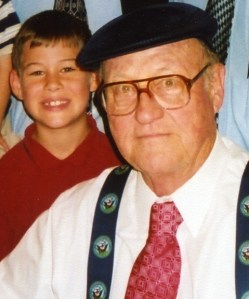
Dad, also a practical man, once told me, “If you are serious about wanting to change, don’t wait until New Year’s Day. Start the change now, and ask the Lord to help you.” And through the years I have proven Dad’s statement to be true.  (That’s my grandson, Caleb, next to dad.) Dad continued, “Don’t make a statement and call it a resolution.”

If you think a change is needed, resolve, or determine to change. Make up your mind, ask God to help you, then set your will to cooperate with God. When you are tempted to resume your former ways, remind yourself that God is ready to help. Ask the Lord for emotional strength to keep your promise. The key is to be honest! Be honest with God and with yourself.

What was it that Polonius said in Hamlet, Act 1, Scene 3?  “This above all: to thine own self be true, and it must follow, as the night the day, thou canst not then be false to any man.”

God did a marvelous thing when He created us in His image. He created us with will-power, and He wants us to use it for His purposes. It shouldn’t surprise you to know that we can do whatever He empowers us to do.

Do you want to change something this year? Don’t be hypocritical. Make sure it’s in line with God’s will, and then ask God for help. If you are honest, God will help you make that change. This year can be a New Beginning for you. I know the covid-19 stuff has turned the world upside down, but God is willing to help you. Ask Him – He’s listening.

Then you can rejoice and say with 2 Corinthians 5:17, “Old (unnecessary, improper, wrong, harmful) things have passed away, and behold, all (needed, good, wholesome, healthy) things have become new.”

Oh yes: if you find that Grandpa was right and you broke the resolution, Don’t Give Up! Things don’t normally change with one statement or in one day. It took time to form bad habits, and it will take time to change. So, don’t quit. With God’s help, you can make, and keep, good resolutions.

Happy New Year, Friends … 3 days late.

Look Into the Face of Jesus

Who is this baby we call the Messiah? John 1:1-3 starts at the dawn of human history. “In the beginning there was the Word. The Word was with God, and the Word was God. He was with God in the beginning. All things were made by him, and nothing was made without him.” Verse 14 says, “The Word became a human and lived among us. We saw his glory—the glory that belongs to the only Son of the Father—and he was full of grace and truth” (NLT). The baby, Who was (translated into English) named Jesus, was previously called both the Word and God.

Luke 1:26-35 tells Mary’s side of the story. The angel appeared to Mary, informed her that God favored her and chose her to be the mother of the Messiah. The angel told her to name the baby Jesus.

Can you imagine Mary’s shocked response? “I’m engaged, but I’m not married yet, and am still a virgin! How am I going to have a baby?”

The angel replied essentially, “Mary, this is an act of God. If you’re willing, God will supernaturally plant the seed within you, and you’ll remain a virgin until after the baby is born.”

With trepidation, Mary agreed with the angel. But Joseph, Mary’s fiancé, had a different reaction.

Matthew 1:18-25 gives us Joseph’s viewpoint. Joseph wanted nothing to do with an unmarried, pregnant woman! He intended to dump Mary for being pregnant out of wed-lock, but the angel finally convinced him of God’s plan, and that Mary was honest, undefiled, and still a virgin. The angel told Joseph in a dream that God wanted him to marry Mary, the baby was to be named Jesus and would [eventually] save people from their sins. Understanding the shame and derision they would endure, Joseph accepted Mary as his wife and adopted Jesus as his own son.

The Imperial decree ordered all men to return to their town of birth for the Roman census, so Joseph took Mary and went to Bethlehem. On the night of Jesus’ birth, the first yard to light up the community on the first Christmas was the field just out of town.

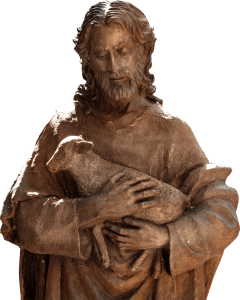
That’s where we read that after the angel scared the daylights out of the shepherds, the angels gave the world-changing announcement that God had entered humanity in the form of a baby. When the shepherds calmed down and believed the angelic message, they were the first visitors to look into the face of our Savior, Jesus Christ, and to welcome God, in the form of a baby, into the world. I also believe they were the first to offer a gift on Christmas night. They gave a lamb to the new-born King.

The wise men, Persian scientists, received the message of the new King as they studied the sky. Psalm 19:1-2 says, “The heavens proclaim the glory of God. The skies display his craftsmanship. Day after day they continue to speak; night after night they make him known” (NLT).

About a year later, these scientists were the first visitors of their kind to welcome God into the world. Looking into the face of our Savior, in the form of a toddler sitting in His mother’s lap, they gave Him gifts fit for a king: gold, frankincense, and myrrh.

Remember that I said Joseph adopted Jesus – the Son of God – as his own son? Now the situation is reversed. If we accept Jesus as our Savior and live to honor Him, God will perform a miracle and adopt us – humans – into His heavenly family. And that introduces another miracle: Jesus, Who is God, is the best Friend a person can ever have!

Christmas is not limited to a starry-eyed baby lying in a manger. It wasn’t intended to be depicted by trees, lights, glitz, hoopla, parties, noise, and a lot more associated with the secular holiday event.

Christmas is about God entering humanity to rescue us from our uncontrolled descent into debauchery and death. God entered humanity as a baby, died on the cross as a man, but broke the curse of sin and death by rising from the dead as Almighty God on the third day and returning to heaven. That’s what Christmas is really all about.

Give gifts. Enjoy the season. Love your family. But look into the face of Jesus. Honor Him in everything you do.

Merry Christmas, friends.

How Do You Celebrate Christmas?

Do you know that the first hint in the Bible of what we call Christmas is in Genesis 3:15? A lot happened between Genesis 3:15 and Matthew 1:18, but we won’t go into all that today.

My questions are: How do you celebrate Christmas? Do you go over the river and through the woods to visit grandma? Do you read the Scriptures that talk about Jesus’ birth? Do you take a trip? Invite people to your house? Do you watch movies or football games? What’s your favorite Christmas meal?

I looked up historic Christmas celebrations. For about 300 years after Jesus’ resurrection, there were no observances of His birth – therefore, no festivities. The first one recorded was in Rome, on December 25, 336 A.D., but didn’t become a primary Christian observance until the 800s. Decorating trees started in Germany, but had nothing to do with Christmas.

In the fourth century, church officials decided to observe Jesus’ birth as a holiday; and for non-biblical reasons, Pope Julius chose December 25. First called the Feast of the Nativity, the custom spread to Egypt by 432 A.D., and to England by the end of the sixth century. By holding Christmas at the same time as traditional winter solstice festivals, church leaders thought that Christmas would be popularly embraced, but in doing so, they gave up the ability to dictate how it was celebrated. Therefore, on Christmas, many people attended church, then celebrated raucously in a drunken, carnival-like atmosphere.

Hmmmm … It seems like that still happens today.

Noting societal debauchery, prevalent poverty, and abusive child labor in Victorian England in the 1840s, Charles Dickens vowed to do something about it, and writing was what he did best. So, in 1843, he published his novel, A Christmas Carol. Although the book is more a work of sentiment than of Christianity, it captures something of the Christmas spirit.

Dickens wanted to insert joy and gladness into a life filled with drudgery, dreariness and death. While acknowledging the seriousness of life, he portrayed the Spirit of Christmas filled with miracles and laughter. He also reminded society of the importance of blessing others by caring for those around them. Dickens encouraged joy and human-kindness, and inspired a positive change in society.
How do Carol and I celebrate Christmas?

We read about the birth of Jesus in chapters 1-2 in Matthew and Luke. That sets the tone for the celebration. We often visit one of our kids, but this year we’ll visit our daughter’s in-laws, Robert and Phyllis Crawford, near Oklahoma City. And instead of buying gifts for our families who live far away, then pay more for mailing them, we’ll mail the allotted money and let them choose the gifts.

Have you heard of the song, Over the River, and Through the Woods, To Grandmother’s House, We Go? I grew up singing it at Christmas, but it was written as a Thanksgiving Poem by Lydia Maria Child in 1844, and referred to Grandfather’s house. I find it interesting that where Carol and I live, all five of our children and their families have to travel over rivers and through forests to reach us.

My favorite Christmas meal is not turkey. (Shhh…don’t tell Carol.) My favorite is ham, mashed potatoes and gravy, yams with marshmallows, and fruit salad with whipped cream. Two to three hours later, I want pumpkin or apple pie with vanilla ice cream! Oh, yes – and coffee.

I like to watch football. On this coming Christmas day, the Minnesota Vikings will play against the New Orleans Saints. But I won’t watch it. Not on Christmas Day. This is a time to spend with family, which includes church family, and helping others.

We usually watch It’s A Wonderful Life the week before Christmas. It helps us to realize – again – the intrinsic value of each and every life. I hope that every one of you reading this reflection understands that every person is important. If you are hurting emotionally or are happy, if you are sick or healthy, if you feel rejected or accepted, if you are poor or wealthy, please believe me: you are important! Whatever may be your status or position in life, reach out and help others. THAT, my friend, is one way of manifesting the spirit of Christmas…the Spirit of Christ.

I understand that the covid-19 pandemic is putting a crunch on worship services, family gatherings, and celebrations this year, but you can still give to others. Be creative and find a way.

But stop and think about what this celebration is really all about – Jesus Christ. He came as a human baby, but never relinquished His true identity – God.

That is spelled out in John 1:1-4. “In the beginning there was the Word. The Word was with God, and the Word was God. He was with God in the beginning. All things were made by him, and nothing was made without him. In him there was life, and that life was the light of all people.”  

Then verse 14 says, “The Word became a human and lived among us. We saw his glory—the glory that belongs to the only Son of the Father—and he was full of grace and truth.”

May the Lord bless you this Christmas season.