Reaching for Life

I’ve been looking at my pictures of the redwood forest in Northern California. The trees are big! Our pine tree in the back yard that is over two and a half feet in diameter looks big, but it is small compared to a relatively small five-foot diameter redwood tree. Amazingly, redwoods that are 10-15 feet in diameter are common; and it staggers the imagination knowing that the diameter of the General Sherman Redwood is over 32 feet!

A typical farmed redwood tree may weigh 50,000 pounds, but some redwood trees weigh over 2,000,000 pounds! Interestingly, about half the weight is in the water. The redwood bark may be over 18 inches thick, and a huge redwood tree may provide wood to build 30-35 homes.

Water is necessary for life. The redwoods grow to 250-350 feet tall and require over 100 gallons per tree per day. But it rains a lot in these forests, snows in the winter, and fog is prevalent; therefore, they are seldom thirsty. The root systems of redwoods are shallow, and that would mean a heavy wind or flood could topple them easily. But as they reach for life-giving water, a mature tree spreads its roots over 2 to 4 acres; and with an average of over 30 trees per acre, the root systems overlap and intertwine which results in a strong foundation for these top-heavy giants. They effectively support each other in rough times.

Light is also necessary for life. God engineered plants to reach for or aim toward light. This is called phototropism. The same is true of these giant trees. Programmed to be tall anyway, they continue to reach for life – for sunlight. Lone trees out in the open will not be as tall as those in the forest with a thick canopy of foliage, therefore, they are open to more danger. There is protection among neighbors.

The mature redwoods are basically fire-resistant. The thick, fibrous bark does not burn easily, and as a protective shell, it insulates the tree which allows it to survive most fires. The thick bark also provides protection of another kind: it has the ability to withstand fungus, disease, and insect attacks. This is why these trees live so long. The oldest known redwoods are about 3,000 years old. Only the bristlecone pines (about 5,000 years old) are known to be older.

Looking at the pictures of these magnificent trees, my mind gravitates toward humanity. I see similarities. No – not about size, but about other features and qualities.

The redwood’s root system covers a wide area which gives it stability in inclement weather. In the same way, our roots in healthy relationships with family, church, and society give us stability during “inclement” situations such as death, job loss, health deterioration, and more. In our many storms of life, we need each other for emotional and physical support.

But strong roots in a healthy relationship with Jesus Christ will help us even more in this life on earth, as well as throughout eternity.

 A straight tree is stronger than a crooked tree, and its wood is useable in more situations. Likewise, a morally and intellectually straight man is stronger and more trustworthy, where an immoral or double-minded man is weak, confuses people, and leads people down the path of destruction.

Trees must reach for the light to survive. In the same manner, man must reach for light – truth – to survive. We cannot survive very long, either societally or spiritually, if we live in spiritual and moral darkness. We cannot mature as morally strong individuals if we resist truth.
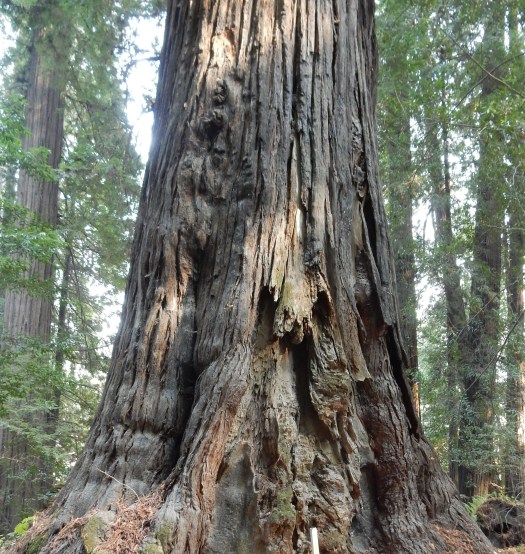
As the thick bark protects the trees, living in truth will protect us. Knowing the truth about various aspects of life – food, environment, chemicals, health, morals, physiology, and a lot more – can help us live safely. And purposefully living according to the truths found in the Bible will protect us in many ways most people don’t yet understand.

As the trees depend on water from the sky for life, man depends on guidance from the sky – from God – for life. Psalm 1:1-2 tells us not to follow the advice of ungodly people, but to meditate on and live according to the words of the Lord. Psalm 33:11 tells us that God’s plans are good, healthy, and beneficial. And Proverbs 14:11-12 warns us that man’s apparently powerful plans will fail in the end, but God’s seemingly weak plans are actually strong and will stand forever.

Trust in Jesus: Reach for Life. And live forever.

Birthday Celebrations

Two of my sisters and two of my children were born in November, so let’s talk about birthdays.

You all know the song, “Happy birthday to you.” It’s normally sung as a cake, with lit candles, is brought into the room or placed on the table. Someone hollers “make a wish,” then the birthday-kid – or adult – blows the candles out with one breath. I’ll admit, it’s difficult to get them all with one breath if there are more than 25 on the cake, or if they are trick candles.

Have you ever heard of those? Trick candles usually have magnesium dust in the wick. After the person blows out the candles, a glowing ember reignites the magnesium, and that reignites the residual wax in the wick. I know the trick to blowing them out – and keeping them out – with one breath, but I won’t tell.

Once when 35 candles were on my cake, it set off the smoke alarm!

Happy Birthday, cake, ice cream, presents, noise … where did it all begin? The answer will reveal why some Christians, Puritans as well as contemporary individuals, don’t celebrate them. They consider the festivity as pagan. They saw it as evil, arrogant, and ego-building.

It seems that birthday celebrations began in ancient Egypt. The date of birth was viewed in conjunction with astronomy, hoping “the stars” might predict their future. Also, a Pharaoh re-established his birthdate to when he became Pharaoh, because that’s when the people viewed him as a god.

The ancient people thought that demons were especially active during major events in our lives, so they made loud noises to scare them away. During new year festivities, the noise comes from guns, fireworks, and other means. For birthdays, noisemakers of many types are employed. But they also thought joy and happiness warded off demons, so gifts were given to make the person happy.

Candles might have come from the Greeks as they honored the goddess Artemis. They were lit to glow like the moon, which was a symbol associated with that goddess.  

Various cultures counted birthdays differently. For example. In June of 1969, we spoke with Chief Eagle of the Rosebud Sioux Reservation in South Dakota. In the past they didn’t think of years; they counted winters. (The Sioux call themselves the Lakota or Dakota – which means, Our People.)

It appears that the birthday cake, as we know it today, was first invented in Germany for their Kinderfeste, or Children’s Festivity. Creamed ice – I said that correctly – was known as early as the second century B.C. But ice cream might have been invented in the mid-1700s A.D. It’s said that President George Washington spent $200 for ice cream in the hot summer of 1790.

The original tune for “Happy Birthday” was written in 1893 by two sisters (Patty and Mildred Hill), both Kentucky school teachers. Their song was called “Good Morning To All,” and was sung by the students each school morning. But when a child had a birthday, the sisters substituted the lyrics Happy Birthday To You.

September 9 and October 5 compete as the most common birth date in the United States, but February 29, on the calendar every fourth year, is the least common birth date in the world.

The majority of American children celebrate birthdays with a cake topped with lighted candles. Most families use candles to represent how old a person is. When the cake is set before the guest of honor, he or she is supposed to make a wish without telling anyone what it is. After making a wish, he or she tries to blow out the candles. If all the candles go out with one breath, it is believed that the wish will come true.

Birthdays are celebrated more for children than for adults, unless it’s a milestone birthday such as 21, 30, 40, 50, 75, or 100. But have you ever thought about why we even bother to celebrate birthdays? Very simply, it’s a time for friends and family to come together and rejoice with you, to tell you how much you mean to them. Or to congratulate you for surviving another year.

With so many people hurting, feeling rejected, or unimportant, celebrating their life and honoring them is a wonderful way to express your love to them, and tell them how much they mean to you. It doesn’t need to cost much, but it’s important to show your family and friends that you care.

Thanksgiving Day

Thanksgiving Day is three days away, and I’ll make this blog a short one.

Carol and I left my brother’s house in Carlinville, Illinois, around 9:00 AM. Paul is a retired US Army chaplain with the rank of colonel. Paul’s background is so full that it would take two books to tell you about him. But since I’m not writing about him just yet, you can look him up on his web site. Go to paullinzey.com.

We had a great time with Paul and are now on our way to Bloomington, Indiana, to visit a friend, Sunny Smith, who is a retired Marine. He has almost as many stories to tell about life in the military as Paul does. We’ll visit my sister and her husband, Sharon and Jim, also in Bloomington, then head up to Worthington, IN, to be with one of our boys, Jeremy, and his family.

It’s a great joy to visit and fellowship with friends and family. Of course, our family members are also friends, and we have a lot to be thankful for.

Several years ago, a missionary couple at church told us about a poor family overseas. With barely enough money to buy food, the poor family received a gift of $70. They were quite excited and grateful for the gift, but they knew another family who had no food at all. Following God’s leadership, they joyfully gave that $70 to the other family. Their generosity revealed not only a grateful spirit, but a deep, mature relationship with God.

God gives many kinds of blessings, many of which are material. Many people, even those who don’t know the Lord, are generally happy about what they have. But those who have a relationship with Him are doubly grateful because they have eternal life in heaven to look forward to, and they don’t wait for Thanksgiving Day to show it. Their gratefulness, their thankfulness, is not based on what they have, but what they are – adopted children of God. They are thankful for life. And when their human life is over, they will be with God forever and thank Him face-to-face.

It isn’t what we have or don’t have that makes us happy, and it isn’t whether or not we’ve experienced hardship in life that prompts us to be thankful. What engenders gratefulness is knowing the One Who offers us eternal life.

James 1:17 tells us that every good gift comes from God. It’s a great idea to express our gratitude to God every day and be generous to others.

Happy Thanksgiving.

The Undulating Seascape

I’m from San Diego, California, and Carol’s from Seattle, Washington. We both are ocean-loving kids. Carol’s family visited the northern Pacific coast often; and my parents took us to the Southern California beaches often during my childhood, and to the Atlantic seaboard in my later high school years. Carol and I can sit on the beach or on a pier jutting into the water and watch the undulating seascape for hours on end and never tire of it.

Friends and acquaintances don’t understand, and ask, “How can you just sit there and look at the same thing for hours? Isn’t that totally boring?”

The answer is a resounding NO. The sea is never the same.

The swells that eventually morph into waves are always changing; and believe-it-or-not, the waves never crash the same. Sometimes the waves merely topple over, other times they mount up and trap enormous amounts of air as they prepare to pound the sand. That’s when the compressed air sends water exploding every which way. Other waves relax and melt into the surrounding water. Often several swells, which are moving at different speeds, will combine and create a much larger, more dynamic wave. And we get thrilled when a several hundred-foot-wide wave curls and breaks in one unified action.

The winds offshore create whitecaps out at sea, and the color of the water – based on the color of the sky and how the sunlight reflects off the water – changes continuously.

Sea animals often come into view. In Puget Sound in Washington State, Orcas (killer whales) are often present; but on our last trip up there we saw and filmed a humpback whale. That humpback must have gotten lost because they normally don’t enter the Sound.

Up and down the coast, we often see dolphins, sea lions, sea otters, gray whales, elephant seals, humpback whales, harbor seals, and other sea critters. In fact, on our last visit to the Oregon coast, we saw hundreds of sea lions floating off the coast, barking their greetings and, quite often, their disapprovals to each other.

We watch seagulls fight for food floating or near the surface of the water. And pelicans have an interesting way of circling to spot their underwater prey, then dive like spears to get their fresh fish feast. Periodically, we see jellyfish – and portions thereof – washed up on the beach. If you see any of these, please don’t touch them because the poison on the tentacles can still hurt you.

We like to go fishing on the coast. An interesting rule is: if we stand on shore or even in the surf, we need a license. But if we stand on the pier, no license is required. I caught a lot of fish from the pier.

One interesting non-sea-life viewpoint was Face-Rock at the State Park in Bandon, Oregon. The huge rock just off-shore resembles the head of a person looking up to the sky, and carries the legend of Indian Princess Ewauna who was lured out into the water by Seatka, the evil spirit of the sea.

At Monterey, California, we nearly lost track of time. After visiting the fascinating Monterey Aquarium, we went to the shore several miles away. The tide was coming in, the waves were crashing in spectacular form with dynamic results! We watched for several hours without realizing it was getting dark. Although both of us had taken over 150 pictures, we kept taking them because every time we looked, the scene was different.

By the way, it was the Monterey Aquarium staff who discovered that octopi (plural of octopus) kill sharks. Look it up on the internet for the whole story.

But just as the undulating seascape is ever-changing, life is ever-changing. Every time we wake up, turn around, go the to store, or meet someone, things change. Our health changes, businesses close, people lose jobs, someone dies. We sometimes emotionally feel like corks tossed about on turbulent water. We need an anchor. What can we do?

As a ship in a storm needs a safe harbor, we can find peace and safety in Jesus. The song declares: “I’ve anchored my soul in the Haven of rest.”

The Bible informs us that Jesus understands everything we experience, has endured every kind of temptation, pain, and hardship we face, and is willing to help us – if we let Him.

Who’s the Designer?

I’ve been driving cars for over 59 years, but that doesn’t make me an auto mechanic. I’ve been using computers for 33 years, but that doesn’t make me a computer programmer. In like manner, a person who has a Ph.D. and works in a scientific laboratory doesn’t mean he or she knows much about creation, the origination of the cosmos, or of life.

But please listen: just because I’m a dedicated Christian doesn’t mean I know everything about creation or of the origination of life, either. If we are honest, we admit that we all base our lives on faith to some degree.

While I openly admit that my knowledge is limited, others who oppose my views get upset or frustrated if I declare their knowledge to be limited.

Let’s look at a few ideas logically and scientifically.

To start, faith is required to believe in what has not been proven. For example, I had faith that this chair would support me. I sat on it to test my theory. Wonderful! It is now proven that the chair will support me, so faith is no longer required. Let’s continue.

In September of 2000, Alan Dershowitz, an agnostic, debated Alan Keys, a Roman Catholic. In defending his main thesis that “what is right cannot be known,” Dershowitz said, “We know what evil is. We have seen it.” He mentioned events such as the holocaust and the crusades. He then raised his voice and emphatically declared, “I don’t know what’s right. I only know what’s wrong!” (From the book, I Don’t Have Enough Faith to be an Atheist, by Norman Geisler and Frank Turek; page 179.)

But Dershowitz was definitely and defiantly wrong.

We cannot know what is incorrect or wrong unless we have a standard of what is correct to judge it against. To know what’s wrong, we must know what is right. Therefore, since we know it is evil to murder, we instinctively understand the intrinsic value of life. Since we know that lying is wrong, we intuitively understand the moral value of truth. The principle of right and wrong is imbedded in everyone’s conscience. Therefore, we have proof that we can know what is right.

How about the concept of truth? Some people emphatically declare that since everything is relative, there is no absolute truth. But is that statement correct? Think now: Is it absolutely true that there are no absolute truths?

Some people affirm that Biblical Creation is not true, and claim that the mythical and unprovable Big Bang created the well-organized cosmos with logical and scientific precision with no intellect or mind to guide anything. But I don’t care how it’s explained, it is scientifically and physically impossible for matter to self-generate out of nothingness. The Big Bang hypothesis is science fiction. I might add, though, It is an intriguing concept.

I’ve never received an intelligent answer to this question: If evolution were true, how did rock particles turn into living organisms?

By the way, have you ever looked through a microscope at a one-celled amoeba? I have. Those critters are very complex. And if you ever stop and think about it, there’s no intelligent rationale as to how amoebas evolved into other life-forms. In reality, evolution is not scientific. It’s a hypothesis, it’s called a theory, and taught as fact. But that’s not science. At best, it is an unprovable concept that is based on faith.

We in the scientific arena understand that nothing (neither material nor energetic substance) can be created out of nothing. Matter can be neither created nor destroyed. Yet matter – stars, planets, gas – does exist.

To believe billions of galaxies came into existence due to an explosion of absolutely nothing takes more faith than to believe our Creator – God – spoke the cosmos into being.

In order for people (agnostics, atheists, higher critics, skeptics, non-believers) to persuade me that God did not create all of nature, they should give me a viable alternative. But they can’t. Their arguments break down due to physical impossibilities, built-in inconsistencies of logic, ignorance of obvious truth, and lack of substantiation. That’s why many who believed in (had faith in) evolution have gravitated toward the Intelligent Design concept.

But they still have a problem: if there’s no God, who is the intelligent designer?

Understanding that ALL concepts of creation are intrinsically religious, the only logical approach is Genesis 1:1, “In the beginning, God….”

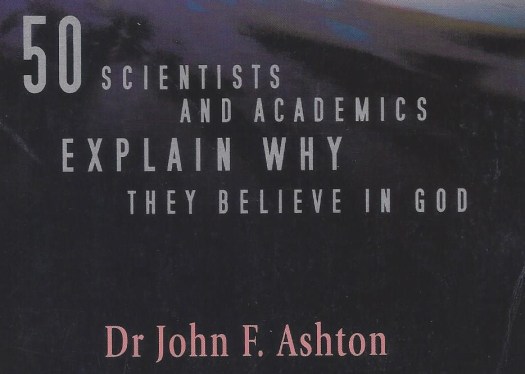
God is the designer of it all.