Peace in the Midst of a Storm

It was December 24, 1914. The battle lines had been drawn up between the English and German forces. As with the Union and Confederate forces in the American Civil War, the English and Germans thought the fight would be over in a few months. But five months after it started, the “hell” of war began to weigh heavily on them.

It had been raining during the day, and freezing at night. The dead between the opposing trenches could not be retrieved, so they froze each night. On December 7, Pope Benedict XV had suggested a cessation of hostilities in honor of Christmas, but neither England nor the German high command would agree. They thought the soldiers wouldn’t see the man across the line as an enemy if they dwelled for a day on Christ and Christmas.

But some men in the frozen, muddy trenches had other ideas. Christians were on both sides of the field, and Christmas Eve on this particular portion of the battle-line was peculiarly quiet.

German soldiers, who had spent time in England prior to the war, began singing Christmas Carols, some in English. Most of the Germans sang in their own language. Their English enemy, 100 yards across no-man’s-land, cautiously looked above the soggy sandbags to see what was going on. Seeing no weapons ready to fire, and no bullets whizzing over their heads, some English soldiers began singing. There, in the middle of the storm of The War to End All Wars, the peace of God was manifesting itself in the hearts of declared enemies.

Then December 25, 1914 – Christmas Day – dawned.

Against the orders of his commander, a German soldier climbed out of the trench, raised his hands in a gesture of peace, and nervously, slowly, walked onto the field of death. Orders of “Don’t shoot!” were issued from the English side. An English soldier, thinking this might be a trick, nevertheless, climbed out of his trench.

Then, he slowly laid his rifle down and raised his hands in peace. As the two men cautiously walked toward each other, men on both sides began emerging from the safety of the trenches and joined them. Those who knew the other’s language conversed, shared stories of home and family. Several reports I read said they played soccer that day, using cans or soggy sandbags for the ball.

The men in the German/Prussian uniforms did not hate those in the English uniforms, and the opposite was true. The unofficial cease-fire on December 25, 1914 verified that fact. They were pitted against each other because of the ideologies of their national governments.

There was another event in the history of the world that took place about 1,880 years earlier that set the stage for the English/German non-official cease-fire. It, also, manifested peace in the midst of a storm.

Not only was the iron hand of Rome harshly ruling the known world, the cruel and insecure Herod was ruling Israel. As the emperor mandated the death of those who would not bow to him or his gods, Herod ordered the death of anyone – including wife and son – who threatened his rule. In the midst of that deathly turmoil, the angel warned Joseph and Mary of the danger. They were granted a place of safety and serenity in a stable for the birth of the One who came to offer salvation and peace to the world – Jesus. Scripture says He would be called Emmanuel, which means, God with us.

He is still with us. The peace He offers was not only for the Jews back in the days of Imperial Rome. It wasn’t only for those who stopped fighting for a day in 1914. Jesus offers peace to us today – in the midst of the storm of covid-19, the turmoil of the presidential election, and social upheaval.

If Democrats, Republicans, Independents, Communists, Socialists, Green Party members, and the rest could stop fighting, study the Bible and allow the truth of Christmas – and the true Christ – to enter their hearts and minds, they could learn God’s purpose for their lives. Jesus also died for the Buddhists, Shintoists, Muslims, atheists, and everyone else who would accept Jesus into their tumultuous lives.

He came as a baby so He could grow up experiencing the pressure and pain we encounter. But His babyhood lasted only a year or so. He became a man Who suffered every kind of pain, trial, and temptation that we suffer. But He never sinned. And He died!
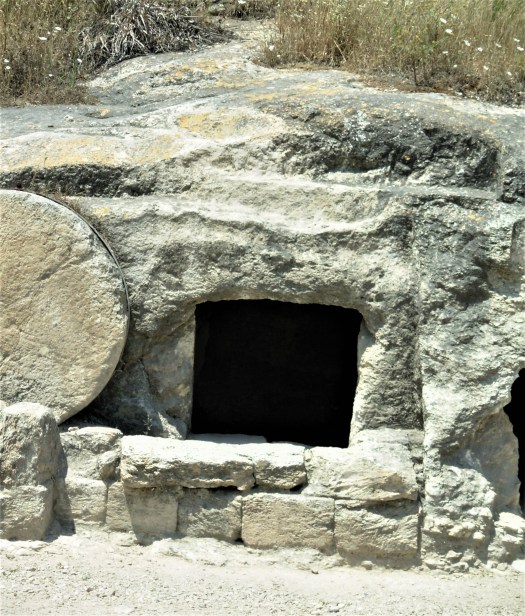
But three days later He came out of that tomb, and we have eyewitnesses to the fact: the guards on duty who were there to make sure no one stole the corpse. And because of His resurrection, He offers us His peace and joy in the midst of our storms. And He offers us eternal life with Him in heaven if we accept Him into our lives. He’s listening right now, so you can talk with Him. He loves you and will help you.

Have a Blessed Christmas.

The Head-Banger

Have you ever found yourself banging your head against a wall? How’d it feel? Did it help the situation? A friend of mine in New Mexico got so upset one day that he broke the sheet rock wall in his house with his head. After recovering from the concussion, he paid someone to repair the wall; but the situation he reacted to didn’t change because HE didn’t change.

Several weeks ago, Carol and I were finishing breakfast when I heard the unmistakable sound of someone banging its head against a solid object. This guy wasn’t upset or angry. He was hungry and looking for food. He was pounding away on the branch making bits of bark fly as he was gathering ants and other bugs with his long, barbed tongue.

It was a woodpecker.

I’m not an ornithologist, but this bird looked like a large Pileated Woodpecker. These guys can grow to almost 20 inches long, have a wingspan up to 29 inches, and weigh up to 12 ounces. It was drumming on one of our branches, grabbing nourishment with its tongue, and apparently taking it to someone in a nest because it made eight or nine trips to a distant tree while we were watching. I read that some woodpeckers have up to 9-inch tongues, but the Pileated Woodpecker’s tongue is only about 4 inches long.

These birds are members of the Picidae family, and peck like a jackhammer at about 20 hits per second! Compare that to a good machine-gun that fires 1,000 bullets per minute, which is16 per second.

The International Ornithological Congress says 236 species of woodpeckers make up the Picidae family world-wide, but only 23 species inhabit the United States.

How do woodpeckers survive the banging without getting headaches or concussions? God provided them with amazing safety features.

The beak consists of three-layers. The tough outer cover is called rhamphotheca made of scales from keratin, a middle layer of porous bone, and an inner fibrous layer made of mineralized collagen. Its structure absorbs and distributes much of the impact throughout the body which reduces the strain on the brain.

The skull is made of sponge-like bone, and liquid surrounds the brain. Both skull and liquid absorb a lot of the rapid-fire shock, and a safety belt called the hyoid bone that wraps around the brain keeps the brain from rattling. While pounding the tree, a thick nictitating membrane covers the eyes, protecting them from flying shrapnel. Also, the slitted nose is protected with special feathers.

Many of these critters are antisocial and don’t mix well with others. In this sense, “Birds of a feather flock together” doesn’t always hold true. Most are territorial and are jealous of their turf.

I read that wild woodpeckers live from 4 to 12 years, but under ideal conditions they might live 25 to 30 years.

The most famous woodpecker in America is the cartoon Woody Woodpecker that was created by Ben Hardaway in 1940. I always liked that cartoon. Hardaway styled Woody as a combination of several birds, including the Pileated Woodpecker.

Thinking back on my friend in New Mexico, he wasn’t created like a woodpecker, so he shouldn’t have physically banged his head. And he discovered that becoming a head-banger doesn’t do any good.

What about figuratively banging our heads? Normally, that means we are frustrated, angry, or worried. However, if we get upset, it blocks the creativity we need for correcting the situation. Rather than demanding that the situation change, we need to change our method of responding.

Storms of all sizes and types are an integral part of life. But as devastating as the storm may be, it is our reaction that exacerbates the problem. Getting upset and banging our heads only makes things worse.

So what should we do?

Because we have a difficult time changing our circumstances, we need to learn how to change ourselves. Romans 12:2 tells us don’t act like the world but ask God to help us change the way we think. Then we will learn to know God’s will for us. Interestingly, when we change the way we think and act, our circumstances often change.

Psalms and Proverbs provide the principles for handling almost any situation that life can present. You may scoff at that; but when you recognize and admit your need for help, God will be waiting for you. We don’t need to be a head-banger; leave that option for the woodpeckers.

The Meandering River of Life

The Büyük Menderes River is the longest river in Turkey that twists and turns in a tortuous path as it rushes to the Aegean Sea. The name Menderes is a derivation of Maiandros which is transliterated into English as Meander, and that name has become prominent in our culture.

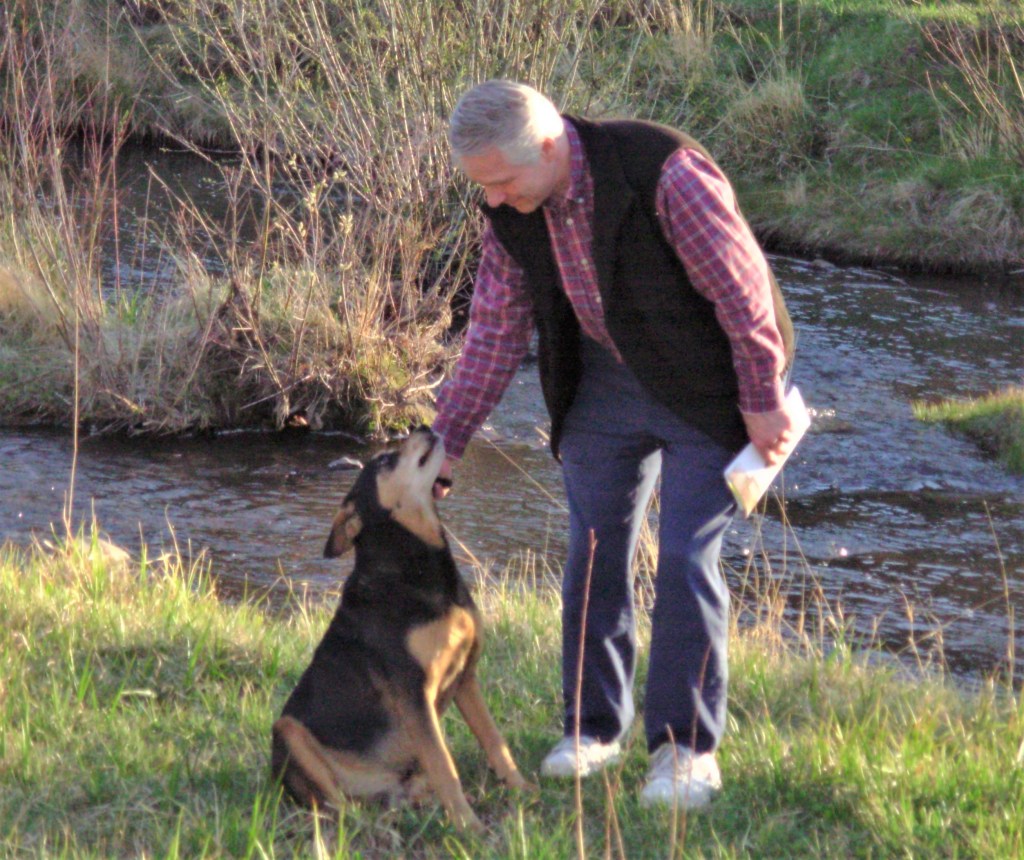
A good illustration of meandering is when my dog and I walked the three-quarter mile dirt road to our mailbox when we lived in the mountains of northern New Mexico. For every 50 feet I walked, Tyke ran to-and-fro about 200 feet. Another illustration is the Ohio River which flows from Pittsburg, PA to Cairo, IL. The Ohio is 981 miles long, but Cairo is only 549 miles from Pittsburg by helicopter. The meandering nearly doubles the distance.

Due to natural causes such as earthquakes, floods, landslides, and hurricanes, river paths change at times. Dad was raised in McAllen, Texas which isn’t far from Brownsville. Years ago, Dad said, “Brownsville is usually in the United States. But during flood stage, the Rio Grande changes course, flows north of Brownsville, and puts the town in Mexico.”

Of course, Dad was joking about Brownsville being in Mexico, but the Rio Grande did change course at times before the flood-control dams were built.

Not only has the Mississippi River changed course, but it also flowed backwards several times. The first time that we know about was after an earthquake in 1812, and the reverse flow generated a tsunami which wiped out a pirate’s den on a river island. When it resumed its southern flow, it cut a new channel and a portion of its course had changed. The second time was in 2005 when it reversed its flow for several hours during Hurricane Katrina. The third time was in 2012 when Hurricane Isaac forced the southern end of the river to flow backwards for 24 hours. You probably read about the mess it caused up and down the river.

As Carol and I were driving from Bloomington, IN to Worthington, IN last month, I turned onto a road that wasn’t on the map. It was headed in a northerly direction, and I knew I would get to my destination. The road meandered every-which-way like a stream trying to find its way to the ocean. Nevertheless, it was relaxing until we reached a T in the road with no indication as to which way we should go. Frustration was about to raise its ugly head, but a man in an old rusty car stopped and asked where we wanted to go. We told him, he told us to turn right, and peace reigned again. The road took us to Worthington, and we joined up with our son and his family.

Then while assisting our son in building his home, I came into contact with poison ivy. That changed my life for a month.

Events throughout life generate corporate change as well. Businesses closed and people lost employment because of our reaction to the recent pandemic. War affects political and financial decisions. I officiated at the funeral of a dear friend in Kentucky recently. Direction in life changed dramatically for that family.

Life is like a meandering river. Change is ever-present. Confusion is prevalent. Emotions are visible and anger often flares.

But stop. Let’s not react negatively. Change is guaranteed almost every day, so how do we establish and maintain a steady course?

The captain and helmsman of the ship must know the river. Sam Clemens, known as Mark Twain, studied the Mississippi and knew every turn. Some captains hired cheap help and lost their vessels to rocks, hidden logs, and erratic shorelines, but Mark Twain kept his boats in safe water.

As we sail the meandering river of life, we need help in keeping our “ships” in safe water. We dare not trust our lives to myths, fables, imaginations, and humanistic religions. We need a solid anchor with a reliable chain that keep us secure during the storms of life.

That anchor is Jesus Christ, and the double-chain consists of the Holy Bible and the Holy Spirit. Jesus said in John 14:26, “The Helper, the Holy Spirit, whom the Father will send in My name, will teach you all things, and bring to your remembrance all things that I said to you.” So read what Jesus said in the Bible.

Jesus our guide in the meandering river of life. You can trust Him.