Birthday Celebrations

Two of my sisters and two of my children were born in November, so let’s talk about birthdays.

You all know the song, “Happy birthday to you.” It’s normally sung as a cake, with lit candles, is brought into the room or placed on the table. Someone hollers “make a wish,” then the birthday-kid – or adult – blows the candles out with one breath. I’ll admit, it’s difficult to get them all with one breath if there are more than 25 on the cake, or if they are trick candles.

Have you ever heard of those? Trick candles usually have magnesium dust in the wick. After the person blows out the candles, a glowing ember reignites the magnesium, and that reignites the residual wax in the wick. I know the trick to blowing them out – and keeping them out – with one breath, but I won’t tell.

Once when 35 candles were on my cake, it set off the smoke alarm!

Happy Birthday, cake, ice cream, presents, noise … where did it all begin? The answer will reveal why some Christians, Puritans as well as contemporary individuals, don’t celebrate them. They consider the festivity as pagan. They saw it as evil, arrogant, and ego-building.

It seems that birthday celebrations began in ancient Egypt. The date of birth was viewed in conjunction with astronomy, hoping “the stars” might predict their future. Also, a Pharaoh re-established his birthdate to when he became Pharaoh, because that’s when the people viewed him as a god.

The ancient people thought that demons were especially active during major events in our lives, so they made loud noises to scare them away. During new year festivities, the noise comes from guns, fireworks, and other means. For birthdays, noisemakers of many types are employed. But they also thought joy and happiness warded off demons, so gifts were given to make the person happy.

Candles might have come from the Greeks as they honored the goddess Artemis. They were lit to glow like the moon, which was a symbol associated with that goddess.  

Various cultures counted birthdays differently. For example. In June of 1969, we spoke with Chief Eagle of the Rosebud Sioux Reservation in South Dakota. In the past they didn’t think of years; they counted winters. (The Sioux call themselves the Lakota or Dakota – which means, Our People.)

It appears that the birthday cake, as we know it today, was first invented in Germany for their Kinderfeste, or Children’s Festivity. Creamed ice – I said that correctly – was known as early as the second century B.C. But ice cream might have been invented in the mid-1700s A.D. It’s said that President George Washington spent $200 for ice cream in the hot summer of 1790.

The original tune for “Happy Birthday” was written in 1893 by two sisters (Patty and Mildred Hill), both Kentucky school teachers. Their song was called “Good Morning To All,” and was sung by the students each school morning. But when a child had a birthday, the sisters substituted the lyrics Happy Birthday To You.

September 9 and October 5 compete as the most common birth date in the United States, but February 29, on the calendar every fourth year, is the least common birth date in the world.

The majority of American children celebrate birthdays with a cake topped with lighted candles. Most families use candles to represent how old a person is. When the cake is set before the guest of honor, he or she is supposed to make a wish without telling anyone what it is. After making a wish, he or she tries to blow out the candles. If all the candles go out with one breath, it is believed that the wish will come true.

Birthdays are celebrated more for children than for adults, unless it’s a milestone birthday such as 21, 30, 40, 50, 75, or 100. But have you ever thought about why we even bother to celebrate birthdays? Very simply, it’s a time for friends and family to come together and rejoice with you, to tell you how much you mean to them. Or to congratulate you for surviving another year.

With so many people hurting, feeling rejected, or unimportant, celebrating their life and honoring them is a wonderful way to express your love to them, and tell them how much they mean to you. It doesn’t need to cost much, but it’s important to show your family and friends that you care.

You’ve Got to be Kidding!

The following event took place in 2018.

“Where are you going this time?” Ed seemed to think my Precious and I should stay put for a while. “And how long will you be gone?”

“We’re going to The Ridges Resort in Young Harris, Georgia. It’s time for the annual reunion of the USS Yorktown (CV-5) Survivor’s Club, and we’re meeting in northern Georgia this year. The reunion will run from May 2-6. I’m the chaplain for the group”

“Oh yeah. Your dad was on the Yorktown at the Battle of Midway, wasn’t he? When was that battle?”

“June 3-6, 1942, and the ship sunk on June 7. I replaced Dad as chaplain of the survivor’s club when Dad died. We’re wrapping a trip around the reunion.”

“Young Harris? Funny name for a town.”

“It’s a real town – a small one – about six miles south of the Tennessee border and about 110 miles by road south of Gatlinburg, Tennessee.”

I told Ed we bought a travel trailer, and that it’ll be our home on the road for a month. I also mentioned that we would visit the Museum of the Bible in Washington D.C., the Gettysburg Battlefield, Niagara Falls, and maybe Noah’s Ark in Williamstown, Kentucky again before coming home.

 “The trip sure sounds interesting. But I know you: you wouldn’t buy a trailer for only a one-month trip, and I know you have to be home for your writer’s conference in June. So, why the trailer?”

“Okay, Ed; I’ll give you a hint. Starting in late July or early August, we’ll be on the road for about a year.”

“A year! Are you serious?”

“Yes, we’ll be gone for about a year, and the trailer will, indeed, be our home on the road. We’ll need a renter for the house. If you know of a family who needs a home for a year, let me know. But regarding the trip, I’m going to conduct an informal survey of churches across America while we travel the country. And, yes, we’ll do a lot of sight-seeing as we go.”

Shaking his head, “More like a spot-check survey. I think you ought to stay home. You going to keep writing for the paper?”

“Oh yes. For some reason Graham Thomas puts up with me, so you’ll see me every Wednesday in the Herald-Leader. And I’ll send Graham Tales From the Road periodically.”

Ed said he would pummel me with more questions later; but he had errands to run.

We never had a trailer before, so we made a preliminary week-end excursion to the Dallas area in March to learn about pulling one. We’ve named the car Traveler and the trailer Casita. In US Navy terms, the Dallas trip was the trial-run; the month-long Yorktown Reunion trip will be the shake-down cruise; and the year-long excursion will be the maiden voyage. (The month-long stretched into a 7-week trip.)

I chuckle as I think about Ed’s and my conversation. It’s true that Carol and I travel a bit, and I’m thinking of a trip back in June of 1970. Renting a U-Haul truck, we were moving from Everett, Washington to Los Alamos, New Mexico. Carol and our two kids flew by United Airlines, and a friend, Oscar Moe, drove the truck with me. Stopping in Pinehurst, Idaho for gas, Oscar struck up a conversation with the gas-station attendant.

“How long have you lived here in Pinehurst?” Oscar asked.

“All my life.”

“Have you traveled much throughout the Great Northwest?”

“Never been outa Pinehurst.”

“I don’t mean to be rude, but you said you are 38-years-old, and you’ve never been out of town?”

“Yup. Don’t need to go nowhere. Family’s here, dog’s here. Ma and Pa’s buried here.”

That amazed me! I was almost 24-years-old, married almost 4 years, and had traveled coast-to-coast with my Navy parents. Meeting someone who had never been out of town? That was almost beyond my comprehension.

Well, back to the 2018 trip.

Ed didn’t think we were really serious about this trip in a small trailer, and when he saw it, he burst out, “You’ve got to be kidding!”

I agreed with him that this will be living in close quarters for a while, and the weekend trip to Dallas would introduce us to living with each other in a portable house that is about half the size of the living room in our house. Will there be tension or misunderstandings? We are human, so the answer was yes. The inside space of a 20-foot trailer has only about 120 useable square feet, and that’s a lot less personal space than a 1750-square-foot house!

But our dedication to Jesus Christ was foundational and our love for and devotion to each other is a close second. We understand human nature. but no matter what happens on this ball we call earth, I’d rather be with Carol than with anyone else in the world. Therefore, overcoming problems is a given, and we will grow through them.

That was five years ago, and Carol & I have slowed down a little. But don’t be surprised if you hear that we took off on another trip. After all, the Casita is still on our driveway in front of the house. Tires are good, and — come to think of it, we are going to Texas in 2 weeks. Hmmmm………

Being Thankful

When I was a kid, Dad would ask us many times what we were thankful for. But on Thanksgiving, we had a family tradition – in addition to having turkey dinner.

Before I get into the tradition, my favorite part of the meal was mom’s mashed potatoes and gravy. Mmmm-mmmm-mmmm! They were good!

Oh, maybe my sisters, Gena and Janice made the mashed potatoes. Yeah, that’s right. Mom started the tradition, dad showed us how to make it without lumps, then Gena and Janice continued. It was a family effort. I can ask God to thank mom for me because she’s in heaven with Him, but I’ll tell my sisters “Thank You!”

The turkey thighs were my next favorite part, with marshmallow-covered sweet-potatoes coming in a close third. I never developed a liking for cranberries, but I would take one teaspoon of the stuff to make mom feel good.

Pumpkin pie and vanilla ice cream topped it off – but sometimes we waited for several hours to let the main meal settle. Then, the pie and ice cream served as a second, special meal!

 After the scrumptious meal, we stayed around the table and each person shared a memory of something that happened that past year for which he/she was thankful. When one of my siblings was thankful that Christmas was coming soon, dad said, “We’ll get to that another time.”

When it was my turn, it was sometimes difficult for me, because emotionally I felt like I was taking a school test: under pressure, I froze up. I broke out in a sweat and couldn’t think. After what seemed like an eternity, Dad would ask, “What are you happy about?”

Now THAT I could answer because it didn’t feel like an interrogation. I was happy about the meal we just ate. I was happy that it rained that week. I was happy that Jesus kept us out of a car accident when we were going to Ramona. I could think of a lot of things if I didn’t feel like I was under the spotlight.

It’s interesting how just changing the words in the question released me from the feeling of a dreaded school test.

With twelve of us around the table – ten kids plus dad and mom – it took a while to complete the tradition, and that was good! Too many times we would eat, clean up, wash-n-dry dishes, and continue on our busy way. But the tradition kept us around for a while and helped us interact as a cohesive family unit.

An example of that is when we, as a family, went to the Greyhound Bus Depot in San Diego to greet an incoming missionary. As dad was getting information from the man, my sister Janice came around the corner.

“Janny!” I hollered; and ran to greet her with a hug.

“How long has it been since they saw each other?” the missionary asked.

Looking at his watch, dad replied, “Oh, about 10 minutes.”

“Ten minutes? And they act like that?”

“That’s what we do – we love each other and greet each other with hugs.”

Love and acceptance is another tradition we always tried to build. One person told me, “It was probably an act because you didn’t really love each other – did you?”

All I could say was, “It was – and is – real for me. I can’t speak for the others; if it was only an act for them, that’s their problem. But as long as it is meaningful for me, it keeps me emotionally and spiritually healthy.”

Wouldn’t you prefer to be around loving and grateful people more than around grumblers and complainers?

It’s a fact that, as a class of people, loving and grateful people are healthier than others. That brings three Scriptures to mind.

Philippians 2:14 says, “Do everything without complaining or arguing.” That includes grumbling. Proverbs 17:22 says, “A happy heart is like good medicine, but a broken spirit drains your strength.” And Romans 8:28 tells us that if we cooperate with God, He can actually bring good out of negative situations if we trust Him.

A happy heart refers to a joyful person; one who normally doesn’t let disappointments get him down. And a broken spirit refers to a crushed or depressed attitude. Not only does depression drain the depressed person of energy, it also drains the energy of people around him.

So, become a thankful person, and make your life easier.

Can a Christian Be a Scientist?

An acquaintance in Texas wrote and asked a question that I had addressed on page 21 in my book, Reflections on Faith & History. He hadn’t read the book, so I copied that section and emailed it to him.

I retired from the scientific community in 2006 but since I still hear the question from other people, I’ll put it on this blog. I’ll present the original question and response and add further comments at the end.

     While working at a scientific laboratory, did you have a hard time separating your “Christian life” from your “scientific life?”

I do not have the need or the desire to separate my life into compartments. For one thing, I might get confused as to “Who am I supposed to be today?” or “How am I supposed to respond in this situation?” Whoever ideologically partitions his or her life because of supposed differences is being hypocritical in one or more areas. Instead, I am a dedicated Christian and it is easy for me to live in both communities. In my case, I totally enjoyed my life in both areas of the scientific and Christian communities because both are based on a quest for knowledge. The word science is an old word that literally means knowledge. We in the scientific community are searching for knowledge in many areas of life. We are called scientists, or seekers of knowledge. Also, we in the Christian community are searching for knowledge, and the Holy Bible which is a major source of knowledge does not contradict true science (2 Timothy 3:16–17).

However, there is a problem here: many people have been taught the fallacy that either there is no Creator God, or that God does not interact with humanity (read Psalm 14:1). They have been taught that human beings (at least some of us) are the ultimate universal intellect, and that we must decide our own reality or fate. But a person who rejects the Bible is rejecting a major source of truth and is then forced to formulate questionable hypotheses to replace rejected truth. Attempting to abstain from religion, his or her belief system becomes a religion in and of itself; and a dubious, man-made religion will not provide the answers for life’s problems.

Also, since people tend to impose their agnostic or atheistic belief systems (which are religious in nature) and humanistic errors on our society, we must study the Bible carefully to separate their counterfeits from the truth (2 Timothy 2:15). But keep this in mind: thousands of scientists around the world realize it was impossible for this universe to just “happen” all by itself. They realize that man could not really evolve from a tadpole, amoeba, monkey, donkey, or a spontaneous loud noise (big bang), and they also believe in God.

So keep on learning about Jesus and the Bible, keep learning about God and his creation, and please do not separate your life into compartments. Be yourself. Be real. Be a Christian.

There is a misunderstanding about whether or not we can talk about our beliefs in public. Although I don’t cram my religion down anyone’s throat, I understand and employ my God-given and Constitutionally guaranteed freedoms of speech and religion.

Here’s an example. One day at the scientific laboratory (I think it was in 1994), I was told that I need to take my Bible off my desk and stop praying on lab property. I looked at my manager and calmly said, “This week, America is celebrating National Native American Heritage Week. Ten Native American Tribes are opening each of their 4-hour sessions on Lab property with their own native prayer, and they have their religious material here on government property. Since the lab authorities and the national government are endorsing these religious events on lab property, they cannot deprive me of the same privileges. Therefore, my Bible stays on my desk, and I will continue to pray privately.”

I didn’t wave banners or get excited. I forthrightly but calmly stated my case and went about my business. And that was the end of it. I have many other personal examples, but that will suffice.

So, can a Christian be a scientist? Yes. Thousands of scientists, professors, doctors, astronomers, et.al., are Christians. Don’t be intimidated by non-Christians, but don’t be foolish, either. Be respectful as you wisely interact with the world (1 Peter 3:15).

On January 24, 2022 I wrote … “In Case You’re Interested”


In that blog I talked about this book, Charter of the Christian Faith. I said that it would be beneficial to whoever wanted to enhance their relationship with the Lord Jesus Christ. And that is absolutely true.

After hearing from many folks commenting on it and how it helped them, I took the privilege of writing a second edition. I refocused the message and gave the book a new title. Also, in order for readers to get the updated edition and not be confused with the two books, I took Charter of the Christian Faith off the market.

I replaced it with the new edition, Truth not meant to be Hidden, pictured here, and I’ve kept the price the same. This is a power-packed message you might never have heard before. And it does reveal truth that has long been hidden.

You’ll find the book at: https://www.amazon.com/s?k=S.+Eugene+Linzey&i=stripbooks&crid=NO0PDTQR3CQL&sprefix=s.+eugene+linzey%2Cstripbooks%2C107&ref=nb_sb_noss.

If you copy that url address and paste it into your browser, it will make finding this book very easy. It was published just last week, and I believe you will want to read it. You will see life in a way you’ve never seen it before.

The reason I wrote the book in the first place is although I know that all Christians go to heaven, much of the Church seemed to have forgotten how Jesus wanted a Christian to live while on earth. I didn’t see much difference in many people’s lives when they became a Christian or joined a church. On Sundays, most people talked about the Lord, sang, bowed heads in prayer, listened to the pastor – most of them – but something was missing.

Why would the Church of Jesus Christ—including all divisions and denominations–be confused as to what the Christian life is all about? Simply because I know many Christians who don’t seem to understand the Faith they claim to believe. Going to church and joining it is not the same as understanding the faith.

The Church, including each member of it, needs to keep in mind that our goal in life is not merely to get to heaven. Our goal in life, both on earth and in heaven, is to be a member of Jesus’ team and grow the Kingdom of God throughout eternity. It is by becoming an adopted child of God, and growing into a mature spokesman for God, that we can fully take our place in the Kingdom. That is why we need to know and understand the teaching in Matthew 5:1-12.

This book, Truth not meant to be Hidden, addresses this topic.

Christ Changes Lives

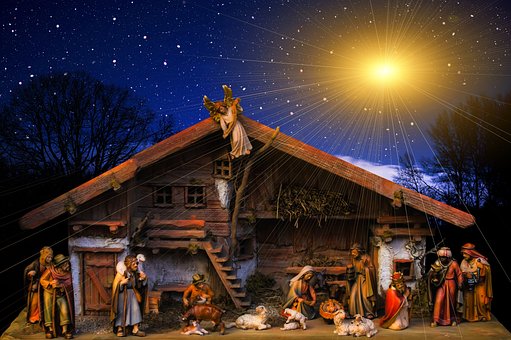
Caleb was puzzled. He had been training four other shepherds for a year now, and a new trainee, Micha, had been assigned to him last week. Caleb was accustomed to his helpers cooperating with him, and he was a little uneasy because they were late bringing in the sheep.

Being a shepherd wasn’t an easy task. Learning to know each animal by name was time-consuming, but that wasn’t the hardest part. Although shepherds need to know about the growing seasons, where the best fields are for grazing, what foliage is unhealthy for the critters, what predators are lurking nearby, how to fight them off, and how to tend the newborn and the wounded, a good shepherd also needs to know how to negotiate with other shepherds who may have trespassed into “their” territory. Caleb was wondering if a problem had erupted, so taking Micha with him, he decided to go out and find out what was happening.

It hadn’t rained for two weeks, so they walked more than an hour over several rather sparse hills to where Caleb had sent the men and flocks.

Tuvia saw Caleb first and joyfully shouted, “God is Good!”

“Not so loud, Tuvia. Yes, God is good. But you must be careful not to startle the sheep.”

“Oh Nahum, you’re always trying to comfort the sheep. But allow me some fun out here in the vast wilderness. I need to let off some energy, and the animals will survive.”

Caleb walked up to them, smiling. “I truly enjoy your enthusiasm, Tuvia. Please never let it leave you. But Nahum does have a point. Where is Levi?”

Ariel responded, “Levi is over the hill tending a ewe giving birth.” Micha immediately ran to watch.

“Over the hill, is he?” mused Caleb. “Well, I suppose we’ll be spending the night out here. It will be a warm and remarkably clear night for the middle of Tishrei (early October), and the sheep seem to be settling down. Yes. tell Levi and Micha to take their time; and Ariel, will you please prepare a meal for us?”

“Yes, Caleb, I’ll have it ready soon.”

After the meal a half-moon was glowing, the stars were shining brightly, a gentle breeze was wafting across the land. And Levi reported that the new birth was a healthy ram lamb.

But Micha sat apart from the rest. His parents taught him the prophecies that the Messiah should be coming soon. He was also taught to always look for deeper meanings to life’s experiences.

Suddenly, he sat up and looked around. He sensed something in the air. The others were relaxing and telling stories, but Micha jumped to his feet and cried out, “Look! Do you see what I see?”

Startled, the others quickly looked – then covering their faces in fear, they fell to the ground. A shining angel appeared and made an announcement! We read the angel’s announcement in Luke 2:10-12

Do not be afraid. I am bringing you good news that will be a great joy to all people. Today your Savior was born in the town of David. He is Christ, the Lord. This is how you will know him: You will find a new-born baby wrapped in white cloth, lying in a manger.

Then, many other glowing angels appeared which lit up the night sky; and they were shouting, “Glory to God in the highest! Peace to all men on earth!”

Or were they singing? It was hard to tell for their voices sounded musical.

The lead angel again told the shepherds not to be afraid and urged them to go.

Finally overcoming their fear, Caleb left Ariel with the sheep. The others followed the heavenly directions, taking a one-month-old lamb with them, and quickly went to Bethlehem. It was just as the angel announced: they found the stable where Joseph and Mary were. When they saw the new-born baby, who was declared by the angels to be God, Micha slowly knelt and softly but incredulously asked, “Look, do you see what I see?”

Caleb and the others, presenting the lamb as a gift, knelt beside Micha and looked at baby Jesus with profound awe.

Joseph announced, “His name is Yohoshua (Jesus) – God is salvation. He will save us from our sin-laden existence.”

Mary gently added, “The prophecy proclaimed he will also be called Immanuel, for he is ‘God with us’.”  The shepherds joyfully returned to their flocks. But they told everyone they encountered about the newborn Christ, for their lives were changed forever!

Thanksgiving Day

I lean back in my La-z-Boy chair, prop up my feet, turn on the 10 motors in the chair to massage my tired back, and relax. I like football, but I don’t feel like watching a game right now. Carol brings me a cup of coffee with the right amount of milk and sugar. I take a sip, ahhhhhhh, close my eyes, and thank God for the wonderful life He has ….

“Sweetheart. Gene, where are you?”

“Huh … wh … what’d you say?”

“You must have fallen asleep.”

“Yeah … I guess I … was … dreaming.”

Thanksgiving Day is almost here, and I’m in front of the computer where my hand fell on the keyboard. I looked at the screen and saw a page of Js. I deleted them. I looked over to where my La-z-Boy chair is beckoning me in real life.

“The reason I called you – oh, sorry that I had to wake you up – but we got a call from family in California. The fires are raging, and many houses, barns, and businesses have gone up in flames. Are you sure we should go out west?”

I thought back on the dream I was enjoying.

Not many bad things have happened to us, and I’m thankful. But what about my friends and family members? We are mourning for the family whose father and daughter recently drowned. Fires have ravaged multi-thousands of acres and several towns, and tornados have created havoc in many places. How will those whose lives have been turned upside down celebrate? Or can they truthfully celebrate Thanksgiving with the turmoil they’re experiencing?

I thought about the smoke would encounter if we went west. That shouldn’t be too bad, and we probably would not meet up with any flames. At least, I hope not. The smoke is devastating for some folks with bronchial problems, but my allergy pills should help me.

“Precious, I think we should go to our daughter and family south instead of our son and family out west.”

Years ago, two of my sisters lost houses in fires, and some friends are currently without electricity. Friends whose houses were damaged by the twisters are waiting for the repairs or reconstruction to take place. With that in mind, a question hung heavily in my mind, so I asked the Lord. “Father, how can people be thankful in the face of disaster? How can they actually be grateful when so much has been taken from them?”

Then I remembered asking my sister, Jan, how she felt when her house was destroyed. She responded, “Eugene, it’s only stuff. Whatever we want to replace, we can. But it’s only stuff. We’re still alive. That’s what counts.” That was an excellent, mature response.

I asked our friends how they’re doing after the tornado damaged their house. One of them responded, “We’re doing fine. It was hard to sleep afterwards, but it’s only a house. God has taken care of us.” The other said, “We’re doing fine. It’ll get repaired, and we are thankful to the Lord.”

I’ve never heard God speak out loud, but He answered my prayer with the following thoughts.

I give many kinds of blessings, many of them are material. Most people, even those who don’t know Me, are generally happy about what they have. But those who know Me are grateful for our relationship, and they don’t wait for this day of the year to show it. Their gratefulness, their thankfulness, is not based on what they have, but what they are. They are thankful for life. And when their human life is over, they will thank Me face-to-face.

Some time ago, a missionary couple at church told us about a poor family overseas. With barely enough money to buy food, they received a gift of $70. They were excited, but they knew another family who had no food at all. Following God’s leadership, they joyfully gave that $70 to the other family. Their generosity revealed not only a grateful spirit, but a deep, mature relationship with God.

“Precious, I called to see if the repairs on the trailer were complete. It’s almost ready.”

“What if the weather gets stormy?”

“We’ll go without the trailer.”

It isn’t what we have or don’t have that produces joy, and it isn’t whether or not we’ve experienced hardship in life that prompts us to be thankful. What engenders gratefulness is knowing Jesus Who offers us eternal life.

James 1:17 tells us that every good gift comes from God. Let’s express our gratitude to God every day. Let’s be generous to others. And let’s be compassionate and help those who are experiencing hardship and tragedy. Allow God to bless others through you.

Labor Day

The Linzey family has a current memory of Labor Day. On August 31, 2012, our oldest son, Ron, and his family came to visit over the Labor Day weekend. We had a great time with Ron, Tanya, and their twelve kids. On Monday, September 3, Ron said, “Well, we better get going. The new baby is due in three weeks and we have some preparations to make.” So they loaded up the van and headed back toward Oklahoma City.

As I was growing up in Southern California, I learned about Labor Day in school. However, at times I confused it with Armistice Day because my sister Janice was born on Armistice Day – which was renamed Veteran’s Day in 1954. That made things worse: for how could Janice be born on Veteran’s Day when she was actually born on Armistice Day. Are you dizzy yet? As a child, I easily became confused. Let’s get back to Labor Day.

   Ron’s family hadn’t been gone long when the van pulled back onto our driveway. Ron said, “For some reason, baby has decided to be born that evening. May we spend the night?” And a new memory was created: Little Daniel was born within the hour … on our bed … on “Labor” Day.

     Although most Americans observe Labor Day as a holiday, some are aware of the meaning of the day. What are some of your memories? While you’re thinking, let me share some historical data with you. We won’t discuss Jolly Old England, but will stick with the US of A.

This day is a celebration of the American labor movement and is dedicated to the social and economic achievements of workers. It’s an annual tribute to the contributions workers have made to the strength, prosperity, and well-being of our country. But if we look at it objectively, we should not celebrate labor OVER management or company owners. No; our achievements are a product of overall cooperation between management and laborers. But we did have quite a time getting things straightened out between the two sides as labor unions became politically oriented. However, without business organizations, laborers are not needed; and without laborers, business organizations could not exist. But someone had to be the authority over the workplace. Although that necessarily fell to management, the compromise was that labor became a cooperative partner.

There have been many labor disputes, such as the massive “Pullman Strike” and the poorly named “Haymarket Massacre.” But not all problems have been between labor and management. Many times the problems were between the laborers themselves and other problems were within management and/or between companies.

Company owners and laborers alike have made mistakes. Some mistakes were based on “company greed” and others on “laborer greed.” But both are encompassed in “human greed.” Many times laborers had proper grievances, and when cool heads prevailed, problems were resolved. Sometimes it was hard to find those cool heads.

But historically, Americans built a strong country. The pilgrims were diligent workers who believed in and honored God. The United States is a blend of people from around the world, and most of them had a desire to be self-sufficient. They wanted to send word back to their motherland that they were doing well. They detested receiving handouts but would rather give a helping hand to others. These folk helped to establish a strong, powerful working force that could solve any problem that arose. I applaud them, and hope America will reestablish that mindset today.

Some of you may have been involved in union strikes. If you have, you know it’s seldom an easy task to clearly define the issues, because both sides act like Republicans and Democrats: too often they create their own problems, hide their own ignorance, and blame each other.

We as a nation have become like I was as a child: we have become confused. Having “grown up” in the 19th century, we regressed in the 20th. I matured because I received a Biblical work ethic from my father who also taught me to believe in Jesus Christ. But America has forsaken our Biblical heritage, rejected a foundational work ethic, and is floating precariously down the river of shame and disgrace. As a nation, we are in trouble.

Our only hope to become stabilized is to reestablish our foundational belief in God and live according to Biblical principles.

Thoughts on Godly Character

It’s interesting how different folk prioritize character traits, or Godly attributes, as having a higher value than others. For example, one person considers honesty as the highest character trait on the list, while someone else views compassion as the most important. Yet another extols humility. So, which one is the most important?

That can’t be answered because it misses the main point, and it reminds me of when a friend asked me some years ago, “Which of your five children do you value the most?” I told him, “That question has no answer because they are all equally valuable.” And it’s the same with the various attributes of God: they are all equally important.

Character is a transliteration of χαρακτήρ, or carakter, which denotes express image. The idea is a brand, an engraving or indelible mark – in this case, an image or imprint on the soul. Therefore, a character trait of God is an attribute which characterizes or closely represents the nature of God.

Having worked with an organization which taught about living with high integrity and good character, I helped teach what I unofficially called the character traits of God. There are quite a few identified in the Bible, but here is my list. Don’t go to sleep now. Read this list slowly and think about God as you read each word (in alphabetical order).

Depending on the circumstances, God is: Alert, Attentive, Available, Bold, Cautious, Compassionate, Content, Creative, Decisive, [shows] Deference, [is] Dependable, Determined, Diligent, Discerning, Discrete, [manifests] Endurance, [is] Enthusiastic, Faithful, Flexible, Forgiving, Generous, Gentle, Grateful, Hospitable, Holy, Humble, [shows] Initiative, [is] Joyful, Just, Loving, Loyal, Meek, [Jesus was] Obedient, [is] Orderly, Omnipotent, Omnipresent, Omniscient, Patient, Persuasive, Punctual, Resourceful, Responsible, [Jesus was] Reverent, [is] Righteous, Secure, Self-Controlled, Sensitive, Sincere, Sovereign, Thorough, Thrifty, Tolerant, Transcendent, Truthful, Virtuous, and Wise.

Still awake? Good. Almighty God is more amazing than you or I could ever imagine! After reading this partial list, can any one of them be considered more important than the others? The answer is a definite No. It takes all of them – plus more – to describe or define Who our God is.

But we can truthfully say: depending on the circumstances, several may be more applicable than others.

For Example: If I am going for a job interview, a Loving or Reverent attitude might not be as relevant as being Attentive and Punctual – depending on the job, of course. And if the house is on fire, we can forget Hospitality; but being Decisive, Determined, and Dependable would really help.

A friend manifested no less than 31 Godly character traits as he repaired the air conditioning unit on my RV. It’s amazing how much we represent God as we help others. Why is that?

When God created mankind, He programmed us to be like Him. In Genesis 1:26 God said, “Let us make man in our image; to be like us.” Therefore, as we endeavor to live a good life, it isn’t just our duty and responsibility to represent God – to be His ambassadors – we can’t help it because it’s part of who we are. And as we help others we are the extension of God’s hands and feet.

But there’s another side to this.

Some folk purposely live in rebellion against God. Some thrive as they steal or defraud others, damage reputations, hurt or commit murder. Some are greedy, ruthless, haters of good. I could continue, but you get the point. These folk are blocking God’s eternal plan for their lives.

However, if they repent and honestly ask to be forgiven, God will Forgive them although they may face the consequences of their poor decisions.

Living with Godly character and integrity produces a wholesome life now, and a wonderful life for eternity.

 What kind of character are you? What are you doing with the time God has given you here on earth?

Identification Generates Change

I’m sure you were asked as a child, “What do you want to be when you grow up?” As I did, you most likely had a ready answer. I wanted to be a Navy Chaplain like my father. Many of my friends gave answers such as: a policeman, fireman, doctor, race car driver, a movie star, and so forth. In the 1970s, two other common answers were: a rock singer or an astronaut.

Why do kids respond like that? The simple is: identification. Identifying with something or someone we admire gives us a sense of belonging, a sense of importance.

As a Californian, I liked the San Francisco 49er football team. When the 49ers won a game, “I” won. When they succeeded, I succeeded. When they lost, I lost. I’ll never forget when WE won OUR 5th Super Bowl Ring! Had I ever met any of them? No, but what difference did that make? I liked Bill Walsh, Joe Montana, and Jerry Rice.

But I truly admired my father, and I strongly identified with him. I always liked dad better than the 9ers, anyway.

I also learned to admire other men who talked and sung about Jesus, and in high school a southern gospel quartet from Mississippi became my focus: The Blackwood Brothers Quartet. Not having met them, I referred to them by their first names, and sung along with the records I bought. I learned all four parts of all their songs and learned to sound like them – somewhat. When I finally met them near Boston, Massachusetts, my spirits soared!

A few others whom I admired and wanted to emulate were the Apostle Paul, Abraham Lincoln, Billy Graham, Paul Harvey, and Dr. J. C. Holsinger (Carol’s and my history professor in the university).

Identification with a person, group, or event generates change. Why? We mentally gravitate toward the object of our focus.

I tend to think like dad. I’m for a unified nation as was Lincoln. I focus on the Bible like Billy Graham. I learned to sing like several of the Blackwoods. Fifty years ago, I could sing tenor similar to Bill Shaw; but as the years passed, I began singing bass similar to J.D. Sumner – but not nearly as low as he did. I learned to study like Dr. Holsinger. I learned to tell stories similar to Paul Harvey. I learned to think theologically and philosophically like Paul.

Since identification generates change, identifying with these men gave me direction in life.

Merriam Webster Online Dictionary defines identification, in part, as: “A largely unconscious process whereby an individual models thoughts, feelings, and actions after those attributed to an object that has been incorporated as a mental image.” The person changes as the thoughts and feelings become a part of his life and his worldview.

An extreme form of emulation is idolatry and leads us away from God. But admiration, properly applied, is beneficial if it leads us toward God, maturity, and wholesome living.

But there is one more person with whom I have identified, and who has changed my life more than any other: Jesus Christ.

My favorite quote from Billy Graham is: “The Bible Says!” So, let’s go there.

John 14:23 says – “If people love me, they will obey my teaching” (NCV).

Romans 6:4 says – “When we were baptized, we were buried with Christ and shared his death. So, just as Christ was raised from the dead by the wonderful power of the Father, we also can live a new life” (NCV).

So, obedience is another way of identifying with the Lord. Obedience includes actions, lifestyle, and manner of speaking. And we find that water baptism is our statement to the world that we have totally identified with Jesus: in his life, death, and resurrection.

Remembering that we mentally gravitate toward the object of our focus, I have learned to focus my life on Jesus Christ. I know who I am, and to whom I belong.

Some who call themselves Christian but who do not live according to Jesus’ teachings, have not identified with Him. If your life – words, actions, lifestyle, attitudes – does not openly verify identification with the Lord, there is a question as to the sincerity of your faith.

Identification with Christ grants strength, security, belonging, power. Not power to rule people, but power to overcome evil and spiritual darkness. Those who identify with Christ receive authority to become adopted children of God. Identification with Jesus will help us throughout eternity.

Who do you admire or look up to? With whom do you identify? As you contemplate your eternal existence, will your role-models help you or hinder you? Think about it. Pray about it. Jesus is ready and willing to help you.