Part 1: Jesus – God with Us

Do we have any idea of when Jesus was born? How did we place his birth in December?
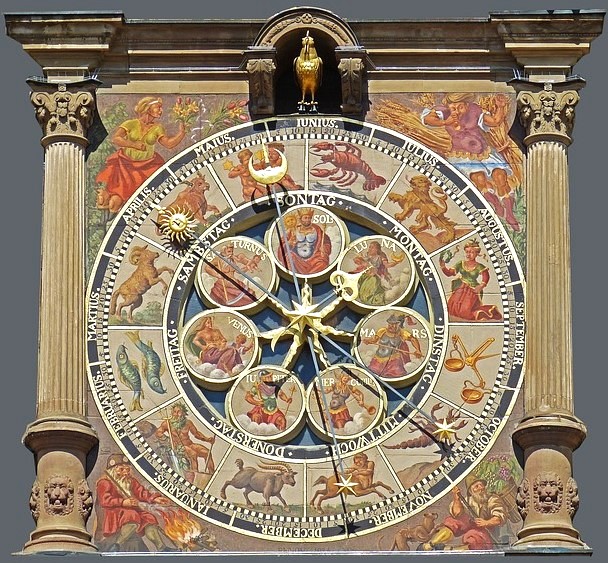
Emperor Julian, Constantine’s nephew, originated the Julian Calendar. In 1582 Pope Gregory’s people found a way to correct the minor flaws in the Julian calendar and produced what we call the Gregorian Calendar. However, the accumulated Julian calendar errors amounted to an estimated period of two to seven years (no one knows for sure), and it would not be possible to go back and attempt to correct every document ever written. Therefore, since all of human history was, in some way, dated in relation to Jesus’ birth, it was decided to back-date Jesus’ birth.

Using the amended Gregorian calendar, we think Jesus was born around 2–5 BC. In what month was he born? Probably in late September to mid-October. Why do I say that?

We know that the Old Testament spoke not only of history and the Abrahamic Covenant, but the Old Testament is intrinsically tied in with the life of Jesus Christ (Immanuel: God with us), the prophecies of his appearance, major Jewish religious festivals, and the proposed restoration of mankind. Therefore, I believe it is safe to assume that the major points of Jesus’ life are also related to the major festivals. Let’s look at them.

Jesus’ crucifixion took place on the Passover (Pesach). This is a major point that is well-documented in the Gospels and in Roman history. The Feast of Unleavened Bread related to Jesus’ burial. The Feast of First-fruits was related to Jesus’ resurrection. And of course, the Feast of Pentecost (Shavuot, or Weeks) related to the birth of the church fifty days after Jesus’ resurrection which was ten days after his ascension.

The other three major festivals are the Feast of Trumpets (Rosh Hashanah), Feast of Tabernacles (Sukkoth, or Booths), and the Day of Atonement (Yom Kippur). With the Feasts commemorating major events in the life of Jesus as well as of Israel, it seems to me that His birth would have taken place at another major feast: possibly at the Feast of Trumpets (around September or October).

Luke 2:8 says, “Now there were in the same country shepherds living out in the fields, keeping watch over their flock by night.” If the shepherds were living in the fields at night when the angels “trumpeted” Jesus’ birth, it is safe to deduce that the weather was not yet too cold. Thus, a September or October timeframe is logical, but not conclusive.

His birth might have been on the Feast of Booths (Tabernacles), also in the September-October time frame. Why? Mary and Joseph were not in a house during Jesus’ birth; they were in a cave, stable, or some other “booth.”

So how did the church decide on December 25?

King Constantine in the fourth century royally decreed that everyone in his empire should be Christian, and it became convenient for him in consolidating his empire to declare many pagan festivities as “Christian.” Therefore, the Sol Invictus (the “Unconquerable Sun”), marking the winter solstice and celebrated on December 25, was decreed to be equivalent to “the Righteousness of our Lord.” And to make things politically and religiously correct, Constantine decreed that Christ was born on that date. And since the emperor heavily influenced the church’s decisions, the church accepted that assigned date.

I’m a historian and I enjoy researching. However, the fact that Jesus wasn’t born on December 25 is not a problem. Our faith does not hinge on knowing the date of Christ’s birth. Our faith is based on the truth that Jesus is God in human form, was born of a virgin, came to save us from eternal destruction, died to redeem us from our sin nature, raised from the dead three days later to conquer death, ascended to heaven 40 days after he rose, and that he will return.

So, go ahead and celebrate His birth. But remember: He is no longer a baby. He is Almighty God, the creator of the universe. He created you and wants you to join Him and be part of His family forever.

Read part 2 tomorrow.

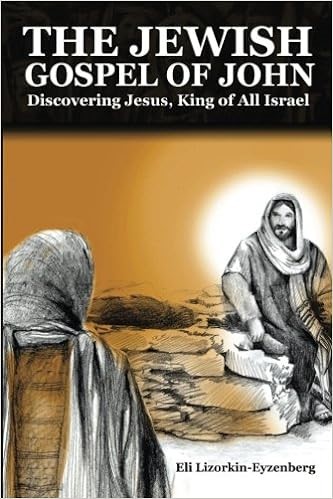
The Jewish Gospel of John

I seldom find a book that grabs my attention so strongly that I would rather read it than eat dinner. I discovered this book in February of 2016 and have kept it nearby for continual reference. It isn’t a novel, but it’s intriguing.

Since the Bible is my all-time favorite book, what am I talking about? For decades, I’ve told people if they want to know Jesus, read the Gospel of John. But people have read it for centuries; and because they don’t know the history, they don’t get the full impact of what took place.

Some folks tell us that the Gospel of John is anti-Semitic; but in the first chapter of this new book, it informs us that the Gospel of John is not anti-Jewish; it is pro-Christ.

Some scholars who can’t or won’t accept the Christ of the Bible, go to great lengths to try to explain the mysteries of the Bible and of the universe. Rather than accept the Christ of the Bible, they laboriously talk about the cosmological christ – the concepts of God, but without a real personal God. More on that in a minute.

So, what is it that grabbed my attention? The Jewish Gospel of John – Discovering Jesus, King of All Israel.

The author is Dr. Eli Lizorkin-Eyzenberg who teaches Jewish Studies for Christians in Tel Aviv, Israel.

Many with a higher-criticism mentality search for the Cosmological Christ, or the Historical Jesus. They attempt to find “it” or “him” in the depths of eastern religions, ancient philosophies, outer space, and/or human kindness – whatever that is. They spend enormous amounts of time and money to search for a quality of life this mythical Christ presents, but they don’t want to accept the God that Jesus ultimately is. Much of this is because they haven’t been able to understand the message in the Bible. It’s true that sometimes the Bible can be difficult to understand because many of the translators failed to recognize both the culture-specific idioms, idiomatic phrases, and the history behind the cultures. But Dr. Eli’s book, The Jewish Gospel of John: Discovering Jesus, King of all Israel, helps to overcome many of these shortcomings.

One of my favorite paragraphs in the book is on page 10. Dr. Eli said: ‘While the juxtaposition of law and the gospel was present in the Church Fathers, it is not until the time of the Reformation that the juxtaposing [contrasting] of law and grace became pronounced. This became a dominant emphasis. The opposite of grace became law; the opposite of law became grace. In all reality, the opposite of law was never grace but lawlessness. Just as the opposite of grace was never law but disgrace.’ I heartily agree.

The Jewish Gospel of John is not just another book about Jesus that was written from a Jewish perspective. We current readers need to step outside of our Gentile understanding and read the Bible from the point of view that aligns with the Hebrew culture; and Dr. Eli enables us to do that.

Instead of reading it as though it was written for Gentile Christians today, The Jewish Gospel of John reveals the Gospel in light of first-century Israel. The book proves what the late Krister Stendahl (Swedish theologian and New Testament scholar, and Church of Sweden Bishop of Stockholm) stated long ago: “Our vision is often more abstracted by what we think we know than by our lack of knowledge.”

Instead of challenging the long-held interpretations (and many misunderstandings) of well-known stories, Dr. Eli, with the skill of an experienced tour guide, lets us hear the Gospel fresh with those who heard it in the first century. The real Jesus is revealed in his book.

Ishay Rosen-Zvi, formerly head of the Talmud and Late Antiquity Department, Tel-Aviv University, now Full Professor teaching rabbinic literature in the department of Jewish Philosophy and Talmud at Tel-Aviv University said, “For some time, research on the Gospels has suffered from stagnation, and there is a feeling that there is not much new that one can say. In light of this, Dr. Eli Lizorkin-Eyzenberg’s commentary on the Gospel of John, with its original outlook on the identity of the original audience and the issues at stake, is extremely refreshing.”

I heartily recommend The Jewish Gospel of John: Discovering Jesus, King of all Israel.

The book can be found at Amazon.com. Or you can go right to the site by typing in: Eli Lizorkin-Eyzenberg (Author of The Jewish Gospel of John) (goodreads.com) You’ll be glad you did.

Birthday Celebrations

Two of my sisters and two of my children were born in November, so let’s talk about birthdays.

You all know the song, “Happy birthday to you.” It’s normally sung as a cake, with lit candles, is brought into the room or placed on the table. Someone hollers “make a wish,” then the birthday-kid – or adult – blows the candles out with one breath. I’ll admit, it’s difficult to get them all with one breath if there are more than 25 on the cake, or if they are trick candles.

Have you ever heard of those? Trick candles usually have magnesium dust in the wick. After the person blows out the candles, a glowing ember reignites the magnesium, and that reignites the residual wax in the wick. I know the trick to blowing them out – and keeping them out – with one breath, but I won’t tell.

Once when 35 candles were on my cake, it set off the smoke alarm!

Happy Birthday, cake, ice cream, presents, noise … where did it all begin? The answer will reveal why some Christians, Puritans as well as contemporary individuals, don’t celebrate them. They consider the festivity as pagan. They saw it as evil, arrogant, and ego-building.

It seems that birthday celebrations began in ancient Egypt. The date of birth was viewed in conjunction with astronomy, hoping “the stars” might predict their future. Also, a Pharaoh re-established his birthdate to when he became Pharaoh, because that’s when the people viewed him as a god.

The ancient people thought that demons were especially active during major events in our lives, so they made loud noises to scare them away. During new year festivities, the noise comes from guns, fireworks, and other means. For birthdays, noisemakers of many types are employed. But they also thought joy and happiness warded off demons, so gifts were given to make the person happy.

Candles might have come from the Greeks as they honored the goddess Artemis. They were lit to glow like the moon, which was a symbol associated with that goddess.  

Various cultures counted birthdays differently. For example. In June of 1969, we spoke with Chief Eagle of the Rosebud Sioux Reservation in South Dakota. In the past they didn’t think of years; they counted winters. (The Sioux call themselves the Lakota or Dakota – which means, Our People.)

It appears that the birthday cake, as we know it today, was first invented in Germany for their Kinderfeste, or Children’s Festivity. Creamed ice – I said that correctly – was known as early as the second century B.C. But ice cream might have been invented in the mid-1700s A.D. It’s said that President George Washington spent $200 for ice cream in the hot summer of 1790.

The original tune for “Happy Birthday” was written in 1893 by two sisters (Patty and Mildred Hill), both Kentucky school teachers. Their song was called “Good Morning To All,” and was sung by the students each school morning. But when a child had a birthday, the sisters substituted the lyrics Happy Birthday To You.

September 9 and October 5 compete as the most common birth date in the United States, but February 29, on the calendar every fourth year, is the least common birth date in the world.

The majority of American children celebrate birthdays with a cake topped with lighted candles. Most families use candles to represent how old a person is. When the cake is set before the guest of honor, he or she is supposed to make a wish without telling anyone what it is. After making a wish, he or she tries to blow out the candles. If all the candles go out with one breath, it is believed that the wish will come true.

Birthdays are celebrated more for children than for adults, unless it’s a milestone birthday such as 21, 30, 40, 50, 75, or 100. But have you ever thought about why we even bother to celebrate birthdays? Very simply, it’s a time for friends and family to come together and rejoice with you, to tell you how much you mean to them. Or to congratulate you for surviving another year.

With so many people hurting, feeling rejected, or unimportant, celebrating their life and honoring them is a wonderful way to express your love to them, and tell them how much they mean to you. It doesn’t need to cost much, but it’s important to show your family and friends that you care.

Reaching for Life

I’ve been looking at my pictures of the redwood forest in Northern California. The trees are big! Our pine tree in the back yard that is over two and a half feet in diameter looks big, but it is small compared to a relatively small five-foot diameter redwood tree. Amazingly, redwoods that are 10-15 feet in diameter are common; and it staggers the imagination knowing that the diameter of the General Sherman Redwood is over 32 feet!

A typical farmed redwood tree may weigh 50,000 pounds, but some redwood trees weigh over 2,000,000 pounds! Interestingly, about half the weight is in the water. The redwood bark may be over 18 inches thick, and a huge redwood tree may provide wood to build 30-35 homes.

Water is necessary for life. The redwoods grow to 250-350 feet tall and require over 100 gallons per tree per day. But it rains a lot in these forests, snows in the winter, and fog is prevalent; therefore, they are seldom thirsty. The root systems of redwoods are shallow, and that would mean a heavy wind or flood could topple them easily. But as they reach for life-giving water, a mature tree spreads its roots over 2 to 4 acres; and with an average of over 30 trees per acre, the root systems overlap and intertwine which results in a strong foundation for these top-heavy giants. They effectively support each other in rough times.

Light is also necessary for life. God engineered plants to reach for or aim toward light. This is called phototropism. The same is true of these giant trees. Programmed to be tall anyway, they continue to reach for life – for sunlight. Lone trees out in the open will not be as tall as those in the forest with a thick canopy of foliage, therefore, they are open to more danger. There is protection among neighbors.

The mature redwoods are basically fire-resistant. The thick, fibrous bark does not burn easily, and as a protective shell, it insulates the tree which allows it to survive most fires. The thick bark also provides protection of another kind: it has the ability to withstand fungus, disease, and insect attacks. This is why these trees live so long. The oldest known redwoods are about 3,000 years old. Only the bristlecone pines (about 5,000 years old) are known to be older.

Looking at the pictures of these magnificent trees, my mind gravitates toward humanity. I see similarities. No – not about size, but about other features and qualities.

The redwood’s root system covers a wide area which gives it stability in inclement weather. In the same way, our roots in healthy relationships with family, church, and society give us stability during “inclement” situations such as death, job loss, health deterioration, and more. In our many storms of life, we need each other for emotional and physical support.

But strong roots in a healthy relationship with Jesus Christ will help us even more in this life on earth, as well as throughout eternity.

 A straight tree is stronger than a crooked tree, and its wood is useable in more situations. Likewise, a morally and intellectually straight man is stronger and more trustworthy, where an immoral or double-minded man is weak, confuses people, and leads people down the path of destruction.

Trees must reach for the light to survive. In the same manner, man must reach for light – truth – to survive. We cannot survive very long, either societally or spiritually, if we live in spiritual and moral darkness. We cannot mature as morally strong individuals if we resist truth.

As the thick bark protects the trees, living in truth will protect us. Knowing the truth about various aspects of life – food, environment, chemicals, health, morals, physiology, and a lot more – can help us live safely. And purposefully living according to the truths found in the Bible will protect us in many ways most people don’t yet understand.

As the trees depend on water from the sky for life, man depends on guidance from the sky – from God – for life. Psalm 1:1-2 tells us not to follow the advice of ungodly people, but to meditate on and live according to the words of the Lord. Psalm 33:11 tells us that God’s plans are good, healthy, and beneficial. And Proverbs 14:11-12 warns us that man’s apparently powerful plans will fail in the end, but God’s seemingly weak plans are actually strong and will stand forever.

Trust in Jesus: Reach for Life. And live forever.

Is There Life Without Internet?

This is a follow-up of my blog last week. But this trip, in late 2018, took us up to the Great Northwest. We were staying at the Silver Lake RV Resort about 48 miles west of Mount St. Helens, not far from Castle Rock, Washington, .

My Precious Carol and I have been staying at an RV Campground since September 15 that does not provide wi-fi service for us. They do provide it for people staying for two weeks or less, but those of us who stay long-term have to pay for our own internet service, wi-fi, and electricity. All you veteran RVers probably know what I’m talking about, but this was new to us.

I laughingly and facetiously asked my Bride of 52 years, “Is there life without internet?”

She reminded me of when our three older kids were in elementary school. The school officials were going to conduct an experiment that was titled: Is there life after TV? The Public Schools were cooperating in a research endeavor regarding the effects of television on family life.

This was not mandatory for everyone, but on Monday morning all kids in the school were encouraged to refrain from watching television for the next 7 days. The kids took notes home to their parents asking them to participate with the project.

The kids were asked to bring in daily reports of what they did each day and how life changed; but in our house, we watched very little TV so I didn’t expect quality of life to change. Darlene, Ron, and Jeremy practiced their musical instruments a little more, we played a few more family games, and we got into more family discussions. But I was surprised when Carol told me how much better we all got along with each other.

Guess what? Shortly after that educational experiment, we sold the TV and used the money for music lessons. Our kids were in on the family pow-wow, and that decision was unanimous.

For the rest of the school, was there life after television? After just two days, there was weeping, wailing, and gnashing of teeth in many of the homes – and much of that came from the parents!

It was surprising how many families had wrapped and warped their lives around the box that usurped so much of their time. Unplugging the television was like a divorce, and life was shattered. Many families couldn’t take it and turned the TV back on. Relief flooded their homes as each family member resumed going his or her separate way.

That was in 1979 and we still do not immerse ourselves in television, theater, entertainment, etc. Our daughters and Carol & I own televisions, but the TVs are tools we use at our discretion. On the other hand, our two married boys, Ron and Jeremy and their large families, don’t own television sets. We all understand what life is about.

Now, where was I? Oh yes … is there life without the internet?

The first question my Precious Carol and I asked ourselves is: What is the purpose of this extended trip?

The purpose is two-fold. We realized that if nothing in our lives changed in these, our later years, we would not be making any new memories. So 1) I resigned from all my responsibilities to reduce stress, and be with Carol. And 2) I need time to write two or three books.

And guess what? It is great! Even without internet.

But let me be open with you: I do need wi-fi and internet periodically, but not 24/7. I need internet capability – as when I need to email you folk, send my Reflection articles to the newspaper, and do research – and the park officials allow me to intermittently use their service in the lodge. But leaving the RV to do that means I plan my time judiciously because this trip was mainly about spending time with Carol.

So, are there benefits of not having internet and TV? Yes, that’s why I am not paying for it at RV campsites. But we are paying for electricity. That comes in handy if we want to have lights, heat, and use of the computer – wi-fi or not.

One man asked me, “Don’t you want continuous use of your e-mail service?”

I told him that I can live without most of the e-mail I receive, and e-mail that friends and family send can be answered when I have time. I reminded him of the benefit of e-mail: others can send e-mail at THEIR convenience, and I can respond at MY convenience. I am not hog-tied to the internet or e-mail; the telephone is what’s needed for immediate interaction.

 Well, since you’re reading this, I suppose the e-mail worked and my blog got through the internet. Have a great day.

The Calaveras Jumping Frog

I had no idea what to expect when Carol and I went to San Andreas to visit our son and his family. Our first three nights were in Angels Camp just eleven miles south.

No; that isn’t a place where celestial beings hunted and camped out. It is a town started by Henri Angell in 1848 as a gold mining town. Originally named Carson’s Creek, the town was incorporated under the name Angels in 1912 (located in Calaveras County) and eventually renamed to Angels Camp.

Although more than $20,000,000 in gold was processed there in the middle to late 1800s, one thing brought fame to both the town and a man: a story about a frog.

Sam Clemens, under the pen name of Mark Twain, was down on his luck and went to try his hand at panning for gold in the winter of 1864-1865. He didn’t do very well during his 88 days here in the California hills, but he heard a story in one of the taverns about a jumping frog. The veracity of the story is questionable; but embellishing it even further, Mark Twain wrote it up and sent it to his newspaper, The Territorial Enterprise, in Virginia City, Nevada.

That story, only 2,637 words including the title (The Celebrated Jumping Frog of Calaveras by Mark Twain), brought him immediate fame and fortune; that story became his “gold mine.”

Our son, Ron, took me to visit the site of his cabin on Jackass Hill where Mark Twain lived for almost three months. The hill received that name because at least once a week, a caravan of up to 200 donkeys with supplies for the miners in Carson Creek (Angels Camp) would stop there for the night.

Today, the main feature of the Calaveras County Fair is the frog-jumping contest. It is called the Calaveras County Fair & Jumping Frog Jubilee, and is one the longest-running events in the state of California—going back to 1893. Of course, as with any good county fair, it includes entertainment, livestock, food, music, and crafts.

The frog jumping contest is usually in the third weekend of May; and in a town of about 3,900 population, about 50,000 visitors attend the jubilee. People can bring their own frogs, or rent them from a company in town (who catch the amphibians in the local ponds). The winner of the contest each year gets a plaque and $900 in cash. But if a frog beats the world record of 21 feet, 5 ¾ inches, the owner gets a World Record Holder title and $5,000 cash. Now maybe you can see why this is a big deal in Calaveras County.

Frogs are placed at the starting line. They get three jumps. The actual distance they jump is immaterial – it’s how close the critter gets to the finish line that counts. (They seldom jump in a straight line.)

Another event that takes place is the Mark Twain Wild West Fest on the third Saturday of October. Gold Rush village is a kid’s area with fence-painting, knot-tying, a petting zoo, historic town with candle and soap-making, and more. There is gold-rush era music, and in honor of Mark Twain, a liar’s contest. That’s a real hoot!

Mark Twain was a good story-teller. In 1899 he wrote an article titled, “How to Tell a Story.” He said, “The humorous story is American, the comic story is English, the witty story is French. The humorous story depends for its effect upon the manner of the telling; the comic and the witty story upon the matter.”

Twain learned to tell stories in a dead-pan manner. The audience would be in a gale of laughter while Twain would sit there and watch them. That made it even funnier.

Mark Twain sent his story about the Calaveras County frog contest to The Territorial Enterprise in Virginia City, Nevada. I read recently that although the paper had gone out of business sometime ago, it is now back in operation. It was in this newspaper that Twain wrote, “If you don’t read the newspaper, you’re uninformed. If you do read the newspaper, you’re misinformed.”

Angels Camp is about 132 miles east of San Francisco by road, and about 80 miles southeast from Sacramento. My favorite eating establishment in town is called Round-Table Pizza, and the best ice cream place is called Yummy Ha-Ha. (I’m not kidding.)

I Won’t Go Back to This Church

Several years ago, Carol and I visited a church in California. It was the largest church in town with four weekend services: one Saturday evening and three on Sunday. I was really looking forward to hearing the pastor to see what was drawing the people.

One of the Sunday services was designated for the youth, and one parishioner said, “You don’t want to visit that one – it’s the loudest kid’s service in this part of the state!”

Well, that explained one drawing card. It’s too bad that neither the kids nor the church staff understand the destructive effect that high decibel levels have on our physical bodies – including our heart and nervous system.

Here is some information regarding noise levels measured in decibels (db).

Calm conversation level between 2-3 people is around 50 db.

60 db is 10 times louder than 50.

70 is 100 times louder than 50.

80 is 1,000 times louder than 50.

90 is 10,000 times louder than 50.

100 is 100,000 times louder than 50.

And so on.

Hearing damage starts at a continuous 80 decibels.

We hear about 85 dbs from locomotives going 45 mph about 100 feet away.

Motorcycles produce about 95-100 dbs.

Chainsaws produce about 105 dbs.

Many churches try to stay between 95–115 dbs during their music.

Clubs and concerts try for 105-125 dbs.

Jet engine at takeoff is about 140 dbs.

150 db can burst the eardrums.

185 db can kill a person.

Hearing degrades dramatically after only two minutes of exposure of 110 dbs without ear protection,

I also found that the church has many weekly and monthly games and activities for kids; various support groups for people; outings for men, women, and senior’s groups; and a school. The church is serving as an overall social organization for a large part of the community with some of the kids’ activities mirroring those provided by the non-Christian world. At least some hurting folks are receiving help, and that’s good.

We discovered something else interesting about that church. The pastor openly proclaimed in his message that we do not need to believe the Bible; we don’t need to live by any moral rules – either health or Biblical; and we don’t need to adhere to Bible doctrine. We don’t need any of that in order to go to heaven. How we live – be it as a prostitute, liar, whatever – has no bearing on our relationship with God.

I communicated with the pastor by email later that week to learn more of his point of view. He informed me that we can live any way we want to, by any code of ethics we choose, participate in any activity we want – be it evil or holy – and believe anything – Biblical or not – that we want to. It won’t make any difference in whether or not God will accept us, because God has already chosen us for heaven or chosen us for hell. Period. And there is nothing we can do about it.

I asked him if we should believe what Jesus taught in Scripture, and he said we don’t have to.

He asserted that it doesn’t matter whether or not people repent and turn from their sin and live a holy life, because if God didn’t choose them, they would go to hell anyway. Obeying the Lord and living for the Lord is not necessary.

I will state emphatically: That is not the God I find in the Bible. And that pastor does not represent Jesus who died for us. John 14:21 says, “Those who accept my commandments and obey them are the ones who love me. And because they love me, my Father will love them. And I will love them and reveal myself to each of them.”

John 3:16 says, “For God so loved the world, that he gave his only begotten Son, that whosoever believeth in him should not perish, but have everlasting life.”

2 Peter 3:9b says, “…But God is being patient with you. He does not want anyone to be lost, but he wants all people to change their hearts and lives.”

I believe that pastor is confused and is defrauding the people. It’s a large social club, and I am concerned for the people attending those social clubs.

The Mighty “A”

I’ve visited many forts in the USA. Among them are an underground bunker near Boston, Massachusetts, Fort Sumter in Charleston Harbor in South Carolina, and Fort Worden near Port Townsend on the Washington Peninsula. Forts were strategically placed on our borders for training and for protection in wartime. Some forts were ready for battle during both World Wars in case the Germans or Japanese attacked the mainland.

But land-based forts are for defense, and are useless in battles we fought across the seas. We needed portable offensive forts: forts that could be hauled across the world so we could take the fight to the land of those attacking us. Our first serious effort to build a floating fortress was in 1892 when we built the USS Texas. That was a good start and we learned a lot, but we needed something more substantial.

The US experimented with several ideas from 1894 through 1932, and we finally succeeded in designing and building fully decked-out citadels. However, because of a tactical error, eight of these sea-going fortresses were sitting-ducks in Pearl Harbor on December 7, 1941 and all eight battleships were bombed. The USS Nevada, USS Tennessee, and the USS Maryland were repaired and returned to service the next year. Three others returned to service in 1943-1945, but we needed new and improved fighters.

Interestingly, no US battleship was sunk in any war after December 7, 1941.

The USS Alabama was one of the new sea-going fortresses coming on line, and was commissioned in February of 1942 prior to the battles of the Coral Sea and Midway. The Alabama, weighing about 45,000 tons and had a crew of 1,793 men, was a fast battleship that could cruise at 27.5 knots (32 mph), and could sail for 14,773 nautical miles (17,000 miles) before refueling.

The ship bristled with firepower. It had 20 five-inch (inside diameter) guns firing 54-pound projectiles, and had 46 anti-aircraft guns. Its massive fire-power came from 9 sixteen-inch (inside diameter) guns which fired projectiles (large, bullet-shaped bombs) weighing an average of 2,400 pounds. These fortresses didn’t need to be near the shore, for they could hit the enemy 24 miles away with these weapons. Amazing!

For weight comparison to the sixteen-inch projectiles: a Chevy Spark (automobile) weighs about 2,269 pounds and a Nissan Versa weighs about 2,400 pounds.

The ship had a belt (steel-plating) at and below the waterline that was over a foot thick to deflect the concussion of near-miss bombs, and deflect or dull the blast of torpedoes.

The USS Alabama has seen battle action around the world: throughout the Atlantic, the Mediterranean, the Philippines, and all through the Pacific Ocean. But its legend continued even after the war. In 1947 it was taken to the Puget Sound Naval Shipyard in Bremerton, Washington to await further orders. The USS New Jersey was the only battle wagon activated for the Viet Nam war, so the Alabama was decommissioned. In 1964 it was towed to Mobile, Alabama and became a floating museum. Yesterday I met several folks who donated money for that effort.

But there’s more to the Mighty “A” to know.

The Alabama is also a movie-star – although, uncredited. It had a major role in the 1975 movie Movin’ On. It was used in the 1988 miniseries War and Remembrance representing the USS Iowa. Nicolas Cage starred in USS Indianapolis: Men of Courage with the Alabama posing as the USS Indianapolis. And it was used in most of the battleship scenes in the 1992 film Under Siege.

I’ve been on aircraft carriers, cruisers, destroyers, frigates, PT-boats, tug-boats, and many others. But I had never been on a Battle-Wagon. Seeing the ship often as I drove by on Interstate 10, I always wanted to visit it, and decided that I would … someday.

That day finally came on April 25, 2019.

As I walked up the gangplank, I said the traditional, “I request permission to come aboard.” The tour guide was a retired Master Chief Petty Officer. Smiling, he responded, “Permission granted. Welcome aboard, Chaplain.” We both laughed and saluted.

I walked every available passageway from stem-to-stern. I slowly walked the main deck and recalled what our US Navy personnel experienced in battle. I honor and admire them for fighting to maintain our freedoms.

With the advent of jet planes, rockets, and missiles, Battleships are now obsolete; but I am in awe of this magnificent ship. I am grateful to the Mobile, Alabama city fathers for preserving this historic memorial – the Mighty “A” – for future generations to experience.

Publishing Your Book the Easy and Inexpensive Way

Have you wanted to write a book but didn’t know how to start? Does the idea of writing a book seem a hard or difficult thing to do? Have you found it difficult to get information about how to get a book published?

You’ve thought about it … you’ve dreamed about it … you might have prayed about it. But now P&L Publishing and Literary Services can help you do something about it. We understand the difficulties because there’s a lot to consider. Writing is an expression of who you are, what you believe, and what you want to accomplish. Writing and publishing are important investments of your time, and we can help you make the best use of it.

The booklet I wrote a few months ago may be just what you’re looking for. The title is Publish Your Book the Easy and Inexpensive Way. When I was asked to speak at a conference, I wrote it so those attending the conference could have a way of remembering more clearly what I taught. This booklet will help dispel the mystery of getting your book in print and out to your readers.

I am S. Eugene Linzey, and I’m the president of P&L Publishing & Literary Services. My staff and I can help you turn your message into a book so it is available to people who want to read it . . . who need to read it.

What are your passions? What flows through your mind every week, if not every day? What do you wish people knew? What would you tell others if you had an audience?

By writing a book, you have an opportunity to impact hundreds . . . maybe thousands . . . of lives. Writing and publishing is your escalator to the world. But how do you even get started?

P&L Publishing & Literary Services was created in 2019 for four basic reasons.

  1. Definitive information about publishing is sometimes hard to get.
  2. Prices are often too high.
  3. Many companies won’t communicate by phone, and it’s difficult to resolve some issues by email.
  4. Waiting many months to finish the job is too long.

Therefore, P&L was formed to give an excellent product at a much lower price and a lot faster than many other companies. We also know that writers are more comfortable and feel more secure if they can talk with the people who publish their books.

We explain the process and spell out the fees up front, and our clients enter the publishing agreement with most questions answered.

But P&L’s mission goes far beyond that.

Many folks have a desire to share their stories, their personal experiences, and their views on life. People are creative, and through their writings they open their readers to new dimensions. And since all our staff members are writers, we know how to make the publishing experience a pleasant one.

Reading informs, empowers, and enables people to learn about life, and writing provides the reading material. You’ll be surprised about the impact your book will have on someone’s life!

Our goal is to make your journey as satisfying and meaningful as possible. We want you to be 100% pleased with the process and with your book.

This booklet will answer many of your questions and introduce you to our staff. But you will most likely have other questions, so please feel free to email or call us at any time. If we’re busy with a client, we will do our best to get back to you the same day.

Come with us on a journey of fulfilling your dream of publishing your story or your message. We’re here to help.

You can type in: S. Eugene Linzey Publish Your Book the Easy and Inexpensive Way, or https://www.amazon.com/Publish-Your-Book-Easy-Inexpensive/dp/B0BVT8KWN2.

C. M. Russell Museum

In September of 2018, I took Carol to see the 201-foot-long Roe River in Great Falls, Montana, and the Giant Springs that feeds the river. My brother, Paul, and I visited the river in June of 2016, and I was anxious to see it again. (Visit http://www.paullinzey.com)

Returning from the river and springs, Carol saw a sign and excitedly said, “Turn around!”

An obedient chauffeur, I turned around and found my way back to 400 13th Street North. I could hardly believe my eyes. I blurted out, “The Charlie Russell Museum? I didn’t know it was here! You want to go in?”

“I pointed it out to you, didn’t I?” (Good point.)

In Southern California I learned to know the artist as Charlie Russell, but perhaps most of you know him as C. M. Russell. Also known as “Kid” Russell, Charlie was perhaps the greatest painter and sculptor of Western America.

Charles Marion Russell was born in St. Louis, Missouri on March 19, 1864—a year before the American Civil War ended; and he apparently had the desire to sculpt and draw as a child. (Some of my friends say it was not a Civil War, but the War of Northern Aggression. Other friends call it the War of Southern Secession. Whatever……)

Through the stories of his grandmother (Lucy Bent Russell – her brothers were Charles and William Bent who founded Bent’s Fort in Colorado), Charlie became infatuated with The West, and when he was sixteen years old his parents allowed him to head west to work on a sheep ranch in Montana—often called Big Sky Country.

He became a cowboy; but no matter what you saw on television, being a cowboy was not all “Yippie-ty-yi-yo, Get Along, Little Doggies.” It was a rough life, but Charlie stayed on and learned almost everything there was to know about the job. He often sketched scenes, painted, and made models of wildlife to pay for his room and board.

Gifted artists are not usually great businessmen; therefore, he had difficulty paying bills and keeping food in the pantry. But when Charlie married Nancy Cooper in 1896, she became his manager. When Charlie might have settled for $25 for a painting, Nancy knew how to get several hundred for it. With Nancy as his manager, Charles Russell entered the national limelight.

Charlie’s memory was amazing, but he frequently used props and models. Sometimes Nancy and another friend would dress up in Native American costumes to model for him. He would often create a quick reference sketch then join in the fun and dress up as well. His studio was filled with Native American and cowboy tools, jewelry, clothing, etc., which he used for reference.

Charles M. Russell died of congestive heart failure on October 24, 1926.

Arriving at the museum in Great Falls around 1:30 pm, time escaped us as we visited the gallery. The Charlie Russell Riders Sculpture Garden in the front of the museum is beautiful. And once inside the gallery, we were amazed with the paintings, sketches, sculptures, and carvings! Even the model stagecoach looked realistic.

Charlie was observant! Seeing what most others glossed over, Charlie saw the beauty in a galloping horse; sage brush in twilight; sunset over the rugged plains; and the fearsome look on the face of the Chief sitting on his pinto without a saddle.

He had a memory for detail that far surpassed most people. A gunfight at a saloon with rowdy cowboys riding their steeds on the boardwalks became a beautifully detailed painting. And looking at another painting, I could almost feel the pain in the cowboy’s wrenched back as he tried to “break the bronco.”

The museum is very well laid out as it reveals the evolution of Charlie’s life: professional as well as personal. We found high-quality gifts in the C. M. Russell Museum Store. The personnel are friendly, informative, and a joy to be with. I learned a lot as I spoke with them. In 2009 the Wall Street Journal called the museum “One of America’s premier Western art museums,” and I fully agree.

As we drove back to Dick’s RV Campground, I marveled at Charlie Russell’s abilities. Almighty God is a great and loving Creator. I believe that God gives everyone some creative ability or talent at birth, and it’s up to us to discover what it is and develop it. Charlie did. I encourage you to visit the C. M. Russell Museum at 400 13th St. North, Great Falls, Montana. You’ll enjoy it.