
 I’ll never forget the first time I asked to be guided by a GPS gizmo. Ron, our oldest son, and his family were with Carol and me as we were traveling. It was night time, and we were looking for the motel. Ron said, “I’ll look it up on my cell phone.” That was a bother for my wife who had been my navigator all of our married life.
Carol said, “I can find it on the map like I’ve always done.” But I wanted to try out a new scientific gadget for the first time.
“Okay, Ron-ole-boy; find the motel.” So he programmed in the address, and we drove up to the side gate of an army base. As I turned the car around, Carol said, “I can find the right street by using the map.” But I wanted to try the GPS.
Ron reprogrammed and we drove around town, only to find a different gate to that army base. By this time Carol was a little irritated.
Ron reprogrammed once more, and we found the main gate … to that same army base. So I drove up to the soldier and asked him for assistance. He directed us to a 7-11 store. There, the clerk informed us that there were four (yes: 4) streets in town with that name, and the primary street was on the army base.
Have you ever been stabbed with a visual “I Told You So!”? Carol found that motel for us, but the “weather” remained cool for a while. (She forgave me the next day.)
GPS programming improved dramatically in the ensuing decade, and it seems that a great many folk have a GPS unit of some sort. I heard on the news that presently, there may be 10 billion cell phones with GPS apps installed. But what is GPS?
The Global Positioning System (GPS) is a satellite-based navigation system consisting of a network of at least 24 satellites placed into orbit by the U.S. Department of Defense. GPS was originally intended for military applications, but in the 1980s, the government made the system available for civilian use.
These satellites circle the earth twice a day transmitting signals to earth. Receivers triangulate this information to calculate our precise location. The more satellites that are involved, the more accurate the results, and GPS units today are very accurate. Carol even likes using them now.
It’s fun watching the little blue dot (we call it the Blue Bug) moving across the screen of the cell phone as we drive across country. Carol often says, “The Blue Bug is staying with us.” But at times she will say, “The Bug is getting lost.” That’s when I make a correction and get back on the right street.
However, since the GPS units know our location, they also know our altitude. They enable precise operation for our interactive maps and our compass apps. The little gizmo can tell us where the restaurants, motels, and gas stations are, and can even tell us the temperature outside – all within seconds.
When we take pictures with our cell phones, the built-in GPS units record when and where they were taken. And when we cross a time zone, Carol and I always have a contest: whose phone changes time first?
Some folk worry that these technological advancements are a way for the government to keep track of us. That is correct. But they are also a great help to us. Many vehicles are equipped with OnStar which has helped a great many folk. OnStar located my car several years ago after it had been stolen.
But another GPS is available to those of us who honor Almighty God. I call this GPS “God’s Protective Service”.
 As I live by Godly principles that are found in the Bible, as I live for the Lord, as I as I honor God in every way that I know how, the Holy Spirit guides me. He knows where I am every second of the day, and knows what kind of difficulties I am facing. He sees what lies ahead of me, and gives me precise directions. If I am about to make a wrong decision, God sends a signal to get me back on track – if I’m listening.
Have fun with the GPS gizmos; but tune in to Almighty God for both temporal and eternal directions.
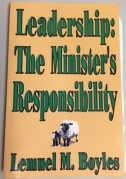 Responsibility, “The need for well-trained, highly qualified leaders in the Christian realm is one of the most critical problems we face in the church today.” I agree, and that also applies to the secular world. Without well-trained leaders, our churches and organizations are faltering. But Dr. Boyles taught that training alone is not sufficient. True leadership entails more than just filling a vocational slot: true leadership involves a higher calling.
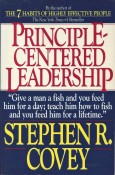 In his book, Principle-Centered Leadership, Stephen Covey said, “…we often attempt to short-cut natural processes–substituting expediency for priority, imitation for innovation, cosmetics for character, style for substance, and pretense for competence.” Although they might not realize it, this is designed failure by incompetent leaders.
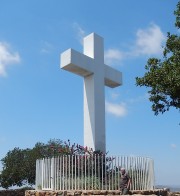 summarized the law in His statements in Matthew 22:37-39; “Love the Lord your God with all your heart, all your soul, and all your mind. This is the first and most important command. And the second command is like the first: Love your neighbor as you love yourself.” This is the foundation for good character and sound leadership.
 several years ago we were minding our own business heading west on Interstate 70 when, suddenly, the dreaded sign appeared: Detour Ahead.
 On another trip, we were returning from Missouri where we spent several days with two of my sisters and a brother. We had a good time. On the way back I said, “Let’s go home on some roads we’ve never been on. Carol chimed in: “Then let’s go to the War Eagle Craft Fair.” I agreed.
 another person or event control your emotions.” I cannot control you or the highway department, but I can control my plans and reactions. I do this by asking God for direction in life which enables me to face life’s uncertainties with confidence.
 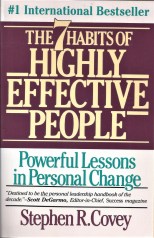 National Laboratory. One of my responsibilities was to assure that our staff’s training was up-to-date. One day I read about a seminar titled, “The 7 Habits of Highly Effective People: Powerful Lessons in Personal Change.” That intrigued me, and I attended the seminar to see if I should recommend it to our staff. I’m glad I did, and it was my privilege to meet and talk with the speaker, Dr. Stephen R. Covey. Dr. Covey condensed his seminar into a book titled by the same name: “The 7 Habits of Highly Effective People.” (He passed away in July of 2012. America misses him, but his teaching will go on. And yes: I recommended this course to our staff.)
 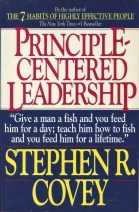 The information I gained at the seminar, and in reading the book, did not guarantee quick fixes to any personal, interpersonal or business problems. But I was supplied with tools to improve my communication skills, my outlook on life, and reduce unnecessary friction.
 off. I know it will be difficult, but you must cooperate with God. You must turn all your worries over to God – and let them go – and learn to trust your staff.” George always thought his feelings and actions were directed by the Lord, so that surprised him.
 are told that nearly all American educational institutions still teach critical thinking; but do they really? My answer is a resounding NO!
  Critical thinkers must take the context of every situation into account and think on a multi-level platform in order to come to proper conclusions. Homeschoolers have an advantage for learning critical thinking skills because they can incorporate these lessons into it their curriculum – as every educational system should do. When a person is able to make correct, intelligent choices on complex matters, he is considered intelligent and competent.
 immorality. But it takes a distinct majority of the Senate and House to change direction or change a law for the better – and even then, one judge is allowed to negate the will of the people. This is wrong. Why doesn’t the US Congress apply the checks and balances which are built into the US Constitution? They are not thinking critically.
 around within the state. In several towns people cautioned our parents “Watch out: be careful if you have to drive through [a certain part of] town. Lock your doors!” Ethnic prejudice prevailed; but as a child I rejected it, and it never took hold in my mind.
 meaning for me. I viewed the American Civil War in somewhat of a different light. It broke my heart to be deprived of friendship with the black kids. It broke their hearts, too, for apparently, I was the first white kid who ever wanted to spend time with them. I was still in the band, glee club, and the senior play, and I still got along with most the white kids, but my life had changed.
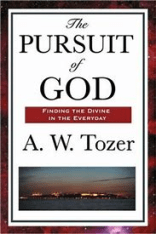 that impacted the 20th Century Church. During a trip by train from Chicago in the late 1940s, Tozer was inspired to write again. When the train pulled into McAllen, Texas the next morning, the rough draft of The Pursuit of God was completed. The depth of that message has made it a book in high demand – about 2 million copies in at least fifteen languages are in print.
 Tozer also said, “The shallowness of our inner experience, the hollowness of our worship, and the servile imitation of the world which marks our promotional methods all testify that we, in this day, know God only imperfectly, and the peace of God scarcely at all.”
 To be an authentic Christian, we must have an in-depth relationship with Jesus Christ. This relationship does not happen by going to church and enjoying the show. It happens by spending time with Jesus Himself through prayer, Bible study, meditating on the Life of Christ, and living in a manner that He would approve.
  inheritance prior to death reveals a rebellious, selfish, and/or an immature character. It also reveals disdain for the parents. Dr. Ken Bailey lived and taught in the Middle East for over forty years and said that for a person to ask for his inheritance prematurely was tantamount to wishing his father to be dead; and the request would never have been granted. This suggests that the story may not have been historical; but, as was common with rabbinical teaching, was a spontaneous story or narrative to address a specific situation.
 Pharisees) was angry when the father (representing God) forgave and honored a brother (representing low-class sinners) who had totally “blown it” in life. The brother thought that the young kid should be punished!
  Gene Linzey