Friend or Foe?

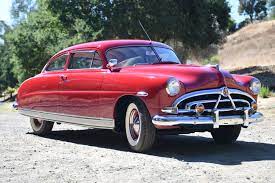
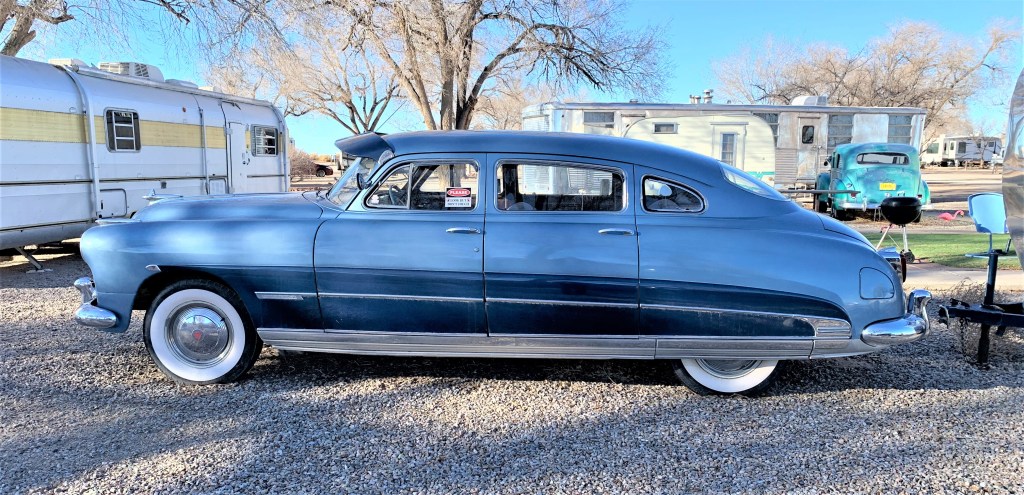
Wind always fascinated me. My 7-year-old hand became an airplane as I stuck it out the window while Dad drove the 1952 Hudson Hornet at the break-neck speed of 60 miles per hour. I enjoyed watching the wind blow water across the neighborhood as water shot high into the air from our garden hose. Wind was my friend. (The Hornet in this picture is not the car Dad drove. I saw it recently at the Enchanted Trails RV Park in Albuquerque, NM.)

Earlier in life, I enjoyed being outdoors. I was 12 years old. It was Saturday morning with a good breeze blowing across our back yard in El Cajon, California. After breakfast, I assembled my kite, tore up an old pillowcase and made the tail, and gave the kite a test flight. I could have bought a 425-foot-long roll of Megalon string, but dad allowed only 300-foot rolls; so I bought 3 rolls. I named my kite Bird. It took off fast – but nose-dived! Ouch!

I made one adjustment to the tail and tried it again. Beautiful!

I waited for a good gust of wind and launched my Bird. Within a half hour, I had used up one roll of string. Tying the string to a stick, I wondered, why not add another roll of string?

I tied the string securely to the beginning of a new roll. Working the Bird very carefully, I released the second roll of string. I had never put a kite up that far. I was happy, but my natural curiosity began working overtime.

Would I be able to take it up another 300 feet? Let’s try it!
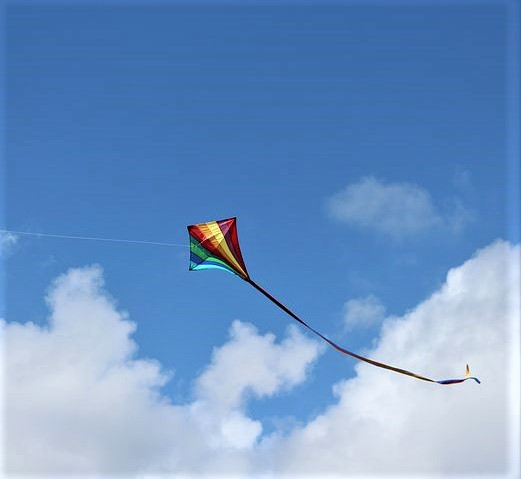
I attached the third roll of string and slowly let it out. At this point, allowing for the angle of the kite’s ascent, the kite was probably 750 feet above the ground and in the main air flow that blew above El Cajon Valley. The Bird was tugging firmly on the stick that the string was tied to.

“Eugene, Mom said it’s time to come in for lunch.”

I don’t remember who the messenger was, but what should I do with the Bird? There was no way I could bring it down in time for lunch. Could I tie it to the fence by the telephone pole and see if it’s still flying in an hour? Why not? What happens if the wind stops blowing? I don’t know, but Mom’s calling, so I’ll find out later.

After lunch, I hurried back outside to check on the experiment. I could hardly believe it! The wind had picked up, and the high-flying Bird was not about to come down. And now I began pondering….

I’ve never had a kite that well-balanced. Probably never will again. I’ve never put a kite up that high. Probably never will again. I’ll never be challenged to fly a kite again. I’ve done it!

After I stood there for about 10 minutes looking at the sight, I cut her loose. It was amazing to watch the Bird fly higher and across the valley until it disappeared out of sight. Did it come down in town somewhere? Maybe. But probably on one of the hills surrounding the valley.

The wind is normally a friend to kite-flyers. Years later I taught my boys to fly kites, but they never matched my experiment with the Bird. Wind also turns the giant turbines on wind farms across the plains which generate electricity.

However, most people also understand that the wind can be an enemy. Trucks and trailers are blown over and their contents get scattered all over the highways. Tornados and hurricanes destroy hundreds, if not thousands, of homes and businesses every year. The wind kicks up tremendous haboobs – dust and sandstorms up to 100 feet high – which cover towns and cities with thick layers of dust and sand.

But wind isn’t the only thing that blows across our lives that either help or hurt us. Our words and attitudes can benefit or destroy people. We can either make their day or ruin it. We can either bless others and help them improve their lives or curse them and send them into a spiral of despair. Look at three verses in Proverbs 15.

Verse 13, “Happiness makes a person smile, but sadness can break a person’s spirit”

Verse 18, “People with quick tempers cause trouble, but those who control their tempers stop a quarrel.”

Verse 28, “Good people think before they speak, but foolish people pour out foolishness.”

Don’t speak words that kick up storms or create devastation; use your words to help people. Be a friend, not a foe. Be a blessing to your community, and God may bless you.
The Head-Banger

Have you ever found yourself banging your head against a wall? How’d it feel? Did it help the situation? A friend of mine in New Mexico got so upset one day that he broke the sheet rock wall in his house with his head. After recovering from the concussion, he paid someone to repair the wall; but the situation he reacted to didn’t change because HE didn’t change.

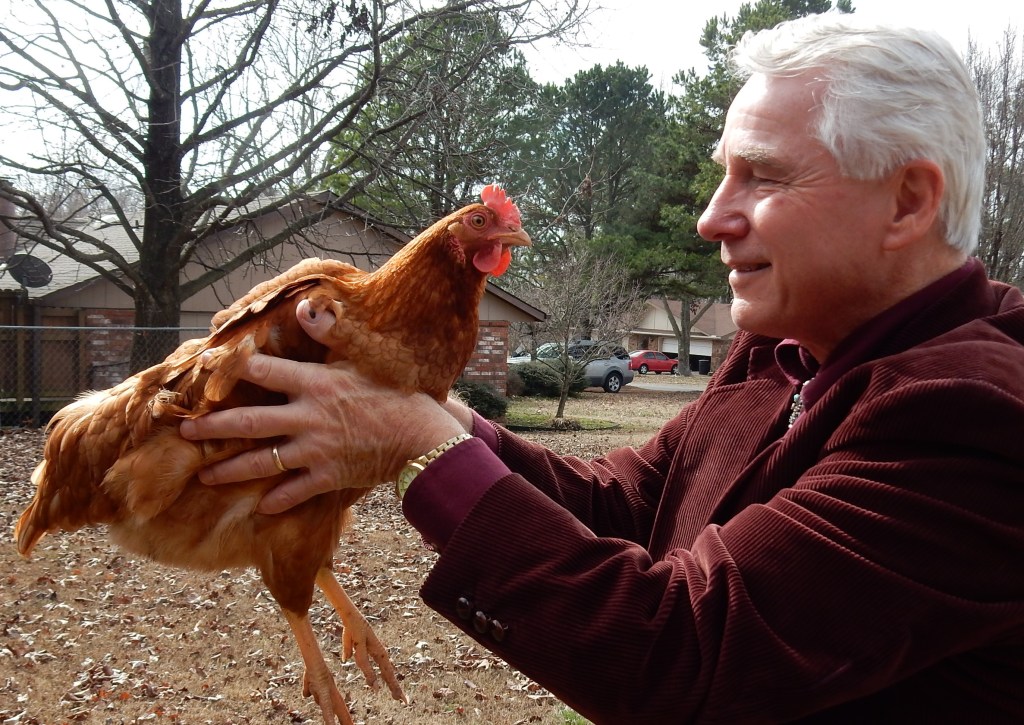
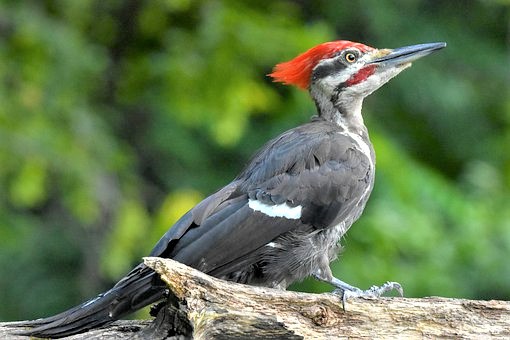
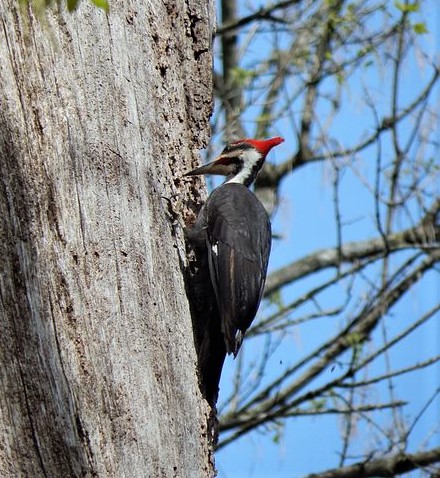
Several weeks ago, Carol and I were finishing breakfast when I heard the unmistakable sound of someone banging its head against a solid object. This guy wasn’t upset or angry. He was hungry and looking for food. He was pounding away on the branch making bits of bark fly as he was gathering ants and other bugs with his long, barbed tongue.

It was a woodpecker.

I’m not an ornithologist, but this bird looked like a large Pileated Woodpecker. These guys can grow to almost 20 inches long, have a wingspan up to 29 inches, and weigh up to 12 ounces. It was drumming on one of our branches, grabbing nourishment with its tongue, and apparently taking it to someone in a nest because it made eight or nine trips to a distant tree while we were watching. I read that some woodpeckers have up to 9-inch tongues, but the Pileated Woodpecker’s tongue is only about 4 inches long.

These birds are members of the Picidae family, and peck like a jackhammer at about 20 hits per second! Compare that to a good machine-gun that fires 1,000 bullets per minute, which is16 per second.

The International Ornithological Congress says 236 species of woodpeckers make up the Picidae family world-wide, but only 23 species inhabit the United States.

How do woodpeckers survive the banging without getting headaches or concussions? God provided them with amazing safety features.

The beak consists of three-layers. The tough outer cover is called rhamphotheca made of scales from keratin, a middle layer of porous bone, and an inner fibrous layer made of mineralized collagen. Its structure absorbs and distributes much of the impact throughout the body which reduces the strain on the brain.

The skull is made of sponge-like bone, and liquid surrounds the brain. Both skull and liquid absorb a lot of the rapid-fire shock, and a safety belt called the hyoid bone that wraps around the brain keeps the brain from rattling. While pounding the tree, a thick nictitating membrane covers the eyes, protecting them from flying shrapnel. Also, the slitted nose is protected with special feathers.

Many of these critters are antisocial and don’t mix well with others. In this sense, “Birds of a feather flock together” doesn’t always hold true. Most are territorial and are jealous of their turf.

I read that wild woodpeckers live from 4 to 12 years, but under ideal conditions they might live 25 to 30 years.

The most famous woodpecker in America is the cartoon Woody Woodpecker that was created by Ben Hardaway in 1940. I always liked that cartoon. Hardaway styled Woody as a combination of several birds, including the Pileated Woodpecker.

Thinking back on my friend in New Mexico, he wasn’t created like a woodpecker, so he shouldn’t have physically banged his head. And he discovered that becoming a head-banger doesn’t do any good.

What about figuratively banging our heads? Normally, that means we are frustrated, angry, or worried. However, if we get upset, it blocks the creativity we need for correcting the situation. Rather than demanding that the situation change, we need to change our method of responding.

Storms of all sizes and types are an integral part of life. But as devastating as the storm may be, it is our reaction that exacerbates the problem. Getting upset and banging our heads only makes things worse.

So what should we do?

Because we have a difficult time changing our circumstances, we need to learn how to change ourselves. Romans 12:2 tells us don’t act like the world but ask God to help us change the way we think. Then we will learn to know God’s will for us. Interestingly, when we change the way we think and act, our circumstances often change.

Psalms and Proverbs provide the principles for handling almost any situation that life can present. You may scoff at that; but when you recognize and admit your need for help, God will be waiting for you. We don’t need to be a head-banger; leave that option for the woodpeckers.

Happy New Year, Friends

On December 31, 2020, Carol and I spent a quiet New Year’s celebration together. It was relaxing because from 2011 through 2020, we had been home on December 31 only four times. We’d been in California on New Year’s Eve five times and in Florida once. And this past New Year’s Eve we were in New Mexico.

Several friends asked, “Can’t sit still, can ya?” My response is normally, “You find no moss under my wheels.” And we’ve driven over 29,000 miles in 2021.

It’s well-known by our families, friends, and those who read my articles that we enjoy living in Siloam Springs, Arkansas. All cities, towns, and villages have their problems, but we’ve found this town to be one of the more pleasant places we’ve lived. With that in mind, why do we “hit the road” so often?

One quick answer is: our five kids live in five different states, and my siblings are spread out from the West Coast to the East Coast. We enjoy visiting them. We also have the privilege of preaching and teaching in our travels.

A second answer is: we enjoy seeing God’s creation first-hand. Seeing nature in books and on video is great. But nothing beats driving through the Sierra Nevada Mountain Range, seeing the Giant Redwoods in northern California, the amazing Oregon Coast, Puget Sound in the great northwest, the red granite beaches of Maine, the snow-white beaches of Siesta Beach in Florida, seeing Yellowstone and Yosemite National Parks, and HUNDREDS of other places.

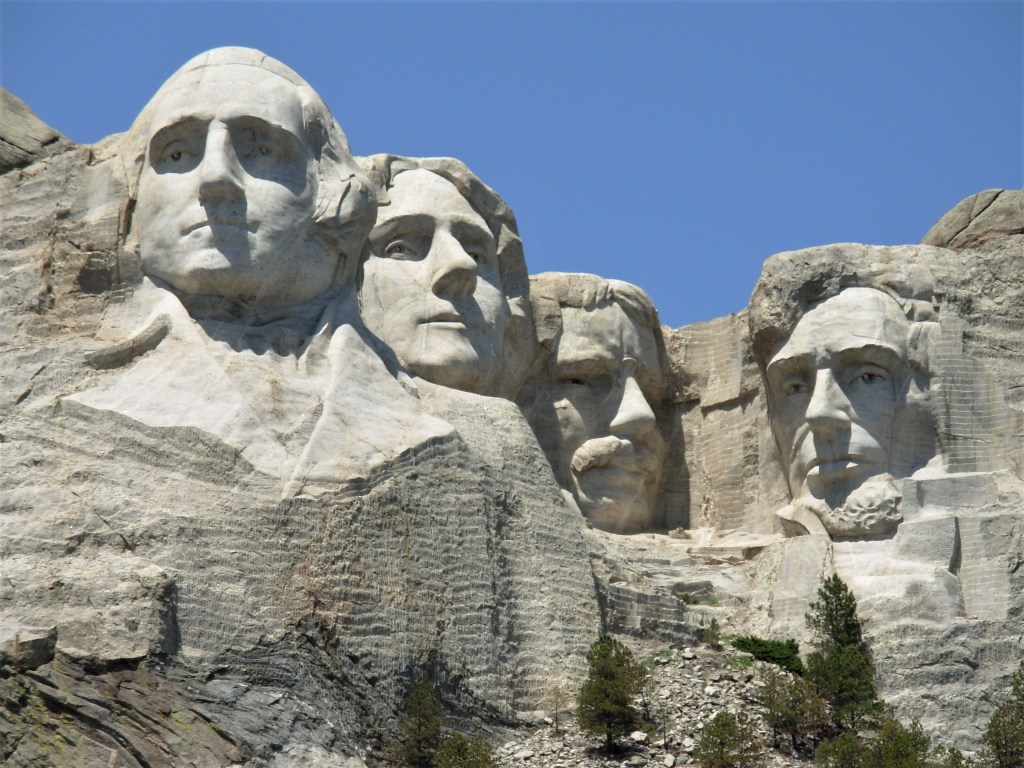
We also enjoy seeing the marvels of man’s creation, such as Mount Rushmore in South Dakota, the 605-foot-tall Space Needle in Seattle, and the 630-foot-tall Arch in St. Louis.

Historic sites such as the Yorktown, Virginia battlefield, the Gettysburg Battlefield, and Pearl Harbor cause me to stop and contemplate how different life might have been if the political and military tide had turned the other way.

The third answer is: we’re getting older, and some day our travel days will be over. So let’s travel while we can.

As we travel, we take thousands of pictures to document where we’ve been and what we saw. You see many of them in these blogs. We’re grateful for digital photography, because that’s a lot less expensive than the film we bought in the past. We often get our pictures out (on computer or another device) and through our memory, we enjoy those trips again.

The ability to remember amazes me. When I get to heaven, I want to ask God how He created memory. But I think He’ll simply say: That’s My secret.

As I mentally gaze on our blessings this past year, I’m fully aware that many people have died, others have gotten sick, many have lost homes and businesses due to pandemics, government mistakes, the natural flow of economics, and natural disasters. But sickness, wars, governmental problems, business failures, and all the other problems and catastrophes have been going on since shortly after Adam and Eve left the Garden of Eden. As we read in Ecclesiastes 1:9, “The thing that hath been, it is that which shall be; and that which is done is that which shall be done: and there is no new thing under the sun.”

The emphasis is: there’s nothing new under the sun. We have modern means of traveling, conducting war, studying, and getting work done, but the essence of life hasn’t changed throughout man’s history. Sickness, death, and all other problems related to life on earth will continue until Jesus stops it. And He will return one day.

But if He doesn’t return soon enough, I will die too. I don’t know by what means, but I will die, and the thought doesn’t bother me at all. Why not? Because that’s life.

In the same concept as midnight on December 31 starts a new year, or a baby being born starts a new life, when my traveling days are over and I breathe my last on earth, I will start a new year, a brand-new life in heaven. It’s part of the Christian’s cycle of life.

However, as badly as I feel for those who have been hurt by various events on earth, I feel worse for those who die while not believing in Jesus Christ. We can start over after a catastrophe on earth, but when we die without faith in Jesus, there is no recovery. Think about it.

The Meandering River of Life

The Büyük Menderes River is the longest river in Turkey that twists and turns in a tortuous path as it rushes to the Aegean Sea. The name Menderes is a derivation of Maiandros which is transliterated into English as Meander, and that name has become prominent in our culture.

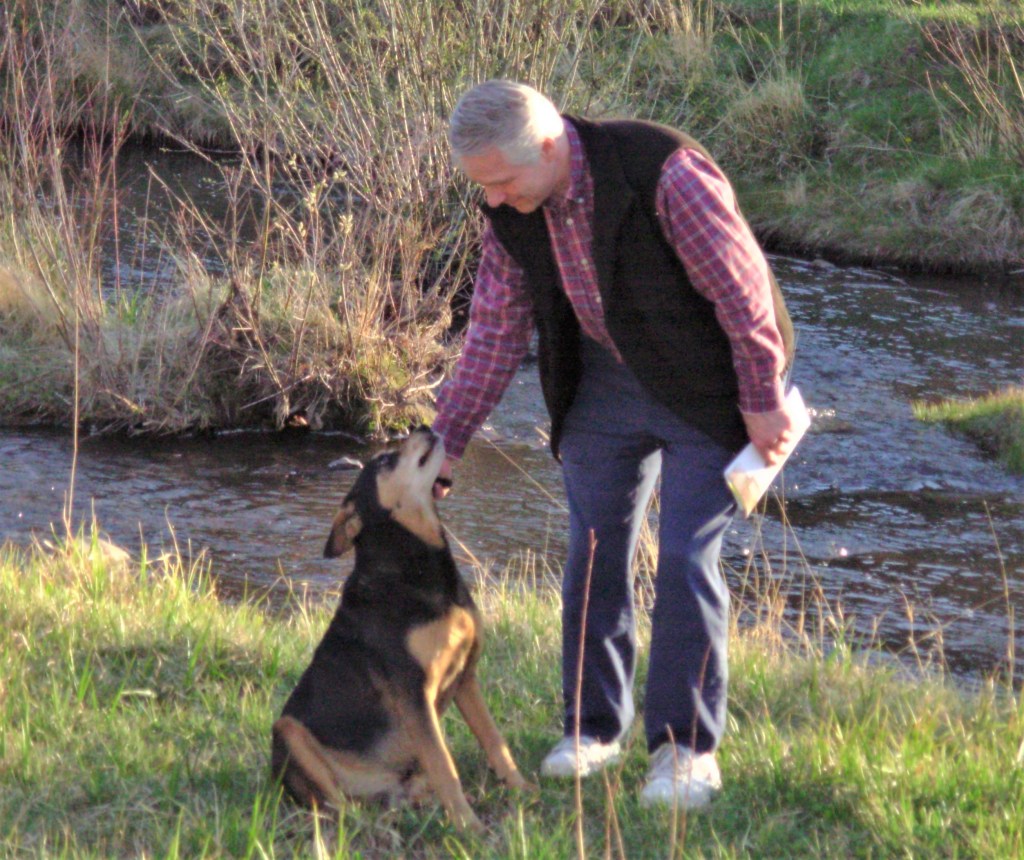
A good illustration of meandering is when my dog and I walked the three-quarter mile dirt road to our mailbox when we lived in the mountains of northern New Mexico. For every 50 feet I walked, Tyke ran to-and-fro about 200 feet. Another illustration is the Ohio River which flows from Pittsburg, PA to Cairo, IL. The Ohio is 981 miles long, but Cairo is only 549 miles from Pittsburg by helicopter. The meandering nearly doubles the distance.

Due to natural causes such as earthquakes, floods, landslides, and hurricanes, river paths change at times. Dad was raised in McAllen, Texas which isn’t far from Brownsville. Years ago, Dad said, “Brownsville is usually in the United States. But during flood stage, the Rio Grande changes course, flows north of Brownsville, and puts the town in Mexico.”

Of course, Dad was joking about Brownsville being in Mexico, but the Rio Grande did change course at times before the flood-control dams were built.

Not only has the Mississippi River changed course, but it also flowed backwards several times. The first time that we know about was after an earthquake in 1812, and the reverse flow generated a tsunami which wiped out a pirate’s den on a river island. When it resumed its southern flow, it cut a new channel and a portion of its course had changed. The second time was in 2005 when it reversed its flow for several hours during Hurricane Katrina. The third time was in 2012 when Hurricane Isaac forced the southern end of the river to flow backwards for 24 hours. You probably read about the mess it caused up and down the river.

As Carol and I were driving from Bloomington, IN to Worthington, IN last month, I turned onto a road that wasn’t on the map. It was headed in a northerly direction, and I knew I would get to my destination. The road meandered every-which-way like a stream trying to find its way to the ocean. Nevertheless, it was relaxing until we reached a T in the road with no indication as to which way we should go. Frustration was about to raise its ugly head, but a man in an old rusty car stopped and asked where we wanted to go. We told him, he told us to turn right, and peace reigned again. The road took us to Worthington, and we joined up with our son and his family.

Then while assisting our son in building his home, I came into contact with poison ivy. That changed my life for a month.

Events throughout life generate corporate change as well. Businesses closed and people lost employment because of our reaction to the recent pandemic. War affects political and financial decisions. I officiated at the funeral of a dear friend in Kentucky recently. Direction in life changed dramatically for that family.

Life is like a meandering river. Change is ever-present. Confusion is prevalent. Emotions are visible and anger often flares.

But stop. Let’s not react negatively. Change is guaranteed almost every day, so how do we establish and maintain a steady course?

The captain and helmsman of the ship must know the river. Sam Clemens, known as Mark Twain, studied the Mississippi and knew every turn. Some captains hired cheap help and lost their vessels to rocks, hidden logs, and erratic shorelines, but Mark Twain kept his boats in safe water.

As we sail the meandering river of life, we need help in keeping our “ships” in safe water. We dare not trust our lives to myths, fables, imaginations, and humanistic religions. We need a solid anchor with a reliable chain that keep us secure during the storms of life.

That anchor is Jesus Christ, and the double-chain consists of the Holy Bible and the Holy Spirit. Jesus said in John 14:26, “The Helper, the Holy Spirit, whom the Father will send in My name, will teach you all things, and bring to your remembrance all things that I said to you.” So read what Jesus said in the Bible.

Jesus our guide in the meandering river of life. You can trust Him.

Walking Toward the Light

I spent three hours working through a research problem, and I needed to stretch my legs and clear my mind.

“Precious, “I’m going for a short walk. Would you like to go with me?”

“It’s 9 o’clock, it’s dark, it’s cold, and no. I don’t want to go for a walk.”

“The walk will be good for you.”

“It’ll be better for me to stay warm here in the RV.”

“Okay; I’ll be back in ten or fifteen minutes. I love you.”

“I love you, too. Take your jacket.”

I didn’t take the jacket because it was still 69 degrees outside; but I didn’t realize it was so dark! I turned on the RV porch light but it is quite dim, and I couldn’t see the moon. Oh well, I’ll just step carefully, and my feet will let me know where the path is.

After walking about twenty paces past the car, I quickly stopped. Something wasn’t right.

I reached out with my right hand and felt prickly pine needles that I couldn’t see. I also couldn’t see my hand. I rubbed my foot on the ground and discovered I was off the path. Because it was dark and I didn’t use the porch light as a point of reference, I hadn’t walked in a straight line.

Well, what do you know? I thought. I’m off the road. My plan didn’t work out the way I thought it would. Hmmm … Carol might gloat over this.

I looked around and saw the RV porch light, but I still couldn’t find the moon. (I later discovered it hiding behind some clouds.)

Walking toward the light, I returned to the RV.

“I thought you were going to be gone for ten or fifteen minutes. What happened? Where’s your jacket?”

“I didn’t need the coat, but it’s a good thing you didn’t go with me.”

“I know: it’s cold and dark.”

Here comes the gloating.

“Believe-it-or-not, Precious, unless I was looking toward the RV, I couldn’t see my hand in front of me.”

“You were smart to come back. I told you it was … oh, never mind. You want some coffee?”

She didn’t gloat. I love her! “Yes, thank you.”

That three-minute episode in the dark reminded me of a recent news report. A man on a 4-day back-country hike found the body of a woman who had been missing for over two months. Apparently, she didn’t file a plan with the forest rangers, nor had she told friends or family where she planned to hike; and a compass was not in her backpack.

Without proper planning, it is easy to get lost!

What do we need for a successful outing? First, tell someone where you’re going.

Next, REI co-op (https://www.rei.com/learn/expert-advice/ten-essentials.html) lists ten essential things: navigation (such as map, compass, GPS, etc.), headlamp and extra batteries, sun protection, first aid kit, knife, fire-starters, shelter, extra food, water, and clothing.

The REI author said, “The exact items from each system that you take can be tailored to the trip you’re taking. For example, on a short day hike that’s easy to navigate you might choose to take a map, compass and PLB, but leave your GPS and altimeter behind. On a longer, more complex outing, you might decide you want all those tools to help you find your way. When deciding what to bring, consider factors like weather, difficulty, duration, and distance from help.”

That is good advice, but many people are short-sighted and don’t invest the time to learn about it.

I find the same goes for people traversing this journey we call life. They are raised to fend for themselves and fight to get ahead – often by stepping on others. But they do not plan for the longer journey: the one that begins at death. Without planning for this final trip, it is easy to get lost – permanently.

What do we need? The map is the Bible and is also our most valuable point of reference. Food and water are wisdom and knowledge we learn in the Bible. The headlamp is the Holy Spirit; He will help us see life properly and walk straight. Clothing is the helmet of salvation, breastplate of righteousness, and the rest of the spiritual armor found in Ephesians 6:11-18. God, Himself, is our shelter.

Your most important trip is ahead of you. Plan well for it by reading the Bible and learning to live for the Lord. Walk toward the Light.

What Did God Say?

God said, “Let us make man in our image.” And when I say “God,” I mean Jehovah, YHWH, the Creator, the Supreme God in the Bible. So, if we’re made in His image, what does God look like? Has anyone seen Him?

Not lately, but Abraham might have, Moses saw God’s afterglow, and Adam conversed with God daily – for a while.

Scripture tells us: “God created man in his own image, in the image of God he created him; male and female he created them” (Genesis 1:27). God is a spiritual being, and we are spiritual beings who live inside human bodies. Mankind was the high point of God’s creative work here on earth. God created us as an entirely new species, quite different from animals. And to emphasize this distinction, God placed man over the animals. In Genesis 1:28 God told Adam, “Rule over the fish of the sea and the birds of the air and over every living creature that moves on the ground.” Animals can’t do that.

How else are we different from critters? Evolutionist Julian Huxley noted that “only humans possess true language, conceptual thought, art, humor, science and religion.” And I add, only humans can record and direct the course of history. Humans can express themselves analytically and it is obvious that only humans have the ability to communicate through complex, multi-lingual skills. All this sets mankind apart from the animal kingdom.

And, quite interestingly, only humans have the ability to deny the existence of God.

Marriage is another example of how we’re made in the image of God. Adam and Eve’s union was much more significant than two beings openly mating in the jungle. Marriage was specifically one man with one woman. Marriage is a compassionate, loving, fruitful, social, and spiritual union.

As humans who are made in the image of God, we reflect many attributes of our heavenly Father. These spiritual and moral attributes allow us to commune and fellowship with people as well as with God. Attributes like love, mercy, and justice are only three examples of Godly qualities available to mankind. God created us to enjoy relationship with each other, but specifically, He made us to enjoy relationship with Him. God wants us to interact with Him and to be in fellowship with Him. This is not the nature of animals.

Some people say mankind is no greater than the animal kingdom and is why man should limit his population growth while protecting the animal species. I suppose they haven’t noticed several animal traits that civilized humanity does not endorse.

Such as: Some animals eat their own kind, but we do not condone cannibalism. Some animals kill and eat their offspring, but we don’t condone infanticide or eating our babies. (Correction: misguided and disobedient humans do commit infanticide in the form of abortion.) Animals don’t care for the elderly, but because of Godly compassion, humans do care for the elderly. Animals do not have the skills and ability to change their society, but man has created great civilizations and been to the moon and back. Animals have continued their lives without change for the past recorded 6,000 years. Chickens live as they have throughout history. Their change in living quarters is because of man.

When you hear or read some scientists say that 98% of our genes are shared with some animals, don’t get excited about it. They also say we share about 50% of our genes with bananas, so what might that mean? I think those statistics are meaningless.

Only humans can experience faith in God. However, it appears that some people were not happy with that arrangement and have created their own imaginary deities. Humans have the ability to choose to worship God or themselves; to acknowledge Almighty God as sovereign or claim another personage (human, spirit, tree, rock) as either a sovereign or co-existent deity. Humans gather for the purpose of worshiping a deity corporately. Animals cannot do any of this.

But of all earthly creations, only man can worship and trust our Creator and enter into a relationship with Him.  

God is a communicator Who cares for us and guides those who listen to Him. He made us to help others. He defeated sin and death through the death and resurrection of Jesus so that we can be with Him and enjoy our relationship with Him forever.

What did God say? Let us make man in our image.” And He did. But God gave us the authority to decide how we will use the attributes He gave us. How are you using them?

Protected by a Spider

Okay, I know that title above sounds a little goofy, but I want you to think about something. What does it take to protect us?

Since there are thousands of dangers in the world, let’s get to the spider and branch out from there.

Now, to put it succinctly – or bluntly, if you prefer – a busy spider protected the future King David when he was hiding from the current King Saul. I read a story some time ago in Hebrew literature, and I’ll write it here to the best of my memory.

When King David was a boy, he enjoyed walking through the fields while taking care of his father’s sheep and enjoying nature. He was thrilled to see how each creature gave something to the world. Several examples are, hens lay eggs, bees make honey, goats produce milk, and sheep give us wool. But he couldn’t figure out a good purpose for the lowly spider.  

“What’s the purpose of the spider?” David wondered. He didn’t even find a good use for the web, although he must have forgotten about it catching bugs. As an answer to the question, God seemed to impress on him that everything in creation had its purpose, and that one day he would understand that the spider also had a purpose.

Years went by and David became a hero who saved his people from the enemy by killing giant Goliath. King Saul was envious of him, feared for his throne, and decided to kill David.

David ran for his life and hid in the hills but Saul, with a portion of his army, was hunting for him. One day hearing that Saul was closing in on him, David hid in a nearby cave. Saul’s spies told him that David was in this area and figured they would kill him within an hour or so.

David was now in mortal danger and cried out to God, “Who will help me?”

Unknown to David, as soon as he entered the cave, a spider quickly spun a beautiful, well-developed circular web across the cave’s entrance. Saul’s men reached the cave where they were sure David was hiding and were about to enter it. But when they saw the intricate web, they said, “If David were here, he’d have torn the web to pieces. He must be hiding somewhere else. Let’s go!”

That’s how David realized that the spider, like all other creatures, can be useful, and he immediately thanked God for creating spiders.

What did it take to save David’s life? A spider.

That makes me stop and wonder how many times diversions, incidents, delays, etc., have saved me from danger.

Returning home from Maryland last month, I made a wrong turn somewhere in Pennsylvania which delayed me for about thirty minutes. No big deal. We normally give ourselves extra time because we don’t enjoy being in a hurry. But when we got back to the right highway, there was quite a slow-down. We eventually saw the tow trucks hauling off two mangled cars.

Would we have been in that wreck if we hadn’t taken the wrong turn? I’ll never know, but checking the timing of my wrong turn, that error could have saved our lives.

A spider protected David. A wrong turn might have protected us. What else protects us?

Some years ago, we were attending a local church that we enjoyed. I was a deacon, Carol and I sang in the choir, a couple of our kids were in the orchestra. But one day the idea came to me that we were supposed to leave that church.

I prayed about it, and the Lord impressed me with, “It’s time to go.”

I didn’t understand why, but I had long-since stopped questioning God. So we talked with the pastor and developed a gentle way of stepping out without raising too many eyebrows.

Within a short time, a major problem broke out in the church and reputations were hurt. But because we had already stepped away, we were not affected in any negative way. We were protected by “the still, small voice” we read about in 1 Kings 19:11-13.

Spider. Wrong turn. Still small voice. God protects us in many ways. All that’s required of us is to obey the Lord. John 10:27 says, “My sheep hear my voice, and I know them, and they follow me.”

Don’t allow delays and problems to ruin your day. Those delays might prevent a bigger problems.

G. W. Carver and J.H. Pickle, Jr.

Have you heard of these men? Both are scientists … well, J. H. is still a scientist, but G. W. was a scientist until he passed away in 1943.

David Pickle called me last week and said he had a book for me, so I drove over to get it. It was so interesting that it didn’t take me very long to finish reading it. The book was compiled and written by Dave’s brother, John H. Pickle, Jr., and it’s an amazing account of his father’s interaction with the outstanding scientist, George Washington Carver! The title of the book is, One of His Boys.

Quoting from the back of the book, “George Washington Carver is today remembered in part for the many products he derived from the peanut, a crop he urged on Southern Farmers to replace cotton and avoid soil exhaustion and the boll weevil. Less known are the multitude of college students Carver took under his wing over the years in relationships that were cherished by and valuable to the scientist. One of His Boys is the story of the mentorship of Johnnie Pickle, one young man inspired to follow in Carver’s footsteps after witnessing firsthand the Wizard of Tuskegee’s wisdom.”

Johnnie Pickle had the privilege of meeting the African American scientist in 1932. Because of this “chance encounter” Johnnie was inspired to become a scientist. Johnnie’s son, John Jr. also followed in Carver’s and Johnnie’s footsteps, and [quoting the book] “spent thirty years developing products for farmers to use. He is now retired and continues to promote good science.”

Dr. John H. Pickle, Jr., spoke about their father’s long-time interaction with Carver. The presentation was at the George Washington Carver National Monument on Saturday, September 11, 2021. I attended and enjoyed the presentation as well as enjoyed meeting Dr. John Pickle.

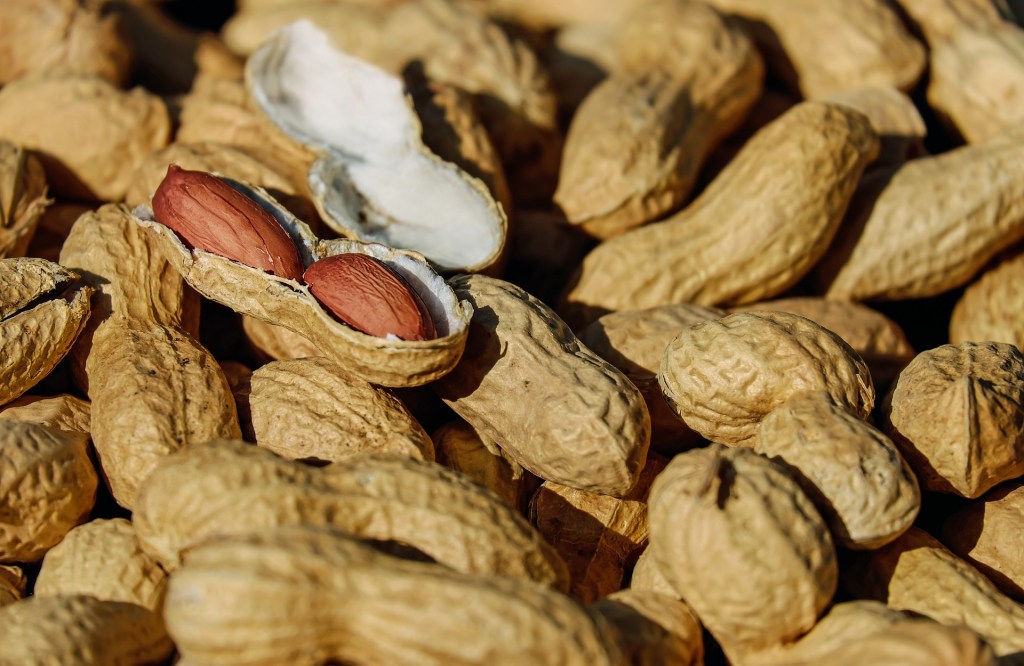
Carver was the most prominent black scientist in the early 1900s. Two of the things he is famous for were crop-rotation and creating over 300 uses for the peanut. I found it quite interesting that, until 1870, peanuts grown in America were primarily used as a garden crop, and its primary large-scale purpose was hog food until around 1932.

Here’s a bit of peanut trivia.

President Thomas Jefferson was a botanist and grew peanuts. The peanut was nutrition for soldiers during the Civil War. Known as goober peas, the Southerners pronounced them gooba peas because the word from Africa was, nguba.

Enter George Washington Carver, the Wizard from Tuskegee.

Quoting Carver: “All my life, I have risen regularly at four in the morning to go into the woods and talk with God. That’s where He reveals His secrets to me. When everybody else is asleep, I hear God best and learn my plan.”

One morning, George asked God why He made the peanut.

Quoting Carver: “He told me, separate the peanut into water, fats, oils, gums, resins, sugars, starches, and amino acids. Then recombine these under My three laws of compatibility, temperature, and pressure. Then you will know why I made the peanut.”

Eight of these discoveries are flour, paste, insulation, paper, wood stains, shaving cream, tires, and skin lotion.

That heavenly advice helped Carver discover over 300 uses for the peanut, and that changed the South, changed ethnic relations, and changed the agriculture industry.

I laughed when I learned that Carver didn’t merely “talk to God.” He “conversed with God.” That’s exactly what prayer is supposed to be – a conversation with God. Carver said, “God speaks to us every hour, if we will only TUNE IN.”

God is alive, and He wants to communicate with us. If I do all the talking, I’ll get no answers. I know what my problems and needs are, at least I think I know, but God really knows them. If I merely recite to God what He already knows, I’m not learning anything.

But if I listen, I can hear God giving me helpful information – as He gave Carver information. God communicates with me often, and wants to converse with you, too. Jesus said in John 10:27, “My sheep know My voice.”

God listens, then responds to us. Do you listen to God?

What’s Over the Next Hill?

“Daddy, what’s over that hill?”

“What do you think you’ll see?” Dad chuckled. He must have been humored at my numerous questions. He continued, “If you sit still for a minute, we’ll be on that hill, then we’ll both find out.” Dad knew but wanted the view to be a surprise.

From my earliest memories at almost 3-years old, I’ve always wondered: What’s around the corner? What’s in the box? How did the mountain get there? What’s fire made out of? What’s over the next hill? I’ve always had an unquenchable thirst for knowledge. I still do.

That was a special trip for me. I was 5 years old, and seldom had the privilege of spending time with dad and mom by myself. Eventually, I had five sisters and four brothers, and this trip would be the first of three trips where I was the only one dad and mom took with them.

Mom was taking a nap in the front seat of the Hudson Hornet, my four sisters (two older and two younger) were left with elders in the church, and I was leaning over the front seat looking with eyes wide open. I had never seen mountains and valleys like this. Seat belts hadn’t been invented yet, but we never had a problem.

There were no freeways where we lived in 1951, and our highways allowed us to travel at the break-neck speed of 55 miles per hour. However, some of these mountain roads allowed only 35-45 mph. Our destination was about 400 miles away, and we left home long before daylight.

As we approached the crest of the hill, dad asked, “Eugene, do you know where we’re going?”

“Yes, we’re goin’ campin’.”

“That’s right. But do you remember where mother said we’re going?”

While I was trying to remember that hard word, we reached the top of the hill. Dad pulled over to the side of the road.

“Ooooohhhhh Daddy! Someone broke that mountain in half!” I was stunned to see half a mountain standing on the side of the valley.

Dad already had his camera in hand and was opening the door. “Son, that broken mountain is called ‘Half-Dome’ and this is called Yosemite Na… Eugene? Where are you?”

Dad found me hiding inside the car, not wanting to get out. I was scared spitless of heights, and when I saw the valley floor WAY DOWN THERE, I panicked. But peeking out the window, I couldn’t take my eyes off that broken mountain.

“Okay, Eugene. Would you get out of the car if I hold your hand?”

I shook my head, “Hu-uh.”

When mom said, “Daddy will let you look through his binoculars if you get out of the car,” I agreed to hold daddy’s hand and get out.

That was my introduction to Yosemite National Park.

We drove down into the canyon and dad took me on a few short hikes. I enjoyed playing in the heavy mist of Bridal Veil Falls, then helping dad set up camp. I don’t remember how much of a help I was, but it was fun being with daddy and mommy.

My favorite part was watching the fire fall down the face of Glacier Point. The park ranger gave a talk each evening, and an entertainment group sang as others prepared a roaring fire on top of Glacier Point. Then at 9:00 PM, the ranger hollered, “Let the fire fall!”

Several men then pushed the burning material over the edge with bulldozers, and a river of glowing embers fell more than a half mile (some 3,000) feet to the valley floor. Little boys never forget things like that. (The final “fire-fall” was on January 25, 1968.)

The question of “what’s over the next hill” has never left me. I might see an elk, a river, a glowing sunset, the wide expanse of the ocean, or another mountain. I never tire of it. And I am blessed with a wife who shares the same adventurous spirit.

We’ve been in every state of the Union and have driven over many hills. But there is one “hill” I cannot experience yet, and I can only imagine what the other side looks like. I’ll go over that hill after I take my last breath here on earth and enter heaven. I’m not in a hurry to get there, but God, dad, and mom are waiting for me, and I won’t be afraid of that height. Who knows: God might have thousands of hills over there for me to experience.

Water!

“Water, water, everywhere, and all the boards did shrink; Water, water, everywhere, nor any drop to drink.” So states the 29th stanza of the The Rime [Rhyme] of the Ancient Mariner by Samuel Taylor Coleridge. The somewhat confusing poem is too long for me to remember, but those lines stick with me.

One of Bob Nolan’s songs sung by the Sons of the Pioneers is Cool Water. The first stanza is: “All day I face the barren waste without the taste of water; Cool water. Old Dan and I with throats burned dry and souls that cry for water, Cool water.” By the way, Old Dan is the mule or horse.

There’s much water in the poem and no water in the song – but in both situations, drinkable water is not available. Mankind has fought for thousands of years over water rights, but what’s the reason for this obsession?

Simply this: Humans can live for four or five weeks without food; but barely a week without water.

However, earth is a watery world. Earth is the only planet in our solar system that is naturally and readily habitable for mankind. Water is found almost everywhere either on or under the surface of the earth: from the polar ice caps to boiling geysers.

The oceans are an integral part of our lives because their influence dominates the world’s weather systems. About 96% of earth’s water covers approximately 71% of the earth’s surface. I read that under current atmospheric conditions, the atmosphere can hold approximately 37 million, billion gallons of water – enough to cover the entire surface of the world, including oceans, with one inch of water.

But if the solid earth were a smooth, round ball, one estimate is that the existing surface water – from oceans, lakes, and rivers – would be about 1.5 miles deep.

A water molecule is made of 2 hydrogen atoms and 1 oxygen atom – H2O – and water aids in sustaining a breathable atmosphere and a viable temperature. It is water that keeps vegetation, animals, and people alive.

Solar radiation heats the atmosphere, land, and oceans. As the warm air rises, water vapor rises with it. As the moisture enters the upper atmosphere, it cools, forms clouds, and spreads the live-sustaining liquid across the world as rain, hail, and snow.

Water is the world’s greatest solvent – humorously, but correctly, called dihydrogen monoxide (H2O). It is called the universal solvent because it dissolves more minerals and compounds than any other chemical known. Scientists have proven this by extracting gold, silver, lead, copper, and a host of other elements from sea water. Water from rain and snow dissolves those minerals from mountains and prairies and deposits them into lakes and oceans.

As corn, beans, wheat, potatoes, and all the other crops grow, their root systems absorb these minerals, and they become part of us as we eat the food. It takes water a long time to break down organic material; therefore, the body creates HCL (hydrochloric acid) to break down or digest food, and the watery blood system distributes food, vitamins, and minerals to every cell of the body.

Water is a major component of the human body. Bodies of newborn babies average 78% water but the adult body averages about 60%. The average water content in adult blood is 80%, and lungs are about 90% water.

Water has enabled mankind to build or advance civilization in many ways. Rivers, lakes, and oceans have been major highways of the world for thousands of years. Dams have been built across major rivers around the world, and the rushing water turns huge hydroelectric turbines to produce electrical power for untold millions of homes and factories. The oceans provide food for people and help to regulate climate by redistributing heat around the world.

Water is critical for life; and without water, live cannot exist.

But there is another kind of water that is critical for humanity. As H2O is mandatory for human life, Jesus has provided “living water” that is mandatory for Eternal Life. Jesus said in John 4:14, “Those who drink the water I give will never be thirsty again.”

How? That means He will sustain or help us throughout life. We “drink” of this living water by learning to know Jesus, purposely obeying Him, and living to please Him. This water includes wisdom that we need as we interact with others; and this water is necessary in every other aspect of human life.

Without this living water, we cannot enter the kingdom of God. Have you partaken of God’s living-water? Quench your spiritual thirst. Start by reading the Gospel of John. Follow it up by reading the book of Romans.