Artificial Intelligence?

How many of you have thought about – I mean, deeply thought about – what is called AI, or Artificial Intelligence? Before we talk about it, let’s define and understand it.

At some point in history, the word “artificial” was given the meaning of insincere, fake, or forced. But that’s not what it means.

According to an etymology dictionary, “artificial” comes from the Latin in the 14th century, artificialis, which came from artificium, and that is: a work of art; skill; theory; system. The overall concept is: “made by man; contrived by human skill and labor.” The artificium was not the THING that was made; it was the SKILL, CRAFT, or TRADE that made the item.

Today, when we talk about Artificial Intelligence – or AI – there’s a lot of misunderstanding. AI today, in its broadest sense, is the intelligence or knowledge manifested by machines that are run by computer systems, and you might be surprised at how much of our industry is run by computers.

AI applications are systems such as web search engines (Google, et. al.), YouTube, Amazon, Netflix, Alexa, Siri, electronic chess games, cell phones, and thousands more! But remember, they are all run by computers. However, AI is used in so many systems – such as the computer I’m using at the moment – that they are not thought of as Artificial Intelligence any longer.

There shouldn’t be any mystery associated with AI. Remember, all Artificial Intelligence is man-made. There is nothing spooky, weird, or mysterious about it. Everything the computer or computer-operated machine can do or say has been programmed by man. And humans have been programmed by our Creator God to be very creative.

For example: One time I asked my cell phone, “Hey Siri, where’s my wife?” The machine answered, “If you don’t know, you’re in trouble.” (My wife and I burst out laughing!) That’s an application of AI, and someone programmed that as one of the possible responses.

Please understand this: Computers and computer-operated machines cannot – repeat, CANNOT – create information or responses without the information to generate those responses being programmed into it. They are wired and programmed by humans to scan thousands of computers and hard drives, then copy various bits of information and paste them together to give coherent responses. And the science involved has grown so well that it seems that the computer is thinking as a human. But it is not, and it cannot think as a human.

The most complex device or machine you can think of might seem to have a mind – or spirit – of its own. But remember that many primitive people thought compasses were possessed of spirits, and early native Americans thought photographs captured people’s souls. But, that was only because they didn’t understand the science involved.

So we need to understand that machines are not people, and they cannot think and respond like people. The movie, 2001 – Space Odyssey, was only science fiction; and the computer, HAL, was not real.

AI, in and of itself, is not evil. Here are several comparative examples:

Guns, by themselves, cannot kill or hurt anyone; people do.

Bows & arrows cannot hurt anyone; people do.

Knives cannot hurt anyone; people do.

Bats cannot hit a ball; people hit the ball with the bat.

Cameras, both movie and still, are not evil; but some people use them to glorify immorality, heinous murder, and evil spirits.

In like manner, AI is not bad. Instead, it’s being used in thousands of applications for the benefit – and amusement – of humanity. However, as with guns, bows & arrows, bats, knives, movies, and almost every other good thing, AI can be used wrongly for the detriment of man.

But listen: there definitely is an intelligence that overshadows anything and everything that man can do and ever could do. He is Almighty God.

When we pray, answers can come immediately: not because some AI can process at super speed, but because the Holy Spirit already knew what we were going to ask. The Bible says in I Chronicles 28:9b, “the Lord examines all minds and understands every motive of one’s thoughts.” And Isaiah 65:24a tells us, “Before they call, I [God] will answer.” Now that is fast!
So, if you want to know when Alexander the Great was born, and why some people thought of him as a god, check AI – the internet.

But when you need wisdom and guidance for living, call on the real God we read about in the Bible, and He will answer. God is omniscient – all knowing – and He cares for us.

Remember The Goal

Have you ever reached your destination, but found out it was the wrong date?  Dad did. On October 13, 2002, Dad and Mom drove seven hours to speak at a Minister’s Retreat. He checked into the motel and called the pastor to let him know he had arrived. Guess what? It was the right place, but the wrong time. Dad was one week early. What could he do? He turned around and drove the seven hours back home. That was a needless 14-hour round trip on his birthday. (He went back the next week; see the photo.)

Have you ever arrived on time, but found out it was the wrong place?  I did. I was working for Metropolitan Insurance Company in 1979. My appointment was two hours from Tulsa on a Saturday morning. I followed the directions – except for one thing: I was supposed to drive two hours SOUTH, but I drove two hours NORTH. I turned around and went back home. That was only a 4-hour round trip and I missed a $100 sale. Dad was at the right place at the wrong time. I was at the right time at the wrong place.

But have you ever started a project and forgot why you were doing it? That’s a tough one! Let me tell you about Christopher Columbus.

Columbus has been described as: One of the greatest sailors in history, a genius, a man of faith, a hero, an administrative failure, and a ruthless, greedy imperialist. It depends on who you talk to. Columbus’s desire to find a westward route to India grew out of the practical experience of a long maritime career, as well as out of his knowledge in geography and cartography (map-making).

His journey to sail and chart the route to foreign lands took place just after a long war had been fought between Muslims and Christians in Spain and Portugal. (This kind of war is not new.) In ancient times sailors knew that the Earth was round, Columbus had studied cartography with his brother, and scientists of the day had even estimated the earth’s size and its volume. (Their incorrect estimate of the earth’s diameter was about 3,000 miles, but of course, today we know the diameter is about 7,920 miles.)

Further examination of Columbus’ writings, and related sources, reveal that Columbus had a very important reason for sailing to India. Christoferens (Christ-bearer) was another version of his name. He believed that he was divinely ordained to carry Christianity across the westward ocean to the people of the Orient. Columbus’ desire was that “the Indian nations might become dwellers in the triumphant Church of Heaven.” That was his goal. That was his calling in life.

What happened to the potential Missionary? He got side-tracked. He got Gold Fever and missed God’s will for his life. He was also deprived of the conditional promises the king had made: riches, his own naval fleet, a title of nobility, and the prestige of having the new lands named after him. (The photo of the boat here resembles Columbus’ boat, the Santa Maria.)

His first trip was in 1492; his 4th trip was in 1504; he died in 1506. To his dying day, he tried to rebuild his fortune, his reputation, and his status in life; but he died a broken man. Columbus put gold and fame above God. He forgot that Scripture said, “You shall have no other gods before Me.” He took his eyes off the goal that God gave him, and focused on another god: gold.

Hebrews 12:1-2 says, “Noting that we are surrounded with such a great a cloud of witnesses, let us put aside everything that might take our eyes off the goal, and the sin which so easily distracts us, and let us persevere as we run the race that God has set before us. Lock your sights onto Jesus the author and completer of our faith; who, because of the joy He would receive, endured the cross, ignored the shame, and now is seated at the right hand of the throne of God.”

Find out what God’s goals are for you. Do what it takes to fulfill them, and your life will take on a richer and deeper meaning.

The Fallen Robin

One morning last summer after a heavy rainstorm, we saw an adult robin sitting on the ground. I wondered if it was hurt, so I went out to check. As I got within twenty feet of her, she flew away, leaving a wet fledgling exposed to the cool air.

Not touching the baby, I found it alive, but injured. Baby called for its mother then pressed itself to the ground trying to become invisible.

For the next half hour, Carol and I intermittently watched from the kitchen. Mama and papa bird took turns checking on the little one and trying to feed it, but baby wouldn’t open its beak. It was crippled from bouncing off the branches as it fell from its home eighteen feet up in the tree. It appeared to have mortal injuries.

Why did the little one leave the nest? Did it think it was ready for the flight test? Did it jump for joy when mama brought food, and fall out? Due to mama and papa’s concern, I knew they didn’t kick it out.

Or was it a heavy wind that hit our neighborhood? Ah, that’s it. There were twigs, small branches, and pinecones laying around, but no eggshells and no other babies; so either this was an only child or the others managed to stay in the nest.

“Precious, I’m not sure baby’s going to make it.”

“Give it a half hour then check it again.”

“Okay.” And I resumed my writing project.

Time flies when you’re having fun, or busy writing, and I forgot about the crash-landing in the back yard. I returned to the present when I heard, “Have you checked baby recently?”

“No, but I will now.”

I went outside to check. Ants had already found the lifeless form, and a pesky fly was circling. Baby was in the path from the house to my office, so I picked it up by the beak and placed it at the side of the yard.

Just then a strong wind hit the yard, and the empty nest fell to the ground. Mama found the nest, checked it over, hopped or walked around for a few minutes, then left for good. I felt sad for mama robin.

The next day we went on a daytrip around northeastern Oklahoma. Hundreds of cattle were out in the fields, and we saw deer among the trees. The babies revealed a sense of security alongside their mothers, and the mothers manifested love and satisfaction as they tended their calves and fawns.

Thinking back on the mama robin, she must have experienced pain after losing her baby; and that reminded me of when our mama dog showed anguish when her pups died.

God instilled love, concern, and dedication for life into humans and many animals. Mothers – from cats to cows, dogs to dolphins, birds to buffaloes, and humans of every ethnic background – care for their young and will exert much effort to protect the newborn. Some animals, and most humans, would give their lives to protect their young.

The Bible reveals the great love that God, himself, has for his creation. Matthew 10:29b tells us, “But not a single sparrow can fall to the ground without your Father knowing it.” And Romans 8:35-39 explains how nothing can separate us from the love God has for us.

The primary method of returning God’s love to him is found in Matthew 22:37-39. “Jesus replied, ‘You must love the Lord your God with all your heart, all your soul, and all your mind.’ This is the first and greatest commandment. A second is equally important: ‘Love your neighbor as yourself.’”

Life is filled with great pain and sorrow. Sometimes it seems like life isn’t worth living. But this life is only temporary; there is much more to know, to experience, to learn about. I would encourage you to turn your heart, mind, and soul to Jesus. Turn to the Gospel of John in the Holy Bible and get acquainted with Jesus. He is the only one Who loves you without reservation and can give you eternal life.

Facing the Wrong Way

Have you ever done something backwards or sideways? You did everything according to directions, but it just didn’t work out the right way?

Many years ago, dad and mom visited us in New Mexico. The first thing that came out of dad’s mouth was, “Eugene, get me a compass, and mount it on the dash board!”

“What’s up, dad?”

Mom volunteered to help with the story. “Dad turned the….”

“I’ll tell my own goofy story, Verna.” And in an aggravated mood, dad told me how in Arizona, he followed the map exactly as planned. But he didn’t know that, at one point, he had the map sideways and drove north for an hour when he should have gone east. “I don’t like going the wrong direction, and I lost two hours. Let’s go get that compass – now, before I forget.”

I laughed about it, but dad forgave me; he knew I wasn’t mocking him. Then I reminded him of what he taught me: laughing at our mistakes is less painful than getting upset. Dad grimaced.

Another time, I was overseeing a building renovation project. One of our electricians was new in the electrical field, and was perplexed. “I don’t get this.” he exclaimed. “It just doesn’t look right.”

I reviewed his engineering drawing, then looked at the wall he was wiring. “Joe, you’re looking the wrong way. Turn around, and check it out.”

Joe turned, looked at the opposite wall, then the print, back to the wall, uttered a few unrepeatable words, then, “Sorry, man.”

“You’re okay, Joe. I’m glad you stopped to get help. It’s always easier to ask for help than to correct an error.”

I’ve made directional mistakes, too. In January of 2015, Carol and I visited my brother Paul and his wife, Linda, in Florida. One afternoon we went sight-seeing in another town. On the way back, late at night, I made a wrong turn. Getting off the freeway at the next exit, I made what I thought was the correct turn. But it put me back on the same highway – going the opposite direction. Trying to correct my direction several more times didn’t help. I didn’t know the freeway layout, and just couldn’t seem to get it right.

A little frustrated, I asked Carol if I would ever get off this road. But dad’s words came back to me: it’s less painful to laugh than to get upset. Then the words of a song by the Kingston Trio in 1959 came to mind, and I began singing the chorus. It was about a man who didn’t have money to get off the subway in the Boston mass transit system:

“Did he ever return? No, he never returned, and his fate is still unlearned.

He may ride forever ‘neath the streets of Boston as the man who never returned.”

Carol and I began laughing, and we eventually found our way back to Paul’s house.

Well, I found out that I still make directional mistakes. Our television developed a problem, so we bought another one – an inexpensive 32-inch flat screen. I programmed it and made sure everything worked properly. But it wouldn’t change channels when I pressed the channel button.

I contacted the company, and they gave me some information. Situation solved … or so I thought. It worked better, but not the way it should.

Carol, my wonderful helper, said, “You did something wrong.”

It may not surprise you to know that husbands don’t like to hear those words. They may be correct, but we still don’t like to hear them.

After talking with an expert in the field, I realized that the remote controller couldn’t talk with the television because I had the receiver box pointing the wrong way. My precious was right: I did something wrong. With a pink face accompanying a bit of embarrassment, I turned the box around and the system worked perfectly.

Sometimes we humans face problems in life because we are turned the wrong way. We might be stubborn, arrogant, or ignorant, and won’t listen to wise counsel. Those attitudes prevent the situations from being corrected.

But if we relax, let go of our pride, and seek counsel, God will help us figure things out. Studying the Bible can enable us to adjust our attitude, then the Lord can guide us. The Psalms and Proverbs are loaded with wisdom. Start there. What did I tell the electrician? “It’s always easier to ask for help than to correct an error.”

What do You Know about Computers?

After working in a national scientific laboratory for twenty-two years, I retired in 2006. But 1991 was a turning point in my professional life: I was introduced to the world of computers.

My project leader asked me a very simple question: “What do you know about computers?”

“Nothing.” I truthfully responded.

“Everyone knows something about them, so really, what do you know?”

“I told you, nothing.”

A little perplexed, he invited me into the computer room. He couldn’t believe that an adult was ignorant about computers in the advanced 1991 culture.

I followed him into the room that contained all the electronic equipment, including the computer, that operated our multi-million-dollar experiment.

Pointing to something on the desk, he asked, “What’s this?”

“A television?”

“No, that’s the monitor.” Pointing to another item, “What’s this?”

“A funny-looking typewriter?”

“No, that’s the keyboard.” Pointing to a metallic-looking box with some buttons on a nearby table, “What’s this?”

“That’s a printer.”

“Correct.” Pointing to something on the floor, “What’s this?”

“A storage container?”

“That’s the computer. Good grief, you don’t know anything about computers!”

He then made a prediction. “Your future lies in knowing how to use the computer. Starting tomorrow, you’ll spend two hours a day learning how to operate the computer and learning what you can do with it. Eventually, all your reports will be made using the computer.”

But the boss didn’t leave me high and dry. He gave me some basic instructions. Very basic!

Holding a flimsy thing in his hand, he started.

“This is a [5.25”] floppy disk, here is where you will sit, this is where you insert the disk into to computer, this is how you turn it on … but stay out of “C” drive.”

I didn’t know what “C” drive was, but I decided to stay out of it. And that was my introduction to the world of computers and word processing.

For the next four months, I spent two hours each working day “playing” with the computer. I took out documents (typed by others) and retyped them while changing things for the experience.  I poked around with buttons and keys just to see what would happen. Often, I would get the poor thing confused and it would freeze up, and I had to use the magic formula of Ctrl – Alt – Del. That always fixed everything. (Remember, that was back in 1991.) But I still didn’t know what “C” drive was.

However, this was a special computer that controlled our scientific experiment. One day when I turned it on, it seemed that some of the information that usually appeared on the monitor was missing, so I called my project manager and asked him what was happening. After a brief interlude of unrecognizable and unrepeatable utterances, he exclaimed, “You got into “C” drive!

Well, over the phone, he gave me instructions that enabled me to retrieve the lost information. That day, I learned about “C” drive and “Undelete,” and that was also the day he scheduled me to attend my first computer class. Two primary bits of knowledge I gained in class were: 1) The computer didn’t store or save information until we purposely saved it. 2) Save what we’re working on every 15-20 minutes.

The boss at the scientific lab was correct when he predicted, “Your future lies in knowing how to use the computer.” Teaching, preaching, formatting books, publishing, and so much more that I do, requires use of the computer. And what’s even more exciting is, I enjoy the work. And you, the reader, know it because without the computer, I wouldn’t be able to put up my blogs.

Oh, yes …  I can now get into “C” drive safely … most the time. 

[An excerpt from Reflections on Life, page 130.
https://www.amazon.com/Reflections-Life-S-Eugene-Linzey/dp/B09BT9TG5D]

Thanksgiving Day

Thanksgiving Day is three days away, and I’ll make this blog a short one.

Carol and I left my brother’s house in Carlinville, Illinois, around 9:00 AM. Paul is a retired US Army chaplain with the rank of colonel. Paul’s background is so full that it would take two books to tell you about him. But since I’m not writing about him just yet, you can look him up on his web site. Go to paullinzey.com.

We had a great time with Paul and are now on our way to Bloomington, Indiana, to visit a friend, Sunny Smith, who is a retired Marine. He has almost as many stories to tell about life in the military as Paul does. We’ll visit my sister and her husband, Sharon and Jim, also in Bloomington, then head up to Worthington, IN, to be with one of our boys, Jeremy, and his family.

It’s a great joy to visit and fellowship with friends and family. Of course, our family members are also friends, and we have a lot to be thankful for.

Several years ago, a missionary couple at church told us about a poor family overseas. With barely enough money to buy food, the poor family received a gift of $70. They were quite excited and grateful for the gift, but they knew another family who had no food at all. Following God’s leadership, they joyfully gave that $70 to the other family. Their generosity revealed not only a grateful spirit, but a deep, mature relationship with God.

God gives many kinds of blessings, many of which are material. Many people, even those who don’t know the Lord, are generally happy about what they have. But those who have a relationship with Him are doubly grateful because they have eternal life in heaven to look forward to, and they don’t wait for Thanksgiving Day to show it. Their gratefulness, their thankfulness, is not based on what they have, but what they are – adopted children of God. They are thankful for life. And when their human life is over, they will be with God forever and thank Him face-to-face.

It isn’t what we have or don’t have that makes us happy, and it isn’t whether or not we’ve experienced hardship in life that prompts us to be thankful. What engenders gratefulness is knowing the One Who offers us eternal life.

James 1:17 tells us that every good gift comes from God. It’s a great idea to express our gratitude to God every day and be generous to others.

Happy Thanksgiving.

The Washer and Faith

Have you ever encountered a situation in which you had no idea what to do?

As of January 1, 2023, United States had a population of over 328 million, the world had an estimated population of over 8 billion, and there was a variety of answers to my question. But think about your own experiences. What did you do?

We know how to look up help in a phone book … woops. That’s old technology and hints at my age. We now often “google it” to find help. Or we ask friends who they recommend for us to call. But in some manner, we look for people we think we can trust. Hiring them, we put our faith in them to solve the problem.

Four years ago, our trailer developed a water leak. We found the area of the leak, but didn’t know how to fix it, so we called in an expert. The repairman came out within an hour and took care of it in 30 minutes. Situation solved. Or so we thought. After traveling to the next town and connecting to the water system, water resumed leaking under the bathroom cabinet. Since the RV expert didn’t cure the trailer’s ill, we had to do something else.

We knew the general area of the leak, but it was in very tight quarters and we couldn’t reach it. So, we bumped it up to a higher level of expertise and took it back to the dealer. We had faith in them and were confident that they could take care of the situation. Until we got there, we didn’t use the water system.

That reminds me of a situation back in 1973.

I was an Accredited Journeyman Home-Appliance Technician and was called out often to repair these necessities of life. Most of the calls were routine and simple for me to fix. Of course, I’ve told our kids, “Anything’s easy if you know how to do it.” And I knew most the appliances inside and out.

But one day I was called to a home to repair a washer machine that I had never seen before. If it had been a Hotpoint, Frigidaire, Maytag, or any other of many brands, I would have done the job within an hour and been on my way. But I didn’t have the knowledge to repair this one.

Normally, a higher authority would be called – but I WAS the authority. What was I supposed to do now?

Actually, I was the authority on the human level, but there was, and is, a Higher Authority on my call list: that Authority is God. Because of past circumstances in which God guided me, I learned to have faith in Him, and I put my trust in whatever He says. So, in this situation, I prayed.

“Lord, You’re the Master technician. You know exactly what the problem is with this washer, and You know how to fix it. If You show me what to do, I’ll fix it, and get paid for it. I’ll give you tithe on what I earn, and I’ll give you the credit and the honor for it everywhere I go. Thank You, Lord.”

And I sat on the floor in back of the machine and waited for the Lord’s advice.

After a few minutes, the owner of the house came into the laundry room and asked, “Mr. Linzey, I haven’t heard any noise back here; are you okay?”

“Yes, Ma’am. I’m just contemplating my next move.”

“Is there anything I can do for you?”

“Yes, there is. Could you make me a cup of coffee – with cream and sugar?”

That would give me at least five more minutes. And not knowing what to do, I continued sitting and waiting for God to help me.

A minute or two later, the answer entered my mind. Not only the answer, the procedure of how to fix it entered my mind just as if I had listened to the Master Technician on the telephone.

The woman brought me the coffee while I was in full operation, and I had the machine repaired, reassembled, and running within 40 minutes.

Back to the leaking trailer …

The dealer knew exactly what to do, fixed it, and we’ve had no water leaks since then. We feel secure when we find people who know how to take care of problems.

God can help us in any and every situation in life. But in order to hear from God, we must know Him and trust Him. How do we learn to know God? Read the Holy Bible, especially the Gospel of John in the New Testament. Jesus said in John 14:6-7, “I am the way and the truth and the life. No one comes to the Father except through me. If you really know me, you will know my Father as well. From now on, you do know him and have seen him.” Learn to know Jesus by reading the Gospel of John.

Learn to know Jesus. Believe in Him and believe that He loves you and wants to help you. Honor God by how you live and obey Him when He guides you. You’ll find that He will help you, even when you are working on a washer machine.

Starting From Scratch ……

I read that Carl Sagan, American astronomer, cosmologist, astrophysicist, astrobiologist, author, science popularizer, science communicator in astronomy and other natural sciences, once said, “Imagination will often carry us to worlds that never were. But without it, we go nowhere.”

That sums up much of Carl’s worldview. And, indeed, he did believe in a lot of what is only imaginary. Nevertheless, God gifted Carl with a great scientific mind. If you knew Carl and me, you would know that he and I disagree on some major issues, but I admired him.

Another of his statements was, “If you wish to make an apple pie from scratch, you must first invent the universe.” That’s quite insightful, and I agree with Carl on that one. But that statement seems to differ with his overall understanding of life – his understanding of the cosmos. Why? Keep reading.

As I said, I agree with the “start-from-scratch” statement, because without the universe, we would have no apples, therefore, no pies.

However, he believed in the hypothetical Big Bang – the concept that all of the cosmos, billions of galaxies and any and all life in them, spontaneously self-created out of an infinitesimally small speck of matter, which, in turn, was created out of nothing – or which might have been a residue of a previous big bang cycle. One scientist in New Mexico told me we might be in the 4th or 5th big bang cycle, but don’t believe it.

Back to Sagan’s apple pie comment.

To make an apple pie, we have to have apples, which requires a tree, which requires a seed. Someone would need to create the seed with life in it, and program into the seed what the tree needed to look like, and how to make both leaves and fruit. We need dirt to plant it in, we need nutrients in the dirt, water to help tree roots dissolve the dirt and absorb the nutrients. It would take a book to describe what the seed had to do, and the impossibility of it happening spontaneously.

We need an atmosphere with the right mix of carbon dioxide, nitrogen, oxygen, and other gases. Someone had to make the gases.

We need a star that emits the correct spectrum of light. The planet needs to be the correct distance from the star. We need a home, called a galaxy, where our star can reside. But we have a problem here. Without a star with gravity to cause gas to condense into a solid ball, the gas from the bang would continue to expand and never condense into a solid. The laws of physics would prevent expanding gas from turning on itself and becoming a solid. Even the astrophysicists don’t know how the first stars formed from expanding gas. Anyone can guess, but hypothetical (unproven) guesses are not scientific.

Oh, yes, we need someone to make a glass or metal container to make the pie in because the big bang couldn’t make them. We need someone to invent and plant all the other ingredients so we can mix them with the apples in the pie and make the crust. So people had to be invented. Someone had to figure out how to design and put together chromosomes and genes, and create deoxyribonucleic acid (DNA), ribonucleic acid (RNA) … all at the same time.

But we have to go deeper.

Someone had to figure out how to transform the dissolved rocks into 382,000 kinds of plant life. Someone also had to teach the dissolved rocks how to morph into living gelatinous amoebas, and teach them to eat other dissolved rocks. And someone had to teach the amoebas how to mutate and grow into 2.13 million species of animals.

And all of this had to happen in an exceedingly short period of time. Tossing in a few more million or billion years is imaginative, but it is not scientific and it accomplishes nothing. Organic life forms – whether they evolved or were created – had to happen fully functional within a day.

 I helped build the Boeing 727s, 747s, 757s, and the B-1B. I worked on the space shuttle program. The parts to these machines cannot self-materialize even with all the basic materials – iron, aluminum, titanium, plastic, glass, etc. – already created. And these machines cannot spontaneously self-assemble no matter how many millions of years we tumble their parts together. And the concept of all matter – from an electron to multi-billions of galaxies – self-materializing out of nothing and self-assembling into well-developed solar systems and galaxies, is non-scientific. Believe it you want to, but it is not a matter of science. It is a non-verifiable belief system.

God, the eternal I Am, the eternal Master Mind of the cosmos, created everything from scratch. He’s the only one who can do that. What I mean is, God, who lives outside time and space, is the only one who could create anything and everything out of absolutely nothing.

Back to Carl Sagan’s apple pie comment.

I thank God every time my precious wife makes apple pies (my favorite), pumpkin pies, cookies, Thanksgiving Day meals, and anything else we want to eat. God created life and the universe, and we use and enjoy what God has created.

Keep studying, but understand that God is not only the engineering, creative force in the universe, but He also came in the form of Jesus to rescue us from our sin nature.

The Empty Tomb

Jesus’ arrest, kangaroo court trial, meeting with Pilate, and crucifixion were verified historical events. Archeologists have found documentation (on paper and on stone), both Roman and Jewish, that conclusively verifies the facts and removes Jesus’ birth, life, and death from the realm of religion. It is recorded history.

You need to know that science, including archeology, has verified the Bible hundreds of times. Therefore, the Bible is an authentic history book in addition to being the Holy Word of God.

But what about Jesus’ resurrection? Has that been verified? Yes, and it starts with that authentic history book – the Bible.

Jesus’ resurrection was witnessed by the guards stationed at the tomb. They were to guard the tomb for at least three days to prevent anyone from stealing Jesus’ corpse and claiming that He raised from the dead (Matt. 27:60-65).

When the guards told the Jewish leaders about Jesus leaving the tomb, the leaders bribed the guards to lie. The lie was not the guard’s idea. Read this: Matt. 28:11-15: “As the women were on their way, some of the guards went into the city and told the leading priests what had happened. A meeting with the elders was called, and they decided to give the soldiers a large bribe. They told the soldiers, “You must say, ‘Jesus’ disciples came during the night while we were sleeping, and they stole his body.’ If the governor hears about it, we’ll stand up for you so you won’t get in trouble.” So the guards accepted the bribe and said what they were told to say. Their story spread widely among the Jews, and they still tell it today. (NLT)”

But most people miss an exceedingly important concept here. The lie is self-contradictory because no one can know what happens when they are asleep. Therefore, the lie and the bribe adds to the evidence that Jesus did, indeed, raise from the dead.

Another question has been asked: “Why is Jesus’ resurrection important?”

1) For starters: all of history is dated according to Jesus’ birth. 2) The resurrection verifies the power of God by not only creating life, but also by restoring life to one who had died. 3) It proves who Jesus claimed to be – the Messiah, God in the flesh. 4) It proves the Old Testament prophecies were correct. 5) Without the resurrection, we have no Savior, no salvation, no eternal life (1 Cor. 15:14-19). 6) In John 11:25 Jesus said “I am the resurrection and the life.” And He told his disciples several times that He would die and come back to life. So it proves that Jesus knew the future, it verifies that Jesus was in control of the situation, and it proves that Jesus was correct in everything He said.

Another question I heard is, “What’s the big deal about the empty tomb?” Great question!

The resurrection is important, and the empty tomb verifies the resurrection. That gives credibility to Jesus’ statement in John 11:25-26, “He who believes in Me, though he may die, he shall live. And whoever lives and believes in Me shall never [spiritually] die.”

Did anyone see Jesus after He walked out of the tomb? I am thrilled to say, “Yes!” There were at least twelve events in the Bible when Jesus appeared to people. The first to see the risen Christ were the guards who were supposed to keep His corpse secure. The second appearance was to Mary in the garden near the tomb. And the last time was to over 500 during His ascension. Yes, there were witnesses!

Something else to consider: Hundreds, if not thousands, of people came out of their graves when Jesus came out of the tomb. They walked among the towns folk telling about the wonders of God. Now THAT’s what I call personal witnessing! Jesus’ resurrection is the world’s most significant event after creation.

I’ve been told that believing in Jesus is an example of blind faith. Not true! Although faith in Jesus Christ requires child-like faith, Scripture attests that all of nature reveals the Glory of God and we see God’s handiwork with eyes wide-open. Our faith is simple and in vivid color. No other religion or faith has the substantiation that Christianity has. All other faiths are blind to some degree.

Finally, hundreds of millions of people throughout history have been transformed by simply placing their faith and trust in Jesus. Why? Only a living Savior Who is actually God has the power to forgive sin and turn sorrow into joy.

We need to remember that Jesus’ resurrection and the empty tomb verifies that our redemption is complete. The future of believers in Christ require no guessing: it’s an established fact. Since Jesus raised from the dead, He is preparing a place for us in heaven – and He will come back in the same way He left. Read Acts 1:9-11.

Jesus is alive!

The Lonely Lamb

About five years ago, we were visiting one of my cousins in Montana. My cousin and his wife were assisting their daughter in a 4-H project. They had raised two lambs, Lolo and Oreo, and entered them for judging in the county fair.

The 4-H Program is important because it helps kids develop skills that are necessary in life. Some things they learn are time management, sportsmanship, finance, record-keeping, and animal husbandry. And very importantly, it teaches kids the necessity of being a team-member.

A lot of work went into raising those critters, and it wasn’t easy. Some of the things they had to do were: build the proper facility, buy the proper equipment, choose the precise nutrition, feed the animals the proper amount of food, keep them healthy, keep their fur clean, keep the stable clean, learn the proper method of showing the animals, and train them not to be afraid of people.

The day of judgment came. This was when the people raising and caring for the critters would know if the time and effort paid off. The judges were kind, but very detailed in their judging. Some animal owners got nervous, sweat, and even became somewhat fearful; but others took it in stride and enjoyed the show. They knew it was not a life-and-death situation.

Although Elli did very well in caring for and showing Lolo, she did not win first place. That was a disappointment.

The next day presented another tense situation: the auction.

Now they would know how people financially valued their work. Would Lolo go for a paltry sum, or would she be highly valued? Joy reigned because beautiful, 110-pound Lolo was purchased for a handsome price.

Then joy morphed into relief. All the work, effort, stress, diligence, and sacrificing of time over the lambs was over. Now Elli and her parents could relax. Lolo was raised, was sold for a good amount, and was gone. Whew!

But wait a minute: Lolo’s sister, Oreo, was still here. How is she reacting to this ordeal?

When my cousin brought Oreo back from the fair, he unloaded her and took her to the pen. But something very strange took place.

Members of the deer family (sheep, goats, caribou, deer, elk, and others) will often jump from all four feet at the same time. It looks funny because it looks like they are bouncing on springs. They land on all four feet simultaneously, then spring up from all fours. If I were to put a sound to it, it would be, “Boing, boing, boing, boing, etc.”

But Oreo was adding something to the effort. Each time she landed, she pounded the ground – hitting the ground as hard as she could. We were standing seventy-five feet away but could feel the thudding as well as hear it. Over and over, she was running, bouncing, and pounding the ground. What was going through her mind? Then it hit us.

Oreo had never been alone! She had either been with her mother and sister, or with only her sister – but never alone. Now, for the first time in her life, this lamb felt hopelessly abandoned and was in mental trauma.

We figured it would take Oreo probably a week to adjust to her new life and overcome the morbid sense of loneliness.

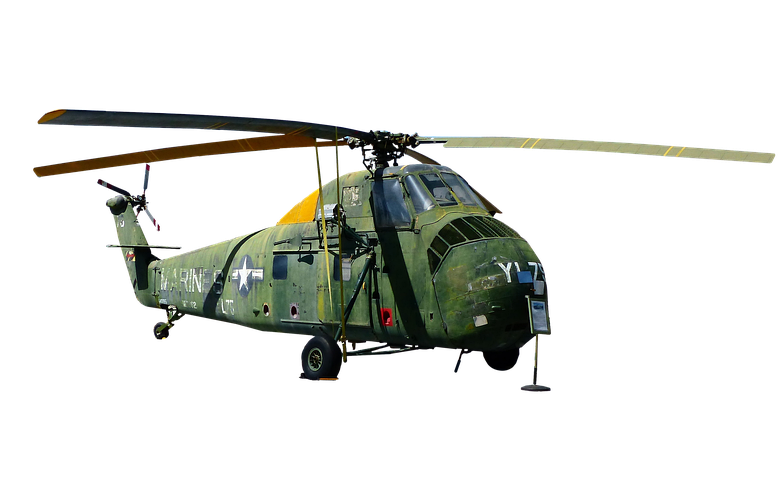
That brought back a memory going back to 1960. Dad, a US Navy chaplain, had received word that a young man had been killed in a helicopter crash and had the responsibility of notifying the wife. I went with dad but waited in the car.

When the woman saw dad on her doorstep in full-dress uniform on Sunday afternoon, a mortal dread enshrouded her. Although dad did his best, there is nothing gentle about hearing that your husband, wife, or child just died. And when trauma, mental or physical, descends upon us, responses are not always predicable.

Her strength leaving her, she nearly collapsed to the floor, and her mind went wild. Dad helped her to a chair. She wanted to smash the wall! Slam the doors! Scream! Hit someone like the lamb was hitting the ground as hard as it could!

But she didn’t. She couldn’t. Her son was sitting beside her.

Crying, the new widow told her 4-year-old son, “Daddy won’t be coming home today; he’s gone to heaven.” Dad arranged for other navy wives to be with her for help and comfort.

At first she felt like an unloved, abandoned, lonely lamb. But after several months of tears, asking “WHY,” and wanting to give up on life, the wife sought and received wise counseling and placed her trust and faith in our Savior. She eventually emotionally healed. She asked God for strength and wisdom to raise her son, and three years later she remarried.

When the hammer of life hits us and we experience the crushing pain, when we suffer that intense grief, we have the privilege of asking the Lord for help. Jesus is always available to us and can help us if we let Him.