What do You Know about Computers?

After working in a national scientific laboratory for twenty-two years, I retired in 2006. But 1991 was a turning point in my professional life: I was introduced to the world of computers.

My project leader asked me a very simple question: “What do you know about computers?”

“Nothing.” I truthfully responded.

“Everyone knows something about them, so really, what do you know?”

“I told you, nothing.”

A little perplexed, he invited me into the computer room. He couldn’t believe that an adult was ignorant about computers in the advanced 1991 culture.

I followed him into the room that contained all the electronic equipment, including the computer, that operated our multi-million-dollar experiment.

Pointing to something on the desk, he asked, “What’s this?”

“A television?”

“No, that’s the monitor.” Pointing to another item, “What’s this?”

“A funny-looking typewriter?”

“No, that’s the keyboard.” Pointing to a metallic-looking box with some buttons on a nearby table, “What’s this?”

“That’s a printer.”

“Correct.” Pointing to something on the floor, “What’s this?”

“A storage container?”

“That’s the computer. Good grief, you don’t know anything about computers!”

He then made a prediction. “Your future lies in knowing how to use the computer. Starting tomorrow, you’ll spend two hours a day learning how to operate the computer and learning what you can do with it. Eventually, all your reports will be made using the computer.”

But the boss didn’t leave me high and dry. He gave me some basic instructions. Very basic!

Holding a flimsy thing in his hand, he started.

“This is a [5.25”] floppy disk, here is where you will sit, this is where you insert the disk into to computer, this is how you turn it on … but stay out of “C” drive.”

I didn’t know what “C” drive was, but I decided to stay out of it. And that was my introduction to the world of computers and word processing.

For the next four months, I spent two hours each working day “playing” with the computer. I took out documents (typed by others) and retyped them while changing things for the experience.  I poked around with buttons and keys just to see what would happen. Often, I would get the poor thing confused and it would freeze up, and I had to use the magic formula of Ctrl – Alt – Del. That always fixed everything. (Remember, that was back in 1991.) But I still didn’t know what “C” drive was.

However, this was a special computer that controlled our scientific experiment. One day when I turned it on, it seemed that some of the information that usually appeared on the monitor was missing, so I called my project manager and asked him what was happening. After a brief interlude of unrecognizable and unrepeatable utterances, he exclaimed, “You got into “C” drive!

Well, over the phone, he gave me instructions that enabled me to retrieve the lost information. That day, I learned about “C” drive and “Undelete,” and that was also the day he scheduled me to attend my first computer class. Two primary bits of knowledge I gained in class were: 1) The computer didn’t store or save information until we purposely saved it. 2) Save what we’re working on every 15-20 minutes.

The boss at the scientific lab was correct when he predicted, “Your future lies in knowing how to use the computer.” Teaching, preaching, formatting books, publishing, and so much more that I do, requires use of the computer. And what’s even more exciting is, I enjoy the work. And you, the reader, know it because without the computer, I wouldn’t be able to put up my blogs.

Oh, yes …  I can now get into “C” drive safely … most the time. 

[An excerpt from Reflections on Life, page 130.
https://www.amazon.com/Reflections-Life-S-Eugene-Linzey/dp/B09BT9TG5D]


The $5,928,000,000 Debt

Jesus emphasized mercy in the story of the unmerciful servant which is found in Matthew 18:23-35 (KJV).

Therefore, is the kingdom of heaven likened unto a certain king, which would take account of his servants. And when he had begun to reckon, one was brought unto him, which owed him ten thousand talents.

Ten Thousand Talents? That sure sounds like a lot of … something. What is it?

There are three ways to think of the word talent.

The first thought is a skill such as playing a musical instrument, playing a sport, or learning a craft. But the servant couldn’t owe the king anything like that.

Another concept is weight. Various charts give different weights, one of which says a talent is equivalent to 85.5 US pounds. Therefore, 10,000 talents is equivalent to about 855,000 pounds, or 427.5 tons. For comparison, an early version of the Boeing 747 aircraft weighs about 435 tons. The servant couldn’t owe anything like that, either.

So, let’s look at it historically from the days Jesus walked the earth.

In 30 A.D. a day’s wage was a Roman denarius, sometimes called a pence or a penny in the Bible, and the laborers worked all day long with no overtime. A single talent was 6,000 denarii, or pence, which was 6,000 days’ wages. If you do the math, you find that was a man’s pay for about nineteen years.

10,000 talents were the wages for about 190,000 years. If a person today earns $15 per hour for 40 hours a week, the wages for 190,000 years would be approximately $5,928,000,000.

Would the man in Jesus’ story ever be able to pay off that debt? No. Jesus told the parable to show how deeply indebted mankind is to God because of sin. It is impossible for us to pay that debt. Therefore, God, in the form of Jesus, had to settle the debt for us.

Let’s return to the story at verse 25. When you see “a hundred pence,” remember that is almost three month’s wages.

But forasmuch as he had not to pay, his lord commanded him to be sold, and his wife, and children, and all that he had, and payment to be made. The servant therefore fell down, and worshipped him, saying, Lord, have patience with me, and I will pay thee all. 

Then the lord of that servant was moved with compassion, and loosed him, and forgave him the debt. 

But the same servant went out, and found one of his fellow servants, which owed him an hundred pence: and he laid hands on him, and took him by the throat, saying, Pay me that thou owest. And his fellow servant fell down at his feet, and besought him, saying, Have patience with me, and I will pay thee all. 

And he would not: but went and cast him into prison, till he should pay the debt. 

So when his fellow servants saw what was done, they were very sorry, and came and told unto their lord all that was done. Then his lord, after that he had called him, said unto him, O thou wicked servant, I forgave thee all that debt, because thou desiredst me: shouldest not thou also have had compassion on thy fellow servant, even as I had pity on thee? And his lord was wroth, and delivered him to the tormentors, till he should pay all that was due unto him.

Jesus painted quite a picture! The compound message revealed a harsh consequence for not forgiving someone. But let’s think about what happens in real life today.

We often get caught up in finding fault, or become blinded in the emotion of a problem, and we can’t see straight. We think we’ve been defrauded, or our rights have been violated, and we want vengeance. Although we’ve made mistakes and have been forgiven, we still demand justice and retribution related to others.

However, Jesus made it clear that since God forgives us of the impossible debt we owe Him, we are asked to forgive others of the minor debt they owe us if we want to continue to grow in our relationship with God.

How would we fare if God demanded justice from us? There is no way we could make it right with God. We would be judged and sentenced to be punished forever. But in the greatest act of mercy in the history of mankind, Jesus is willing to forgive us.

1 John 1:9 tells us that all we need to do is sincerely confess our sin and ask God to forgive us. But a stipulation related to our pardon is that we extend mercy to others. That’s an integral part of Christianity – an essential part of forgiveness – and we cannot ignore it. It’s a dynamic factor in the process of becoming like Jesus.

[An excerpt from chapter 5 in the book: Truth not meant to be Hidden.
Visit: https://www.amazon.com/Truth-not-meant-Hidden-Becoming/dp/B0BRYWHZDS

After Your Book Has Been Published ……

Many writers are happy when their book has finally – FINALLY – been published, and they immediately order 10, 25, 50, or whatever number they choose, and begin selling them and/or giving them to friends. And it’s not a bad thing to do, but it can generate a little embarrassment. I know about this because I’ve done the same thing. The basic problem is simple, but since I cannot speak for all formatter/publishers, I’ll just speak for us at P&L Publishing and Literary Services.

At the end of the formatting process, we email a PDF version of the formatted document to the author. The author is supposed to read the document very carefully and assure that the book says exactly what he or she wants it to say. The author will then notify us that it is ready to publish, or that there are a few changes or corrections that need to be made. We make the adjustments and publish the book.

However, many authors do not read it carefully. Another issue is that the document often looks different in a book than it does on your computer. It even looks different than if it were merely printed at home. Authors will often find what I call Little Stumbling Blocks that they wish they could fix. Well, they CAN fix them, and the fix should take place before everyone starts buying the book.

I recommend that, after your book has been published, you order one copy for yourself and read it carefully. Make a list of corrections you might want to make and send the list to your publisher. There may or may not be an additional charge – that will depend on the contract and the complexity of changes to be made.

But please follow the above advice, because we want you to be happy with your book. Then, order your 10, 50, or how many you want, and enjoy selling or giving them to friends.

For more information about P&L Publishing and Literary Services, please click on this url address. The web site is undergoing a New Years renovation, but the basic information is easily available. https://plpubandlit.org/

Have a great day, and Write Creatively.

Be a Blessing to Society

Karl Marx once said, “People without a heritage are easily persuaded.” That is true, but why?

Do you remember watching Fiddler on the Roof or reading the book? When Tevye was asked why he does things in a certain way, he responded, “Tradition.” Tradition and heritage are anchors that help people know who they are. They give people stability and a sense of worth.

Thinking back on Karl Marx’s statement, one of the reasons our culture has been changing so rapidly is that our heritage, our values are being stripped away, and people are losing their national and spiritual identity. One of the ways to keep our identity is to read about our history. Another way is to write about our own personal history – including our family history and family values.

So, I encourage you to read and write. Read books that build character and emotional strength. And when you write, write creatively. At the start of this new year, determine to be a blessing to society.

Happy New Year, Friends

On December 31, 2020, Carol and I spent a quiet New Year’s celebration together. It was relaxing because from 2008 through 2022, we had been home on December 31 only five times and on the road ten times. Hey, I just realized that we’ll stay home this year, too. YAY1

Several friends asked, “Can’t sit still, can ya?” My response is normally, “You find no moss under my wheels.” For example, in 2021 we drove over 29,000 miles and almost 21,000 in 2022.

It’s well-known by our families, friends, and those who read my articles, that we enjoy living in Siloam Springs, Arkansas. All cities, towns, and villages have their problems, but we’ve found this town to be one of the most pleasant places we’ve ever lived. With that in mind, why do we “hit the road” so often?

One quick answer is: our five kids live in five different states, and our siblings are spread out from the West Coast to the Mississippi Valley. We enjoy visiting them. We also have the privilege of preaching and teaching in our travels.

A second answer is: we enjoy seeing God’s creation first-hand. Seeing nature in books and on video is great. But nothing beats driving through the Sierra Nevada Mountain Range, seeing the Space Needle in Seattle, WA, the amazing Oregon Coast, Puget Sound in the great northwest, Niagara Falls, the red granite beaches of Maine, the snow-white beaches of Siesta Beach in Florida, seeing Yellowstone and Yosemite National Parks, and HUNDREDS of other places.

We also enjoy seeing the marvels of man’s creation, such as Mount Rushmore in South Dakota, the 605-foot tall Space Needle in Seattle, and the 630-foot tall Arch in St. Louis.

Historic sites such as the Yorktown, Virginia battlefield, the Gettysburg Battlefield, and Pearl Harbor cause me to stop and contemplate how different life might have been if the political and military tide had turned the other way.

The third answer is: we’re getting older, and some day our travel days will be over. So let’s travel while we can.

As we travel, we take thousands of pictures to document where we’ve been and what we saw. We’re grateful for digital photography because that’s a lot less expensive than the film we bought in the past. We often get our pictures out (on computer or other devices) and through our memory, we take those trips again.

The ability to remember amazes me. When I get to heaven, I want to ask God how He created memory. But I think He’ll simply say: That’s My secret.

As I mentally gaze on our blessings this past year, I read that approximately 3,273,707 people died in 2022 in the United States (around 69,163,777 worldwide), others have gotten sick, many have lost homes and businesses due to pandemics, government mistakes, the natural flow of economics, ongoing wars, and natural disasters. But sickness, wars, governmental problems, business failures, and all the other problems and catastrophes have been going on since shortly after Adam and Eve left the Garden of Eden. As we read in Ecclesiastes 1:9, “The thing that hath been, it is that which shall be; and that which is done is that which shall be done: and there is no new thing under the sun.”

The emphasis is: there’s nothing new under the sun. We have modern means of traveling, conducting war, studying, and getting work done, but the essence of life hasn’t changed throughout man’s history. Sickness, death, and all other problems related to life on earth will continue until Jesus stops it. And He will return one day.

But if He doesn’t return soon enough, I will die too. I don’t know by what means, but I will die, and the thought doesn’t bother me at all because death is part of life, and I know where I’ll go – to heaven to be with Jesus.

In the same concept as midnight on December 31 starts a new year, or a baby being born starts a new life, when my traveling days are over and I breathe my last on earth, I will start a new year, a brand-new life in heaven. It’s part of the Christian’s cycle of life.

However, as badly as I feel for those who have been hurt by various events on earth, I feel worse for those who die while not believing in Jesus Christ. We can start over after a catastrophe on earth, but when we die without faith in Jesus, there is no recovery. Think about it.

And I do wish you a Happy New Year.

Peace in the Midst of a Storm

It was December 24, 1914. The battle lines had been drawn up between the English and German forces. As with the Union and Confederate forces in the American Civil War, the English and Germans thought the fight would be over in a few months. But five months after it started, the “hell” of war began to weigh heavily on them.

It had been raining during the day, and freezing at night. The dead between the opposing trenches could not be retrieved, so they froze each night. On December 7, Pope Benedict XV had suggested a cessation of hostilities in honor of Christmas, but neither England nor the German high command would agree. They thought the soldiers wouldn’t see the man across the line as an enemy if they dwelled for a day on Christ and Christmas.

But some men in the frozen, muddy trenches had other ideas. Christians were on both sides of the field, and Christmas Eve on this particular portion of the battle-line was peculiarly quiet.

German soldiers, who had spent time in England prior to the war, began singing Christmas Carols, some in English. Most of the Germans sang in their own language. Their English enemy, 100 yards across no-man’s-land, cautiously looked above the soggy sandbags to see what was going on. Seeing no weapons ready to fire, and no bullets whizzing over their heads, some English soldiers began singing. There, in the middle of the storm of The War to End All Wars, the peace of God was manifesting itself in the hearts of declared enemies.

Then December 25, 1914 – Christmas Day – dawned.

Against the orders of his commander, a German soldier climbed out of the trench, raised his hands in a gesture of peace, and nervously, slowly, walked onto the field of death. Orders of “Don’t shoot!” were issued from the English side. An English soldier, thinking this might be a trick, nevertheless, climbed out of his trench.

Then, he slowly laid his rifle down and raised his hands in peace. As the two men cautiously walked toward each other, men on both sides began emerging from the safety of the trenches and joined them. Those who knew the other’s language conversed, shared stories of home and family. Several reports I read said they played soccer that day, using cans or soggy sandbags for the ball.

The men in the German/Prussian uniforms did not hate those in the English uniforms, and the opposite was true. The unofficial cease-fire on December 25, 1914 verified that fact. They were pitted against each other because of the ideologies of their national governments.

There was another event in the history of the world that took place about 1,880 years earlier that set the stage for the English/German non-official cease-fire. It, also, manifested peace in the midst of a storm.

Not only was the iron hand of Rome harshly ruling the known world, the cruel and insecure Herod was ruling Israel. As the emperor mandated the death of those who would not bow to him or his gods, Herod ordered the death of anyone – including wife and son – who threatened his rule. In the midst of that deathly turmoil, the angel warned Joseph and Mary of the danger. They were granted a place of safety and serenity in a stable for the birth of the One who came to offer salvation and peace to the world – Jesus. Scripture says He would be called Emmanuel, which means, God with us.

He is still with us. The peace He offers was not only for the Jews back in the days of Imperial Rome. It wasn’t only for those who stopped fighting for a day in 1914. Jesus offers peace to us today – in the midst of the storm of covid-19, the turmoil of the presidential election, and social upheaval.

If Democrats, Republicans, Independents, Communists, Socialists, Green Party members, and the rest could stop fighting, study the Bible and allow the truth of Christmas – and the true Christ – to enter their hearts and minds, they could learn God’s purpose for their lives. Jesus also died for the Buddhists, Shintoists, Muslims, atheists, and everyone else who would accept Jesus into their tumultuous lives.

He came as a baby so He could grow up experiencing the pressure and pain we encounter. But His babyhood lasted only a year or so. He became a man Who suffered every kind of pain, trial, and temptation that we suffer. But He never sinned. And He died!

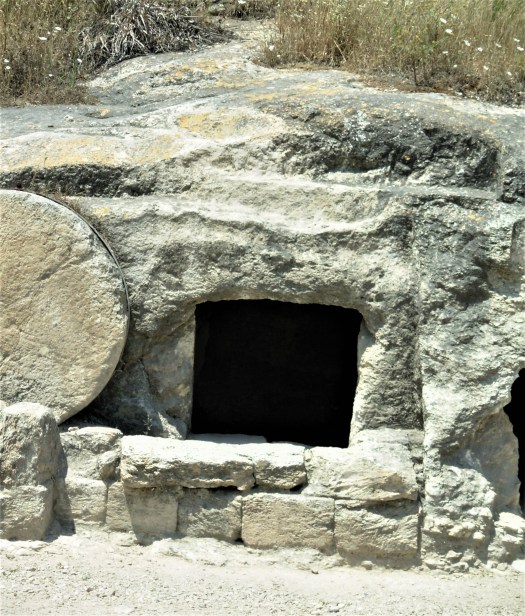
But three days later He came out of that tomb, and we have eyewitnesses to the fact: the guards on duty who were there to make sure no one stole the corpse. And because of His resurrection, He offers us His peace and joy in the midst of our storms. And He offers us eternal life with Him in heaven if we accept Him into our lives. He’s listening right now, so you can talk with Him. He loves you and will help you.

Have a Blessed Christmas.

Part 3: What was the Star of Bethlehem?

Let’s check into a proven historical resource: the Bible. Please read Matthew 2:1–9. And I thank Dr. D. James Kennedy of Coral Ridge Ministries, Ft. Lauderdale, Florida, for helping me think through this issue. (Dr. Kennedy passed away September 5, 2007.)

The phrase “we have seen” denotes an academic observation, and the phrase “in the East” (“…For we have seen His star in the East.…”) literally means “in its rising,” which in turn could denote a physical direction or pointing of the “star.” Therefore, the wording in verse two “we have seen his star in its rising” implies a meticulous scrutiny of a portion of the night sky rather than a casual observation.

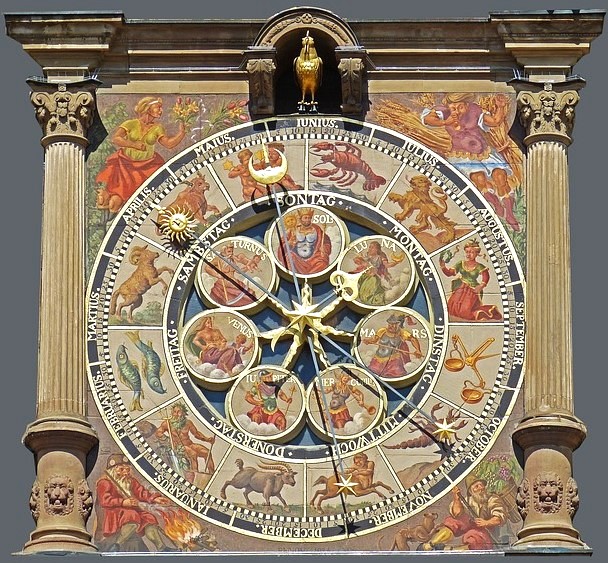
The zodiac is divided into twelve constellations, and at that time in history each constellation was assigned to a specific world empire. The common thought back then was whenever a king or prince was born, a “sign” (comet? super-nova? conjunction of several planets?) would be found in that empire’s constellation.

Dr. Kennedy said the Persians believed whenever a comet entered a constellation, if the comet’s tail pointed downward a king had just died, but if the tail pointed upward a king was born. It was also understood that God (or “the gods”) controlled the heavens. Psalm 19:1 agrees by saying, “The heavens declare God’s glory; the sky displays His handiwork.”

Therefore, the wise men (Magi, astronomers, scholars, nobility) may have been studying the sky and discovered a new comet in Israel’s constellation with its tail pointing upward, and correctly understood it to mean that a new king was born in or near Israel’s capital: Jerusalem. In this sense, these royal ambassadors did not follow the star as one would follow a slow hotair balloon. Rather, they followed the directions obtained from Israel’s constellation and went to Jerusalem.

But what is it about the “star” that led them to the specific house? Matthew 2:9 says, “… and behold, the star which they had seen in the East went before them, till it came and stood over where the young Child was.” A comet, possibly as close as 3,000,000 miles away, cannot “stand over” a planet, let alone stand over a house. The moon, 240,000 miles away, cannot “stand over” a particular house. Therefore, even a small star the size of our sun (with a diameter of approximately 860,000 miles, and 93,000,000 miles away) cannot get close enough to “stand over” a house.

So we need to consider another act of God – that of possibly assigning a messenger – to further direct the royal ambassadors. Here is a brief explanation of my theory.

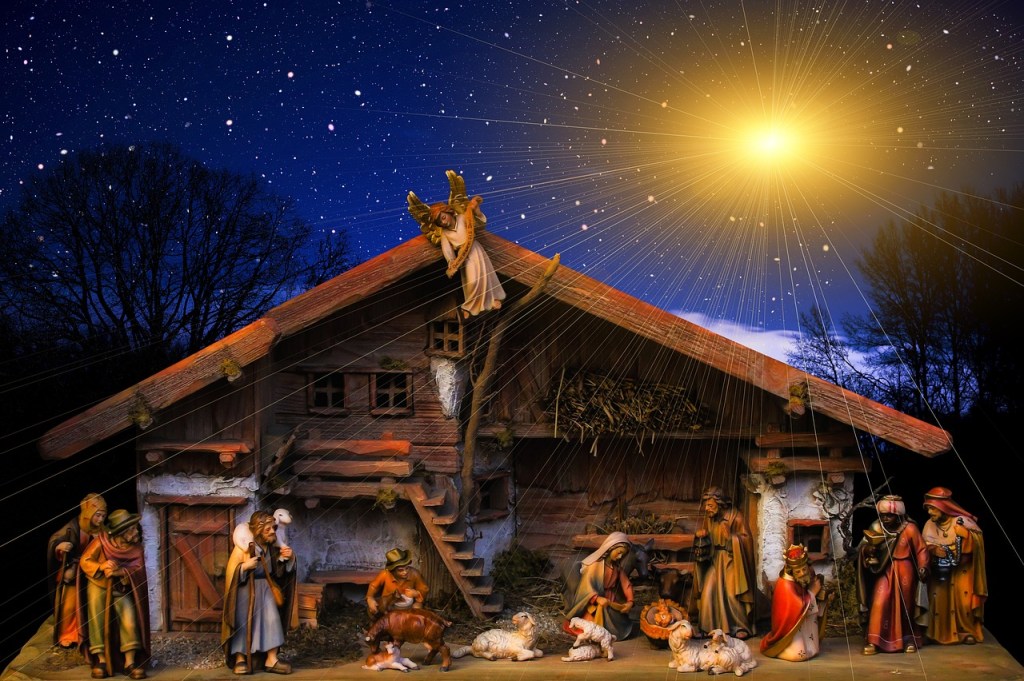
After seeing a comet within Israel’s constellation which prompted the magi to start on their journey and directed them to Jerusalem, and being advised by the palace scholars to go to Bethlehem, an angel could have taken the physical position of “standing” or hovering over the house as the Magi approached Bethlehem. However, the angel would have started high in the sky and slowly descended to the house as the visitors approached. Therefore, the angel was not recognized for who he was. This, my theory, fits the biblical parameters while taking into consideration history and culture. I hope this helps you in formulating your ideas.

Someone asked me if I could prove that Jesus is God. No, I cannot. But the Bible says that He is. And because the Bible has been proven correct so many times, I accept the Bible as authoritative proof. What many folks do not understand is this: believing that Jesus is God is a matter of faith, but disbelieving is also a matter of faith.

Scripture attributes characteristics and titles to Jesus that can be true only of God, and Jesus is often called God. Example: “Looking for the blessed hope and the appearing of the glory of our great God and Savior, Jesus Christ” (Titus 2:13; NCV). Jesus is presented as being self-existent (John 1:1, 14:6); omnipresent (Matthew 18:20, 28:20); omniscient (John 4:16–18, 6:64, Matthew 17:22–27); omnipotent (Revelation 1:8, Luke 4:39– 55, 7:14–15, Matthew 8:26–27); and possessing eternal life (John 1:4, 1 John 5:11–12, 20).

Most of Jesus’ followers were devout Jews who believed in one true God. They were uncompromisingly monotheistic, yet they recognized Jesus as God incarnate. Because of his extensive training as a Pharisee and a rabbi, the Apostle Paul would be even less likely to attribute deity to Jesus. Yet he did (Acts 9:1–5, 20:28). These were not blind, mushy-minded, easy to deceive simpletons. They were devout Jews who were proud of their Jewish heritage. Yet they became followers of Jesus Christ because they believed what their Scriptures prophesied about Him.

Did Jesus claim to be God? In a confrontation with Satan, Jesus said, “It is written, ‘You shall worship the Lord your God, and serve Him only” (Matthew 4:10–11, NASB). Yet Jesus purposely received honor and worship that He, as God, had a right to receive (Matthew 14:33, 28:9). The Jewish leaders told Him: “For a good work we do not stone You, but for blasphemy; and because You, being a man, make Yourself out to be God” (John 10:33; NASB). Thus, the Jewish leaders agreed that Jesus claimed to be God. So, it is safe to believe that Jesus Christ is God, but is eternally dangerous not to believe.

This Jesus is the one who was born of a virgin, lived a sinless life, was killed on the cross because the Jewish leaders were afraid of Him, who raised to life after three days in the tomb, and re-ascended to heaven forty days after his resurrection. He is God. You do not need to be afraid of Him because He came to save us and grant us eternal life. He loves you and is waiting for you to respond to Him.

Part 2: Who were the Wise Men?

Who were the wise men, and why did they search for the new king? Matthew 2 says in part, “wise men came from the east to Jerusalem saying we have seen his star in the east… When they entered the house, they saw the young child with his mother.…”

The east is a big area, so we need to know what Eastern societies employed those who might be watching or studying the stars. China, India, and Persia are possible candidates.

China is the first that comes to mind, for they have written many things about the stars and the heavens throughout their history. But China’s Daoism (Taoism) was basically passive and stressed ethical action, and Confucianism stressed conformity as related to society, government, and family. Neither group was interested in religion or other governments at the time.

India is also an unlikely candidate because Buddhism (with its focus on the negative aspects of materialism) and Hinduism (with perhaps over 300 million gods, although possibly based on one central deity) were not interested in either the religions or the governments of other civilizations.

That leaves us with Persia. The main religion in Persia at the time was Zoroastrianism, and their priests were of a class called Magi (from whence we get magician). They were basically monotheistic. They acknowledged an evil one who was in opposition to the true Wise Lord, they believed the world would end when light finally conquered darkness, and they believed the Wise Lord was a loving God who desired communication with humans. These wise men, or scholars, studied the stars, and the languages, writings, cultures, botany, etc., of other civilizations.

They were the scientists of the day and carried status of nobility. In fact, the words “wise men” in Scripture refer to Babylonian officials who were of the Magian class. Remember also when the Jews (including Daniel who was Nebuchadnezzar’s personal counsel for years) were in captivity in Babylon in the sixth century BC, the Zoroastrians learned about the prophesies in the Hebrew Scriptures. Until about 220 AD, Zoroastrianism was sympathetic to any religion, including Judaism and Christianity, that taught kindness, justice, righteous thinking, truth, monotheism, etc.

The magi had various fields of expertise, including astronomy and astrology. Whenever a sign or star indicated a royal birth (Psalm 19:1), or when they learned of a royal birth through the communication system of the day, a delegation of three to seven was sent to acknowledge that royal event with expensive gifts fit for a king. Traveling with a caravan, they timed their arrival for when the child was about a year old (Matthew 2:11) because of the high infant mortality rate, and the visit was intended as an honor to God as well as an honor to the reigning king and the new prince.

Therefore, I believe that the Magi were monotheistic Zoroastrians from Persia, and they spread the good news of the new King throughout Persia when they returned home.

There is a small group of Zoroastrians today in India, but they believe somewhat differently than the Magi who took gifts to honor the Messiah, Jesus Christ.

Read part 3 tomorrow.

Part 1: Jesus – God with Us

Do we have any idea of when Jesus was born? How did we place his birth in December?

Emperor Julian, Constantine’s nephew, originated the Julian Calendar. In 1582 Pope Gregory’s people found a way to correct the minor flaws in the Julian calendar and produced what we call the Gregorian Calendar. However, the accumulated Julian calendar errors amounted to an estimated period of two to seven years (no one knows for sure), and it would not be possible to go back and attempt to correct every document ever written. Therefore, since all of human history was, in some way, dated in relation to Jesus’ birth, it was decided to back-date Jesus’ birth.

Using the amended Gregorian calendar, we think Jesus was born around 2–5 BC. In what month was he born? Probably in late September to mid-October. Why do I say that?

We know that the Old Testament spoke not only of history and the Abrahamic Covenant, but the Old Testament is intrinsically tied in with the life of Jesus Christ (Immanuel: God with us), the prophecies of his appearance, major Jewish religious festivals, and the proposed restoration of mankind. Therefore, I believe it is safe to assume that the major points of Jesus’ life are also related to the major festivals. Let’s look at them.

Jesus’ crucifixion took place on the Passover (Pesach). This is a major point that is well-documented in the Gospels and in Roman history. The Feast of Unleavened Bread related to Jesus’ burial. The Feast of First-fruits was related to Jesus’ resurrection. And of course, the Feast of Pentecost (Shavuot, or Weeks) related to the birth of the church fifty days after Jesus’ resurrection which was ten days after his ascension.

The other three major festivals are the Feast of Trumpets (Rosh Hashanah), Feast of Tabernacles (Sukkoth, or Booths), and the Day of Atonement (Yom Kippur). With the Feasts commemorating major events in the life of Jesus as well as of Israel, it seems to me that His birth would have taken place at another major feast: possibly at the Feast of Trumpets (around September or October).

Luke 2:8 says, “Now there were in the same country shepherds living out in the fields, keeping watch over their flock by night.” If the shepherds were living in the fields at night when the angels “trumpeted” Jesus’ birth, it is safe to deduce that the weather was not yet too cold. Thus, a September or October timeframe is logical, but not conclusive.

His birth might have been on the Feast of Booths (Tabernacles), also in the September-October time frame. Why? Mary and Joseph were not in a house during Jesus’ birth; they were in a cave, stable, or some other “booth.”

So how did the church decide on December 25?

King Constantine in the fourth century royally decreed that everyone in his empire should be Christian, and it became convenient for him in consolidating his empire to declare many pagan festivities as “Christian.” Therefore, the Sol Invictus (the “Unconquerable Sun”), marking the winter solstice and celebrated on December 25, was decreed to be equivalent to “the Righteousness of our Lord.” And to make things politically and religiously correct, Constantine decreed that Christ was born on that date. And since the emperor heavily influenced the church’s decisions, the church accepted that assigned date.

I’m a historian and I enjoy researching. However, the fact that Jesus wasn’t born on December 25 is not a problem. Our faith does not hinge on knowing the date of Christ’s birth. Our faith is based on the truth that Jesus is God in human form, was born of a virgin, came to save us from eternal destruction, died to redeem us from our sin nature, raised from the dead three days later to conquer death, ascended to heaven 40 days after he rose, and that he will return.

So, go ahead and celebrate His birth. But remember: He is no longer a baby. He is Almighty God, the creator of the universe. He created you and wants you to join Him and be part of His family forever.

Read part 2 tomorrow.

My Most Meaningful Christmas

When I reflect back on my life, many occasions stand out as special events. Eleven memories are: my wedding day; the day I joined a Gospel quartet as a teenager; each day of the birth of our five kids; the day I dropped dad’s prized notebook into the San Diego Harbor; the day dad returned from a 13-month deployment; the first time I preached over the radio; and the day, when playing hide-n-seek, I backed into a cactus plant. (I won’t tell you how badly that hurt!)

When I consider my most meaningful Christmas Day before marriage, I have to pause and go through my life – location-by-location. In the 20 years between my birth and marriage, we lived in 9 different places (10 if we include the college campus), and my childhood memories are in those 10 mental compartments. As an adult married for 57 years – and counting to the same, wonderful, precious Carol – we lived in 17 different locations – so far.

Reflecting on my childhood, dad sometimes took us on Saturday afternoon family walks through El Cajon, California. We walked past Foster’s Freeze ice cream store, and each of us got an ice cream cone. They cost a nickel back then. We walked to the other end of town, stopping at the 5, 10, & 15-cent store for a coke. They cost a dime. We then crossed the highway, and walked back home, stopping first by the Ford dealership to look at new cars. Looking didn’t cost anything. As children, we thought it must have been a 5-mile walk. But the walks were probably around two miles at the most and were deeply enjoyable times with mom and dad.

Whenever I got into a fuss with any of my five sisters, I always went to dad for consolation. He didn’t arbitrarily take my side in the fuss, but he helped me understand life. I felt important when I was with my dad.

But then, the navy sent dad overseas for 13 months, and I felt all alone. I plodded along, but life was hollow for me. I hate to admit it, but I cried often. Not realizing it, I became belligerent at times to mom. It wasn’t intentional, but I was a kid, and hurting. However, that doesn’t excuse me, and I eventually grew up and asked both mom and the Lord to forgive me.

Then Dad Returned Home! And I became happy again. We had two Christmases that year. When dad returned in the summer of 1957 and gave all of us gifts, we claimed that as an extra Christmas. Then we celebrated the regular Christmas in December. That Christmas was my most meaningful childhood Christmas.

But Joy still comes in the morning. That’s the first line in the chorus of the song, Alive & Breathing, by Matt Maher.

Dad helped pick out the tree. Dad brought out the special gifts he had purchased for us overseas but had concealed them in his closet. We never suspected he had them. Dad spent the whole day with us. Dad, my brothers, and I tossed the football. We played catch with a baseball. Dad had target-practice with me with my new Daisy B-B Gun. Many of us played Monopoly. Dad won. We had root-beer floats. All in all, I was in heaven-on-earth! Life wasn’t perfect, but my daddy was home! And that was my most meaningful Christmas as a child.

What about you? Think back in time. Our memory is our Time Travel Machine. Relax and take time to reflect on your life. What events or relationship made Christmas meaningful to you, and when was that? It can be either when you were a child or an adult. Please take time to jot down some notes and think about the good times in your life. Share those good memories with family and friends.

But there’s another story for a lot of people. Many of you might not have good or enjoyable memories. Life has been hard. Rejection has been inscribed across the recesses of your mind. Sometimes you might think of ending it all. I would like you, also, to write some of those painful memories on paper. Write down the details of how you’ve been hurt. Then I want you to talk with God about it. Tell Him how difficult your life has been. Pour out your heart and feelings to Him. He understands. Why?

Jesus was born into this corrupt, hell-bent world to show us a better way to live. His purpose was to take the penalty of our own sin and selfishness so that we could be healed and restored to Father God. Jesus’ plan is for us to live with Him where sin, selfishness, and sorrow does not exist. It’s called Heaven.

God commissioned people to jot down His thoughts to give us. Those notes are the Bible. You can learn to know Jesus by reading Matthew, Mark, and Luke, but especially the Gospel of John. Leaving heaven, He came to be born as a human, like us. But unlike you and me, Jesus was never selfish. As a human, He didn’t search for fulfillment to make His life worthwhile. Instead, He came to give Himself in order to make our lives worthwhile. He gave His life on the cross to re-establish eternal life for us. In His 33 years on earth prior to His crucifixion, He showed us how to live, how to love, and how to give.

Also unlike you and me, Jesus raised back to life to confirm that He is, indeed, God, and to reaffirm His love for us.

I encourage you this Christmas season to think less of stuff, more of others, and especially, more of Jesus. He wasn’t born in December, but this celebration is still all about Him. Stuff will wear out; but if you choose to live for Jesus Christ, our Savior, your relationship with Him will last forever.

MERRY CHRISTMAS.