
I overheard Clarence give the following advice to a mutual friend in Tulsa, “Forgive and forget, then forget what you forgave – otherwise you have not forgiven.” (A colleague had lied to the boss about Richard’s ability to do the job.) Later I told Clarence, “If the Bible says that, I will believe it.” Within a day or so he came up with the following verses:
Isaiah 43:25 – “I, I am the One who forgives all your sins, for my sake; I will not remember your sins.
Psalm 25:7 – Do not remember the sins and wrong things I did when I was young. But remember to love me always because you are good, Lord.
Hebrews 8:12 – I will forgive them for the wicked things they did, and I will not remember their sins anymore.
However, according to my studies, they did not verify Clarence’s statement, so the discussion turned to God’s character and the word “remember” in these verses. Agreeing that God is perfect in every way, which includes His memory, Clarence asked if God can choose to forget. I suggested that we not confuse the issue, but stick to what the Bible says.
The word “remember” means “to be mindful or cognizant of” and “to hold in continual remembrance.” So, if God “remembers my sin no more” it means, based on my repentance, God forgives me and does not keep thinking about my error. Another way of saying it is: He does not hold that sin against me. I’ve been pardoned.
We then moved to the word “forgive.”
“To forgive” means “to remove the blemish on the record resulting from the wrongdoing” or “to pardon.” The act of forgiving does not erase the offense or the event in real time because we cannot erase the past; but it is focused on purging the legal record related to the offense.
When President Obama pardoned seventeen people, he “… granted these individuals clemency because they have demonstrated genuine remorse and a strong commitment to being law-abiding, productive citizens and active members of their communities.” Obama did not eradicate what they did, but removed legal liability. That’s what God does for us, and is what we are supposed to do for those who offend us. The offense or event in real time is not erased, but the judicial verdict or sentence related to the event is expunged from our record.
When we allow the Lord to heal us from hurts caused by others, the memory of the offense may actually become clearer and the details of the offense take on sharper focus; yet the pain will be substantially lessened – and possibly erased. Nevertheless, although the offense often IS forgotten, forgiving does not necessarily include forgetting.
Forgiveness is a decision based on our attitude towards God and relationship with Him. One woman in California fabricated a rumor about someone she was jealous of in church. With the intent of damaging the woman’s reputation, the rumor made its predictable circuit and grew substantially in the process. Not yet knowing the outcome of the rumor, the perpetrator’s conscience began to bother her so she went to her victim, confessed, and asked to be forgiven.
The victim said, “I will forgive you, but first let me tell you what you did.” As she recounted the repercussions (which included the breakup of her marriage) of the rumor, both women were deeply sobbing with their arms around each other and the two women became life-long friends.
Personal forgiveness does not always set people free from legal mandates or from physical consequences on the human level. For these two women, repentance was deep, forgiveness was genuine, reconciliation was complete, but the memory remained for life.
In the later 1960s a man in Southern California was arrested for murder. The family of the victim showed up in court and in Christian love truthfully told the judge, “We forgive this man and would like to set him free.”
The presiding judge wisely said, “It is good for you to forgive him, and both God and I honor you for it. Your forgiveness clears the record between you and God. However, this man has also offended the United States of America and justice must be dispensed.”
![dscn0464[1]](https://genelinzey.com/wp-content/uploads/2018/10/dscn046412.jpg?w=197&h=180) Forgiveness is not about letting the offender off the hook, but returning the right to dispense justice back to God and to the appropriate human authorities. Forgiving others, and asking to be forgiven when we err, keeps our consciences clear.
Forgiveness is not about letting the offender off the hook, but returning the right to dispense justice back to God and to the appropriate human authorities. Forgiving others, and asking to be forgiven when we err, keeps our consciences clear.
Clarence and I cleared up the allegations about Richard’s abilities, and the slander backfired on the perpetrator. But the memories remain; so along with the Apostle Paul, we are to humbly forgive others, and use those memories as stepping stones for personal and spiritual growth.
 that “mental claustrophobia” and that’s a tough prison. How do we get trapped like that? Some folk might say life has dictated our fate. If you’ve watched the movie “Anne of Green Gables” you could say it’s because of a lack of imagination. Yet others may actually blame God for it.
 Great benefits could await us if we dare to step outside our comfort zone. No, I am not suggesting that we put safety and common sense aside, and I am not suggesting that we stop providing for our families. But we may have an invention tucked away in our God-given creative mind, we may have an idea that could improve the quality of life, or we may simply want to reach out and expand our horizons; but we must be willing to take a risk. The risk can span the financial, physical, emotional, or reputational realms; but with proper mentoring we can break out of our mental prison. God doesn’t want us stuck. Dependable, yes! But not stuck.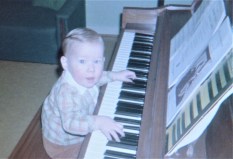
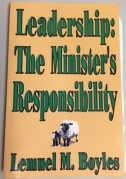 Responsibility, “The need for well-trained, highly qualified leaders in the Christian realm is one of the most critical problems we face in the church today.” I agree, and that also applies to the secular world. Without well-trained leaders, our churches and organizations are faltering. But Dr. Boyles taught that training alone is not sufficient. True leadership entails more than just filling a vocational slot: true leadership involves a higher calling.
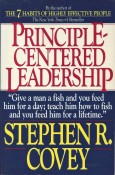 In his book, Principle-Centered Leadership, Stephen Covey said, “…we often attempt to short-cut natural processes–substituting expediency for priority, imitation for innovation, cosmetics for character, style for substance, and pretense for competence.” Although they might not realize it, this is designed failure by incompetent leaders.
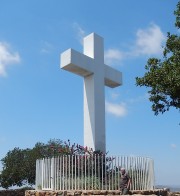 summarized the law in His statements in Matthew 22:37-39; “Love the Lord your God with all your heart, all your soul, and all your mind. This is the first and most important command. And the second command is like the first: Love your neighbor as you love yourself.” This is the foundation for good character and sound leadership.
 and we would be temporarily locked in the house. That was great for the skiers, and it made the landscape look more beautiful than words can tell. And if there was no wind while the snow was falling, the big fluffy snowflakes absorbed all the background noise which created a living Winter Rockwell Painting. Beautiful!
  With critters in front of the fireplace, a table nearby with a puzzle or a scrabble game on it, steam rising from two cups of hot chocolate or coffee, a big window across the room with snow gently falling outside–we have another Rockwell Painting. Periodically I would go out and clear the walks and uncover the car before the snow got too deep.
 several years ago we were minding our own business heading west on Interstate 70 when, suddenly, the dreaded sign appeared: Detour Ahead.
 On another trip, we were returning from Missouri where we spent several days with two of my sisters and a brother. We had a good time. On the way back I said, “Let’s go home on some roads we’ve never been on. Carol chimed in: “Then let’s go to the War Eagle Craft Fair.” I agreed.
 another person or event control your emotions.” I cannot control you or the highway department, but I can control my plans and reactions. I do this by asking God for direction in life which enables me to face life’s uncertainties with confidence.
 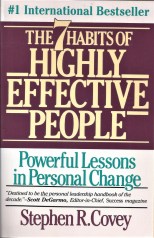 National Laboratory. One of my responsibilities was to assure that our staff’s training was up-to-date. One day I read about a seminar titled, “The 7 Habits of Highly Effective People: Powerful Lessons in Personal Change.” That intrigued me, and I attended the seminar to see if I should recommend it to our staff. I’m glad I did, and it was my privilege to meet and talk with the speaker, Dr. Stephen R. Covey. Dr. Covey condensed his seminar into a book titled by the same name: “The 7 Habits of Highly Effective People.” (He passed away in July of 2012. America misses him, but his teaching will go on. And yes: I recommended this course to our staff.)
 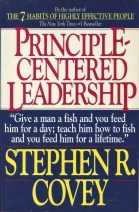 The information I gained at the seminar, and in reading the book, did not guarantee quick fixes to any personal, interpersonal or business problems. But I was supplied with tools to improve my communication skills, my outlook on life, and reduce unnecessary friction.
  balanced success are honesty, character, integrity, faith, love and loyalty.”
 prevented! He knew that his tire pressure was very low but he wouldn’t take time to inflate it to the proper pressure. “I’ll take care of it next Saturday.” he said. But he didn’t.
 keywords=Reflections+On+Faith+%26+History
 off. I know it will be difficult, but you must cooperate with God. You must turn all your worries over to God – and let them go – and learn to trust your staff.” George always thought his feelings and actions were directed by the Lord, so that surprised him.
 are told that nearly all American educational institutions still teach critical thinking; but do they really? My answer is a resounding NO!
  Critical thinkers must take the context of every situation into account and think on a multi-level platform in order to come to proper conclusions. Homeschoolers have an advantage for learning critical thinking skills because they can incorporate these lessons into it their curriculum – as every educational system should do. When a person is able to make correct, intelligent choices on complex matters, he is considered intelligent and competent.
 immorality. But it takes a distinct majority of the Senate and House to change direction or change a law for the better – and even then, one judge is allowed to negate the will of the people. This is wrong. Why doesn’t the US Congress apply the checks and balances which are built into the US Constitution? They are not thinking critically.
 Gene Linzey